I was struck by the backlash to the Texan pediatrician who was ostracized and lost her job because she pointed out that decisions have consequences, and all those who voted for drumpf in Texas are experiencing those painful consequences. Painful words uttered in despair, but damn – that doesn’t make them any less true.
How many times have we heard the line that “now isn’t the time to talk about this”? We’ve seen it with the debate on gun laws, and now we see it on this horrible consequence of firing those who warn us of dangerous weather.
But once again people have died, children have died, destruction and despair are gripping our nation, and the cause of that horror is not open for discussion? It’s being political in a time of national mourning? It’s insensitive? Decisions made in comfort and greed by those untouched by the disaster have exacted the ultimate cost, and they once again seek to control the conversation by denying the ability to explore how it happened!
So, is it safe to talk about these things now? Is it ok to talk about how stripping the social safety nets have consequences? Is it ok to seek to examine what we as a country believe in now, or are we waiting for the next disaster to blow through, the NEXT time parents weep looking for lost and dead children, or will it be one of the times after that? How long must we listen to the powerful deny the impact of greed, arrogance and ignorance.
And, to respond to this fool Abbott; Smart teams look to see if the wrong plays were called, or more likely, the wrong people were making the wrong decisions.
Far from the front lines of the climate crisis, 100 men and women in air-conditioned offices, 61 of them millionaires, are making decisions that could increase United States carbon dioxide emissions, and the warming of the climate they are driving, for decades to come.
In the latest political wrangle over energy and climate policy, a group of Republican senators over the weekend added provisions to the US federal budget bill that, as currently written, would end clean energy tax credits at the personal level and at utility scale and increase taxes on foreign-made parts for solar power equipment.
Ending federal subsidies for most renewable energy projects, including residential heat pumps, for example, would affect thousands of projects that are already in planning or development and jeopardize future investments in manufacturing renewable energy equipment.
Friday, June 27, hours before the Senate released the latest draft of the reconciliation bill just after midnight, US Secretary of Energy Chris Wright claimed on the Department of Energy website that wind and solar are unreliable and that federal subsidies have made energy more expensive, although he did not cite any official reports or peer-reviewed studies to support that claim.
On the Department of Energy website, Wright wrote, “wind and solar brings us the worst of two worlds: less reliable energy delivery and higher electric bills …If sources are truly economically viable, let’s allow them to stand on their own,” he wrote, ignoring that the fossil fuel industry gets annual subsidies of about $20 billion annually, according to estimates by Oil Change International, a nonprofit watchdog group.
But hundreds of studies show that renewable energy is much less expensive and, in a well-planned grid, can make energy supplies more secure.
“The proposed GOP tax on wind and solar is a danger to the United States,” Mark Z. Jacobson, a Stanford University renewable energy researcher who has authored numerous studies on wind and solar power, wrote via email.
The new tax provisions “lock in death and illness to up to 100,000 Americans every year due to fossil-fuel and bioenergy-fuel air pollution that wind and solar help to eliminate,” he said.
An early evaluation shows the administration’s planned energy policies would result in the drilling of 50,000 new oil wells every year for the next few years, he said, adding that it “ensures the continuation of land devastation… the poisoning of soil and groundwater due to fossil fuels and the continuation of gas blowouts and fires.”
There is nothing beneficial about the tax, he said, “only guaranteed misery.”
An analysis by the Rhodium Group, and energy policy research institute, projected that the Republican regime’s proposed energy policies would result in about 4 billion tons more greenhouse gas emissions than a continuation of current policies—enough to raise the average global temperature by .0072° Fahrenheit.
The overall budget bill was also panned in a June 28 statement by the president of North America’s Building Trades Unions, Sean McGarvey.
McGarvey called it “a massive insult to the working men and women of North America’s Building Trades Unions and all construction workers.”
He said that, as written, the budget “stands to be the biggest job-killing bill in the history of this country,” potentially costing as many jobs as shutting down 1,000 Keystone X pipeline projects, threatening an estimated 1.75 million construction jobs and over 3 billion work hours, which translates to $148 billion in lost annual wages and benefits.
“These are staggering and unfathomable job loss numbers, and the bill throws yet another lifeline and competitive advantage to China in the race for global energy dominance,” he said.
Research in recent years shows how right-wing populist and nationalist ideologies have used anti-renewable energy arguments to win voters, in defiance of environmental logic and scientific fact, in part by using social media to spread misleading and false information about wind, solar and other emissions-free electricity sources.
The same forces now seem to be at work in the US, said Stephan Lewandowsky, a cognitive psychologist at the University of Bristol who studies how people respond to misinformation and propaganda, and why people reject well-established scientific facts, such as those regarding climate change.
“This is a bonus for fossil fuels at the expense of future generations and the future of the American economy,” he said. “Other countries will continue working towards renewable-energy economies, especially China. That competitive advantage will eventually pay out to the detriment of American businesses. You can’t negotiate with the laws of physics.”
Members of the church preached that LGBTQ+ people should be shot in the head (Google Street View)
An independent Baptist church in Indiana, Sure Foundation Baptist Church, has doubled down on a sermon which was delivered during a men’s preaching evening that called for LGBTQ+ people to take their own lives.
On Thursday (3 July), preacher Justin Zhong shared a post on the official Facebook page for the Sure Foundation Baptist Church in Indianapolis, stating he will “not apologize for preaching the Word of God”.
“I will not apologize for stating facts. I will not negotiate with terrorists, among whom the LGBTHIV crowd is full of domestic terrorists,” Zhong wrote.
“The Bible is crystal clear that sodomites (homosexuals) deserve the death penalty carried out by a government that actually cares about the law of God. We are not to take the law into our own hands.”
The statement comes after the church was criticised for the violent homophobic language used by church members during Men’s Preaching Night, which was broadcast live on Facebook.
“We should pray for their deaths”
During a sermon entitled ‘Pray the Gay Away’, member Stephen Falco said: “You ought to blow yourself in the back of the head. You’re so disgusting.”
Falco went on to rhetorically ask: “How shall we then properly pray for gay people?”
“We should pray for their deaths, plain and simple,” he answered himself.
Another church member, reported by Newsweek as Wade Rawley, said LGBTQ+ folks should be “beaten and stomped in the mud” before they “should take a gun and blow the back of their heads off”.
The christian church called for LGBTQ+ folks to be killed (Canva)
On the church’s official website, it states under its beliefs section that the congregation “believe that
sodomy (homosexuality) is a sin and an abomination before God which God punishes with the death penalty,” adding: “No sodomite (homosexual) will be allowed to attend or join Sure Foundation Baptist Church. (Leviticus 20:13, Romans 1:19-32, Deut. 23:17-18, 1 Kings 14:24, Jude 1:7)”.
In the Facebook post defending the sermon, Zhong outlined several quotes from Bible scripture with additional commentary explaining why those quotes matter and what they mean.
“The Bible says that the sodomites (homosexuals) are filled with all unrighteousness. That’s why I believe all sodomites are capable of molesting children and committing all kinds of wickedness,” Zhong wrote.
“It is hilarious that the best thing they can say to us is that we are closet homos, because they know being a homo is filthy and vile and disgusting.”
Zhong went on to say that the Sure Foundation Baptist Church is a “Bible-believing church” whereby “whatever the Bible says, we believe it”.
“We don’t care about what the world, culture, or media think. It is funny that these so-called “faith leaders” and some “Christians” do not approve of this message. This simply shows me that they do not care about the Bible.”
He continued: “Sure Foundation Baptist Church protects children from predators. We don’t separate children from their families. We expose perverts and pedophiles. No homos will ever be allowed to attend any church services.
“Sure Foundation Baptist Church is a soulwinning powerhouse. We preach the gospel of Jesus Christ and the eternal security of the believer on a weekly basis to the lost and dying world, while all those “holier than thou” Christians let the world go to hell.”
He added: “If you are sick and tired of the woke culture or churches that do not preach the whole Bible, then you should come and check us out!”
In response to comments made by members of the Sure Foundation Baptist Church, the Concerned Clergy of Indianapolis – a fellowship of “pastors and other concerned citizens who are God-fearing people who believe injustice, racism, ageism, class-ism and sexism to be contrary to the will of God” – said: “The Concerned Clergy of Indianapolis stands firmly against the harmful rhetoric recently preached that condemned all LGBTQ individuals to hell and instructed people to stay away from them.
“Such messages are not only theologically irresponsible but pastorally dangerous.”
In a further statement emailed to Newsweek, the church stated: “The Bible puts the death penalty on the LGBTQ people.
“We as Christians must believe and preach what the Bible says.
“The reason people are so shocked about all this is not many ‘Christians’ and even ‘pastors’ actually believe the Bible.
“To be clear, we only called for the government to execute those people. We are against vigilantes.”
When Jason Collins came out in a 2013 Sports Illustrated cover story, he broke down the long-sealed closet in men’s sports by becoming the first openly gay active player in any major league sport. President Barack Obama called him to offer his support, saying he “couldn’t be prouder,” and Oprah Winfrey called him “a pioneer.”
“By not having to hide who I am, just being able to live an authentic life, there’s something powerful about being the one to out yourself and step forward and speak your truth,” Collins told Uncloseted Media. “There’s no greater feeling.”
Many thought that Collins’ announcement would lead to a slew of men coming out in professional sports; commentators called it a “tipping point” and the moment “when things really changed.” But 12 years later, the silence is deafening. Today, there are zero active openly gay or bisexual players in the NFL, NBA, NHL, MLB, MLS, PGA and ATP.
What makes these numbers particularly shocking is that more than 1 in 5 Gen Z adults in the United States identify as LGBTQ+. “It is a legit claim that the last closet for men is sports, especially in the North American context,” says Charlene Weaving, a professor of gender studies at St. Francis Xavier University. “If you look at sport[s], it’s as if what’s happening in society is amplified. Sports is the worst place for sexism and homophobia. … There’s so much pressure to adhere to a heterosexual persona.”
So what’s keeping the closet door shut?
Coaching can help or hurt
Brian Burke participates in the 2025 Toronto Pride Parade on June 29, 2025 in Toronto, Ontario. (Harold Feng/Getty Images)
One key element in men’s sports that can help or hinder someone from coming out is the mentors who surround them.
“The coaches create the culture, right? What you say, what you allow [in] your locker room, that’s all on us,” says Anthony Nicodemo, a gay high school basketball coach in Westchester, New York.
He says he intentionally uses LGBTQ-inclusive language with his team to signal that there’s nothing wrong with being gay. “If we had a game on Saturday morning and it’s Friday night, I’d say, ‘Hey go home with your boyfriend or girlfriend tonight, stay in.’ My kids would laugh, of course, but then after I said it a couple times, they didn’t even blink,” he says. “If there was a gay kid on my team, that gay kid knows that he’s welcome.”
A 2016 study by the Journal of Sport and Health Science found that gay and bisexual male teen athletes feel particularly unwelcome when playing in formal sporting environments where there are coaches. The study also found that they were more likely to play on an informal team without a coach, which would lessen their chances of becoming a professional athlete.
“The hope is that you’re going to create inclusive environments that are ultimately going to allow those kids to get to the point in society where we feel comfortable with them coming out and eventually playing at the professional level,” says Nicodemo, who worked with Collins at the Pride Center’s LGBTQ+ inclusion basketball clinic in San Antonio this March.
Nicodemo says we need more role models like Brian Burke, the former president of hockey operations for the Pittsburgh Penguins. After Burke’s gay son passed away in a car accident in 2010, he made it his mission to explicitly advocate for gay men competing in pro hockey. “If you’re a member of the LGBTQ+ community, you are welcome with the Pittsburgh Penguins,” he said at a 2021 Pittsburgh Pride Revolution March. “You’re welcome to come to our games, you’re welcome to play for our team, you’re welcome to work on our staff. You are welcome.”
Research suggests all players want to participate in more inclusive environments. A 2021 study evaluated college coaches who identified as LGBTQ+, as allies, or as anti-LGBTQ+. In every context, students preferred coaches who embraced nondiscrimination, choosing the ally and the LGBTQ+ coach over the anti-LGBTQ+ coach.
Despite this, Nicodemo says he may be an anomaly when it comes to LGBTQ-inclusive coaches. In fact, a 2015 study concluded that the United States was the most homophobic country in the world when it comes to sports and 80 percent of the study’s participants reported witnessing or experiencing homophobia in U.S. sports.
Just this week, the Wake Forest men’s baseball coach Tom Walter issued an apology after cameras caught him using an apparent homophobic slur during an NCAA game.
“There’s a lot of homophobia in our society. There is a lot of homophobia still in sports, in particular, male sports,” says Collins. “We still have a lot of work to do as far as creating those environments that those athletes do feel comfortable to step forward [in] and share who they are. It’s about education and letting them know it’s okay to say, ‘I am gay,’ ‘I am bisexual.’ You know, you name it, but it’s okay. It’s okay to speak your truth.”
Are the leagues pulling their weight?
Beyond the coaches are the leagues. While some of them have taken steps to create inclusive environments, others have gone in a different direction by rolling back their LGBTQ-inclusive policies amid attacks on Diversity, Equity and Inclusion (DEI). In March, the MLB removed references to their “Diversity Pipeline Program,” which outlined their diversity-focused hiring initiatives, from their website.
This may have been in response to external pressure. In October 2023, the conservative public interest organization America First Legal, which was founded by Trump’s Deputy Chief of Staff Stephen Miller, filed a formal complaint against the MLB, blasting the league’s diversity pipeline and related initiatives as blatant examples of racial and sexist discrimination against white men.
And in 2023, the NHL banned all LGBTQ+ symbols from uniforms after a handful of players refused to participate in Pride Nights.
While the ban was lifted after pushback from sponsors, players and fans, Nicodemo believes it sent the wrong message to young male players. “I believe wholeheartedly that Pride nights save lives. I think [about] a gay kid that is watching hockey at home and seeing the rainbow flag and how important that is,” he says. “Gay kids need to see people representing pride. When I was coaching before COVID, when we used to actually wear suits when we coached, I wore a rainbow lapel in every game just to show it was okay.”
Some men’s leagues have done more to promote inclusivity. NBA Cares, the social justice arm of the league’s charitable programming, has prioritized including gay youth and men in their initiatives. Nicodemo has worked with NBA Cares, and Collins has contributed as an ambassador.
“This is very important for coaches, for those people in leadership positions, to think about as far as, ‘How do I get the best possible version of my athlete?’ … One way you do that is by creating a team environment where everyone feels safe,” says Collins.
Homophobia and misogyny in the men’s locker room
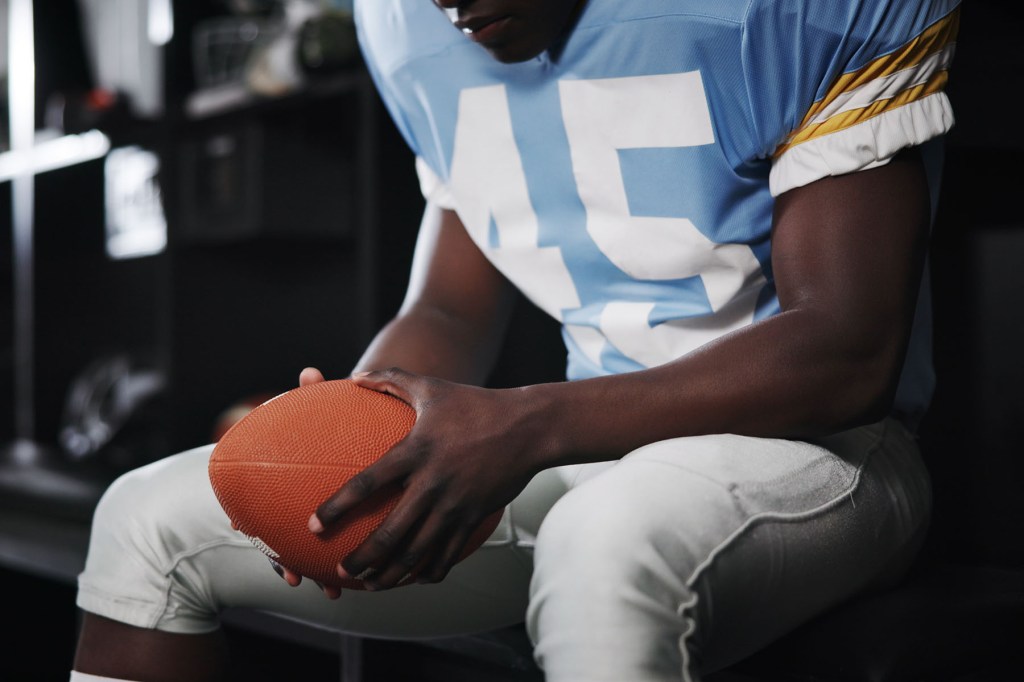
A player with a ball his hand sits in a locker room. (Jacob Wackerhausen/Getty Images)
Unlike men’s leagues, women’s leagues are more accepting of LGBTQ+ players. Billie Jean King, Brittney Griner and Abby Wambach are some of the many women who have thrived while competing as openly gay athletes.
Homophobia is more common among men. And in the locker room, it isn’t always easy to spot, as it often masks itself in homoeroticism.
“Two male athletes will kiss each other on the lips. And that’s considered to be love and appreciation that you scored that big goal. ‘I’m gonna kiss you and it’s not at all viewed to be perceived to be gay and the grabbing of the bums or the testicle area.’ This idea of showering together, slapping towels, that’s all considered to be like part of men’s sport,” says Weaving. “So it’s this idea where players can be as ‘gay’ as they want and in the context of the field or the locker room, they’re not perceived to be gay. But if they were to act that way outside of that sporting context, then they’re considered to be.”
Collins says this gender divide may be because of sexism and toxic masculinity. This kind of performative homoeroticism is only socially acceptable because it’s understood to be ironic—a joke that relies on not actually being gay. When the behavior slips beyond the bounds of “just joking,” it exposes an undercurrent of homophobia masked as camaraderie.
The financial cost of coming out: something to gain or lose?
Beyond all these pressures lies a monetary component for athletes who are considering opening the closet door while still in uniform. Cyd Zeigler, the cofounder of Outsports, wrote in a 2024 article that he knows “for a fact that agents have told gay athletes to stay in the closet” and that his “best answer has pointed to the agents and managers whose livelihoods depend on athletes maximizing their earning potential in just a few years.”
Weaving agrees. “The general managers and the owners have more traditionally homophobic, sexist thinking. They believe [LGBTQ+ players] will harm viewership,” she says. “It’s still taboo where athletes fear repercussions, predominantly, around sponsorships.”
The fear of losing out on money may be misguided. The first day Jason Collins’ number 98 jersey became available on the NBA website, one year after he came out, it was the top seller of all active NBA players. Carl Nassib’s jersey became a top seller on the NFL’s official online marketplace when he came out in 2021. And Michael Sam, the first gay NFL player, had the second-highest selling jersey in his 2014 rookie class of more than 250 draftees.
The Trump effect on the last closet
Perhaps the biggest factor keeping men in the closet is America’s current political climate, where the Trump administration and corporate America have abandoned DEI and so-called “woke” initiatives.
“The Trump administration asks districts to sign attestations to say that they’re not going to do DEI work in schools. That could be a pride flag hanging in the classroom,” says Nicodemo. “If you’re not creating an inclusive environment for these kids, then these kids are never going to feel comfortable coming out.”
What can be done?
As all these factors create a challenging environment for men to feel safe coming out in sports.
Collins says what could move the needle the most is an increase in role models who will make young athletes feel like they’re competing in a safe environment. “It definitely got to very dark, lonely places because I felt like I was going through this alone,” he says. “When I was younger, I was constantly looking for those role models, of people who have sort of been down this path,” he says.
Weaving agrees and says that a lack of LGBTQ-inclusive coaches can be more than just a deterrent for student-athletes seeking to grow their career.
“For many children, it doesn’t only make things uncomfortable, it can push them out of sports altogether,” she says. “Coaches play a big role. Youth sport is the starting point. If you can create positive environments, inclusive cultures at that level, it continues and helps to shift the pro culture.”
Collins remains hopeful that there will be more visibility of gay men in professional sports but underscores the need for role models to step up.
“If you’re a coach or if you’re an athletic director or even a headmaster out of school, you have to seek out help. You have to bring other organizations who have expertise. And it can be as simple as a 30- to 60-minute conversation, but at least you’re laying the groundwork down for educating those players, educating those athletes,” says Collins, a two-time NBA championship finalist who married his partner last month.
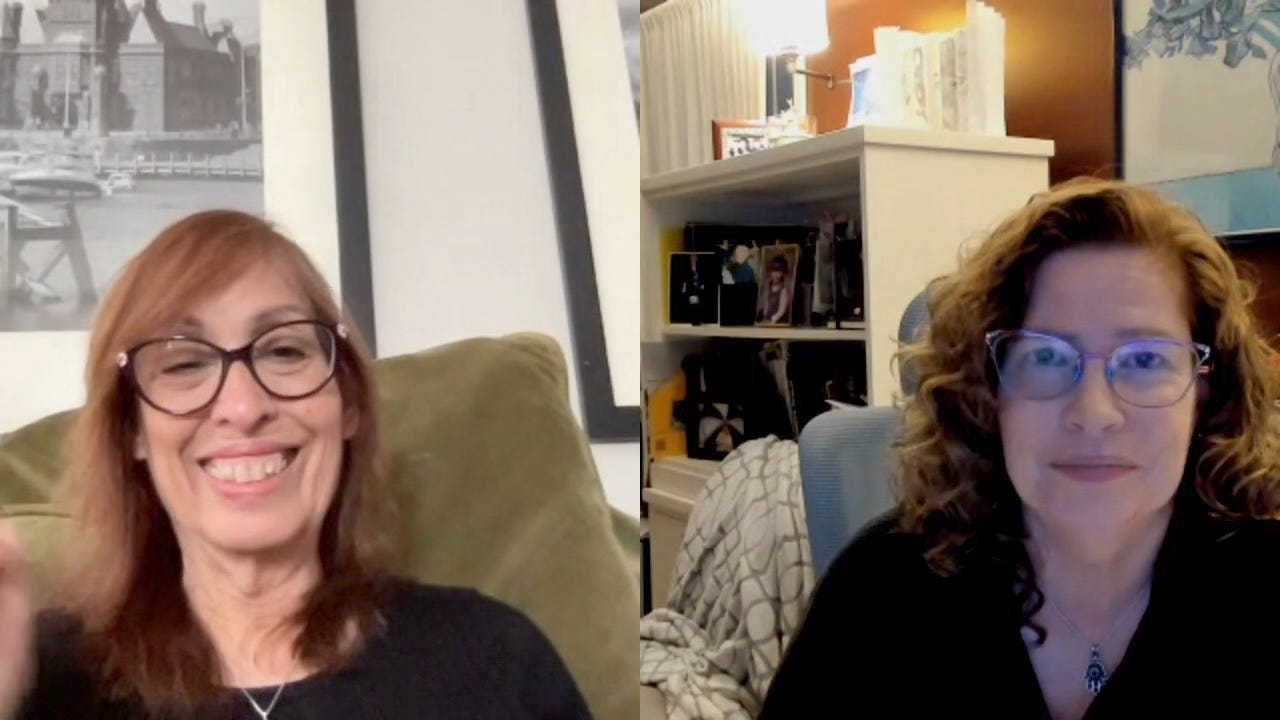
We did not record a podcast last week because Donna was traveling to Austin, where her family was celebrating Fourth of July AND the arrival of a new baby (her grand-niece!).
She expected hot, humid weather. What she got was four days of torrential rain, and the specter of over one hundred deaths from flooding in the nearby hill counties – including children at a sleep away camp that was overcome by the deluge.
One week later, this tragedy is ongoing. People are wondering how much DOGE’s cuts to the National Weather Service and NOAA factored into it. Journalist Marisa Kabas has reported that as of Monday, only 86 FEMA employees were on the ground in Texas (they usually deploy hundreds of people to disaster zones like this). “We are doing a lot less than normal,” a FEMA staffer told her.
No shit.
In the meantime, $450 million from FEMA’s budget has been allocated to that concentration camp in the swamps of Florida. And Trump’s big, ugly budget bill allocates billions to expand ICE and build more “detention centers” throughout the country.
ICE continues to terrorize immigrant communities, kidnapping law-abiding parents, gardeners, day laborers, and others who just happen to have brown skin (including US citizens).Donna returned home to Los Angeles in time for a show of military cosplay in MacArthur Park. No one got hurt in that one – but it felt like a dress rehearsal for something worse.
We talked about that and more in this week’s podcast.
We are living through history and it really sucks. Aliza says that the best way to deal with the continual onslaught of terrible events is to DO something. Anything. Volunteer in the community. Participate in events. Write postcards for candidates, donate to good causes.
And allow yourself the down time you need to muster up the energy to do it again.
We talked about some of the everyday heroes who are helping us all muster through this.
Like Joshua Aaron, the developer of the ICEBlock app that alerts people of ICE activity in their area. (Currently just for iPhones; we are anxiously awaiting news that this app will become available to Android users.)
The ACLU has done heroic work for over a century. After recording this week’s podcast, we were dismayed to learn that their Mobile Justice app Aliza has relied upon for years is no longer available.
To ensure compliance with a growing number of consumer privacy laws and the ACLU’s own privacy policies and to minimize risk with surveillance technologies currently used by law enforcement, the national office has made the decision not to renew our contract with Quadrant 2, the vendor behind Mobile Justice, and shut down the app on February 28, 2025.
But the ACLU is still a source of valuable information. Here are a couple of pages that you may want to bookmark:
There are things you can do as a bystander, too. This Yahoo article talks about New York City, but much of it applies anywhere in the U.S. It’s completely legal to film an ICE encounter, and the article has great suggestions for how to narrate and what details to include. There is advice on how your video can help, but it’s also important not to post your videos online without the consent of the person being detained.
The National Immigrant Justice Center is just one of many organizations with so much information on how to handle encounters with ICE or DHS, whether you are the target or a bystander.
The coalition of anti-authoritarian groups that has risen since the start of this regime continue to organize. The next big nationwide gathering is “Good Trouble Lives On,” which will be held in honor of the late John Lewis, around the July 17 anniversary of his death. Find an event near you here.
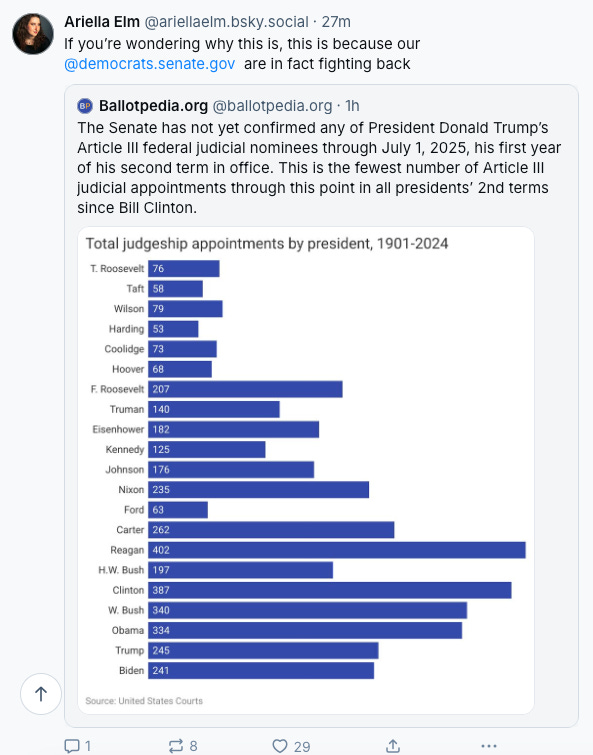
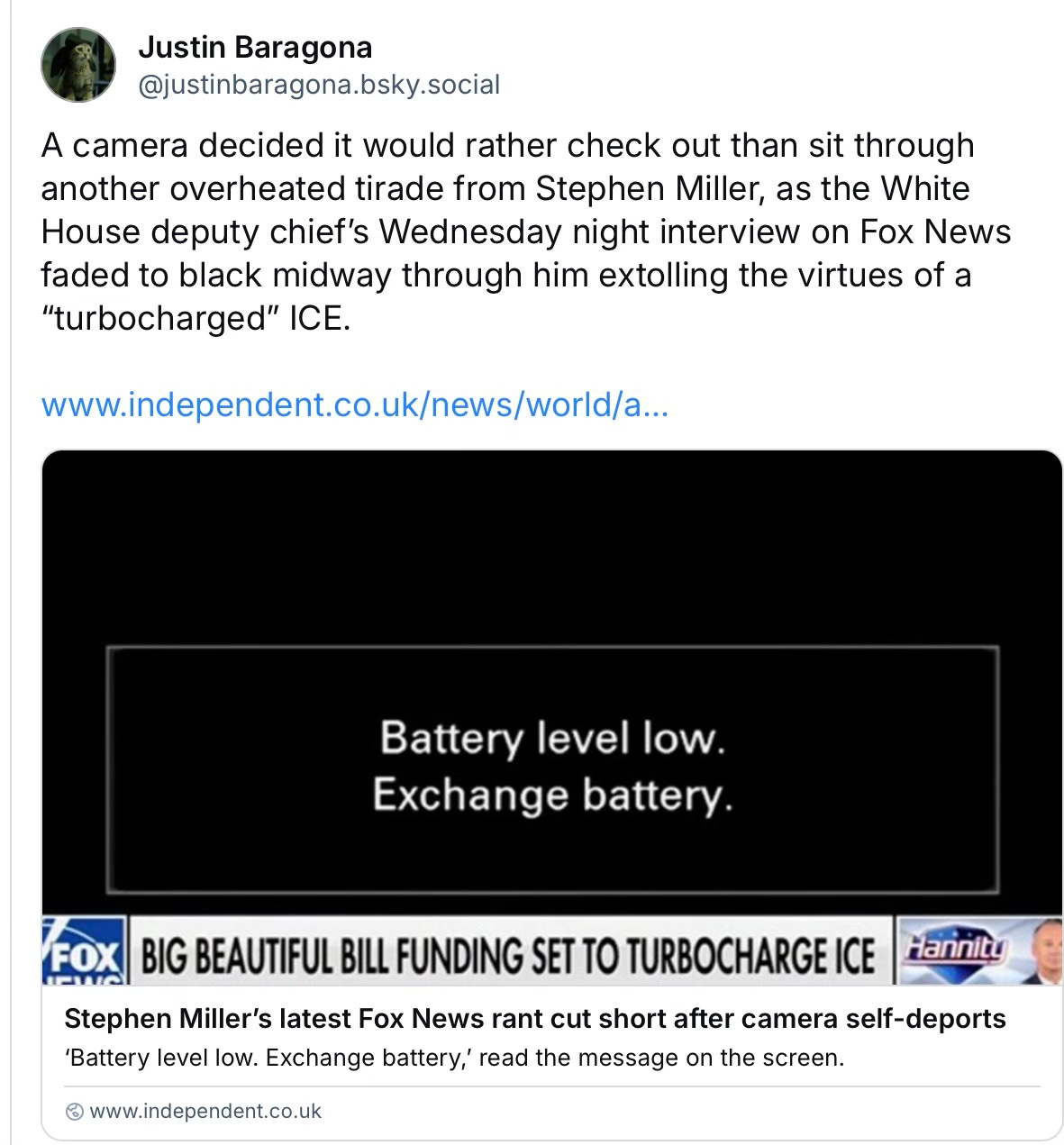
And in case you’re one of those “DO SOMETHING” people who love to bash Democrats, remember that they ARE doing something. A LOT. If you want to know what, you should follow Ariella Elm on any of the socials. She makes posts like the ones below, and daily posts like this one that list the wins for democracy and actions all over the country that are helping stem the tide of fascism, and we need to thank and elevate these soldiers for democracy.
18,000 individual donors, Instagram and TikTok views have kept Deja Foxx — a once long-shot Gen Z candidate — competitive in the race for a congressional seat in Arizona.
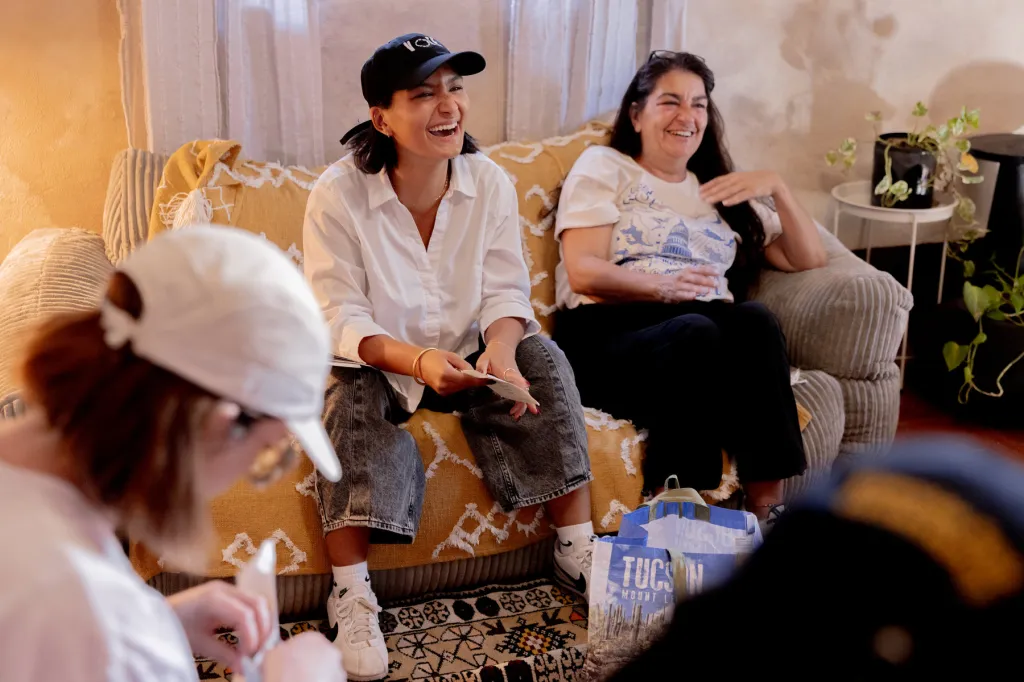
TUCSON, ARIZ. — On a Saturday afternoon, Deja Foxx is staging a TikTok Live in her living room. A phone tripod is set up in front of her kitchen table. The frame is centered on a slouchy sofa against an adobe wall, where a chile ristra hangs on one side.
“All right, everybody, take your seats,” she tells the mix of young volunteers, family members and campaign staff who are gathered to help her. “You have some really great mail to open, and I’m so excited because usually it’s just me and my mom that do this.”
She goes live and takes a seat next to her mom on the couch.
One volunteer reads a letter from a 19-year-old named Henry from California: “Even though I can’t vote for you, I adore your campaign,” he wrote. “We need more young leaders and new, fresh ideas from us, Gen Z. As someone who grew up on MediCal, and free public school lunch, who currently is uninsured, I enjoy your background and fighting for us.”
Another volunteer read a note from 20-year-old Julie, who wrote that while she’s been frustrated and overwhelmed by the state of politics, following Foxx’s campaign gave her hope. “I’ve been writing to my officials, but wanted to write something positive for a change. Keep doing what you’re doing.”
Other letter writers included a 22-year-old activist who started organizing after the Parkland shooting, a college student in Phoenix who offered to work for Foxx’s political office in the future, a 23-year-old from Chicago who started following her social media years ago, a North Carolina dad of a daughter moving to Arizona, and a Kentucky woman worried about Medicaid coverage. Volunteers spent 30 minutes reading that day’s mail. During the weekly segment, the audience is usually in the thousands.
Deja Foxx opens mail from her campaign post office box during a TikTok LIVE with her mother, Lisa Foxx, and close friends at her home in Tucson, Arizona. (Courtney Pedroza for The 19th)
Most of the notes included a donation, with the amounts ranging from $20 to $2,000. By the end of the read out Foxx had raised $4,000, mostly from people located outside Arizona. Just two days before, she announced she hit $500,000 in campaign donations, raised through 18,000 individual donors.
Just two months ago, Foxx wrote on Substack about the difficulties of running her campaign for Congress as a Gen Z candidate. She made a plea directly to her online followers: “Our biggest challenge and the only one that really matters: You haven’t invested in us yet.”
At the time, a slow trickle of donations was keeping afloat her campaign to fill the seat left by U.S. Rep Raúl Grijalva, who represented the southern Arizona district for over 20 years.
Shortly after the lawmaker’s death in March, his daughter Adelita Grijalva — who has served for decades in local politics on Tucson’s school board and more recently on the Pima County Board of Supervisors — tossed her hat in the ring for the Democratic primary. Then came the endorsements: Arizona U.S. Sens. Mark Kelly and Ruben Gallego, and progressive politicians like Bernie Sanders and Alexandria Ocasio-Cortez. The winner of that primary, which takes place July 15 and includes former state Rep. Daniel Hernandez, will almost certainly go on to win the September special election in this solidly Democratic district.
Foxx announced that she would take on Grijalva in early April. Most of her short political life — at 25, she would be the youngest woman elected to Congress — has focused on reproductive rights. She served on the board of Planned Parenthood in Arizona at age 17, worked in Tucson health clinics as a sex educator in high school, and more recently worked on the Prop 139 Ballot Initiative campaign in 2024, which enshrined the right to abortion in the state’s constitution.
If we want to win in 2028, I promise you that it is going to require electing leaders in this party who can be effective messengers.”Deja Foxx
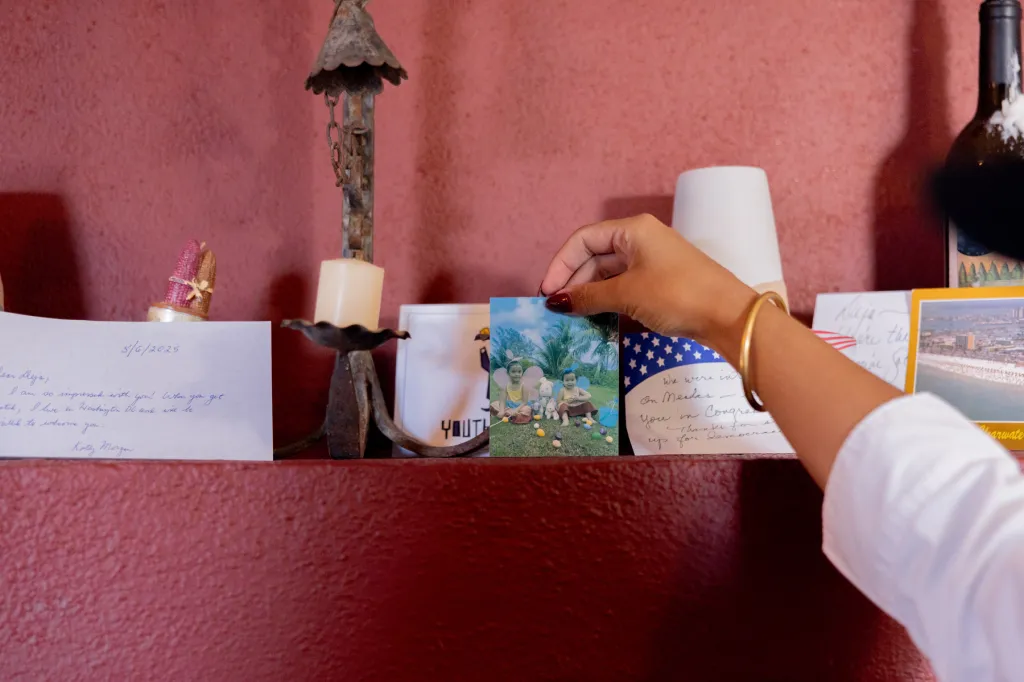
Deja Foxx reaches for mail she received from her campaign post office box on Saturday, June 21, 2025, at her home in Tucson, Arizona. (Courtney Pedroza for The 19th)
But while Foxx doesn’t have the backing of “the establishment,” as she refers to it, or the name recognition of Grijalva, she’s created her own buzz by using her social media platforms to speak directly to her generation. Over the past month, her stories have been viewed almost 30 million times on TikTok, Facebook and Instagram. She also has thousands of followers on Substack. That support and the donations that followed afforded her television advertisements, something that was out of reach when she started.
Her social media savvy has allowed her to bypass the need for big donors, build her own following, and capitalize on national support that’s percolated from the ground up. Along the way she’s making the argument that her social media skills aren’t just part of a campaign strategy, but necessary to communicate the politics of the party as the electorate grows younger and more disillusioned.
“We saw people in the party, in the traditional media, wringing their hands, ‘How did we lose young people in this last election? Why did they move toward apathy and the other side? … And it’s because we’re failing to compete in social media and new media spaces,” Foxx said. “If we want to win in 2028, I promise you that it is going to require electing leaders in this party who can be effective messengers.”
Foxx learned the power of a viral moment when she was a 16-year-old activist for Planned Parenthood. At a town hall in 2017, she asked former Arizona Sen. Jeff Flake (R) why he would deny her the American dream by voting against funding that made birth control accessible to people who grew up in poverty. Foxx, who was insured through Medicaid at the time, got her birth control from Planned Parenthood.
A clip of the exchange went viral. “I woke up the next day and millions had seen the video,” she said. It’s a moment that changed how she thought about activism. The fact that millions of people watched her on their phones and computers put her on equal footing in public discourse with the United States senator, she said. “As a 16-year-old girl working at a gas station … that is remarkable.”
In the nine years since, the political world has grown to recognize the necessity of social media in campaigns, and politicians have turned to Foxx for her expertise. At the same time she was becoming a prominent reproductive rights activist, she used Instagram to build community among her peers through her organization Gen Z Girl Gang. She worked as an influencer and digital strategist for the Kamala Harris campaign in 2019 and later as a social media director at a political action committee. In 2024, she was invited to speak at the Democratic National Convention in support of Harris as an activist and content creator.
But it’s in her own run for Congress where she has been able to test these communication strategies herself. On her TikTok and Instagram accounts, soundbites from her debates have racked up millions of views. More personal reels, like when she surprised her mom with her first batch of campaign literature, have gone viral. She’s embraced being interviewed by independent journalists with followings on places like Substack and YouTube.
She’s using communication styles and platforms that are meeting people where they’re at.”Jessica Maddox
“She’s using communication styles and platforms that are meeting people where they’re at. That style may turn off some older voters, but it’s going to excite younger voters who are particularly disaffected or disenfranchised or disheartened by American politics and even the Democratic party,” said Jessica Maddox, an associate professor of digital media at the University of Alabama. “I’ve been particularly impressed with her TikTok presence, because it feels very authentic.”
That authenticity is the main ingredient in connecting with young voters online, experts say. Maddox and others pointed to the success of Zohran Mamdani’s mayoral campaign in New York as an example of how young politicians are tapping into social media to drum up real support at the polls. Both candidates utilized platforms to engage with people, like Gen Z, who are likely to sit out primaries where voters tend to be older.
The strategy puts lesser known candidates on a more equal playing field, allowing them to subvert the traditional hierarchies that fuel campaigns. “There’s always been a tight relationship between legacy media and politics, and social media kind of upends that,” Maddox said. “[Foxx] can kind of bypass more traditional outlets and get the message out herself.”
Social media has also turned a local race into a national fundraiser, which has helped her stay competitive. Candidates like Grijalva and Hernandez have benefited from deeper donor pockets, and outside support from political action committees. By early May, both candidates had already raised hundreds of thousands of dollars, according to the Arizona Republic. Their latest campaign finance numbers are expected to be released soon. Foxx announced she had hit $600,000 in donations at the end of June.
“It’s an interesting social media element that someone these days could have supporters kind of all over the country, even though they’re running for a very specific seat,” said Kathryn Coduto, a professor of media science at Boston University.
While there is a scarcity of polls in the race, a recent one commissioned by Foxx’s campaign shows her name recognition has risen significantly since May, when half of likely voters hadn’t heard of her. And, on Wednesday, David Hogg’s political action committee announced it would be endorsing her in the race. Hogg, who became famous for his activism after the Parkland mass shooting, now runs a political organization called Leaders We Deserve, aimed at building generational change for Democrats.
“If we replace one of the oldest members of Congress with the youngest — Deja is just 25 years old — we could send an incredibly strong message about which direction the Democratic Party is heading in, and show people how we are dramatically changing to meet this moment,” Hogg said in an Instagram Reel.
While Foxx has worked as an influencer in the past, now that she’s running for office that label has been used to undercut her years of political work and activism. At her first debate, Foxx also pointed out that some of her opponents have belittled her influencer experience. In recent news articles, people associated with Grijalva’s campaign have questioned whether Foxx’s national reach is the same as in-district community support.
The label “influencer” carries a lot of baggage, experts say. It’s still seen as superficial or trivial despite its power in activism and politics. It’s also another way of writing off young people, particularly women, as unserious.
“It’s seen as like little girls playing instead of actually utilizing this tool to accomplish something and talk to constituents,” Coduto said.
Deja Foxx poses for a portrait on at her home in Tucson, Arizona. (Courtney Pedroza for The 19th)
Jade Larson, who wrote her doctoral dissertation on political fandom and social media, said it’s also not surprising that there is such a stigma around being a politician-influencer.
“Every time media is used in a new way in politics, it’s this scandalous thing,” she said. “You can track it all the way back to Bill Clinton going on the ‘Late Night Show’ and playing saxophone, to Obama starting POTUS on Twitter, to Trump making his own social media [network]. It’s always something that’s scandalous, and people push back against it until it kind of becomes the mainstream and the norm.”
Arguably it is the mainstream now. The power of social media that Foxx tapped into nearly a decade ago has only grown more influential in politics and the media — two industries that are closely intertwined. A report from Pew Research Center found that over half of U.S. adults get some of their news from social media, with women and Democrats making up greater regular news consumers on apps like TikTok and Instagram. These users also skew younger, with those between the ages of 18 to 40 making up the bulk of social media news consumers. In a separate poll by Pew Research, 48 percent of TikTok users ages 18 to 29 say keeping up with politics is one of the reasons they are on the platform.
“A whole lot of congresspeople can give a very solid MSNBC interview,” Foxx said. But as someone who interviewed them as a content creator at the State of the Union, “I’m telling you that when they are put in front of an iPhone, there are so many members that fail to communicate. They don’t think the way that our generation thinks. They fail to understand sound bites and algorithms, and youth or even meme culture.”
At the same time that these social media strategies are taking off, voting power is also starting to shift to the very people that use them. Soon, Gen Z and Millennials will have just as much political sway as Gen X and the Baby Boomers — if they go out and vote, Coduto said.
“If you can cultivate enough excitement and you can find a way to really break through and get people to the polls by using social media, then I think it’s going to be an unstoppable strategy.”
Feeling overwhelmed by the news? The 19th is considering new ways to keep you informed. But we need your input. Fill out this quick survey to share your thoughts.
July 11, 1905 The Niagara Movement, precursor of the National Association for the Advancement of Colored People (NAACP), was formed in Buffalo, New York. Meeting at the home of Mary Burnett Talbert were W.E.B. DuBois, John Hope and 30 others who rejected the accommodationist approach of Booker T. Washington (“The wisest among my race understand that the agitation of questions of social equality is the extremest folly . . . .”) Founders of The Niagara Movement at Niagara Falls The Niagara Movement’s manifesto was, in the words of DuBois, “We want full manhood suffrage and we want it now . . . We are men! We want to be treated as men. And we shall win.“ The Niagara Movement and its founding principles
July 11, 1968 The American Indian Movement (AIM) was founded in Minneapolis, Minnesota, by George Mitchell, Dennis Banks, Clyde Bellecourt and 200 others. They gathered to organize in order to deal with widespread and persistent poverty among native Americans, and unjust treatment from all levels of government. American Indian Movement background
July 11, 1969 The federal appeals court in Boston reversed the convictions of Dr. Benjamin Spock and Michael Ferber who had been found guilty of conspiring to counsel evasion of the military draft in 1968. The judges considered their activities opposing the Vietnam War covered under the 1st Amendment right to free speech. Dr. Benjamin Spock and Dr. Martin Luther King Jr. Read “A Call to Resist Illegitimate Authority” co-authored by Dr. Spock (1967)
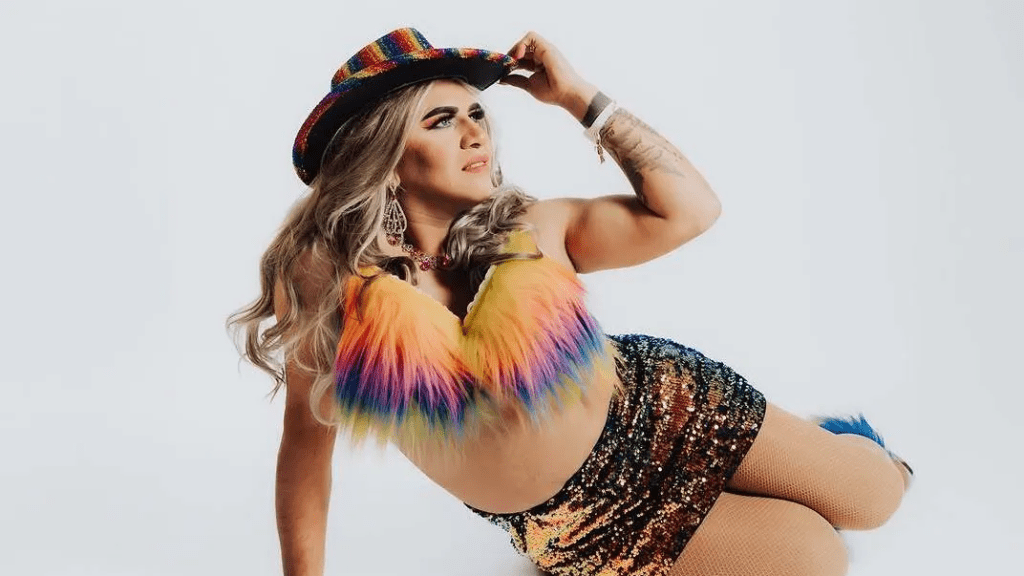
Community activists in San Francisco are rallying to support Hilary Rivers, an immigrant drag queen who was arrested by ICE agents after an asylum hearing nearly two weeks ago — one of the latest LGBTQ+ victims of the Trump administration’s campaign for mass deportations.
Rivers fled his home in Guatemala due to “traumatic and severe” persecution for being gay, as the San Francisco Chronicle reported last week. (His legal name is not being widely reported to protect his confidentiality, advocates told the nonprofit news platform 48Hills.org shortly following the drag performer’s arrest.) On June 26, Rivers attended a scheduled asylum hearing, where the government’s motion to dismiss his case was denied; Rivers was then arrested by ICE agents as he left the courtroom. That combination — in which the government attempts to dismiss an asylum case, then immediately arrests the asylum seeker for deportation — has become an increasingly common tactic for U.S. immigration police in the past several months, and one that is sometimes conducted with cooperation from courthouses themselves. (snip-MORE)
Transgender pilot Jo Ellis was falsely accused of killing 67 people earlier this year — and unfortunately, she isn’t alone: right-wing hoaxers have blamed trans people for at least 12 incidents of violent death in the U.S. since 2022, according to a new analysis in Wired.
Ellis, a part-time pilot in the Virginia Army National Guard, filed suit against right wing influencer Matt Wallace in April, after Wallace shared false claims that Ellis was responsible for the January helicopter crash at Ronald Reagan International Airport that killed dozens. The crash was later determined to be an accident caused by years of poor safety practices at the airport. But Ellis soon found herself on the receiving end of right-wing hatred thanks in part to people like Wallace, who posted on Elon Musk’s X platform that the crash “may have been another trans terror attack.”
Wallace has since deleted the post about Ellis, as Wired noted. But the key word in that post was “another.” In the past two years, right-wing disinformation accounts — such as Chaya Raichik’s “Libs of TikTok” — have spread similar false accusations against trans people on at least a dozen occasions, according to Wired’s analysis of news reports across that period. (snip-MORE)









 Scottie's Playtime