An Uncloseted Media investigation finds that Alberta’s government is using many of the same tactics that were used to pass anti-LGBTQ bills in the Deep South.
Jay, a 24-year-old trans man who immigrated from East Africa to Canada in 2016, used to think of Canada as a safe place for queer people. But with Alberta—arguably Canada’s most conservative province—attempting to pass the country’s first gender-affirming care ban, he doesn’t feel this way anymore. “It’s really heartbreaking as a person who, back home, would not be able to live the way that I do, seeing the same rights being stripped away from folks here,” says Jay, who asked to go by first name because he’s not out to everyone in his life.
Since September, when Alberta’s anti-trans sports ban and pronoun policy officially went into effect, Jay has felt his province’s values inch closer to those of the U.S.
“I’m constantly thinking maybe I should leave this province. It’s not very safe for me here,” he told Uncloseted Media. “It’s starting to feel like a foreign place.”
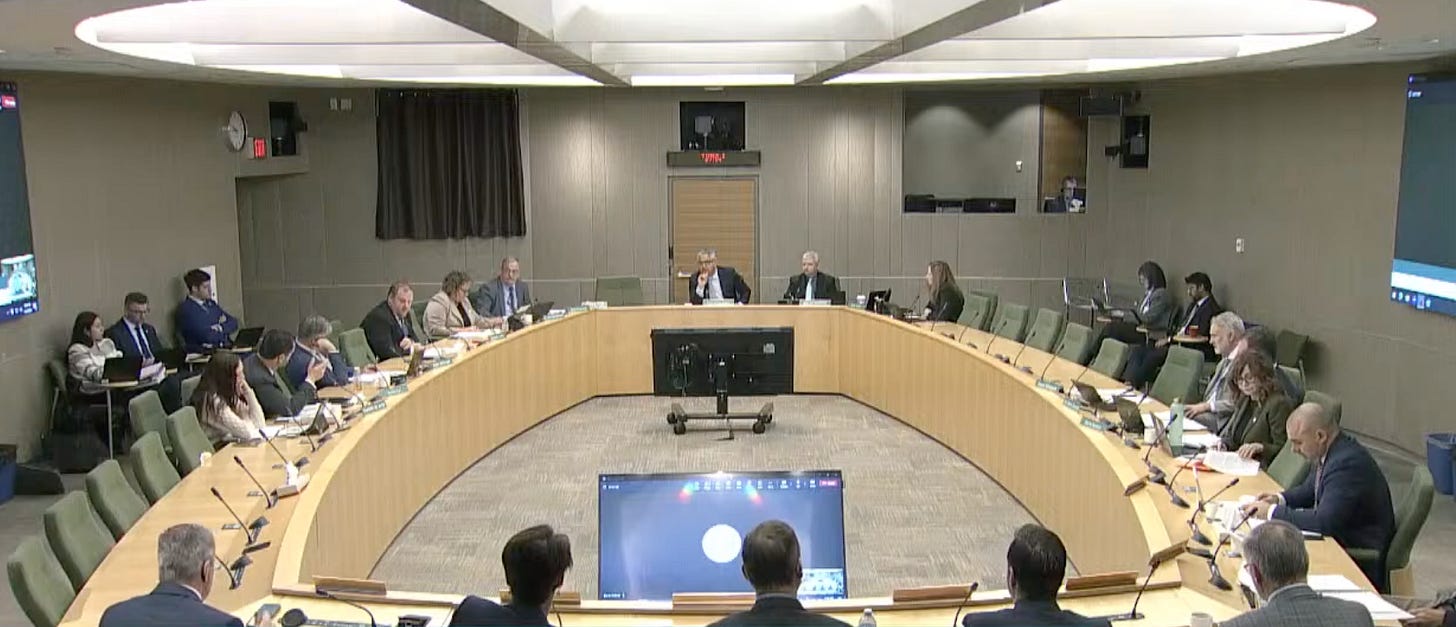
Alberta’s anti-trans policy push started making headlines last year. On Dec. 3, 2024, more than 80 Albertan politicians assembled in the province’s capital, Edmonton, to debate the Health Statutes Amendment Act, also known as Bill 26. The act—which is likely to go into effect—would impose the strictest ban on gender-affirming care for minors that Canada has ever seen.
Conservative Adriana LaGrange, who in 2019 introduced an amended act that made it legal for parents to be notified if their child joins a gay-straight alliance, sponsored the bill. During the assembly, LaGrange told her colleagues a ban “would preserve choice so that [minors] can make adult decisions in the future,” and that while “Albertans know that our government is committed to safeguarding individuals’ rights … there are times when public health measures must be taken to keep our communities safe.”
As the legislative debate continued, Sarah Hoffman, a member of the Legislative Assembly for the New Democratic Party (NDP), accused Alberta Premier Danielle Smith and those closest to her of “playing political games that will have potentially deadly consequences for teens.” And Peggy Wright, another member of the NDP, referenced American trans kids whose lives have been upended from similar state bans: “Kids in the United States shouldn’t have to travel away from home to get the health care that they deserve, and neither should the kids that I know that are already thinking about what it is that they’re going to do once this [Canadian] legislation is passed. … As a mom, as a grandma, I am asking that every single person in this House think about those kids in your life. What kind of a future do you want for them?”
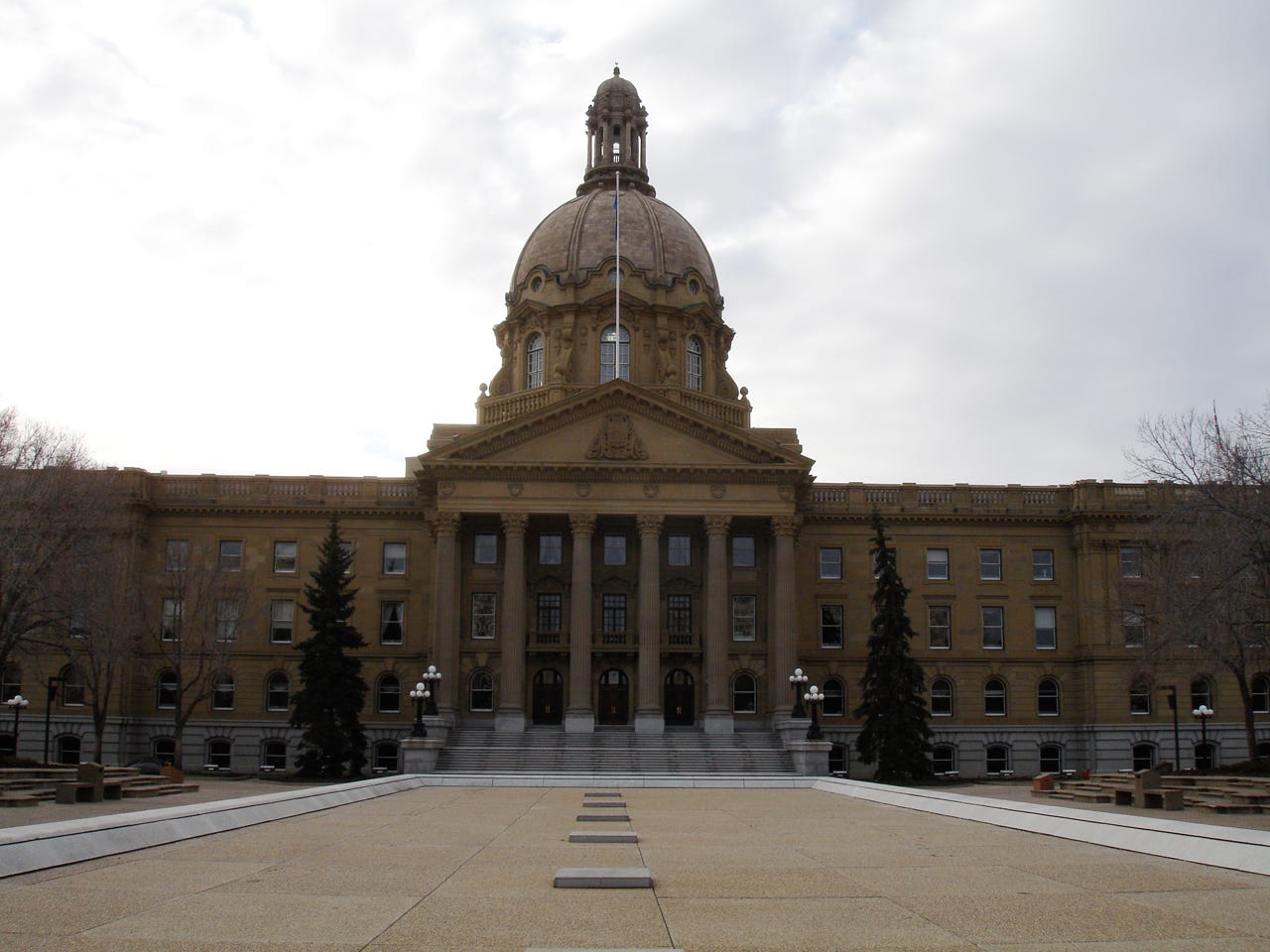
Alberta Legislature, facing the front entrance. Photo by Daryl Mitchell.
After this assembly, Alberta’s plans for the ban were stalled when families of transgender children and LGBTQ groups took legal action against the province. But on Nov. 17, Premier Smith announced her government will attempt to nullify this litigation and enact the ban by using a constitutional provision called the notwithstanding clause. If it goes through, this clause—which was used inAlberta in 2000 to push through legislation opposing gay marriage—will override efforts to stop the ban for up to five years.
“I’m not aware, and I have looked into it, of any other constitutional democracy in the world that has a similar provision,” says Bennett Jensen, director of legal at Egale Canada, one of the groups that pursued legal action against Alberta.
“[Smith] has been following in the steps of some of the worst actions of lawmakers in the United States,” he says. “It’s really important, especially for Americans, to understand that with the exception of the pronoun component of this, all these other laws are new in Canada. No government has ever acted to ban gender-affirming care for minors before.”
Following in Alabama’s Footsteps
Jensen sees a connection between Alberta’s anti-trans policy and that of the United States, where the American Civil Liberties Union (ACLU) is tracking over 600 anti-LGBTQ bills. He points to the provincial government’s citation of an Alabama ban, known as the Vulnerable Child Compassion and Protection Act, that prohibits the prescription of hormones and puberty blockers for minors, as well as gender-affirming surgeries. This legislation also establishes criminal penalties for doctors who violate the ban and requires parents to be notified if their child wishes to change their name or pronouns in school.
The Alberta government submitted an affidavit to the provincial court citing Alabama’s ban. This included the Alabama bill as well as a written statement by Clay Crenshaw, the state’s chief deputy attorney general.
Crenshaw spent nearly $1 million to defend the Alabama ban and told legislators he hired “lawyers from the Cooper & Kirk law firm up in D.C. to help [them] with the transgender litigation.” This law firm is known for legislating against LGBTQ rights and led the defense when Californians challenged their state’s decision to prohibit same-sex marriage.
Alberta’s ban mirrors Alabama’s in that it prohibits surgeries, puberty blockers and hormone replacement therapy for minors, though—unlike Alabama—they would allow youth who are already receiving gender-affirming care to continue receiving it.
“[The Alberta government] relied on information from the government of Alabama in the context of its ban on gender-affirming care,” says Jensen. “So the government seems to be deeply informed by the actions of American lawmakers, and that is deeply troubling.”
A Shared Expert Witness
Alberta also hired James Cantor, one of the expert witnesses that Alabama used to push its ban through. Cantor is a Canadian psychologist who has acted as an expert witness in dozens of U.S. cases on trans issues. He was first hired in 2021 by the Southern Poverty Law Center-designated anti-LGBTQ hate group Alliance Defending Freedom. The Christian legal group has advocated for laws banning sodomy, has helped overturn Roe v. Wade, and is currently arguing the Supreme Court to overturn Colorado’s conversion therapy ban.
In a 2024 interview, Cantor told Uncloseted Media that his perspective on trans rights makes him “marketable” to U.S. conservatives. He compares his testimony to Marisa Tomei’s feisty character in “My Cousin Vinny” and references “Ally McBeal” and musical comedy “Schmigadoon!” as theatrical elements involved in being an expert witness.
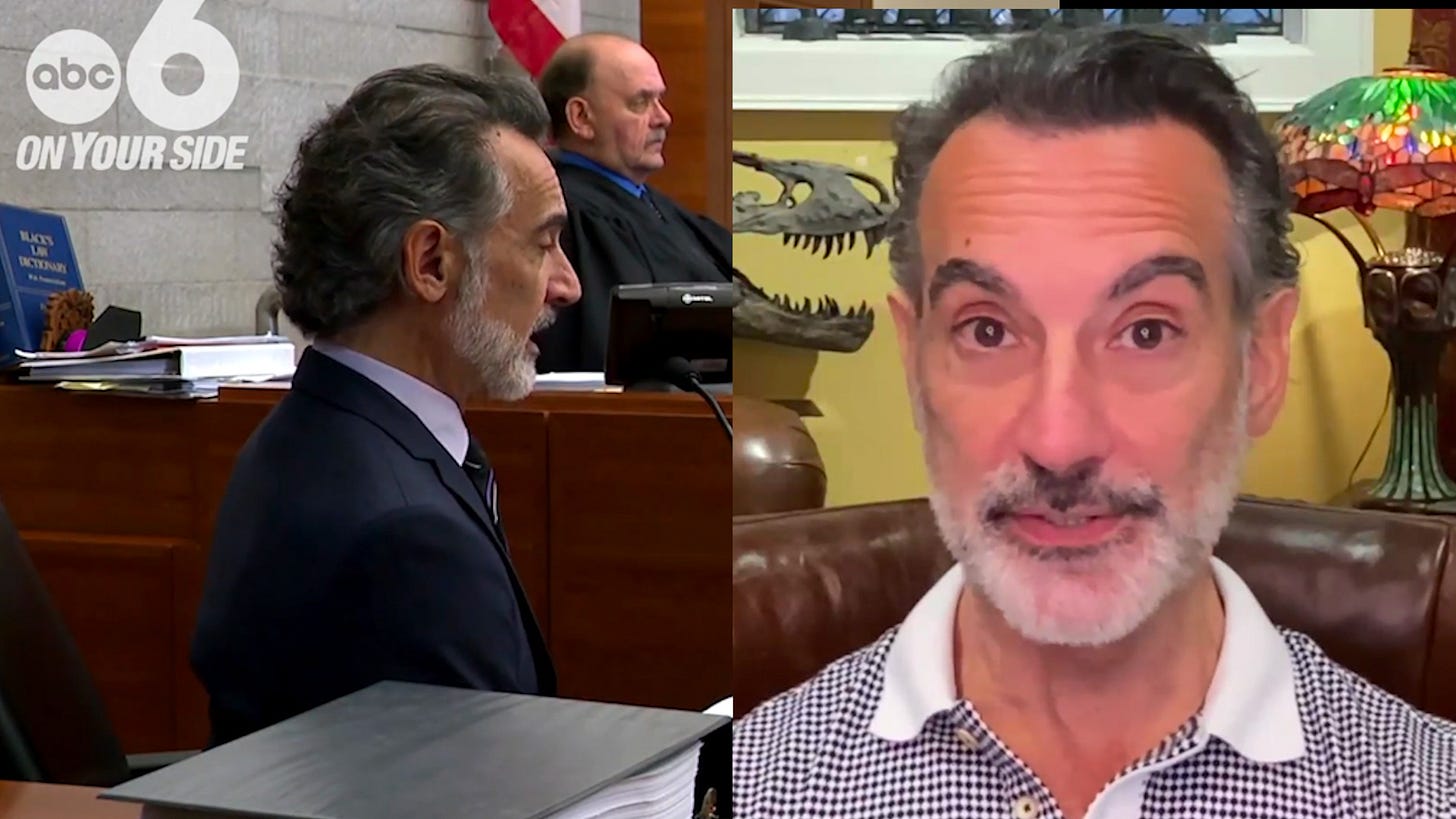
“The first time I was going in court, we were just laughing,” says Cantor. “It was just teasing about how I love being a performer on stage enjoying an audience, and here I am doing it in a courtroom. … In Ohio, there was a television camera for the news at the courtroom. The next day on social media, all I kept hearing was what a good hair day I was having.”
Cantor is cited at least 36 times throughout Alabama’s defense of its gender-affirming care ban.
In his expert witness testimony in Alberta, Cantor makes dubious claims, including that trans adults consist “primarily of biological males and only those sexually attracted to females” and that kids identifying as trans “is a distinct phenomenon that, without social transition, usually desists.”
In taking legal action against the Alberta government, Egale Canada stated in February that “Dr. Cantor’s astonishing lack of insight into the limitations of his own expertise is wholly inconsistent with the role of an expert in a court proceeding and is disqualifying in itself.” And in a West Virginia Court case where they used Cantor’s expert testimony, the ACLU argued that Cantor’s “views, which pathologize transgender people … are irrelevant, harmful, and unfit for use by the Court.”
Even in Alabama, one of America’s most conservative states, U.S. District Judge Liles C. Burke wrote in his opinion and order that he gave Cantor’s testimony as an expert witness “very little weight” after it was uncovered that he had never treated a transgender child.
Still, Alberta hired him as an expert witness.
Subscribe for LGBTQ-focused, accountability journalism.
I am an older gay guy in a long-term wonderful relationship. My spouse and I are in our 36th year together. I love politics and news. I enjoy civil discussions and have no taboo subjects. My pronouns are he / him / his and my email is Scottiestoybox@gmail.com
View all posts by Scotties Playtime

Design by Soph Holland. Photo by Jake Wright.


 Scottie's Playtime