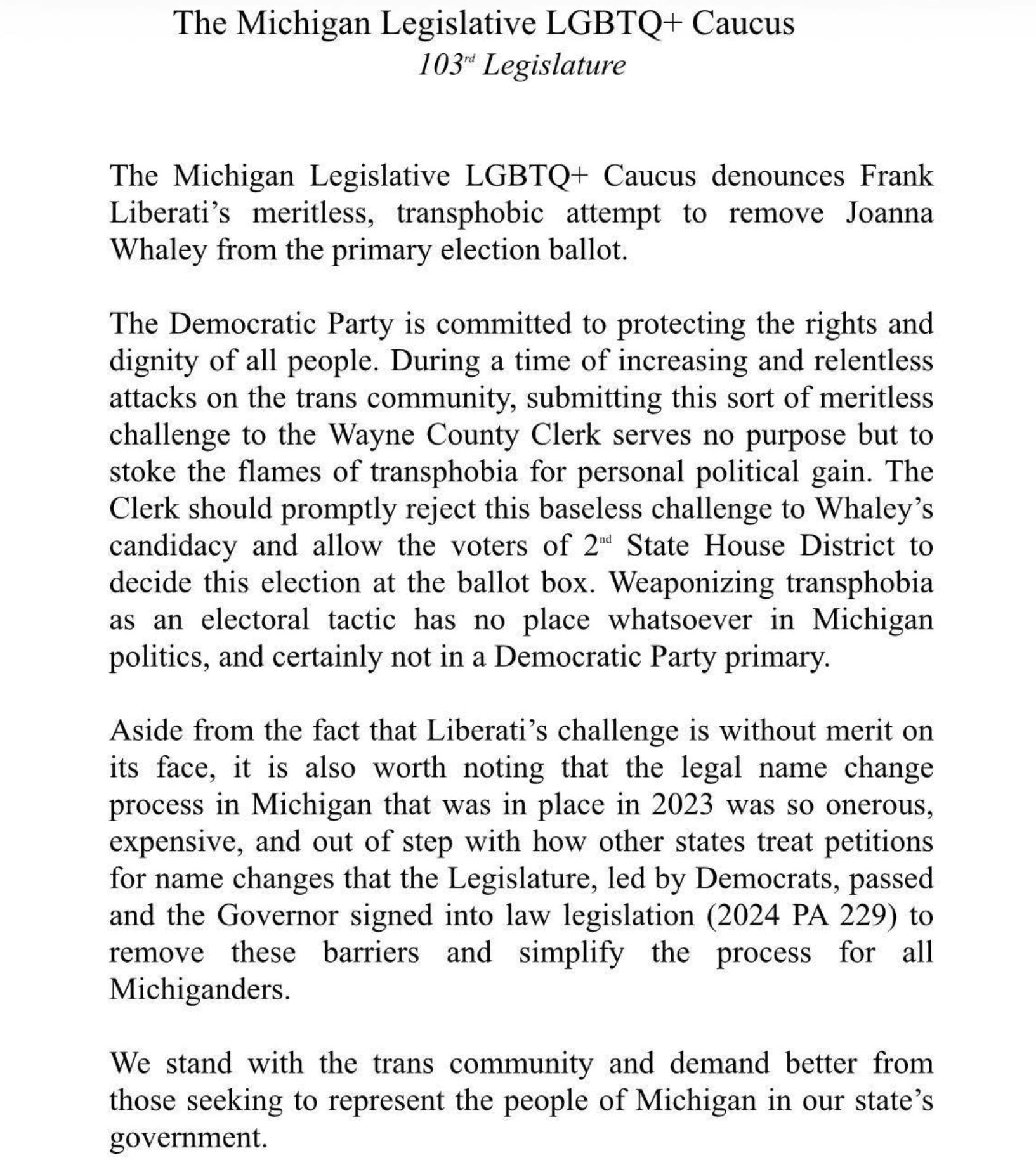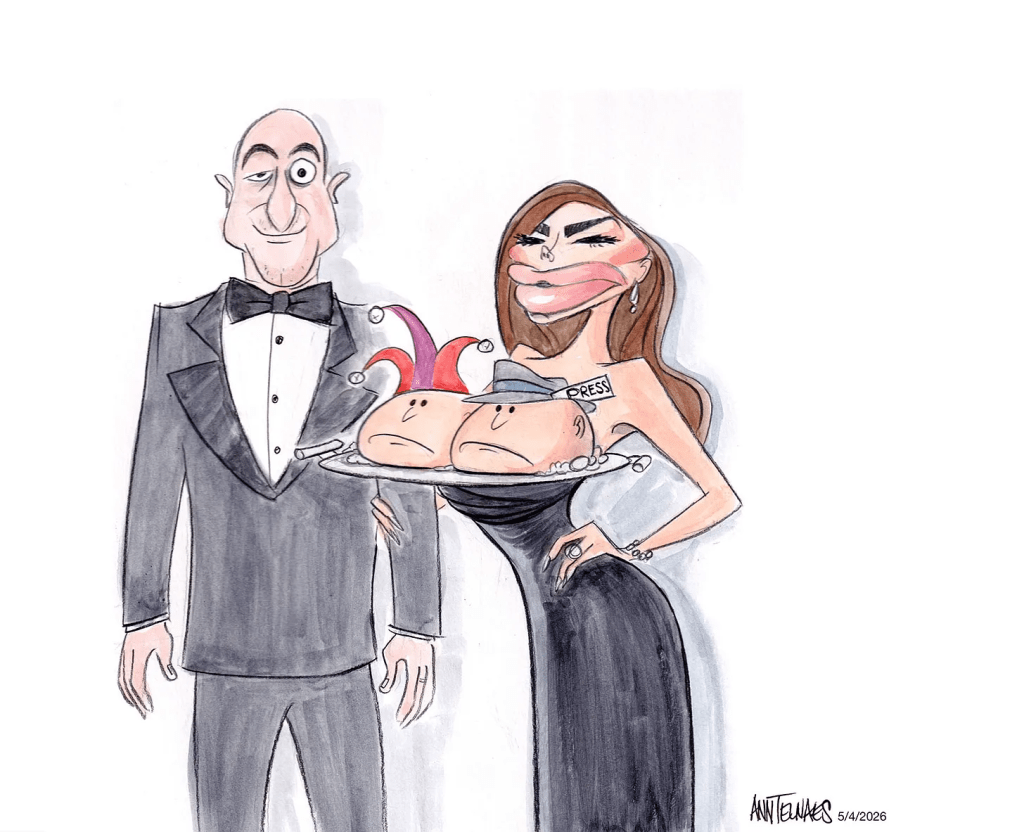
A Man Who Does Not Mansplain Women’s Issues Gives Vital Information About Abortion Law; Then, Thom Tillis Is Retiring; Finally, A Brain Cleanser

Yawn. Wednesday

https://www.gocomics.com/darksideofthehorse/2026/03/04

Your Josh Day Next Day!

Good News From Spain-

Not that the planes won’t go elsewhere, but it’s good to see other countries stand up for right instead of so very wrong.

US aircraft leave Spain after government says bases cannot be used for Iran attacks

By Reuters

  • Summary
  • Spain, US jointly operate military bases in Moron, Rota
  • US tankers head to Germany, France from Spanish bases, maps show
  • Spain says its bases will not be used for Iran attacks

MADRID, March 2 (Reuters) – Fifteen U.S. aircraft have left the Rota and Moron military bases in southern Spain since the U.S. and Israel launched weekend attacks on Iran, maps by flight tracking website FlightRadar24 showed on Monday.

Foreign Minister Jose Manuel Albares said Spain would not allow its military bases, which are jointly operated by the U.S. and Spain but under Spanish sovereignty, to be used for attacks on Iran, which Spain has condemned.

To Begin Our Afternoon, Now

and go on about our day being peaceful, in order to bring about peace. (I have a dental appt. to finish what was begun a couple of weeks ago at that dental appt. I feel all pure-white-dovey inside.)

Then And Now

Now

https://www.theguardian.com/world/live/2026/mar/02/us-israel-war-iran-live-updates-attacks-strikes-tehran-lebanon-beirut-hezbollah-dubai-latest-news

Middle East crisis liveUS-Israel war on Iran

Earlier, Donald Trump laid out US objectives, saying mission could go on for four-five weeks, adding US has ‘capability to go far longer’

From 46m ago 17.01 EST

US urges citizens to immediately depart over a dozen Middle Eastern countries

The US state department has urged Americans to immediately depart more than a dozen Middle Eastern countries amid US-Israeli strikes against Iran.

US citizens were urged to depart using commercial means from BahrainEgyptIranIraqIsrael, the [occupied] West Bank and GazaJordanKuwaitLebanonOmanQatarSaudi ArabiaSyriaUnited Arab Emirates and Yemen, according to Mora Namdar, the department’s assistant secretary for consular affairs.

Hundreds of thousands of travellers are currently stranded in the Gulf states, as the airspace over some of the world’s busiest international airports, including Dubai and Abu Dhabi, closed over the weekend.

Thousands of flights cancelled as world faces worst travel chaos since Covid crisisRead moreShare

Updated at 17.31 EST 17.44 EST

Israel says it is working to intercept new missiles launched from Iran

The Israeli military has said it has detected incoming missiles launched from Iran and its defensive systems are working to intercept the threat.Share

Updated at 17.45 EST 17.41 EST

Chris Stein

The US Senate’s Democratic minority leader Chuck Schumer said a briefing from Trump administration officials about the US war with Iran “raised many more questions than it answered”.

“Look, a whole lot of questions were asked. I found their answers completely and totally insufficient,” Schumer told reporters as he exited the meeting. He departed without taking questions.

US secretary of state Marco Rubio as well as CIA director John Ratcliffe are among those briefing Congress leaders in a classified facility in the Capitol.

A reminder that you can follow our US politics live blog for more US-focused reaction and developments:

Rubio says US ‘preemptively’ attacked Iran after learning Israel was about to strike as Democrats decry ‘Trump’s war’ – liveRead more

(snip-go to The Guardian, because they are running live, and things keep happening.)

=====

Then

https://www.theguardian.com/world/2011/feb/25/thousands-join-day-of-rage-across-middle-east?CMP=share_btn_url

Thousands join ‘day of rage’ across the Middle East

This article is more than 15 years old

 In Iraq, six killed as frustration erupts over corruption
 Yemen holds its biggest pro-democracy rally
 Egyptians demand accelerated reforms

In Yemen’s capital, Sana’a, an anti-government protester chants slogans demanding the resignation of President Ali Abdullah Saleh. The president ordered security services to protect protesters. Photograph: Muhammed Muheisen/AP

Protests erupted in cities across the Middle East and North Africa. At least six people were reported killed and dozens injured in Iraq; thousands took to the streets in the Yemeni capital, Sana’a; and Egyptians gathered in Cairo’s Tahrir Square to demand an accelerated reform programme.

Iraq

Anger over corruption and abysmal basic services erupted in a “day of rage”, with the most serious clashes in Mosul and Hawija, in the north, and Basra in the south. At least six people were killed – three in Mosul and three in Hawija – and 75 injured in clashes with security services as protesters tried to attack government buildings.

Thousands of people made their way to the city’s Tahrir Square, but soldiers had closed it off with razor wire, using percussion grenades and firing in the air in an attempt to disperse crowds.

Lina Ali, 27, told Reuters: “The education system is bad. The health system is also bad. Services are going from bad to worse.” Protesters complained of high unemployment, a shortage of drinking water and frequent power cuts.

In Basra, the city’s governor, Shaltagh Abboud, said he would resign after 18 people were wounded in skirmishes between the 4,000 protesters and state security. A curfew was imposed until 6am tomorrow. There were also clashes in Falluja and Nassiriya.

Nouri al-Maliki, the prime minister, warned demonstrators they would become victims of al-Qaida and pro-Saddam violence.

Muntadar al-Zaidi, the Iraqi journalist who threw his shoes at George Bush, was arrested in Baghdad after travelling from Beirut to take part in the Day of Rage.

Yemen

Tens of thousands of protesters in Sana’a called for an end to the 32-year reign of President Ali Abdullah Saleh. It was the biggest pro-democracy rally in Yemen’s recent history. But small, yet violent, protests have been taking place across the country since Egypt’s Hosni Mubarak resigned two weeks ago.

Local media reported 30,000 anti-government demonstrators in Sana’a and more than 100,000 nationwide. Students, tribesmen, opposition activists and young professionals flooded the streets around Sana’a University, where protesters have been camped out since Sunday. “The people want the regime to fall,” they shouted, rising from their knees after a Friday prayer to mourn the deaths of two men shot dead on Tuesday by pro-Saleh supporters. The protest was peaceful, though at times tense. Protesters want better living conditions as well as political reform.

One banner read simply: “Look at the gap between the rich and poor.”

Riot police who tried to seize an anti-government protester had to fire in the air to dispel angry students demanding his release.

A few miles away, state media were out in force to film 10,000 middle-aged men, many carrying batons, marching up and down the streets yelling: “Saleh means stability.” These government loyalists, including impoverished tribesmen bussed in from far away, have been in Sana’a’s Tahrir Square for more than a month, holding rallies for which they have been given food, drink, and the placards, and accommodated in giant beige marquees. Anti-government protesters claim the loyalists are balataj, hired thugs, but Yemeni authorities deny any connection with the armed men.

Saleh has told his security forces to protect both sets of demonstrators and prevent any further clashes between them.

Egypt

Activists returned to Tahrir Square in their thousands to demand a faster pace to reforms. They want a new cabinet to replace one that includes many figures from the Mubarak regime. According to Al Jazeera they singled out the prime minister, Ahmed Shafik, who, they said, was hand-picked by Mubarak; and they want the former president, believed to be holed up in his Sharm el-Sheikh villa, to be put on trial and held accountable for his 31 years of rule,. They also want political prisoners released.

The ruling military council has promised elections within six months. “We do not want Shafik any more, even if they shoot us with bullets,” activists chanted. “Revolution until victory, revolution against Shafik and the palace.”

Tunisia

In the centre of Tunis, tens of thousands demanded the resignation of the prime minister, Mohamed Ghannouchi, seen as an ally of the ousted president. The uprising that forced former president Zine al-Abidine Ben Ali to flee on 14 January after 23 years in power was the catalyst for regional revolt. “Shame on the government!” and “Ghannouchi step down,” they shouted. Witnesses said it was the biggest protest since Ben Ali’s departure, when demonstrations were banned. Activists also protested against the bloody crackdown by forces loyal to Libya’s Muammar Gaddafi. Thousands of Libyans have fled to Tunisia.

Jordan

In the capital, Amman, 5,000 protested, demanding political reform. “Reform has become a necessity that cannot wait,” said Sheikh Hamza Mansour, the head of the Islamic Action Front, the country’s largest opposition group, at a rally. “It’s the demand of all Jordanians,” he added. Protestors chanted: “The people want to reform the regime”, “we want a fair electoral law”, and “people want an elected government”.

Bahrain

There were tens of thousands of anti-government protesters in Manama, adding to pressure for sweeping democratic change during two weeks of demonstrations in the strategic Gulf island kingdom. At least two marches converged on Manama’s landmark Pearl Square, the focal point of the uprising – the largest show of opposition strength so far.

Security forces made no immediate attempt to halt the marchers in an apparent sign that Bahrain’s rulers do not want to risk more bloodshed and denunciations from their Western allies.

Bahrain is the first Gulf state to be thrown into turmoil by the Arab world’s wave of change. The government had declared Friday a day of mourning for the seven people killed in clashes since 14 February.

Many protesters waved Bahrain’s red-and-white flag, chanting: “No dialogue before the government is dissolved,” and “For Bahrain’s future, we are not afraid to be killed.”

One procession split into separate groups of men and black-robed women, passing skyscrapers adorned with images of the nation’s ruling family.

Some demonstrators called on the US to do more to support their cause. “These people are fighting for freedom,” said Hussain Isa al-Saffar, 25. “The US … should be supporting freedom here.”

The White House said the national security adviser, Tom Donilon, spoke with Bahrain’s crown prince, Salman bin Hamad bin Isa Al Khalifa, on Thursday stating the US’s support for reforms through dialogue with opposition groups. The US chairman of the joint chiefs of staff, Admiral Mike Mullen, also held talks with Bahraini leaders Thursday.

In Pearl Square, a massive Bahraini flag was hoisted along with the phrase “martyrs’ square” in Arabic, a reference to those killed by security forces. Graphic photos of the dead were posted in the square, and a noose was fashioned around a portrait of Bahrain’s prime minister.

Palestine

The Palestinian Authority (PA) had authorised a Day of Rage to protest against the US veto of a UN security council resolution condemning Israeli settlements, but that was called off without explanation.

An unofficial protest on Thursday in Ramallah, the main city in the West Bank, demanded unity between the two main factions, Fatah and Hamas, as well as “liberation”.

Analysts say the Fatah-dominated PA and Gaza’s Hamas government are nervously watching uprisings elsewhere in the region. Palestinians in both Gaza and the West Bank complain of repression.

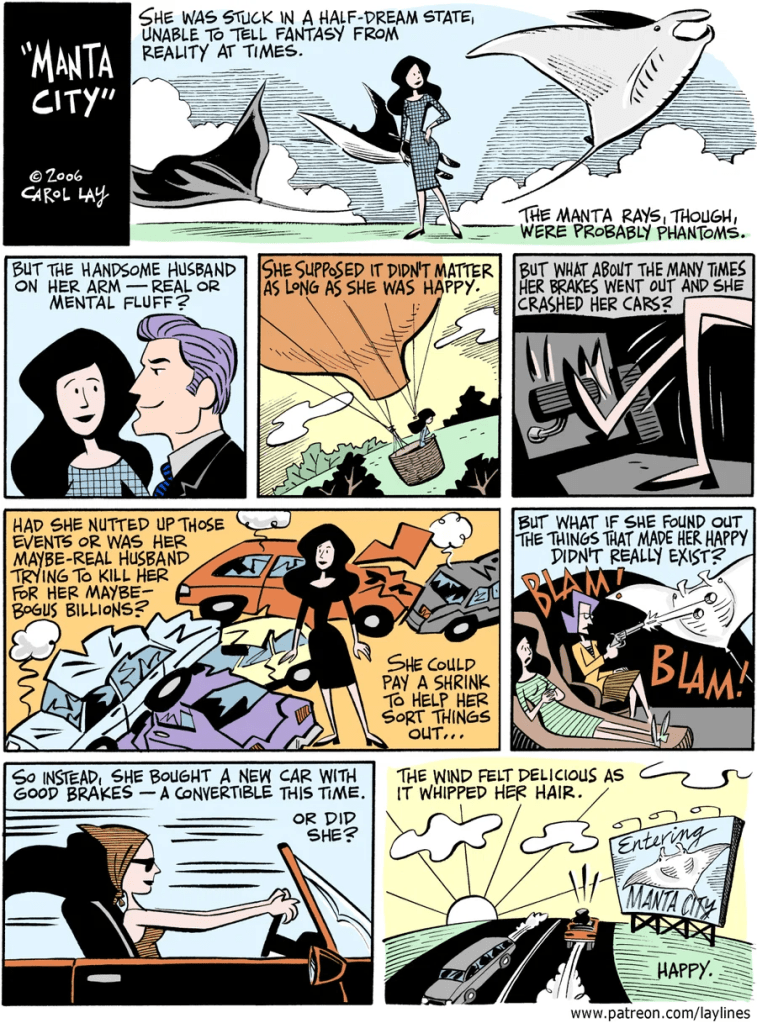
I Can’t Not Share This

but you don’t have to read it. It’s nothing bad, but is very truthful. From 2007, but the locations, of course, are interchangeable.

https://www.gocomics.com/lay-lines/2026/03/02

The boys’ club: How Epstein’s influence shaped the exclusion of women in STEM

In one email, an AI researcher suggested it’s “hard to be brilliant if you are worrying if you look fat or why another woman hates you.”

This story was originally reported by Jessica Kutz of The 19th. Meet Jessica and read more of their reporting on gender, politics and policy.

In 2018, an elite group of academics and scientists planned to gather for an exclusive retreat at a luxury farm in the woods of Connecticut. The guests had been hand-picked by prominent New York literary agent John Brockman, who frequently hosted similar salons for luminaries in science, technology and media. 

The problem? Brockman had included two women on the list, and his staunch supporter and biggest funder wanted them out. 

“John, the old conferences did not care about diversity. I suggest you not either,” Jeffrey Epstein wrote in response to an email about the programming. “The women are all weak, and a distraction sorry.” 

In reply, Brockman justified the women’s inclusion, and says they’d been a part of a related book about AI, which needed to be inclusive to sell. “Today, it’s impossible to get a publisher to buy such a book with essays by 25 men and no women,” he wrote. 

Brockman concludes the email by citing #MeToo and mentioning the news of another scientist, whose book he had tried to publish, coming under fire for sexual harassment allegations. He wonders whether it might be best for optics if the disgraced financier — the biggest financial backer to Brockman’s nonprofit Edge Foundation — didn’t attend after all. 

“Me-Too is not going away; it’s growing, it’s all-pervasive and we’re now in a McCarthy-ism moment on steroids.” 

Brockman did not respond to a request for comment.

Screenshot of a 2018 email from Jeffrey Epstein to John Brockman in which Epstein argues against including women in a conference, writing that “the women are all weak, and a distraction.”

The 2018 exchange, which was revealed as part of a trove of files released by the Department of Justice, illuminates Epstein’s deep interest and entrenchment in the scientific community. He was well connected to scientists at top universities who continued to associate with him after a 2008 conviction for soliciting prostitution from a minor. But the files also underscore how he used his power and money in ways that kept women out of places where they might succeed. 

“I think we all had a sense that the system wasn’t super fair, right?” said Nicole Baran, a member of 500 Women Scientists, a grassroots organization that started in 2016 to combat racism and misogyny in STEM — or science, technology, engineering and mathematics. “Seeing some of these emails — and peering behind the curtains of the rooms that we were never invited into, I think has really laid bare, I don’t know, just truly how broken and corrupt the system is.”

The emails are a reminder to women like Baran that the profession, at its highest levels, still operates under the gaze of men. And in a field where funding is scarce — and climbing the career ladder is often only possible through a combination of luck, mentorship and networking — the files reveal the ways sexism and misogyny still hold women back. 

For the boys in the club, the arrangement worked to their benefit. Epstein donated millions of dollars to their research, hosted them at networking dinners at his home, invited them to visit his island or his ranch in Santa Fe, and connected them to potential funders to further their work. 

As a result, these men were able to establish their own well-funded labs to pursue their work, land lucrative book deals and make connections to other prominent men, particularly those in Silicon Valley who were working on technological advancements like AI.

But as the emails reveal, these same men did not see women as intellectual equals.

Take Roger Schank, an AI researcher and theorist who died in 2023. He suggested in one email that “intelligence comes about in part from real focus” and that it is rare for a woman to not be “first and foremost focused on what others are thinking and feeling about her.” 

“Hard to be brilliant if you are worrying if you look fat or why another woman hates you or why you don’t own a kelly bag,” he wrote. To which Epstein responded: “It’s the tail of distribution , no really smart women – none.” 

(Epstein’s emails and those of his correspondents often contained typos; The 19th is reproducing the text as it appears in the files released by the Justice Department.)

Screenshot of a 2010 email from researcher Roger Schank suggesting that women are preoccupied with appearance and others’ opinions, followed by a reply from Jeffrey Epstein stating there are “no really smart women — none.”

Larry Summers, the former president of Harvard University, who emailed with Epstein hundreds of times, made a joke in one email about how “half the IQ In world was possessed by women without mentioning they are more than 51 percent of population.” 

The email was sent in 2017, more than a decade after Summers came under fire for a speech he gave at a conference for women and underrepresented groups in STEM, where he suggested that there weren’t as many women smart enough to be in these professions due to higher variability in men’s intelligence. During his time as president he was also scrutinized for the lack of women in tenured positions. The Guardian reported that under his reign the share of tenured positions offered to women fell from 36 percent to 13 percent. 

In another exchange, Epstein and Jeremy Rubin, a bitcoin developer and MIT researcher, went back and forth over whether there are any games that women are actually better at than men. It would be “interesting to attempt to make an intellectually stimulating game where women outperform men,” Rubin wrote in 2016. “Unless women are inherently inferior to the maximally talented man at all tasks ;).” 

For women like Lauren Aulet, a neuroscientist and assistant professor at the University of Massachusetts, the files revealed conversations that were more brash than she expected. “I think what was most shocking was simply how blatant and explicit the misogyny was.” 

“We have this narrative that explicit misogyny is something from the ’50s and ’60s, and what we have now is like implicit bias and microaggressions,” she said, adding: “I think this made clear that explicit misogyny is still out there in science and in academia, it’s just perhaps behind closed doors.”

Screenshot of a 2017 email exchange that includes a message from Larry Summers stating that “half the IQ in world was possessed by women,” referencing women’s share of the global population.

Importantly, she says, the ways in which women are talked about, and also excluded from the connections these men had, have professional repercussions

“Women scientists aren’t necessarily the people that come to mind for certain men when they’re thinking about who they’re inviting to dinner or who they’re inviting to a conference,” she said. 

Not having that visibility can matter when it comes to achievements like being offered a tenured position — the height of stability in academia. “Often the tenure board will reach out for letters of recommendation from other people at other institutions in the field. Certainly, the more you’re known broadly, the better it is for your career in terms of tenure.”

Other scientists, like Alison Twelvetrees, a neurobiologist based in the United Kingdom, said she was not as surprised by the contents of the emails. “You just feel that it’s happening, even if you’re not privy to the exact contents of the conversations.” 

In her career, she said she’s often been the only woman in the room. “You become very aware of the — I mean a very British way of putting this — blokey banter that you’re not a part of and you kind of feel that exclusion.” 

For Twelvetrees, the emails also showed how these scientists would let things slide in their interactions with Epstein. “A lot of men who get to the top, they’re cowards,” she said. “So even if they’re aware that they’re not supposed to condone the way people are speaking, or they shouldn’t be that way in those environments, they will condone it,” she said. “It’s that sort of cowardice to [not] be an active bystander and not call it out. It’s still the majority.”

She sees a connection between the ways women are talked about in the files and the response to a recent push to strip Elon Musk of his fellow title at the Royal Society, the U.K.’s premier scientific institution, after his AI tool, Grok, was given the capability to undress women and girls

So far, the head of the institute has said the only reasons to strip fellows of their titles is if they’ve conducted scientific misconduct, things like falsifying data, Twelvetrees said. “[Elon’s] used the products of science to make his personal AI assistant Grok a mass engine of misogyny and white supremacy. I don’t understand how that isn’t scientific misconduct.”

In January, X, formerly known as Twitter, announced it had limited image generation to paid users and added additional safety guardrails. However, reporting has shown Grok can still generate explicit images despite these changes.

For her, it’s just another example of men not being allies to women. “It’s these people at the top just sort of being pretty casual about stuff they should be standing up to,” she said. 

Screenshot of a 2010 email from Jeffrey Epstein in which he disparages women’s intellectual abilities, writing that women “confuse knowing facts with knowledge” and are “good at trivia pursuit but not theory or laws.”

Outside of quipping about women’s intelligence, some of the emails show men talking about young women in their profession in ways that are degrading. David Gelernter, a computer scientist at Yale University who corresponded with Epstein many times, recommending an undergrad student for a possible job, describing her to Epstein as a “v small good-looking blonde.” Yale has since placed Gelernter on leave, while they review his conduct.  

In another series of exchanges, Epstein and Summers discuss a woman whom Summers said he was mentoring, but who he implied he wanted to sleep with. He has since clarified to the Harvard Crimson the woman was not a student. In November, he told the student newspaper that he was deeply ashamed of his actions and takes full responsibility “for my misguided decision to continue communicating with Mr. Epstein.” He has stepped down from public positions including at the Center for American Progress and on the board of OpenAI. 

The interactions revealed in the files are “very dehumanizing” for women, according to Baran, an assistant professor of biology at Davidson College. “I think especially when you think about like, these are men who had colleagues [and] mentees that were women,” she said. “And I think what was so clear is the way in which women in particular were just not spoken about as people with equal intellectual capacity and power.”  

The revelations also made her question some of the work produced by some of the men scientists connected to Epstein, including researchers she teaches in her own classes. “It’s really hard to separate the science that these people created from the theories that are considered sort of foundational,” she said. “Especially in this area of  psychology and evolution in particular, where I’m finding it just really hard to disentangle [from their] behavior in their personal life that seems so egregious and horrific.” 

As an assistant professor of biology, it’s made her think of the young women she sees going into the sciences today. “Will their ideas be taken seriously?” she wonders. “Will their creativity, brilliance or ingenuity be taken seriously? Or will it be dismissed or ignored?” 

On This Last Day Of Black History Month

“Smokin’ Joe Frazier”

(snippets)

Who Was Joe Frazier?

Joe Frazier was the world heavyweight-boxing champion from 1970 – 1973. Frazier is perhaps best remembered for his fearless 15-round match against Muhammad Ali at Madison Square Garden, known as the Fight of the Century, where he knocked out Ali. In 2011, Frazier passed away from his final fight of liver cancer.

(snip)

He moved to New York City to live with an older brother and find work. Employment, however, was hard to come by, and to put cash in his pocket he started stealing cars and selling them to a junkyard in Brooklyn. But Frazier harbored dreams of doing something with his life. Many of those dreams were built around boxing. As a younger kid, back in South Carolina, he had dreamed of becoming the next Joe Louis, airing out punches at burlap bags he’d filled with leaves and moss. Up north Frazier’s love for boxing didn’t subside.

After moving to Philadelphia, Frazier found work at a slaughterhouse, where he routinely punched sides of beef stored in a refrigerated room. That scene later inspired Sylvester Stallone for his 1976 film, Rocky. It wasn’t until 1961, though, that Frazier entered the ring and actually began to box. He was rough and undisciplined, but his unpolished talent caught the eye of trainer Yank Durham.

Professional Career

Under the direction of Durham, who shortened Frazier’s punches and added power to his devastating left hook, the young boxer quickly found success. For three straight years, he was the Middle Atlantic Golden Gloves Champion, and he captured the gold medal at the 1964 Summer Olympics in Tokyo. He turned pro in 1965 and in just under a year had compiled an 11-0 record. In March 1968 he was crowned heavyweight champion where he kept the title until 1973.

Frazier eventually retired from boxing in 1976 to become a community leader and advocate for the youth by opening up a boxing gym to keep the youth off the streets of Philadelphia.

(snip-there is lots of diverse info on the page, linked in the title above)

I’m sorry; we have to click on “Watch on YouTube” to see Joe Frazier sing on (I think?) Merv Griffin.

Muhammad Ali

American boxer

Also known as: Cassius Marcellus Clay, Jr.

Muhammad Ali (born January 17, 1942, Louisville, Kentucky, U.S.—died June 3, 2016, Scottsdale, Arizona) was an American professional boxer and social activist. Considered one of the greatest boxers in history, Ali was the first fighter to win the world heavyweight championship on three separate occasions; he successfully defended this title 19 times. (snip)

“When it comes to love, compassion, and other feelings of the heart, I am rich.”

Muhammad Ali

Humanitarian Timeline

Oct. 29 1960

Donates Fight Proceeds to Kosair Children’s Hospital

Just weeks after earning his Olympic gold medal, Ali faced

Tunney Hunsaker in Louisville, with proceeds from this fight

going to Kosair Children’s Hospital. Fellow Olympic

champion Wilma Rudolph, a childhood polio survivor, was a

guest at the event.

Read newspaper article

(snip-So much more on this page, and the whole site, it’s a timeline slideshow that scrolls with you at your speed)

Hear Aldous Huxley Read “Brave New World,” Find Out How “Metropolis” Shaped Modern Sci-Fi, On Open Culture

Sci-Fi Saturday!