By: Start TV Staff Posted: January 14, 2026, 1:17PM
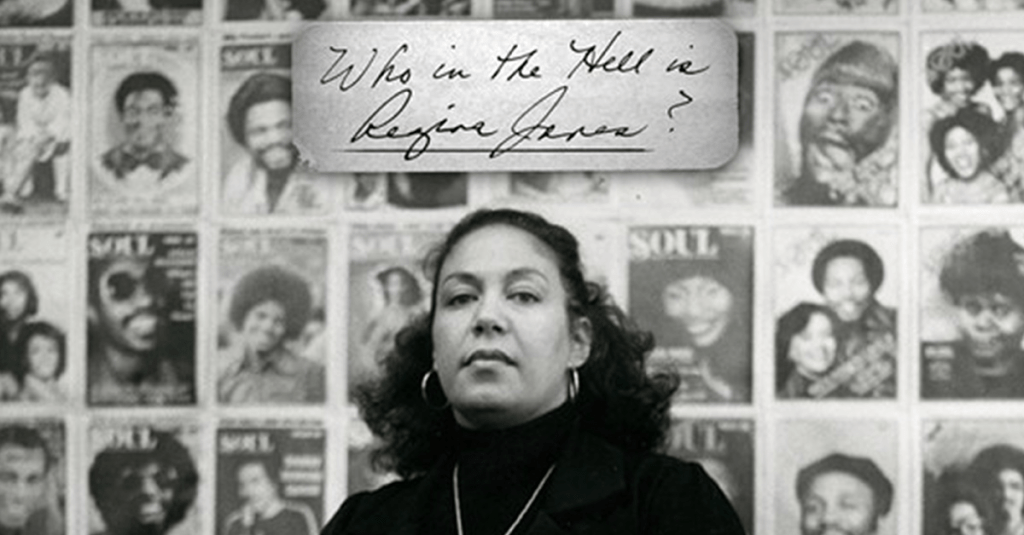
Start TV is set to premiere the award-winning documentary, Who in the Hell is Regina Jones?, on Monday, February 16 at 8P | 7C with a special encore immediately after at 10P | 9C.
The stellar production from Weigel Productions Corp. shines a light on legendary journalist Regina Jones. The documentary, which won the Outstanding Documentary Feature Award at the Greater Cleveland Urban Film Festival, turns a lens on Jones’ historical journey – the invisible labor, turmoil, struggle, and joy of a modern-day Black woman, who emerged as publisher and founder of the groundbreaking SOUL newspaper. On this nationwide platform, Black artists could get coverage long before other publications entered the arena.
Pregnant and married at 15, Regina Jones experienced the Watts Rebellion of 1965, raised five children, stepped into places where she was not wanted, and navigated a world that offered her no favors. SOUL was the first publication devoted specifically to Black musicians and perspectives in music, published from 1966 to 1982. During its run, the publication profiled some of the era’s most prominent Black artists, including Aretha Franklin, James Brown, Diana Ross, Gladys Knight, and Stevie Wonder.
Who in the Hell is Regina Jones? was produced by Weigel Productions Corp and directed by Soraya Sélène and Billy Miossi, edited by Nancy Novack A.C.E., co-edited by Alisa Selman, produced by Alissa Shapiro, and executive produced by Academy Award nominee Sam Pollard.
from John Lustig, whose email helped me make up my mind what to post to acknowledge the day, and did a far better post than I would have done.
About Today’s Comic
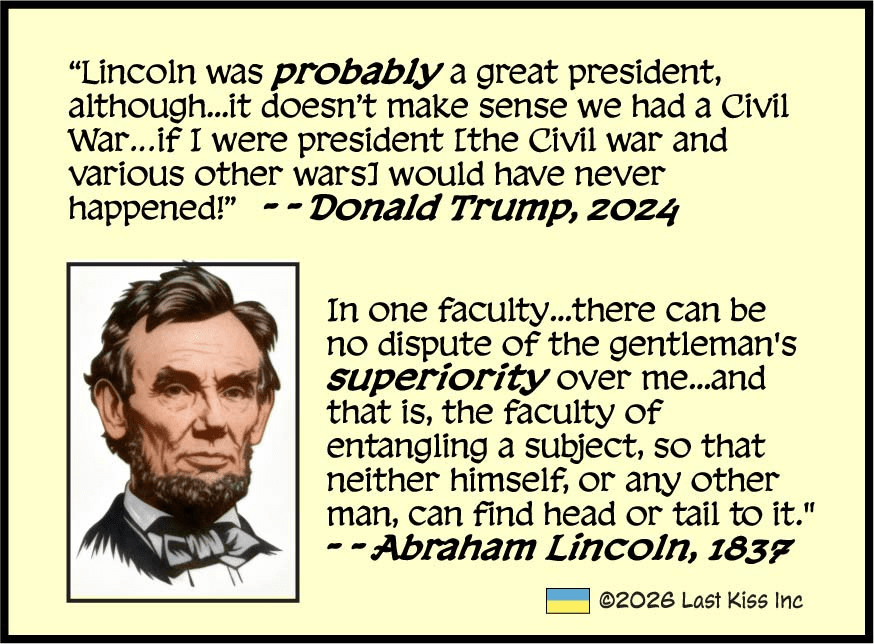
The ellipses in today’s comic are where I abridged the quotes to make them a little more readable. (In general, I try to keep text as brief as possible in every Last Kiss comic.) Below are the full quotes.
Trump initially said that Reagan was his favorite. (Note: Trump was 34 when Reagan first took office, and 42 when he left.) So next Trump mentioned Lincoln as a possibility.
“Great presidents?” Trump said. “Lincoln was probably a great president, although I’ve always said, why wasn’t that settled? You know, I’m a guy that—it doesn’t make sense we had a Civil War….You’d almost say, like, why wasn’t that [settled]? As an example, Ukraine would have never happened, and Russia, if I were president. Israel would have never happened; October 7 would have never happened, as you know.”
Abraham Lincoln. This Jan. 11, 1837 quote from our 16th president can be found on the website for his presidential website here:
“In one faculty, at least, there can be no dispute of the gentleman’s superiority over me, and most other men; and that is, the faculty of entangling a subject, so that neither himself, or any other man, can find head or tail to it.”
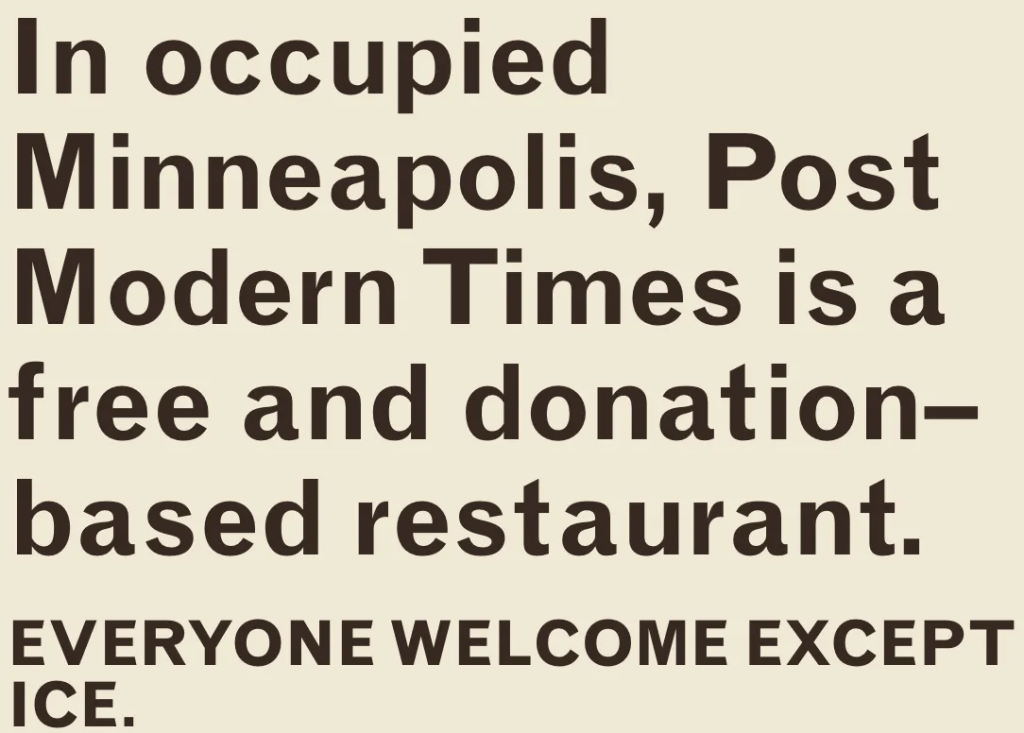
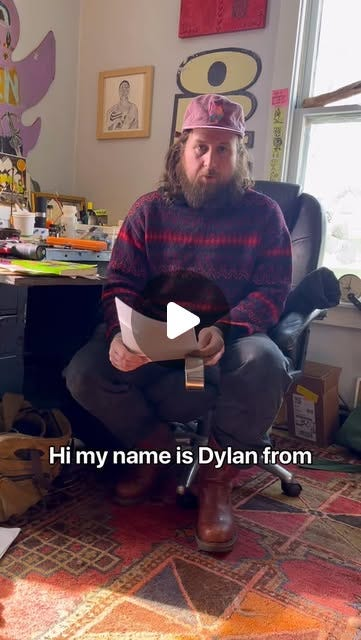
In the days after federal agents killed ICU nurse Alex Pretti (only days after other federal agents killed Renee Good), I saw a video of a haggard Minneapolis restaurant owner saying that he was going to give food away until the federal government’s occupation of Minnesota ends. His restaurant, Modern Times Cafe, was going to be 100% free… for everyone. It wasn’t just going to be free for people who proved they needed free food or for folks who asked for free food. It was going to be FREE. FOR. EVERYONE. Dylan Alverson, owner of the now-renamed Post Modern Times Cafe, was mad as hell, and he was not going to charge for pancakes anymore!
(Full Instagram bit on the page; above is a photo)
Actor and singer Mandy Patinkin’s son Gideon had shared Dylan’s video with me. Gideon runs Mandy’s verified Instagram account. The Patinkins’ IG page is filled with hopeful political messages, righteous leftist anger, and—most importantly—ways to help. At some point our Internet paths crossed, and we have tagged each other in posts ever since. Seeing Dylan’s video was yet another battery in my back that gave me the juice to go to Minneapolis. I saw the video on Monday, January 26, and by that Thursday, January 29 I was on a Zoom with the McKnight Foundation to figure out how we could work together to get me to the Twin Cities. Once we decided that I would go, I quickly put a visit to Post Modern Times on the agenda. I didn’t go there for McKnight. I went there for me. I really wanted to meet Dylan. He reminded me of people I met in Berkeley, back in the day. True believers who are more than excited to go against the grain. Luckily, Dylan was down to talk. As we discuss in the episode, he is not one for attention. He just wants to help his neighbors. I also found out that since he shared that initial video, he has decided that having a free restaurant feels so good that he wants to keep Post Modern Times Cafe free, even after Trump’s government leaves (which they finally announced they are going to do). (Snip)
Dylan plans to turn his restaurant into a nonprofit organization. This just shows, yet again, that the effect this occupation has had on Minnesota is permanent. It doesn’t matter if the feds leave today, they have:
killed two people,
shot at least one more,
made schoolchildren afraid to go to school,
made some people (especially Latino restaurant workers) afraid to go to work,
hurt local business across Minnesota, because consumers are afraid to shop (or are too broke shop because they aren’t working), and
generally traumatized the state.
None of that gets erased, fixed, or healed just because the goons get gone. I truly hope that more people are able to sue the federal government like the teachers union, Education Minnesota, did. The only thing that has stopped the people of the Twin Cities and beyond from folding completely is that there are many, many, MANY people like Dylan Alverson who are committed to community. Like Dylan, they are committed above and beyond their own self-interest… or even their own commonsense.
While Dylan’s free restaurant may seem like a gimmick or a naive idea, Dylan sees it as part of a larger way to fight back against our authoritarian government. Dylan put it best in our interview:
“The world is watching, and they should. This could be the start of a revolution. We don’t know. But to me, it feels like it. And I’m willing to go as far as I need to if I can make that happen.”
Post Modern Times will only be able to keep up its anti-capitalistic “gamble” (gamble is Dylan’s word for what they are doing) if they also have community support. If you can, donate or spread the word about Post Modern Times Cafe’s bold plan.
(snip-MORE, including a podcast with Mandy Patinkin & Katherine Grody, helping MN teachers, and yet more!)
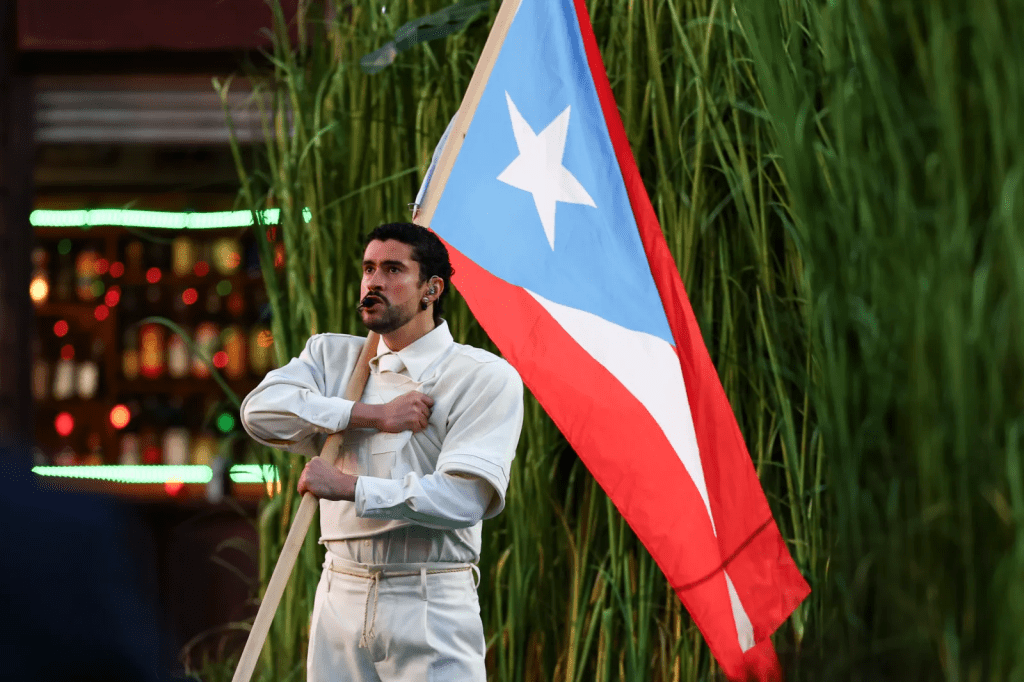
Duolingo saw a sharp rise in Spanish learners following Bad Bunny’s Super Bowl Halftime Show, according to a post shared by the language-learning app on social media.
“Duolingo saw a 35 percent increase in Spanish learners last night. Better late than never,” the company wrote on Threads on February 9, under its official account, @duolingo. The post, which included a graph showing a clear spike in Spanish lessons, has been liked more than 7,500 times to date.
The surge followed Bad Bunny’s history‑making performance at the Super Bowl Halftime Show, where he became the first artist to sing primarily in Spanish during the most-watched sporting event in the U.S. Duolingo’s official Threads account shared the data shortly after the night ended, highlighting the immediate impact the performance appeared to have on language learning behavior.
Bad Bunny’s Super Bowl appearance came months after he used a Spanish-language monologue on Saturday Night Live (SNL) to tell audiences they had “four months to learn” Spanish ahead of the game. Despite online backlash from some commentators at the time, the data shared by Duolingo suggests many viewers embraced the message, with interest in learning Spanish rising sharply during the Halftime Show.
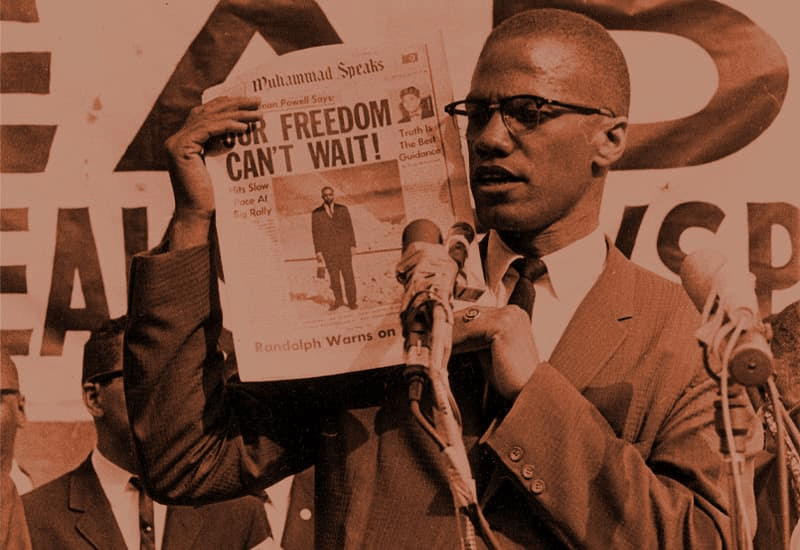
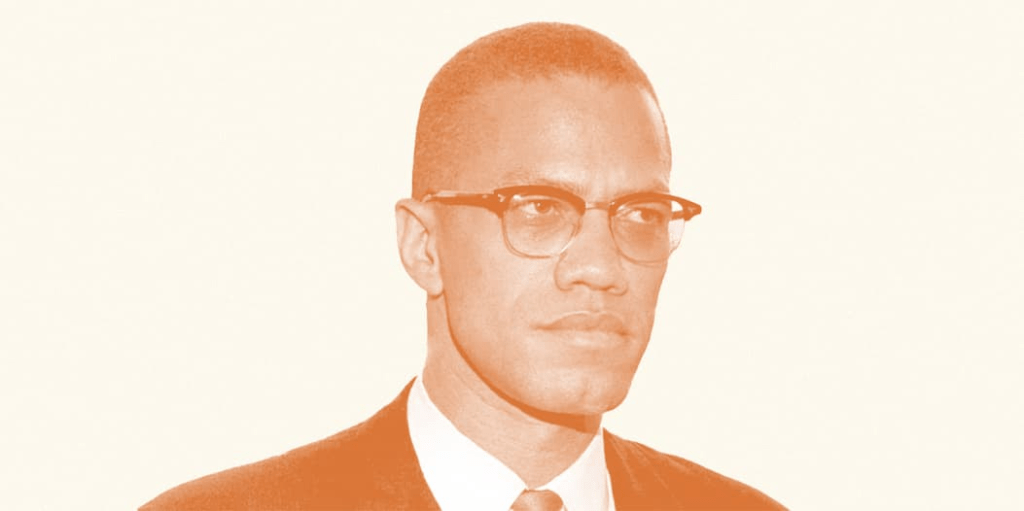
On Sunday, February 21, 1965, a little after 3pm, as he was preparing to address his Organization of Afro-American Unity in New York’s Audubon Ballroom, the controversial civil rights leader and revolutionary Malcolm X was shot dead by members of the Nation of Islam, the religious group X had broken from the year before. He was 39.
“In the aftermath, rivers of ink spilled across New York City’s many newspapers,” wrote Ted Hamm. The legendary journalist Jimmy Breslin was callous and dismissive; Langston Hughes “somewhat cryptic.”
James Baldwin, who was in London at the time, famously shouted at the reporters who found him after X’s death: “You did it! It is because of you—the men that created this white supremacy—that this man is dead. You are not guilty, but you did it. … Your mills, your cities, your rape of a continent started all this.”
Later, Baldwin told the story this way:
“There we were, at the table, all dressed up, and we’d ordered everything, and we were having a very nice time with each other. The headwaiter came, and said there was a phone call for me, and Gloria rose to take it. She was very strange when she came back—she didn’t say anything, and I began to be afraid to ask her anything. Then, nibbling at something she obviously wasn’t tasting, she said, ‘Well, I’ve got to tell you because the press is on its way over here. They’ve just killed Malcolm X.’ The British press said that I accused innocent people of this murder. What I tried to say then, and will try to repeat now, is that whatever hand pulled the trigger did not buy the bullet. That bullet was forged in the crucible of the West, that death was dictated by the most successful conspiracy in the history of the world, and its name is white supremacy.”
“I was certainly saddened by the shocking and tragic assassination of your husband,” Martin Luther King, Jr. wrote to Betty Shabazz, X’s wife, after the murder.
“While we did not always see eye to eye on methods to solve the race problem, I always had a deep affection for Malcolm and felt that he had a great ability to put his finger on the existence and root of the problem. He was an eloquent spokesman for his point of view and no one can honestly doubt that Malcolm had a great concern for the problems that we face as a race.”
More than sixty years later, some details about the assassination remain unclear. But Malcolm X has endured as a cultural icon, death being, in the end, not quite enough to silence him.
EVERGREEN QUOTE:“You’re not supposed to be so blind with patriotism that you can’t face reality. Wrong is wrong no matter who does it or who says it.”–Malcolm X
Last year I started a list of book conventions and fan gatherings that went completely sideways or didn’t happen because they fell apart during the planning. The title: WTF Cons? I realized in about mid-May that keeping track would be a full time job and I couldn’t keep up with it. There were that many.
Sometimes it’s lack of organization. Sometimes the follow through is so bad the City of Baltimore files civil contract claims against you, as is the situation with Grace Marsceau, the organizer behind A Million Lives Book Festival. You know, the one that made headlines about how much money people lost. There was Sinners & Stardust which came with a side order of Sexual Harassment. There were weekend cons that promised attendees for registered authors and didn’t deliver any; there were gatherings that promised reader events that didn’t materialize. I could keep going but I’d be here for days.
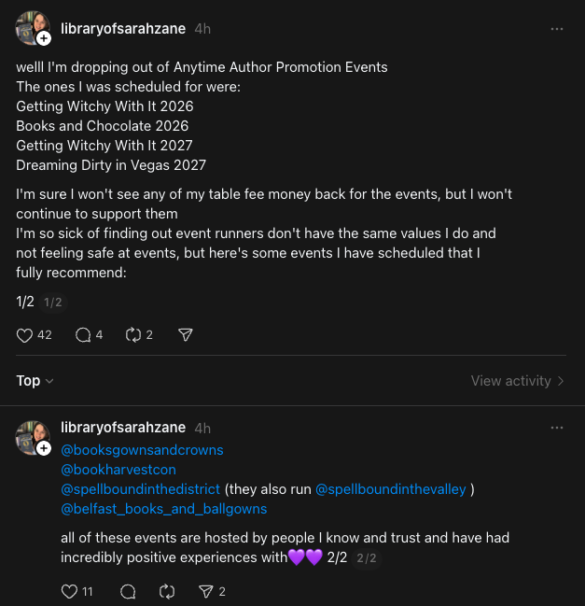
The latest breakdown per Threads seems to be Getting Witchy With It in Salem, MA, scheduled in both 2026 and 2027. The CEO of Anytime Author Promotions, Virginia Johnson, posted a video about Minneapolis, and to say it didn’t go over well is an understatement.
“You’re seeing the extremism of what Minneapolis, of what the news wants to show you.”
Which part is “the extremism,” I wonder?
The part where ICE executed Renee Good? Or the part where ICE executed Alex Pretti? The tear gas canisters lobbed at pre schoolers or the ones tossed at high school students?
The level of privileged, ignorant bullshit this person seems to be fertilizing her professional reputation with is truly breathtaking.
(Also, is she driving while recording this? I can’t tell from the windows but it appears that the car is in motion and she’s driving it. If so, then I ask most sincerely, WHAT THE FUCK IS UP WITH THAT. And I once saw someone tuning a violin while slowly moving toward the George Washington Bridge at 7am. Pardon my fuddy duddy question but is this a thing? That people do? Record videos while driving?)
I haven’t been able to find any active social media accounts for Anytime Author Promotions, and I haven’t seen a statement. I have reached out to them directly – though I tried to use the comment form on their site to reach out, but I received an error message that my message was unable to be sent.
But when I looked into the company, I was shocked. This isn’t one event: it’s many.
Flirty in Kansas City, MO, Tampa, FL, and Des Moines, Iowa.
Dreaming Dirty in Ann Arbor, MI, Baltimore MD, and Las Vegas, NV.
Getting Witchy with It in Salem, and New Orleans and Charleston.
RAGE in Atlantic City, NJ, and Versailles, Ohio.
Books and Chocolate in Hershey, PA.
Glass City in Toledo, OH.
Book Blast in Dallas, TX and Seattle, WA.
That is a lot of events – fifteen by my counting which is not my greatest skill – many of which are scheduled into 2028.
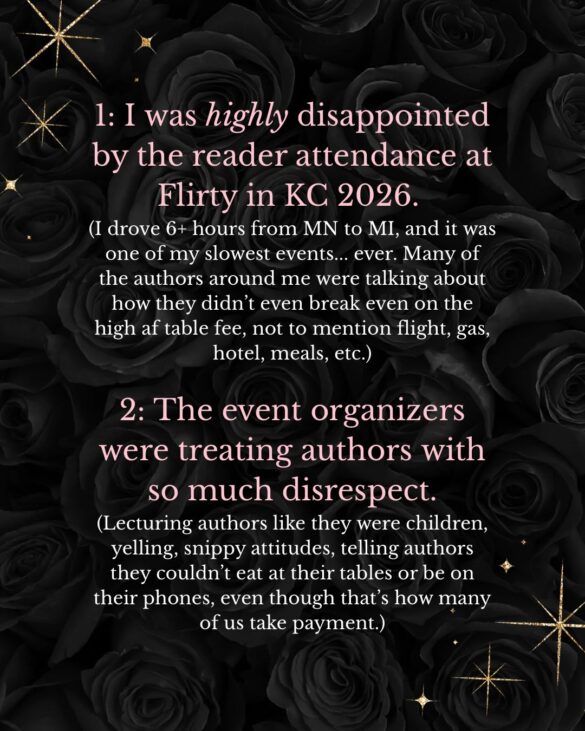
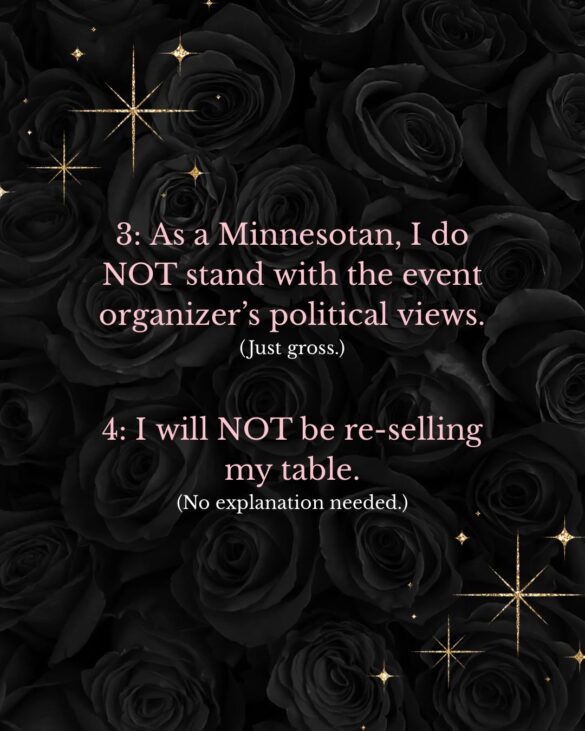
And sure enough, authors are posting about dropping out and forfeiting their deposits – that’s a song many know all the words to.
So many authors, in fact, that it’s a trending topic on Threads right now – twice. (I have a screengrab but I don’t want to post it because one of the other trending topics is a spoiler for a tv show.)
Revelations about the alleged political alignment of the CEO of Anytime Author Promotions do not appear to be new – only the video is.
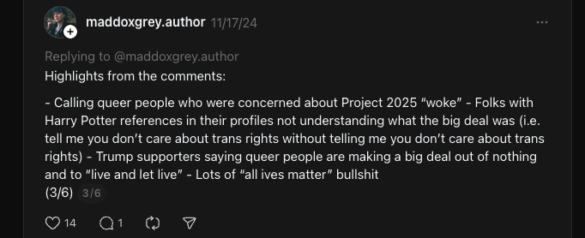
Author Maddox Grey reported in November 2024 in another thread that the Anytime Author Promotions Facebook group seems to have a history of using right-coded language and fostering a community that does so as well:
I cannot find this Facebook group, only pages that are sporadically updated, so I can’t fact check this claim.
What a shitty position for folks trying to grow a career to be in. The two largest cons are long gone, along with all the support and reader connections they fostered. There are many other gatherings, but as I mentioned at the start, it’s a risky prospect. They can be replete with inexperienced conference organizers, insufficient budget for events and security, and low turnout among authors, readers, or both. It’s a real crap shoot with time, money, and energy – all of which are in limited supply.
To create a successful event, in my experience, you need buy-in from several key groups. In this case:
Authors, but especially some with established audiences and name recognition. That said, hosting an author with a massive fanbase requires additional security, space, and logistical organization for crowd control and safety for everyone.
Readers who might want to meet those authors and potentially be introduced to new ones, which requires outreach and engagement and, you know, marketing and publicity. Readers also might want or expect a reader-focused event like a party or similar, and not just a book signing and panels. So that means budget allotments for decoration, entertainment, etc.
Host Location, i.e. where will this event be held? Is there an airport with direct flights or easy driving access and parking? Does the space have enough room should items A and B yield a high turnout? What about food – because food costs inside hotels will send your eyebrows right into your hairline.
Then, considering the above, how much will attending cost? How much are table fees? Will those fees cover the cost of the above items? Those margins might thinner than the profit on a mass market paperback.
(I also want to say a word about conference organizing: I used to do this, so I’m not just talking out of my ass here. I have always followed what I call “the mafia rule” when blogging: “Youdon’t talk about the work, don’t talk about the family,” so the most I want to say is that many years ago, I worked a nonprofit which hosted meetings between their membership and US and international officials. Organizing these gatherings both in the US and abroad was my job. So while I’m a little rusty, I’m pretty familiar with the large and small scale logistical coordination of stakeholders and invested parties.)
Lam then went on to share the eleven other events they will be appearing at in 2026. So there are other options – many other options.
I think we are accelerating past the point where embracing right wing rhetoric and supporting the actions of the current administration yields ferocious backlash, especially within romance, and especially within communities of marginalized people within romance.
With one video and the resulting social media response, Johnson appears to have damaged the brand of the company and reduced author and reader attendance at most of the scheduled events, if reports on Threads are accurate. That is a big, big mess.
As this seems to be an evolving situation, I’ll update this post if more information becomes available.
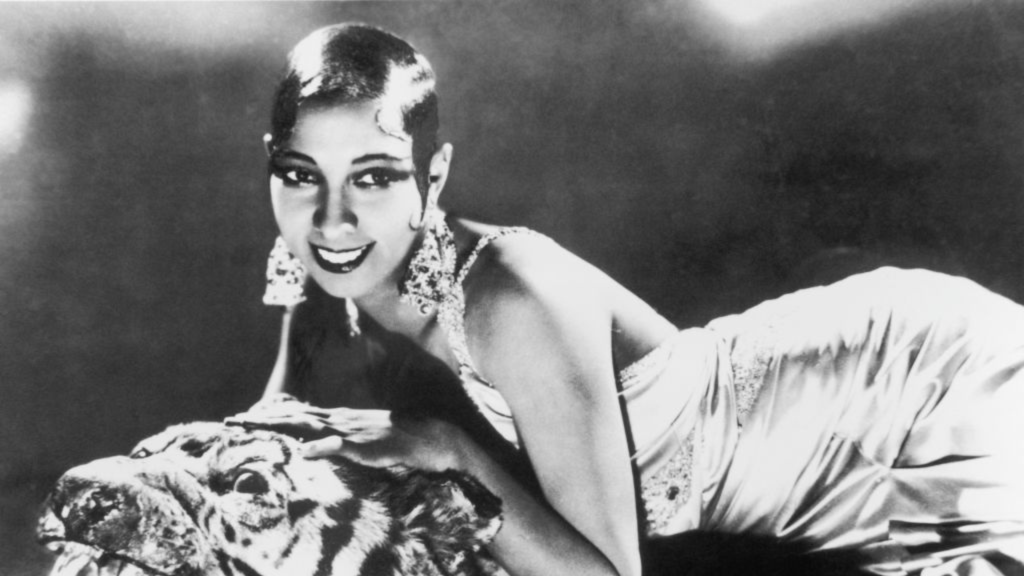
circa 1925: Portrait of American-born singer and dancer Josephine Baker (1906 – 1975) lying on a tiger rug in a silk evening gown and diamond earrings. (Photo by Hulton Archive/Getty Images)
When most people think of history’s American spies, they imagine a sleuthy white man, tracking troop movements, planting bugs and obtaining secrets under the radar of the enemy. What’s rarely imagined, let alone taught, is the role Black Americans played in espionage from the Revolutionary War through modern times.
Enslaved and free Black men and women slipped into rooms they weren’t meant to enter, cozied up to marks who underestimated them and quietly ran intelligence networks that relied on invisibility in plain sight. Here are Black spies whose intelligence work shaped history.
Mary Elizabeth Bowser
Screenshot: YouTube “Mary Elizabeth Bowser: Unsung Heroes of the Civil War | Ancestral Finding Postcard”
Dubbed the “baddest bitch in history” by Comedy Central, Bowser became known as one of the Union’s most daring Civil War spies. Literate and underestimated, Bowser worked as an undercover agent from inside the Confederacy’s most vulnerable locations — Confederate President Jefferson Davis’s home, according to African American Registry.
Masking her intelligence by pretending to be bat sh*t crazy, “Crazy Bet,” as she was known, used a rumored photographic memory to collect important military information and pass it on to Ulysses S. Grant.
James Armistead Lafayette
Fascimile of the Marquis de Lafayette’s original certificate commending James Armistead for his revolutionary war service, 1784. From the New York Public Library. (Photo by Smith Collection/Gado/Getty Images).
James Armistead Lafayette was born enslaved but became a master of deception during the American Revolution. According to America’s Army Museum, he disguised himself as a runaway, infiltrated British camps, delivered key intelligence to the Marquis de Lafayette and fed false information to the enemy. His double agent work was crucial at Yorktown in 1781.
With Marquis de Lafayette’s support, he later won his freedom and dropped his enslaver’s name.
Josephine Baker
circa 1925: Portrait of American-born singer and dancer Josephine Baker (1906 – 1975) lying on a tiger rug in a silk evening gown and diamond earrings. (Photo by Hulton Archive/Getty Images)
Josephine Baker was a known boundary-breaking dancer, singer and international icon, but few knew she was also a World War II spy for the French Resistance. Though she spied on behalf of France rather than the U.S., Baker belongs in this conversation about Black espionage.
At the height of her fame, Baker used her celebrity to move through elite European society and collect information on Nazi Germany and other Axis powers, according to History.com. Baker hid intelligence in invisible ink on sheet music and pinned notes inside her clothing, later explaining, “nobody would think I was a spy.”
Her bravery earned her France’s highest military honors.
Debra Evans Smith
Screenshot: YouTube
While working in Records Management, Debra Evans Smith attended the FBI Academy after gaining nine pounds to meet the minimum weight requirement.
When only one percent of Black women were spies, Smith was drawn to counterintelligence. She volunteered for surveillance, learned Russian, and spent four years handling Russian counterintelligence in Los Angeles, conducting interviews and investigations in the language, according to the FBI. For her, the work was never about individual cases—it was about serving the country.
If you’ve never heard of Abraham Gallaway, that’s no accident. According to historian Dr. David Cecelski, Gallaway may have been the most important Southern war hero, but his legacy was erased when North Carolina rewrote its own history in the late 1800s, depicting enslaved people as “docile.” Gallaway’s story did not fit their narrative.
Born enslaved in 1837 near Wilmington, N.C., he escaped at 19. Gallaway became a “master spy” for the Union Army during the Civil War, providing military intelligence from within the South and establishing a spy network. He also became a state senator, according to 6 ABC. Today, his story is preserved at the North Carolina Museum of History.
Mary Louvestre
Mary Louvestre (sometimes spelled Touvestre) was a free Black woman who would not take no for an answer. Working as a seamstress in Virginia, she stole documents about troop movements and walked to deliver them to Union officials in Washington, D.C. When officers brushed her off, hesitating to meet with her, she kept going back until they listened.
Darrell M. Blocker
Darrell M. Blocker spent 32 years in U.S. intelligence, retiring in 2018 as the most senior Black officer in the CIA’s Directorate of Operations and earning the Distinguished Career Intelligence Medal. A second-generation intelligence professional, Blocker’s work took him to dangerous territory in places like Iran and North Korea, according to the International Spy Museum.
Having lived in 10 foreign countries, he has held titles including Deputy Director of the Counterterrorism Center and managed the CIA’s Ebola response.
A portrait of Harriet Tubman, African-American abolitionist and a Union spy during the American Civil War, circa 1870. (Photo by HB Lindsey/Underwood Archives/Getty Images)
Harriet Tubman was more than the Underground Railroad’s “Moses.” She made power moves in the Union Army, using her reputation to recruit Black scouts. Tubman gathered intel no one else could. According to Brandeis University, she became the first woman to lead a U.S. military raid in 1863, which freed 750 people and sealed her acumen as a true strategist.
George E. Hocker, Jr.
YouTube: “2025 Mary’s Woods MLK Jr Celebration”
George E. Hocker, Jr., a Washington, D.C. native, joined the CIA in 1957 while studying at Howard University. Working as a file clerk to fund his education, he stopped short of aspirations to work as a spy because CIA leaders told him Black people were not intelligent enough or able to “blend in.”
He believed them … until the 1963 March on Washington inspired him to pursue his dream despite racism. During the Cold War, Hocker gathered intelligence in Africa and later went to Latin America, risking his life on dangerous assignments. Hoker never lost sight of the fight at home, stating, “While I was fighting for my country’s interests abroad, my fellow Black Americans were facing war zones of their own at home,” as quoted in Newsweek.
Robert Smalls
Robert Smalls, 1887. African-American politician, publisher, businessman and maritime pilot. Born into slavery, he escaped, and commandeered and piloted a Confederate transport ship which became a Union warship. His example and persuasion helped convince President Abraham Lincoln to accept African-American soldiers into the Union Army. From “Men of Mark: Eminent, Progressive and Rising” by William J. Simmons. Creator: Unknown. (Photo by Heritage Art/Heritage Images via Getty Images)
Born into slavery in 1839 in Beaufort, South Carolina, Robert Smalls rose to become a skilled pilot on the Confederate transport CSS Planter by his early twenties. In a bold act of courage in 1862, he seized the ship, picked up his family, and navigated past Confederate forts under the guise of a captain, delivering the vessel safely to Union forces. Smalls went on to become the first African American to command a U.S. naval vessel, and after the war, he purchased his former enslaver’s house, reclaiming a space that had once symbolized his bondage.
A handsome bird of open landscapes, the Chocolate-vented Tyrant is an unusual species to be included among the so-called “flycatchers.” Inhabiting flat grassland and scrub, this bird is primarily a ground-dweller, rarely seen higher than a fencepost or tussock. Furthermore, this flycatcher is not one to catch insects on the wing (to “fly-catch” in ornithology lingo), preferring instead to hunt its prey on the ground. In keeping with this terrestrial lifestyle, the Chocolate-vented Tyrant has notably long legs and is more likely to run or walk than to hop or fly. In combination with its large size and rusty belly, the tyrant’s appearance and behavior are reminiscent of birds in the thrush family, such as the American Robin.
The Chocolate-vented Tyrant breeds in the cold, dry, and infamously windy Patagonian Steppe, also known as the Patagonian Desert. In an environment largely devoid of trees, this bird takes advantage of the open sky to perform an expansive aerial display, similar to other birds like the Red Knot and American Woodcock that use flat, open habitat in the breeding season. The Chocolate-vented Tyrant is also known to forage alongside wintering shorebirds — yet another habit unusual for its family, but typical of others, like the groups of sandpipers and plovers it sometimes joins.
Threats
Birds around the world are declining, and many of them, including the Chocolate-vented Tyrant, are facing urgent threats. Throughout the tyrant’s range in South America, livestock grazing, agricultural expansion, and invasive species all hinder this bird’s ability to thrive. Furthermore, sparse protected areas may be insufficient to support the species, particularly on its nonbreeding grounds in the Pampas, the vast grasslands region east of the Andes.
Habitat Loss
The Chocolate-vented Tyrant is losing habitat in both its breeding and nonbreeding ranges. On the Patagonian Steppe, where this species breeds, overgrazing by sheep disrupts the limited vegetation afforded by a dry climate, resulting in erosion and eventually desertification. The Pampas faces similar threats from overgrazing by cattle, as well as the clearing of native habitat in favor of agriculture.
The Chocolate-vented Tyrant is a habitat specialist, making it particularly vulnerable to threats like habitat loss and degradation. In addition to protecting habitat through our network of reserves, ABC also works to reduce the threat of invasive species and restore habitat. At ABC, we’re inspired by the wonder of birds and driven by our responsibility to find solutions to meet their greatest challenges. With science as our foundation, and with inclusion and partnership at the heart of all we do, we take bold action for birds across the Americas.
Creating & Maintaining Reserves
Habitat is the foundation for birds’ survival. Working with dozens of partners and local communities throughout Latin America, ABC supports a growing network of protected areas in more than a dozen countries. Totaling more than 1.3 million acres, nearly one-third of the world’s birdlife (more than 3,000 species) is protected by an ABC-supported reserve.
In November 1973, 10 Black models helped put American fashion on the map in an epic runway face-off with well-known French designers. In honor of the start of New York Fashion Week, here’s their story!
Models dressed in midriff-bearing tops and oversized bottoms of solids, stripes and plaids worn with headresses during the fashion show to benefit the restoration of the Chateau of Versailles, five American designers matching talents with five French couturiers at the Versailles Palace on November 28, 1973 in Versailles, France…Article title:’One night and pouf! It’s gone! (Photo by Fairchild Archive/Penske Media via Getty Images)
We know that for most people, February is all about the Super Bowl, Valentine’s Day and Black History Month. But if you love style, you know it’s also about New York Fashion Week – a time for some of the hottest designers to showcase the latest trends — kicking off Wednesday (Feb. 11).
While we’re going to be all over covering what’s new from Sergio Hudson and Public School, we thought this week was also a perfect time to show some love to the Black designers and models who paved the way for future generations.
We’re kicking things off with the story of 1973’s Battle of Versailles fashion show –an epic stand-off between French and American designers in Paris. The highly-hyped event not only put American fashion designers on the map, but it also put a spotlight on a group of 10 Black models who shut down the red carpet and showed the rest of the world the beauty in having a diverse runway that looked more like the rest of the world.
A Palace in Need of Repair
Fragment of golden entrance gates to the Versailles Palace (Chāteau de Versailles) on a sunny summer day. The Versailles is a Royal Palace in Versailles which is a suburb of Paris, some 20 kilometres southwest of the French capital.
The Palace of Versailles is an iconic French landmark. The stunning estate became the official royal residence in 1682. But while it has been a tourist destination for quite some time, in the early 1970s, the 17th century palace was in desperate need of a $60 million glow-up to repair years of damage.
A Fabulous Fundraiser
American Fashion co-ordinator, Miss Eleanor Lambert (Mrs Berkson) who arrived by Qantas today to finalise arrangements for a major all-American fashion show in Sydney and Melbourne later this year. May 25, 1967. (Photo by Trevor James Robert Dallen/Fairfax Media via Getty Images).
American fashion publicist Eleanor Lambert knew $60 million dollars wasn’t small change, so she proposed the idea of a fashion show to raise money for the Versailles repair project. Working with the palace curator, Gerald Van der Kemp, she wanted to invite some of the wealthiest elites from around the world to view collections from fashion designers from France and the United States. Lambert believed the ticket sales would help bring in much-needed funds for the palace project and give American designers a chance to prove their talent on the world stage.
The French Designers
Fashion designer Pierre Cardin stands in his studio surrounded by models. (Photo by Pierre Vauthey/Sygma/Sygma via Getty Images)
Lambert’s idea got the green light, and the date was set for Nov. 28, 1973. The French assembled an all-star lineup of designers, including Hubert de Givenchy, Yves Saint Laurent, Pierre Cardin, Marc Bohan (Creative Director for Christian Dior) and Emmanuel Ungaro. Ready to show the international audience that Paris was the fashion capital of the world, they planned more than an ordinary runway show, but a production that featured live music, dance and an extraordinary set.
The American Designers
NEW YORK, NY – JANUARY 24: Designer Stephen Burrows attends the Tribute To The Models Of Versailles 1973 at The Metropolitan Museum Of Art on January 24, 2011 in New York City. (Photo by Stephen Lovekin/Getty Images)
The American team accepted the challenge and built a roster that included designers Oscar de la Renta, Halston and Bill Blass. Unlike the French, Team USA brought a little more diversity to the event, with the only woman designer, Anne Klein, and Stephen Burrows, a Black graduate of New York’s Fashion Institute of Technology, who made a name for himself with his colorful, lightweight knit designs and signature lettuce hem.
News of the show got lots of press in both the United States and France. John Fairchild, who was the editor of Women’s Wear Daily at the time, helped add to the hype, billing the event “The Battle of Versailles.”
Choosing Models
Norma Jean Darden, Bethann Hardison, Billie Blair (Getty Images)
The budget for the event was tight, causing some of the more well-known models of the time — like Jerry Hall and Lauren Hutton — to turn down the $300 job. But their decision left the door open for a group of talented and beautiful Black models who were happy to step in and help bring the designer’s clothing to life. In the end, the American show featured 10 Black models – Billie Blair, Bethann Hardison, Pat Cleveland, Amina Warsuma, Charlene Dash, Ramona Saunders, Norma Jean Darden, Barbara Jackson, Alva Chinn and Jennifer Brice – making it one of the most diverse runways the fashion industry had ever seen at a major show.
Americans in Paris
Models Bethann Hardison and Armina Warsuma arrive in Marseille, Paris. (Photo by Michel Maurou/Reginald Gray/WWD/Penske Media via Getty Images)
Although they weren’t paid much for the gig, many of the Black American models chosen for the show jumped at the chance to participate in a high-profile international event. Pat Cleveland remembers how excited many of the models were when they first set foot on French soil.
“They got out of the bus and kissed the ground, they were so happy,” she said.
A Not-So-Warm Welcome
Model Pat Cleveland eats a sandwich backstage during the Battle of Versailles fashion show to benefit the restoration of the Chateau of Versailles on November 28, 1973. The Battle of Versailles featured the top five American designers matching their talents with five French couturiers. The Americans triumphed. (Photo by Reginald Gray/WWD/Penske Media via Getty Images)
Although the city of lights was beautiful, the American designers and models did not feel the love in France. Designer Stephen Burrows confirmed that their accommodations were far from five-star.
“There was no toilet paper in the bathroom. It was terrible,” Burrows said. “They had the girls there working all day long and didn’t feed them.”
Rehearsal Drama
Oscar de la Renta watches American team model Billie Blair practicing in a breakout rehearsal space within the palace complex. (Photo by Michel Maurou/WWD/Penske Media via Getty Images)
The French weren’t any more gracious when it came to the rehearsal time, using up most of the days leading up to the show to run through their performance –leaving the American team to make the most of the middle of the night.
A Star-Studded Guest List
Marisa Berenson, Roy Halston, Liza Minnelli and friends attend the fashion show to benefit the restoration of the Chateau of Versailles, five American designers matching talents with five French couturiers at the Versailles Palace on November 28, 1973 in Versailles, France. (Photo by Fairchild Archive/Penske Media via Getty Images)
The idea of a showcase featuring some of the best in American and French fashion attracted a who’s who of high-profile stars, including Elizabeth Taylor, Liza Minelli (who took the stage during the American show) and Andy Warhol.
The French Performance Was a Production
American born-French entertainer Josephine Baker in costume rehearses on stage before her performance during the “Battle of Versailles” fashion competition in Paris on November 29, 1973. (Photo by Reginald Gray/WWD/Penske Media via Getty Images)
On the night of the show, the French took the stage first, with a 40-piece orchestra, more than $30,000 worth of props and performances from well-known Soviet ballet dancer Rudolf Nureyev and legendary performer Josephine Baker along with their designer’s collections. American model Bethann Hardison remembered the French designer’s elaborate presentation that lasted for more than 2.5 hours.
“They had everything. You just couldn’t believe all the entertainment they had,” she said. “It was like a circus. The only thing they didn’t do was shoot a man out of a cannon.”
The Americans Met the Moment
After the French showcase, it was Team USA’s turn to take the stage. Although they walked to music on a cassette tape instead of a live orchestra, they met the moment, with the Black models showing off their rhythm as they floated down the runway. Although their show was only 35 minutes, they left the audience – who gave them a standing ovation – wanting more.
Making Fashion Ready-to-Wear
Battle of Versailles (Photo by Reginald Gray/WWD/Penske Media via Getty Images)
While the French showcased classically tailored clothing conceived with a wealthy client in mind, the American designers were looking toward the future and embracing a growing shift towards ready-to-wear pieces that were accessible to a wider audience. The designers weren’t afraid to add color and pattern to a collection that was made for time.
The Power of Diversity
Models dressed in gowns take the stage during the fashion show to benefit the restoration of the Chateau of Versailles, five American designers matching talents with five French couturiers at the Versailles Palace on November 28, 1973 in Versailles, France…Article title: ‘One night and pouf! It’s gone! (Photo by Fairchild Archive/Penske Media via Getty Images)
Filmmaker Deborah Riley Draper captured the magic of the Battle of Versailles in the documentary, “Versailles ’73: American Runway Revolution.” In an interview with CBS, she emphasized the importance of this groundbreaking moment in fashion history.
“What America was able to do was to demonstrate that diversity and inclusion on the stage was the most powerful weapon they could have,” she told CBS in an interview.







 Scottie's Playtime