If you or a loved one are in crisis, please call or text 988 or text HOME to 741741 to connect with a live volunteer crisis counselor.
Sens. Tammy Baldwin, a Democrat, and Lisa Murkowski, a Republican, introduced a bipartisan bill on Wednesday to re-establish national emergency suicide prevention services for LGBTQ+ youth — which have been stripped by the Trump administration at a time when the vulnerable group needs it most.
In July, the Trump administration terminated the 988 hotline’s LGBTQ+ services, which connected young people in crisis with counselors trained in supporting LGBTQ+ youth. This new bill, backed by the LGBTQ+ youth suicide prevention organization Trevor Project as well as the American Foundation for Suicide Prevention, would modify the Public Health Service Act to reinstate those services and require the Secretary of Health and Human Services to maintain them. The bill now moves to committee.
The Trevor Project estimates that more than 1.8 million LGBTQ+ young people seriously consider suicide each year in the United States, as they face high rates of bullying, assault and discrimination. And when the 2024 presidential race was called for Donald Trump, calls and texts to the Trevor Project’s own crisis hotlines spiked by 700 percent, as LGBTQ+ youth felt afraid about the outcome of the election.
“Given that LGBTQ+ youth are more than four times as likely to attempt suicide than their peers, the need for these services remains pressing,” said Jaymes Black, CEO of The Trevor Project, in a statement. “This is not about politics, or identity; this is about doing what is best to support our country’s highest risk populations — and save young people’s lives nationwide.”
During his first term in 2020, President Trump signed a bipartisan law to create 988 as a more accessible resource for mental health emergencies. The free hotline launched in July 2022. Since then, millions of people in crisis have turned to 988. And nearly 1.5 million of those calls, texts and chats were sent by young Americans seeking specialized LGBTQ+ services.
“We are in the middle of a mental health crisis, and the 988 lifeline saves lives, plain and simple,” said Baldwin, who wrote the original legislation to create the 988 hotline. Cutting funds for specialized services within 988 puts the lifeline in jeopardy, she said in a statement.
“There is absolutely no good reason that Donald Trump took away this specialized help for our LGBTQ youth. Mental health does not see partisan lines or geography,” the Wisconsin Democrat added.
I love all his work, including boosting the indies, and preservation/conservation of U.S. natural resources. I can’t pick a favorite, but the first movie I saw with Robert Redford in it was “Inside Daisy Clover.” He was a genius in that, and in all that he did. This is a pleasant tribute. (And Newman’s Own products are actually high quality, and quite good; beloved by both human and pet.🌞)
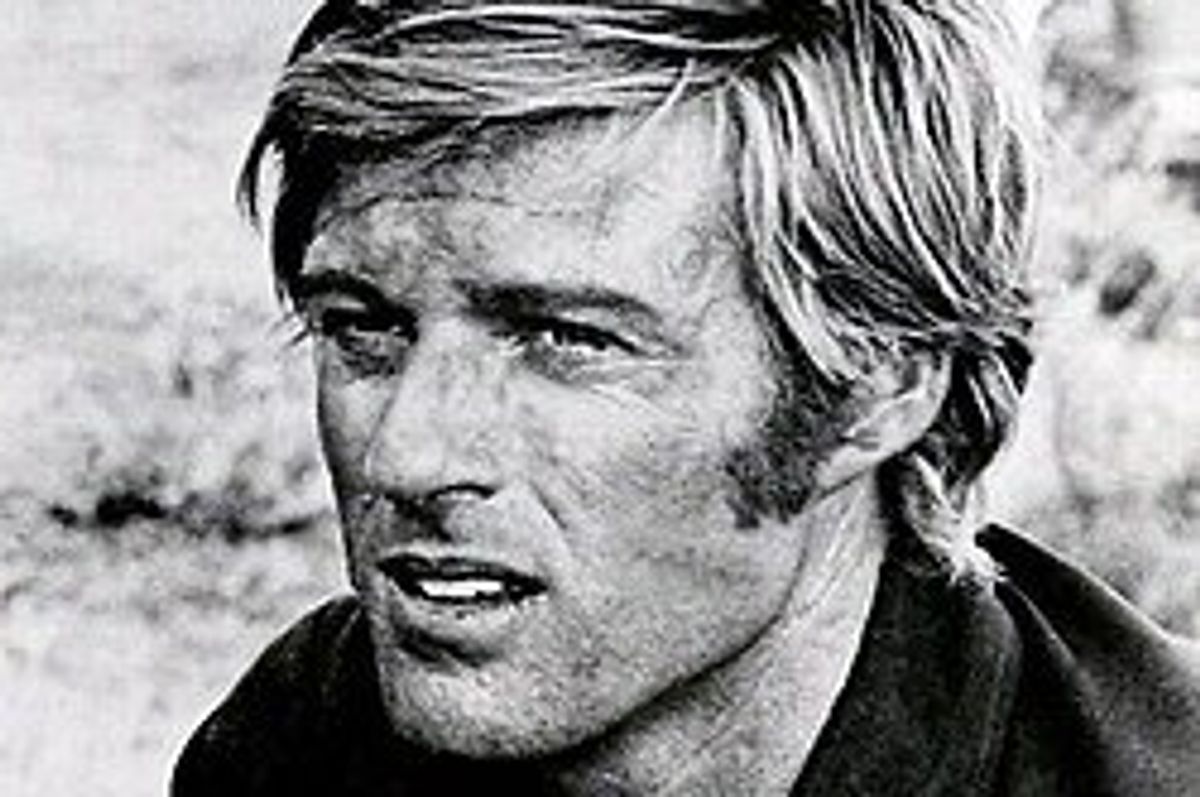
Robert Redford was many things to many people: husband, father, heartthrob, Oscar-winning actor, trailblazer. But to fellow actor Paul Newman, he was both co-star and dear friend.
When Newman passed away in 2008, Redford wrote a touching tribute to him for Time Magazine.
“I first met Paul Newman in 1968, when George Roy Hill, the director of Butch Cassidy and the Sundance Kid, introduced us in New York City,” Redford wrote. “When the studio didn’t want me for the film–it wanted somebody as well known as Paul–he stood up for me. I don’t know how many people would have done that; they would have listened to their agents or the studio powers.”
One of their most powerful connections was laughter. “Whenever he’d make a mistake on set, he would enjoy it more than anybody,” Redford wrote. “I’d look at him, and he’d look at me, and I’d say, ‘You’re not fooling anybody. You’re not staring at me intensely; you’ve lost your line.’ And he’d roar with laughter.”
Redford shared their heartfelt pranks: “We played lots of pranks on each other. I used to race cars, and after he took this rare Porsche I owned for a drive, he began to get into racing. He had incredible reflexes, and he got really good, but he talked so much about it that I got sick of it. So I had a beaten-up Porsche shell delivered to his porch for his 50th birthday. He never said anything, but not long after, I found a crate of molten metal delivered to the living room of my (rented) house. It dented the floor. I then had it turned into a really ugly sculpture and dropped it into his garden. To this day, neither one of us has ever mentioned it.”
So it wasn’t surprising that even after Newman died, Redford would lovingly tease him. In a now resurfaced clip from the Pete’s Dragon press junket in 2016, film critic Kevin McCarthy compliments Redford on his performance in Captain America: Winter Soldier. He says, “There’s a moment in that movie where you walk up to your fridge and you open it up – and in your fridge is Newman’s Own spaghetti sauce.” Redford gives his trademark sly smile.
So it wasn’t surprising that even after Newman died, Redford would lovingly tease him. In a now resurfaced clip from the Pete’s Dragon press junket in 2016, film critic Kevin McCarthy compliments Redford on his performance in Captain America: Winter Soldier. He says, “There’s a moment in that movie where you walk up to your fridge and you open it up – and in your fridge is Newman’s Own spaghetti sauce.” Redford gives his trademark sly smile.
“Have you ever gone out and purchased Newman’s Own, like salad dressing?” McCarthy asks. Again Redford smiles and jokes, “No. Are you kidding? No, I like good food.” His face continues to brighten on the topic.
Redford adds, “Ready for a funny story? My wife and I were in a restaurant in Napa Valley and there was a table next to us of about seven people. And they kept looking over and commenting. And I thought, ‘We’re not gonna be left alone, they’re gonna come over and bug me’ and so forth. And sure enough, this guy comes up from the table and says ‘I’m sorry, I hate to interrupt. We’re all here and we are such fans. I just wanted to tell you how much we love your work.’ And I said ‘Well thank you.’ And he said, ‘And we love your salad dressing.'”
McCarthy laughs, then confirms, “They thought you were Paul Newman? Did you correct him or did you let it go?” Redford dryly, without missing a beat, says, “No. I was so stunned, I just stared into space for a while. But it was a great moment.”
Commenters point out how special their friendship was. “I love how he’s teasing his friend even beyond the grave,” one wrote. “I like to imagine that in that moment he knew Paul heard that comment and smiled.”
McCarthy goes on to talk about the magic of Pete’s Dragon and how it changed Redford’s character’s worldview. He asked, “Do you have something like that in your own life? Something that magical that happened that essentially changed the way you saw life?”
Redford answers quickly. “I did.” He describes being taken to the library as a child and says of the children’s books he read, “All the stories in the children’s section were about a life bigger than the one you were living in. And I got really taken with that. And the idea of fantasy. The idea of seeing a world larger than your own is where the magic was.”
Tributes to Redford are flooding in after news of his death. Director Ron Howard took to X to write, “RIP and thank you Robert Redford, a tremendously influential cultural figure for the creative choices made as an actor/producer/director. And for launching the Sundance Film Festival, which supercharged America’s Independent Film movement. Artistic game changer.”
Governor Spencer Cox of Utah, where Redford spent many cherished years until his passing, wrote on X, “Decades ago, Robert Redford came to Utah and fell in love with the place. He cherished our landscapes and built a legacy that made Utah a home for storytelling and creativity. Through Sundance and his devotion to conservation, he shared Utah with the world.”
October 18, 1648 I. Marc Carlson The Shoemakers Guild of Boston became the first labor union in the American colonies. Labor organization in colonial times
October 18, 1929 The Persons Case, a legal milestone in Canada, was decided. Five women from Alberta, later known as the Famous Five, asked the Supreme Court of Canada to rule on the legal status of women. Some decisions of Magistrate Emily Murphy had been challenged on the basis that she was not a legal person, and she was a candidate for appointment to the Canadian Senate. After the Supreme Court ruled against them, they appealed to the British Privy Council.The Privy Council found for the women on this day (eight years after the case began and eleven years after women received the federal vote), declaring that women were persons under the law. October 18 has since been celebrated as Persons Day in Canada, and October as Women’s History Month.
Sculpture by Barbara Paterson of the Famous Five in Ottawa, first on Parliament Hill to honor women The other women activists in the Famous Five: Henrietta Muir Edwards, Nellie McClung, Louise McKinney, and Irene Parlby. The Persons Case
Food is an essential human need, and even more so for infants and toddlers during the critical early months of rapid growth and development. The United States has the resources to ensure everyone has enough to eat. Yet millions of people across the U.S. experience food insecurity, meaning they struggle to afford enough food for an active, healthy life year-round. In 2023, the most recent data available, 33.6 million adults and 13.8 million children — including nearly 2 million children under 3 years old — lived in food-insecure households, meaning more than 1 in 8 households (13.5 percent) in the U.S. had difficulty acquiring food due to lack of resources.[1]
Figure 1
Households with young children are more likely to experience food insecurity. More than 1 in 7 (15.5 percent) households with infants and toddlers under 3 were food insecure in 2023, compared to 11.9 percent of households without children and 13.5 percent of all households. Nationally, more than 1 in 6 (17.1 percent) children under 3 lived in food-insecure households in 2023 and this share varies across states. (See Table 1.) These shares also vary by race and ethnicity, with children under 3 in American Indian or Alaska Native (30.3 percent), Hawaiian or Pacific Islander (26.3), Black (25.9), and Hispanic (22.4) households more likely to live in food-insecure households than those in Asian (5.5) or white (10.9) households.[2]
Roughly half of the children under age 3 who lived in food-insecure households didn’t experience food insecurity themselves, but the adults in those households were food insecure. Parents often find ways to maintain normal meal patterns for their children, even when they are food insecure themselves; these families often face other challenges as a result of their precarious financial circumstances. And in many households, food insecurity among children is so severe that caregivers report that children were hungry, skipped a meal, or did not eat for a whole day because there was not enough money for food.
Children are especially vulnerable to poverty, financial strain, and hardship. For infants and young children, the lack of access to good nutrition can lead to less favorable life-long outcomes. Caregivers’ struggles paying for food and other bills are linked to worse child outcomes.[3] Material hardship such as the lack of food also increases the risk for child welfare involvement due to neglect and abuse.[4] There is growing awareness among researchers that the consequences of adversity — poverty, abuse or neglect, parental substance use disorder or mental illness, housing instability, and exposure to violence — during the early years of life can extend well beyond childhood and affect people’s physical, mental, and economic well-being as adults.[5]
Conversely, when public policies provide economic security for their families, children tend to have better educational, health, and behavioral outcomes.[6]
Positive Health and Well-Being Effects of SNAP and WIC Last a Lifetime
The Supplemental Nutrition Assistance Program (SNAP) delivers more nutrition assistance to low-income children than any other federal program, making it the nation’s largest child nutrition program. In 2024, SNAP helped about 16 million children each month — about 1 in 5 U.S. children — including 2.8 million children under the age of 3.
While SNAP provides only a modest benefit — just $6.20 on average per person per day — it forms a critical foundation for the health and well-being of children in the U.S., lifting millions of families and their children out of poverty and improving food security. Food insecurity among children fell by roughly a third after their families received SNAP benefits for six months, a USDA study found.[7]
For young children in particular, SNAP’s benefits last a lifetime. Studies have found children have improved birth outcomes and better health, education, and employment outcomes as adults if they had SNAP access during early childhood or if their parent had SNAP access during pregnancy.[8] Access to SNAP among families with children is associated with reductions in child maltreatment reports and child welfare involvement.[9] Emerging evidence also suggests that SNAP helps decrease decades-long racial inequities in food security, reducing the gap between white households and Black and Hispanic households, who are more likely to experience food insecurity because of starkly unequal opportunities and outcomes in education, employment, health, and housing.[10]
The federally funded WIC program — more formally known as the Special Supplemental Nutrition Program for Women, Infants, and Children — also improves lifetime health for low-income pregnant and postpartum parents, their infants, and young children. Among other health and developmental improvements, WIC participation is associated with reduced risk of premature birth, low birthweight, and infant mortality. This is especially important because pregnancy-related complications and mortality, as well as infant mortality, are higher for families of color than for white families, again due to unequal access to health care and broader inequities in health, economic, and other systems for people of color.
Despite these benefits, only about half of all people eligible for WIC were enrolled in 2022. Less than half (46 percent) of eligible pregnant parents participated in WIC. Only 64.1 percent of eligible infants and children under the age of 3 participated.[11] And participation declines as children grow older. While nearly 4 in 5 (78.4 percent) infants eligible for WIC participated in the program in 2022, the rate drops to 65 percent, 50 percent, 44 percent, and 25 percent among children 1 to 4 years old, respectively.[12]
There are many opportunities for state agencies to reach more eligible families with low incomes, and these efforts are showing promise, with take-up and participation increasing in recent years. While data on WIC coverage rates for 2023 and 2024 are not yet available, nationwide average monthly participation increased by 7.1 percent between fiscal years 2022 and 2024, suggesting that coverage rates may have increased modestly.[13]
Increasing WIC take-up across the board — and for pregnant parents of color and their infants in particular — can be an important part of a strategy to improve pregnancy-related and child health, mitigate the large pregnancy-related health disparities affecting these communities, and advance racial equity in other aspects of pregnancy-related and child health and food security.[14]
Megabill Cuts Threaten Access to Nutrition Assistance
The harmful Republican megabill, H.R. 1, enacted on July 4, 2025, will dramatically raise costs and reduce food assistance for millions of people by cutting federal funding for SNAP by $187 billion (about 20 percent) through 2034, the largest cut to SNAP in history. These cuts will increase poverty, food insecurity, and hunger, including among children.
The bill includes a major structural change that will cut billions in federal funding for most states’ basic food benefits, with a new requirement that most states will have to pay between 5 and 15 percent of SNAP benefits. This amounts to billions of dollars each year that states across the country would now be required to pay. If a state can’t or won’t make up for some or all of these massive federal cuts with tax increases or spending cuts elsewhere in its budget, it will have to cut its SNAP program or it could opt out of the program altogether, terminating SNAP food assistance entirely in the state, including to households with young children.
If children lose SNAP, they will also experience harmful ripple effects in other child nutrition programs, such as free school meals and summer EBT, due to the loss of automatic eligibility that comes from receiving SNAP. To make up for the federal cuts and avoid cutting nutrition assistance as well as other priorities affecting young children, such as health care or education, state policymakers will need to either raise new revenue or rollback recent tax cuts to raise the funds needed to prevent harmful cuts.
TABLE 1
Nearly 2 Million Children Under 3 Years Old Lived in Food-Insecure Households, Thousands Across Every State
Children Under 3 Years Old in Food-Insecure Households
State
Number
Share
Alabama
38,000
21%
Alaska
5,000
16%
Arizona
55,000
23%
Arkansas
21,000
20%
California
172,000
13%
Colorado
27,000
14%
Connecticut
17,000
15%
Delaware
5,000
16%
District of Columbia
3,000
11%
Florida
102,000
16%
Georgia
60,000
16%
Hawai‘i
6,000
13%
Idaho
14,000
19%
Illinois
45,000
10%
Indiana
45,000
17%
Iowa
15,000
12%
Kansas
16,000
14%
Kentucky
39,000
25%
Louisiana
35,000
20%
Maine
8,000
21%
Maryland
28,000
12%
Massachusetts
25,000
12%
Michigan
63,000
19%
Minnesota
32,000
14%
Mississippi
21,000
20%
Missouri
38,000
17%
Montana
5,000
14%
Nebraska
15,000
19%
Nevada
18,000
18%
New Hampshire
NA
NA
New Jersey
35,000
13%
New Mexico
16,000
22%
New York
95,000
14%
North Carolina
67,000
18%
North Dakota
6,000
17%
Ohio
59,000
14%
Oklahoma
29,000
20%
Oregon
19,000
15%
Pennsylvania
58,000
16%
Rhode Island
NA
NA
South Carolina
28,000
16%
South Dakota
5,000
14%
Tennessee
34,000
14%
Texas
237,000
19%
Utah
23,000
15%
Vermont
NA
NA
Virginia
36,000
11%
Washington
36,000
13%
West Virginia
11,000
18%
Wisconsin
27,000
15%
Wyoming
5,000
23%
Total
1,808,000
16%
Note: Sum does not equal total due to rounding. Counts are rounded to the nearest 1,000, and shares to the nearest whole number. “NA” refers to states whose sample size was too small to calculate reliable estimates. These estimates rely on ten years of data due to small sample sizes in many states. However, for the 13 states that had large enough sample sizes, their five-year estimates of the share of children under 3 in food-insecure households were similar to the ten-year estimates presented here. Source: CBPP analysis of 2014-2023 Current Population Survey Food Security Supplement
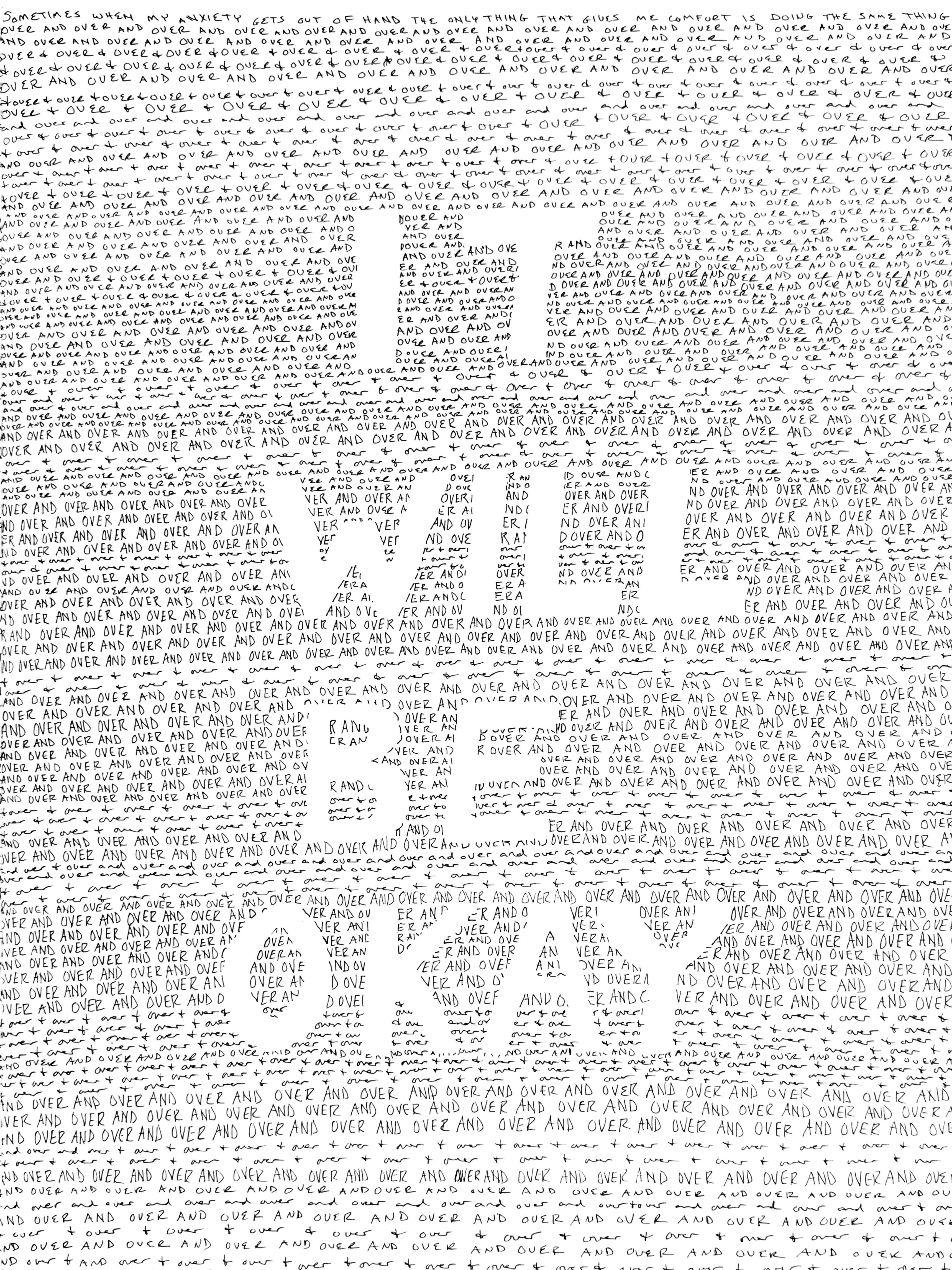
This week’s doodle was one I started a long time ago and came back to off and on whenever my anxiety got crazy. This week I finished it.
“Sometimes when my anxiety gets out of hand the only thing that gives me comfort is doing the same thing over and over and over and over and over and…”
Does it count as art if it’s just text? I’m not sure, but it brings me comfort and maybe it will bring you comfort too.
Whenever I worked on this I reminded myself that every time I’d been worried in the past, if I could go back it time I would assure myself that “It will be okay.” Maybe not easy. But always okay, eventually. And now I tell myself that again. I tell you too.
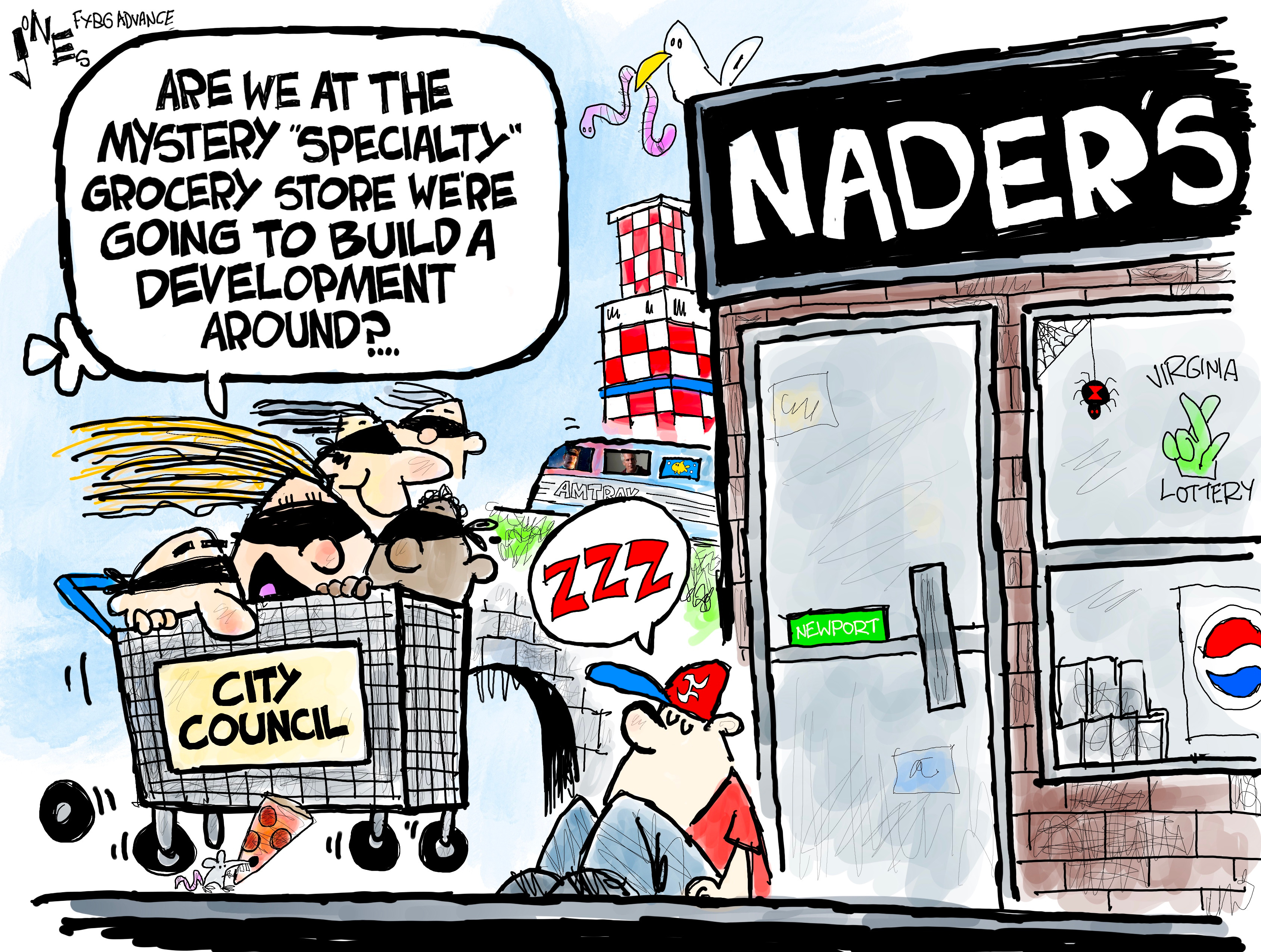
Back on July 6, I published another cartoon on this same issue. A sketchy developer is asking for Fredericksburg to zone an area for homes, apartments, retail space, and for it all to be anchored by a “specialty” grocery store. The catch is, the city won’t be allowed to know which grocery store it’s getting. And now, they’ve taken a closer step to approving it.
Nader’s is a downtown grocery store in Fredericksburg, and it’s an institution. But over the years, I’ve heard complaints about it being the only grocery store downtown. It’s probably Fredericksburg’s version of a Bodega. A Bohemian friend of mine wrote a song about the place. I think Nader’s name has changed, but it’s always going to be known as Nader’s. It is by the Purina tower and the train station.
Creative note: I came up with this idea while on the train to my convention last Thursday. Because of all the shenanigans happening here, I wasn’t able to finish the cartoon until Friday afternoon. I drew this in the lobby so I could spend more time with my colleagues, and a LOT of them were looking over my shoulder watching me draw this. That would have been intimidating a few years ago, as most of them are better artists than I am, but they’re really the coolest people and are super supportive.
During the awards ceremony Saturday night, the president of the AAEC, Marc Murphy, mentioned that the winner of the Rex Babin Award was drawing (a local cartoon) in the lobby with friends watching. And that’s how I knew I had just won the award. More on this soon. (snip)





 Scottie's Playtime
