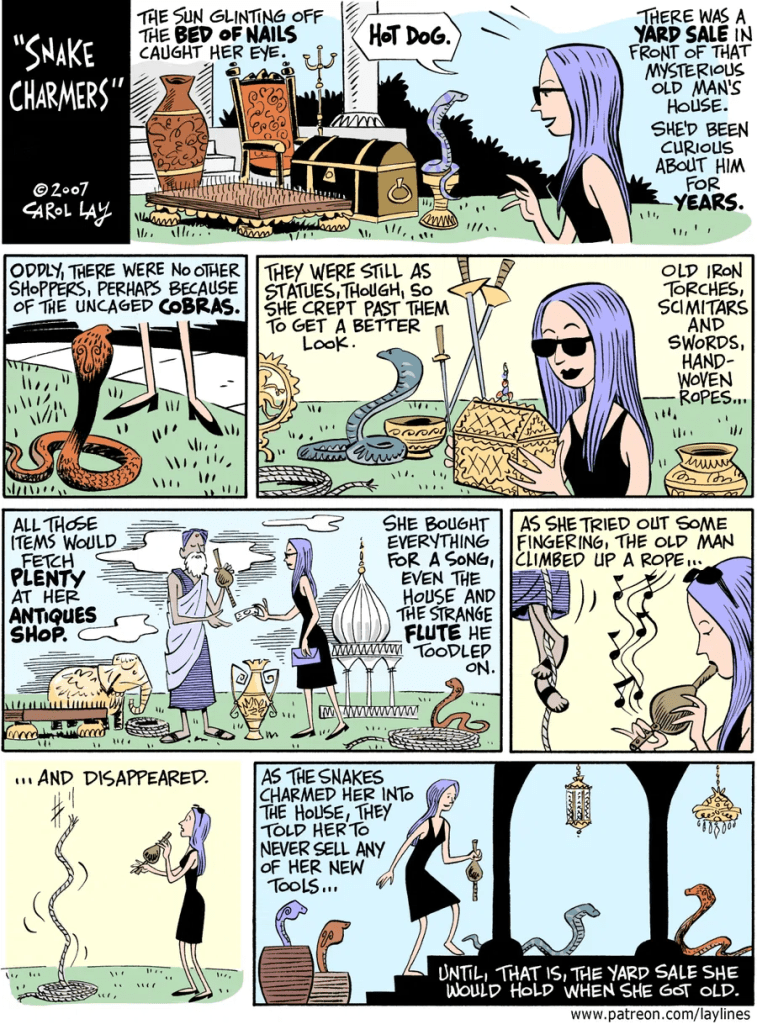
but you don’t have to read it. It’s nothing bad, but is very truthful. From 2007, but the locations, of course, are interchangeable.

but you don’t have to read it. It’s nothing bad, but is very truthful. From 2007, but the locations, of course, are interchangeable.

They just keep on keepin’ on!
Any season of the year, the Mountain Chickadee is a delight to encounter. In their breeding season, they form neighborhoods of adjacent territories in the conifer forests of western Canada and the U.S., which ring in the early spring dawn with dozens of cheerful whistled songs. In winter, groups of Mountain Chickadees are joined by other birds — nuthatches, woodpeckers, creepers, kinglets — to form large dispersed flocks that move together through the forest, following the chickadees’ namesake rallying call.
Mountain Chickadees are social birds, living in groups of up to three mated pairs and juveniles of the last breeding cycle for most of the year, only breaking off into territorial pairs for the breeding season. In fact, while we tend to think of the breeding season as the time when mates are chosen and territories are established, most of this actually occurs in the winter. This is when the social hierarchy is solidified between the individuals in a group, and come spring, the dominant birds will reliably take the best territories. While boundaries may shift somewhat, the same birds will usually hold the same territories year after year. Pair bonds are formed during the winter as well, and usually last for as long as both birds survive.
Mountain Chickadees are well-known for their caching behavior. To survive harsh mountain winters, these chickadees hide surplus food throughout their winter territories, a behavior known as “scatter hoarding.” A single chickadee may cache tens of thousands of food items — insects, conifer seeds, or goodies from bird feeders — over the course of a year. They may cache food any time they have extra, and may recover caches any time of the year, but spend the most time caching in the fall, and the most time eating from them in the winter. In fact, studies have shown that Mountain Chickadees living in harsher winter environments have better spatial memory and are more adept at remembering where they have cached food. Unsurprisingly, these birds also survive longer. (snip-MORE)

=====
More than most, the Black-billed Magpie is a bird that inspires strong emotions in humans. A familiar species across much of the West, the Black-billed Magpie is intelligent, adaptable, and bold. For these attributes, they are both admired and loathed. While considered an annoyance or an inconvenience by some, they are also highly social and will occasionally leave “gifts” for humans who feed them.
Like many other intelligent and opportunistic corvids, magpies will take advantage of whatever resources they can. As such, the Black-billed Magpie is probably best known as a scavenger of garbage, carrion, and poorly guarded picnics. This has given these birds a bad reputation, with many regarding them as pests. A common folk belief is that magpies will wound cows to eat their flesh or drink their blood. Magpies will, in fact, stand on the backs of cows to probe and peck. However, the goal is typically not to eat the cow itself, but the parasites on the cow, such as ticks, that are doing just that. Cows are not the only beneficiaries of this behavior — magpies will eat ticks off of other large mammals, including bison, moose, elk, and deer.
The Black-billed Magpie holds a special place in mythology as well. Magpies are recognized as messengers in numerous Indigenous cultures of North America, sometimes to the aid of humans, sometimes to carry news to the Creator. One widespread story tells of how the magpie, for helping humans and birds alike, was given the honor of “wearing the rainbow” — a reference to the iridescent sheen on this bird’s wings and tail. (snip-MORE)

No particular reason, they simply strike me, so I’m sharing. Have some reading music, too.

https://www.gocomics.com/lards-world-peace-tips/2026/02/27

https://www.gocomics.com/jim-benton-cartoons/2026/02/27

https://www.gocomics.com/jerry-king-comics/2026/02/27

https://www.gocomics.com/heathcliff/2026/02/27

https://www.gocomics.com/freerange/2026/02/27

https://www.gocomics.com/foxtrotclassics/2026/02/27

https://www.gocomics.com/darksideofthehorse/2026/02/27
Enjoy your Friday, everybody!!
Hear the song, get more facts, on the page! (Title below is the link.)

A handsome bird of open landscapes, the Chocolate-vented Tyrant is an unusual species to be included among the so-called “flycatchers.” Inhabiting flat grassland and scrub, this bird is primarily a ground-dweller, rarely seen higher than a fencepost or tussock. Furthermore, this flycatcher is not one to catch insects on the wing (to “fly-catch” in ornithology lingo), preferring instead to hunt its prey on the ground. In keeping with this terrestrial lifestyle, the Chocolate-vented Tyrant has notably long legs and is more likely to run or walk than to hop or fly. In combination with its large size and rusty belly, the tyrant’s appearance and behavior are reminiscent of birds in the thrush family, such as the American Robin.
The Chocolate-vented Tyrant breeds in the cold, dry, and infamously windy Patagonian Steppe, also known as the Patagonian Desert. In an environment largely devoid of trees, this bird takes advantage of the open sky to perform an expansive aerial display, similar to other birds like the Red Knot and American Woodcock that use flat, open habitat in the breeding season. The Chocolate-vented Tyrant is also known to forage alongside wintering shorebirds — yet another habit unusual for its family, but typical of others, like the groups of sandpipers and plovers it sometimes joins.
Birds around the world are declining, and many of them, including the Chocolate-vented Tyrant, are facing urgent threats. Throughout the tyrant’s range in South America, livestock grazing, agricultural expansion, and invasive species all hinder this bird’s ability to thrive. Furthermore, sparse protected areas may be insufficient to support the species, particularly on its nonbreeding grounds in the Pampas, the vast grasslands region east of the Andes.
The Chocolate-vented Tyrant is losing habitat in both its breeding and nonbreeding ranges. On the Patagonian Steppe, where this species breeds, overgrazing by sheep disrupts the limited vegetation afforded by a dry climate, resulting in erosion and eventually desertification. The Pampas faces similar threats from overgrazing by cattle, as well as the clearing of native habitat in favor of agriculture.
(snip)
The Chocolate-vented Tyrant is a habitat specialist, making it particularly vulnerable to threats like habitat loss and degradation. In addition to protecting habitat through our network of reserves, ABC also works to reduce the threat of invasive species and restore habitat. At ABC, we’re inspired by the wonder of birds and driven by our responsibility to find solutions to meet their greatest challenges. With science as our foundation, and with inclusion and partnership at the heart of all we do, we take bold action for birds across the Americas.
Habitat is the foundation for birds’ survival. Working with dozens of partners and local communities throughout Latin America, ABC supports a growing network of protected areas in more than a dozen countries. Totaling more than 1.3 million acres, nearly one-third of the world’s birdlife (more than 3,000 species) is protected by an ABC-supported reserve.
(snip-MORE)

Written by Matthew Russell
Beneath the icy stillness of the Arctic, where sunlight barely filters through thick sea ice, jellyfish are rewriting the rules of survival. For years, scientists assumed these delicate creatures could not withstand the region’s brutal winters. But that assumption shattered when researchers discovered adult Chrysaora melanaster jellyfish drifting under the frozen Chukchi Sea, tentacles trailing through near-freezing water.
The findings stunned marine biologists. Footage captured by Columbia University researchers using underwater vehicles revealed dozens of fully grown jellyfish gliding along the shallow seafloor. Their bells stretched nearly 24 inches across, and their tentacles extended up to 10 feet long. These jellyfish weren’t dormant, dying, or clinging to survival. They were alive and active, defying decades of assumptions about Arctic marine life, Live Science reports.

Arctic jellyfish are surviving the winter in their adult stage.
To capture this rare glimpse, researchers rode snowmobiles across miles of frozen ocean and drilled through four feet of ice. Cameras dropped into the water below revealed not only jellyfish but a surprising abundance of other life — from algae to crustaceans. What stunned scientists most was that these jellyfish appeared healthy and fully developed, in the medusa stage, not the dormant polyp form previously believed to be their only means of winter survival, according to Columbia Climate School.
The cold helps them. It slows their metabolism, allowing them to conserve energy. And the ice above shields them from turbulent winter storms.
As Columbia biologist Andy Juhl put it, “Life under sea ice is like living in a refrigerator — everything slows down.” This slow-paced existence may help these jellyfish survive for years, not just months as once assumed.

Scientists found jellyfish living under four feet of Arctic ice.
Jellyfish don’t just surprise us in the north. Thousands of miles south, in the icy waters of Antarctica, researchers aboard the Schmidt Ocean Institute’s expedition recently filmed one of the rarest marine animals ever seen — the ghost jellyfish. This deep-sea giant (*Stygiomedusa gigantea*) spans over three feet wide, with flowing oral arms stretching more than 30 feet. It drifts silently through the dark, catching prey without the aid of tentacles. It was filmed at 1,300 meters depth in a region only accessible because a massive iceberg had recently broken free, the Stewartville Star reports.
Ghost jellies are rarely seen — only 120 sightings have ever been recorded since their discovery in 1899. Their immense size and unusual feeding methods set them apart, but it’s their reproduction that draws perhaps the most curiosity. Unlike most jellyfish, ghost jellies give birth to live young. The juveniles emerge directly from the parent’s mouth after developing inside its bell, a trait called viviparity, according to Live Science.

These jellyfish were once believed to die off each winter.
While ghost jellies are deep-sea dwellers, some were filmed at surprisingly shallow depths — just 260 feet in Antarctic waters. Researchers suggest that in polar regions, shifts in sunlight and prey behavior may draw these jellies closer to the surface.
Both Arctic and Antarctic jellyfish species show how adaptable these animals can be. In the Arctic, jellyfish once assumed to vanish in winter now appear to thrive, aided by the very cold that was thought to be their limit. In Antarctica, a creature thought to be relegated to unreachable depths rises when opportunity allows, providing rare glimpses of life in Earth’s most extreme waters.
What unites them isn’t just their beauty or rarity. It’s their resilience — silent drifters shaped by pressure, cold, and darkness, yet still pulsing through the oceans, undeterred.

Ghost jellyfish in Antarctica can grow over 30 feet long.
Despite their resilience, these jellyfish may face new threats. According to Columbia Climate School, arctic species like *C. melanaster* rely on thick sea ice for shelter. As climate change causes rapid ice loss, these jellyfish — and many creatures that depend on sea ice — may see their habitats disappear. At the same time, jellyfish in warmer parts of the world are thriving, even swarming, in response to warming waters and fewer predators.
In the far north, though, it may be the opposite. With less ice, cold-adapted jellies could decline. In the case of these jellyfish, warming may simply mean vanishing.
Still, these discoveries are a reminder of how much we have yet to understand. The creatures beneath the ice and beyond the reach of sunlight continue to defy expectations, reminding us that the ocean — even in its coldest corners — is alive with mystery.
c’mon, everyone, Scottie can draw that toon! Cheer him on, and join him-draw one of your own! 🧑🎨
1. Start with a character

Will your character be an avatar of yourself? A plucky young heroine? A grizzled space pirate? A robot with feelings? Design your character with simple shapes that can easily be repeated from panel to panel. Put them in different poses, draw them far away and up close, from various views. Once the character starts moving on their own, you have the start of a story.

Draw the action from left to right, top to bottom across the page. The space between panels is called the gutter. In the gutter, time passes. This amount of time can be a millisecond (a character blinks) or an eon (a star collapses). Use small changes in expression and pose to show what the character is thinking and feeling. Add thought balloons and text bubbles for dialogue.

Make each character distinct in shape and personality. Let their form dictate their behavior and action. How do they complement or oppose the main character? What new direction can they take the story?
(Snip-this is a pretty long post with the art, so I’m snipping here. I wanted to leave the art big enough to be seen fairly clearly. We will know how our own toons end! Also, though I don’t recall thinking about it when I found this substack, no doubt there was subconscious inspiration from Michael Seidel’s blog. I read it over lunch.)
Hello friend,
This week I needed a quiet place to escape from my own head so I made one:

And then I added another swing because maybe you need a quiet place to be as well. We’re all in this together.
In slightly related news, I follow a lot of artists on instagram who share tips and tutorials and this tree idea came from Cathflo.art who I adore. Her tutorials aren’t in English but art is universal in any language. Also universal? Hope. Love. Joy. Kindness. Compassion.
Just saying.
Love,
me
I lol’d. Still grinning each time I look at it while I post it. 😄