Supernova Remnants

The ghosts of dead stars

Cosmos: Cosmos is a quarterly science magazine. We aim to inspire curiosity in ‘The Science of Everything’ and make the world of science accessible to everyone.
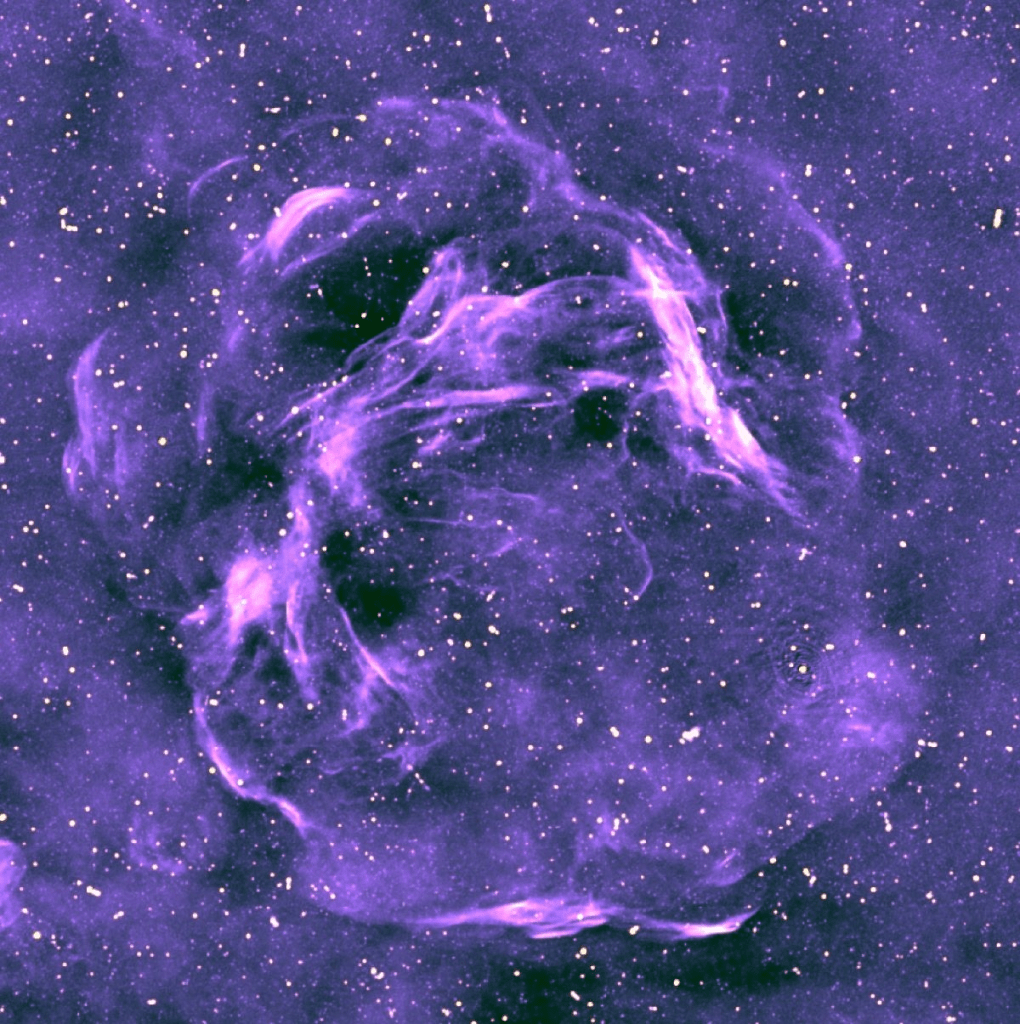
Supernova remnant G278.94+1.35, dubbed ‘Diprotodon’, captured by CSIRO’s ASKAP radio telescope. Credit: Sanja Lazarević

Supernova remnants are some of the most visually impressive objects in space. Astronomer Kovi Rose offers us a unique window into these violent and powerful celestial events.

Something explosive always seems to be happening in space. We often see headlines in the news about dramatic events like a flaring star, a gravitational wave from colliding neutron stars, or the latest supernova erupting in a galaxy far, far away.

The stories normally tend to focus on the peak periods of these energetic events, which generate in a week roughly a trillion-trillion times as much energy as we generated on Earth last year. But what remains after a star’s collapse – a supernova remnant, as astronomers call it – is both spectacular and scientifically interesting.

Purple cloud like ripples in a donut shape on a dark background.
Supernova remnant G295.5+09.7 captured by the ASKAP radio telescope at Inyarrimanha Ilgari Bundara, CSIRO’s Murchison Radio-astronomy Observatory. Cloud-like ripples and filaments of interstellar gases are illuminated along the boundaries of the supernova remnant. Credit: ASKAP Evolutionary Map of the Universe (EMU) Team & Kovi Rose

The end of a star

Stars are endlessly collapsing under gravity. This immense pressure drives a fusion reaction, where hydrogen particles join together into heavier elements. The energy produced by this fusion reaction pushes outwards, stopping the star from collapsing in on itself. However, when a star starts to run out of fuel for its fusion engine, the balance breaks down and things get interesting.

For stars roughly the size of our Sun, there is no big explosion as they reach their final years. Instead, when they run out of fuel, they gently shrink into a glowing lump of carbon and oxygen called a white dwarf. White dwarfs don’t collapse entirely under the force of gravity, because the electrons in the remaining atoms are strong enough to push back. This is thanks to a quirky quantum effect called electron pressure.

A white dwarf can produce a supernova, but only under very specific circumstances, when the white dwarf is orbiting another star. When a white dwarf gets too close to the other star – which could even be another white dwarf – its gravitational influence will start to pull in material from the other star. This breaks the balance between gravity and those simmering electrons, ultimately causing the white dwarf to explode!

Bigger stars do end their lives in a supernova, and usually without any outside help. These stars – with more than 8 times the mass of our Sun – live fast and die young. They burn through their nuclear fuel faster than their smaller cousins, with lifetimes of millions (not billions) of years. These stars start by fusing hydrogen into helium in the core. As that runs out, they start fusing helium atoms together instead. And so it continues up the periodic table. The heavier the element, the faster the star runs out of fuel – with carbon and oxygen burning for mere years and months, respectively. But this can’t go on forever.

Once the core is made of iron, the fusion process grinds to a halt. With no new energy keeping the star inflated, its layers suddenly collapse. The rush of material inwards hits the remaining iron core and produces a shockwave that moves outwards at speeds nearing a quarter of the speed of light. These aptly named core-collapse supernovae usually leave their densely packed remains behind in the form of a neutron star – or, depending on how massive they were, a black hole.

Tuning the radio

For both classes of supernova, the stellar matter from the explosion is launched out across space at thousands, or even tens of thousands, of kilometres per second. Moving at these speeds, the leading front of the supernova can take tens of thousands of years to slow down, usually after spreading out across several light-years of space (one light-year is about 9.5 trillion kilometres) and sweeping up any additional material they encounter along the way. This is a supernova remnant: an interstellar bubble created by the wake of one of nature’s most energetic explosions.

This powerful blast wave contains fast-moving electrons that interact with nearby material in a fascinating way. The space around a supernova is filled with magnetised matter, and because of the special relationship between electricity and magnetism, the electrons curve rather than flying straight. As their paths change, the electrons are forced to slow down. Some of their energy is converted into light – but not always as light our eyes can see.

Pinky purple circular shape on a purple background
Supernova remnant SN1006 captured by CSIRO’s ASKAP radio telescope. SN1006 is the remnant of a supernova that was observed in the year 1006 by astronomers all over the world, from Egypt to China. It was first recognised as a supernova remnant in 1965, following radio observations at Murriyang (the Parkes radio telescope). Credit: Dr Emil Lenc & Kovi Rose.

Visible light is just one window into the full spectrum of electromagnetic waves. It has a short wavelength of a few hundred nanometres; for context, the average width of a single human hair is nearly 100,000 nanometres. Most of the light in supernova ‘bubbles’ has much less energy, with a wavelength of tens of centimetres or even metres. This particular type of light is called radio.

Radio astronomers have built just the right instruments to detect this kind of light emitted by supernovae. From the initial blast to the giant bubble-like structures they create as the explosion moves out through space, radio telescopes can detect these explosive supernova ‘bubbles’ expanding and eventually slowing down as they become a remnant.

We also see the brightness and energy of the light changing depending on how much material the shockwave sweeps up as it expands, or how strongly magnetised the surrounding material is. By studying the radio light generated by supernova remnants, we can learn when and how they formed, as well as what kind of dense objects the explosion left behind.

Australia’s view

Radio astronomy has a long, continuous history in Australia. We were one of the first countries in the world to use radio instruments to study celestial objects. The American radio engineer Karl Jansky, widely considered the founder of radio astronomy, first detected radio emission in 1933 from a dense region somewhere in the Milky Way. However, in 1954, CSIRO astronomers in Sydney figured out that the source of Jansky’s detection was located right at the centre of our galaxy.

As the field of radio astronomy developed, astronomers and engineers began exploring different types of telescopes that could be used to study a range of objects in the sky. Depending on the design of the instrument, we can use them to detect point-like radio sources – like the centres of distant galaxies – or diffuse clouds and filaments, like the boundaries of a supernova remnant. And using advanced image-processing techniques and modern telescopes like CSIRO’s ASKAP radio telescope, we can create images that show the beauty of the radio sky at both small and large scales.

Man sitting in a dish shaped hole adjusting wires radiating from the centre.
This 24-metre-wide ‘hole-in-the-ground’, originally dug out by a few radio astronomers during their lunch breaks, was used to locate Sagittarius A. At the time it was the second-largest radio telescope in the world. Credit: CSIRO
Close up of three satellite dishes in a red sandy flat landscape.
CSIRO’s ASKAP is a telescope made of 36 smaller (12-metre) dish-like antennas spread over a large area on Wajarri Yamaji Country in Western Australia. Credit: Laura Driessen

Exploring our galaxy

Supernova remnants are stunning markers of the explosive history of our galaxy. And luckily for astronomers, we’ve already discovered hundreds of them. Observations of that white road of stars that runs across the sky, the Milky Way, have revealed a foamy sea of interstellar bubbles created by ancient supernovae.

The shapes of supernova remnants reflect the circumstances of their formation and their encounters with neighbouring objects, including cosmic clouds of gas and dust. Some appear symmetrical, while others take on distorted forms, moulded by interactions with nearby material or overlapping with other expanding bubbles. In fact, our whole solar system sits near the centre of a ‘superbubble’ – a vast cavity containing most of the stars visible to the naked eye. Scientists reckon the superbubble was carved out by the cumulative explosions of multiple supernovae over millions of years.

Radio astronomers estimate that as many as 1,500 supernova remnants may be still hiding in our galaxy undiscovered. New observations with highly sensitive radio instruments like ASKAP and the upcoming SKA telescopes will help us uncover these elusive interstellar bubbles, and reveal more details about the energetic processes that shaped the Milky Way.

Cloudy green wavelengths as seen through the radio telescope.
The central band of the Milky Way seen at radio wavelengths. This image combines observations from the Parkes and ASKAP radio telescopes to reveal the network of supernova remnants and gas clouds in the central region of our galaxy. Credit: R Kothes (NRC) and the PEGASUS team.

Kovi Rose is an astrophysics PhD candidate at the University of Sydney who studies the radio light from nearby dwarf stars and distant supernovae.

Originally published by Cosmos as The ghosts of dead stars

“Nest Helpers”

Dancing “Jerks”

(“Jerks” is a joke on another blog.)

Dancing cockatoos more common than previously thought

Velentina Boulter

White cockatoos on a tv antenna
A group of Little Corellas (Cacatua sanguinea), a species of white cockatoo native to Australia and southern New Guinea, perch on a suburban TV antenna. Credit: Lea Scaddan / Moment / Getty Images Plus.

A new study shows cockatoos in captivity dance more often than expected, with the birds pulling out moves like the “body roll” and the “moving jump”.

The researchers observed cockatoos showing off a total of 30 distinct dance moves. Some stylish birds showed off unique moves not seen in any other bird.

“The work suggests that playing music to parrots may provide a useful approach to enrich their lives in captivity, with positive effects on their welfare,” says lead researcher Natasha Lubke from Charles Sturt University, Australia.

Lubke and colleagues analysed 45 videos of cockatoos dancing that had been posted to social media.

Across the videos, the researchers established 30 distinct dance moves like the “headbang” or the “sidestep”. Of these dance moves, 17 had not been previously described scientifically.

The “downward movement” was the most common motion, appearing in 50% of the birds’ repertoire. Routines involving just wings, like “flapping” and “wings back”, were the least common.

Each cockatoo species had a unique top 10 most common dance moves, and the researchers observed that closely related species did not display similar dances.

Illustration of cockatoo dance moves
Illustration of the 10 most common recorded dance movements. Ethogram descriptors based on Keehn et al. [3] and illustrations by Zenna Lugosi. Credit: Lubke et al., 2025, PLOS One, CC-BY 4.0.

The researchers then followed up their initial video analysis by investigating the behaviour of 6 cockatoos at Wagga Wagga Zoo in Australia.

The cockatoos were then played either music, an audio podcast or no audio at all. All cockatoos performed dance moves whether there was music playing or not.

“I showed that dancing behaviour is more common in cockatoos than previously thought and was seen in 10 of the 21 cockatoo species,” says Lubke.

“My analysis also indicated that dancing is far more complex and varied than previously thought, recording 30 different movements seen in multiple birds and a further 17 movements that were seen in only one bird.”

Some of the dance moves observed were similar to those displayed by wild parrots when they are in the process of courtship. This suggests captive cockatoos may have redirected their courting dance toward their owners.

More research is needed to understand whether the cockatoos actually enjoy dancing in order to improve the welfare of captive cockatoos. 

“The similarities with human dancing make it hard to argue against well-developed cognitive and emotional processes in parrots, and playing music to parrots may improve their welfare,” says Rafael Freire, a professor in animal behaviour and welfare at Charles Sturt University. 

“Further research would be beneficial to determine if music can trigger dance in captive birds and serve as a form of environmental enrichment.”

All 30 of the cockatoos’ groovy dance moves are listed in the research paper published in PLOS One.

Originally published by Cosmos as Dancing cockatoos more common than previous thought

Tissue alert

Odie walked the Rainbow bridge about 4:20 pm on 8-5-2025

The weekend before this last one Odie started throwing up and he was not eating as well as he normally did.  On Monday last week Ron took him to the vet.  After 800 dollars the vet said she felt he had no blockage and most likely he had an ulcer.  She gave us several medications and told us to get him some over the counter Pepcid.  We managed to give him his medications in a syringe. 

But on Thursday we took him back to the vet for a bolus of fluid because he still was not eating nor drinking.   We increased his new make him hungry ear rub.   All weekend we tried hard to entice him to eat or drink.  On Monday I had a doctor’s appointment.  When I got home I suggested that Ron call the vet.  He told me he got Odie to drink something and said he heard cats can make huge turn a round after not eating or drinking for days.  I felt what it really was a cry for more time.  As Odie seemed stable and not in pain I let things be, after all Ron watches a lot of animal vet shows and I hoped he was correct.   

For the first time since Odie got ill he did not leave his safe space which is Ron’s closet that day.  Ron tried hard to get him to drink or eat.   This morning (Tuesday 8-5-2025) I told Ron he needed to call the vet and he agreed, he had faced the fact of Odie’s situation and realized that Odie was passing and not able to get better. 

The vet told us to bring him in around 4 pm or 1600 for those on a 24 hour clock.  All day both Ron and I checked on him and Ron kept trying to get him to eat or drink.  The veterinarian hospital is only like five or 7 minutes away from us.   At about 3:50 pm Ron set the carrier on the counter and put a fresh blanket in it.  I picked Odie up from the closet and realized he had no strength to even support himself anymore.  Once I got him in the carrier he did not even try to turn around and we struggled to get his tail completely in the carrier.  I ended up having to reach around him to pull the blanket further in so we could secure the door.  

I needed Ron to carry the carrier to the vet’s office, but while I had been with every furry family member when they walked the rainbow bridge, Ron has not joined me during the procedure as his feelings are so strong and he has struggled with the death of each one.  I feel it is the last act of love I can do for them.  My last duty for them.  

The vet asked if we both wanted to stay and I said yes.  I was surprised Ron did also.  The vet assistant took Odie to have an IV inserted.  I asked Ron if he was sure he wanted to stay instead of going to the waiting room or the car.  He wanted to stay.  When they brought Odie back we petted him until the doctor came in to do the finial step.  As first the sedative and then the last medication was injected Ron sat near him and talked to him.  I stood next to him and gently rubbed his head and neck fur.  I said a few things verbally and a lot more mentally.  I could see Ron was doing the same.  I was proud of how he handle a very painful experience.  The one who was crying the most was the vet, she said that her cat was a ginger and she really liked Odie when he was visiting them.  

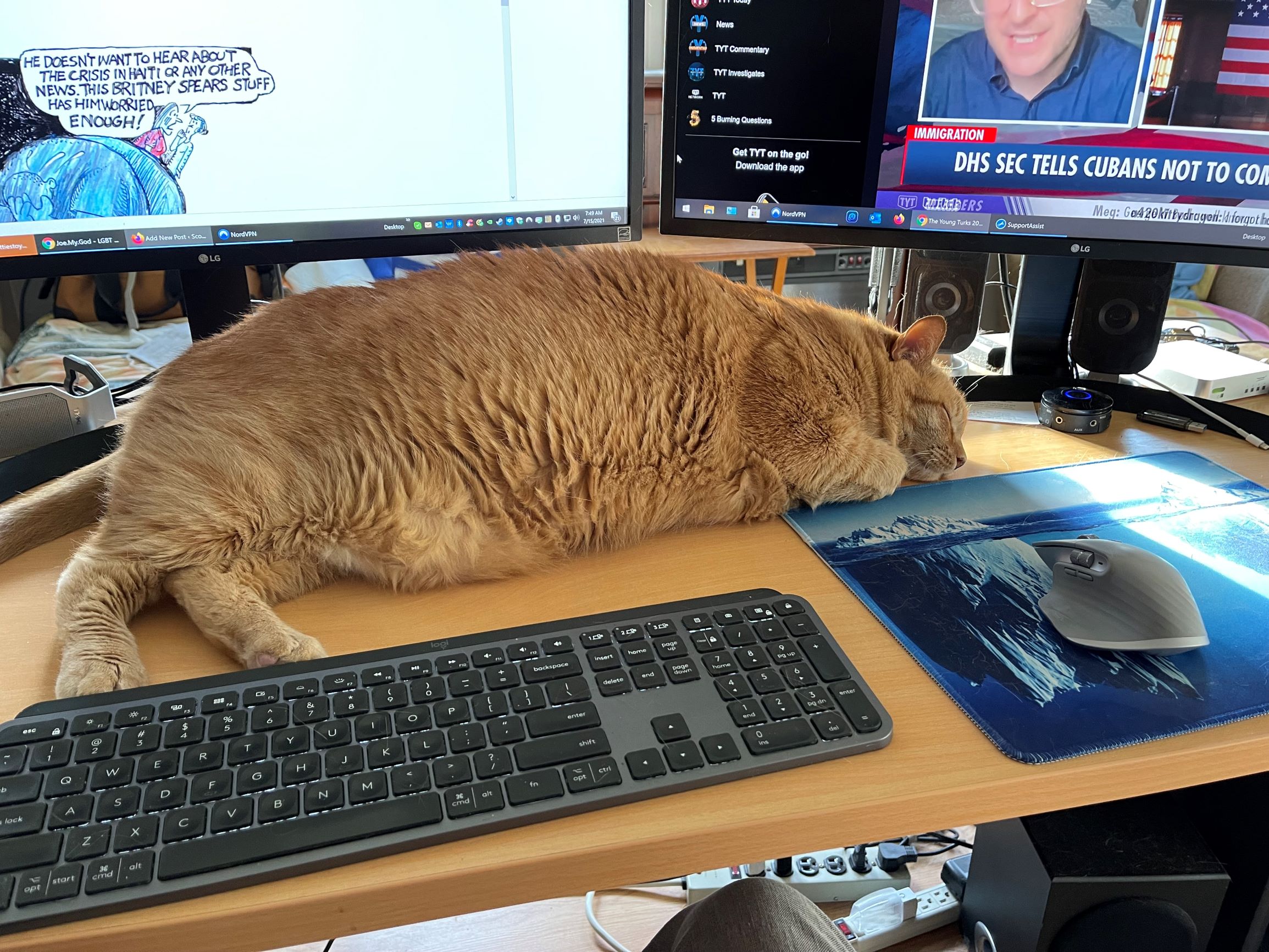
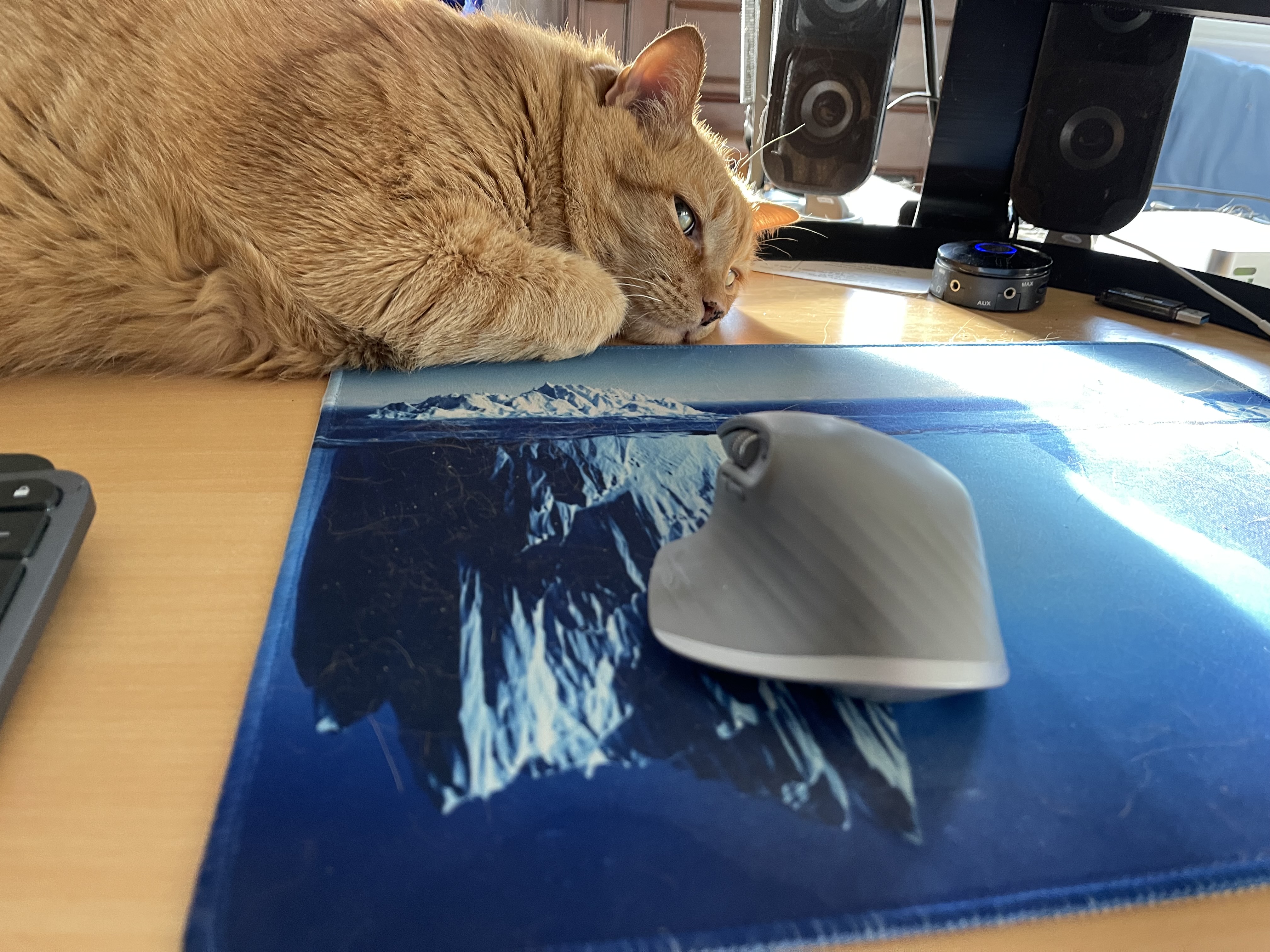
I have included a few pictures of Odie below.   Best wishes, Purrs, and Hugs for all who want them.  

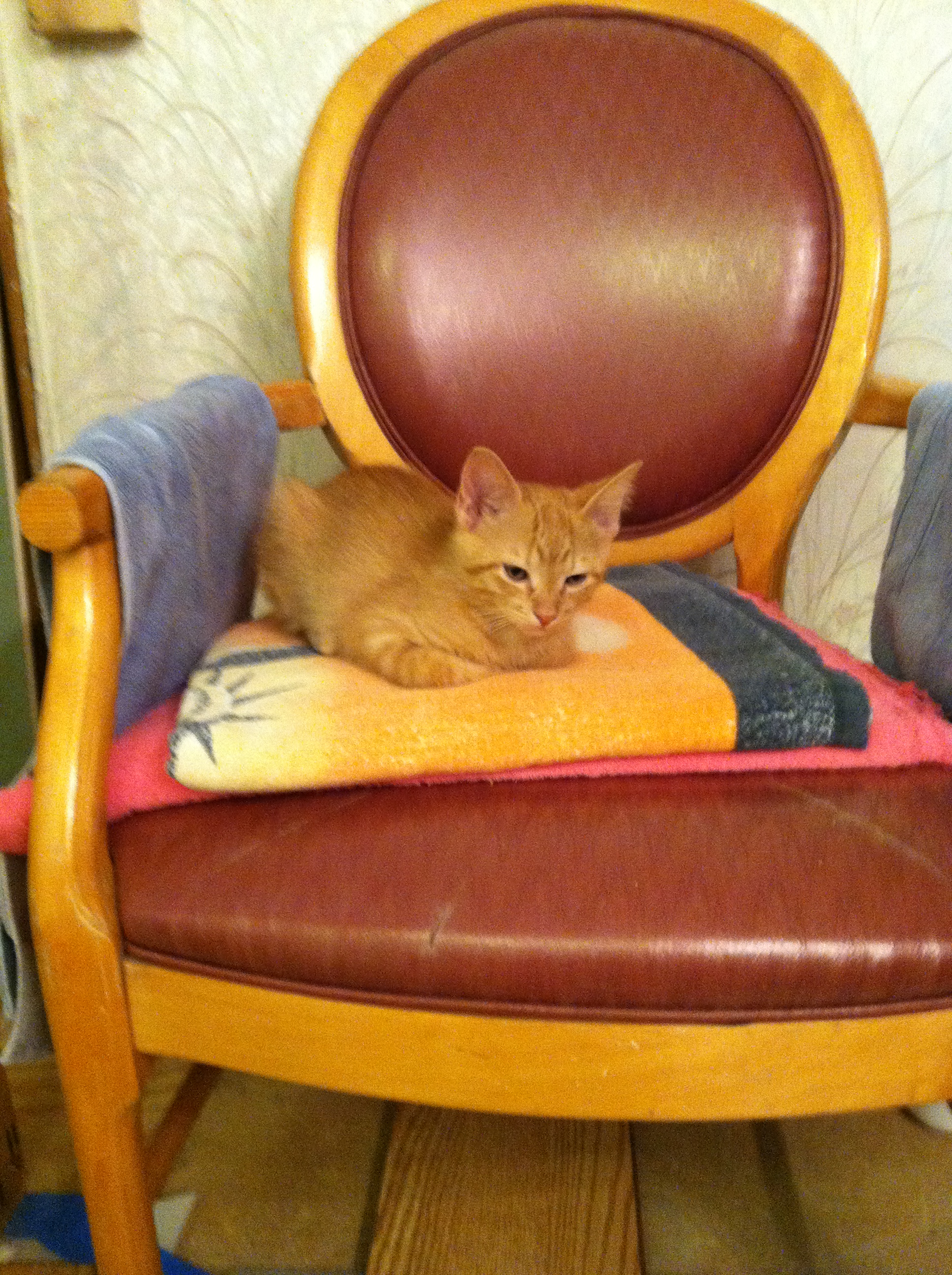
Odie as a Kitten


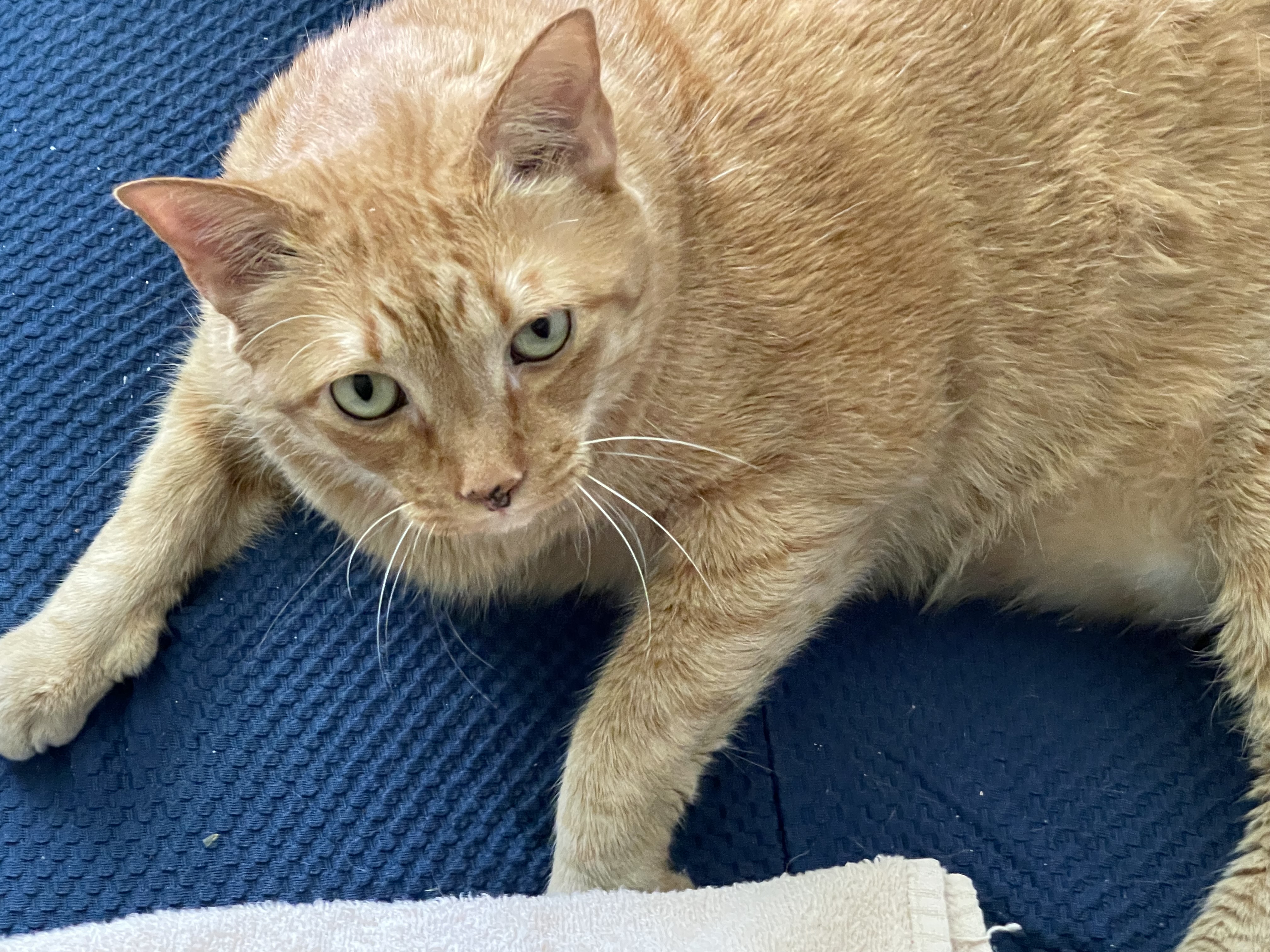
Odie older.

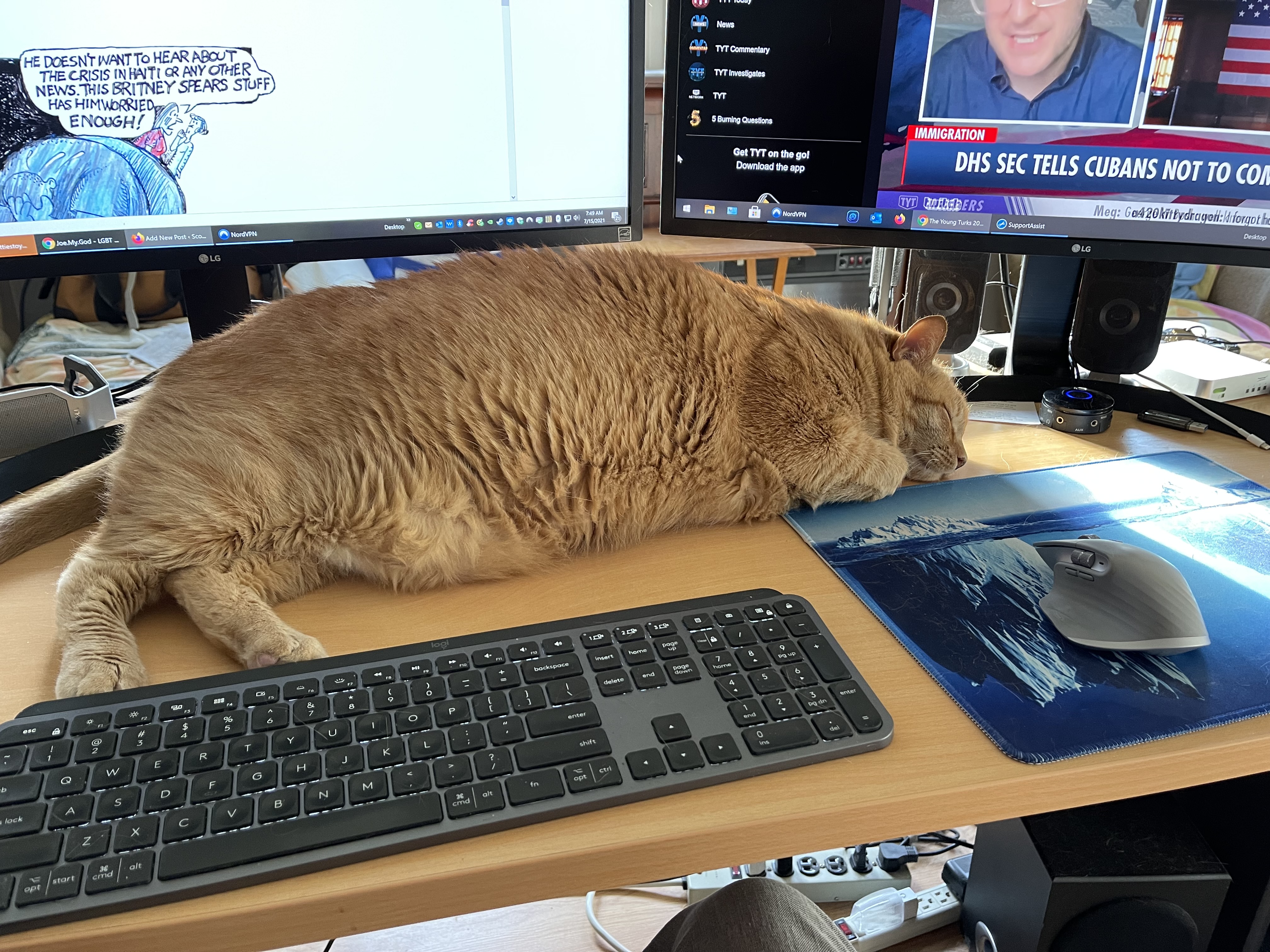
Odie in his favorite spot to get my love and attention.   My desk.


Hibernating For Better Health?

Unlocking the genetic ‘control switches’ of hibernation

Velentina Boulter – Velentina Boulter is science journalist based in Melbourne.

A small brown mouse curled up asleep in its nest
Common dormouse. Credit: Michel VIARD/Getty Images

New research has identified specific regions of DNA that regulate hibernation by tweaking metabolism. The findings could offer pathways to new treatments for metabolic disorders like type 2 diabetes in humans.

When hibernating animals wake, they reverse dangerous health changes similar to those seen in type 2 diabetes, muscle atrophy, Alzheimer’s disease and stroke. Researchers hope that unlocking hibernation regions in the human genome could help develop treatments for these potentially fatal health conditions.

“If we could regulate our genes a bit more like hibernators, maybe we could overcome type 2 diabetes the same way that a hibernator returns from hibernation back to a normal metabolic state,” says Elliot Ferris, a bioinformatician at the University of Utah (U of U) Health in the US.

Ferris is co-author of 2 new studies which pinpointed that DNA regions near a gene cluster called the “fat mass and obesity (FTO) locus” play a crucial role in the ability to hibernate. While the FTO locus also appears in humans, hibernating animals use it in a different, and potentially more advantageous way.

“What’s striking about this [FTO] region is that it is the strongest genetic risk factor for human obesity,” says senior author of the study, Chris Gregg, a professor in neurobiology at U of U Health.

According to the World Health Organization, 1 in 8 people worldwide were living with obesity in 2022. Obesity can lead to an increased risk of type 2 diabetes, heart disease and other health implications, which illustrates the importance of preventing and treating the condition.

“Humans already have the genetic framework,” says Susan Steinwand, a research scientist at U of U and co-author of the studies. “We just need to identify the control switches for these hibernator traits.”

To locate the hibernation-specific regions of the genome, the team used multiple independent whole-genome technologies to compare mammals that do and don’t hibernate.

“If a region doesn’t change much from species to species for over 100 million years but then changes rapidly and dramatically in 2 hibernating mammals, then we think it points us to something that is important for hibernation, specifically,” says Ferris.

The hibernator-specific DNA regions (located close to the FTO locus) weren’t genes but DNA sequences called “cisregulatory elements” (CREs) which contact nearby genes to either turn up or down their expression, almost like a film director coordinating cinematographers, set designers and actors. The researchers found the CREs regulated the activity of neighbouring genes, including those involved in metabolism.

When they mutated these regions in mice, the researchers observed changes in weight and metabolism. Some of the mutations the researchers performed sped up the weight gain, while others slowed it down. Other mutations affected the body’s ability to recover body temperature after hibernation.

They suggest that this is what allows animals to gain weight before entering hibernation and then slowly release the energy in their fat reserves during the winter.

This means that mutating a single hibernator-specific region has wide-ranging effects extending far beyond the FTO locus, says Steinwand.

“It’s pretty amazing,” she says. “When you knock out one of these elements – this one tiny, seemingly insignificant DNA region – the activity of hundreds of genes changes.”

The studies suggest that CREs might also play a role in regulating human metabolism.

While understanding this flexibility could lead to better treatments for disorders like type 2 diabetes, the study also helps indicate which DNA elements should be explored in future studies.

“There’s potentially an opportunity – by understanding these hibernation-linked mechanisms in the genome – to find strategies to intervene and help with age-related diseases,” says Gregg.

“If that’s hidden in the genome that we’ve already got, we could learn from hibernators to improve our own health.”

The research has been published in the journal Science.

Originally published by Cosmos as Unlocking the genetic ‘control switches’ of hibernation

I Read This Substack Every Chance I Get; About Louisiana Culture, History, & Food, & Now Survival

This one’s about trouble for all coastal states, coming from Louisianans.

Louisiana Fights Against Becoming Another Not There No More Statistic by Jerileewei

Terrebonne Parish: Where the Rivers Meets the Sea Read on Substack

CCJC Audio Podcast Episode 00086, Season 2

“It’s not just the land we’re losing. It’s the stories. The way we talk. The smell of the air before a big storm.” — Emile Navarre

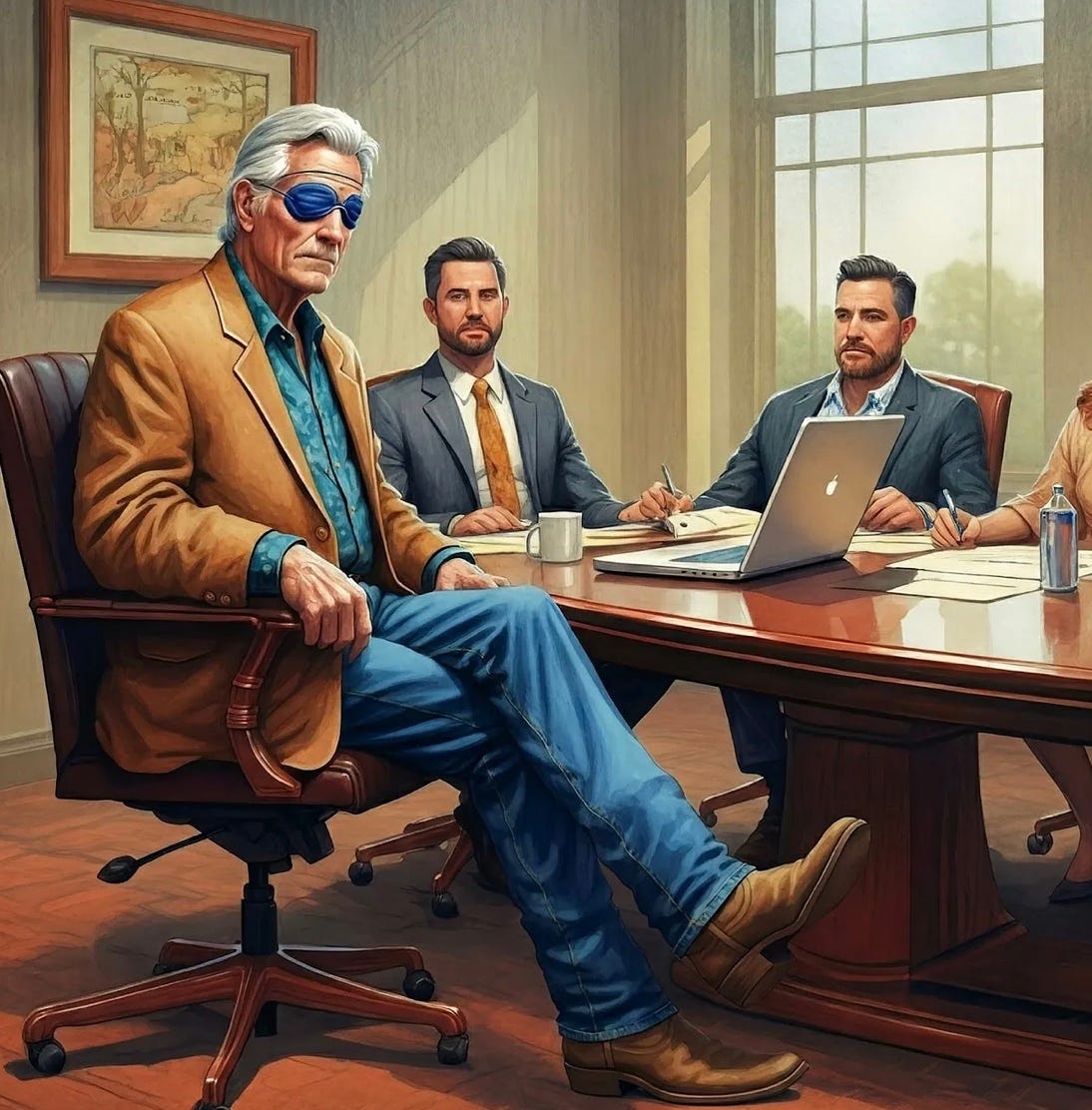
Staff meeting at Cajun Chronicles Podcast Corp in New Orleans, with Blind Writer/Editor Emile Navarre and others.
Cajun Chronicles Audio Podcast – Bringing you the heart of Louisiana. Artwork generated with Google Docs Image Maker.

Back from his month long vacation in Chacahoula, Louisiana, Cajun Chronicle Podcast, Writer/Editor, Emile Navarre arrived for our first staff meeting armed with fresh material for a future episode, as soon as Marie Lirette, our Outreach Coordinator can reach out to potential experts on the topic of “Ain’t There No More” – a nation wide trending group talk everywhere these days, as our world changes in ways none of us could have imagined.

Here is his recount of his lifelong story telling to his family’s youngest children:

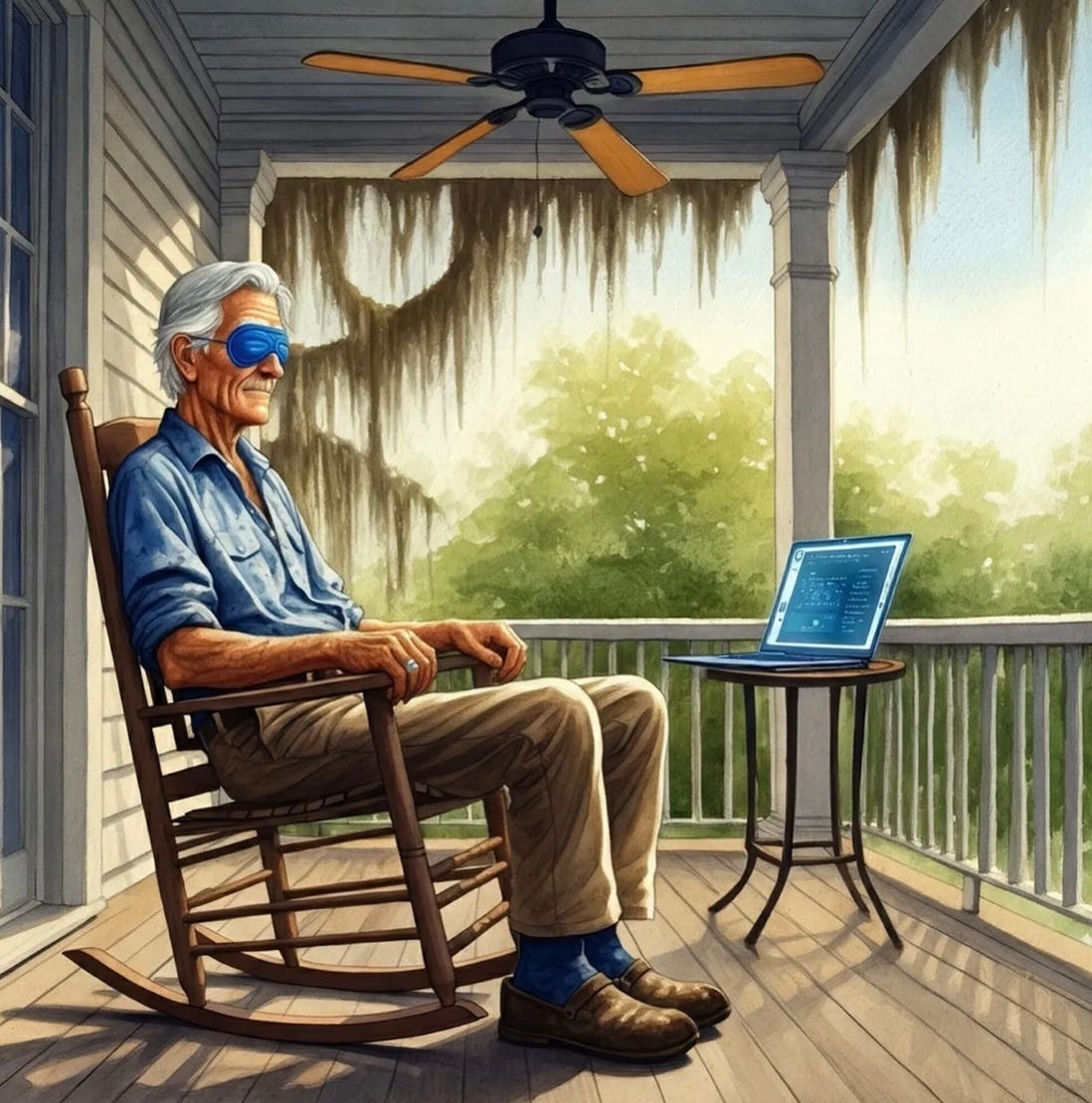
Emile Navarre in his rocking chair on front porch in Louisiana.
Cajun Chronicles Audio Podcast – Bringing you the heart of Louisiana. Artwork generated with Google Docs Image Maker

Come closer, chérs,” he said, his voice a low rumble like the last Lafitte skiff shrimping boat of the day heading down the Bayou Lafourche over Galliano or Golden Meadow way. His cane bottom rocking chair seat creaked a steady rhythm against the worn Cedar floorboards as he said that.

The sun, a too warm blanket he could feel, but not see, was sinking somewhere behind the great oak in the yard he will always remember. He ran a hand over the cane of his chair, then rested it on the knee of a boy sitting on the steps below him. He lifted his walking stick and pointed off to the right side. “You see that big fence, hein?

Or that levee your mamans and pépère have to climb to get home from work at the Bollinger Shipyard, just to get up to the house? We didn’t have such a thing when I was a boy. Back then, my feet knew every dip and bump in this land”.

“From our porch right down that oyster shell road to the bayou where the shrimp jumped so high, you’d swear you could catch them in your mouth, if you were quick.” A ripple of giggles ran through the children.

Ah, oui,” he chuckled, “I lost a good tooth catching shrimp that way. But the land, it was different. We were like a river familyShe’d bring us a big muddy hug every spring, and we’d be happy for it.”

The floods, they were always a part of life. We’d move our things up high, sing songs, and wait for the water to go down. When it did, Mother Nature would leave behind a gift, a rich, dark mud that made our gardens burst with life. You could feel it in your toes, a soft, giving sponge of sandy soil that told you everything was going to be alright.”

He paused, and the laughter faded, replaced by the chirping of crickets.

My pépère, he’d sit right here on the back porch with a fishing line tied to his toe, but in his mind, Gaia was always busy with the water. He’d talk about how the Lafourche river was a living thing, always moving, always changing. ‘She builds, and she takes away,‘ he’d say.”

We knew that. A little bit here, a little bit there. It was a fair trade. But then came the men with the big ideas. They came from places where the land didn’t move so much. They told us we could stop the river’s big hugs. They said we could make a straight line and build high walls, so the water would stay in its place.”

Emile’s voice dropped to a conspiratorial whisper. “The young people, they thought it was wonderful. No more floods! No more moving furniture to the attic! But my pépère, he just shook his head. ‘You can’t trap a wild woman, not for long,’ he said. ‘She will find her way, and she will be angry for it.'”

And she was,” he said, his hand now clutching his walking stick. “For years, the river was quiet, but our land, she was not. I can’t see it anymore with my eyes, but I felt it with my feet. The soil grew tired, no longer receiving her yearly gift.”

The ground began to sag, and the bad marsh saltwater, it came closer in to say hello, not from a storm, but like a thief in the night, creeping up through the channels les Américains dug for the oil. They were for the big machines, the big money, but they were also a wound. A wound in the land that never healed.”

He turned his head toward the silent children, his milky blind blue eyes fixed on something only he could see. “Now, this levee you have, it protects you from the river, oui? But it holds the land in a box. It cannot breathe. The land is sick, and the ocean is hungry, taking a football field from our home every hour, the experts say.”

I hear it in the wind now, not just the storms, but also in the sad whispers of the marsh, of the birds that have no place to land anymore. The land is leaving us, and we are left behind. We traded our river’s muddy hugs for a straight line and some high walls, and now we pay for it. Now, it’s not just the water that takes. It’s the land that gives itself away.”

The porch was silent, a stillness that was heavier than the humid air. The children looked at each other, not understanding all the words, but feeling the weight of them. One of the little girls, her braids tied with pink ribbons, quietly moved her hand to rest on the Emile’s knee as she headed inside for bed.

Emile smiled, his face creasing with a thousand invisible memories. Talking to the breeze, he raised his fist and threatened, “But you know what else my pépère said? He said, ‘As long as we tell the stories, the land is not truly gone.’ So listen, chérs, listen closely to my bedtime stories. Because now, it is your turn to remember.”

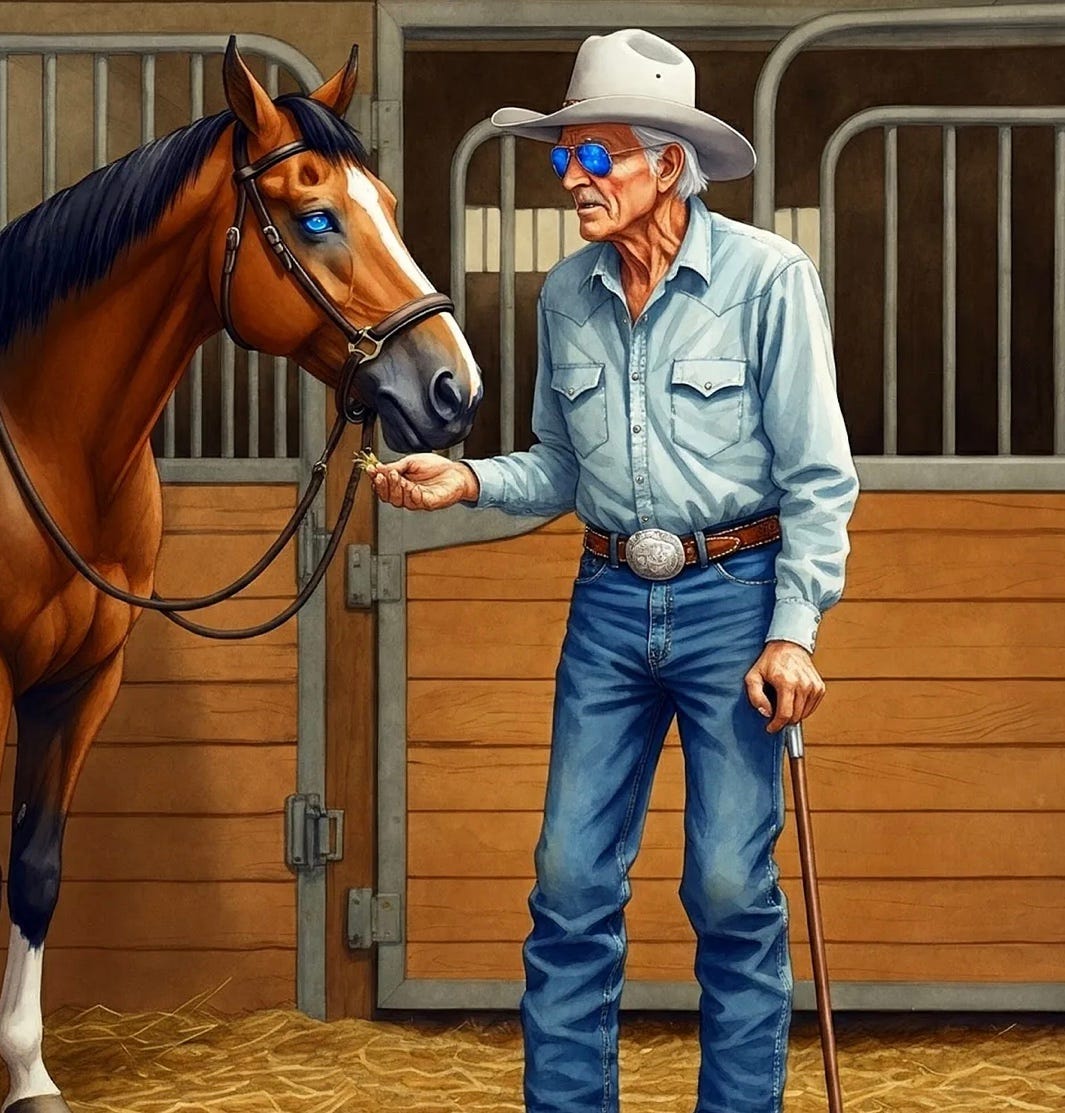
Emile Navarre with his horse, once a cattleman always a cattleman.
Cajun Chronicles Audio Podcast – Bringing you the heart of Louisiana. Artwork generated with Google Docs Image Maker

He had felt the last of the children’s light footsteps fade into the dusk, and the porch was still again except for his rocking chair. His head turned to the quiet rustling of the adults lingering on the porch. “You hear my stories, oui?” he said, his voice now lower, rougher.

You too remember what I said about the river’s gift of mud? We didn’t know it, but we were like a family that had a big, generous table. Rivers brought food, and our land ate it. Every year, she’d get fat and happy. We thought we were so smart, so clever, when we built those high walls.”

We told Gaia to stop eating for a while, believing for a while that she didn’t need the mud. ‘Don’t worry,’ we said, ‘We’ll protect you from the floods.’ But what we really did was put the food in a box and send it out to sea. Now, the land is starving. You cannot see it in a day, or a year. But that’s happening rapidly.”

But I feel it in every part of my mind and body. Every year, she gets thinner, weaker. And like a sick old person who can’t stand anymore, Mother Earth’s starting to melt away. The medicine to save her is that very food we cut her off from. But the walls of levees and the canals the Corps of Engineers built? They are so high.”

How will we get the food back to Louisiana’s coast before she’s gone entirely? That is the story my heart tells me now. And that is the story for you all to worry about. Time’s running out. I’m 75 years young this month. In another 75 years I won’t be here to see that my beloved Louisiane will be added to that dreaded list, “Ain’t Here No More.


Cajun Chronicles Note: Sediment Starvation: The settlers’ levees and later government agencies built, while protecting their land from floods, also had an unintended consequence that would become a major factor in today’s coastal crisis. By containing the rivers, they prevented the natural flooding that would have deposited sediment into the wetlands.

This sediment was the building block of the delta. Without it, the land began to sink (subsidence) and slowly disappear. The settlers since the 1800s and later colonists were unaware of this long-term process and the vital role of the Mississippi’s and other rivers’ sediment in sustaining the land.

Water’s Takin’ Our Land, Gulf’s Hungry & She Ain’t Slowin’ Down

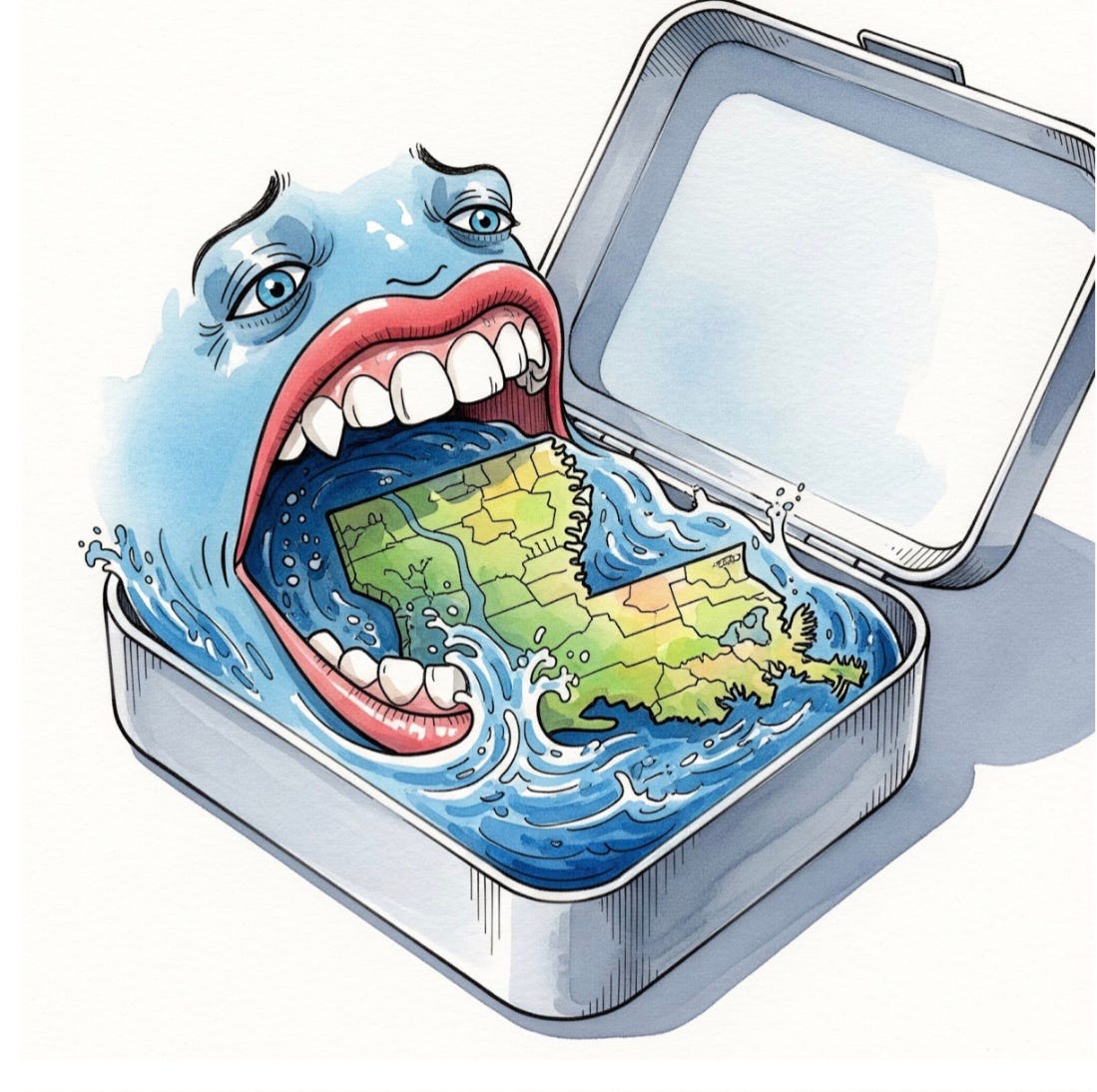
Cartoon image of Gulf ocean swallowing coastal Louisiana in a lunch box.
Cajun Chronicles Audio Podcast – Bringing you the heart of Louisiana. Artwork generated with Google Docs Image Maker

Louisiana has the highest coastal land loss rate in the United States. Since the 1930s, the state has lost about 2,000 square miles of land. This is a significant amount, roughly the size of the state of Delaware.

Without major intervention, the state of Louisiana is projected to lose an additional 700 to 1,000 square miles of land by the year 2050. This is an area roughly the size of the greater Washington D.C.-Baltimore area.

By the year 2100, the projections are even more dire, with some worst-case scenarios suggesting that up to 3,000 square miles of land could be lost. Some scientists have even warned that the entire remaining 5,800 square miles of Louisiana’s coastal wetlands in the Mississippi River delta could eventually disappear.


A Word of Wisdom:

Our fictional and non-fictional tales are inspired by real Louisiana and New Orleans history, but some details may have been spiced up for a good story. While we’ve respected the truth, a bit of creative license could have been used. Please note that all characters may be based on real people, but their identities in some cases have been Avatar masked for privacy. Others are fictional characters with connections to Louisiana.

As you read, remember history and real life is a complex mix of joy, sorrow, triumph, and tragedy. While we may have (or not) added a bit of fiction, the core message remains, the human spirit’s power to endure, adapt, and overcome.

© Jerilee Wei 2025 All Rights Reserved.

“Hanging on in Hawaiʻi”

Samuel L. Jackson!

Snagged it from Jeff Tiedrich’s Substack.

Snippet: here are your heroes of the day: the Swedish state-owned energy company Vattenfall, who hired Samuel L. Jackson to star in a commercial entitled “Motherfucking Wind Farms.”

enjoy.

Some Bits From My Monday

Not necessarily in order of the day. For instance, just now, which is 8:30 PM Monday night, I am beginning to feel like the worst doggy mom in the world again. Ollie, dear little broken guy that he is, practically perfect in every way but for the fear he gained from his early abuse, has to be tranquilized before visiting the vet. Also muzzled right before the vet comes in the exam room, but. I Have To Slip My Little Doggy Mickeys! He gets one at night, one with breakfast on appointment day, and one an hour before the appointment, along with a couple of Solliquin, which are supplements with calming homeopathic calming substances. He loves those. Not so much the tranqs because he has no idea what’s happening to him or why. Tonight, though, he’s dealing with it better than a couple of weeks ago, which was his first time. He has to go in tomorrow for a follow-up heartworm test because we switched him from one flea protection to another that also protects from various other bugs that can bite him and cause him illness. At least he’s getting to where he doesn’t mind riding in the car as much as he used to! Of course, he’ll be tranquilized, so there’s that. There’s a kinda funny King Clarence YouTube about getting slipped mickeys; they do it like one of those TV lawyer ads. Pretty comical. Have not shown that to Ollie.

Moving on; a thing I like to do is buy the raw organic nuts and cashews off the ugly produce shelf; these are excellent products that are fine, but cheap because they need to be used quickly. Frequently, I’ll split a bag with the birds and squirrels; I’ll chop and freeze some for our use, and chop the rest to scatter outside. Earlier today, I decided to chop some cashews to take outside for birds and squirrels. The chopper is one of those “armstrong” choppers (photo below); you put your stuff in the cup, put the chopper over it, and start pumping the handle, which is on a spring. I remember a spokesperson ad for the “Slap Chop”, if anyone else does; my chopper is like that, but it’s a Zyliss. Not advertising. My chopper is 20 years old, the blades are beginning to dull, but I keep thinking that as long as I do things by hand instead of electricity, things in the world will be better. Well, today I get the chopper down, and the cup for the stuff, which is also the storage base of the chopper, has the ooky sticky feel that old plastics get when the PVCs or PFCs or whatever start leaching out. sigh. It wasn’t on the inside of the cup; only the outside, so I trashed the cup, and used a solid bowl to chop after I washed the chopper to make sure. Don’t want to mess up the birds’s systems with plastic chemicals!

When things like this happen, the words “planned obsolescence” always come into my mind. These days many, including myself, might say “enshittification,” though I think it’s reasonable that a 20 year old chopper cup might be worn out enough to leach. But still. Anyway, the words “planned obsolescence” always bring Jimmy Carter to mind. Why, you might ask?

Or maybe you didn’t, but here’s why. I was not of voting age when he was elected. His speaking accent annoyed me a great deal. I liked his ideas, definitely didn’t want Ford, was relieved when Carter won and wished him well, but that accent made my teeth hurt. So, of course, when the time for his initial SOTU arrived, what did my Speech & Forensics instructor instruct us, but to listen to that SOTU, and judge it using the very guidelines judges would use on us later in tournaments. We were to pay close attention to everything, but our work was to judge the speech without factual or political consideration, only his delivery skill.

Now, my recollection is he did fine; aside from his accent, which was not a judgeable item, he spoke of “planned obsolescence” a great deal. Enough that it became a bit redundant as to the speech itself, though not to his actual points. Of course, I had to mark that. However, that term stayed with me, and I learned from that, about designing and manufacturing, sales, consumerism, etc., etc. And that term comes to me when something fails after some use, and I think of Jimmy Carter, which reminds me to be all around nicer.

Speaking of this: do you think Jimmy Carter would use the term “enshittification” these days (not in an SOTU, of course!)? Let me know in the comments. I hope you enjoyed my Monday mind’s wanderings!