
Category: Animals / Insects / Water Life / Plants / Nature
Visit The Marine Detective
True, this-
The same thing goes with humans really. by Jenny Lawson (thebloggess)
To be flawed is to be real. Read on Substack
Someone asked me why I draw flowers so often when I don’t really seem like a “pretty, floral kind of girl” and that’s a very fair question (and possibly a hidden insult?) so I made this in response:

“The lovely thing about drawing flowers is that when I fuck them up they just seem more real.”
The same thing goes for people, really. Our strangeness and flaws make us real.
Don’t be afraid to embrace yours, sweet friend.
Love,
Jenny
American Bird Conservancy: “The Sleeping One”
How Bees and Sunflowers Create a Delicious Snack | Deep Look
Remember this is a 4k video. Also I am leaving in a few minutes to go to my allergist. Hugs.
Starbox Dachshunds
The Black one looks just like our Chrissy, who lived to 21 yo before passing during April of 2020. This riff is so awful, yet so cute, and has the holiday spirit.
Pacific killer whales have enough food, but are still struggling
October 22, 2024 Evrim Yazgin
Marine biologists have challenged the claim that lack of food is driving a population crash in killer whales in the Pacific Ocean saying boat noise may be the issue.
Killer whales (Orcinus orca) frequent the waters of British Columbia and feed on Chinook salmon.

Researchers from the University of British Columbia in Canada used echosounder data to determine prey salmon densities, as well as discussions with local anglers and whale watching crews in British Columbia, Canada.
There are 2 different populations. One population is local to northern waters. These killer whales have tripled their numbers to about 300 individuals since monitoring began in the 1970s.
The other population inhabits the waters between British Columbia and California to the south. Their numbers fluctuated between 66 and 98 individuals with the latest census putting their numbers at just 73.
“The differing trajectories of these two populations of fish-eating killer whales have been attributed to ecological and biological differences between regions such as prey availability, diet breadth, competition, physical disturbance, underwater noise, contaminants and inbreeding,” the authors write. “However, food availability likely plays the greatest role in limiting their carrying capacities.”
Previous research has shown a correlation between salmon numbers and killer whale population health. But the authors say these studies have never been able to show why the southern population was struggling.
In fact, the southern population of killer whale is the only marine mammal that is struggling in the region. Harbour seals, sea lions, other types of whale and porpoises are all thriving.
Nevertheless lack of access to the Chinook salmon was always put down as the reason for the killer whales’ woes.
But sport anglers told the researchers that they have noticed no drop in salmon numbers. And whale watchers have reported that they have regularly seen the endangered orcas swimming among salmon.
The researchers suggest that the issue isn’t lack of salmon, but that the southern population of killer whales are having trouble catching their prey. This, they say, is likely due to noise from boats. The area where the southern orca population lives has far higher sea traffic than the regions further north.
It’s also possible the orca struggle to hunt at different times of year. They may find enough salmon in summer, but have trouble during spring.
The findings are presented in a paper published in PLOS ONE.
https://cosmosmagazine.com/nature/marine-life/pacific-killer-whale-food/
Agenda 47
Thank you, Ten Bears! I keep pointing out that Project 2024, Agenda 47, and the Republican National Party Platform are all cut from the same whole cloth. It’s important to be aware, even though one need not read each document separately.
3 For Science on Friday!
Why did scientists name these new frogs after Star Trek characters?
What sound does a frog make? If you said “croak” or “ribbit” or even “bonk” like the Australian pobblebonk frog, you’d be right. And now, thanks to new research, “Star Trek whistle” is also a correct answer!
Seven newly discovered species of frogs in Madagascar have been named for their unique calls, some of which are similar to whistle-like sound effects used in Star Trek: the “boatswain whistle” and “tricorder” device.

“That’s why we named the frogs after Kirk, Picard, Sisko, Janeway, Archer, Burnham, and Pike – 7 of the most iconic captains from the sci-fi series,” says Miguel Vences of the Technische Universität Braunschweig, Germany, who led the research. (snip-MORE)
============================================
“Stellar volcano” captured in dramatic Hubble images
https://players.brightcove.net/5483960636001/default_default/index.html?videoId=6363356718112 (video on the page; it wouldn’t embed.)
Dramatic and colourful close-ups from NASA’s Hubble Space Telescope show a binary system of rambunctious stars. See the high-resolution image here.
The system is called R Aquarii. The primary star is an aging red giant more than 400 times heavier than our Sun. Its companion is a burned-out white dwarf.
The red giant pulsates, changes temperature, and varies in brightness by a factor of 750 times over a roughly 390-day period. At its peak the star is nearly 5,000 times brighter than our Sun.
Meanwhile, the white dwarf dances around the red giant. It orbits the giant star every 44 years.
When the white dwarf gets closest to the red giant, its gravity pulls hydrogen gas off the red giant. The material accumulates around the dwarf star and undergoes nuclear fusion. The result is an explosion akin to an enormous nuclear bomb.
Filaments shoot from the dwarf star’s core like a geyser, forming loops and trails of plasma traveling at more than 1.6 million km per hour. (snip-MORE)
========================================
Confirmed: The Sun has reached solar maximum

Representatives from NASA, the National Oceanic and Atmospheric Administration (NOAA) and the international Solar Cycle Prediction panel met on Tuesday and announced that the Sun has reached its solar maximum.
The solar cycle is 11 years. At the height of the cycle, the Sun’s magnetic poles flip and its activity intensifies.

“During solar maximum, the number of sunspots, and therefore, the amount of solar activity, increases,” says Jamie Favors, the director of NASA’s Space Weather Program. “This increase in activity provides an exciting opportunity to learn about our closest star –but also causes real effects at Earth and throughout our solar system.”
Increased solar activity can affect satellites and astronauts in space, as well as communications and navigation systems. (snip-MORE)
Kamala Harris Has a Great Plan for Rural America by Charlotte Clymer
And you should know it. Read on Substack
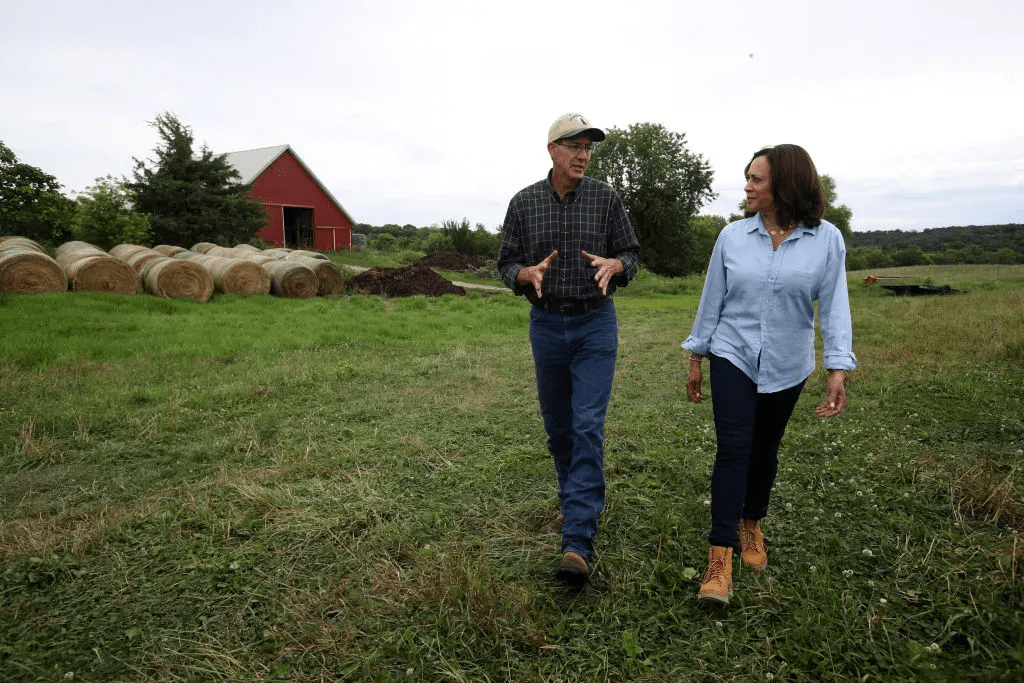
This morning, the Harris-Walz campaign announced an extensive economic plan for rural communities. It’s a deeply impressive vision for working class families in these parts of the country.
Given that much—perhaps, most—of political media will not adequately report on this and inform voters of what Vice President Harris plans to do for Rural America, I’m gonna take the rare step of publishing her plan, in full, as a blog post.
I’m doing this because Lord knows we’re all more likely to see an intellectually dishonest column in The New York Times about Vice President Harris ignoring rural voters than we are to see significant reporting and analysis on her proposed policies for rural voters.
So, here it is. Just to confirm, all of the below text was written by the campaign. Please share with your friends and family in rural areas of the country:
FOR IMMEDIATE RELEASE
October 15, 2024
Vice President Harris and Governor Walz’s Plan for Rural Communities
New Initiative Will Strengthen Rural Health Care by Adding 10,000 Health Care Professionals, Expanding Telemedicine, Cutting the Number of Ambulance Deserts in Half, and Keeping Rural Hospitals and Pharmacies Open
Supporting the Next Generation of Small- and Mid-sized Farmers and Ranchers
Strengthening the Backbone of the Rural Economy with Investments in Housing, Child Care, and Senior Care
Vice President Harris and Governor Walz believe in rural communities and understand that supporting locally led solutions is key to rural prosperity. Their administration will make it a priority to equip the nearly 50 million rural Americans with the tools and resources they need not just to get by, but get ahead.
Today, Vice President Harris and Governor Walz are announcing a plan for rural America. The key elements will:
- Increase access to affordable and high-quality health care in rural communities—by adding 10,000 health care professionals, expanding telemedicine, cutting the number of ambulance deserts in half.
- Support the sandwich generation to care for elders at home, lowering the cost of childcare and increasing the number of providers, and expanding the Child Tax Credit to provide tax cuts up to $6,000 for families with newborns.
- Lower the costs of buying a home, starting and expanding a business, and raising a family—by sparking the construction of 3 million new housing units, providing up to $25,000 in down payment assistance for first-time homebuyers, increasing the small business tax deduction for startup expenses 10-fold to $50,000.
- Invest in the future of American agriculture by boosting access to credit, land, and markets, building new markets and streams of income for small- and mid-sized farmers and producers, and supporting the rise of the next generation of American farmers and ranchers.
Donald Trump will turn back the hard-earned progress that rural communities are making. As President, he tried to repeal the Affordable Care Act and vows to terminate it if reelected, stripping protections from people with pre-existing conditions and devastating rural hospitals and care services. He will ban abortion nationwide, threaten access to contraception and IVF, and force states to monitor women’s pregnancies and report women’s miscarriages and abortions to the federal government.
He already took overtime pay away from millions of Americans while giving tax breaks to billionaires and big corporations – at the same time that he tried to cut funding that supports rural housing and creates rural jobs. If Trump returns to office, he promises to give more tax cuts to the super-rich and big corporations while hiking taxes on rural families by $4,000 a year – as estimated by the conservative leaning American Action Forum, and putting Social Security and Medicare on the chopping block.
Independent analysis from Goldman Sachs, Moody’s Analytics, and other top economists – including those surveyed by the Financial Times and Wall Street Journal – and more also agree that Vice President Harris’ plans are better for the U.S. economy than Donald Trump’s. For example, an analysis by Moody’s Analytics shows that, under a Harris presidency, more than a million new jobs would be added to the economy than under a second Trump Administration. Meanwhile, Moody’s finds that Trump’s plan would cause a recession by mid-2025, cost 3.2 million jobs, and add over 1 percent to inflation. And, a survey of nearly 40 top economists by the Financial Times and University of Chicago found that 70 percent agree that Vice President Harris would be better on the deficit than Trump, while only 11 percent believe that Trump would be better on the deficit than Harris.
Trump’s Project 2025 agenda will slash the federal crop insurance program, gut protections for clean water and air, and repeal the Bipartisan Infrastructure Law and Inflation Reduction Act, which will roll back historic investments in small businesses and rural infrastructure including broadband, and clean energy. Under a Harris-Walz administration, rural America is not going back.
EXPANDING RURAL HEALTH CARE
Vice President Harris and Governor Walz believe quality health care is a right, not a privilege. That’s why they are announcing new initiatives to improve and expand affordable health care in rural areas. Their plan will recruit 10,000 additional rural health care professionals and protect and expand access to care from telemedicine to local independent pharmacies.
- Recruiting 10,000 Rural Health Care Professionals, including doctors, nurses, community health workers, and EMS professionals to provide health services to Americans in rural and tribal areas—while working to protect our health workforce from burnout. This initiative will include:
- Expanding Scholarships, Loan Forgiveness, and Other Pipeline Programs for Doctors and Nurses Who Will Provide Health Care in Rural and Tribal Areas: They will expand funding to recruit and retain doctors, nurses, pharmacists, public health professionals, and other health care providers through scholarships, loan repayment programs including the National Health Service Corps Loan Repayment Program, the Indian Health Service Loan Repayment Program, and the Public Service Loan Forgiveness Programs. Their plan to build 3 million new homes nationwide, including in rural and tribal areas, and to provide $25,000 in downpayment assistance will further lower costs of buying a home in rural America, creating incentives for health professionals to buy homes and stay in rural America. They will invest in programs that introduce rural youth to careers in medicine, and provide the necessary support for them to pursue that career path. This plan builds on Vice President Harris’s leadership in investing in programs to train more nurses and doctors who will live and work in rural and underserved communities, including funding an additional 1,000 residency slots in hospitals. When a provider trains in a rural area, they’re more likely to remain, living and working there.
- Providing a Major Grant Program To Train and Fund Rural Community Health Workers: They will launch a new permanent grant program to train and fund Rural Community Health Workers; make it easier for Medicaid to cover Community Health Workers; and expand grants to Community Health Centers and Rural Health Centers.
- Expanding Rural Telehealth Services: Americans living in rural areas are around 17 times more likely to use telehealth than those in cities, but half of all people living in rural areas lack access to the broadband speeds needed to support telehealth.
- Permanently extend Medicare coverage of telemedicine benefits, currently set to expire, by working with Congress to pass the Preserving Telehealth, Hospital, and Ambulance Act.
- Double federal funding for telehealth equipment and technologies. They will double the U.S. Department of Agriculture’s (USDA) Distance Learning and Telemedicine Grant Program for Rural Communities to $120 million. This will give rural and tribal communities more resources for telehealth equipment—including at rural health clinics, hospitals, and schools–and support innovative new technologies like tele-medically equipped ambulances.
- Slashing the Number of Ambulance Deserts in Half: At least 2.3 million rural Americans live in ambulance deserts—meaning they live at least 25 minutes away from an ambulance—and in 14 states more than 10% of the population lives in such an area. Volunteer squads—which provide the majority of rural EMS staff—struggle to survive due to a lack of sustainable funding sources and difficulty recruiting new volunteers. Vice President Harris and Governor Walz will take action to cut the number of rural Americans in ambulance deserts in half by the end of the decade:
- Expanding EMTs and Paramedics in Rural Areas: They will dramatically increase financial and technical support to rural and tribal communities to train, equip, and employ first responders, and provide resources for ambulances, lifesaving equipment, and the construction and maintenance of first responder stations.
- Increasing Funding and Support for Volunteer EMS Programs: They will provide grants to small volunteer ambulance and EMS programs to help them survive and thrive. These extra resources will support innovative uses of technology like telehealth and explore solutions to low reimbursement levels for both public and private insurers.
- Keep Independent Pharmacies Open and Increase the Number by 3,000. Independent pharmacies make up more than three-quarters of pharmacies in rural areas, and their pharmacists are a critical and trusted health care resource. But nationally the number of independent pharmacies has decreased—by nearly 50% since 1980, leveling off at about 20,000 locations, with 1 in 10 independent retail pharmacies in rural America closing over the last decade.
- A Harris-Walz Administration will set a goal of enabling 23,000 independent pharmacies to either launch or stay open by working to enact legislation that would prevent pharmaceutical middlemen known as pharmacy benefit managers from shortchanging rural independent pharmacies and steering orders of the most profitable drugs away from independent rural pharmacies and to chains. This would be a 15% increase in the number of independent pharmacies – restoring the rural independent pharmacies that have closed over the last decade and increasing their number by 5%.
- Keeping Rural Hospital Doors Open To Ensure Access to Emergency Services. Since 2010, nearly 150 rural hospitals have either shuttered or ceased providing inpatient hospital services. A Harris-Walz Administration will work to strengthen Medicare’s Rural Emergency Hospital Designation – which helps facilities offer medical services in areas that may not be able to sustain a full-service hospital, while protecting the Affordable Care Act and supporting Medicaid expansion, which has helped to reduce uncompensated care in expansion states and improves the financial health of rural hospitals. This will also help support improvement in maternal health, which Vice President Harris has long advocated for, by increasing access to options for obstetric care.
- Lowering Health Care Costs. Vice President Harris and Governor Walz will also lower health care and prescription drug costs for Americans. They will work to cap the cost of insulin at $35 and out-of-pocket expenses for prescription drugs at $2,000 for everyone. They will also fight to keep helping millions of Americans save $800 a year on their health insurance and accelerate Medicare negotiations over prescription drugs to help bring drug prices down more quickly and cover more drugs.
- Restoring and Protecting Reproductive Freedoms. They will also keep fighting for womens’ rights to make decisions about their own bodies. The Vice President will, if elected, never allow a national abortion ban to become law. And when Congress passes a bill to restore reproductive freedom nationwide, she will sign it.
- Supporting Veterinary Care in Rural Areas and address the increasing shortage of veterinarians by encouraging providers to work in areas with too few veterinarians by strengthening USDA’s Veterinary Medicine Loan Repayment Program, which reduces debt for physicians working in high-need areas for the food supply, and increasing grants for starting and expanding veterinary practices in critical areas.
Trump meanwhile tried to end the Affordable Care Act and has promised to terminate it if reelected — over 500 rural hospitals at risk of closure could close. He sought to make significant cuts to both Medicare and Medicaid in every single one of his budgets. His Project 2025 agenda will reverse the caps on insulin and other prescription drugs, raising the prices on life-saving Medications.
A HISTORIC PLAN TO EXPAND ACCESS TO CARE AND SUPPORT THE SANDWICH GENERATION
Vice President Harris cared for her aging mother and knows that when families cannot find affordable care for their elderly parents or children, it is not just a big financial strain, but also a source of severe emotional stress that takes a big toll on families. Nearly a quarter of American adults are part of the sandwich generation providing intergenerational care to both their children and a parent or a loved one with disabilities.
- Protect and Strengthen Medicare, Help Rural Seniors Live Independently, and Support Family Caregivers. Vice President Harris and Governor Walz will protect Medicare and strengthen it with a historic Medicare at Home plan, which will cover robust home care for seniors under Medicare for the first time ever. This will help both seniors and their caregivers, who often shoulder the financial and emotional burden of caring for aging loved ones. Vice President Harris and Governor Walz will also expand Medicare to cover hearing and vision benefits to support the millions of seniors who rely on glasses and hearing aids.
These plans are common sense. They can help family caregivers work and save both families and the federal government money by allowing seniors to stay in their homes instead of being sent to nursing homes, which are often more expensive. Medicare at Home will also reduce hospitalizations. These new benefits will be fully paid for and extend the life of the Medicare Trust Fund by expanding Medicare drug price negotiations and more.
- Make Quality, Affordable Child Care Accessible and Expand the Child Tax Credit. Vice President Harris and Governor Walz know that millions of Americans are balancing both care for their children and care for aging loved ones. Too many rural families struggle to access affordable child care near them. One survey found that only 38 percent of rural parents could easily find childcare within their budget, compared to over half of urban parents. Vice President Harris and Governor Walz will bring down child care costs for American families to help save thousands of dollars on child care and expand access to good child care options by building a robust child care supply. Vice President Harris is also proposing to expand and make permanent the Child Tax Credit, including giving families with newborns a tax cut of $6,000 per child. This will help families cover expenses early on in life. After Vice President Harris cast the tie-breaking vote on the legislation that temporarily expanded the Child Tax Credit in 2021, it helped the families of over 9 million children in rural areas.
As president, Trump tried to cut Medicare and Medicaid in every single one of his budgets, has called for raising the retirement age to 70, and said privatizing Medicare will create a “stronger system.” He denied millions of families the full child tax credit and tried to cut federal child care funding by nearly $100 million. His Project 2025 agenda will actually raise costs on families by $4,000 a year.
STRENGTHENING THE BACKBONE OF THE RURAL ECONOMY
Vice President Harris and Governor Walz are committed to helping rural communities grow and thrive economically. They are fighting to lower prices for Americans including through tax cuts for 100 million working and middle-class families and policies to lower the price of housing, groceries, and health care. They are also supporting small businesses by cutting red tape and proposing a ten-fold increase in the tax deduction for new businesses starting up.
Vice President Harris has fought for landmark investments in rural communities: high-speed internet access to every corner of rural and tribal America, as well as projects to build and fix roads and bridges in rural and tribal communities across America, and to support transit vehicles and infrastructure for thousands of rural and tribal transit systems. Rural communities stand to benefit from up to 45% of the total funding—or more than $450 billion—provided by the Bipartisan Infrastructure Law, the Inflation Reduction Act, and the CHIPS and Science Act is, and almost 30% of the IRA funding announced so far will flow to rural communities. Governor Walz has long championed rural communities. He spent 12 years representing a rural district in Congress, and as Governor, he spearheaded the largest single investment in broadband infrastructure in state history to help thousands of Minnesotans—including those in rural areas—connect to jobs, education, health care, and their communities.
But they know it is not enough—too many rural communities still do not have the tools they need to get ahead.
- Supporting Small Businesses by Increasing Capital and Access to Resources. Vice President Harris has set an ambitious goal of 25 million new business applications by the end of her first term. She plans to encourage businesses to start and grow by increasing the small business deduction 10-fold to $50,000, providing low- to zero-interest loans to small businesses that grow and create jobs, allocating one-third of federal contract dollars to small businesses, and providing other financing for rural and tribal entrepreneurs through the Treasury Department’s State Small Business Credit Initiative—which lifts up entrepreneurs and founders in rural America, middle America, and underserved communities.
- Create New Jobs and Opportunities Through:
- New America Forward Tax Credits to promote investment in the industries of the future, including greater credits for companies investing in agricultural, manufacturing, and energy communities. This includes modernizing steel and iron production, developing biotechnology, building new data centers for AI and supporting AI innovation, further developing clean energy manufacturing, revitalizing America’s semiconductor industry, and investing in aerospace, autos, and other forms of transportation. These tax credits will provide significant additional benefits to investments made in longstanding manufacturing, energy, and agricultural communities and reward companies that work with unions and communities to support workers and protect jobs.
- New Opportunities for Those Without Four-Year College Degrees including promoting meaningful pathways for those without college degrees to federal jobs and working with businesses to do the same in the private sector. Vice President Harris and Governor Walz have also set a goal of doubling the number of registered apprenticeships during their first term. This will include partnerships with community colleges on high-quality, evidence-based training programs.
- Cutting Red Tape so that America Can Build More Housing, Manufacturing, and Energy Projects Faster while also ensuring community engagement and adequate protections for the environment and public health. This will build Vice President Harris’s work through the Inflation Reduction Act to speed permitting review, and her work to finalize a rule to modernize environmental reviews.
- Keeping Rural Schools Open and Thriving. Vice President Harris knows that a great teacher can have a life-long impact on children. But teacher shortages disproportionately impact rural communities throughout the country. That’s why she will double down on programs that prepare and train teachers in rural and tribal areas in an effort to support new teachers and increase retention rates in rural communities—all of which will improve student outcomes like academic achievement and high school graduation rates, resulting in higher long-term earnings, job creation, and a boost to the economy. She will also build on federal transportation programs that help get children to school where bus routes or vehicle maintenance costs put additional strain on already limited budgets.
- Protect and Strengthen Social Security while Making the Super Wealthy Pay their Fair Share. Vice President Harris and Governor Walz will protect and strengthen Social Security and Medicare by making the super-wealthy pay their fair share. Trump, by contrast, once called for raising the retirement age to 70, and he tried to cut Social Security and Medicare every year of his presidency. Now, on the campaign trail, Trump is continuing to talk up cuts to Social Security and Medicare, saying “there is a lot you can do…in terms of cutting.”
- Lowering Costs:
- Lower Costs of Buying and Renting a Home Across Rural America by sparking the construction of 3 million new affordable rental and owner-occupied homes, providing up to $25,000 in down payment assistance for first-time homebuyers, and cracking down on predatory investors. Vice President Harris and Governor Walz will also work to strengthen USDA’s programs for rural and tribal communities, especially in housing, and as part of their proposal to strengthen the Low Income Housing Tax Credit program to create more homes that are affordable for renters, they will work to ensure that rural states receive a fair allocation of these credits to address the unique challenges that rural communities face when dealing with housing challenges, including higher construction costs and lower housing density.
- Providing Rural and Tribal Families with Reliable, Low-Cost Internet Access, by reenacting the Affordable Connectivity Program. The Bipartisan Infrastructure Law’s Affordable Connectivity Program provided 23 million households with up to $30 off of their monthly internet bills and a one-time discount of up to $100 to buy a laptop, desktop computer, or tablet. Over 3 million people who benefited from ACP live in rural and tribal areas. Vice President Harris will reenact this popular program, which ended in June of this year, to ensure that rural and tribal families can connect to the internet and obtain the financial, educational, and health opportunities that come from reliable internet access. She will also take common-sense steps to speed up the construction of new internet for rural and tribal communities.
- Provide Funding and Support to Local Communities, Tailored to Address Local Needs.
- Vice President Harris and Governor Walz will work with Congress to pass the bipartisan Rural Partnership and Prosperity Act, led by Senators Casey and Fischer. This will provide new grants to every state that will support locally led solutions to address rural and tribal communities’ needs—including for child care, housing, job training, and economic development.
- Vice President Harris and Governor Walz will expand the Rural Partners Network nationwide by partnering with rural communities to help them navigate and access existing federal funding opportunities.
Trump neglected rural communities. He failed to address the housing supply crisis during this presidency, and now his Project 2025 agenda will increase mortgage premiums on federally backed loans, and drive up mortgage rates by around $1,200 by privatizing Fannie Mae and Freddie Mac. He also tried to eliminate the Economic Development Administration, and wants to repeal investments in infrastructure, clean energy, and more that have been strengthening the economies of rural communities. He will also raise costs by nearly $4,000 per family with a “Trump Sales Tax” on imported items that families rely on.
He also has no plan to support families and seniors. He has called for raising the retirement age to 70 years old. His Project 2025 agenda would slash funding for child care, abolish Head Start, and cut more than $20 billion in federal support for the nation’s most vulnerable students.
HARVESTING THE FUTURE OF AMERICAN AGRICULTURE
Vice President Harris and Governor Walz know that America’s farmers, farmworkers, and ranchers feed our nation, drive our economic growth, and enhance our security and resilience. That’s why Vice President Harris helped secure nearly $20 billion in investments to help hundreds of thousands of farmers and ranchers adopt voluntary innovative conservation practices, promote sustainable agriculture, and increase resilience against extreme weather. She also directed $1 billion to increase meat and poultry processing capacity, up to $900 million to boost domestic fertilizer production, and funding to strengthen food supply chains and give farmers more choices. Governor Walz—who grew up spending time on the family farm—has stood by farmers and ranchers throughout his time in public service. In Congress, Governor Walz worked across the aisle to pass three Farm Bills to expand veterans’ access to crop insurance, farm education, and job training and enacted legislation to improve veterans’ health care. And as Governor, he championed efforts to support new farmers and to build new markets and revenue streams.
But Vice President Harris and Governor Walz know that today too many small farmers and ranchers still face barriers to success or are getting ripped off by big corporations. Vice President Harris and Governor Walz have a plan to invest in the future of America’s agricultural industry. They will combat consolidation and other barriers that make it more difficult for small farmers to get ahead, and support the next generation of American farming by:
- Making it Easier for Beginning Farmers and Ranchers to Get Started by improving access to credit for beginning farmers—including by reducing barriers to receive USDA’s farm ownership and operating loans—and supporting training and technical assistance including for military veterans and young farmers. This builds on Vice President Harris and Governor Walz’s proposals to provide one million forgivable loans to entrepreneurs who have historically faced barriers to accessing credit as well as low- to zero-interest loans to small businesses that create jobs.
- Expanding Farmland Protection Programs including supporting working farm easements that ensure farmland remains farmland and isn’t lost to non-agricultural buyers.
- Doubling Down on Partnerships with Farmers and Producers to Build New Markets and Streams of Incomes. That’s why Vice President Harris fought tirelessly for the Inflation Reduction Act, which included a $20 billion investment to help the agricultural community voluntarily adopt and expand conservation and climate smart agricultural strategies—all while saving money, creating new income streams, ensuring the wealthy pay their fair share in taxes, and increasing productivity. If elected, Vice President Harris and Governor Walz will double down on this work.
- Ensuring America’s Farmers Have the Right to Repair Their Equipment. Currently, equipment manufacturers put in place restrictions, such as software blocks on tractors and other farm equipment, that make it difficult if not impossible for farmers to repair their own equipment. Vice President Harris and Governor Walz will require manufacturers of electronics-enabled agricultural equipment to share documents, parts, software, and tools with owners and independent repair shops by working with Congress to enact the Agricultural Right to Repair Act.
- Boost Competition to Create Opportunities for Small Farmers and Ranchers. Vice President Harris and Governor Walz will support small businesses in the agricultural industry, including continuing successful efforts to block excessive consolidation by working with Congress to pass bipartisan legislation to increase antitrust enforcement in agriculture and help ensure poultry growers and ranchers get a fair price. They will also focus on expanding production among new suppliers and small farms, growers, and processors to create broad-based, resilient local and regional food supply chains and spur competition with large conglomerates.
- Ensuring Crop Insurance Works for All Farmers and Ranchers. Vice President Harris and Governor Walz will strengthen the Federal Crop Insurance Program by directing the USDA to study whether the program should cover additional crops and working with Congress to ensure the program protects against more threats like natural disasters and extreme climate events – risks that raise costs and disrupt supply chains.
- Growing Opportunities and Small and Mid-Size Farms and Small Businesses in Rural and Tribal Communities to Sell to Customers Around the Globe. Research shows that agricultural export losses due to retaliatory tariffs from Trump’s trade wars totaled more than $27 billion in 2018 and 2019. The impact on small farmers and rural communities was devastating: agricultural jobs fell, U.S. farm bankruptcies surged, and net farm income plummeted. Vice President Harris and Governor Walz will provide technical assistance to small and mid-sized farmers and businesses so that they have more opportunity to sell their products.
Donald Trump will make the challenges that American farmers face worse. As President, he bailed out the largest 10% of farmers, while sacrificing smaller family farms in his trade wars. Between September 2018 and September 2019, farm bankruptcy filings rose 24% nationally. He also enabled big meatpackers and agribusinesses to run family farms out of business. As his own Secretary of Agriculture said, “In America, the big get bigger and the small go out.” Now, if Trump is elected again, his Project 2025 agenda will hurt rural America, including making crop insurance for family farmers even more expensive and risking another slew of retaliatory tariffs.
Vice President Harris and Governor Walz believe in rural America and pledge to support rural Americans to create a New Way Forward.

