
Category: Animals / Insects / Water Life / Plants / Nature
I miss this and right now I need it
Sunday AM Art & Science
Drawing is learning: the birds of the subantarctic
September 12, 2025 Bonnie Koopmans

(Some) Penguins of the Subantarctic. Watercolour and gouache on toned paper, 30 x 23cm. Credit: Bonnie Koopmans.
Visit the remote, windswept islands of the subantarctic with scientific illustrator Bonnie Koopmans. Here she shares her artworks of a few of the extraordinary birds that call this harsh yet majestic environment home. This article originally appeared in the Cosmos Print Magazine in December 2024.
Between Tasmania and Antarctica, there are a series of tiny, isolated islands on the cusp of the Southern Ocean. Many people don’t even realise they exist, but these frigid and windswept islands host a surprising diversity of seabirds.
Last summer, I was awarded a Heritage Expeditions True Young Explorer Scholarship to visit this remarkable region. My time in the subantarctic included visiting 4 of the island groups in the region: The Snares, the Auckland Islands, and Campbell Island (belonging to New Zealand) and Macquarie Island (belonging to Australia).
As a keen naturalist and natural history illustrator, I jumped at the chance to experience an area so remote, expensive and difficult to access. Additionally, as a keen birder, the subantarctic represented an opportunity to see some stunning birds in the most beautiful, harsh and unique environment.

As an illustrator and visual learner, drawing is one of my methods of learning about something, whether it’s internalising technical species differences or figuring out the general shape and character of an animal.
Field studies and drawing from life, especially, allow an artist to deeply observe and capture behaviour and colours in a way that is otherwise very difficult to achieve. The illustrations featured in this article are a mixture of studies done in the field, and finished paintings I completed once I was back home.
Flipping through a bird field guide, the seabird section often seems remarkably… grey. For me, it was finally seeing these birds in the flesh that made me realise how special they are.
While seabird identification can be complicated (groups such as prions are notoriously difficult to identify), observing them in person can provide other avenues to assist the process, as even aspects such as manner of flight can help with distinguishing species.
Albatross with their immense unflapping wingspan, and their endearing rambling stride on land. Petrels following the ship almost the entire journey, arcing left and right past the stern. Penguins effortlessly rocketing through the water, only to reach land and be slowed to a shuffle by their own tiny legs.
Certainly, the highlight of the trip were the penguins, with 6 species seen on the trip, each absolutely bursting with personality and charm. To see a breeding colony of penguins is an unforgettable sight (and sound!) and, if anything, it’s a wonder to see immense congregations of penguins at all considering the history of whaling and sealing in the subantarctic.

A devastating history
During the 1800s and into the early 1900s, whaling and the subsequent products of oil and baleen were critically important to the newly industrial world. Whale oil – and later seal and penguin oil – provided crucial lubricants for machinery, and fuel for lighting. The subantarctic was heavily targeted.
Besides the obvious and huge impact these activities had on whale, seal and penguin numbers, another long-term conservation issue was the introduction of livestock and establishment of stowaway predators. These affected the local populations of seabirds, especially.
Once the whale and seal populations were low enough that it was no longer financially viable for whalers to remain on the islands, they turned their livestock loose, and pigs, cows, cats, and stowaways such as rats were left to run rampant.
As many of the seabirds breeding on these islands had never had to contend with land-based predators, the introduction of cats and rats devastated their populations. Surprisingly voracious predators which were, similarly, introduced as a food source were weka – flightless rails endemic to New Zealand.
As ground dwellers, the rails could easily eat chicks of ground burrowing seabirds such as common diving petrels and blue petrels. Additionally, livestock such as pigs and cows caused environmental damage and drastically changed the composition of habitat through grazing and trampling.

Today’s birdlife
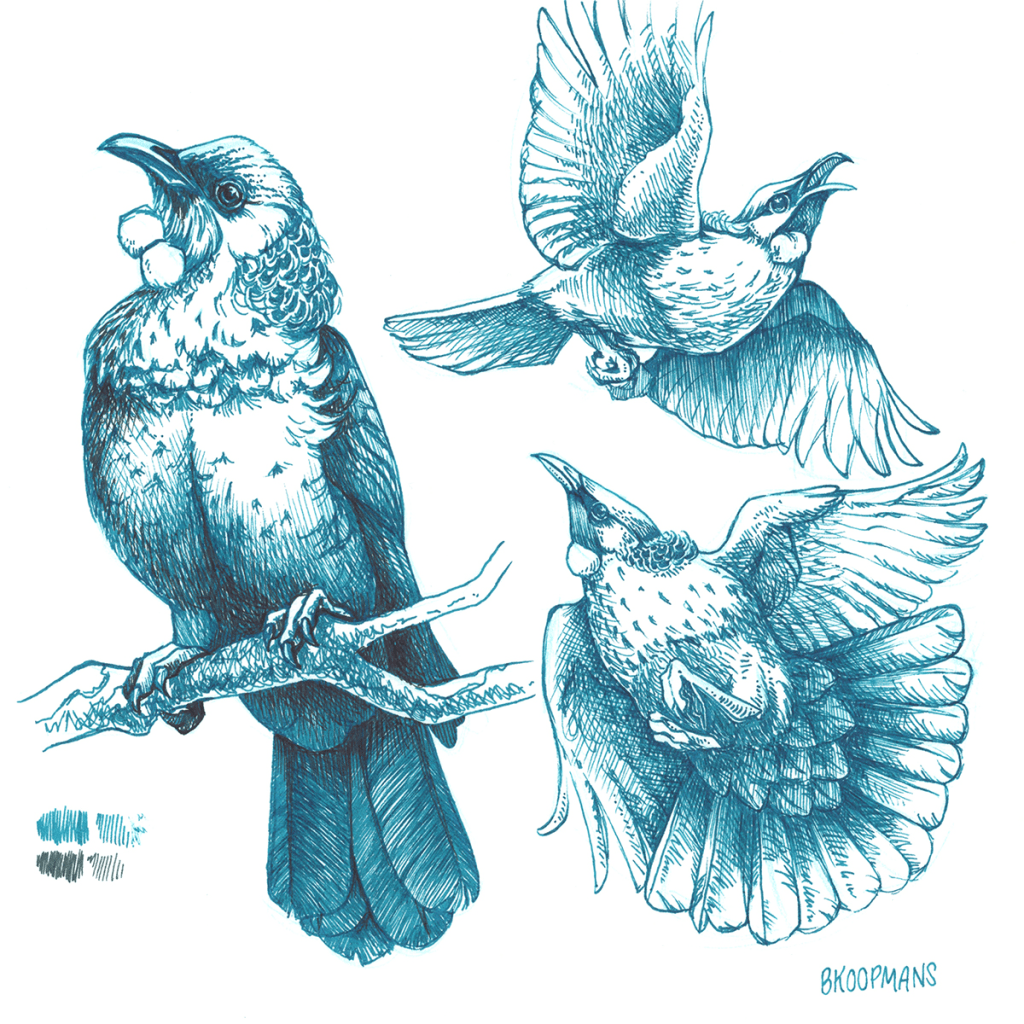
Beyond the obvious seabird residents, these islands are home to a wide variety of other bird species, from red-crowned parakeet and New Zealand falcon, to several species of passerines (‘perching birds’) such as tomtit, New Zealand bellbird and tūī.
Being so isolated, the islands tend to have a high level of endemism, meaning they are unique to the location. Several species of shags, ducks and snipe have diverged evolutionarily between the islands over time.
Campbell teal (Anas nesiotis) represent the impact introduced predators can have, but are also an incredible success story. This charismatic flightless duck was presumed extinct following the introduction of brown rats to Campbell Island during the period of whaling. A precariously small population was discovered on Dent Island, which rats hadn’t managed to reach, and in 1987 some of the teal were removed from the wild to establish a captive breeding program and ensure the preservation of the species.

Due to the significance of the New Zealand and Australian subantarctic islands in terms of unique habitat, flora and importance for the fauna that eke out an existence in the region, there have been some incredibly successful efforts to remove predator species and rehabilitate these islands.
Macquarie, Enderby, and Campbell Islands are now free of introduced pests, with New Zealand’s Department of Conservation aiming to embark on their most ambitious pest eradication yet, targeting Auckland Island at 46,000ha.
Campbell teal have been reintroduced to Campbell Island as of 2004, and bird populations generally have been improving with lessened pressure from predation.
The precariousness of life on these tiny specks of land in the middle of a vast ocean makes them so unique and important to the creatures that thrive there.
All 4 of these island groups are now protected as UNESCO World Heritage Sites for outstanding universal value.
True Young Explorer scholarship applications open each year in spring for summer voyages. You must be aged 18–30 and share your experience of the subantarctic.

Originally published by Cosmos as Drawing is learning: the birds of the subantarctic
Things That Matter
‘Like walking through time’: as glaciers retreat, new worlds are being created in their wake
As Swiss glaciers melt at an ever-faster rate, new species move in and flourish, but entire ecosystems and an alpine culture can be lost
Photographs by Nicholas JR White By Katherine Hill
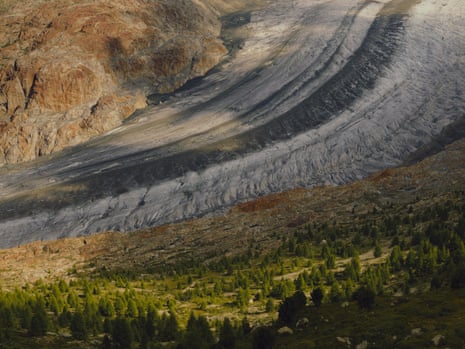
From the slopes behind the village of Ernen, it is possible to see the gouge where the Fiesch glacier once tumbled towards the valley in the Bernese Alps. The curved finger of ice, rumpled like tissue, cuts between high buttresses of granite and gneiss. Now it has melted out of sight.
People here once feared the monstrous ice streams, describing them as devils, but now they dread their disappearance. Like other glaciers in the Alps and globally, the Fiesch is melting at ever-increasing rates. More than ice is lost when the giants disappear: cultures, societies and entire ecosystems are braided around the glaciers.
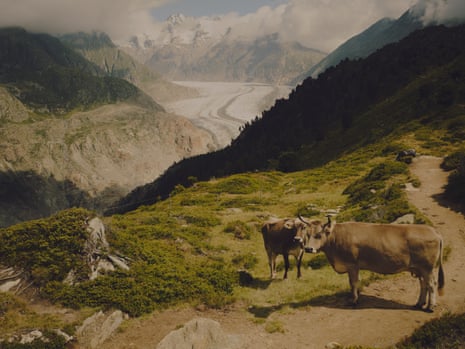
The neighbouring Great Aletsch, like the Fiesch, flows from the high plateau between the peaks of the Jungfrau-Aletsch, a Unesco region in the Swiss canton of Valais and Europe’s longest glacier. It is receding at a rate of more than 50 metres a year, but from the cable car above it remains a mighty sight.
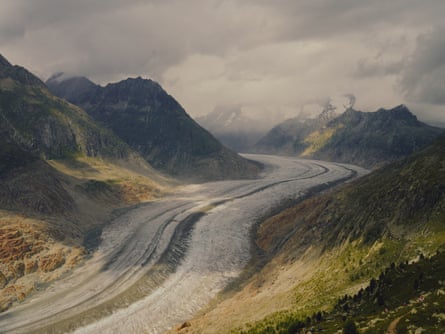
Clouds scud across the sky and shafts of light marble the ice. On the rocky slopes leading down to the glacier from the ridge, there are pools of aquamarine brilliance, the ground speckled with startling alpine flowers. The ice feels alive, with waterfalls plunging into deep crevasses and rocks shimmering in the sun.
“It’s just so diverse, these harsh mountains and ice, and up the ridge, a totally different habitat,” says Maurus Bamert, director of the environmental education centre Pro Natura Aletsch. “This is really special.”
Participants now pray for the glacier not to vanish, but they once prayed for it to retreat and stop swallowing their meadows
Many of the living worlds in the ice and snow are not visible to the human eye. “You don’t expect a living organism on the ice,” Bamert says. But there is a rich ice-loving biotic community and surprising biodiversity that thrives in this frozen landscape.
Springtails or “glacier fleas” survive on the snow’s crust – this year alone, five new species were identified in the European Alps. But there are also algae, bacteria, fungi and ice worms, as well as spiders and beetles, which feed on springtails.
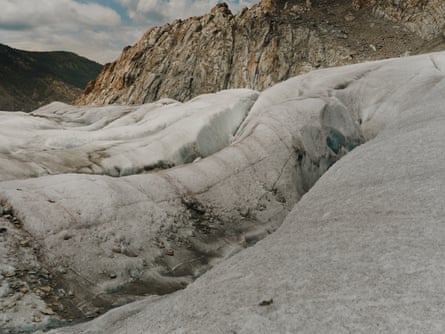
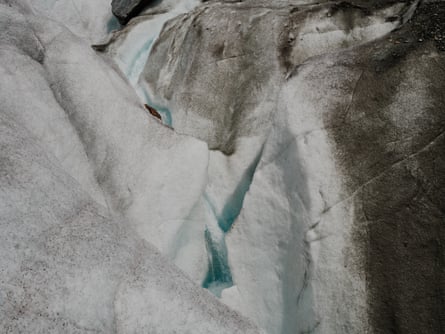
As ice melts, this landscape and its inhabitants, human and non-human, are all affected. Along the glacier’s path, ice turns to water and the rushing sound of the river becomes audible. In 1859, at the greatest extent of its thickness, the glacier reached 200 metres higher than it does now.
The landscape revealed by the melt is mostly bare rock, riven with fissures that spill across the hillside. Jasmine Noti from Aletsch Arena, the regional tourism organisation, says these widen each year, new cracks appear and routes are redesigned. The ice acts like a massive buttress, gluing the hillside together, and as it melts, slippage and instability increase.
As the edges of the glacial valley descend into the cool cover of the Aletschwald forest, “it’s like walking through time”, says Bamert. On the higher slopes, older pines dominate, but lower down the trees thin, and the pioneer species of larch and birch cover the hillside: early signs of newer postglacial reforestation.
It only takes about five to 10 years for plants to colonise the land. Further down yellow saxifrage and mountain sorrel cling to the rocks. All this was once under ice sheets, but the succession of growth tells a story of glacial retreat, historic and recent.
Tom Battin, professor of environmental sciences at Lausanne’s Swiss Federal Institute of Technology, says glacial margins are a transitional landscape where ecosystems are vanishing and appearing. An expert on the microbiology of stream ecosystems, Battin led a multiyear project on vanishing glaciers and what is lost with them.
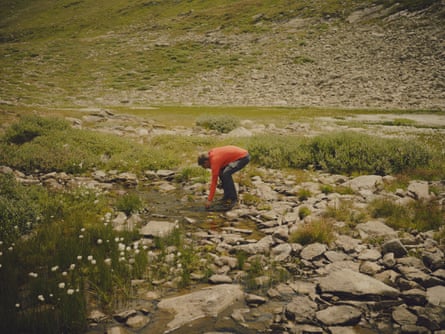
As he walks down to the Märjelensee, one of the Aletsch’s glacial lakes, this transition is readily apparent. In this mountain hollow, there was once an expansive lake with ice cliffs around its rim. Today, the pools of water are lit by patchy sun and rain, fish jumping and bog cotton dancing in summer light.
Battin points to aquatic mosses. These, he says, could never live in glacial streams which are fast flowing and extreme. Wading into the water, he searches for the golden-brown blooms of a particular alga, Hydrurus foetidus, which is a keystone species that thrives in glacier-fed rivers, fixing carbon dioxide into organic matter.
Lee Brown, professor of aquatic sciences at Leeds University, has studied invertebrate communities in glacier-fed rivers around the world, and says we do not yet know the full importance of those that are likely to disappear.
“It’s a challenge to communicate,” he says, pointing out the crucial roles that tiny organisms have in the “trophic networks” – the nutrients flowing between organisms within an ecosystem – that connect ice, rivers, land and oceans. Biofilms, or communities of micro-organisms that stick to the surface of ice and rivers, filter the water. Glaciers wash down vital nutrients from the mountain, but their rivers may run dry when the ice melts.
Without this biodiversity which you can’t see, all that other biodiversity that people care about might disappear
Tom Battin
There are whole worlds in and around the ice, poorly known and understood until recently. Mountains are like high islands, Battin says, with unique ecosystems and endemic species.
“Without this biodiversity which you can’t see,” he says, “all that other biodiversity that people care about might disappear.”
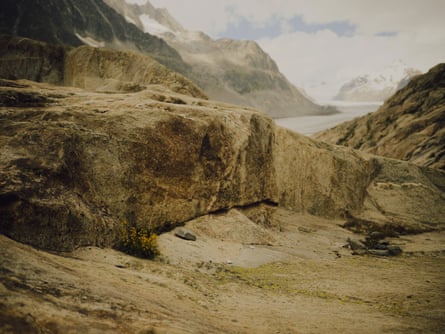
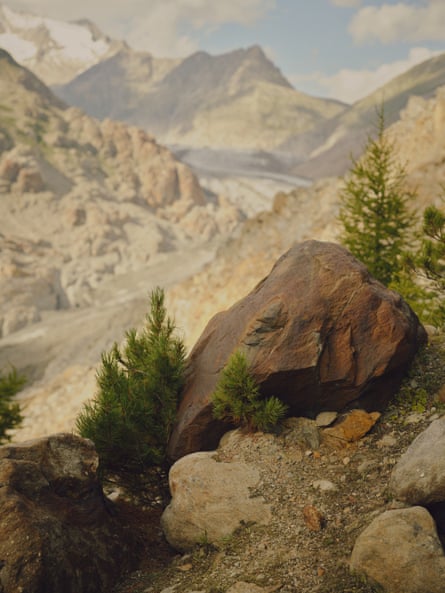
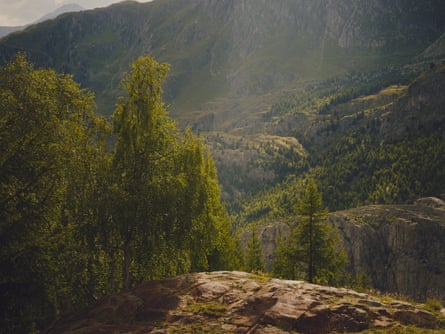
Francesco Ficetola is a professor of environmental science at Milan University who leads the PrioritIce project examining emerging ecosystems in glacial forelands, or land exposed by the retreating ice. As it melts, he says, “there’s a powerful combined effort of organisms” to create new and increasingly complex habitats.
As something is gained, however, much is lost. Cold-climate specialists such as ptarmigan and Alpine ibex are retreating up mountains, their habitats becoming ever smaller. The Swiss pines, on whose seeds nutcracker birds feed, are also moving upwards. Specialist alpine flowers and other pioneer plants at glacier edges are threatened, pushed out by the succession of forests and meadows.
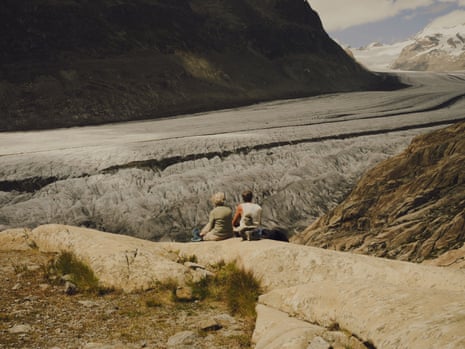
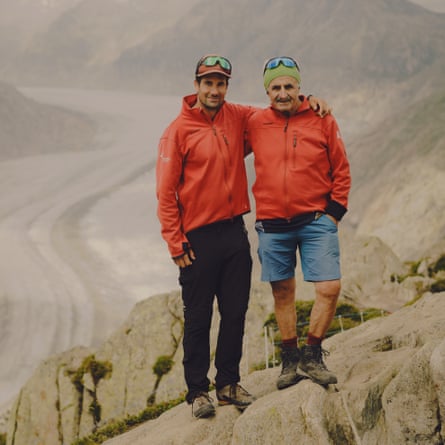
For the people of this region, too, life alongside the glacier is changing. The guides Martin Nellen and his son, Dominik, have lived with the Aletsch glacier all their life. Martin jokes that the older he gets, the farther he must climb from the ridge to the glacial valley as the ice melts. “It’s rubbish,” he says.
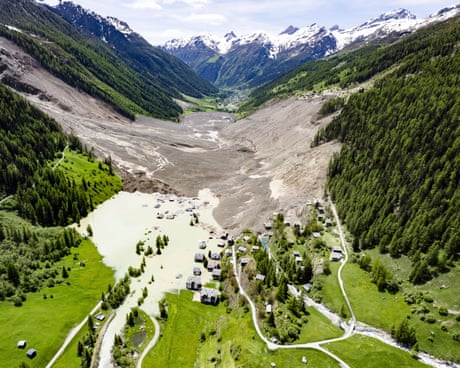
Martin was instrumental in raising funds for information boards, which he also helped design, that explain the life story of the Aletsch. Dominik says they feel “sad, of course” about the glacier’s retreat, but they are also proud to educate people about glaciers and the distinctive landscape of snow-covered peaks and lush pastures.
Every year at 6am on 31 July people gather for a procession that winds from the church in Fiesch to the Mariahilf chapel in the forest above. Participants now pray for the glacier not to vanish, but they once prayed for it to retreat and stop swallowing their meadows and grazing land.
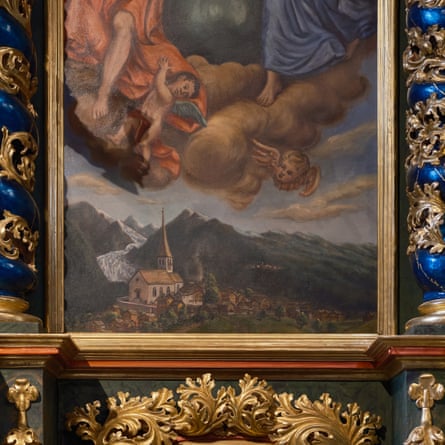
Divine assistance was first requested in 1652. Rosa, one of those gathered for the pilgrimage, remembers the deep snow and cold of past years. “I have been going since I was five,” she says. “There used to be more people.”
This procession is special for the reversal of its request, but similar stories exist across the Alps. They are a reminder that something intangible is lost as glaciers disappear. The great rivers of ice have shaped the imaginations of inhabitants and visitors. Not everyone sees the glacier through the lens of faith, but many visitors – whether praying, guiding or educating – worry what the future holds.
At a place called Baseflie, a cross still stands, erected in 1818 to banish the Aletsch glacier when it threatened pastures. Today, the wooden silhouette against a blue sky seems like a memorial to all that may be lost as glaciers vanish.
Find more age of extinction coverage here, and follow the biodiversity reporters Phoebe Weston and Patrick Greenfield in the Guardian app for more nature coverage
“Springtime Sprite”
I Actually Did Not Write This
Nor did I have input. But I’ve found my spirit author regarding seasons!
Here on Main Street: The “Ber” Months
The next four months are the most wonderful time of the year.

What kind of terrible person hates summer?
It’s me. Hi. I’m the problem, it’s me (to quote a newly engaged woman).
Longtime readers of the Post know that I hate the summer months of June, July, and August with the intense heat of a thousand suns (which is often what those months feel like).
Summer is overrated. I think there’s a secret summer society that has people brainwashed that June, July, and August are the perfect months. The sun! The heat! The beaches! The cookouts! To which I would add: The bugs! The sweltering heat! The sunburns!
Remember those Country Time lemonade mix commercials, the ones that lamented that “summer will be a short 94 days?” I used to think, really, it’s going to be that long?
I bet if you really pinned people down and promised to keep their responses anonymous, they would actually admit that fall is better than summer.
(Kids aren’t factored in that polling because they get out of school in the summer and are carefree for three months (though I bet they love getting new school supplies). I have to do the same exact things I do the other months of the year; the only difference is I sweat more.)
I like the “Ber” months,” the months of fall and early winter: September, October, November, December.
There’s a great argument to be made that the new year should start in September instead of January. I wouldn’t make that argument myself, but I could!
Vacations are over, kids are back in school, adults have a new focus on work, people are making plans, the weather is changing. There’s an energy that happens in the fall that you don’t get in the lazy days of summer. There’s more of a fresh, new-feeling start as the calendar ticks over from August to September than there is when we go from December to January. Labor Day could be the new New Year’s.
There’s also better food in the fall and winter. Comfort foods like hot, hearty soups and chili. Pasta and stews and pies. We can turn on the oven again in the “Ber” months.
What do we eat in the summer? A salad? Yeah, that’s comforting.
Holidays? I’ll take Halloween, Thanksgiving, and Christmas over St. Patrick’s Day, Easter, and the Fourth of July. All of the holidays from March until August put together don’t add up to the three big holidays you get in the fall and winter.
Clothing? In the warm, sticky months you wear shorts and gross flip-flops. I don’t need to see anyone’s feet. In the “Ber” months, there are more clothing options, and I’m actually more comfortable in jeans, a sweatshirt, or a flannel shirt than I am with less clothing in the summer.
You say the “Ber” months are the “Brrr” months? So what? Are you a construction worker? Are you a mail carrier? Then why are you concerned with how cold it is? Go inside your home and turn up the heat. Wrap yourself in a blanket and make yourself a cup of tea.
Tea is the official drink of fall and winter, by the way.
Even arts and entertainment are better in the fall. The movies seem to be of better quality, the big books come out. Sure, fall TV isn’t quite what it used to be (new shows premiere year-round now), but people still look forward to September and October when new seasons of their old favorite shows start.
Every August, local newscasters and meteorologists sigh heavily that the summer is ending. The nice temperatures are going away! Can’t we prolong the summer a little bit longer? They get all upset that instead of it being 90 it’s 68, which apparently is some unbearable temperature.
I submit to you that “nice weather” in the summer is actually pretty rare. I’d rather view the spectacular brown and gold treescape above or snowy winter scenes than a bright sun broiling asphalt.
You say I can just turn on the air conditioner in the summer if it’s too hot and humid? I don’t have an air conditioner, and people who don’t have an air conditioner can’t escape the heat and humidity (I don’t know what it’s like where you live, but here in New England, all homes come with heat but you usually have to add the A/C yourself). You can always put on another piece of clothing if it’s too cold. If you keep taking off an article of clothing when it’s too hot, eventually someone will call the police (and they’ll be filming you on their phone and putting it online).
Of course, a lot of this is a regional thing. There are more warm months in places like Texas and Arizona and Florida, and it’s a regular thing for them. Which is why I would never live in Florida (and the weather is only one of approximately eleven reasons why I would never live in Florida).
So I’m happy that it’s after Labor Day. The next four months are the most wonderful time of the year. And even when the “Ber” months are over, everything is still good because then we get the “Ary” months. As a lover of the cold and snow, I welcome them too.
I own sweaters and I know how to use them.
In My Backyard
there is a little apple tree. The people who lived here before us planted an apple and a pear tree. The pear tree was taken out by wind/lightning several years ago, and DH took out the stump a few years after that. The apple tree has just kept plugging along. We didn’t/still don’t care for spraying chemicals for pests, so the apples are mostly enjoyed by creatures of the air and ground, if I’m clear. But one year in the early aughts, I thought I’d try to collect some of the apples, cook them up, and put them away. I looked up some info on doing such things, and learned from the U of MI that our tree is considered to be a neglected fruit tree, because it isn’t sprayed to keep pests away, nor professionally pruned. The information confirmed that the plan to cook and freeze was the best one for apples from such a tree. I did that for a few years, but then went back to work and the tree continued to produce (except for one year; we got blossoms, but no fruit. It was back the next year, though.)
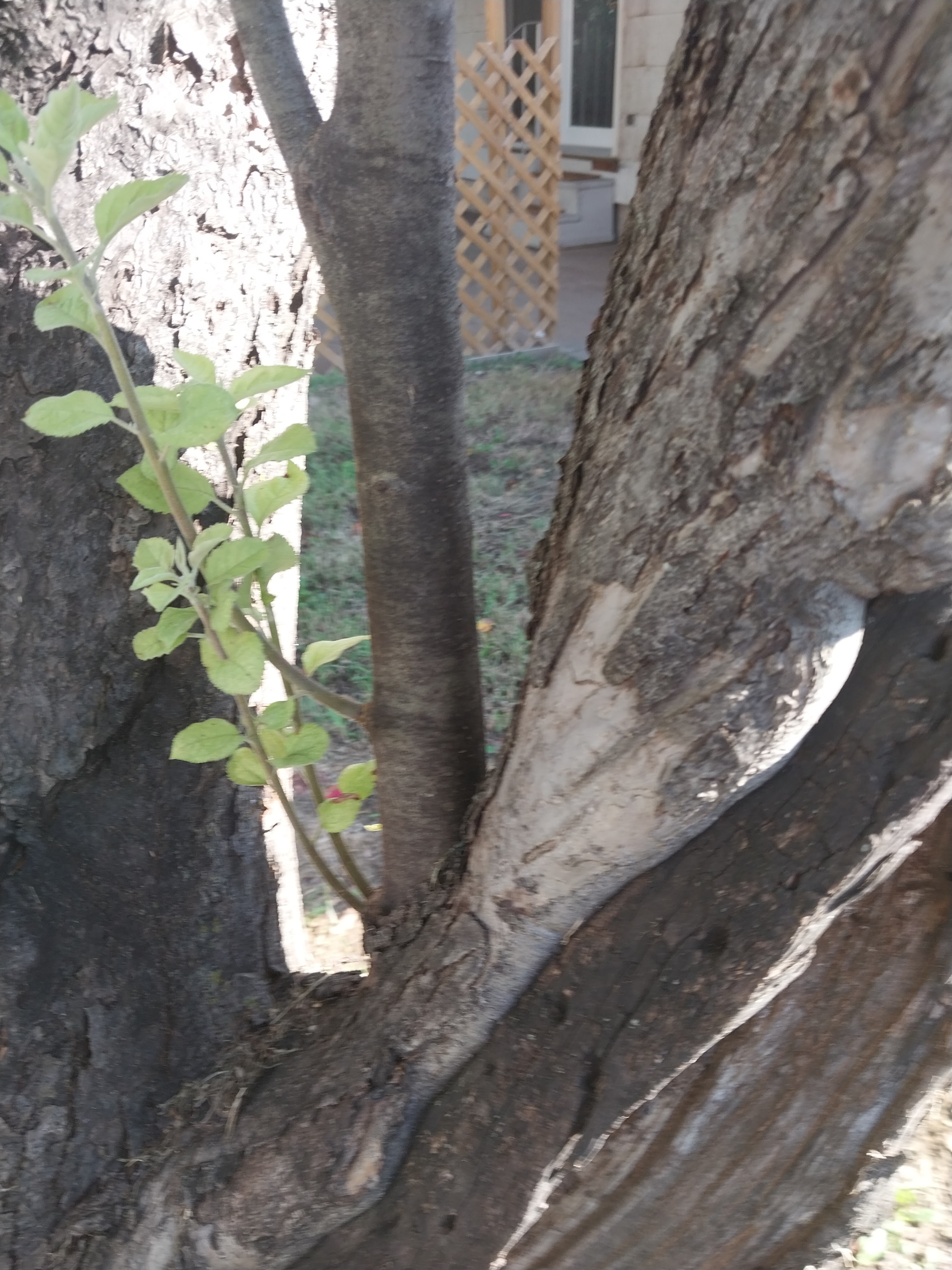
So, late last Winter, I needed to get some maintenance done on all the trees in the yard. The trimmers were such great help, and it is easier to relax when the wind is harsh, since the trees are nicely trimmed and power lines are not endangered by tree branches. The trimmers discussed the little apple tree with me; the photos below will help explain. We decided to trim the apple tree but let it stay because there were blossoms, and new branches and limbs. Something to do with, if the new branches are growing up, there is life; if the branches are growing downward or outward, it’s a last gasp. The trimmers’s business is a 2d generation family business, with all members having studied tree ag specifically so they can care for people’s trees in the best interests of all. They’re great people. So, anyway:

It appears, from the trunk, that the tree is dead, as seen in the shot above; that’s at the bottom of the tree, and up to the first branch. An entire family of elves could live comfortably in this tree. And yet, there are newer branches, with young limbs. This morning I was out there with Ollie, and there are more baby limbs growing! So I took photos, and thought I’d share. If anyone knows about this, input is welcome; else enjoy my apple tree!


And Now For Something Different-
” … to serve man …”
Walking In NYC –
WP needs a category for Shoes.

 Scottie's Playtime