TOPEKA (KSNT) – Kansas’ attorney general and the Kansas Bureau of Investigation (KBI) have signed a deal to assist federal immigration forces in the Sunflower State.
Danedri Herbert with the Kansas Office of the Attorney General said in a press release on Monday, Feb. 17 that Attorney General Kris Kobach and the KBI have signed an agreement with the U.S. Department of Homeland Security (DHS). This will allow KBI agents to work alongside Immigrations and Customs Enforcement (ICE) to remove immigrants who are residing in Kansas illegally.
A limited number of KBI agents will receive ICE training that authorizes the agents to arrest immigrants who are in the U.S. illegally, serve and execute warrants for some immigration violations and issue immigration detainers, according to the press release. Herbert said a section of the Immigration and Nationality Act authorizes states and political subdivisions of a state to enter into agreements like this. (snip-MORE)
Ocean acidification now looms as a direct challenge to oysters. Experts warn that more acidic conditions can alter the sex balance in these shellfish. Some oysters start life as male, then switch to female later. Shifts in pH threaten to speed that switch.
These shifts could upend aquaculture and coastal ecosystems everywhere.
Researchers note that an oyster population with too many females might see future reproduction problems, since a balanced sex ratio helps keep populations stable.
Photo: Pexels
Oysters rely on environmental cues to decide their sex. (snip-MORE)
Proposal calls on company to prepare reports on ‘macroeconomic costs’ of health insurer’s practices
UnitedHealth Group is attempting to swat down a non-binding shareholder proposal that asked the company to prepare reports on the costs of delayed and denied healthcare.
The proposal, filed by members of the Interfaith Center on Corporate Responsibility (ICCR), represents a new frontier in seeking to hold insurance companies accountable for the “macroeconomic costs” of denied care – arguing they eventually hurt the bottom line of large investors.
The proposal asks UnitedHealth Group to prepare reports on the “public health-related costs and macroeconomic risks created by the company’s practices that limit or delay access to healthcare”.
“The investors we work with are interested in long-term value creation,” said Meg Jones-Monteiro, senior director of health equity at ICCR. The coalition represents primarily institutional investors, such as pensions and foundations.
“When you think about the investment portfolios our members have, they are very diverse,” Jones-Monteiro. “What happens in one sector impacts another.”
The proposal is non-binding, but UnitedHealth Group is nevertheless fighting to stop it. In a filing with the Securities and Exchange Commission in January, UnitedHealth Group attempted to exclude the proposal from proxy statements on technical grounds, arguing in part that the terms “public-health related costs” and “macroeconomic risks” are vague and subject to interpretation. (snip-MORE)
Last month I asked to hear from trans-friendly employers who sponsor visas, and provided a simple form for interested employers to reach out. In the process, I heard from many individuals: people who were hoping to find new employment in another country, and people who worked for companies that were aligned, who were encouraging their bosses to fill in the form.
A quick reminder before we dive in: I’m not providing formal legal or financial advice. I’m just trying to point people in the right direction and provide some ideas for relocation for people who want it.
The bad news
Here’s the bad news: today, that form sits empty. While the post was shared far and wide, not a single person has filled it in.
I think there are a few reasons for this. First and foremost, in the current environment, being listed in such a database presents a significant risk, particularly if you’re doing business with US entities. In an environment where the administration is firing employees and cutting contracts for even the barest mention of support for trans people, there’s every reason to believe that the current administration will penalize people and organizations who work with trans people.
So, that’s not great. I’m very sorry to everyone who got their hopes up that I would be able to make direct connections.
The good news
The good news: some countries actively sponsor visas, welcome trans people, and are hiring.
In my personal conversations with people, what jumped out again and again was that emigrating to the Netherlands was a viable route for many people — and particularly those with tech skills (engineering, IT, product management, design, research, and so on).
Reasons include:
Dutch tech companies tend to sponsor visas. (Look for job vacancies written in English and/or on boards like Tech Me Abroad and Relocate.me.)
You can relocate with a self-employment visa if you have a skilled background, can demonstrate at least one Dutch-based contract or that you’ll start a tech-based business, and can show that you’ll independently make €1,613 (~$1,700) per month.
The DAFT visa lowers the barrier to entry for US entrepreneurs who can commit to invest €4,500 (~$4,700).
The Netherlands is also kind of just a neat country: excellent social safety net, great support for culture and the arts, good connectivity to other European countries, and a strong grant support network for mission-driven tech. Amsterdam is a first-class cosmopolitan city, but other centers in the Netherlands are not to be sniffed at, and the country is so small that you can easily take public transit from one to another in less time than it might take you to commute to work by car in the US.
It is not, however, perfect. Much like the US, the Netherlands has had its own racial reckoning; unlike the US, the discourse has often centered on the idea that racism doesn’t happen there. That’s a rich claim from a society where racist tropes like Zwarte Piet are still commonplace, and where women of color are often marginalized. There’s work to be done — although it’s worth asking if this is truly any worse than the US.
Not everybody can relocate, and not everybody has these skills. I’m aware that this is a privileged route that not everybody can take advantage of. It would be better if there was a defined route for everybody who needed to find a safer place to live; it would be better still if a safe place to live was the place they already call home. This situation is sick and sad, and I truly wish that everything was different.
It also comes with an attendant cost. It’s estimated that moving to the Netherlands will set you back between $6-10K. That’s a lot less than one might expect, but it’s obviously a significant barrier for many people. Unfortunately, very little financial support exists for these moves. If you know of grants, mutual aid funds, or community resources that help trans people relocate, please share them. Funding and guidance from those who’ve navigated the process could make all the difference.
Please reach out
In the meantime, I’ll keep looking. If you are a company in a country that is safe for trans people, and you’re looking to hire people from the US who need visa sponsorship, please fill out this form or reach out to me via email. I’m not giving up.
==========
I once had a wonderful experience with tens of thousands of pansies. by Worriedman
Plant the green side up and give it a good drink of water a couple of times a week…
Pansies are Viola hybrids, Viola x wittrockiana. (“wittrockiana” sounds like a mountainous region in the south of the Duchy of Grand Fenwick) The common names, pansy, viola and violet are used interchangeably. “Pansies” are usually larger and taller than true violas, with large showy blooms. Violas are usually smaller plants, with smaller blooms, more plentiful than find on pansies. If you want to be a real nerd you can look at the petals. Both kinds of blooms have five petals . On the pansy, four petals point up, one points down. On the viola, two petals point up and three point down.
February 17, 1958 The first meeting of Britain’s Campaign for Nuclear Disarmament (CND) was held. CND developed the peace symbol which became its logo. CND history
February 17, 1975 Several hundred residents of Wyhl, Germany, occupied the site of a nuclear power plant with the intent of halting construction. The contractor had begun building despite a court order to suspend doing so. Police responded to the protesters with dogs, water cannon, and arrests. By the following week, however, over 25,000 had joined the occupation, and police withdrew for eight months. This is believed to have been the first such nuclear plant site takeover in the world. The occupation was nonviolent, and a sort of village sprang up with a “Friendship House” and a “popular university.” Local farmers supported the occupiers with food. Stand-off between anti-nuclear activists and police at Wyhl, Germany Following the negotiated withdrawal of the occupiers, a panel of judges permanently banned construction of the plant, and the land is now a nature preserve.
February 16, 1936 A coalition known as the Popular Front (Frente Popular), comprised of socialists, communists, republicans, and labor groups, narrowly won a majority in the Cortes, Spain’s parliament, defeating the National Front.
February 16, 1959 Fidel Castro was sworn in as Cuba’s youngest prime minister after leading a years-long guerrilla campaign that forced right-wing dictator Fulgencio Batista into exile. Fidel Castro Castro, who had become commander-in-chief of Cuba’s armed forces after Batista was ousted on January 1, replaced the more moderate Jose Miro Cardona as head of the country’s new provisional government. Fulgencio Batista More background on Fidel As reported at the time, including a filmed interview with Castro in English
February 16, 1982 Citizens’ Action for Safe Energy (CASE) succeeded in stopping construction of Black Fox Nuclear Power Plant near Inola, Oklahoma. Public Service of Oklahoma announced the cancellation, the first of its kind solely due to citizen protest. CASE’s founder, Carrie Barefoot Dickerson, known as Aunt Carrie, and her husband, Robert, spent nearly a decade and all their financial assets organizing folks around Tulsa and the state. The Dickersons’ principal concern was the potential damage to health near the plant, and elsewhere through uranium mining and processing. Aunt Carrie, her allies and their success watch video (2011)
February 16, 1996 Seven activists were arrested for blocking the road to the ceremony commissioning the nuclear submarine U.S.S. Greeneville at the Norfolk (Virginia) Naval Base.
February 16, 1996 The Zapatista National Liberation Army (EZLN), representing Mexico’s southern indigenous peoples, and the Mexican federal government signed the San Andrés Accords. Begun in 1994 in Chiapas state, the EZLN had pushed the government for: • Basic respect for the diversity of the indigenous population of Chiapas; • The conservation of the the natural resources within the territories used and occupied by indigenous peoples; Subcommandate Marcos, leader of the Zapatistas, and two of his officers • A greater participation of indigenous communities in the decisions and control of public expenditures; • The participation of indigenous communities in determining their own development plans, as well as having control over their own administrative and judicial affairs; • The autonomy of indigenous communities and their right of free determination in the framework of the State.
February 16, 2005 The Kyoto Protocol went into effect after countries responsible for 55% of the world’s greenhouse gas (GHG) emissions had ratified the treaty, following Russia’s agreement to its terms. The agreement’s purpose was to reduce such gases to 12% below their levels in 1990 by 2012 and, thus, slow global warming. 180 countries had agreed (except for the United States and Australia, two of the world’s top emitters of GHG per capita) to rules for implementing the Kyoto Protocol on July 29, 2001, in Bonn, Germany. President George W. Bush withdrew the U.S. from the process shortly after he took office that same year. His reasoning was that, since India and China had not signed on, they would gain a competitive advantage. The U.S. is now responsible for 15.6% of the earth’s GHG (with 5% of its population). History, background on the Kyoto Protocol
(However, it’s not well-known, it’s chilling, and it could be upsetting, so take only what you can take. It’s like Rosewood+Greenwood, plus yet more. -A)
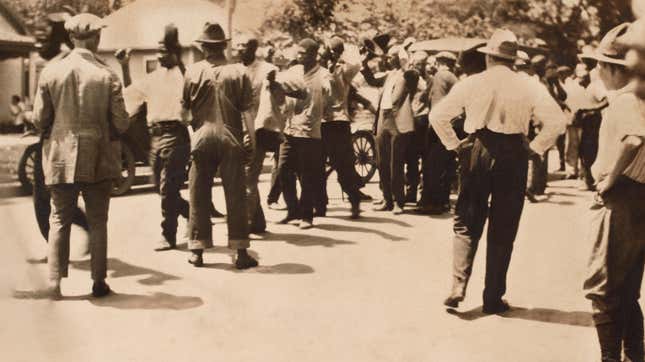
Photo: Unidentified Photographer, June 1921 (Getty Images)
Most Black Americans have never heard of the Red Summer of 1919…but it is an element of Black history that we need to pay attention to. This country specializes in committing monstrous atrocities and then ignoring the consequences of their actions. It happened with Native Americans and the Trail of Tears. And, of course, it happened with Black folks. This truth is best captured when we consider what happened in the year 1919.
When Austrian Archduke Franz was assassinated on 28 June 1914, it set off a chain of events that led to what we now call World War 1. Working age white men were drafted and sent to fight, so that left many job vacancies in northern cities that Black men were happy to fill. See, Black folks were feeing the racist South hoping to find less racism in northern cites. The population of Black Chicagoans increased by more than 100% while the number of Black folks in Philadelphia grew by 500%.
While that was happening, 367,000 Black Americans either enlisted or were drafted into service to fight in the war that had just popped off. Black men were eager to prove to white America that Black people deserved dignity. They hoped they would see that by fighting in what white folks were calling ‘The Great War.’ But once the war ended, Black soldiers returned to an ungrateful nation. Thinking about these men, W.E.B. Du Bois wrote on May of 1919 in the NAACP’s Crisis newsletter, “We return. We return from fighting. We return fighting.”
Du Bois had no idea how prophetic his words would be. From May of that year to December, over 25 race massacres took place on American soil. More than 250 Black men, women and children’s lives were violently cut short. Black folks discovered that the racial violence they thought they escaped when they left places like Alabama and Mississippi was not a feature of Southern living. Instead, it was part of being Black in America.
Those white soldiers who came home and discovered that scores of Black people had moved to the north. They also found Black soldiers who felt that they had earned their place in American life by serving their country. An official put it like this: “one of the principle elements causing concern is the returned negro soldier who is not readily fitting back into his prior status of pre-war times.” Therefore, white soldiers became white terrorists to put these soldiers and anyone who looked like them back in their place. There were race massacres in Washington D.C., Omaha, Knoxville, and a massive race riot in Chicago where 38 people were killed and 537 injured. Few white people were arrested for these crimes, fewer were prosecuted. Two years later was the Tulsa race riot where the Greenwood district, what we now call Black Wallstreet, was burned to the ground.
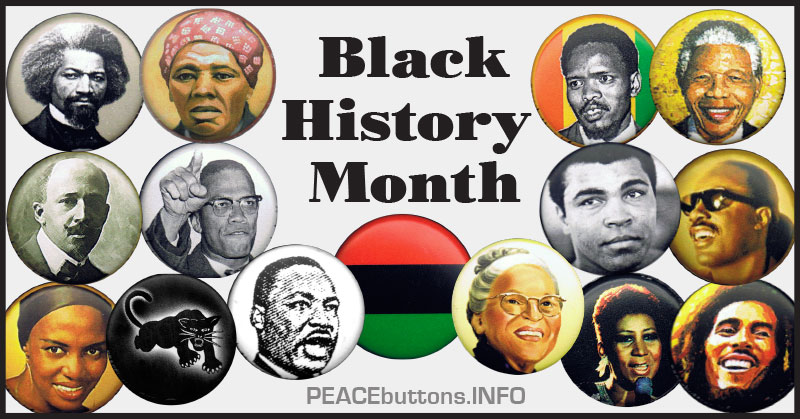
As we celebrate Black History Month, we need to tell the entire truth of our history. Not just the accomplishments of men and women who embody Black excellence, but also the way that America has wronged us. The Red Summer of 1919 is one of those stories that we would like to forget. Yet don’t our accomplishments shine even more brightly considering the darkness we had to endure? No doubt we have endured days when hope unborn had died. But, somehow, against all odds, we came to the place for which our fathers sighed.
I have been ill so all I could do is mostly save stuff, post news from my bed, and watch videos, one after another. Most of what I watched I did not remember. This one I had watched and liked, and saved to the video computer. I am so glad I did. As I rewatched the video I began to realize how vast and immediate the impacts are to us right now. The entire things regions are known for will have to shift. In the now wetter areas that business and housing take up the majority will have to give way to growing food crops if we want to eat. Sadly meat consumption will have be drastically cut until ways to mitigate the damage food animals do at all levels of production. Plus these methods of water reclamation and returning water back to the aquifers. Love it. Thanks to Ten Bears for posting it. Hugs.
I am reposting this because brucedesertrat had a great comment and when I went to the link the site demanded I stop my ad blockers and sigh in. I refused to do both. So a few minutes ago I posted a fresh article on the NIH funding and in this original post I added three links to the Kennedy Center and Felon president tRump. Hugs




 Scottie's Playtime