Mother Jones with The Mill Children, & More, in Peace & Justice History for 7/7

July 7, 1863
The first military draft was instituted in the U.S. to provide troops for the Union army in the American Civil War. Once called, a draftee had the opportunity to either pay a commutation fee of $300 to be exempt from a particular battle, or to hire a replacement that would exempt him from the entire war.
July 7, 1903

The March of the Mill Children  watch a video – highly recommended
Labor organizer Mary Harris “Mother” Jones led the “March of the Mill Children” over 100 miles from Philadelphia to President Theodore Roosevelt’s Long Island summer home in Oyster Bay, New York, to publicize the harsh conditions of child labor and to demand a 55-hour work week. It is during this march, on about the 24th, she delivered her famed “The Wail of the Children” speech.
Roosevelt refused to see them.

“Fifty years ago there was a cry against slavery and men gave up their lives to stop the selling of black children on the block. Today the white child is sold for two dollars a week to the manufacturers.” –
from Mother Jones’s autobiography
 
Read more about Mother Jones 
July 7, 1957
Convened at the onset of the Cold War, a group of scientists held their first peace conference in the village of Pugwash, Nova Scotia, Canada. The mission of the Pugwash Conference was to “. . . bring scientific insight and reason to bear on threats to human security arising from science and technology in general, and above all from the catastrophic threat posed to humanity by nuclear and other weapons of mass destruction . . . .”

Bertrand Russell
Wealthy industrialist and Pugwash son Cyrus Eaton had invited the world’s greatest minds to his family home in Nova Scotia and address the emerging threat of nuclear war. The Conference became the basis for an ongoing organization that deals with issues of weapons of mass destruction. The 1995 Nobel Peace Prize was awarded to Joseph Rotblat (one of the original signatories of the Pugwash Manifesto) and to the Pugwash Conferences on Science and World Affairs.
Albert Einstein
Pugwash home 

Fifty years later . . .
25 scientists, diplomats and former military officers from 15 countries gathered for a “Revitalizing Nuclear Disarmament” strategy workshop. The meeting was held near the Thinkers’ Lodge, the site of the first meeting in 1957.
Fifty years ago from Pugwash, Nova Scotia, nuclear scientists helped alert the world to the dangers of nuclear weapons, and especially the newly developed hydrogen bomb,” said Paolo Cotta-Ramusino, Secretary General, Pugwash Conferences on Science and World Affairs. “Today, we are working with experts from around the world for global action to revitalize nuclear disarmament and the final elimination of nuclear weapons.
Senator Roméo Dallaire, Honorary Patron of the Pugwash Peace Exchange, said “It is appalling to observe the increasing potential for many regional nuclear arms races, shameless plans to modernize nuclear arsenals and bald-faced threats of pre-emptive nuclear use,” said Senator Dallaire. “Only by revitalizing discussion and implementation of disarmament leading to abolition can we ensure that these genocidal devices will never again be used.
July 7, 1977
The United States conducted its first test of the neutron bomb. The neutron bomb was a tactical thermonuclear weapon designed to cause very little physical damage through limited blast and heat but was designed to kill troops through localized but intense levels of lethal radiation.

A neutron bomb explosion at a test site
July 7, 1979
2,000 American Indian activists and anti-nuclear demonstrators marched through the Black Hills of western South Dakota to protest the development of uranium mines on sacred native lands.

https://www.peacebuttons.info/E-News/peacehistoryjuly.htm#july7
Useful Material, Here

Of course, we’re all looking to save what we can, every day. This can be applied to small households larger than single resident. Give it a look! I remember doing some of this in the 80s, and I still do all I can. A penny’s a penny! Also, if you click through to read, here on the headline, | you can see funny graphics to go with many of the suggestions.

People who live alone share their 45 best money-saving hacks

“I fill empty glass jars with water and store them in my fridge. It costs more to cool an empty fridge than a full one.”

Emily Shiffer

Whether you’re single or choose to live alone, it can be expensive. Finding ways to save money living alone can take some creative thinking, but there are easy ways to put some extra cash back in your wallet.

In an online forum, member Just_Throw_Away_67 posed the question to fellow people who live alone: “What random cost-saving measures have you found that work well for those living alone?”

And single people and people living solo happily shared their money-saving hacks. These are 45 of the best ways to save money if you live alone.

“I’ll start, to save money on energy I fill empty glass jars with water and store them in my fridge. It costs more to cool an empty fridge than a full one, and since I don’t eat very much my fridge is often nearly empty. Not sure how much this has saved me, but now I have water if I ever were to need it!” Just_Throw_Away_67 (Note from A.: This holds true for the freezer, too. Keep some containers of water up/out there. They help use less energy, and frankly, the ice is useful during power outages.)

“Blackout curtains because I live in the South so it’s always hot. I also have privacy film that blocks some UV rays when I do want some light. Using a floor fan in my room (where I spend the majority of my time) with the door closed to keep it cooler. Close the air vents in my guest room since it’s primarily unused to cut down on AC costs. Cook large batches of food at one time so I’m not constantly using my stove/oven.” eternally_feral

“It’s a pain to heat the whole oven for a little food. I recommend an air fryer over a toaster oven though. They’re a bit faster (and you can still make toast).” MissDisplaced

“I keep my heating and cooling low. I can wear extra layers or less to get to a comfortable temp.” Reasonable-Cold2161

“I read a tip to not bother doing a full ‘grocery shop’ trip if it doesn’t work for you/doesn’t make sense for you. Rather, if you find you’re throwing food away you couldn’t eat in time, try to do the method of going to the store of getting, say, just what you need for tonight and tomorrow’s meals, or whatever.” citynomad1

“Grocery delivery. I end up spending 50% less compared to shopping in the store.” Everydaylookwithin

“This is why I do curbside pickup. I order through the app, see what deals and coupons they have, stick to my list and don’t end up impulse buying. An added bonus is I can pick up on my way home from work and not spend time waiting in the checkout line.” zoebadwolf

“It took a little bit of up front investment, but I dumped my gigantic and ancient energy-hungry fridge a long time ago for a brand new one that is much smaller and also has a variable speed compressor for extra efficiency. The energy savings from that move alone probably paid for the fridge several times over by now.” BrewCityChaserV2

“I have a countertop dishwasher that I intentionally use only during off-peak hours. Luckily, this rental has a new refrigerator, and I run my air purifier on its 2 hour timer during those off hours (cat hair lol). Oh- I bought a Tushy bidet on sale- it pays for itself in the first year!” sk8rcruz

“I always bring my own lunch to work. I also cut up fresh veggies, put them in ziploc bags, freeze them, and then steam them later in the microwave. You can also just put a whole bag of spinach in the freezer and then steam it in the microwave. Clean with a plastic spray bottle of vinegar and dish soap. Sprinkle baking soda on carpets and rugs before vacuuming.” Unhappy-Jaguar-9362

“I have milk jugs with water in them in the fridge and freezer. I also buy in bulk. Usually the more you buy the cheaper per unit it is. I have a year supply of everything (joking) not quite but almost. I keep my air conditioner at a warmer temperature and use a fan to cool me all the way. I close blinds and curtains during the day. This cuts down on the heat in the room. Unfortunately it is dark in my apartment during the day , but this can make a difference of up to 10 degrees. This saves on cooling costs. Instead of buying single servings of food. I make a family size amount and put the leftovers in round dinner containers all ready to go for the next meal. These can also be frozen if you don’t want the same thing a couple days in a row and put in the microwave for 6 or 7 minutes.” Delightful_Helper

“I buy the family size packs of meats, divide and freeze. I also still cook big meals like when my kids were teenagers and divide them into portions and freeze. Its simply too hard to cook for one person. I make a weekly menu of the dishes I want to cook and then place my order for the grocery delivery. It does save money and since I cook a lot of casseroles, big pots of soups and stews, etc., and freeze in portions. I use my air fryer to warm the frozen dishes instead of the oven. It has almost become my hobby to have a variety of different meals through out the week without having to cook every day. Life is good 😊.” No_Guava_90

(snip-MORE, plus funny graphics)

“High-Flying Filter-Feeder”

Baby Strikers, Barbara Gittings, & More in Peace & Justice History, 7/3, 7/4

July 3, 1835
Children employed in the silk mills at Paterson, New Jersey, went on strike for an eleven-hour workday and a six-day workweek rather than 12-14 hour days. With the help of adults, they won a compromise settlement of a 69-hour week.
More on the Baby Strikers 
July 3, 1966
4000 Britons chanting, “Hands off Vietnam,” demonstrated in London against escalation of the Vietnam War. U.S. warplanes had recently bombed the North Vietnamese capital of Hanoi as well as the port city of Haiphong. Police moved in after scuffles broke out at the demonstration outside the U.S. Embassy in Grosvenor Square; 31 were arrested.

Actress Vanessa Redgrave joins 25,000 two years later at Anti-Vietnam war protest, Grosvenor Square.
Read more 
July 3, 1974
At the Moscow Summit talks between President Richard Nixon and President Leonid Brezhnev, the United States and the Soviet Union agreed to hold bilateral talks on the prohibition of chemical weapons.
July 4, 1776

The United States declared its independence from King George III and Great Britain, thus beginning the first successful anti-imperial revolution in world history. Signed in Philadelphia by 56 British subjects who lived and owned property in thirteen of the American colonies, the document asserted the right of a people to create its own form of government. The signers of the Declaration of Independence were members of the 2nd Continental Congress which had voted two days earlier to separate from the British crown.
Read the Declaration
see some quotes on nationalism and patriotism
July 4, 1827
Slavery was outlawed in New York State as the result of the Gradual Emancipation law passed ten years earlier. This freedom applied only to those who had been 18 at the time of its passage. Enslaved children born during the subsequent ten-year period were not be freed until they reached the age of 21.
At the urging of Reverend William Hamilton, a freedman and carpenter, and others, the end of slavery was celebrated in churches. The Fourth of July had in the past been marred by young white men attacking black Americans.
More on William Hamilton  and others
July 4, 1829
Speaking at Boston’s Park Street Church, newspaper editor and abolitionist William Lloyd Garrison gave a seminal speech on “Dangers to the Nation.” Though Massachusetts had banned slavery in 1781 and there was strong anti-slavery sentiment, most understood that a national ban of slavery would threaten the union of the states. Compensation to slaveholders and return of the enslaved to Africa was considered the best solution.
Garrison, on the other hand, called attention to the hypocrisy of celebrating the the day the document was signed declaring, “All men are created equal” while two million were in bondage. He proposed four propositions that day to guide the abolitionist movement:
1. Above all others, slaves in America deserve “the prayers, and sympathies, and charities of the American people.”
2. Non-slave-holding states are “constitutionally involved in the guilt of slavery,” and are obligated “to assist in its overthrow.”    
3. There is no valid legal or religious justification for the preservation of slavery.
4. The “colored population” of America should be freed, given an education, and accepted as equal citizens with whites.


William Lloyd Garrison
July 4, 1894
The Republic of Hawaii was proclaimed with Sanford B. Dole as president. It was recognized immediately by the United States government under President Grover Cleveland. This was the result of the successful overthrow of the Hawaiian monarchy, then held by Queen Lydia Liliuokalani, and the support by white Americans involved in the sugar trade on the islands for annexation by the United States. Shortly after she had come to office, she had promulgated a new constitution which increased the power of the monarchy and that of native Hawaiians.
July 4, 1965

Barbara Gittings at the Philadelphia picket
The first of an annual picket in front of Philadelphia’s Independence Hall was held by gay and Lesbian Americans. Jack Nichols and Frank Kameny and members of the New York and Washington Mattachine Society and the Daughters of Bilitis had earlier demonstrated in Washington, and wished to change the general perception that homosexuals were perverted or sick.

“By those protesters coming out publicly, and placing themselves very strategically in front of the building that evoked the Declaration of Independence and the idea that all men are created equal, it suggested it [gay rights] was no longer a moral or national security or psychiatric issue … it was a civil-rights issues,” 
David K. Johnson wrote in The Lavender Scare: The Cold War Persecution of Gays and Lesbians in the Federal Government.
July 4, 1966
The Freedom of Information Act, P.L. 89-487, became law. It established the right of Americans to know what their government is doing by outlining procedures for getting access to internal documents.
July 4, 1969

“Give Peace a Chance” by the Plastic Ono Band was released in the United Kingdom.
The song was recorded May 31, 1969, during the “Bed-In” John Lennon and Yoko Ono staged at the Queen Elizabeth Hotel in Montreal as part of their honeymoon. John and Yoko stayed in bed for 8 days, beginning May 26, in an effort to promote world peace.
Some of the people in the hotel room who sang on this were Tommy Smothers, Timothy Leary, Allen Ginsberg, and Petula Clark. Smothers also played guitar. This event promoting peace received a great deal of media attention.
“All we are saying . . .”  
watch & listen – give it a chance
July 4, 1969
A national anti-war conference in Cleveland, Ohio, mapped out activities against the Vietnam War and resulted in the founding of New Mobe (mobilization).
More about the Mobes
July 4, 1983
The Women’s Encampment for a Future of Peace and Justice began an eight week stay on a farm just outside the Seneca Army Depot near Romulus, New York. The purpose of the gathering was for the women to learn about and together protest the escalation of militarism and the weapons build-up being led at the time by the Reagan administration.
visit PeaCe eNCaMPeNT HeRSToRy PRoJeCT 
July 4, 2007
The first of several Peace Caravans (Caravanes de Paix) set out from South Kivu and traveled across Africa’s Great Lakes region, including the Democratic Republic of the Congo, Burundi and Rwanda. The Scout Associations of the countries in the violence-ridden area trained hundreds of young people in conflict resolution through their focus on education for peace.

Members of the Caravan for Peace in Burundi
The classes and the caravans included hundreds of young people in Scouts and Girl Guides from many ethnic groups (often with a history of mutual hostility) who act as community mediators.
https://www.peacebuttons.info/E-News/peacehistoryjuly.htm#july3

Hi, All!

I didn’t get any posts set up last night for today. Ollie got a little overheated yesterday during our walk, and I wanted to watch over and care for him to make sure he’s all right. I just didn’t get to setting up posts. (I feel as if that will be a relief for eyes on the blog! But anyway.) He is fine; he’s not taking the fireworks real well, and for some reason doesn’t want his morning walk today, either, which is different, but I’m letting him lead on that. Fireworks don’t begin until 10AM here, so so far, so good on that. Anyway, that’s what’s up here. I hope all are managing to stay healthily cool enough, and taking good care to hydrate well, and screen the UV rays. And that the fireworks aren’t irritating! 🎆

500 bird species at risk of extinction in next 100 years

(The planet needs all its species. -A.)

June 30, 2025 Evrim Yazgin, Cosmos science journalist

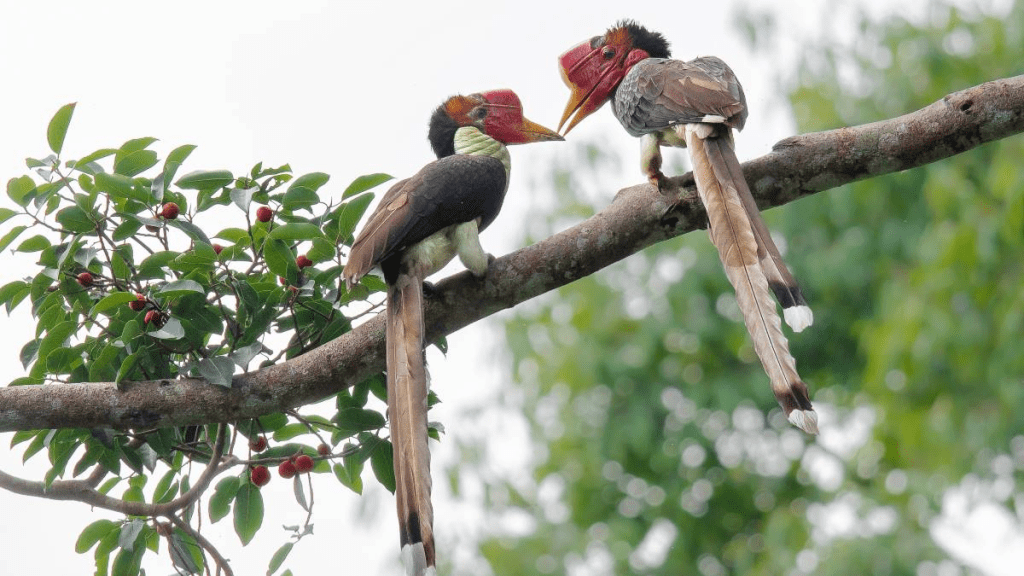
Helmeted Hornbill (Buckeroos vigil) male and female. Credit: Hello my names is james,I’m photographer / iStock / Getty Images Plus.

Researchers analysed different threat factors such as habitat loss and climate change to find that 500 bird species could go extinct in the next century. Unique species are most at risk.

This would be a level of extinction 3 times higher than the previous 500 years of bird extinctions.

The study, published in the Nature Ecology & Evolution, warns that the loss of unique birds could harm ecosystems around the world.

Vulnerable birds include the bare-necked umbrellabird found in the forests of Costa Rica and Panam, helmeted hornbill from Southeast Asia and yellow-bellied sunbird-asity endemic to Madagascar.

“We face a bird extinction crisis unprecedented in modern times. We need immediate action to reduce human threats across habitats and targeted rescue programmes for the most unique and endangered species,” says lead author Kerry Stewart from the University of Reading, UK.

The researchers studied the behavioural and morphological traits of about 10,000 bird species – representing nearly all known bird species – using data from the International Union for Conservation of Nature (IUCN) Red List.

Applying a statistical model, the researchers were able to show that large-bodied species were more at risk from hunting and climate change. Meanwhile, birds with broad wings suffer more from habitat loss.

“Stopping threats is not enough, as many as 250–350 species will require complementary conservation measures, such as breeding programmes and habitat restoration, if they are to survive the next century,” says senior author Dr Manuela Gonzalez-Suarez, also from the University of Reading. “Prioritising conservation programmes for just 100 of the most unusual threatened birds could save 68% of the variety in bird shapes and sizes. This approach could help to keep ecosystems healthy.”

“Many birds are already so threatened that reducing human impacts alone won’t save them,” adds Stewart. “These species need special recovery programmes, like breeding projects and habitat restoration, to survive.”

The authors say that “functionally unique” species – i.e. species that fill highly specialised ecological niches – are the most vulnerable. Likewise, the loss of such unique species could cause a cascading effect of harm for broader ecosystems.

“Effective targeted recovery programmes that explicitly consider species uniqueness hold great potential for conserving global functional diversity as a complementary strategy to threat abatement,” they write.

Originally published by Cosmos as 500 bird species at risk of extinction in next 100 years

https://cosmosmagazine.com/nature/birds/500-bird-species-extinction-risk/

Updated: You Know The Numbers; Get On The Phones With Your US Reps

Yes, this passed in the Senate, thanks to the VP’s tiebreaking vote. However, it’s still got rows to hoe in the US House; Spkr. Johnson wants to vote tomorrow. The thing to remember about our US Reps is, they’re up for election each 2 years. So, while firmly directing them in dealing with this dreadful bill, also firmly yet lovingly remind them that the OBBB will be hanging around their necks every step of the way of their campaigns like a bubblegum machine golden giant dollar sign necklace, if they vote in favor.

(Actually, if you didn’t when you contacted your Senators last week, you can still remind them of the same thing, unless they voted against, in which case, Thank Them. It took bravery to vote against, and they need to know we have their backs. And thank you very much. Now call.)

Civil Unions in VT, & More, in Peace & Justice History for 7/1

I hope everyone and their pets enjoy at least some peace these next few days! I hate fireworks, though I don’t mind them far away or on TV. I did used to like them, when I was a kid. 🎆

July 1, 1917
8000 anti-war marchers demonstrated in Boston. Their banners read:
“IS THIS A POPULAR WAR, WHY CONSCRIPTION?
WHO STOLE PANAMA? WHO CRUSHED HAITI?
WE DEMAND PEACE.”
The parade was attacked by soldiers and sailors, on orders from their officers.
July 1, 1944
A massive general strike and nonviolent protest in Guatemala led to the resignation of dictator Jorge Ubico who had harshly ruled Guatemala for over a decade.

Juan José Arévalo Bermejo
On March 15 of the following year, Dr. Juan José Arévalo Bermejo took office as the first popularly elected president of Guatemala, and promptly called for democratic reforms establishing the nation’s social security and health systems, land reform (redistribution of farmland not under cultivation to the landless with compensation to the owners), and a government bureau to look after native Mayan concerns.

Jorge Ubico
A decade of peaceful democratic rule followed, until a CIA-backed coup in 1954 ushered in a new, even more brutal era of dictatorial and genocidal regimes. [see June 27, 1954]
July 1, 1946
The United States exploded a 20-kiloton atomic bomb near Bikini Atoll, part of the Marshall Islands in the Pacific Ocean.
July 1, 1968
Sixty-one nations, including the United States, Britain and the Soviet Union, signed the Treaty on the Non-Proliferation of Nuclear Weapons (NPT) which set up systems to monitor use of nuclear technology and prevent more nations from acquiring nuclear weapons. 190 countries are now signatories; Israel, India and Pakistan remain outside the Treaty. North Korea joined the NPT in 1985, but in January 2003 announced its intention to withdraw from the Treaty.
Text of the Treaty 
July 1, 1972

The first issue
Publication of the first monthly issue of Ms. Magazine, founded by Gloria Steinem “The truth will set you free. But first, it will piss you off,”
Letty Cottin Pogrebin “Housework is the only activity at which men are allowed to be consistently inept because they are thought to be so competent at everything else,” and others.

Ms. Magazine today  (It’s still Ms. Magazine! -A.)
July 1, 2000

Vermont’s civil unions law went into effect, granting gay couples most of the rights, benefits, protections and responsibilities of marriage under state law.
In the first five years, 1,142 Vermont couples, and 6,424 from elsewhere, had chosen a Vermont civil union.

https://www.peacebuttons.info/E-News/peacehistoryjuly.htm#july1

Teen spread hen manure on road ahead of Pride parade as part of ‘prank’

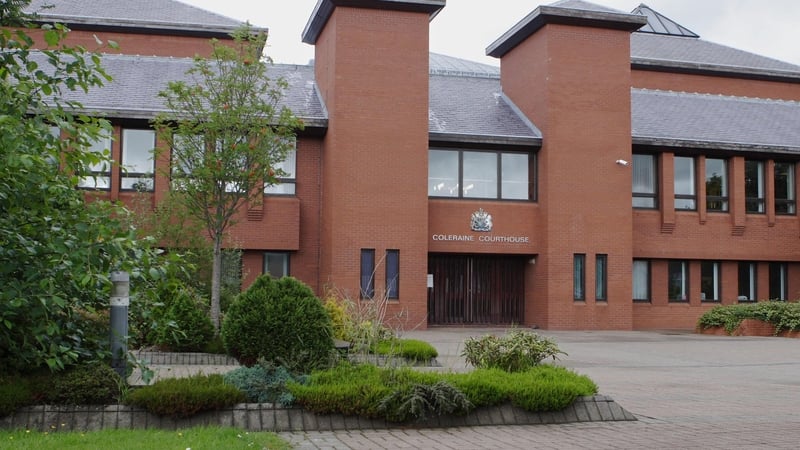
Coleraine Magistrates Court heard that the 19-year-old "made full and frank admissions" to police
Coleraine Magistrates Court heard that the 19-year-old “made full and frank admissions” to police

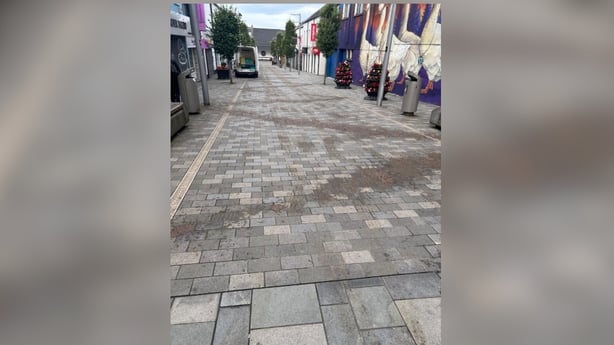
A Co Antrim teenager spread gallons of hen manure on a road before Ballymena’s first Pride parade as part “of a prank,” a court has heard.

Coleraine Magistrates Court also heard that 19-year-old Isaac Adams “made full and frank admissions” to police when he was arrested.

Defence solicitor Stewart Ballentine said Mr Adams was “literally caught in the headlights of the police vehicle” when committing the offence.

Appearing handcuffed in the dock, Mr Adams, from the Lislaban Road in Cloughmills, confirmed his identity and that he understood the three charges against him, all alleged to have been committed on 28 June this year.

He was charged with causing criminal damage to Granville Drive in Ballymena, causing manure to be deposited on the road and possessing a bladed article, namely a lock knife.

According to a police statement at the time, Mr Adams was arrested in the early hours following reports of slurry being spread on the road at around 02.55am.

“The matter is being treated as a hate crime,” said the police statement.

The PSNI said they observed slurry on the road at Greenvale Street

While Mr Adams was charged to court today, a 20-year-old man who was arrested in connection with the incident has been released on police bail and is due to appear in court in November.

During Mr Adams’ brief court appearance, a police officer gave evidence that she believed she could connect the teenager to each of the offences.

She outlined how police on patrol happened upon a male wearing a balaclava and carrying “two empty 25 litre jugs”.

“He admitted that he had been spreading the manure over the roads to disrupt the Pride parade,” the officer told the court, adding that the lock knife was found in his pocket when he was searched.

The courty heard that Mr Adams “freely admitted” that he intended to disrupt that Pride parade due to be held later that day and during formal police interviews, the teenager told police “he was not the only person involved”.

The farmer told police he had filled four or five, five gallon jugs with “hen litter waste” from his family farm “and described it as a prank”.

Regarding issues of bail, the officer conceded the parade had now taken place and further that Mr Adams has absolutely no criminal record.

District Judge Peter King heard the clean up operation cost £788 (€921).

Under cross examination from Mr Ballentine, the officer agreed that Mr Adams “cooperated fully with the police” and also that he told them he had the knife as part of his work.

Submitting that Mr Adams “comes from good stock” in North Antrim and that the incident “is very much out of character,” Mr Ballentine said that having spent the weekend in a police cell, Mr Adams “has learnt a very salutary lesson”.

He argued that Mr Adams could be granted bail and Judge King agreed.

Freeing Mr Adams on his own bail of £500 and adjourning the case to 24 July, the judge imposed several conditions, including a curfew, barred Mr Adams from entering Ballymena and from contacting his co-accused.

Having heard the incident by mobile phone, he also ordered that Mr Adams can only have a phone which cannot access the internet and he has to pass on the details of any phone to the police.

Peace & Justice History for 6/29

June 29, 1925
The South African parliament passed a bill excluding black, coloured (mixed race) and Indian people from all skilled or semi-skilled jobs.
June 29, 1963
A mass “walk-on” (trespass) was organized at a chemical and biological warfare facility in Porton Down, England. These weaponized agents had been researched and produced there since 1916; it’s now known as the Defence Science and Technology Laboratory.

Protesters demand an end to germ warfare in 1963 at Porton Down (Getty)
Unconscionable activities at Porton Down (From 2004)