A conservative hotline in Texas was created for concerned citizens to “report” any and all drag shows happening in the state. Once LGBTQ allies learned about it, well, this hotline got a little bit more than it bargained for.
Miss Majesty Divine, a drag performer, collects tips and dances among the crowd at Phat Sammy’s tiki bar in Huntsville, Ala.Credit…D’Angelo Lovell Williams for The New York Times
It was an unusually chilly Thursday night in December, and a drag queen named Miss Majesty Divine was putting the final touches on her show makeup. She was about to go onstage for her regular gig at a basement tiki bar, one of the last performances before Christmas.
Up at street level, two unwelcome guests had arrived. They were not fans. They were men with bushy beards, one holding a bullhorn, the other a placard that depicted a drag queen holding a screaming baby and the hashtag #stopdragqueenstoryhour.
“Repent, you filthy dog! You are going to burn in hell!” the one with the bullhorn shouted. “God sent AIDS to deal with people like you!”
Madge, as she is known to her friends and adoring fans, was unfazed.
“I teach math to middle schoolers,” Madge deadpanned. “You think I haven’t been called some things?”
By the end of the next workday, Madge, who in the classroom was known as Mr. James Miller, would call himself something new: retired. In the middle of the school year, the teacher, 52 years old, abruptly put in his papers. His career was over.
“It’s funny — all these people who complain about cancel culture, and now they are trying to cancel my whole existence,” Madge told me.
Miller’s troubles began on Oct. 12, when the conservative social media account known as Libs of TikTok, which specializes in finding and spreading videos, often out of context, of supposedly outrageous liberal behavior, posted an edited video of him performing in drag as Madge at charity events, some of which had children in attendance.
The video went viral, landing Miller on The Daily Mail’s website and many conservative news sites, falsely portraying his tame performances as lewd and overtly sexual. An avalanche of hate came down on Miller. Amid the maelstrom he realized that he could not continue teaching in Alabama. He had already been thinking of retiring soon, and this cataclysm prompted him to accelerate his plans.
Image
Miss Majesty Divine applies her makeup backstage before her performance, transforming from middle school math teacher to drag queen.
Image
Miss Majesty Divine struts to her last number, a Tina Turner mix that ends with “Proud Mary.”
Image
Kirstin Orlando, a drag performer, dances onstage in a dominatrix-themed outfit, complete with a riding crop.
Image
Tsunami Rayne, a drag performer, does a final check of her outfit backstage at Phat Sammy’s.
I traveled to Alabama last month to try to understand the state of queer America today, to try to understand this unsettling whiplash I’ve been feeling lately as a queer person. The world watched a gay congressman lead the vote to codify national recognition of same-sex and interracial marriage, and the grandees of the L.G.B.T.Q. community gathered at the White House to watch President Biden sign that bill into law and to listen to Cyndi Lauper croon “True Colors.”
At the same time, queer people are being hounded by vigilantes and targeted by bigoted laws. On TV I watch queer people as protagonists but also hear them vilified as groomers and child molesters by right-wing news organizations and lawmakers. A web designer would rather go all the way to the Supreme Court than make a wedding website for a theoretical queer couple. Queer spaces, from clinics serving transgender youth to nightclubs, are under attack. These past few years have been a time of head-spinning backlash.
I chose to come here not because Alabama has one of the strongest records of homophobic legislation in the country or because it is one of the few states where less than half of the population supports federal protections for gay marriage. I came here because the last time I was in Alabama, in 2017, I had one of the best nights of my life, at a gay bar with a bunch of queer people I had just met.
At the time, I was the editor of HuffPost, and I was in town with a group of colleagues as part of a cross-country bus tour we did, interviewing people about the state of America along the way. We met and interviewed a man named Michael Meadows who had just been named Mr. Leather Birmingham. He invited us back to the local leather bar, Spike’s. It is hard to explain how good it feels to walk into a queer space when you are a queer person in a strange place — the warm embrace and recognition of a shared experience, no matter how different our lives might be. A night of karaoke, dancing in faux cages and rounds of shots ensued. My memories are hazy, but the pictures and videos on our phones don’t lie: We had a blast.
When I went to Birmingham in 2017, we were less than a year into the Trump administration. It was long before the phrase “don’t say gay” entered the popular vernacular and before the word “groomer” came roaring back into circulation as a slur hurled at queer people. It was before the tsunami of book bans and, Lord help us, long before Libs of TikTok.
It was a time when major TV shows featuring transgender actors were started. “RuPaul’s Drag Race” had become a cultural phenomenon, and drag performances drew wider audiences. Gay bars had become prime destinations for straight bachelorette parties, much to the chagrin of many gay patrons.
And it wasn’t just media and society. Supreme Court decisions affirming the right to same-sex marriage seemed to have paved the way to mainstream acceptance of gays and lesbians. Polling showed consistent majority support for same-sex marriage. Some of the hottest debates within the queer community every June were over whether Pride had become too mainstream and corporate.
That year Alabama, a blood-red state, stunned the nation by electing a Democrat to the Senate, choosing Doug Jones, a former prosecutor who had brought two of the Klan bombers of the 16th Street Baptist Church to justice, over the right-wing Republican Roy Moore. Jones spoke proudly of having a gay son.
Image
Miss Majesty Divine, Kirstin Orlando and Tsunami Rayne before going onstage at Phat Sammy’s.
The late 2010s were a pivotal time in James Miller’s life, too. He was interviewing for a teaching job at Mountain Gap Middle School in Huntsville.
“When I was interviewing, I said to myself: I don’t want to spend another 20 years in the closet,” Miller told me as he got ready for the drag show. So when he got the job offer, he pointedly told the hiring committee that he would need to discuss it with his husband and son. It was a test, and the school passed, welcoming him with open arms.
“I thought, ‘I found where I want to be,’” Miller said.
At that point, Miller had also been performing as a drag queen for roughly two decades, though like any good teacher, he kept a strict divide between his classroom and his life outside of school. He said he got his start in drag performing at a charity event to raise money for an AIDS hospice.
“A friend of mine said, ‘Why don’t you do drag? You’ve got a big mouth and a bad attitude,’” Miller said.
Over time, he built a loyal following, performing at local nightclubs and at charitable events. As drag grew more popular with broader audiences, he started performing at story hours for kids. He said he took care to tailor his performance to the audience, keeping it PG whenever children were around, though like any kids’ entertainer, he said he liked to slip in double entendres that would fly over children’s heads but give the grown-ups a chuckle. It was a fun side hustle.
Until now. After Libs of TikTok released the video of him performing, he was placed on paid leave from his job. His email inbox filled with hateful messages.
“People said things like, ‘Why are they letting this thing breathe?’” he told me. Other messages called for him to be prosecuted for child abuse.
But he also got warm and supportive messages from parents and students.
“I heard today about the stupid issue happening, and I just wanted to say as a parent that has had three of their own children in your classroom, we fully support you,” said one such message Miller showed me.
The crowd at the tiki bar that December night whooped when Majesty Divine finally pranced onstage, lip-syncing along to Lizzo.
“It’s bad bitch o’clock. Yeah, it’s thick-thirty,” she sang, thrusting out an ample hip and tossing a bewigged shrug. “I’ve been through a lot, but I’m still flirty.”
Then Madge shared some news.
“Y’all keep up with the news? Well, don’t. It’s too depressing,” she said. “Tomorrow at 3:15 is the end of 30 years of teaching for me. I’m retiring.”
The crowd let out a cacophony of supportive boos and cheers.
“I love you all so much,” Madge purred. She brought down the house with a Tina Turner mash-up that ended in a barn-burning rendition of “Proud Mary.”
Amber Portwood, the manager of the bar, said it was a huge loss for the children of Huntsville.
“Madge is such a wonderful teacher and community person,” she said. “Her students were the first to come to her defense. It is absolutely shameful what happened.”
Asked about Miller, Huntsville City Schools sent this statement: “The district addressed a personnel matter several months ago following viral posts on social media involving a teacher. While we are limited in what we can share for privacy reasons, this was not a school-related event, it did not take place on school property, it did not occur during school hours, and it has no connection to any instruction that occurs in our classrooms.”
Image
Lauren Jacobs, the assistant director of the Magic City Acceptance Center, in the center’s library. It stocks L.G.B.T.Q. books, which are banned in many Alabama schools.
How did we get here? Looking back, I cannot help wondering now whether what looked in the 2010s like an unstoppable march toward mainstream acceptance of gay and lesbian people was perhaps more of a wobble. Perhaps the wanton cruelty of the Trump era uncorked something that was there all along. Right-wing, nativist parties espousing what they describe as traditional values have made electoral gains across many continents, and almost all of them have found queer people an easy target to use to whip up support for their agenda.
What looked in American polls like widespread acceptance of gay and lesbian people came in large part from a highly effective campaign to show that gay people are just like everyone else, save one small difference that likely was genetic and immutable, and that we wanted the same things: the American dream of marriage, conventional career success, military service.
But like all liberation movements, the fight for queer liberation contained multitudes of different people with different beliefs, including those who wanted revolution — to overthrow the entire heteronormative patriarchal system built around monogamy and the nuclear family within capitalism. They saw that system as the root of oppression not just of queer people but also of women and all kinds of marginalized people.
But the vanguard’s demand for revolution inevitably runs up against the majority’s urgent need for safety and basic rights. Much of the L.G.B.T.Q. rights movement’s efforts moved toward reforming rather than remaking. And so we have decriminalized gay sex, legalized gay marriage and allowed gay people to serve openly in the military. And a lot of us slipped into a kind of complacency. We once chanted, “Silence equals death.” Now we cooed, “Love is love.”
As many more queer people have come out into the light, parts of the community that were more hidden from the mainstream are demanding their visibility, too, especially transgender and nonbinary people, among them many children and teenagers who in previous generations would not have dreamed of coming out. And that has made a lot of people of many different political stripes very uncomfortable.
“A lot of the improvements in L.G.B.T.Q. life that the pollsters point to and on which we base our conclusion that there has been significant progress — they don’t really tell us much about what people are privately feeling,” said Martin Duberman, a leading historian of the gay rights movement who, at 92, has some long-term perspective on this issue. “And I think what we are seeing now is those private feelings coming out again.”
For much of modern history in the United States, queerness had to be carefully hidden to avoid police harassment and violence. Eventually queerness came to be tolerated if it emulated heterosexual norms — gender appropriate, couple-focused, monogamous. Now the insistence on recognition from queer people who don’t conform to expectations about gender seems to have been a bridge too far.
We’ve been here before. Urvashi Vaid, the lionhearted activist who tragically died at the age of 63 last year, wrote about this in her prescient book, “Virtual Equality,” which was published in 1995. As a candidate, Bill Clinton had courted the gay vote, but he ultimately triangulated his way to the Defense of Marriage Act and the abominable “don’t ask, don’t tell” policy in the military.
In a 1994 speech Vaid warned us, “By aspiring to join the mainstream rather than continuing to figure out the ways we need to change it, we risk losing our gay and lesbian souls in order to gain the world.”
Years of effective activism culminated with the dismantling of the Defense of Marriage Act by the Supreme Court. But as supporters of voting and abortion rights will tell you, a Supreme Court decision turns out to be a flimsy scaffold on which to build your freedom. The court has gutted the Voting Rights Act and overturned Roe. The battles for the ballot and bodily autonomy have moved mostly to the state and local levels. It is clear that queer people will receive a frosty reception from the emboldened majority of the highest court in the land.
So what now? I posed this question to the organizer and writer Dean Spade, who has worked relentlessly as an advocate for queer and trans people.
“The only social movements that have ever won any liberation or even reduced the conditions of harm were made up of millions of ordinary people, gumming up the works, throwing wrenches into the machines of oppression and then helping each other survive the systems along the way so that they could keep organizing,” he told me.
Queer people have never sat around and waited for rights and dignity to be handed to them — from the first stirrings of gay resistance in the early 20th century to the Stonewall uprising to the horrors of the AIDS epidemic, we have built our own systems of mutual aid and care. In Alabama, that spirit and the people who carry it refuse to give in to the backlash.
I saw that spirit at the Magic City Acceptance Center, an organization that provides a safe space and supportive programming for queer youth in Birmingham. There I met a 31-year-old queer Black woman named Lauren Jacobs, who was born and raised in Birmingham. When she was trying to decide where to go to college, she could have done what generations of young queer people have done: Get a one-way ticket out of Alabama, head for one of the meccas on the coasts and never look back.
But she didn’t. After checking to make sure it had an L.G.B.T.Q. student organization, she chose to attend the University of Alabama in Tuscaloosa and joined the vibrant queer community there.
“We have a long, long track record of activism here,” Jacobs told me.
Image
Elizabeth Danielle Marceille Allen, a transgender woman who found shelter and support at TAKE.
Image
Daroneshia Duncan-Boyd, TAKE’s founder and director, with her husband, Logan Boyd, a transgender man, who helps run the center’s programming.
Image
Aniya Nicole, a member of the TAKE community, outside the center.
Image
Corey Oden, the program coordinator for the health program at TAKE, which helps transgender people get H.I.V. prevention, treatment information and medication and other medical care.
After graduation she decided to move back home to Birmingham, roll up her sleeves and fight for queer people in her home state.
“It felt like there was so much work to do in Alabama,” she said. “There is so much I like about how we organize in Alabama.”
The center now serves hundreds of queer youth in Birmingham and across the state. It offers space for them to hang out, play video games and be with their peers. Every year, the center holds a prom for queer kids; they can dress as they like and bring a date of whatever gender they prefer. Jacobs was among a couple of dozen attendees at the first one in 2014. Around 200 kids attended the most recent one.
The work of the center could not be more urgent. According to the Trevor Project, a mental health and suicide prevention organization focused on L.G.B.T.Q. youth, 47 percent of Alabama’s queer kids seriously considered suicide in the past year, and 20 percent of transgender kids attempted suicide.
“For young people who feel that Alabama doesn’t have spaces like this, for them to be able to walk into a place like this and feel they deserve it — that is always a joy,” Jacobs said.
I found another answer at the TAKE Resource Center, an organization in Birmingham’s East Lake neighborhood supporting transgender people of color. It was started by a transgender woman, Daroneshia Duncan-Boyd, who felt that too many trans people were suffering from poverty, homelessness and violence. She built TAKE in the mold of queer mutual aid organizations throughout history, with the knowledge that a hostile society would do little to save them.
“We started TAKE with sex-work dollars and unemployment checks,” Duncan-Boyd told me with a chuckle. Now the organization operates an emergency shelter, life-skills classes, legal clinics and a drop-in center.
“Other organizations provide surface-level services, but we get down into the nitty-gritty,” said Logan Boyd, a transgender man who works at the center. He moved to Alabama in 2017, and the following year he and Duncan-Boyd married. They are now trying to have a baby, a head-spinning but enticing prospect for Boyd.
“We’re trying to change the image of what the American dream can be,” he said. “I’ll have to wrap my head around being a pregnant man, I guess.”
Reimagining what life could be for transgender people in the South is central to TAKE’s mission. But first, it must attend to the most basic, urgent needs. I met one of TAKE’s clients, a 41-year-old trans woman named Marcy Allen. In November she had found herself penniless and homeless on the streets of southern Alabama after a string of bad luck.
“It was getting colder, so I needed somewhere indoors to sleep,” Allen told me. “I was doing things I didn’t want to do to pay for hotel rooms.”
News of her plight made its way to Duncan-Boyd, who leaped into action.
“The next thing I know, I am on a bus headed here,” Allen said. She told me she had been living in the group’s emergency shelter and was looking for a job. She had already made an appointment at the local gender clinic to begin her long-sought medical transition.
“March 4,” she said. “I have been on bootleg hormones, and now I can finally get the real thing.”
She attended a legal workshop to begin the process of changing her name. She said Marcy was a temporary name, a place holder. Now she is known as Elizabeth Danielle Marceille Allen.
“It suits me, don’t you think?” she asked, with a flick of her blond hair.
On my last night in Birmingham, I was invited to a party by the Magic City Sisters of Perpetual Indulgence. They are a charitable organization that raises money for mostly queer causes. The Sisters have their roots in a raucous and raunchy group of queer activists in San Francisco who dressed in nuns’ habits and behaved outrageously.
Birmingham’s Sisters throw elaborate parties every year, and this one, the Fire and Ice Red Dress Party, was to raise money for the Gender Health Clinic in Birmingham, which provides care for transgender and nonbinary people. They also give out awards to people who have done great service to the queer community.
“The Sisters promulgate universal joy and expiate stigmatic guilt,” the group’s leader, or abbess, Robert King Dodge, told me, decked out in a dazzling red frock and a bejeweled top hat.
It was held at an Arts and Crafts mansion in a fancy part of Birmingham, and all the grandees of the local gay community turned out in force. I thought about that carefree Birmingham night in 2017 and how different things felt now. Everyone I talked to was worried — about the terrible laws that would oppress queer people and the hateful message that sends to queer kids. They all thanked me for coming to Alabama to write about what’s happening.
As the award ceremony wound down, I was surprised to hear my name over the loudspeaker. King Dodge beckoned me up, a wrapped gift in his hand.
“Open it,” he urged.
It was a framed certificate naming me an honorary Sister of Perpetual Indulgence in the house of the Magic City Sisters of Birmingham.
I didn’t quite know what to say. My eyes filled with tears as I looked around the room, filled with people who were proud of all our community has accomplished but terrified of the gathering threats.
“Thank you,” I said. “It’s an honor to be your sister.”
I am so fortunate to have lived in a time and place that permitted me to live my whole adult life out and to be proud of being a lesbian. Increased visibility was supposed to make queer people more recognizable and accepted, and there is no question that it did. But I now wonder if, for some, the sheer volume and range of people coming out have had the opposite effect: making it seem that queer people are omnipresent and a threat.
I get it. When people who are alien to you tell you that deep down, they are just like you, it saves you from having to confront how you might actually be like them. How you might envy their freedom, the strength of their communities. As any decent psychoanalyst will tell you: The flip side of fear is desire.
As I left Birmingham the next morning, I thought about the extraordinary people I had met and the fights they were waging for the lives of queer people in their communities. I knew that this era’s slogan, that wan tautology “Love is love,” was no match for resurgent bigots reclaiming hateful chants about AIDS ridding the world of the homosexual scourge. We need to reach into our past as well and remember the time we chanted, “Silence equals death.” And an old favorite, a mantra for all time: “We’re here. We’re queer. Get used to it.”
This man who authored the bill felt his religion and his opinion was more valid than all the science and medical data that shows he is wrong. He claims that identifying as a different gender than assigned at birth is a temporary problem, giving the idea it is a phase people go through like adolescence or acme. That was what people tried to claim about gay people in the past, that it was a phase young adults would grow out of, or it was done as rebellion against parents. That was wrong then and it is wrong about trans people now. These right wing people are just recycling all the old tropes against gay people to use against trans people. The goal is to destroy all the social advances in the US society and return to a past that was regressive and oppressive before equality and civil rights for minorities. Please understand that for trans people to wait that late in life until 26 means not only living as the wrong gender all that time but also the human body has by then been set into the mold of the wrong gender for the person. During puberty so many changes happen to create a male or female body that simply by looks is a lifetime sentence of being in the wrong body. If you are one gender imagine looking like the other all your life because someone said you couldn’t have the medical treatment needed to help you live as you really are. Hugs
The bill’s author said he did not speak to a single transgender person before writing it.
Oklahoma State Sen. David Bullard (R)Photo: Oklahoma Senate
In Oklahoma, a new bill called the “Millstone Act of 2023” has been proposed that would ban gender-affirming care in all forms for anyone under 26 years old. The bill targets healthcare providers and says anyone who violates the rule could face felony charges and have their medical license revoked.
The bill’s name reportedly refers to a passage in the Bible that says it is better to tie a large stone to your neck and drown than to cause harm to a child. It was introduced by state Sen. David Bullard (R), who was also behind a state law that passed last year banning trans youth from using school bathrooms and locker rooms that align with their gender identity.
In a statement to The Oklahoman, Bullard said gender-affirming surgery is “a permanent solution to a temporary problem” and called it a violation of doctors’ Hippocratic Oath to do no harm.
“We want to make sure that if we’re going to do a procedure like this that is irreversible, then we want to make sure an individual is at their full maturity when it comes to cognitive development,” he said.
He also explained why he wanted to restrict gender-affirming care to such a late age.
“At the age of 18, you can vote, but a vote is not a permanent change in your body that cannot be reversed. At the age of 21 you can drink, but at the end of the day if you decide to put the alcohol down, you can put the alcohol down. But with this surgery, there is no going back. We just want to make sure that the brain is fully developed before we allow this kind of surgery, permanent thing to happen.”
He also said he did not speak to a single transgender person before writing the bill.
Oklahoma has passed a slew of anti-trans legislation as of late.
The Millstone Act is also one of multiple bills that have been proposed targeting gender-affirming care for trans adults as Republicans continue to expand their crusade against trans people. Bills targeting medical care for trans adults have recently been proposed in South Carolina and New Hampshire as well.
“We have been saying a slow moving genocide targeted at eliminating transgender people through eliminating gender affirming care is happening,” wrote activist Erin Reed in December. “It continues.”
A cisgender female cancer survivor who had her breasts removed said that public restroom users regularly challenge her gender, making her nervous about such confrontations.
Tiffany Liles-Taylor — a 43-year-old lesbian woman from the English town of Enderby, Leicestershire, about 96 miles north of London — was diagnosed with breast cancer and had a double mastectomy in 2020.
“I’ve had to carry around these really heavy things my whole life,” she told ITV. “I was in my forties and they were starting to get droopy anyway – so I thought ‘these can go’.”
After a long recovery, she returned to work as a ward clerk in a local hospital in spring 2021. However, the short-haired woman now finds that she’s regularly misgendered.
She said that she gets called “Timothy” more than “Tiffany” and has high social anxiety because she has short hair and is quite masculine, causing others to assume that she’s a guy when they see her together with her wife.
“Public toilets are very stressful because people will always challenge me whenever I go in,” she said. “They will ask me if I’m in the right toilet, or get members of staff to question why I’m there— to which I have to constantly explain that I had cancer, not a sex change.”
“It’s that confrontation that I hate. I want people to understand that I am a woman, and I am in the right place,” she added.
When she wears clothing or wigs that are commonly seen as more feminine, she says she still gets mistreated because the clothes make her feel inauthentic and uncomfortable.
England has laws allowing public accommodation access for LGBTQ+ people and forbidding discrimination against queers. But even such legal protections can’t stop misgendering and harassment from ignorant individuals.
Liles-Taylor isn’t the only cis female who has been harassed in a public restroom for her gender presentation.
In November, a young cis woman with short hair recorded another woman harassing her in the public restroom of the Rampart Casino in Las Vegas, Nevada because the woman assumed she was transgender.
In the U.S., right-wingers have created a panic about trans individuals using public bathrooms, claiming that trans people are sexual predators and that public accommodation laws allow them to sexually harm women and children. In reality, the vast majority of sexual assaults are committed by cisgender men and women.
This story was in a news article how Mark Meadows a high ranking republican / Christian dominionist who did voter fraud in NC. But while like always republicans who scream about all the voter fraud but they excuse it as they keep getting caught doing it. Again I am so sick of the double standard. Here in Florida DeathSantis got a lot of press by going after former felons who were told they could vote with his election police, yet they never go after the known republicans who have been found guilty of voter fraud who live in the Villages. DeathSantis and the local press never mention them and that they are republicans, while screaming about the democrats trying to steal the elections. Hugs
Pamela Moses at home in Memphis. Photograph: Andrea Morales/The Guardian
The case of Pamela Moses sparked a national outcry – but newly uncovered documents reveal the extent of its injustice
It was the morning after Labor Day and Pamela Moses was in a rush.
All summer, the outspoken activist had been feuding with election officials in Memphis, Tennessee. She wanted to get her name on the ballot for Memphis’s 2019 mayoral election, even gathering enough signatures to do so. But officials said she could not run – a prior felony conviction made her ineligible to seek office.
Now, there was a new problem. In late August, the local elections commission sent her a letter saying they were going to cancel her voter registration. Moses was confused – she had been voting for years. That day, she was determined to sort it out.
But what unfolded over just a few hours that day on 3 September 2019 would upend her life. It would lead to a sudden arrest months later at O’Hare airport in Chicago and culminate in a six-year prison sentence for voter fraud.
Her case would go on to touch a nerve in the US and cause a national outcry. While there’s no comprehensive data on voter fraud prosecutions based on race, it was one of several recent examples in which Black defendants like Moses have faced long criminal sentences for voting errors, while white people have faced little punishment for more fraud. Long after the abolition of poll taxes and literacy tests, Black Americans still face significant scrutiny for trying to exercise their right to vote.
To make matters worse there is a byzantine bureaucracy in Tennessee and other US states, which can make it nearly impossible for people with felony convictions to vote again. The system has allowed officials to block people from voting for owing small sums of money and prosecutors to bring charges against others who make good-faith mistakes about their voting eligibility.
But at the center of the Moses case was a relatively simple question: should someone who makes a voting mistake face serious criminal charges?
Nearly everyone in Memphis seems to know Moses, 45, or has heard ofher.
She’s a self-taught student of the law – the librarians in the county law library know her by name – and has sued many of the top officials in Memphis, frequently representing herself in court. She’s appeared in local papers over the years. She’s had disagreements with other local activists and founded her own non-profit.
“If she sees something that she feels is unjust, she’s going to say something about it,” said Dawn Harrington, who has been friends with Moses for over two decades and is the executive director of Free Hearts, a criminal justice non-profit. “She’s not going to be afraid of the backlash that might happen.”
“She’ll always take you to the limit,” said Michael Working, a criminal defense attorney in Memphis who has represented Moses and known her for a decade. “She’s willing very often to be publicly flogged by the government on principle.”
In person, Moses is at times mercurial, but often charming. She can rattle off the history of Memphis neighborhoods, the names of local judges, lawyers and statutes that she’s researched, sprinkling in bits of hip-hop history (she also writes and produces her own music). She is fiercely protective of Taj, her teenage son.
Few officials attracted Moses’s ire as much as Amy Weirich, a Republican who served as the district attorney in Shelby county, which includes Memphis. Several years ago, Moses made local headlines when Weirich prosecuted her for stalking and harassing a local judge, tampering with evidence and forgery.
In 2015, Moses pleaded guilty to those charges and was sentenced to several years of probation. Years later, she would say that pleading guilty and not fighting the case “was the worst mistake of my life”. She believed she was innocent, but the conviction led people to think she was guilty.
Harrington, her longtime friend, said that the case cemented her status as someone who was disliked by people in high office in Memphis. “She had been on the bad side of the powers that be there,” she said.
When Moses pleaded guilty, there was a hearing in which a judge questioned her and made sure she understood the consequences of her decision. But there was one ramification that neither the judge nor any of the lawyers present brought up: Moses would lose the right to vote for life.
To understand Moses’s case, one needs to know that America has long stripped people convicted of felonies of the vote.
After constitutional amendments in the 19th century expanded the franchise to Black Americans, many states passed felon disenfranchisement laws as a way to continue to keep African Americans from the ballot box and therefore prevent them from wielding political power, said Christopher Uggen, a professor at the University of Minnesota who has studied the topic closely. He suggested the laws had persisted because people with criminal convictions are stigmatized, and so seeking redress for them is politically fraught.
Today, the laws continue to heavily affect Black Americans – 5.3% of the adult Black population is disenfranchised because of a felony, compared to 1.5% of the non-Black adult population. Overall, an estimated 4.6 million people can’t vote because of a felony conviction in the US.
Moses’s home state of Tennessee strips any person convicted of a felony of the right to vote. Nearly 472,000 people of voting age can’t vote in Tennessee because of a felony conviction, the vast majority of whom have completed their sentence, according to the Sentencing Project, a criminal justice non-profit. It’s estimated that more than one in five Black people of voting age in the state can’t vote because of a felony.
In Tennessee, it is also extremely difficult for these people to get their voting rights back once they complete their sentences. There are three different sets of rules, depending on when the person was convicted. A request to even just fill out the state’s required application for the restoration of voting rights can be rejected for any reason – without explanation.
Tennessee’s confusing system isn’t unusual. Many US states, particularly in the south, require anyone with a felony conviction to go through a bureaucratic process if they want to vote again.
In Mississippi, people with certain felony convictions have to petition the legislature to restore their voting rights individually – and hardly anyone makes it through.
In Florida, voters overwhelmingly approved a constitutional amendment in 2018 to repeal the state’s lifetime voting ban for most people with felonies. But the Florida legislature quickly stepped in and passed a measure that said completing a sentence meant paying all outstanding fines and court fees, which put voting again out of reach for many. Even if people can afford to pay, it’s extremely difficult to figure out how much they owe since the state has no centralized way of keeping track.
That uncertainty is the point of these laws, said Nicole Porter, the senior director of advocacy at the Sentencing Project.
“I think there is intentionality behind the complications,” she said. “It’s about chilling or minimizing participation in the electorate by certain constituencies. It’s the modern-day manifestation of very hard policies that dominated the Jim Crow era.”
This was the tangled web Moses stepped into just after Labor Day in 2019.
Because she didn’t realize she had lost her voting rights, she had been voting regularly until the summer of 2019. When she was informed that her voter registration was about to be canceled, Moses called the elections commission and asked what to do. She said a staffer advised her to go through the restoration process. (The elections commission declined to say to the Guardian whether it had ever advised her to do so.)
The next step Moses took was the one on which her conviction – and its reversal – rested.
One of the people required to fill out the form for her voting rights restoration was a probation officer, who had to confirm that Moses’s criminal sentence had concluded. When Moses showed up at the probation office on 3 September, she met with the manager on duty, named Kristoffer Billington, who had worked for the probation office for five years. He had never filled out the form before, he would later testify in court.
Moses told him her probation was finished, and he went to the back of the office to research her case. Billington called a colleague in a different office for help. They both looked at Moses’s file in the computer system.
According to the information they saw, it looked like Moses had finished her probation in 2018. But there was a problem – Moses’s computer file still showed she was on unsupervised probation. Billington thought this was a bureaucratic error and believed someone had forgotten to close out her file.
As he was examining the case, the receptionist repeatedly called Billington’s office to tell him Moses was growing impatient and wanted to turn in the form to the election office, he would later testify. After about an hour of research, he wrote on the form that Moses had completed her probation, signed it and returned it to her.
Billington had made a mistake. Unbeknown to him, there were more case files that showed Moses’s felony probation wouldn’t expire until the following year, 2020. In parallel, Moses had been fighting in court that summer to have a judge declare that her sentence was over because she wanted to run for mayor. In court filings, she argued that her probation had expired. But courts disagreed. Moses didn’t think those rulings were correct and thought Billington and the probation office would be able to give her a more definitive answer.
It might seem hard to believe that there was a dispute about something as basic as when Moses’s sentence ended. But those kinds of ambiguities are actually quite common, Uggen said.
“People who aren’t subject to supervision don’t really understand how fuzzy things like release and supervision dates are,” he said. “Anybody inside the system or across jurisdictions knows that what’s written on this piece of paper might be very different than that other piece of paper.”
And these bureaucratic mistakes can land people in prison.
Just 30 minutes after Moses left his office, Billington got a call from someone in the Tennessee attorney general’s office telling him he made a mistake on the form. And after Moses turned in the form, the elections office quickly caught the mistake too. A few days earlier, they had referred her to prosecutors for potential voter fraud, owing to the fact they had learned she had been regularly voting while on probation.
“Isn’t whether or not she completed the required probationary period for the 2015 felonies the subject of the [ongoing court case],” Pablo Varela, an attorney for the elections commission, emailed Kirby May, a prosecutor in the district attorney’s office shortly after Moses turned in the form. “How can the Court Clerk issue this attached document stating she has been granted final release from incarceration or supervision?”
May responded later that afternoon and attached a copy of a July court order saying Moses was still on probation. She was still ineligible to vote, he said.
Vicki Collins, a staffer at the elections commission, forwarded Moses’s application to the Tennessee secretary of state’s office to review. “The Shelby County Election Commission has been in an ongoing lawsuit with Ms. Moses. She has been denied the right to be on the ballot for Mayor because she is still on probation until 2020,” wrote Collins, who specialized in helping people with felony convictions get their voting rights back. A little over an hour later, a lawyer with the secretary of state’s office wrote back. She agreed Moses was ineligible to vote, but offered a new reason for why.
In 2015, one of the crimes Moses pleaded guilty to was tampering with evidence, which causes a permanent loss of voting rights in Tennessee. All of the research Billington had done at the probation office was irrelevant. It didn’t matter whether she was on probation or not.
The next morning, Collins, the elections staffer, appeared happy to learn Moses was permanently barred from voting. “LOOK AT HER STATUS!!! PERMANENTLY INELIGIBLE,” she wrote in an email, including a smiley face.
The same day, the elections office also received a letter from the Tennessee department of corrections alerting them to Billington’s error. The letter didn’t say that Moses was to blame or that Billington was deceived.
The elections office quickly wrote to Moses explaining she was permanently banned. “Absent a change in state law, future attempts to register to vote anywhere in Tennessee may be considered a class D felony,” read the letter from Linda Phillips, the election administrator in Shelby county.
Later that evening, Phillips expressed concern that she hadn’t received a reply from Moses. “I am a bit concerned that Pamela Moses did not respond to my email telling her she would never be able to register to vote.” She hinted at concerns for her own safety over the issue, writing “I do have a concealed carry permit,” in an email to a member of the election commission.
In a response to questions from the Guardian, Phillips said: “If incorrect information is provided to our office, intentionally or unintentionally, the state of Tennessee alerts us about the inaccuracies. That’s what happened in Ms Moses’s case.”
She also defended the emails she and Collins sent after learning Moses was ineligible to vote.
“Any email exchanges within [the elections commission] regarding announcements of Ms Moses’s ineligibility to vote should be perceived as urgent notice to ensure staff awareness, considering Ms Moses’s frequent and sometimes harassing visits to our offices,” she said.
Two months later, prosecutors filed a 14-count indictment, charging Moses with illegally voting nearly a dozen times after her 2015 guilty plea. She was arrested at O’Hare airport while returning to the US from a trip abroad.
Later, prosecutors offered her a deal, saying if she pleaded guilty to a misdemeanor charge she would get six months of unsupervised probation and no additional prison time. She refused.
“It was about the principle to me,” Moses said. “I hadn’t done anything wrong. All I did was try to get my right to vote back and you don’t like me,” she said. “I was OK with going to jail if people could understand what this is really about. I don’t regret making that decision.”
Just before the trial began, prosecutors dropped 12 of the 14 charges, declining to prosecute her for illegally voting. There was no evidence that anyone had told Moses she was ineligible to vote, and the fact that the elections office had sent her voter information made it harder to prove she knew.
The trial began on 3 November 2021 and lasted just two days. A single question remained: did Moses knowingly trick Billington to falsely say she was off probation when he filled out the form?
May, the assistant district attorney prosecuting the case, zeroed in on the numerous times after 2015 that Moses had asked courts to declare she was off probation and judges had rejected her requests.
“It’s like a child going up to both her parents, ‘Gimme, gimme, gimme’ … They make the mistake and give it, even though they’d told no, no, no. It’s the same thing, she knew what she was doing on September 3rd,” he said at the trial. “She was desperate to try to get her rights restored, she wanted to run for mayor, whatever, she was desperate. She didn’t care, she was going to try anyway. This was her last stitch [sic] effort.”
When Billington testified, he owned up to his mistake. But May argued Moses had deceived him, even though she was not in the room when he did his research and signed off on the form. Billington said Moses had told him she was off probation when she walked into the office and was acting impatient as he researched her case.
Ferguson, Moses’s lawyer, argued that the state was punishing Moses for its own mistake. “If they can’t get it right, we can’t convict her for not getting it right,” he said in his closing argument.
Ultimately the jurors found Moses guilty. In late January, W Mark Ward, the judge overseeing the case, sentenced Moses to six years in prison. Weirich, the prosecutor, said Moses had brought a trial and any harsh punishment on herself by refusing to take the plea.
“I gave her a chance to plead to a misdemeanor with no prison time. She requested a jury trial instead. She set this unfortunate result in motion and a jury of her peers heard the evidence and convicted her,” she said at the time.
Local reporters had been following Moses’s case, but in early February, it started to receive national attention. The Guardian published a story highlighting Moses’s punishment. The next evening, Rachel Maddow did a segment on Moses’s case, comparing her six-year sentence to those of white Trump supporters who had received lesser sentences for intentional acts of voting fraud. The New York Times, Washington Post and Associated Press, among other outlets, followed. Moses, detained in prison, didn’t know her case was getting more attention.
Then, a few weeks later, new information came to light.
Through a public records request, the Guardian obtained the result of an internal investigation from the Tennessee department of corrections looking into why Billington had signed off on Moses’s voting eligibility. The supervisors who had investigated squarely placed the blame on Billington for the error, undercutting the prosecution’s idea that Moses had deceived him into signing off on the form.
Perhaps most significantly, Moses’s lawyers had never seen the document before – prosecutors hadn’t turned it over with all of the other evidence in the case. That lack of disclosure was potentially unconstitutional and entitled Moses to a new trial.
The day after the Guardian published the document, Moses had a previously scheduled hearing to request a fresh trial. Judges rarely granted such requests – the hearing was supposed to be a formality on the way to an appeal. At any rate, that morning, Moses’s lawyer submitted the missing document to the court.
Remarkably, Ward unexpectedly granted Moses’s request for a new trial. He said that the document should have been turned over to Moses’s lawyers before the initial trial and that he had erroneously allowed certain other evidence to be admitted. Moses, who had been in jail, broke down in tears in the courtroom.
It wasn’t the first time Weirich’s office has come under fire for failing to disclose evidence to a defendant. A 2014 study by the Fair Punishment Project found her office ranked first in Tennessee in prosecutorial misconduct. Weirich sought to distance herself from the error. The department of corrections, not her office, was to blame for not turning over the missing document, she said.
Two months later, Weirich announced she would drop all charges against Moses. “She has spent 82 days in custody on this case, which is sufficient,” she said in a statement, also noting Moses remained permanently barred from voting. “In the interest of judicial economy, we are dismissing her illegal registration case and her violation of probation.”
Both Weirich and Ward would go on to lose their re-election bids in August.
Moses’s case may have prompted a national outpouring of disapproval, but tendentious-seeming voter fraud charges have not disappeared.
In August, for instance, Florida’s governor, Ron DeSantis, announced the state was prosecuting 19 people with prior criminal records for voter fraud. Many of the people charged said they were confused about their eligibility and that no one had told them they couldn’t vote.
Crystal Mason, a Black woman in Texas, is still appealing a five-year prison sentence for casting a provisional ballot in the 2016 election while on supervised release for a federal felony. Mason has said she had no idea she was ineligible, and the ballot had even been rejected.
Moses, as well as those who have followed her case, doubt that it will be one of the last.
Both the Shelby county elections commission and the Tennessee department of corrections declined to say whether they had changed their processes for helping people determine their voting eligibility in the wake of Moses’s case. “Any changes in that process would be done at the state level,” Phillips said.
One morning at the end of April, just after the charges were dropped against her, Moses held a press conference at the National Civil Rights Museum in Memphis. She was there to speak publicly for the first time about Weirich’s decisions to drop the charges against her.
‘When it comes to Black people in the south, whatever we do, if it’s wrong, you’ve got to pay for it’, said Moses. Photograph: Andrea Morales/The Guardian
“When it comes to Black people in the south, whatever we do, if it’s wrong, you’ve got to pay for it,” she said. “If there was a white person and I got treated the way I did, I would be just as upset. But you don’t see white people getting treated like that.”
Since her case was dropped Moses has been working on an album and documentary, and she’s continued to push to be able to vote again.
She’s still seeking a gubernatorial pardon from her 2015 conviction and is suing Tennessee to try to get the state’s felon disenfranchisement law declared unconstitutional. She’s also suing local officials for damages in her voter fraud case. “I don’t know what the future holds, but I do know I will get to vote again,” she said.
“I want people to take away that it’s not over just because Pamela is free,” said Dawn Harrington, Moses’s friend.” Because there are so many other Pamelas all across the state.”
The weird thing is this entire lie is not needed unless they want to claim to be victims and then vindicated. Every article on this I have read states that what he demanded the libraries do is to give him the space and promote his Christian religious readings. That was the rub he wanted the libraries to sponsor him, pay him, and promote his religion. They refused. But they all allowed him to book a room and promote it himself, but that wouldn’t give him the media anti-drag queen vibe he wanted. So then he agrees to book a room, holds his reading which has very few kids and lots of adults, and lies about the mass of people attending. He claims 2,500 people attended, look how much more popular god is than the sinful drag queens. But as the library says, their biggest room only holds 300 people. And he did not book the biggest room. Why the need to lie? To push the idea that his god is great and popular and yes the right wing rabid media will report that number as truth knowing it is a lie. As I was once told it is not a lie if it is for Christ or if it helps us win. Hugs.
Actor Kirk Cameron went on Fox News Channel on Friday to discuss his fight against libraries who have been turning down story-hour book-reading pitches from the publisher of Cameron’s new children’s book As You Grow.
The sit-down came after a reading Thursday a the Indianapolis Public Library drew a sizable crowd — though the library disputes the attendance figures given by publisher Brave Books and repeated by Cameron on air.
Brave Books tweeted out Thursday that the event drew “over 2,500 people,” calling it a record crowd in the library’s 137-year history — stats Cameron referenced on the air. The library disputed that today.
Read the full article. The video below from Cameron’s publisher has 1.1 million views at this writing.
We are being inaccurately portrayed in news/social after a room rental yesterday. Our estimated door count during the event is around 750, not 2500. We've had larger events. We turn 150 yrs old in 2023. And our auditorium, which our guests chose not to rent, holds 300, not 2000. pic.twitter.com/ETwtOhS7AP
The same Heritage Foundation judicial organization funded by wealthy Christion dominionists billionaires that also are funding the rabid right wing groups attacking the trans kids and drag queens. All in an attempt to stop the US from joining every other industrial advanced nation in the world in advancing civil rights and social understanding. These people are demanding the US retreat into a world they think existed long ago written about 2,500 years ago by people who did not understand anything about germs, the earth being round, space itself, or biology because they thought / wrote that striped sticks seen while animals bred would cause the color of the offspring. Think of that last alone. The people the fundamentalists are basing their anti-trans idea on comes from people who thought striped sticks (some versions say just sticks or branches) caused a difference in the color of the birthed offspring if the animals seen them while fucking. Really that is the level of understanding these people are basing their anti-trans, they’re there is no such thing as a different gender ID than the one identified at birth? I am tired of trying to play nice on this with these assholes. These are the same people that bankrolled a bunch of ideologs on to the SCOTUS who rushed to help trump because he was promoting their god and a future theocracy and are doing everything they can to deny Biden the same presidential powers because they want to enforce racism and religion. Let those with eyes see the truth of it. Hugs
Arizona v. Mayorkas, the Court’s new Title 42 decision, appears to be the latest act of gamesmanship by a Republican Supreme Court.
Former President Donald Trump shakes hands with Justice Brett Kavanaugh before delivering the State of the Union address on February 5, 2019. Mandel Ngan/AFP via Getty Images
Ian Millhiser is a senior correspondent at Vox, where he focuses on the Supreme Court, the Constitution, and the decline of liberal democracy in the United States. He received a JD from Duke University and is the author of two books on the Supreme Court.
On Tuesday, the Supreme Court handed down a one-page, 5-4 decision extending the life of a Trump-era border policy known as Title 42, which expels numerous immigrants seeking to enter the United States using an expedited process.
That decision came in Arizona v. Mayorkas, and is typical behavior from the Supreme Court — or, at least, is reflective of this Court’s behavior since a Democrat moved into the White House at the beginning of 2021. It’s the latest example of the Court dragging its feet after a GOP-appointed lower court judge overrides the Biden administration’s policy judgments, often letting that one judge decide the nation’s policy for nearly an entire year.
The Title 42 program, which the Biden administration determined must be terminated last May, will now likely remain in effect for several more months due to the Court’s decision. Indeed, even if the Court ultimately decides that the administration should prevail in this case, the Court is unlikely to lift its order extending this Trump-era program until June. And that delay may be the best-case scenario for the Biden administration — and for the general principle that unelected judges aren’t supposed to decide the nation’s border policy.
A brief history of the Supreme Court’s politicized scheduling
In August 2021, a Trump-appointed judge named Matthew Kacsmaryk handed down a poorly reasoned opinion ordering the Biden administration to reinstate a program, known as “Remain in Mexico,” that required many asylum seekers to stay on the Mexican side of the US southern border while they awaited a hearing. Although the Supreme Court eventually reversed Kacsmaryk, it sat on the case for more than 10 months — effectively letting Kacsmaryk exercise the homeland security secretary’s authority over the border during that entire period.
Worse, when the Court did eventually decide this case, known as Biden v. Texas, it left one looming issue in the lawsuit unresolved and sent the case back to Kacsmaryk. The Supreme Court determined that Kacsmaryk misread federal immigration law to only give the federal government two alternatives when an asylum seeker arrives at the Mexican border, when in fact the government has many options. It left open the question of whether the Biden administration properly completed the appropriate paperwork when it terminated Remain in Mexico.
When the case returned to Kacsmaryk, a former Christian right activist with a record of granting legally dubious victories to conservative litigants, he handed down a second order indicating that the administration must reinstate the Remain in Mexico program. It could be a year or more before the Supreme Court gets around to reviewing Kacsmaryk’s new attempt to impose Trump’s immigration policies on the country.
Similarly, last July, a Trump judge named Drew Tipton effectively seized control of much of Homeland Security Secretary Alejandro Mayorkas’s authority over Immigration and Customs Enforcement (ICE), the agency that enforces immigration law within US borders. Tipton’s opinion is exceedingly weak and cannot be squared with more than a century of Supreme Court precedents, and a majority of the justices appeared likely to reverse Tipton during oral arguments on the case in November.
But the Court has also sat on this case for months, rejecting the Justice Department’s request to immediately restore Secretary Mayorkas’s lawful authority over ICE in July. The Supreme Court may not rule on the case, known as United States v. Texas, until next June — at which point Tipton will have unlawfully usurped Mayorkas’s authority for 11 months.
The Court’s tendency to manipulate its own calendar isn’t restricted to immigration cases. One of the most high-profile examples of the Court delaying resolution of a case brought by left-leaning litigants occurred in September 2021, before the Court’s 2022 decision overruling Roe v. Wade. A 5-4 Court refused to decide a case challenging Texas’s strict anti-abortion law known as SB 8, effectively allowing Texas to ban many abortions while Roe remained good law. (In fairness, the Court did eventually rule on SB 8 the next December, but that decision established that SB 8 is immune from any meaningful constitutional challenge.)
The Court, which currently has a Republican supermajority, did not behave this way when a Republican occupied the White House. In Barr v. East Bay Sanctuary(2019), for example, a lower court blocked a Trump administration policy that effectively locked virtually all Central American migrants out of the asylum process. The Trump administration asked the justices to reinstate this policy in late August 2019, and the Court agreed to do so about two weeks later.
Similarly, in Wolf v. Cook County(2020), the Court reinstated a Trump administration policy targeting low-income immigrants — and it did so just eight days after Trump’s lawyers asked the Court to do so.
Indeed, under Trump, the Court was so quick to intervene when a lower court blocked one of the Republican administration’s policies that Justice Sonia Sotomayor complained in dissent that her GOP-appointed colleagues were “putting a thumb on the scale in favor of” the Trump administration.
As these cases show, the Supreme Court can wield tremendous power not just by handing down substantive rulings that determine what federal law requires. It can often reshape federal policy for months or even longer by manipulating how quickly it attends to the cases on its docket.
Although the Court has historically discouraged litigants of all kinds from seeking relief on its so-called “shadow docket,” cases that are decided using an expedited process and without full briefing or oral argument, these longstanding norms faded away when Trump was president. When lower courts blocked Trump policies, the Court frequently raced to reinstate those polices.
Judicial partisanship, in other words, is often much more subtle than a Supreme Court opinion definitively ruling that the law must be read to implement Republican policies. Sometimes, locking GOP policies in place, at least temporarily, can be accomplished with little more than creative scheduling.
The winding road that brought Title 42 to the Supreme Court
Setting aside the question of when the Court will determine if the Title 42 program should continue to exist, it should be noted that the Court’s decision in Arizona is difficult to defend on the merits. As Justice Neil Gorsuch, a Trump appointee who normally behaves like a doctrinaire conservative, writes in his Arizona dissent, the Title 42 program was justified by a public health emergency — the acute phase of the Covid-19 pandemic — which has “long since lapsed.”
Federal law permits the Centers for Disease Control and Prevention to “prohibit, in whole or in part, the introduction of persons and property from such countries or places as [it] shall designate in order to avert” the spread of a “communicable disease” that is present in a foreign country. Beginning in late 2020, when the Covid pandemic was raging, the Trump administration used this authority to order large numbers of noncitizens arriving at the Canadian and Mexican borders to be immediately expelled from the United States.
The program is called “Title 42” because the statute permitting it to exist is part of Title 42 of the United States Code.
The Biden administration, for its part, decided to leave this policy in place for more than a year after President Biden took office — Title 42 is both a useful tool for officials seeking to limit immigration at the southern border and an increasingly difficult-to-justify tool because its only legal basis is a statute permitting temporary immigration restrictions to prevent the spread of disease.
Eventually, the Biden administration determined that the program could no longer be called necessary. On April 1, the CDC concluded that “the cross-border spread of COVID-19 due to covered noncitizens does not present the serious danger to public health that it once did, given the range of mitigation measures now available.” Accordingly, the CDC announced that it would terminate the Title 42 policy as of May 23, 2022.
But that order never took effect. Shortly after CDC announced that the Title 42 program would end, a group of Republican state officials filed a lawsuit claiming that the program must continue in order to maintain what they described as “the abrupt elimination of the only safety valve preventing this Administration’s disastrous border policies from devolving into an unmitigated chaos and catastrophe.” The case was assigned to Judge Robert Summerhays, a Trump appointee to a federal court in Louisiana, and Summerhays issued an order requiring the administration to continue the policy three days before Title 42 was supposed to end.
Summerhays’s decision is wrong. In it, he claims that the Biden administration was required to undergo a lengthy process known as “notice and comment,” which can take months or years to complete, before it could terminate the Title 42 program. But the whole point of the public health statute at issue in this case is that sometimes the government has to issue emergency immigration orders to mitigate a public health crisis.
If the government had to complete a months-long process every time it issues an order under this statute, then the statute serves no purpose. If a new disease were to emerge in, say, Switzerland tomorrow, it would be pointless for the government to close the border to Swiss people months from now. Such an emergency order must be issued as fast as possible.
Nor should a different process apply when the CDC decides to lift an emergency order. As the Supreme Court said in Perez v. Mortgage Bankers Association (2015), “agencies use the same procedures when they amend or repeal a rule as they used to issue the rule in the first instance.”
In any event, Summerhays’s decision is not currently before the Supreme Court — it’s currently on appeal to the United States Court of Appeals for the Fifth Circuit. But the decision matters because his order is the specific thing that prevents the Biden administration from terminating the Title 42 program immediately.
The Arizona case — the one that is actually before the Supreme Court — involves a parallel lawsuit heard by Clinton-appointed Judge Emmet Sullivan, in a case called Huisha-Huisha v. Mayorkas. That decision determined that the Title 42 program is itself unlawful and must be terminated.
Frankly, there is nearly as much to criticize in Sullivan’s opinion as there is to criticize in Summerhays’s. Both decisions depart from the ordinary rule that public health policy should be set by officials who are accountable to an elected president, and not by unelected judges. They also depart from the text of the relevant public health statute, which provides that public health officials — and not judges like Robert Summerhays or Emmet Sullivan — should determine when emergency immigration restrictions should be implemented to control the spread of a communicable disease.
But Sullivan’s order would also have the practical effect of implementing the same policy that the Biden administration sought to put in place last May. While Summerhays attacked the CDC’s order terminating the Title 42 program, Sullivan concluded that the Title 42 program is itself illegal and must be terminated on his authority.
Except that the Supreme Court decided to halt Sullivan’s order, at least for now.
The Supreme Court’s Title 42 decision makes no sense
If you are confused by this convoluted tale of two competing lawsuits, I should warn you that things are about to get even more complicated.
The Biden administration did not seek a prolonged stay of Sullivan’s order, which means that this order should be in effect right now and the Title 42 program should be terminated. But the states behind the Louisiana lawsuit (the one heard by Summerhays), did ask a federal appeals court to stay Sullivan’s order — even though those states are not a party to the Huisha-Huisha lawsuit.
While it is sometimes possible for a non-party to a lawsuit to “intervene” in a case, and gain the power to act as if they were a party to the suit in the process, a bipartisan appeals court panel determined that the red states waited too long to intervene in the Huisha-Huisha case. That order — not the merits of Sullivan’s decision, but the appeals court order determining that the states waited too long — is what’s before the Supreme Court in the Arizona case.
The Court’s 5-4 decision in Arizona, meanwhile, effectively ruled that the Title 42 program must remain in effect while the justices consider whether the red states failed to intervene in the Huisha-Huisha case in a timely manner.
So, to summarize, one judge, a Republican, has determined that the Republican Party’s preferred immigration policy must remain in effect. His opinion is poorly reasoned and at odds both with a federal statute and with binding Supreme Court precedents. Meanwhile, a second judge, a Democratic appointee, has determined that the Republican Party’s preferred immigration policy is illegal.
The CDC — the only institution that actually has the statutory authority to determine when the Title 42 program should be terminated — decided that this program must end in May. But CDC’s April order has been trapped in limbo for months due to the Republican judge’s erroneous decision. And it is now likely to be trapped in limbo for much longer while the Supreme Court ponders a minor procedural question about when parties seeking to intervene in a lawsuit must do so.
All of this is happening, moreover, against the backdrop of a Supreme Court that took only days to determine that a Republican administration’s policies must be put into effect right away, but that often sits on cases blocking Democratic policies for months — even when the justices ultimately determine that the lower court’s order blocking the Democratic policy was wrong.
In 2021, Trump-appointed Justice Amy Coney Barrett delivered a speech at the University of Louisville’s McConnell Center (named for Senate Republican leader Mitch McConnell), in which she announced that her goal was “to convince you that this court is not comprised of a bunch of partisan hacks.” But if that is truly her goal, she and her colleagues might want to consider applying the same scheduling rules to cases brought by Republicans that her Court applies to cases brought by Democrats.
For those who had any doubts that this was not really the people rising up but actually a well funded well organized by right wing billionaires’ effort to stop society from progressing further from the bible views of how to live. This article points out how these groups get started and funded. It points out the ones driving these issues are the religious ones founded by Christian fundamentalist billionaires with the goal of creating a repressive society that will conform to a hierarchical theocracy with them at the top being the rulers. It is not so much about god as it is power to rule over others as god’s messengers. The interview is not long but really informative. Hugs
Imara Jones accepting the NABJ-NAHJ Journalist of Distinction AwardPhoto: Screenshot
Imara Jones is an award-winning journalist, thought leader, and content creator whose work focuses on trans people and the intersection of religious fundamentalism, the LGBTQ+ community, and civil rights. The sequel to her award-winning podcast The Anti-Trans Hate Machinedrops in March.
Jones shared some time on a chilly afternoon in Brooklyn to describe the state of the far right’s campaign targeting trans kids, drag queens, and “groomers,” from a billionaire Christian cabal spreading nationalist gospel and unlimited cash to a new and made-to-order frontline hate group called Gays Against Groomers.
LGBTQ Nation:I imagine for your work it’s got to be a full-time job just keeping up with all the connections between attacks and protests and media fueling them, and the money fueling the organizations. Do you have a giant bulletin board in your office, like a detective, with pictures and pushpins and strings connecting everything?
IJ:Yes, we have. Generally, we create what we call sitemaps. And we kind of look for who’s where, and who are they connected to, and how they link back. And at a certain point it, you know, you don’t even have to do that as much anymore because you hear a name, or you see an organization, and you go, “Oh yeah, there are links to X.” In the right-wing space that fuels a lot of his hate, you see the usual suspects and don’t have to look that hard.
LGBTQ Nation:There’s been a recent focus on drag shows and story time hours by frontline groups and media outlets like Libs of TikTok and Project Veritas. Is that a shift away from casting young people as villains, like the ones playing girls’ sports and 10-year-olds testifying in state legislatures, and moving to adults as villains or what they’re calling groomers? Is that an easier sell for hate groups and far-right media than attacks on kids and parents?
IJ:I don’t see it as an either/or. I see it as an expansion of the battlespace rather than a conversion of it from one thing to the other. We have to understand from the perspective of the right that these distinctions about gender and gender identity, it’s like blurred into one thing. Drag is very threatening because it has wide acceptance. It’s about bending gender, right? And about the part of gender that’s an illusion. And so for them that fits very much in the space of trans people.
And when I look at conservative media, they haven’t let up at all on trans people and trans kids. You know, we have anti-trans bills that were passed this year in Georgia and in Florida, and as a centerpiece of the campaigns of [Republican Gov. of Texas] Greg Abbott and [Republican Gov. of Florida] Ron DeSantis, and on and on and on. There was a huge emphasis in Uvalde in an online campaign that moved to conservative media that then moved to a member of Congress to say that the shooter was trans. So, I don’t think that it’s a flip. It’s looking new to us because it’s greatly expanded, but it’s actually not.
LGBTQ Nation: Tell us about the Betsy DeVos/Prince clan, and why we don’t hear about their influence.
IJ:Can I take those questions in reverse? I would say why don’t we hear about it, one, because they’re powerful people and people are afraid of powerful people, including newspapers, and we know that. Secondly, I think it’s because they have a degree of mainstream credibility because she was a secretary of education, even in the midst of a controversial administration. And one of the reasons why they’re so effective is because their extremism is cloaked behind this air of comity and rectitude. There’s a certain way in which she composes herself, which I think doesn’t scream extremist.
LGBTQ Nation:And how about the DeVos/Prince clan itself?
IJ:When we say the DeVos family, we’re talking about the fusion of two billionaire families into one. Betsy DeVos was born Betsy Prince into the really wealthy Prince family. And then she married Richard DeVos. It’s actually a giant clan, a billionaire clan. And there is not a far-right organization, and in many cases designated hate groups, who exist without the largess of that family. Betsy DeVos, or Betsy Prince and her husband, Richard DeVos are the second generation in this billionaire kind of clan.
Richard DeVos’ father, for example, was extremely important to the founding of the Heritage Foundation. The Prince family, which is Betsy DeVos, helped to fund the headquarters of the Family Research Council, which is designated by the SPLC [Southern Poverty Law Center] as a hate group. And they’ve been involved in so many far-right organizations throughout the decades. And so what you have here in this second generation is kind of a sophistication of their operation and particularly in Betsy Prince, this kind of fusion of strategy, of money and a whole host of other things.
LGBTQ Nation:How does that manifest itself?
IJ: So this family is kind of the royal family of the Christian nationalist movement. And they set the example for how to move money throughout the right wing for all of the other really wealthy families. They participated in an annual gathering of Christian nationalist billionaires called The Gathering, in which Betsy DeVos is on tape coaching them in terms of how, as a wealthy person in this far-right movement, you move money to other things, and encouraging them to do so. There is religious extremism in their views, which is what’s driving a lot of this.
As well, all of the Trump administration’s anti-trans policies came out of the DeVos Center for Family and Religion that’s housed in the Heritage Foundation. People were moved from that center into the Trump administration where they began to disseminate these policies. I think that we have to keep in mind that Betsy DeVos is just the most visible person of this large, far-right billionaire clan that has been active for over 40 years.
LGBTQ Nation:How did DeVos end up as education secretary in the Trump Administration?
IJ:They didn’t know who to appoint to anything because their win was a surprise, right? So they were like, “What in the world are we going to do?” So they turned to Erik Prince. It’s gonna sound familiar, younger brother of Betsy. And he’s like, okay, we’ll get you linked up with the right people. And one, he clued them into his sister and, two, they went to the Heritage Foundation, and the Heritage Foundation said, “Boy, you know, this is actually what we’ve wanted to do for a really long time.”
And so it flows that the Heritage Foundation would recommend Betsy DeVos because their family is a longtime founder at that center and they know that she’s been really active in education and educational circles. And then they basically started to populate the entire administration with people recommended by a combination of the Heritage Foundation and Erik Prince and that’s literally how she got in the mix.
LGBTQ Nation:The DeVos family are adherents of Dominionism. What is that?
In Ecclesiastes, there is the charge to basically create theocracies that are based on kind of a real religious caste system. And so how do you do that? The way you do that is something called Dominionism. And that is to say that you seize the seven mountains of society, you gain control of those things. And once you have control of them, you can then move society towards this theocratic vision. And so what are some of the seven mountains? They’re business and finance, they’re education, they’re the media, arts, etc. So the charge for Betsy DeVos at this epic gathering in the early 2000s was to charge really wealthy people and billionaires to pick their mountain, and then focus on it. As people who have been told over and over and over that their wealth flows from the fact that they are chosen and special, you can see how they gravitate towards something like Dominionism, and they have. Their whole family has.
LGBTQ Nation: I’d like to zero in on one particular group as an example of one at the bottom of this organizational hierarchy. What can you tell us about Gays Against Groomers? It appeared out of nowhere about six months ago, fully formed and led by a woman named Jaimee Michell. Do you think it’s organic?
IJ:There’s very little on the right that’s organic. It’s really funny, because I have to explain this a lot to mainstream and even the liberal funders, where, you know, on the left, a lot of things are organic, and people just form them and then they get funded. A lot of times, what happens on the right is, they’ll say, “Who’s gonna start an organization that will do X?” And then someone raises their hand.
This is one of the things we’re going to document next year on the podcast, but one of the things that they do on the right is that they go out and they shop for people from the communities that they’re targeting who are willing to essentially carry the message that they want them to carry if they give them a large enough check. And so they will go out and they’ll look for a Jaimee Michell — this is not uncommon — they’ll be actively looking for these people online or elsewhere. And once they find them, they will either engage them or platform them or say, “Can we introduce you to other people?” and that’s literally how it gets started.
A lot of the TERFs that you see platformed, and TERF organizations, it’s all because the Heritage Foundation went and found them and put them on a panel, and after that, all those people began to be kind of off to the races in terms of their public voice and platforming and a whole host of other things.
LGBTQ Nation:It says very prominently on the Gays Against Groomers website that they’re “a 100% independent, self-funded nonprofit organization.”
IJ: They’re not an official 501(c)(3). I think they claim that. I don’t think there are any 990’s on them. So, to self-assert that you’re self-funded, without in any way showing that you’re self-funded, and the fact that they have so many people — I can look at it right now and say they have a budget of close to a million dollars? Or over a million dollars? So where did that come from? There’s not a million dollars-worth of Gays Against Groomers money in the gay community, right? It’s not an organic conversation. Whereas like, okay, Gays Against Guns. Can they go out and do a GoFundMe campaign amongst people, raise money? Yeah. There’s support for that. But no, there’s nothing organic about this. It reads to me like a slick version of the ex-gay organizations that were funded and founded by Focus on the Family in the 1980’s.
LGBTQ Nation:What’s in store for Season 2 of Anti-Trans Hate Machine?
IJ: We are focusing on the way that the right has manufactured a cultural and media debate about the validity and worthiness of trans people and trans kids, and then has gone on to weaponize that to justify both political and actual violence.
LGBTQ Nation:What do you mean by weaponize, exactly?
IJ:So, you create a conversation. It’s like what happened in the 1930s — and there’s nothing analogous to the Holocaust — but there is an analogy to how you got there as a society. And one of the things that happened in the 1930s is that they just started a conversation about the bad people that needed to be separated from Germany. And that conversation was actually started by the Nazis. Once that conversation had reached a certain level, they use it as justification — they weaponized it — to then begin this campaign of physical separation and then targeting. You create the conversation, and then you recognize the conversation that you created, in order to take the action that you really want to take.


 Oklahoma State Sen. David Bullard (R)Photo: Oklahoma Senate








 —————————————————————————–
 Photo: Shutterstock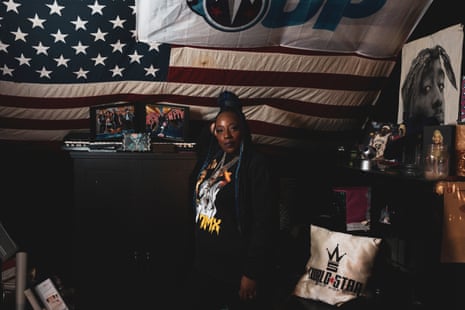
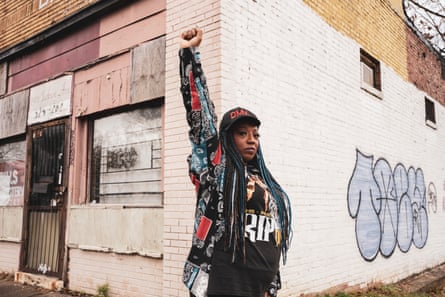


/cdn.vox-cdn.com/uploads/chorus_image/image/71804286/1094199896.0.jpg)
 Imara Jones accepting the NABJ-NAHJ Journalist of Distinction AwardPhoto: Screenshot


 Scottie's Playtime