DHS Tells Police That Common Protest Activities Are ‘Violent Tactics’

That pesky thing called the US CONSTITUTION says that the people have a right to protest the government.  The last ten or more years the federal government has been trying to restrain the rights of the people to protest or have their voices heard.  This is another example.  Hugs

https://www.wired.com/story/dhs-tells-police-that-common-protest-activities-are-violent-tactics/

DHS is urging law enforcement to treat even skateboarding and livestreaming as signs of violent intent during a protest, turning everyday behavior into a pretext for police action.

The Department of Homeland Security is urging local police to consider a wide range of protest activity as violent tactics, including mundane acts like riding a bike or livestreaming a police encounter, WIRED has learned.

Threat bulletins issued during last month’s “No Kings” protests warn that the US government’s aggressive immigration raids are almost certain to accelerate domestic unrest, with DHS saying there’s a “high likeliness” more Americans will soon turn against the agency, which could trigger confrontations near federal sites.

Blaming intense media coverage and backlash to the US military deployment in Los Angeles, DHS expects the demonstrations to “continue and grow across the nation” as protesters focused on other issues shift to immigration, following a broad “embracement of anti-ICE messaging.”

The bulletins—first obtained by the national security nonprofit Property of the People through public records requests—warn that officers could face assaults with fireworks and improvised weapons: paint-filled fire extinguishers, smoke grenades, and projectiles like bottles and rocks.

At the same time, the guidance urges officers to consider a range of nonviolent behavior and common protest gear—like masks, flashlights, and cameras—as potential precursors to violence, telling officers to prepare “from the point of view of an adversary.”

Protesters on bicycles, skateboards, or even “on foot” are framed as potential “scouts” conducting reconnaissance or searching for “items to be used as weapons.” Livestreaming is listed alongside “doxxing” as a “tactic” for “threatening” police. Online posters are cast as ideological recruiters—or as participants in “surveillance sharing.”

One list of “violent tactics” shared by the Los Angeles–based Joint Regional Intelligence Center—part of a post-9/11 fusion network—includes both protesters’ attempts to avoid identification and efforts to identify police. The memo also alleges that face recognition, normally a tool of law enforcement, was used against officers.

Vera Eidelman, a senior staff attorney with the American Civil Liberties Union, says the government has no business treating constitutionally protected activities—like observing or documenting police—as threats.

DHS did not respond to a request for comment.

“Exercising those rights shouldn’t be justification for adverse action or suspicion by the government,” Eidelman says. Labeling something as harmless as skateboarding at a protest as a violent threat is “disturbing and dangerous,” she adds, and could “easily lead to excessive force against people who are simply exercising their First Amendment rights.”

“The DHS report repeatedly conflates basic protest, organizing, and journalism with terroristic violence, thereby justifying ever more authoritarian measures by law enforcement,” says Ryan Shapiro, executive director of Property of the People. “It should be sobering, if unsurprising, that the Trump regime’s response to mass criticism of its police state tactics is to escalate those tactics.”

Fusion centers like JRIC play a central role in how police understand protest movements. The intelligence they produce is rapidly disseminated and draws heavily on open-source data. It often reflects broad, risk-averse assumptions and includes fragmentary and unverified information. In the absence of concrete threats, bulletins often turn to ideological language and social media activity as evidence of emerging risks, even when tied to lawful expression.

DHS’s risk-based approach reflects a broader shift in US law enforcement shaped by post-9/11 security priorities—one that elevates perceived intent over demonstrable wrongdoing and uses behavior cues, affiliations, and other potentially predictive indicators to justify early intervention and expanded surveillance.

A year ago, DHS warned that immigration-related grievances were driving a spike in threats against judges, migrants, and law enforcement, predicting that new laws and high-profile crackdowns would further radicalize individuals. In February, another fusion center reported renewed calls for violence against police and government officials, citing backlash to perceived federal overreach and identifying then-upcoming protests and court rulings as likely triggers.

At times, the sprawling predictions may appear prescient, echoing real-world flashpoints: In Alvarado, Texas, an alleged coordinated ambush at a detention center this week drew ICE agents out with fireworks before gunfire erupted on July 4, leaving a police officer shot in the neck. (Nearly a dozen arrests have been made, at least 10 on charges of attempted murder.)

In advance of protests, agencies increasingly rely on intelligence forecasting to identify groups seen as ideologically subversive or tactically unpredictable. Demonstrators labeled “transgressive” may be monitored, detained without charges, or met with force.

Social movement scholars widely recognize the introduction of preemptive protest policing as a departure from late-20th century approaches that prioritized de-escalation, communication, and facilitation. In its place, authorities have increasingly emphasized control of demonstrations through early intervention, surveillance, and disruption—monitoring organizers, restricting public space, and responding proactively based on perceived risks rather than actual conduct.

Infrastructure initially designed to combat terrorism now often serves to monitor street-level protests, with virtual investigations units targeting demonstrators for scrutiny based on online expression. Fusion centers, funded through DHS grants, have increasingly issued bulletins flagging protest slogans, references to police brutality, and solidarity events as signs of possible violence—disseminating these assessments to law enforcement absent clear evidence of criminal intent.

Surveillance of protesters has included the construction of dossiers (known as “baseball cards”) with analysts using high-tech tools to compile subjects’ social media posts, affiliations, personal networks, and public statements critical of government policy.

Obtained exclusively by WIRED, a DHS dossier on Mahmoud Khalil, the former Columbia graduate student and anti-war activist, shows that analysts drew information from Canary Mission, a shadowy blacklist that anonymously profiles critics of Israeli military action and supporters of Palestinian rights.

In federal court Wednesday, a senior DHS official acknowledged that material from Canary Mission had been used to compile more than 100 dossiers on students and scholars, despite the site’s ideological slant, mysterious funding, and unverifiable sourcing.

Threat bulletins can also prime officers to anticipate conflict, shaping their posture and decisions on the ground. In the wake of violent 2020 protests, the San Jose Police Department in California cited the “numerous intelligence bulletins” it received from its local regional fusion center, DHS, and the FBI, among others, as central to understanding “the mindset of the officers in the days leading up to and throughout the civil unrest.”

Specific bulletins cited by the SJPD—whose protest response prompted a $620,000 settlement this month—framed the demonstrations as possible cover for “domestic terrorists,” warned of opportunistic attacks on law enforcement and promoted an “unconfirmed report” of U-Haul vans purportedly being used to ferry weapons and explosives.

Subsequent reporting in the wake of BlueLeaks—a 269-gigabyte dump of internal police documents obtained by a source identifying as the hacktivist group Anonymous and published by transparency group Distributed Denial of Secrets—found federal bulletins riddled with unverified claims, vague threat language, and outright misinformation, including alerts about a parody website that supposedly paid protesters and accepted bitcoin to set cars on fire, despite a clear banner labeling the site “FAKE.”

Threat alerts—unclassified and routinely accessible to the press—can help law enforcement shape public perception of protests before they begin, laying the groundwork to legitimize aggressive police responses. Unverified DHS warnings about domestic terrorists infiltrating demonstrations in 2020, publicly echoed by the agency’s acting secretary on Twitter, were widely circulated and amplified in media coverage.

Americans are generally opposed to aggressive protest crackdowns, but when they do support them, fear is often the driving force. Experimental research suggests that support for the use of coercive tactics hinges less on what protesters actually do than on how they’re portrayed—by officials, the media, and through racial and ideological frames.


Dell Cameron is an investigative reporter from Texas covering privacy and national security. He’s the recipient of multiple Society of Professional Journalists awards and is co-recipient of an Edward R. Murrow Award for Investigative Reporting. Previously, he was a senior reporter at Gizmodo and a staff writer for the Daily … Read More

YOU HAVE THE LEGAL AUTHORITY, F*****G USE IT

One voice was yelling he was a US citizen.  The conditions are horrible.  They get their drinking water from the toilet.   Maxwell Frost is a progressive treasure.  Hugs

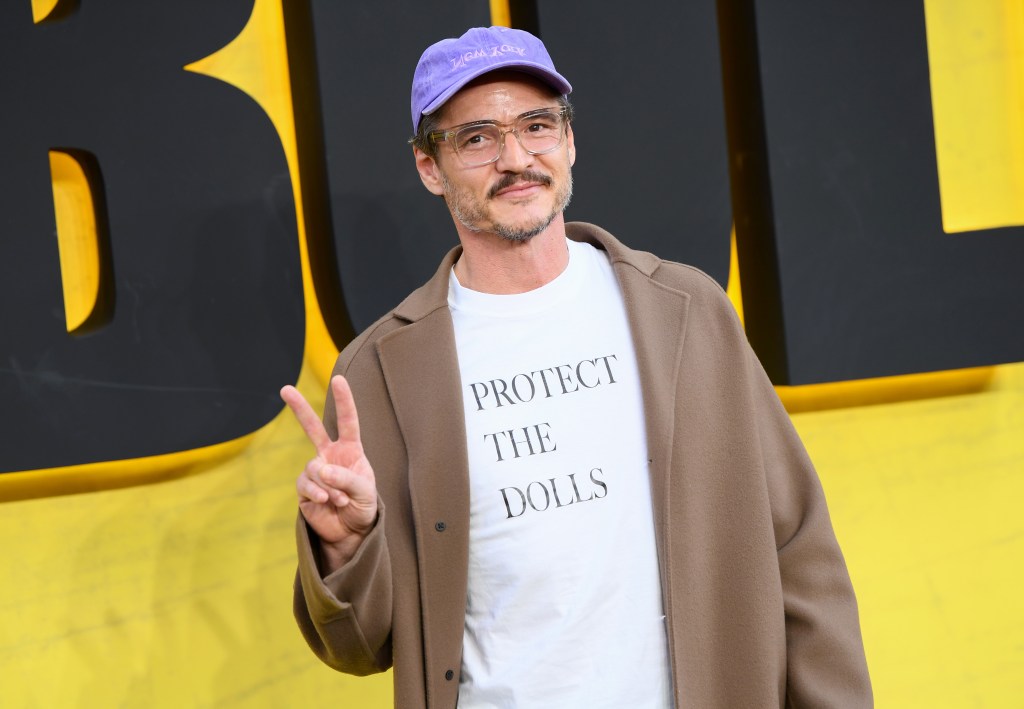
Pedro Pascal comes out swinging for the trans community yet again at Fantastic Four premiere

https://www.thepinknews.com/2025/07/09/pedro-pascal-fantastic-four-trans/

Some clips about how the democratic leadership in the US congress are not getting the message from the people.

The Democratic Party leadership which is made up of all corporate democrats along the manner of Nancy Pelosi.   The idea that a 33 year old Social Democrat like Bernie Sanders and AOC running NY City terrifies them.  Behind the scenes they are trying hard to wing support to Andrew Cuomo who has been accused of being very corrupt instead of a guy who promised to do things that make life better for the working lower incomes.  They are scared that the people will see that they have power and that government CAN work for them.  The democratic leadership totally ignores the fact that Mamdomi raised enough money from small individual donor donations and refused corporate PACs and bribes.    He is the future of the Democratic Party if the democrats ever want to win again.  The videos of the man on the street getting greeted by everyone, he doesn’t put on airs but walks the streets and is like everyone else.   Hugs

In a recent post I posted the news article from Axios about democratic members of congress needing to be more aggressive including being willing to get shot trying to inspect ICE facilities.  It was not about wanting to cause violence nor about wanting to be shot.  The article was about the perception that democratic leadership are too timid and scared to challenge the thuggish ICE and current administration.   The video below goes over the article.   Hugs

Tom Homan rips violent clashes at California pot farm where illegal minors were working, blames Dems’ ‘Nazi’ rhetoric

There is a video at the link below.  I watched this.  ICE went in to terrorize and prove they could.  They had a military style attack helicopter.  This is going to get worse.   They are the tRump admin Gestapo, armed thugs who follow no rules attacking people who have violated no criminal laws.  Even if they were undocumented they had broken no laws as crossing the border illegally is a civil offense like speeding.  Hugs

https://nypost.com/2025/07/11/us-news/tom-homan-rips-violent-clash-at-california-pot-farm-as-proof-ice-protests-will-turn-deadly-blames-dems-nazi-rhetoric/

Clips from The Majority Report on different subjects.


Indiana church tells LGBTQ+ people to kill themselves or face death penalty under Trump

https://www.thepinknews.com/2025/07/07/indiana-indianapolis-sure-foundation-baptist-church-lgbtq/

Indiana Has An Asshat, God-Awful, Hateful, Preacher…

I know in the last few days I have posted a lot of what I think is important stuff.  But if you have ever wanted to hear a grand response to a hate preacher calling for the death of gay people then you need to watch this video.  The reverend is as upset and agitated as I have ever seen him.  He not only debunks the hate preachers arguments but uses the verses before and after to show how wrong people that use that to hate on gays are.   Hugs.

Florida officials deny accusations of inhumane conditions at Alligator Alcatraz

https://www.cbsnews.com/miami/news/alligator-alcatraz-detainees-allege-inhumane-conditions-at-immigration-detention-center/

Cuban reggaeton artist Leamsy La Figura, arrested last week in Miami-Dade on assault charges, was transferred to South Florida’s new immigration detention facility known as Alligator Alcatraz in the Everglades, the singer confirmed in a phone call.

He and other detainees claim they are enduring inhumane conditions at the site, including lack of access to water, inadequate food and denial of religious rights.

Alligator Alcatraz was built in a matter of days on a rarely used municipal airport located about 50 miles west of the City of Miami. The first group of detainees arrived at the center on July 3, according to state Attorney General James Uthmeier.

La Figura, whose real name is Leamsy Isquierdo, was charged with aggravated assault with a deadly weapon and battery. He was initially held at the Turner Guilford Knight Correctional Center (TGK) before being transferred to Alligator Alcatraz.

“There’s no water to take a bath”

In a phone call from inside the facility, La Figura described what he called horrific conditions.

“I am Leamsy La Figura. We’ve been here at Alcatraz since Friday. There’s over 400 people here. There’s no water to take a bath, it’s been four days since I’ve taken a bath,” he said.

He claimed the food at the immigration facility is scarce and unsanitary.

“They only brought a meal once a day and it had maggots. They never take off the lights for 24 hours. The mosquitoes are as big as elephants,” La Figura said.

Detainees say rights are being violated

Other detainees echoed La Figura’s concerns, alleging violations of their basic rights.

“They’re not respecting our human rights,” one man said during the same call. “We’re human beings; we’re not dogs. We’re like rats in an experiment.”

“I don’t know their motive for doing this, if it’s a form of torture. A lot of us have our residency documents and we don’t understand why we’re here,” he added.

A third detainee, who said he is Colombian, described deteriorating mental health and lack of access to necessary medical care.

“I’m on the edge of losing my mind. I’ve gone three days without taking my medicine,” he said. “It’s impossible to sleep with this white light that’s on all day.”

He also claimed his Bible was confiscated.

“They took the Bible I had and they said here there is no right to religion. And my Bible is the one thing that keeps my faith, and now I’m losing my faith,” he said.

La Figura’s girlfriend said the couple shares a 4-year-old daughter.

Florida officials respond to inhumane conditions allegations

On Tuesday, state officials responded to the allegations made by detainees at the facility, saying they are “completely false.”

“The reporting on the conditions in the facility is completely false. The facility meets all required standards and is in good working order,” said Stephanie Hartman, director of communications for the Florida Division of Emergency Management.

FDEM was the engine behind Alligator Alcatraz, using the state’s emergency management tools and funding to build, staff and operate the detention facility.

The detention has faced intense criticism over human rights, environmental impact, oversight and the legality of commandeering protected Everglades land.

Overturning gay marriage ban and adding LGBTQ protections just got harder. Find out why.

https://www.cincinnati.com/story/news/politics/2025/07/09/gop-splits-issue-to-ax-ohio-same-sex-marriage-ban-add-lgbtq-protections/84504795007/

Portrait of Jessie BalmertJessie Balmert

Cincinnati Enquirer
  • Ohio Republicans split the Ohio Equal Rights Amendment into two separate ballot issues.
  • One issue addresses overturning Ohio’s same-sex marriage ban, while the other expands anti-discrimination protections for LGBTQ+ individuals.
  • This move requires proponents to collect double the signatures or sue the Ohio Ballot Board.

Ohio Republicans added another hurdle for proponents of a measure to overturn Ohio’s dormant ban on same-sex marriage and expand anti-discrimination protections for LGBTQ residents.

In a party-line vote, Ohio Ballot Board divided the Ohio Equal Rights Amendment into two issues: one to overturn a 2004 vote that defined marriage as between one man and one woman and another that would prohibit state and local government from discriminating against more than a dozen protected groups, including transgender Ohioans.

To make the ballot, proponents will either have to collect double the number of signatures to get both proposals approved or sue the Ohio Ballot Board to overturn its decision. Backers are eyeing the 2026 ballot at the earliest, said Lis Regula, a member of Ohio Equal Rights’ leadership committee.

During the July 9 meeting, the ballot campaign’s attorney Corey Colombo argued that the proposed constitutional amendment was one issue because it encompassed equal rights for all Ohioans.

People gather for the 52nd Cincinnati Pride Parade, Saturday, June 28, 2025, in Downtown Cincinnati.

People gather for the 52nd Cincinnati Pride Parade, Saturday, June 28, 2025, in Downtown Cincinnati.

But Republicans contended that transgender issues and marriage equality are two different things with two different levels of support from voters.

While Ohioans might support marriage between any two people in the Ohio Constitution, “they may not want to support creating 12 new protected classes under a bunch of different circumstances,” said Ohio Secretary of State Frank LaRose, a Republican who leads the Ohio Ballot Board.

Rep. Terrence Upchurch, D-Cleveland, said Republicans divided the measure because of politics. “It’s one issue. It’s cut and dry.”

“There’s definitely political will for using trans people to divide Ohioans,” Regula said. “The hopeful side of me appreciates that they are recognizing the support for same-sex marriage. That’s great. We’ve made progress. We still have progress to make.”

What is the Ohio Equal Rights Amendment?

If approved by voters, the Ohio Equal Rights Amendment would prohibit state and local government from discriminating based on: “race, color, creed or religion, sex, sexual orientation, gender identity or expression regardless of sex assigned at birth, pregnancy status, genetic information, disease status, age, disability, recovery status, familial status, ancestry, national origin or military and veteran status.”

The sweeping measure would expand the list of protected individuals far beyond the national Equal Rights Amendment, which aims to prohibit discrimination based on sex. Ohio ratified that amendment in 1974, but it has not been recognized as part of the U.S. Constitution because of missed deadlines and other disputes.

The proposal would also overturn a 2004 vote that defined marriage as between one man and one woman.

This language has been dormant since a 2015 U.S. Supreme Court decision led by Ohioan Jim Obergefell legalized gay marriage in America. As of 2023, Ohio had 22,400 same-sex married couples, according to the most recent federal census data.

“Marriage equality has been going strong now for 10 years, and the sky hasn’t fallen. Society hasn’t collapsed,” said Senate Minority Leader Nickie Antonio, D-Lakewood. “What happened is you have families who have standing, whose children can feel good and talk about their families just like every other kid at school, no matter what the configuration of their family is.”

But proponents of marriage equality worry that the Obergefell decision could be overturned by an unfriendly U.S. Supreme Court. “I think it is reasonable to believe that it is under threat,” said Regula, citing the language used in the decision overturning Roe v. Wade.

What are the arguments for and against this measure?

Supporters of the proposed constitutional amendment want to overturn Ohio laws that penalize people with HIV for donating blood or having sex without disclosing their HIV status. More recently, Republican lawmakers banned transgender students from using school bathrooms that match their gender identity and banned gender-affirming care for transgender minors. 

“Those discriminatory laws make Ohio less of a welcoming place and make it a place where fewer people are interested in coming,” Regula said.

Opponents say these are losing issues at the ballot box.

“To bring such an unpopular constitutional amendment like this forward is one, shockingly appalling, but also really dumb after Sherrod Brown just lost his Senate seat over these issues,” said Aaron Baer, president of the Center for Christian Virtues.

Republicans crafted attack ads against Brown for voting against amendments that would have stripped funding from schools and colleges that allowed transgender girls to play in women’s sports.

“I have a hard time seeing them get a lot of traction with this,” Baer said. CCV was a driving force behind the 2004 constitutional amendment to ban same sex marriage in Ohio.

What happens next?

The group looking to put the Ohio ERA before voters faces a tall task. If they want voters to approve both measures, they must collect an additional 1,000 valid signatures for each proposal, go before Ohio Attorney General Dave Yost for initial approval and return to the ballot board.

Then, proponents would have to collect at least 413,487 valid signatures, or 10% of votes cast in the most recent governor’s race, for each measure or 826,974 in total. Those signatures must meet a minimum threshold in half of Ohio’s 88 counties.

“While I applaud the spirit of the work that they are trying to do, I just think it’s a real uphill battle that they’re going to be faced with,” said Antonio, the state’s first and currently only openly gay lawmaker.

For more than a decade, Antonio has repeatedly introduced the Ohio Fairness Act to prohibit discrimination based on sexual orientation or gender identity. The GOP-controlled Legislature has not moved forward on the fairness act.

Antonio said a legislative fix is still the right path for protections against LGBTQ discrimination.

“I struggle with asking the majority of people, the majority of the population, to grant equality by a vote to a marginalized group,” Antonio said. “I will continue to fight for the Ohio Fairness Act, because I think it’s the right thing to do.”

Reporter Laura A. Bischoff contributed to this article.

State government reporter Jessie Balmert can be reached at jbalmert@gannett.com or @jbalmert on X.