August 24, 1968 France became the world’s fifth thermonuclear power when it exploded a hydrogen bomb at the Fangataufa Atoll in the South Pacific. It had a yield of 2.6 megatons (the equivalent of more than two-and-a-half million tons of TNT) and heavily contaminated the atoll, leaving it off-limits to humans for six years. Fangataufa test Atmospheric and underwater nuclear weapons testing continued there for nearly thirty more years.
August 24, 1970 United Farm Workers Organizing Committee (UFWOC) leaders Cesar Chavezand Dolores Huertacalled for a consumer boycott of lettuce to support the strike against lettuce growers who would not negotiate contracts with the farm workers for decent wages and working conditions. United Farm Workers show their support for the lettuce strike and boycott at a rally in Salinas, California. U.F.W. history Farm Labor leader Cesar Chavez, pictured at a rally in Salinas, California The United Farm Workers today Farmworker Movement Documentation Project Susan Due Pearcy Boycott Posters and buttons
August 23, 1933 Mahatma Gandhi, weighing only 90 pounds, was released unconditionally from Sassoon Hospital in Poona because, after 5 days of his latest “fast unto death,” the doctors feared that his body could no longer stand the strain of fasting. He had been taken to the hospital from Yeravda jail, which he had described as his “permanent address,” when he started his fast. He was protesting official refusal to allow him to continue his work with the Untouchables (he had called them harijan, or “children of God”) while in prison. Gandhi leaving hospital, 1933 He had deliberately courted arrest, rejecting an order permitting him to reside only within the limits of Poona, and had been sentenced to a year’s imprisonment. Gandhi and his fasts
August 23, 1945 In a letter to his friend Anne Marie Petersen shortly before the end of British colonial rule in India, Mahatma Gandhi wrote, “When there is independence, why should you fear the majority? If you have God with you and the majority have not, should you still fear? And if both have God between them who should fear whom? Is there then any question of majority and minority? Let us pray. Love. Bapu”
August 23, 1989 Over one million joined hands across the three Baltic republics (Lithuania, Latvia and Estonia) in a 400-mile-long chain of resistance against control by the U.S.S.R. (Union of Soviet Socialist Republics). It was the 60th anniversary of the Soviet-German Non-Aggression Pact, also known as the Molotov-Ribbentrop Pact after the foreign ministers of the Soviet Union and Nazi Germany who had negotiated it. Generally called the Hitler-Stalin Pact, it secretly agreed to Soviet control of Latvia and Estonia, and German influence over Poland and Lithuania. Germany, again secretly, later ceded control over Lithuania to the Soviets for 7.5 million dollars in gold ($115 in 2008 dollars). Baltic hands The Baltic Way(with pictures of the action)
August 22, 1958 President Dwight Eisenhower announced a voluntary moratorium on nuclear weapons testing. A report outlining a system for monitoring and verifying compliance of a complete ban on such testing had been released just the day before. The Conference of Experts, as it was known, had been meeting in Geneva, Switzerland, to work out the details on detection of violations of such a treaty. The U.S. delegation was led by Nobel physics laureate Ernest Lawrence from the University of California (the Lawrence Livermore National Laboratory is named after him). Eisenhower predicated his moratorium on U.S.S.R. and U.K. agreement to the same limitations. All three countries agreed to the one-year halt in testing and to begin negotiations on a complete test ban at the end of October; all three performed last-minute (atmospheric) tests before the opening of talks.
August 22, 1964 Singing at a boardwalk demonstration: Hamer (with microphone), Stokely Carmichael, (in hat), Eleanor Holmes Norton, Ella Baker. Fannie Lou Hamer, leader of the Mississippi Freedom Democratic Party (MFDP), testified in front of the Credentials Committee at the Democratic National Convention. She was challenging the all-white delegation that the segregated regular Mississippi Democrats had sent to the presidential nominating convention. Mississippi’s Democratic Party excluded African Americans from participation. The MFDP, on the other hand, sought to create a racially inclusive new party, signing up 60,000 members. The hearing was televised live and many heard Hamer’s impassioned plea for inclusion of all Democrats from her state.The hearing was televised live and many heard Hamer’s impassioned plea for inclusion of all Democrats from her state. In her testimony she spoke about black Mississippians not only being denied the right to register to vote, but being harassed, beaten, shot at, and arrested for trying. Concerned about the political reaction to her statement, President Lyndon Johnson suddenly called an impromptu press conference, thereby interrupting television broadcast of the hearing. Hear her testimony Link to photo gallery
August 22, 1971 The FBI (Federal Bureau of Investigation) arrested twenty in Camden, New Jersey, and five in Buffalo, New York, for conspiracy to steal and destroy draft records. Eventually known as the Camden 28, most were Roman Catholic activists, including four priests, and a Lutheran minister.“We are not here because of a crime committed in Camden but because of a war committed in Indochina….” Cookie Ridolfi The Camden 28
August 22, 1972 Rhodesia’s team was banned from competing in the Olympic Games with just four days to go before the opening ceremony in Munich, Germany. The National Olympic Committees of Africa had threatened to pull out of the games unless Rhodesia was barred from competing. Though the Rhodesian team included both whites and blacks, the government was an illegal one, controlled by whites though they represented just 5% of the country’s population. It had broken away from the British Commonwealth over demands from Commonwealth member nations that power be yielded to the majority. Read more
August 22, 1986 The Kerr-McGee Corporation agreed to pay the estate of the late Karen Silkwood $1.38 million ($2.68 in 2008), settling a 10-year-old nuclear contamination lawsuit. She had been active in the Oil, Chemical and Atomic Workers union, specifically looking into radiation exposure of workers, and spills and leaks of plutonium. The story of Karen Silkwood
August 21, 1831 Nat Turner, a 30-year-old man legally owned by a child, and six other slaves began a violent insurrection in Southampton County, Virginia.They began by killing the child’s stepfather, Joseph Travis, and his family. Within the next 24 hours, Turner and, ultimately, about 40 followers killed the families who owned adjacent slaveholding properties, nearly 60 whites, while freeing and inciting other slaves to join them.Militia and federal troops were called out, and the uprising was suppressed with 55 African Americans including Turner executed by hanging in Jerusalem, Virginia, and hundreds more killed by white mobs and vigilantes in revenge. More about Nat Turner Nat Turner’s confession
August 21, 1968 The Czechoslovakian people spontaneously and nonviolently resisted invasion of their country of 14 million by hundreds of thousands of troops and 5000+ tanks from the Soviet Union and four other Warsaw Pact countries.The troops were enforcing the overthrow and arrest of Alexander Dubcek and his government. They had been implementing significant democratic reforms known collectively as “socialism with a human face,” or the Prague Spring. Cover of the magazine Kvety, with a photograph of the statue of St. Wenceslas in Wenceslas Square in the center of Prague. Graffiti on the statue reads “Soldiers go home” in Russian and “Dubcek – Svoboda” in Czech. Hundreds attempted to obstruct invading tanks. Both Czechs and Slovaks argued with the soldiers and refused all cooperation with the occupying armies while showing broad support for the deposed government and its reform program. Moscow relented and returned Dubcek to office, at least temporarily. Prague Spring in retrospect Czech perspective
August 21, 1971 Two grenades killed and wounded members of the leadership of the Philippines’ Liberal Party during a rally in Manila’s Plaza Miranda. Philippine President Ferdinand Marcos accused a leader of the party, Benigno Aquino, of the bombing and arrested him, labeling him a communist. Liberal Party Secretary-General Aquino, an effective young leader and Marcos opponent, was imprisoned, mostly in solitary confinement, for seven years until allowed exile to the U.S., ostensibly for medical treatment.
August 21, 1976 Approximately 20,000 people, mainly women, from both Protestant and Catholic areas of Belfast, Northern Ireland, attended a Peace People’s rally at Ormeau Park.
August 21, 1983 Exiled popular Philippine political leader Benigno Aquino was assassinated by soldiers of the Aviation Security Command as he crossed the tarmac at Manila International Airport. Benigno Aquino He had spent three years of asylum in the U.S. Upon his return, he intended to lead the political opposition to President Ferdinand Marcos and the martial law he had imposed. During the plane trip across the Pacific, he had commented to reporters, “I suppose there’s a physical danger because you know assassination’s part of public service . . . My feeling is we all have to die sometime and if it’s my fate to die by an assassin’s bullet, so be it.” Hundreds of thousands demonstrated against Marcos.
Ferdinand Marcos The Aquino funeral drew millions and gave impetus to the broad-based People’s Power movement which eventually forced Marcos from power. Read more about Aquino
August 21, 1991 A coup against Soviet Union President Mikhail S. Gorbachev by hard-line Communist Party members (State Emergency Committee), collapsed in the face of popular opposition. Russian Federation President Boris N. Yeltsin, having quit the Party the previous year, had called for a general strike. Mikhail S. Gorbachev | Boris N.Yelsin
August 21, 1998 Samuel Bowers, the 73-year-old former Imperial Wizard of the White Knights of the Ku Klux Klan, was convicted in Hattiesburg, Mississippi, of ordering a firebombing that killed civil rights activist Vernon Dahmer 32 years before. Bowers had also been instrumental in the killing of three other civil rights workers in Philadelphia, Mississippi for which he was never charged. On Vernon Dahmer’s tombstone are the words, “If you don’t vote, you don’t count.” Samuel Bowers 32 years to justice Dahmer’s home after the bombing
(It’s a newsletter I receive, and I don’t have a link for what I’ve copied and am pasting, but there are links within the piece. Enjoy.)
AUGUST 17 — AUGUST 23
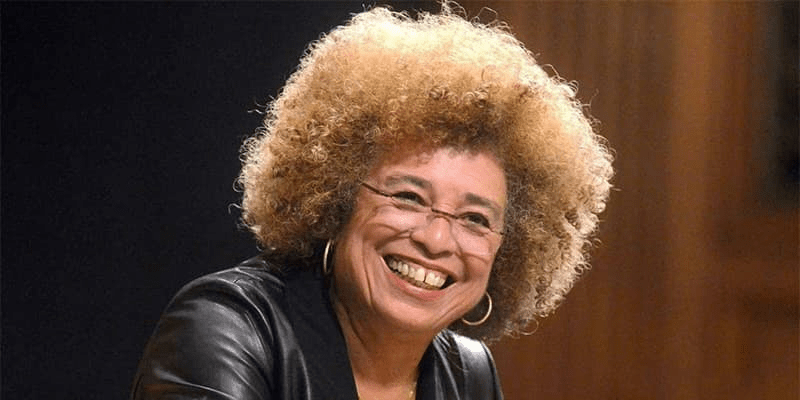
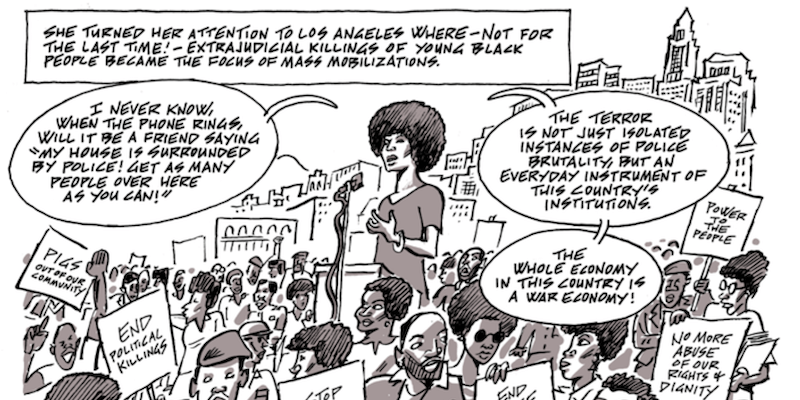
Angela Davis debuts on the FBI’s Ten Most Wanted List. In 1969, the legendary author and activist Angela Davis was a newly minted assistant philosophy processor at UCLA. But she was also an avowed Communist, and as a result, then-Governor Ronald Regan tried to have her fired before she’d begun any actual teaching. No luck: Davis’s dismissal didn’t hold up in court, and her first class had to be moved to a bigger classroom to accommodate the 2,000 students who had signed up for it—but she would finally be fired again nine months later, for “inflammatory rhetoric” in public speeches. Davis was an outspoken supporter of the Black Panthers and was fervently against the Vietnam War, but arguably her most scandalous activist activities at the time were in defense of the Soledad Brothers, three Black inmates imprisoned in Soledad, CA, who were accused of killing a white guard. In 1970, guns registered to Davis were used in an attack on the nearby Marin County Civic Center; the perpetrators hoped to take hostages to bargain for the inmates’ release, but instead left four casualties. Davis, despite not being at the scene, was charged with murder, kidnapping, and criminal conspiracy charges. She couldn’t be found, and so on August 18, 1970, by order of J. Edgar Hoover, Davis became the third woman ever to be included on the FBI’s Most Wanted List. Eight weeks later, Davis was finally arrested in a New York motel; the trial that followed catapulted her to international fame—and turned her into a revolutionary icon—as her supporters, who viewed her as a political prisoner, chanted “Free Angela!” across the globe.In 1972, after 16 months in prison, she was acquitted of all charges by an all-white jury. “It took a worldwide movement of people to acquit Miss Davis,” noted one of her attorneys, Howard Moore Jr., but it shouldn’t have. “Justice should be the routine of the system,” he added.
THIS IS WHY THEY BAN IT: “Progressive art can assist people to learn not only about the objective forces at work in the society in which they live, but also about the intensely social character of their interior lives. Ultimately, it can propel people toward social emancipation. ” –Angela Davis
August 20, 1619 The first enslaved Africans brought to North America arrived in Jamestown, Virginia, aboard a Dutch ship.
August 20, 1964 A nearly $1 billion (about $5 billion in current dollars) anti-poverty measure, the Economic Opportunity Act, which created Head Start, VISTA (Volunteers In Service To America), and other programs that became part of the “War on Poverty,” was signed into law by President Lyndon Johnson. Sargent Shriver & LBJ Sargent Shriver, the first director of the Peace Corps, drafted the legislation and became director of the Office of Equal Opportunity which implemented the new law. The “Great Society”
(Click through on the Desmond Tutu link, and join me in what I’m pretty sure will be your first thought when you see the page. And enjoy your beverage while reading. -A.)
August 19, 1791 Benjamin Banneker Benjamin Banneker, the first recognized African-American scientist, a son of former slaves, sent a copy of his just-published Almanac to Secretary of State Thomas Jefferson, along with an appeal about “the injustice of a state of slavery.” More about Benjamin Banneker, his achievements and his letter to the president ===================================================== August 19, 1953 Prime Minister Dr. Mohammed Mosaddeq Royalist troops surrounded, bombarded and burned the residence of the Mohammed Mosaddeq, the recently dismissed elected Iranian Prime Minister. After having briefly fled his country for Italy due to the rioting over his unconstitutional dismissal of Mosaddeq, Shah Mohammed Reza Pahlavi was returned to the Peacock throne with dictatorial power. All this was done with the planning, financing and assistance of the CIA and its British counterpart, MI6. Background on Mosaddeq Stephen Kinzer on the U.S.-Iran relationship in perspective =============================================== August 19, 1958 The NAACP (National Association for the Advancement of Colored People) Youth Council in Oklahoma City, led by Clara Luper, a high school history teacher, began sit-ins to desegregate lunch counters, inspired by success in Wichita, Kansas. [see August 11, 1958]. Clara Luper TV interview with Clara Luper More about Clara ================================================ August 19, 1970 The U.S. deployed Minuteman III intercontinental ballistic missiles near Greeley, Colorado. It was the first missile with multiple (then three-170 kiloton) nuclear warheads known as MIRVs (Multiple Independently targetable Re-entry Vehicles). The MIRV: each cone is a warhead All the details about this fearsome armament ================================================== August 19, 1989 Anglican Bishop and Nobel Peace Prize-winner Desmond Tutu was among hundreds of black demonstrators, members of Mass Democratic Movement who were whipped and blasted with sand stirred up by helicopters as they attempted to picnic on a “whites-only” beach near Cape Town, South Africa. Desmond Mpilo Tutu
Yeah, me, neither. Also! I am not, and never was, a KISS fan. I always thought they were bubble gum. Needless to say, I enjoy Clay Jones’s commentary re KISS!
I’m a KISS fan, to an extent. When I was in the 4th or 5th grade, a friend introduced me to KISS, and I was hooked. I had posters and albums. I wanted to be Ace Frehley and started playing guitar. I was obsessed with KISS. Other than my guitar obsession (I’m still obsessed), all that was over by the time I hit the 8th grade. With a bit more maturity, I had become more interested in not just the current music of the time, like Van Halen, but another friend had introduced me to The Beatles, and I think I discovered the Rolling Stones on my own. I started paying attention to my mom’s music and got into CCR.
A few years later, I was walking through the music department of K-Mart, and saw the album cover for KISS’s latest album, Lick It Up, and learned that they had a couple of replacement members and had taken the makeup off. This was huge news in KISS world, but I was out of the KISS ARMY (that was the fan club) by that point.
And that’s the thing about KISS. Their audience was mostly little boys, such as myself. While KISS looked like a dangerous rock and roll band, at least at the beginning, they had become more of a marketing product than a rock and roll band. In addition to the posters I had, KISS were marketing lunch boxes, action figures, trading cards, bed sheets, pillows, comic books, and even had made a TV movie, KISS Meets the Phantom of the Park, which might be the worst TV movie ever.
KISS may have been serious about their music, but they weren’t taken seriously, which is difficult to obtain when each member is face-painted like a clown. The Insane Clown Posse is probably more respected. And while there are some gems in their catalog, most of their songs actually sucked. KISS chased trends. They started as a rock band striving to be on Led Zeppelin’s level, but they didn’t have the songwriting chops or musicianship, despite Ace Frehley being a badass (when he was sober enough to play on the albums, and didn’t force the band to use a hidden replacement for his lead guitar playing). KISS went from trying to be the next Beatles to producing a disco track, to chasing hair metal in the 80s, to writing songs with Michael Bolton and Bryan Adams, to making a grunge album. Critics didn’t like them, and they never made the cover of Rolling Stone during their prime (but did make it decades later for an article that was mostly retrospective).
They were more noted for their theatrics, fire-breathing, blood-spitting, and smoke pouring out of Frehley’s guitar than for their music.
Most musicians in respected rock bands are invited to play on other artists’ albums, such as Bob Seger, members of Fleetwood Mac, Mike Campbell of Tom Petty and the Heartbreakers, and every member of The Eagles. Even members of Cheap Trick got invites, and even lured Beatles producer George Martin to produce their albums. But I can’t think of a member of KISS who has ever played on another artist’s album. After leaving KISS, Ace Frehley called John Waite (the Missing You guy) to see if he’d like to start a band with him, and never got a return call. And Ace was the most successful solo artist to come out of the band (though his last album was embarrassing). Peter Criss’ albums are unlistenable.
Gene Simmons was not a good songwriter (sample lyric: “Let me put my log into your fire”), and his bass playing is still mocked today (they often used a hidden replacement, or Paul and Ace would play bass on the songs they wrote). Paul Stanley had an operatic voice (that didn’t have a natural sound), but he tried too hard to show it off, and his guitar playing and songwriting were cheesy. Peter Criss was more of a jazz drummer than a heavy rock guy like John Bonham of Zeppelin, and he had timing issues, but his voice had an amazing sound, especially considering that he was tone deaf. Ace Frehley, who is unfortunately a racist who used to get drunk and bang on his Jewish bandmates’ hotel room doors dressed as a Nazi (really. They used to call him RACE Frehley), inspired millions with his guitar playing, but his skills decreased due to his laziness and addictions. By hiring studio musicians to pretend to be Criss, Frehley, and Simmons on their albums and hiding it from the fans, KISS didn’t even take themselves seriously.
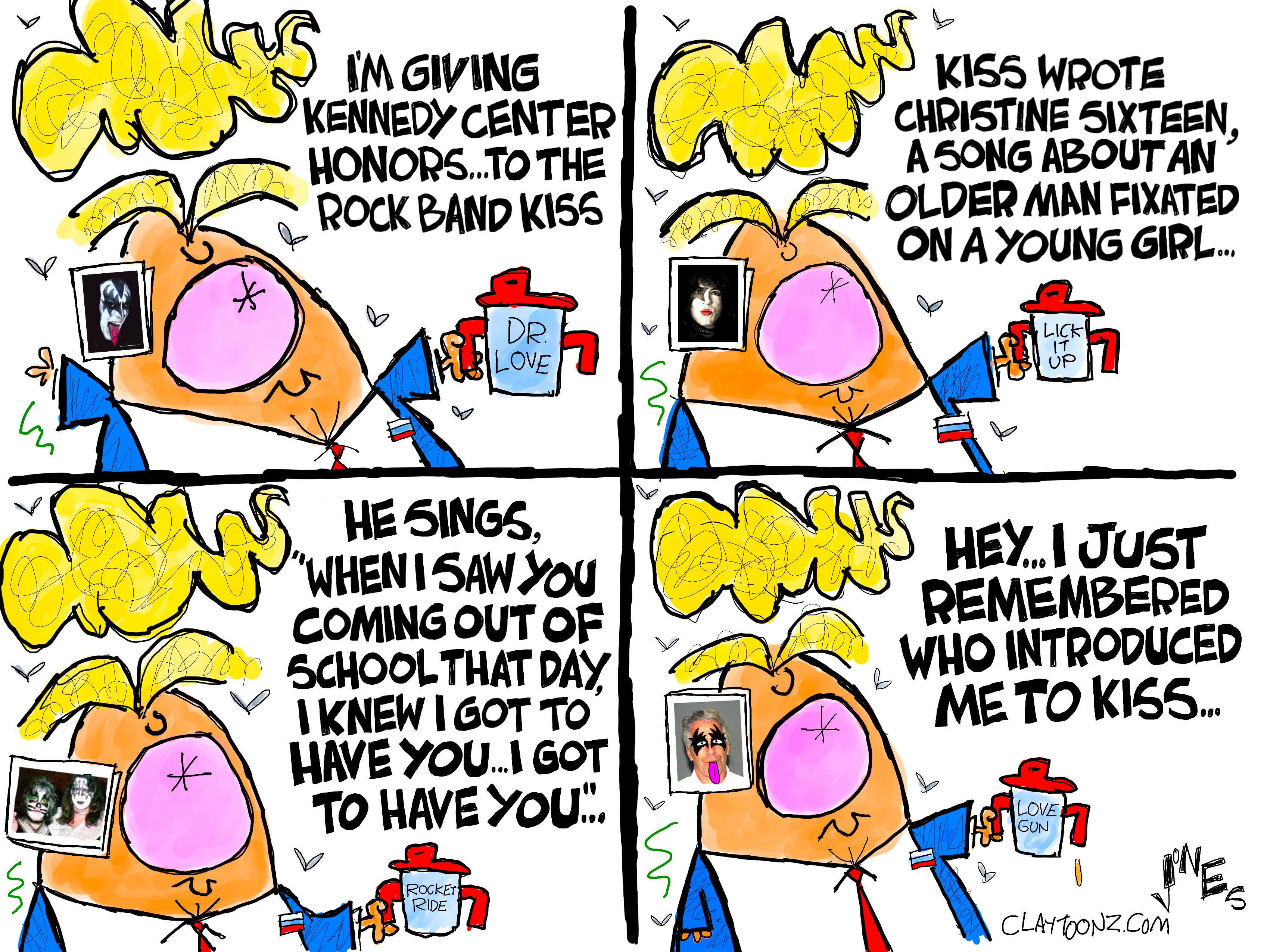
KISS was never a great band. So why are they the first to be honored by Donald Trump since he made himself the head of the Kennedy Center? Because Trump has no culture (ketchup on burnt steaks), and he has the maturity of a 12-year-old boy.
Trump will be hosting the ceremony for these “honors,” which will be interesting. People will probably tune in because folks love a good train wreck.
Each member of KISS expressed how honored and humbled they are for receiving these “honors,” but boys…being “honored” by Donald Trump isn’t really an honor.
That’s another difference between KISS and bands taken seriously. Musicians sue Trump to stop playing their music at his rallies.
And, yes. KISS has a song glorifying pedophilia. Gene Simmons wrote it. I had to adjust the lyrics for space, but those cited in the cartoon say,
“I don’t usually say things like this to girls your age, But when I saw you coming out of the school that day, That day I knew, I knew, I’ve got to have you, I’ve got to have you.”
Even as a kid, I thought it was weird that Gene only saw Christine because he was hanging outside her school. (snip-MORE)
August 18, 1914 In another step in the ethnic intimidation that led ultimately to the Armenian genocide in Turkey, looting was reported in Sivas, Diyarbekir, and other provinces. Under the guise of collecting war contributions (WWI had just begun), stores owned by Armenian and Greek merchants were vandalized. 1,080 shops and stalls owned by Armenians were burned at the Diyarbekir bazaar. Chronology of the Armenian Genocide
August 18, 1920 Women throughout the U.S. won the right to vote when the Tennessee legislature approved the 19th amendment to the U.S. Constitution (the last of 36 states then required to approve it). An amendment for universal suffrage was first introduced in Congress in 1878, and Wyoming had granted suffrage in state law by 1890. This amendment to enfranchise all American women had been introduced annually for 41 years without passage; it had gotten two-thirds of both houses of Congress to approve it just the year before. “The right of citizens of the United States to vote shall not be denied or abridged by the United States or by any State on account of sex.” In the Tennessee House, 24-year-old Representative Harry Burn surprised observers by casting the deciding vote for ratification. At the time of his vote, Burns had in his pocket a letter he had received from his mother urging him, “Don’t forget to be a good boy” and “vote for suffrage.” Teaching With Documents: Woman Suffrage and the 19th Amendment (National Archives) (It is still there; I checked.)
August 18, 1963 James Meredith James Meredith, the first African American to attend the University of Mississippi, became the first to graduate. His enrollment at “Ole Miss” a year earlier had been met with deadly riots, forcing him to attend class escorted by heavily armed guards. James Meredith being escorted to his classes by U.S. marshals and the military. Who was James Meredith
August 18, 1964 South Africa was banned from taking part in the 18th Olympic Games in Tokyo due to the country’s refusal to reform its racially separatist apartheid system. Read more
August 18, 1977 Steve Biko, the leader of the Black Consciousness Movement resisting apartheid, was arrested at a roadblock outside King William’s Town. He died while in custody from abuse during the weeks of interrogation that followed. Steve Biko “So as a prelude whites must be made to realise that they are only human, not superior. Same with Blacks. They must be made to realise that they are also human, not inferior.” “The most potent weapon in the hands of the oppressor is the mind of the oppressed.” – Biko speech in Cape Town, 1971 More about Biko
Putin doesn’t see Ukraine as a sociergn nation but as a puppet state of Russia’s that he can control. He doesn’t see them as having the right to determine their own future. Here is a quote from the article.
Putin signalled no movement in Russia’s long-held demands, which also include a veto on Kyiv’s desired membership in the NATO alliance.
————————————————————————————————————————
Source says Putin demands control of entire Donetsk region
Trump says Zelenskiy has ‘gotta make a deal’
Zelenskiy reported to have rejected demand
Zelenskiy to visit Trump on Monday with European back-up
Europeans say they will maintain or increase pressure on Russia
WASHINGTON/MOSCOW/KYIV, Aug 16 (Reuters) – U.S. President Donald Trump said on Saturday that Ukraine should make a deal to end the war with Russia because “Russia is a very big power, and they’re not”, after a summit where Vladimir Putin was reported to have demanded more Ukrainian land.
After the two leaders met in Alaska on Friday, Trump told Ukrainian President Volodymyr Zelenskiy that Putin had offered to freeze most front lines if Kyiv ceded all of Donetsk, the industrial region that is one of Moscow’s main targets, a source familiar with the matter said.
Zelenskiy rejected the demand, the source said. Russia already controls a fifth of Ukraine, including about three-quarters of Donetsk province, which it first entered in 2014.
Trump also said he agreed with Putin that a peace deal should be sought without the prior ceasefire that Ukraine and its European allies had demanded. That was a change from his position before the summit, when he said he would not be happy unless a ceasefire was agreed on.
“It was determined by all that the best way to end the horrific war between Russia and Ukraine is to go directly to a Peace Agreement, which would end the war, and not a mere Ceasefire Agreement, which often times do not hold up,” Trump posted on Truth Social.
Zelenskiy said Russia’s unwillingness to pause the fighting would complicate efforts to forge a lasting peace. “Stopping the killing is a key element of stopping the war,” he said on X.
Nevertheless, Zelenskiy said he would meet Trump in Washington on Monday.
That will evoke memories of a meeting in the White House Oval Office in February, where Trump and Vice President JD Vance gave Zelenskiy a brutal public dressing-down. Trump said a three-way meeting with Putin and Zelenskiy could follow.
Kyiv’s European allies welcomed Trump‘s efforts but vowed to back Ukraine and tighten sanctions on Russia. European leaders might join Monday’s White House meeting as well, German Foreign Minister Johann Wadephul said.
Russia launched a full-scale invasion of Ukraine in February 2022 and has been gradually advancing for months. The war – the deadliest in Europe for 80 years – has killed or wounded well over a million people from both sides, including thousands of mostly Ukrainian civilians, according to analysts.
RUSSIA LIKELY TO WELCOME TRUMP’S COMMENTS
Trump’s various comments on the three-hour meeting with Putin mostly aligned with the public positions of Moscow, which says a full settlement will be complex because positions are “diametrically opposed”.
Putin signalled no movement in Russia’s long-held demands, which also include a veto on Kyiv’s desired membership in the NATO alliance. He made no mention in public of meeting Zelenskiy. Kremlin aide Yuri Ushakov said a three-way summit had not been discussed.
In an interview with Fox News’ Sean Hannity, Trump signalled that he and Putin had discussed land transfers and security guarantees for Ukraine, and had “largely agreed”.
“I think we’re pretty close to a deal,” he said, adding: “Ukraine has to agree to it. Maybe they’ll say ‘no’.”
Asked what he would advise Zelenskiy to do, Trump said: “Gotta make a deal.”
“Look, Russia is a very big power, and they’re not,” he added.
Item 1 of 10 U.S. President Donald Trump looks on next to Russian President Vladimir Putin during a press conference following their meeting to negotiate an end to the war in Ukraine, at Joint Base Elmendorf-Richardson, in Anchorage, Alaska, U.S., August 15, 2025. REUTERS/Kevin Lamarque
[1/10]U.S. President Donald Trump looks on next to Russian President Vladimir Putin during a press conference following their meeting to negotiate an end to the war in Ukraine, at Joint Base Elmendorf-Richardson, in Anchorage, Alaska, U.S., August 15, 2025. REUTERS/Kevin Lamarque Purchase Licensing Rights, opens new tab
Graphic: Map of Ukraine shows the eastern oblasts and the areas under Russian control
NEED FOR SECURITY GUARANTEES FOR UKRAINE
Zelenskiy has consistently said he cannot concede territory without changes to Ukraine’s constitution, and Kyiv sees Donetsk’s “fortress cities” such as Sloviansk and Kramatorsk as a bulwark against further Russian advances.
Zelenskiy has also insisted on security guarantees to deter Russia from invading again. He said he and Trump had discussed “positive signals” on the U.S. taking part, and that Ukraine needed a lasting peace, not “just another pause” between Russian invasions.
Canadian Prime Minister Mark Carney welcomed what he described as Trump’s openness to providing security guarantees to Ukraine under a peace deal. He said security guarantees were “essential to any just and lasting peace.”
Putin, who has opposed involving foreign ground forces, said he agreed with Trump that Ukraine’s security must be “ensured”.
For Putin, just sitting down with Trump represented a victory. He had been ostracised by Western leaders since the start of the war, and just a week earlier had faced a threat of new sanctions from Trump.
‘1-0 FOR PUTIN’
Trump spoke to European leaders after returning to Washington. Several stressed the need to keep pressure on Russia.
British Prime Minister Keir Starmer said an end to the war was closer than ever, thanks to Trump, but said he would impose more sanctions on Russia if the war continues.
European leaders said in a statement that Ukraine must have “ironclad” security guarantees and no limits should be placed on its armed forces or right to seek NATO membership, as Russia has sought.
Some European commentators were scathing about the summit.
“Putin got his red carpet treatment with Trump, while Trump got nothing,” Wolfgang Ischinger, former German ambassador to Washington, posted on X.
Both Russia and Ukraine carried out overnight air attacks, a daily occurrence, while fighting raged on the front.
Trump told Fox he would postpone imposing tariffs on China for buying Russian oil, but he might have to “think about it” in two or three weeks.
He ended his remarks after the summit by telling Putin: “We’ll speak to you very soon and probably see you again very soon.”
“Next time in Moscow,” a smiling Putin responded in English.
Additional reporting by Kanishka Singh, Trevor Hunnicutt, Jeff Mason, Lidia Kelly, Jasper Ward, Costas Pitas, Ismail Shakil, Bhargav Acharya, Alan Charlish, Yuliia Dysa, Pavel Polityuk, Gwladys Fouche, Dave Graham, Paul Sandle, Joshua McElwee, Andreas Rinke, Felix Light and Moscow bureau; Writing by Andy Sullivan, Kevin Liffey, Mark Trevelyan, Joseph Ax and James Oliphant; Editing by Raju Gopalakrishnan, Gareth Jones and Cynthia Osterman








 Scottie's Playtime