If asked to pick one Lady Gaga song to encapsulate who she is and what she stands for, you’d be hard pressed to come up with a better choice than “Born This Way.” Released in 2011, the song is a vibrant, full-body dance anthem that calls on listeners to celebrate who they are. “God makes no mistakes,” she sings in the refrain. “I’m on the right track, baby / I was born this way.” The song was immediately embraced upon release, particularly by the LGBTQ+ community.
As it turns out, this wasn’t the first time a song by that name made that kind of impact. In 1977, Motown Records released the disco anthem “I Was Born This Way,” an upbeat tune featuring a largely unknown Black gospel singer who responds to critics with a refrain that was a head-turner for its time: “I’m happy. I’m carefree. And I’m gay. I was born this way.”
In 2021, Gaga directed people’s attention to that song, saying it was the inspiration for her own hit. And in the new documentary I Was Born This Way, which premiered at the Tribeca Film Festival in June, directors Daniel Junge and Sam Pollard shine a light on its creation and its singer, Carl Bean, an extraordinary individual who spent his life serving his LGBTQ+ community.
Junge and Pollard’s film starts with the story of Bean’s childhood in Baltimore. And many of the main moments are unforgiving: His mother abandons him at birth because she doesn’t feel ready to have a child; his uncle sexually assaults him for years; Bean attempts to kill himself as a teenager after his previously loving adoptive father hits him for being gay.
Bean, who died in 2021 at age 77, faced hardships in his life, many of which the film explores. But none of the horrors of Bean’s life land with the kind of bleakness one might expect. It’s not that the documentarians pull their punches, either. It’s Bean — there’s a persistent lightness to his spirit, the quiet joyfulness of someone who by some miracle is able to see a broader perspective. Those qualities so suffuse the story of his life that no darkness can overcome them.
And that faith sustained him when he moved first to New York City, where he would sing with Harlem’s Christian Tabernacle Choir, and then when he moved to Los Angeles and started writing his own songs. In New York, he worked at Macy’s and became lifelong friends with Cissy Houston, Estelle Brown, and Dionne Warwick; in Los Angeles, he signed a record deal but then discovered they only saw him as a gospel singer. And then, out of nowhere, Motown Records reached out.
The song “I Was Born This Way” has its own interesting history, which Junge and Pollard track. It was originally written years earlier by Bunny Jones, a New York City beautician who was friends with Stevie Wonder and later became a promoter. She wrote the song for one of her acts, a gay performer. But it wasn’t until two years later, when Motown reworked the song for disco and gave it to Bean to sing (with his friend Estelle Brown on backup), that it took off.
“There was such a feeling of freedom and relief and release when you danced to that song,” Minority AIDS Project program director Mike Jones says in the documentary. “All of the things we were trying to say throughout our lives to many of our friends and family that we could not say were in that song.”
While the collapse of disco would see the song fade from people’s memories, the film reveals the ways it continued to quietly live on. Musician and record producer Questlove talks about how often it has been sampled in other work over the decades. Among other places, you can hear it on Debbie Gibson’s “One Step Ahead,” Deee-Lite’s “Good Beat (Turn Up the Radio Mix),” and Rick Wade’s “Free.” The song, he says, “is the music equivalent of the Giving Tree.”
Meanwhile, Bean faced an unexpected fork in the road. Motown offered him the chance to do another big song. But “I Was Born This Way” had changed his perspective on the meaning and purpose of his life. “I had found my niche,” he said. “I knew my gig was to be a change agent in our society.”
And the film recounts how that choice led him down a path he could not have expected. Seeing how little was being offered to people of color when the AIDS pandemic erupted in the early ’80s, Bean started making visits on his own, traveling from person to person he learned about on Los Angeles city buses. Eventually he founded the Minority AIDS Foundation, which provided a hotline for information and to arrange visits.
When he learned from social workers that he would gain greater access to those who were sick if he became clergy, he also got ordained. Unexpectedly, some of those he visited asked for an Easter service. He provided it, not realizing it would be such a positive experience that they would aske him to lead to more services. Eventually, he started his own church, Unity Fellowship, an African American Christian community specifically for LGBTQ+ people.
Bean’s decades of generosity would eventually cost him. In his later years, he found himself unable to move his lower body. “All of those years of racism, of homophobia, all of that death and dying, it had an effect on my mind, my spirit, my being,” he said. “My body shut down.” The revelation is stunning — there’s been no sign over the course of the film that he has been suffering or overwhelmed with grief.
It’s a telling reminder of the sacrifices and generosity of so many queer people like Bean, whose stories are not well known. It’s also a testament to their irrepressible joy: At the end of the film, asked whether he has any last words for the camera, Bean offers a simple thought that pours directly out of the work of his life, including his famous song. “Find the place in you that allows you to love yourself and others,” he says. “It begins with love and ends with love.”
Then, as the film crew starts to pack up, he starts laughing warmly. There’s no reason. He just has so much to give.
July 19, 1848 The first Women’s Rights Convention in the U.S. was held at Seneca Falls, New York. Its “Declaration of Sentiments” launched the movement of women to be included in the constitution.The Declaration used as a model the U.S. Declaration of Independence, demanding that the rights of women as individuals be acknowledged and respected by society. It was signed by sixty-eight women and thirty-two men. The impetus came from Elizabeth Cady Stanton and Lucretia Mott, both of whom had been excluded, along with all the other female American delegates, from the World Anti-Slavery Convention (London, 1840) because of their sex. Frederick Douglass, the former slave and abolitionist leader attended the convention and supported the resolution for women’s suffrage. When suffrage finally became a reality in 1920, seventy-two years after this first organized demand in 1848, only one signer of the Seneca Falls Declaration, Charlotte Woodward, then a young worker in a glove manufactory, had lived long enough to cast her first ballot. The Seneca Falls Convention and the Early Suffrage Movement The Declaration of Sentiments
July 19, 1958 Several black teenagers, members of the local NAACP chapter (National Association for the Advancement of Colored People), entered downtown Wichita’s Dockum Drug Store (then the largest drugstore chain in Kansas) and sat down at the lunch counter. Wichita sit-in sculpture The store refused to serve them because of their race. They returned at least twice a week for the next several weeks. They sat quietly all afternoon, creating no disturbance, but refused to leave without being served. Though the police once chased them away, they were breaking no law, only asking to make a purchase, a violation of store policy. This was the first instance of a sit-in to protest segregationist policies. Less than a month later, a white man around 40 walked in and looked at those sitting in for several minutes. Then he looked at the store manager, and said, “Serve them. I’m losing too much money.” That man was the owner of the Dockum drug store chain. That day the lawyer for the local NAACP branch called the store’s state offices, and was told by the chain’s vice president that “he had instructed all of his managers, clerks, etc. (statewide), to serve all people without regard to race, creed or color.”
July 19, 1974 Martha Tranquill of Sacramento, California, was sentenced to nine months’ prison time for refusing to pay her federal taxes as a protest against the Vietnam War.
July 19, 1993 President Bill Clinton announced regulations to implement his “Don’t Ask, Don’t Tell” policy regarding gays in the military, saying that the armed services should put an end to “witch hunts.” The policy was developed by General Colin Powell, then Chair of the Joint Chiefs of Staff, and eventually summarized as “don’t ask, don’t tell, don’t pursue, don’t harass.”
July 19, 2000 A federal administrative law judge ordered white supremacist Ryan Wilson to pay $1.1 million in damages to fair housing advocate Bonnie Jouhari and her daughter, Dani. The decision stemmed from threats made against Jouhari by Wilson and his Philadelphia neo-Nazi group, ALPA HQ.
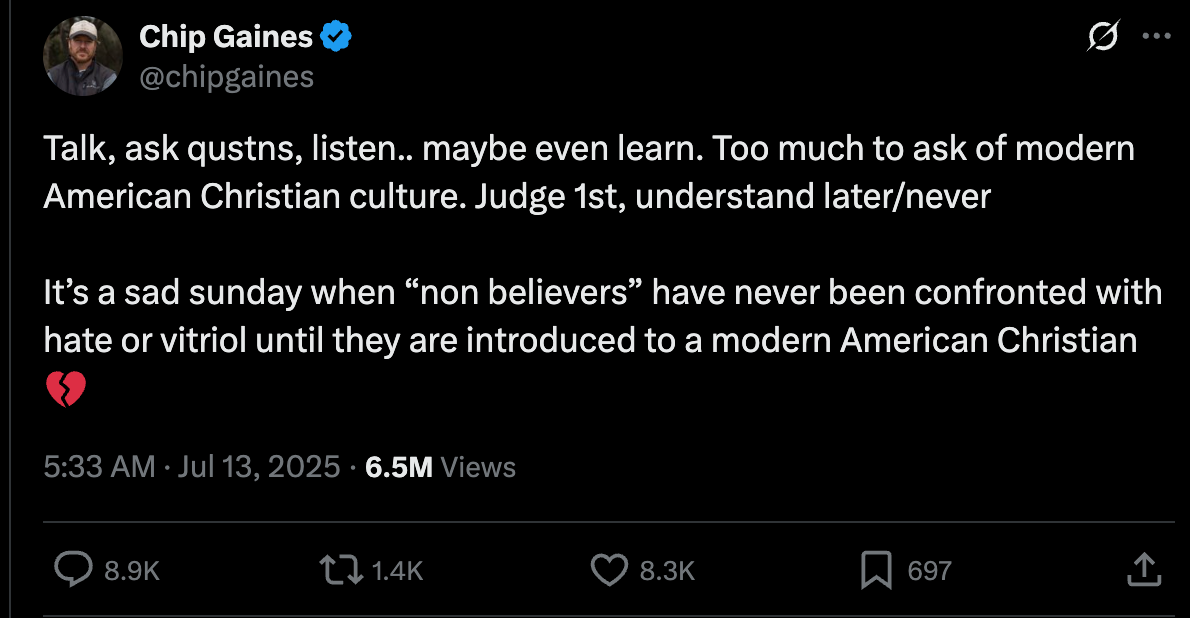
(One’s a meme.) It’s likely been obvious since I’ve been posting here, that aside from some comments I make which are my own and don’t represent the blog, I’m careful about what sort of energy I put into the Playtime universe. I’ve just finished reading Evan Hurst’s Moral High Ground for today, and while it’s wildly, hilariously entertaining as well as pertinent, it’s not the energy I want to put out, so instead, here is a meme from me, with a bit from the piece, which is linked, and if you like really snarky humor, please do go enjoy it! It’s just a little rougher than I want to post here, even though I restacked it on substack. To be totally clear, the meme applies to myself and what Chip Gaines said. And now, we carry on- A.
Heartbreaking: The Worst Person You Know Just Made A Great Point
Snippet from The Moral High Ground:
I don’t know what Chip Gaines’s walk with the Lord on these issues has consisted of, bu his response to the manufactured controversy from God’s most wasted creations confirms that he’s indeed been on some version of such a walk, unlike anybody else in this post.
One line in there tells me that Chip, wherever he is exactly on this issue, his heart is at least aiming in the direction of Jesus:
Talk, ask qustns, listen.. maybe even learn. Too much to ask of modern American Christian culture. Judge 1st, understand later/never It’s a sad sunday when “non believers” have never been confronted with hate or vitriol until they are introduced to a modern American Christian
“Maybe even learn. Too much to ask of modern American Christian culture.” That’s biting, but that’s not the line. “Judge 1st, understand later/never.” He’s not fucking around, but that’s still not the line.
“It’s a sad sunday when ‘non believers’ have never been confronted with hate or vitriol until they are introduced to a modern American Christian.”
There it is. That’s the one that says he gets it. (snip-do go read it all, if you like; link below!)
Chip And Joanna Done Pissed Off The Bigots, Oh Lord by Evan Hurst
Joanna better not give a gay couple any shiplap! Read on Substack
If you or a loved one are in crisis, please call the National Suicide Prevention Lifeline at 1-800-273-TALK (8255), or contact the Crisis Text Line by texting TALK to 74174.
When Arden was 16, they called a suicide crisis hotline “thinking their life was over.”
They were in an abusive relationship, regularly self-harming, and felt that nothing was helping. “It was terrifying,” they told Uncloseted Media.
“If it weren’t for the hotline, I would have killed myself.”
Since that day, Arden, now 24 years old and living in Brooklyn, has used various crisis helplines. When the 988 national suicide prevention hotline launched a “Press 3” option in 2022 for LGBTQ+ youth, they immediately started using the resource.
Arden, who identifies as nonbinary, says the LGBTQ+ hotline workers “respected their identity” and were understanding that they are not a woman. “It was really affirming for a very troubling time in my life.”
Since then, Arden has “Pressed 3” more times than they can remember, seeking help for everything from dealing with the loss of their friend, who died by suicide, to “stupid cliquey gay people stuff.”
“I remember when my friend had killed himself and I was dealing with a lot. I called them and they talked to me for over an hour because I was really upset,” they say. “When I called the hotline, it was a last resort. I was really at my wits’ end.”
Arden — whose last call to the lifeline was two weeks ago — is one of 1.3 million callers and chatters the LGBTQ+ youth hotline has served since it launched, according to federal data. The legislation that greenlit the national program, signed by Trump in 2020 during his first term, explicitly recognized that LGBTQ+ youth are more than “4 times more likely to contemplate suicide than their peers, with 1 in 5 LGBTQ+ youth and more than 1 in 3 transgender youth reporting attempting suicide.”
Kaoly Gutierrez/Uncloseted Media
This new option to “Press 3” allowed queer youth in crisis the ability to directly connect with counselors from a set of specialized LGBTQ+ crisis centers. These counselors are trained in cultural competency and often bring lived experience, providing identity‑affirming, empathetic support for challenges like coming out, discrimination or mental health crises.
Despite the hotline’s success, the Trump administration announced last month that they would be shutting it down on July 17, claiming that the service had run out of congressionally directed funding. The Substance Abuse and Mental Health Services Administration said in an email to Uncloseted Media that “continued funding of the Press 3 option threatened to put the entire 988 Suicide & Crisis Lifeline in danger of massive reductions in service.”
“This is absolutely a mistake,” a suicide prevention call center director told Uncloseted Media. “We are concerned that this will result in increased suicide rates for LGBTQ+ youth.”
Why we need option 3
The director’s concern is supported by a 2022 research brief that found that queer college students with access to LGBTQ-specific services were 44% less likely to attempt suicide than those without it. Research also shows that a hotline specific to LGBTQ+ services increases the likelihood of queer youth calling.
“It’s true for any direct service,” Harmony Rhoades, associate research professor of sociology at Washington University, told Uncloseted Media. “People who are in substance use recovery want to work with people who’ve gone through recovery themselves because they understand what that experience is. Culturally, there is not a lot of understanding of the specific experiences of someone who is LGBTQ+ and without specific training, a crisis counselor isn’t going to be able to know the language that’s going to feel affirming.”
Kaoly Gutierrez/Uncloseted Media
“Connecting with someone who gets it was really helpful. … Because at home, I was so isolated and I didn’t really interact with other queer people,” says Genna Brown, who used the Trevor Project’s chat function at 10 years old.
“I was an extremely self-loathing, suicidal kid who was under the impression that God hated me and I was gonna burn in hell for eternity,” Brown, now 15 and living in High Point, North Carolina, told Uncloseted Media.
“I only used the chat feature because I was scared my parents would hear me. We shared a wall,” she says. “I was spiraling really bad. I’d just realized I was crushing on girls, and I thought I was going to burn in hell for all eternity because that is what we are taught.”
Raised in a Southern Baptist church, Brown never felt safe at home, where her father would regularly spit slurs like “faggots” and “queers.” At church, every sermon was about Sodom and Gomorrah or about how “real love” only existed between a man and a woman.
“I grew up knowing the number one thing not to be was one of the ‘dirty queers,’” she says. “I kept thinking, I can kill myself now and go to hell, or live longer and still go to hell. I used to have panic attacks at 9, 10 years old, just thinking about burning in hell perpetually.”
Brown remembers Caitlin, the chat counselor who helped her, being the first ever to tell her that queer love was valid.
“She told me she’d been with her girlfriend for seven years. I didn’t even believe queer people could be happy. … It broke my brain in the best possible way,” says Brown, who is now out and proud to her parents, who have come around, and to most of her friends on social media.
Genna and her Mom, Melanie. Kaoly Gutierrez/Uncloseted Media
Arden had a similar experience. “The queer line is better than the regular line,” they say. “I feel like it’s less like going through a checklist on the queer line.”
As a survivor of sexual assault, Arden says knowing that the counselors on the other line were trained in LGBTQ-specific trauma made it easier to reach out for help. “My voice doesn’t pass per se but they still respected my identity,” they say.
LGBTQ-specific resources for youth are critical, with 41 percent seriously considering suicide in 2024. In addition, queer youth are disproportionately affected by a litany of mental health issues and trauma, including physical and sexual assault, anxiety, depression, eating disorders, bullying and addiction.
“It’s not like we’re cherry-picking some random group,” says Rhoades. “If we are going to fund [suicide prevention], there is no reason we should do it inefficiently by not effectively targeting the people who need it most. So yes, they need specific suicide prevention services.”
While the hotline focuses on LGBTQ+ youth, they don’t turn away adults who need help. Joshua Dial, 36, says that when he called 988, he was often connected to the LGBTQ+ youth hotline after mentioning that he’s gay.
“I always walked away feeling better after I called,” he says. “There have been times when I spoke to the regular 988 crisis people, and they helped too. But they didn’t understand quite as much.”
Dial, a Lutheran who lives in Stillwater, Oklahoma, says he wasn’t always comfortable being open about his sexual orientation to his religious community and that the only way to meet other gay people was on hook-up and dating apps, which he notes are “not for emotional support.”
“I wouldn’t be talking to my pastor about getting on Grindr. I can’t go to my pastor and tell them what I did last weekend,” he says.
Dial, who was raised to believe that homosexuality is a sin, has experienced depression since the age of 16 and has also struggled with bipolar disorder, addiction and PTSD. “My addiction was getting worse, and the only constant was that the line was always available,” he says. “I didn’t have any other options, but I knew that if I called the hotline, I would get help.”
Dial says the emotional support he received through these phone calls kept him from self-harm and suicide. “There are times when I called that number and was this close to taking a handful of pills, this close to slitting my wrist, this close to buying a gun to shoot myself. And I talked to those people, and they not only understood, but they gave me the empowerment of knowing that someone had my back.”
How cutting option 3 affects the whole system
While the cuts are only meant to affect the hotline’s support for LGBTQ+ youth, crisis center employees say they’ll impact the entire 988 network.
“This being rifted does very much mean less capacity for 988 as a whole,” says the suicide prevention call center director. “Everyone will be affected.”
“When the LGBTQ+ hotline opened up, it really lowered the volume on the mainstream counselors,” a 988 hotline counselor in Washington state told Uncloseted Media. “It seemed really helpful, and I didn’t get a lot of LGBTQ+ chats after that point.”
The counselor at the Washington state center says they are about to lay off 42 counselors from their LGBTQ+ hotline. They say these roles won’t be replaced on the main 988 line due to a hiring freeze. Because of this, counselors expect the number of calls they receive to double, which could dramatically increase wait times. The Washington state center did not respond to a request for comment.
Even without the cuts, wait times are an issue. A 17-year-old caller from Virginia says that even the 10 minutes they had to wait for their call to be answered were painful. “I was worried that nobody would want to talk to me. I was just feeling hopeless,” they say. “There’s this one resource that I’m supposed to be able to have access to 24/7, but it just isn’t as accessible as it should be. For some people, those 10 minutes are crucial.”
In a 2009 study of 82 patients referred to a psychiatric university hospital after a suicide attempt, nearly half reported that the period between their first thought of suicide and their actual attempt had lasted 10 minutes or less, underscoring how shorter wait times can be a matter of life and death.
“If we are not able to catch someone during the time that suicidal thoughts have appeared and intervene as quickly as possible, they could start figuring out how they’re going to kill themselves and make it happen,” says the suicide prevention call center director. “And a lot of folks have access to means that can result in instant death like firearms.”
What can be done?
With the “Press 3” option gone, Rhoades worries that the current spate of anti-LGBTQ+ legislation and hateful rhetoric toward the community will affect how counselors without queer-specific training will provide care.
“We’re living in an unprecedented time where anti-LGBTQ+ hatred is being normalized,” she says. “It absolutely affects how young people are treated. And it filters down to crisis counselors.”
As Congress and the Trump administration prepare to shut down “Press 3” on July 17 in an effort to save money, many believe that it will have the reverse effect.
“They just want these people to die. … That’s the message I got,” says a hotline operator in Washington state, adding that the administration is “not looking at the bigger picture.”
Arden says they wouldn’t be here today without the line’s support. “I’ve been struggling for a long time in my life [with] self-harm and I’ve been clean almost two years now,” they say. “I would definitely not be clean if it weren’t for the hotline and I would probably hurt myself again.”
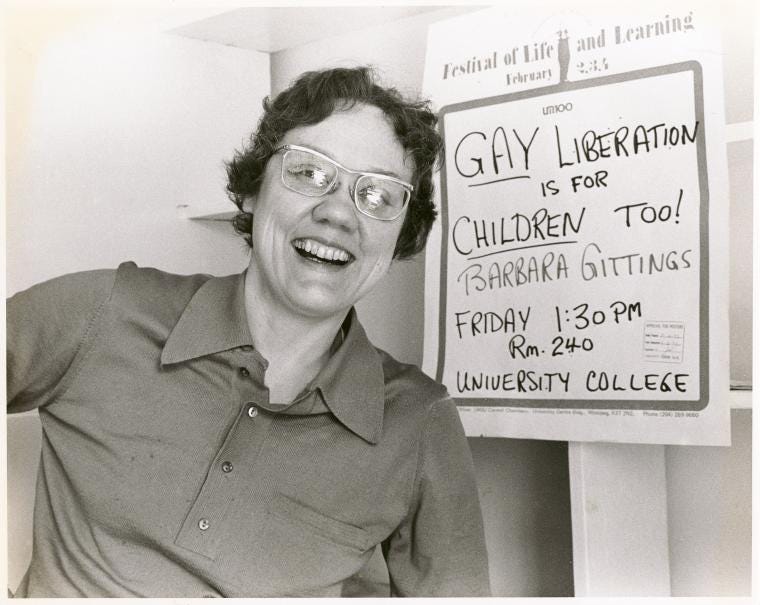
Queer History 491: Barbara Gittings – The Librarian Who Told the Shrinks to Go Fuck Themselves by Wendy🏳️⚧️🏳️🌈🌈 Read on Substack
In the dark fucking ages of American psychiatry, when homosexuality was classified as a mental illness and queer people were subjected to electroshock therapy, chemical castration, and lobotomies in the name of “treatment,” Barbara Gittings stood up and said what needed to be said: “We’re not sick, you assholes.” Born in 1932 in Vienna, Austria, to American parents, Gittings didn’t just challenge the psychiatric establishment’s classification of homosexuality as pathology—she dismantled it piece by piece with the methodical precision of the librarian she was and the righteous fury of a woman who had spent her entire adult life watching her community be tortured by medical professionals who should have been helping them.
Gittings wasn’t content to politely ask for acceptance or quietly hope that attitudes would change. She organized, she protested, she confronted the American Psychiatric Association directly, and she refused to let them continue pathologizing her existence without a fight. When the APA finally removed homosexuality from their Diagnostic and Statistical Manual in 1973, it wasn’t because they suddenly developed enlightened attitudes—it was because activists like Gittings had made their position scientifically and politically untenable. She didn’t just change a classification; she helped save thousands of lives by ending the medical justification for torturing gay people into compliance.
The Making of a Revolutionary: From Confusion to Clarity
Barbara Gittings’s journey to activism began in the most American way possible—in a college library, researching her own fucking existence because nobody else would give her straight answers about what it meant to be attracted to women. Born into a middle-class family that moved frequently due to her father’s work, she grew up feeling different but having no language or framework to understand why.
When she enrolled at Northwestern University in 1950, she was a typical college student in every way except one: she was desperately trying to figure out why she was attracted to women instead of men. In an era when homosexuality was literally unspeakable in polite society, when the very word “lesbian” was considered so shocking that newspapers wouldn’t print it, Gittings did what any good researcher would do—she went to the library.
What she found there was a psychological horror show disguised as medical literature. Book after book described homosexuality as a mental illness, a developmental disorder, a psychological pathology that could and should be cured. The “experts” had a whole arsenal of explanations for why people like her existed—overbearing mothers, absent fathers, childhood trauma, arrested development—and an even more horrifying arsenal of “treatments” designed to fix them.
The psychological impact of reading this shit cannot be overstated. Imagine being a young woman trying to understand herself and discovering that every medical authority in your society considers your very existence to be evidence of mental illness. The internalized shame, self-doubt, and fear that this “research” created in LGBTQIA+ people was devastating and intentional—designed to make them compliant with attempts to “cure” them.
But Gittings had something that many of her peers lacked: a librarian’s skepticism about sources and a growing suspicion that the experts might be full of shit. The more she read, the more she began to question whether the problem was with homosexuality or with the people studying it.
The Mattachine Society: Where Polite Activism Met Reality
In 1958, Gittings discovered the Mattachine Society, one of the earliest gay rights organizations in America, and it changed her life forever. But it also pissed her off. The organization, founded in the early 1950s, was committed to what they called “accommodation”—basically, trying to prove to straight society that gay people were just like everyone else, except for that one little detail about whom they fucked.
The Mattachine approach was understandable given the political climate of the 1950s—this was the era of McCarthyism, when being gay could cost you your job, your security clearance, and your freedom. The organization’s founders believed that the best strategy was to keep their heads down, be respectable, and hope that straight society would eventually accept them as harmless.
Gittings thought this approach was bullshit, and she wasn’t afraid to say so. She joined the New York chapter of Mattachine in 1958 and immediately began pushing for more visible, more confrontational activism. She understood something that the old guard didn’t: that respectability politics wouldn’t work because the problem wasn’t that gay people were too visible—it was that they weren’t visible enough.
Her psychological insight was profound: as long as gay people remained hidden, straight society could continue to believe whatever stereotypes and prejudices they wanted about homosexuality. The only way to change attitudes was to force people to confront the reality of gay existence—to see actual gay people living actual lives rather than the pathological caricatures promoted by the medical establishment.
The Daughters of Bilitis: Creating Community Through Visibility
In 1958, Gittings also became involved with the Daughters of Bilitis, the first lesbian organization in the United States. Founded in San Francisco in 1955, DOB was even more conservative than Mattachine, focused primarily on providing social opportunities for lesbian women in a safe, private environment.
But Gittings wasn’t interested in hiding. She became the editor of The Ladder, DOB’s newsletter, and immediately began transforming it from a timid publication that avoided anything controversial into a bold voice for lesbian rights and visibility. Under her editorship, The Ladder began featuring photographs of lesbians (with their permission), publishing articles that challenged the medical pathologizing of homosexuality, and providing positive representations of lesbian relationships.
This shift toward visibility was revolutionary in ways that are hard to understand today. In the 1960s, most gay publications featured either no photographs of gay people or images that were so heavily shadowed or cropped that the subjects were unrecognizable. The idea that lesbians would allow their faces to be published in a gay magazine was considered so dangerous that many DOB members were horrified by Gittings’s approach.
But Gittings understood the psychological importance of representation. She knew that isolated lesbians across the country were reading The Ladder as their only connection to lesbian community, and she wanted them to see that lesbians were real people with real lives, not the pathological specimens described in medical literature.
The psychological impact of this visibility cannot be overstated. For many readers, The Ladder was the first place they had ever seen positive representations of lesbian existence. It provided both validation and hope—proof that they weren’t alone and that other women like them were not only surviving but thriving.
The Confrontation Strategy: Making Homosexuality Impossible to Ignore
By the early 1960s, Gittings was convinced that the gay rights movement’s strategy of respectability and accommodation was not only ineffective but counterproductive. She began advocating for what she called “confrontation”—direct, visible challenges to discrimination and prejudice that would force society to deal with gay people as real human beings rather than abstract concepts.
In 1965, she organized the first gay rights picket in front of the White House, protesting the federal government’s ban on employing gay people. The images of well-dressed gay men and lesbians carrying signs demanding equal rights were shocking to a society that had never been forced to confront organized homosexual political action.
The psychological courage required for these early demonstrations cannot be overstated. The participants were risking their jobs, their families, their safety, and their freedom by identifying themselves publicly as homosexuals. Many wore sunglasses or otherwise tried to disguise their faces, but they showed up anyway because they understood that visibility was the price of liberation.
Gittings’s strategic insight was brilliant: by presenting gay people as ordinary Americans demanding basic civil rights rather than patients seeking treatment for mental illness, she was reframing the entire discourse around homosexuality. She was moving the conversation from the medical model—where gay people were sick individuals who needed to be cured—to the civil rights model—where gay people were a minority group facing discrimination.
The War Against Psychiatric Oppression
But Gittings’s most important battle was against the psychiatric establishment itself. She understood that as long as homosexuality was classified as a mental illness, gay people would continue to be subjected to “treatments” that were actually torture, and society would continue to view them as fundamentally defective.
The psychiatric profession’s approach to homosexuality in the 1960s was a fucking nightmare. Therapists were using electroshock therapy, aversion therapy (including showing gay men pictures of naked men while administering electric shocks or nausea-inducing drugs), hormone treatments, and even lobotomies to try to “cure” homosexuality. These treatments didn’t work—they couldn’t work, because there was nothing to cure—but they destroyed thousands of lives and caused immeasurable psychological trauma.
Gittings began a systematic campaign to challenge the psychiatric establishment’s classification of homosexuality as mental illness. She studied the research, attended psychiatric conferences, and began confronting psychiatrists directly about their unscientific and harmful approaches to treating gay people.
Her psychological insight was devastating to the psychiatric establishment: she pointed out that their research was fundamentally flawed because it was based entirely on gay people who were seeking treatment or who had been forced into treatment. It’s like studying cancer by only looking at people who are dying from it and then concluding that cancer is always fatal.
The vast majority of gay people, Gittings argued, were living perfectly healthy, productive lives without any need for psychiatric intervention. The only reason they might seek therapy was to deal with the psychological damage caused by living in a society that told them they were sick.
The APA Infiltration: Activism from Within
Gittings’s most brilliant tactical move was her decision to infiltrate the American Psychiatric Association’s own conferences and meetings. Starting in the late 1960s, she began attending APA meetings not as a patient or a researcher, but as an activist demanding that gay voices be heard in discussions about homosexuality.
This was psychological warfare at its finest. Psychiatrists were used to talking about gay people, not to gay people. They were comfortable theorizing about homosexuality in the abstract but deeply uncomfortable being confronted by actual homosexuals who refused to accept their pathological classifications.
In 1972, Gittings organized a panel at the APA’s annual meeting titled “Psychiatry: Friend or Foe to Homosexuals?” The panel included both hostile and sympathetic psychiatrists, but the real bombshell was the appearance of “Dr. H. Anonymous”—a gay psychiatrist who spoke from behind a mask and with a voice modulator to protect his identity while describing the discrimination and fear that gay medical professionals faced within their own profession.
The psychological impact of this presentation on the psychiatric establishment was enormous. For the first time, many psychiatrists were forced to confront the possibility that their colleagues—people they respected and worked with—might be gay themselves. It shattered the comfortable distance between the treaters and the treated.
The Victory: When Science Finally Caught Up with Reality
The combination of Gittings’s activism, changing social attitudes, and pressure from within the psychiatric profession itself finally led to the APA’s decision in 1973 to remove homosexuality from the Diagnostic and Statistical Manual of Mental Disorders. This wasn’t just a bureaucratic change—it was a fundamental shift in how American society understood homosexuality.
The psychological impact of this victory on the LGBTQIA+ community cannot be overstated. Overnight, millions of gay people were no longer officially mentally ill. Parents could no longer force their gay children into psychiatric treatment. Insurance companies could no longer pay for “conversion therapy.” The medical justification for discrimination and violence against gay people had been removed.
But Gittings understood that the victory was fragile. She continued her activism, working to ensure that the APA’s decision stuck and that other medical and psychological organizations followed suit. She also worked to educate mental health professionals about how to provide genuinely helpful therapy to LGBTQIA+ people—therapy that affirmed their identities rather than trying to change them.
The philosophical implications of this victory were profound. For the first time in modern American history, a minority group had successfully challenged the medical establishment’s classification of their identity as pathological. It established an important precedent for other groups facing medical discrimination and provided a model for how activism could challenge supposedly scientific authority.
The Personal Cost of Public Activism
Gittings’s decades of activism came with significant personal costs. She faced job discrimination, social ostracism, and constant stress from being a public target for anti-gay hostility. Her relationship with her partner, Kay Tobin (later Kay Tobin Lahusen), was subjected to scrutiny and criticism from both hostile straight society and conservative elements within the gay community who thought she was too visible, too confrontational, too unwilling to compromise.
The psychological toll of being a full-time activist for an unpopular cause was enormous. Gittings dealt with depression, anxiety, and the constant stress of knowing that her public visibility made her a target for violence and harassment. She also faced criticism from within the gay community—from people who thought her tactics were too aggressive and from younger activists who thought she wasn’t radical enough.
But she persisted because she understood that the stakes were too high for compromise. Every day that homosexuality remained classified as mental illness, gay people were being subjected to harmful “treatments.” Every day that gay people remained invisible, young LGBTQIA+ people were growing up believing they were fundamentally broken.
Her commitment to the cause required sacrificing many of the normal pleasures and securities of life. She couldn’t have a completely private relationship, couldn’t avoid political controversy, couldn’t retreat into the kind of respectability that might have made her life easier but would have betrayed the people counting on her activism.
The Intersection of Library Science and Liberation
Gittings’s background as a librarian profoundly shaped her approach to activism. She understood the power of information, the importance of documentation, and the need to preserve the historical record of LGBTQIA+ resistance. Her work wasn’t just about changing laws or policies—it was about changing the fundamental narratives that society told about gay people.
She applied librarian principles to activism: careful research, systematic organization, preservation of documents, and broad dissemination of information. She understood that lasting social change required changing not just attitudes but the underlying information systems that shaped those attitudes.
Her work with The Ladder exemplified this approach. She transformed it from a social newsletter into a comprehensive archive of lesbian thought, experience, and resistance. She published articles by and about lesbians from all walks of life, creating a literary and intellectual tradition that had previously been almost completely suppressed.
The psychological importance of this work cannot be overstated. For isolated LGBTQIA+ people across the country, publications like The Ladder were lifelines—proof that they weren’t alone, that other people shared their experiences, and that their lives had value and meaning beyond what mainstream society acknowledged.
The Legacy of Confrontational Activism
Gittings’s approach to activism—direct, confrontational, unwilling to compromise on fundamental questions of dignity and rights—provided a model for later LGBTQIA+ activists and for other social justice movements. She demonstrated that marginalized groups didn’t have to wait for permission to demand equality, didn’t have to prove their worthiness for basic human rights, and didn’t have to accept expert opinion that contradicted their lived experience.
Her victory over the psychiatric establishment proved that supposedly scientific authority could be challenged and changed when it was based on prejudice rather than evidence. This lesson has been crucial for other communities facing medical discrimination, from transgender people challenging pathological classifications of gender identity to fat activists challenging medical assumptions about weight and health.
The psychological liberation that her work provided to LGBTQIA+ people continues to reverberate today. Every time someone refuses to accept a mental health professional’s attempt to pathologize their sexual orientation or gender identity, every time an LGBTQIA+ person demands affirmative therapy rather than conversion therapy, every time someone challenges medical authority that contradicts their lived experience, they’re building on the foundation that Gittings laid.
The Continuing Relevance of Information Warfare
In an era when LGBTQIA+ rights are again under attack, when conversion therapy is being repackaged and promoted by religious and political conservatives, when young LGBTQIA+ people are being told that their identities are phases or mental illnesses, Gittings’s example remains urgently relevant.
Her understanding that information is power, that representation matters, and that marginalized communities must control their own narratives provides a roadmap for contemporary activism. She showed that it’s possible to challenge expert authority when that authority is being used to harm rather than help, and that sustained, organized resistance can change even the most entrenched institutional prejudices.
The psychological principles she identified—that visibility reduces stigma, that community reduces isolation, that accurate information reduces fear—remain as relevant today as they were in the 1960s. Her work reminds us that the fight for LGBTQIA+ rights isn’t just about laws and policies—it’s about the fundamental right to exist without being pathologized, criminalized, or erased.
The Sacred Act of Refusing to Be Sick
Perhaps Gittings’s greatest contribution to LGBTQIA+ liberation was her simple, revolutionary insistence that being gay was not a sickness. This wasn’t just a political position—it was a spiritual and psychological stance that transformed how millions of people understood themselves.
By refusing to accept the psychiatric establishment’s pathological classification of homosexuality, she was asserting something profoundly important: that LGBTQIA+ people were the ultimate authorities on their own experience, that scientific-sounding prejudice was still prejudice, and that no one had the right to define another person’s identity as inherently disordered.
This principle—that marginalized people are experts on their own lives—has become central to contemporary social justice movements. From disability rights activists challenging medical models that pathologize difference to racial justice activists challenging psychological theories that blame victims for systemic oppression, Gittings’s example continues to inspire people who refuse to let experts define their experiences for them.
The Revolutionary Power of Saying “Fuck That”
Barbara Gittings’s legacy can be summed up in her fundamental refusal to accept bullshit, even when that bullshit came with medical degrees and official stamps of approval. She looked at a psychiatric establishment that was torturing gay people in the name of treatment and said, essentially, “Fuck that. We’re not sick, you’re the ones with the problem.”
This kind of clarity—the ability to see through official rhetoric to underlying prejudice—is what made her such an effective activist. She wasn’t intimidated by credentials or authority when those credentials were being used to justify harm. She trusted her own experience and the experiences of her community over the theories of people who had never lived what they were trying to explain.
Her victory over the APA wasn’t just a policy change—it was proof that marginalized communities have the power to challenge and change even the most entrenched systems of oppression when they organize, persist, and refuse to accept definitions of themselves created by their oppressors.
The revolution she started continues today, carried forward by every LGBTQIA+ person who refuses to be pathologized, every activist who challenges expert authority that contradicts lived experience, and every individual who understands that the most radical act is sometimes simply insisting on your right to define yourself.
Holy shit, what a legacy: she helped save an entire community from medical torture by having the courage to tell the experts they were wrong. That’s the kind of revolutionary clarity the world needs more of—the willingness to trust your own experience, challenge authority that causes harm, and never stop fighting until justice is achieved.
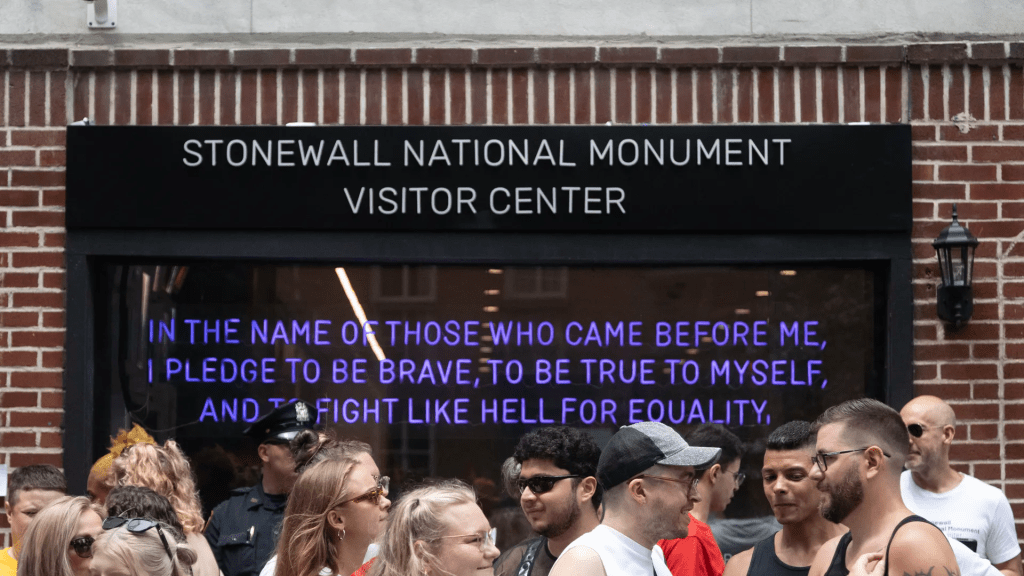
NEW YORK, NEW YORK – JUNE 30: People stand outside Stonewall National Monument Visitor Center during the 2024 NYC Pride March on June 30, 2024 in New York City. (Photo by Noam Galai/Getty Images)Noam Galai/Getty Images
The Stonewall National Monument website seemingly erased most mentions of bisexuality from its website right before Pride month. This comes after the site erased all mentions of trans people from the same “.gov” earlier this year.
The changes appear to have been made on May 27, according to the website itself, which notes the date that each page was last updated. But they largely went unnoticed until independent journalist Erin Reed reported on them on Thursday in a post on her Substack. As of July 11, the homepage on the website, which is run by the National Parks Service (NPS), reads, “Before the 1960s, almost everything about living authentically as a gay or lesbian person was illegal. The Stonewall Uprising on June 28, 1969 is a milestone in the quest for civil rights and provided momentum for a movement.”
But a version of the homepage from May 26, accessed via Wayback Machine, reveals a previous version of that same statement: “Before the 1960s, almost everything about living openly as a lesbian, gay, bisexual (LGB) person was illegal. The Stonewall Uprising on June 28, 1969 is a milestone in the quest for LGB civil rights and provided momentum for a movement.”
Similarly, the “history and culture” page on the website was also updated to remove references to bisexuality on May 27. Where an archived version of the page from May 26 uses the acronym “LGB” numerous times, the most recent version of the page says “gay and lesbian,” and even uses the euphemism “the Stonewall community” in one instance. However, the “virtual fence exhibit” page on the website, which was updated on May 13, still uses the “LGB” acronym, as does the education page. (Though only time will tell how long those mentions will stay.)
As previously reported by Them, these changes come after NPS removed most mentions of trans people from the Stonewall National Monument website in February.
In June, the NPS also told activist Steve Love Menendez, who has been installing hundreds of Pride flags at the monument annually since 2017, that he should only install rainbow flags this year, and that they would not be covering the cost of trans or progress Pride flags, as they had done since 2023. (Visitors brought their own trans flags to place at the monument anyway.)
Though it’s unconfirmed whether the Trump administration is directly responsible for these changes, they are in line with the anti-trans executive orders that the President issued earlier this year, which sought to redefine gender as binary and determined at birth on all federal websites, among other anti-DEI efforts.
The letter “T” was also removed from instances of the acronym “LGBTQ+.”
In a statement emailed to Them, Stacy Lentz, the co-founder and CEO of The Stonewall Inn Gives Back Initiative, took care to note that neither the bar itself nor its affiliated charity are associated with NPS. “That said, we find it deeply troubling that any government agency would erase bisexual people from their public-facing materials,” she said. “Stonewall has always welcomed and celebrated the full spectrum of our community — and that will never change.”
Kurt Kelly, owner of the Stonewall Inn, told Them, “The erasure of bisexual people from federal websites is not just a digital oversight — it’s a deliberate act of invisibility that harms an already marginalized part of our LGBTQ+ community.”
“We must unite as a community to always fight to ensure every identity under our rainbow is seen, heard, and protected. Bi visibility matters. Lives depend on it,” he added. “The fact they continue to do this on the Stonewall National Monument website is even more troubling knowing what Stonewall means to our community around the globe. “
Them has reached out to the National Parks Service for comment.
Or, whenever you read this. There are 4 snippets, all important to maintaining visibility of people through representation in history. Language alert, in case you’re at work.
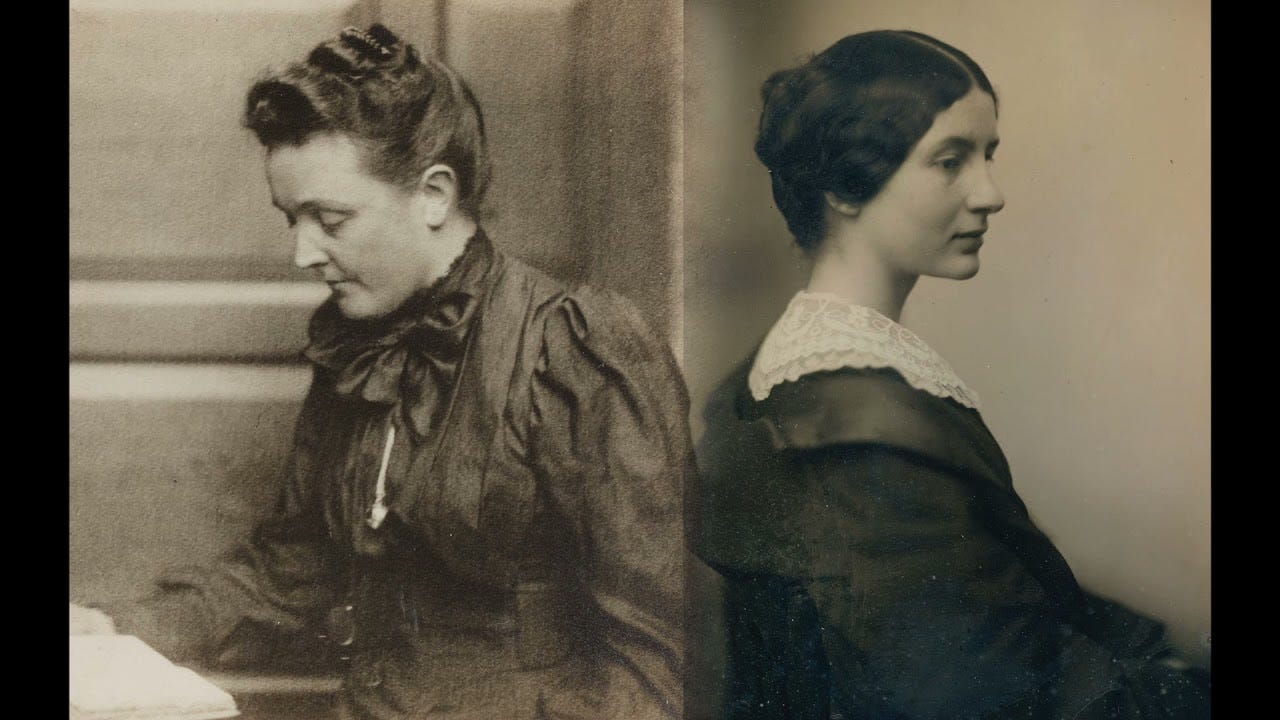
Queer History 847: Sarah Orne Jewett – The Defiant Pen That Refused to Bow by Wendy🏳️⚧️🏳️🌈🌈 Read on Substack
Sarah Orne Jewett wasn’t just a writer—she was a goddamn literary revolutionary who told the world to fuck off while she lived her truth in broad daylight. Born in 1849 in South Berwick, Maine, this fierce woman carved out a life that would make modern queer folk weep with recognition and rage at how little has changed. Her “Boston marriage” with Annie Adams Fields wasn’t just a relationship; it was a middle finger raised high to a society that demanded women choose between intellectual fulfillment and emotional intimacy.
The term “Boston marriage” itself is a sanitized piece of historical bullshit that literary scholars use to avoid saying what everyone with half a brain knows: these women were lovers, partners, and soulmates who built lives together while the world pretended they were just “very close friends.” Jewett and Fields lived this reality for nearly three decades, creating a partnership that was more authentic and enduring than most heterosexual marriages of their era—or ours, for that matter.
The Making of a Literary Badass
Sarah Orne Jewett emerged from a world that wanted to stuff women into corsets and drawing rooms, but she said “fuck that noise” and became one of America’s most celebrated regional writers. Her father, Theodore Herman Jewett, was a country doctor who took his daughter on his rounds through rural Maine, exposing her to the harsh realities of working-class life that would later infuse her writing with a authenticity that urban literary elites couldn’t fake if they tried.
This early exposure to real people living real lives—not the sanitized version of existence that polite society preferred—shaped Jewett’s understanding that truth was more important than propriety. She watched women struggle to survive in a world that offered them shit options: marriage to men who might abuse them, spinsterhood that meant poverty and social isolation, or the kind of life she would eventually choose—one that required courage, defiance, and the willingness to let people think whatever the hell they wanted. (snip-MORE)
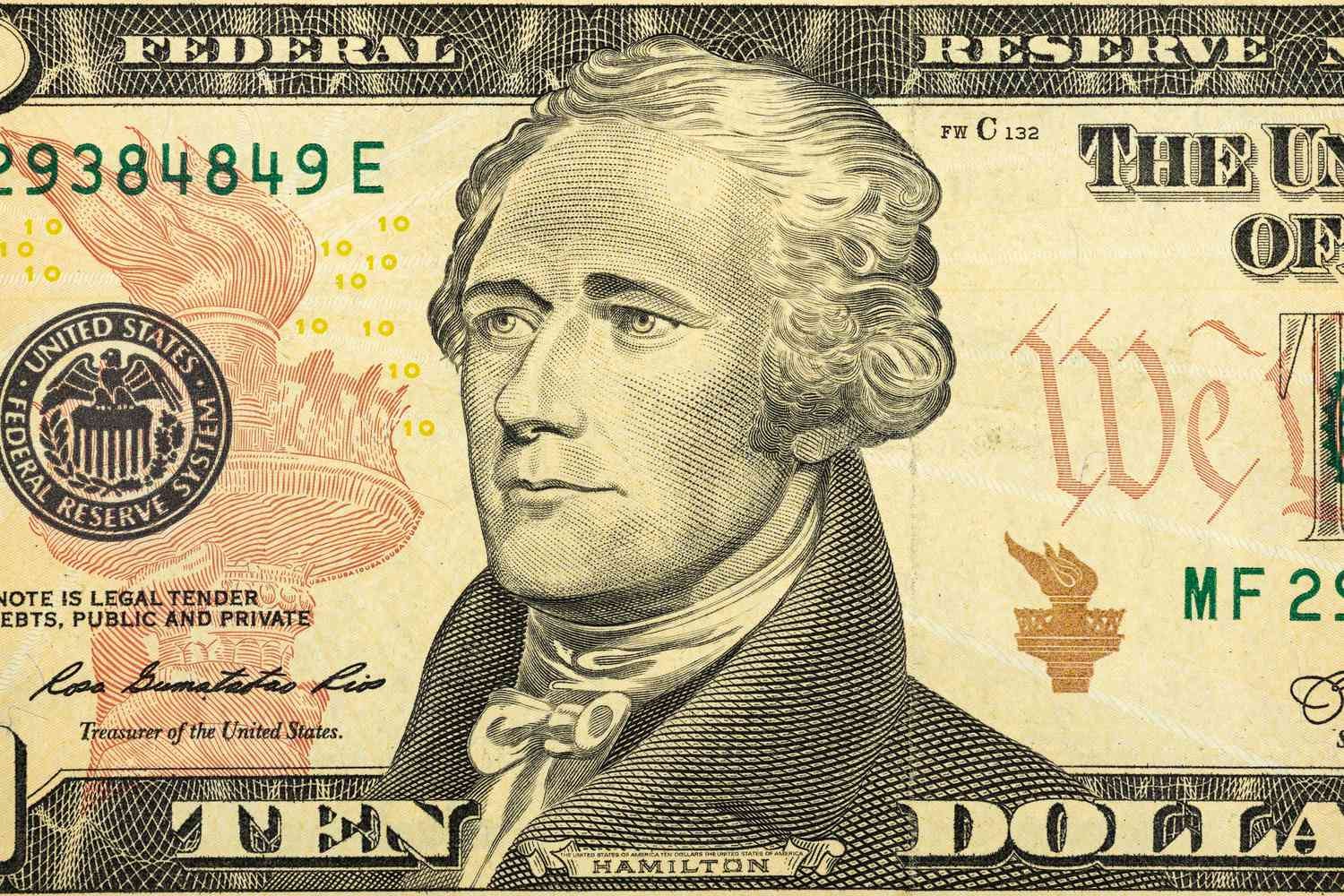
Queer History 594: Alexander Hamilton – The Founding Father Who Loved Hard and Wrote Gay as Fuck Letters by Wendy🏳️⚧️🏳️🌈🌈 Read on Substack
In the pantheon of American mythology, Alexander Hamilton has been sanitized, straightened, and scrubbed clean of anything that might challenge the heteronormative fairy tale we tell ourselves about our founding fathers. But here’s the thing about historical whitewashing—it can’t erase the actual fucking words these men wrote to each other. And Alexander Hamilton, that brilliant, passionate, self-destructive bastard who helped birth a nation, wrote letters to John Laurens that were so goddamn romantic, so emotionally intimate, so clearly beyond the bounds of “normal” male friendship that historians have been performing Olympic-level mental gymnastics for centuries to explain them away.
Born in 1755 on the Caribbean island of Nevis, Hamilton clawed his way from bastard orphan to the right hand of George Washington through sheer intellectual brilliance and an intensity that burned like a fucking supernova. But it was his relationship with fellow revolutionary John Laurens that revealed the depth of his capacity for love, passion, and the kind of emotional vulnerability that straight male mythology pretends doesn’t exist. Their correspondence reads like a love affair conducted through the medium of revolutionary politics, and anyone who thinks these men were just “very good friends” has clearly never read a love letter in their goddamn life.
The Making of a Revolutionary Heart
Alexander Hamilton’s early life was a masterclass in how trauma and abandonment can forge either a monster or a revolutionary—and sometimes both. His father abandoned the family when Alexander was ten. His mother died when he was thirteen, leaving him and his brother orphaned and destitute in a world that had no fucking patience for bastard children with no connections.
The psychological impact of this early abandonment cannot be overstated. Hamilton developed the kind of intense, desperate need for connection that would characterize all his relationships—romantic, political, and personal. He threw himself into every relationship with the fervor of someone who had learned early that love was scarce and could disappear without warning. (snip-MORE)
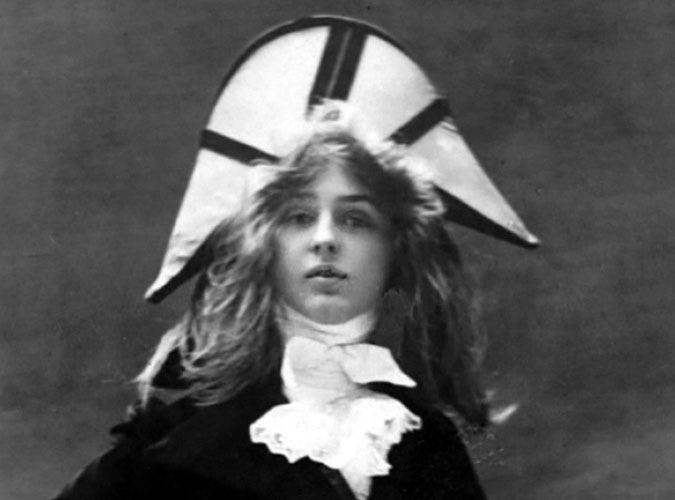
Queer History 673: Renée Vivien – The Sapphic Rebel Who Burned Bright and Fucking Died for Love by Wendy🏳️⚧️🏳️🌈🌈 Read on Substack
In the suffocating, corseted world of turn-of-the-century Europe, where women were expected to be seen and not heard, to marry well and breed often, and to suppress any hint of sexual desire that didn’t serve patriarchal ends, Renée Vivien said “fuck that” with every passionate verse she penned. Born Pauline Mary Tarn in 1877, this British-American poet didn’t just write love poetry to women—she set the goddamn literary world on fire with verses so erotically charged, so unapologetically sapphic, that they made Victorian sensibilities spontaneously combust.
Vivien wasn’t just a poet; she was a fucking revolutionary who wielded language like a sword against the heteronormative assumptions of her time. She lived fast, loved hard, and died young at 32, leaving behind a body of work that would make contemporary lesbian poets weep with envy and recognition. Her life was a middle finger to every social convention that tried to cage women’s desires, a testament to the power of living authentically even when the world wants to crush you for it.
The Making of a Sapphic Goddess
Pauline Mary Tarn was born into privilege in London on June 11, 1877, but privilege couldn’t protect her from the psychological warfare that society wages against women who dare to love other women. Her father died when she was eleven, and her mother, perhaps recognizing something unconventional in her daughter, shipped her off to boarding school in Paris. It was there, in the City of Light, that Pauline would transform herself into Renée Vivien—a name that literally means “reborn” and “living,” because sometimes you have to kill your old self to become who you’re meant to be. (snip-MORE)
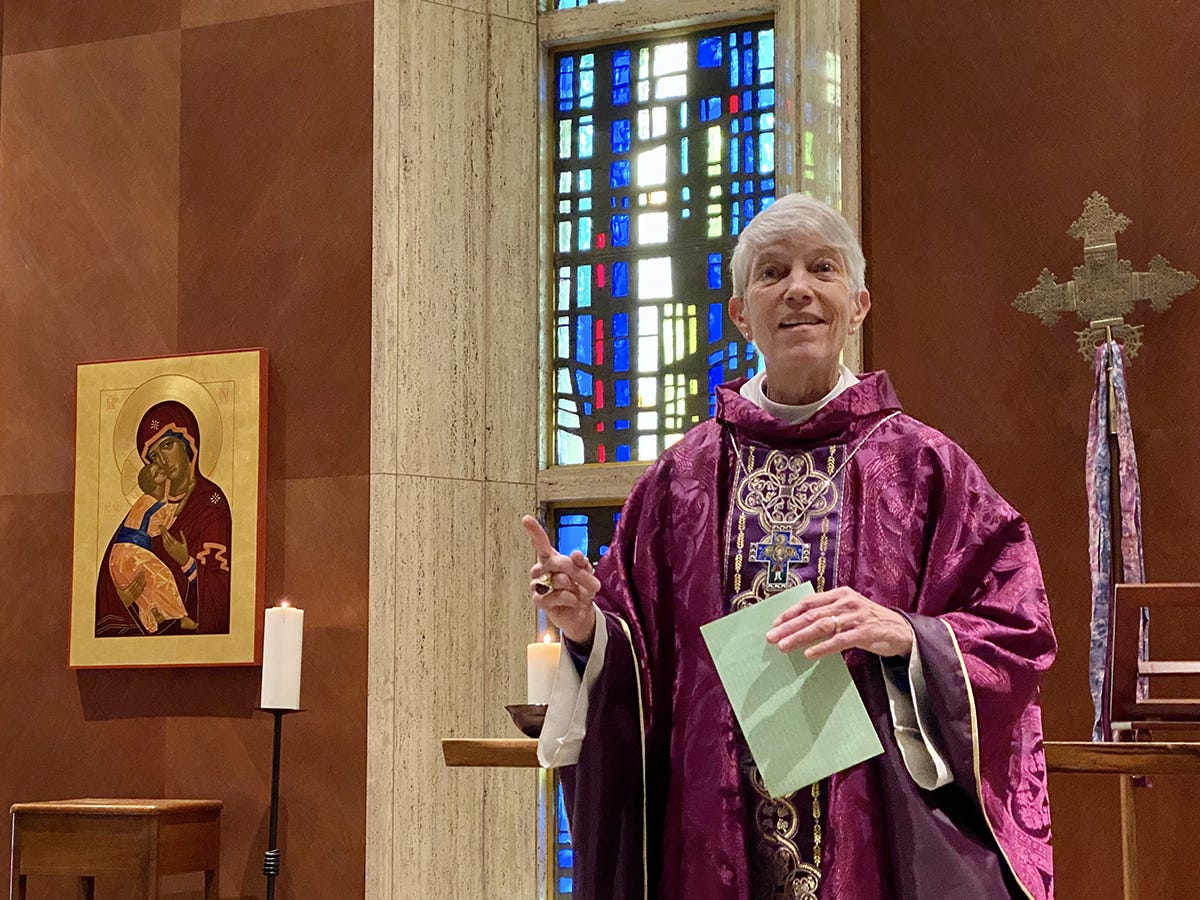
Queer History 847: Mary Glasspool – Holy Shit, She Actually Did It by Wendy🏳️⚧️🏳️🌈🌈 Read on Substack
In the grand fucking theater of religious hypocrisy, where LGBTQIA+ people have been told for millennia that they’re damned, broken, and unwelcome at the altar of God’s love, Mary Glasspool stood up in 2010 and said, “Bullshit.” Not with those exact words, mind you—she’s a bishop, after all—but with something far more powerful: her entire goddamn life.
Born in 1954 in New York, Mary Douglas Glasspool didn’t just break the stained-glass ceiling of the Episcopal Church; she obliterated it with the force of a woman who refused to let anyone else define her relationship with the divine. When she was consecrated as the first openly lesbian bishop in the history of Christianity, she didn’t just make history—she rewrote the fucking rulebook on what it means to serve God while being authentically, unapologetically queer.
The Holy Shit Moment That Changed Everything
Picture this: It’s January 15, 2010, and the religious establishment is losing its collective mind. Conservative bishops are clutching their pearls, traditionalists are having actual conniptions, and somewhere in the background, you can practically hear the sound of centuries-old prejudices cracking like ice on a frozen pond. Mary Glasspool, a 55-year-old woman who had been serving her church and community with distinction for decades, was about to be consecrated as a bishop in the Episcopal Church—and she wasn’t hiding who she was or who she loved.
The consecration ceremony at Christ Cathedral in Los Angeles was a watershed moment that sent shockwaves through the Anglican Communion worldwide. Here was a woman who had spent her life in service to others, who had demonstrated exceptional leadership, theological acumen, and pastoral care, and the fact that she happened to love women was somehow supposed to disqualify her from serving God? Fuck that noise. (snip-MORE)
Members of the church preached that LGBTQ+ people should be shot in the head (Google Street View)
An independent Baptist church in Indiana, Sure Foundation Baptist Church, has doubled down on a sermon which was delivered during a men’s preaching evening that called for LGBTQ+ people to take their own lives.
On Thursday (3 July), preacher Justin Zhong shared a post on the official Facebook page for the Sure Foundation Baptist Church in Indianapolis, stating he will “not apologize for preaching the Word of God”.
“I will not apologize for stating facts. I will not negotiate with terrorists, among whom the LGBTHIV crowd is full of domestic terrorists,” Zhong wrote.
“The Bible is crystal clear that sodomites (homosexuals) deserve the death penalty carried out by a government that actually cares about the law of God. We are not to take the law into our own hands.”
The statement comes after the church was criticised for the violent homophobic language used by church members during Men’s Preaching Night, which was broadcast live on Facebook.
“We should pray for their deaths”
During a sermon entitled ‘Pray the Gay Away’, member Stephen Falco said: “You ought to blow yourself in the back of the head. You’re so disgusting.”
Falco went on to rhetorically ask: “How shall we then properly pray for gay people?”
“We should pray for their deaths, plain and simple,” he answered himself.
Another church member, reported by Newsweek as Wade Rawley, said LGBTQ+ folks should be “beaten and stomped in the mud” before they “should take a gun and blow the back of their heads off”.
The christian church called for LGBTQ+ folks to be killed (Canva)
On the church’s official website, it states under its beliefs section that the congregation “believe that
sodomy (homosexuality) is a sin and an abomination before God which God punishes with the death penalty,” adding: “No sodomite (homosexual) will be allowed to attend or join Sure Foundation Baptist Church. (Leviticus 20:13, Romans 1:19-32, Deut. 23:17-18, 1 Kings 14:24, Jude 1:7)”.
In the Facebook post defending the sermon, Zhong outlined several quotes from Bible scripture with additional commentary explaining why those quotes matter and what they mean.
“The Bible says that the sodomites (homosexuals) are filled with all unrighteousness. That’s why I believe all sodomites are capable of molesting children and committing all kinds of wickedness,” Zhong wrote.
“It is hilarious that the best thing they can say to us is that we are closet homos, because they know being a homo is filthy and vile and disgusting.”
Zhong went on to say that the Sure Foundation Baptist Church is a “Bible-believing church” whereby “whatever the Bible says, we believe it”.
“We don’t care about what the world, culture, or media think. It is funny that these so-called “faith leaders” and some “Christians” do not approve of this message. This simply shows me that they do not care about the Bible.”
He continued: “Sure Foundation Baptist Church protects children from predators. We don’t separate children from their families. We expose perverts and pedophiles. No homos will ever be allowed to attend any church services.
“Sure Foundation Baptist Church is a soulwinning powerhouse. We preach the gospel of Jesus Christ and the eternal security of the believer on a weekly basis to the lost and dying world, while all those “holier than thou” Christians let the world go to hell.”
He added: “If you are sick and tired of the woke culture or churches that do not preach the whole Bible, then you should come and check us out!”
In response to comments made by members of the Sure Foundation Baptist Church, the Concerned Clergy of Indianapolis – a fellowship of “pastors and other concerned citizens who are God-fearing people who believe injustice, racism, ageism, class-ism and sexism to be contrary to the will of God” – said: “The Concerned Clergy of Indianapolis stands firmly against the harmful rhetoric recently preached that condemned all LGBTQ individuals to hell and instructed people to stay away from them.
“Such messages are not only theologically irresponsible but pastorally dangerous.”
In a further statement emailed to Newsweek, the church stated: “The Bible puts the death penalty on the LGBTQ people.
“We as Christians must believe and preach what the Bible says.
“The reason people are so shocked about all this is not many ‘Christians’ and even ‘pastors’ actually believe the Bible.
“To be clear, we only called for the government to execute those people. We are against vigilantes.”
When Jason Collins came out in a 2013 Sports Illustrated cover story, he broke down the long-sealed closet in men’s sports by becoming the first openly gay active player in any major league sport. President Barack Obama called him to offer his support, saying he “couldn’t be prouder,” and Oprah Winfrey called him “a pioneer.”
“By not having to hide who I am, just being able to live an authentic life, there’s something powerful about being the one to out yourself and step forward and speak your truth,” Collins told Uncloseted Media. “There’s no greater feeling.”
Many thought that Collins’ announcement would lead to a slew of men coming out in professional sports; commentators called it a “tipping point” and the moment “when things really changed.” But 12 years later, the silence is deafening. Today, there are zero active openly gay or bisexual players in the NFL, NBA, NHL, MLB, MLS, PGA and ATP.
What makes these numbers particularly shocking is that more than 1 in 5 Gen Z adults in the United States identify as LGBTQ+. “It is a legit claim that the last closet for men is sports, especially in the North American context,” says Charlene Weaving, a professor of gender studies at St. Francis Xavier University. “If you look at sport[s], it’s as if what’s happening in society is amplified. Sports is the worst place for sexism and homophobia. … There’s so much pressure to adhere to a heterosexual persona.”
So what’s keeping the closet door shut?
Coaching can help or hurt
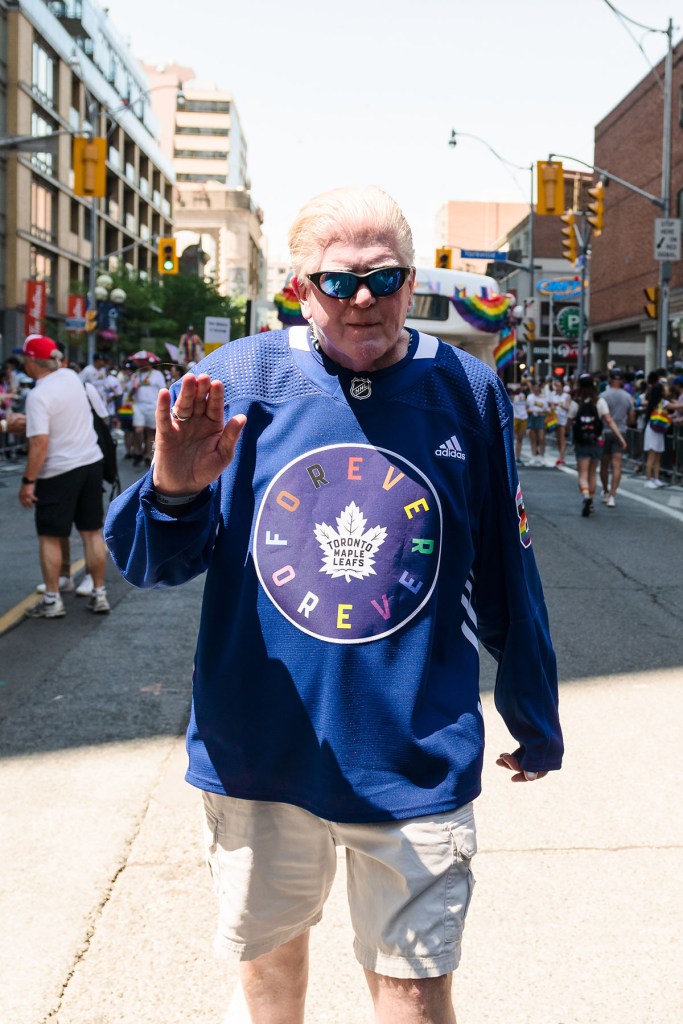
Brian Burke participates in the 2025 Toronto Pride Parade on June 29, 2025 in Toronto, Ontario. (Harold Feng/Getty Images)
One key element in men’s sports that can help or hinder someone from coming out is the mentors who surround them.
“The coaches create the culture, right? What you say, what you allow [in] your locker room, that’s all on us,” says Anthony Nicodemo, a gay high school basketball coach in Westchester, New York.
He says he intentionally uses LGBTQ-inclusive language with his team to signal that there’s nothing wrong with being gay. “If we had a game on Saturday morning and it’s Friday night, I’d say, ‘Hey go home with your boyfriend or girlfriend tonight, stay in.’ My kids would laugh, of course, but then after I said it a couple times, they didn’t even blink,” he says. “If there was a gay kid on my team, that gay kid knows that he’s welcome.”
A 2016 study by the Journal of Sport and Health Science found that gay and bisexual male teen athletes feel particularly unwelcome when playing in formal sporting environments where there are coaches. The study also found that they were more likely to play on an informal team without a coach, which would lessen their chances of becoming a professional athlete.
“The hope is that you’re going to create inclusive environments that are ultimately going to allow those kids to get to the point in society where we feel comfortable with them coming out and eventually playing at the professional level,” says Nicodemo, who worked with Collins at the Pride Center’s LGBTQ+ inclusion basketball clinic in San Antonio this March.
Nicodemo says we need more role models like Brian Burke, the former president of hockey operations for the Pittsburgh Penguins. After Burke’s gay son passed away in a car accident in 2010, he made it his mission to explicitly advocate for gay men competing in pro hockey. “If you’re a member of the LGBTQ+ community, you are welcome with the Pittsburgh Penguins,” he said at a 2021 Pittsburgh Pride Revolution March. “You’re welcome to come to our games, you’re welcome to play for our team, you’re welcome to work on our staff. You are welcome.”
Research suggests all players want to participate in more inclusive environments. A 2021 study evaluated college coaches who identified as LGBTQ+, as allies, or as anti-LGBTQ+. In every context, students preferred coaches who embraced nondiscrimination, choosing the ally and the LGBTQ+ coach over the anti-LGBTQ+ coach.
Despite this, Nicodemo says he may be an anomaly when it comes to LGBTQ-inclusive coaches. In fact, a 2015 study concluded that the United States was the most homophobic country in the world when it comes to sports and 80 percent of the study’s participants reported witnessing or experiencing homophobia in U.S. sports.
Just this week, the Wake Forest men’s baseball coach Tom Walter issued an apology after cameras caught him using an apparent homophobic slur during an NCAA game.
“There’s a lot of homophobia in our society. There is a lot of homophobia still in sports, in particular, male sports,” says Collins. “We still have a lot of work to do as far as creating those environments that those athletes do feel comfortable to step forward [in] and share who they are. It’s about education and letting them know it’s okay to say, ‘I am gay,’ ‘I am bisexual.’ You know, you name it, but it’s okay. It’s okay to speak your truth.”
Are the leagues pulling their weight?
Beyond the coaches are the leagues. While some of them have taken steps to create inclusive environments, others have gone in a different direction by rolling back their LGBTQ-inclusive policies amid attacks on Diversity, Equity and Inclusion (DEI). In March, the MLB removed references to their “Diversity Pipeline Program,” which outlined their diversity-focused hiring initiatives, from their website.
This may have been in response to external pressure. In October 2023, the conservative public interest organization America First Legal, which was founded by Trump’s Deputy Chief of Staff Stephen Miller, filed a formal complaint against the MLB, blasting the league’s diversity pipeline and related initiatives as blatant examples of racial and sexist discrimination against white men.
And in 2023, the NHL banned all LGBTQ+ symbols from uniforms after a handful of players refused to participate in Pride Nights.
While the ban was lifted after pushback from sponsors, players and fans, Nicodemo believes it sent the wrong message to young male players. “I believe wholeheartedly that Pride nights save lives. I think [about] a gay kid that is watching hockey at home and seeing the rainbow flag and how important that is,” he says. “Gay kids need to see people representing pride. When I was coaching before COVID, when we used to actually wear suits when we coached, I wore a rainbow lapel in every game just to show it was okay.”
Some men’s leagues have done more to promote inclusivity. NBA Cares, the social justice arm of the league’s charitable programming, has prioritized including gay youth and men in their initiatives. Nicodemo has worked with NBA Cares, and Collins has contributed as an ambassador.
“This is very important for coaches, for those people in leadership positions, to think about as far as, ‘How do I get the best possible version of my athlete?’ … One way you do that is by creating a team environment where everyone feels safe,” says Collins.
Homophobia and misogyny in the men’s locker room
A player with a ball his hand sits in a locker room. (Jacob Wackerhausen/Getty Images)
Unlike men’s leagues, women’s leagues are more accepting of LGBTQ+ players. Billie Jean King, Brittney Griner and Abby Wambach are some of the many women who have thrived while competing as openly gay athletes.
Homophobia is more common among men. And in the locker room, it isn’t always easy to spot, as it often masks itself in homoeroticism.
“Two male athletes will kiss each other on the lips. And that’s considered to be love and appreciation that you scored that big goal. ‘I’m gonna kiss you and it’s not at all viewed to be perceived to be gay and the grabbing of the bums or the testicle area.’ This idea of showering together, slapping towels, that’s all considered to be like part of men’s sport,” says Weaving. “So it’s this idea where players can be as ‘gay’ as they want and in the context of the field or the locker room, they’re not perceived to be gay. But if they were to act that way outside of that sporting context, then they’re considered to be.”
Collins says this gender divide may be because of sexism and toxic masculinity. This kind of performative homoeroticism is only socially acceptable because it’s understood to be ironic—a joke that relies on not actually being gay. When the behavior slips beyond the bounds of “just joking,” it exposes an undercurrent of homophobia masked as camaraderie.
The financial cost of coming out: something to gain or lose?
Beyond all these pressures lies a monetary component for athletes who are considering opening the closet door while still in uniform. Cyd Zeigler, the cofounder of Outsports, wrote in a 2024 article that he knows “for a fact that agents have told gay athletes to stay in the closet” and that his “best answer has pointed to the agents and managers whose livelihoods depend on athletes maximizing their earning potential in just a few years.”
Weaving agrees. “The general managers and the owners have more traditionally homophobic, sexist thinking. They believe [LGBTQ+ players] will harm viewership,” she says. “It’s still taboo where athletes fear repercussions, predominantly, around sponsorships.”
The fear of losing out on money may be misguided. The first day Jason Collins’ number 98 jersey became available on the NBA website, one year after he came out, it was the top seller of all active NBA players. Carl Nassib’s jersey became a top seller on the NFL’s official online marketplace when he came out in 2021. And Michael Sam, the first gay NFL player, had the second-highest selling jersey in his 2014 rookie class of more than 250 draftees.
The Trump effect on the last closet
Perhaps the biggest factor keeping men in the closet is America’s current political climate, where the Trump administration and corporate America have abandoned DEI and so-called “woke” initiatives.
“The Trump administration asks districts to sign attestations to say that they’re not going to do DEI work in schools. That could be a pride flag hanging in the classroom,” says Nicodemo. “If you’re not creating an inclusive environment for these kids, then these kids are never going to feel comfortable coming out.”
What can be done?
As all these factors create a challenging environment for men to feel safe coming out in sports.
Collins says what could move the needle the most is an increase in role models who will make young athletes feel like they’re competing in a safe environment. “It definitely got to very dark, lonely places because I felt like I was going through this alone,” he says. “When I was younger, I was constantly looking for those role models, of people who have sort of been down this path,” he says.
Weaving agrees and says that a lack of LGBTQ-inclusive coaches can be more than just a deterrent for student-athletes seeking to grow their career.
“For many children, it doesn’t only make things uncomfortable, it can push them out of sports altogether,” she says. “Coaches play a big role. Youth sport is the starting point. If you can create positive environments, inclusive cultures at that level, it continues and helps to shift the pro culture.”
Collins remains hopeful that there will be more visibility of gay men in professional sports but underscores the need for role models to step up.
“If you’re a coach or if you’re an athletic director or even a headmaster out of school, you have to seek out help. You have to bring other organizations who have expertise. And it can be as simple as a 30- to 60-minute conversation, but at least you’re laying the groundwork down for educating those players, educating those athletes,” says Collins, a two-time NBA championship finalist who married his partner last month.







 Scottie's Playtime