In Italy on Wednesday, the Italian Senate pushed forward the West’s most restrictive ban on international surrogacy, making it a crime punishable by prison time for Italians to use surrogates in another country. The move closes the door on same-sex couples’ last, best option to start a family in the country.
The far-right government of Prime Minister Giorgia Meloni had already banned both surrogacy and domestic or international adoption by same-sex couples in Italy.
The legislation amending existing Italian law would classify surrogacy as a universal crime transcending borders and impose a two-year prison sentence and a million-euro fine for defying it. The law also criminalizes work by Italian doctors, nurses and technicians in foreign fertility clinics that provide surrogacy services.
Last year, Meloni’s government barred Italian cities and towns from accepting birth certificates that list same-sex parents, denying their children access to citizenship, public schooling and healthcare. That edict is tied up in court.
The Senate’s passage of the anti-surrogacy law, 84 to 58, follows approval by the government’s lower house last year, virtually assuring its enactment.
Meloni has made “traditional values” a cornerstone of her tenure leading the Brothers of Italy party, despite being a single mother who never married. The far-right populist league was founded on the ruins of Benito Mussolini’s Republican Fascist Party in the aftermath of World War II.
“It’s like a truck hitting us in the face,” Pierre Molena, a gay man pursuing surrogacy abroad with his partner, told The New York Times.
“We are worried about our future and that of our children,” he said.
“It is nature that decides this, not us,” Sen. Susanna Campione, who voted in favor of the law, told the The Washington Post.
“This is a civilized law that safeguards the child but also the woman, since we believe that surrogacy essentially reduces a woman to a reproductive machine.”
While most U.S. states and Canada allow the practice, surrogacy has become a flashpoint in Europe. Germany and France ban domestic surrogacy, while it’s legal in the United Kingdom and Greece under certain circumstances. Pope Francis has labeled the practice “womb renting,” and called for a global ban.
About 250 couples a year in Italy pursue international surrogacy, according to legal experts. Ten percent of those couples are same-sex.
“This law is disgusting,” Salvatore Scarpa told the The Post. The gay dad and his partner had a daughter with a surrogate based in California last year and plan to have a second child with the same woman. They have an implantation planned for this month.
“They cannot stop our family. How dare they judge us,” he said.
Alessandra Maiorino, a member of Italy’s anti-establishment Five Star Movement, said the new law stigmatizes children already born to gay couples as well, telling lawmakers who voted for it: “It looks like you don’t realize these people already exist.”
Subscribe to the LGBTQ Nation newsletter and be the first to know about the latest headlines shaping LGBTQ+ communities worldwide.
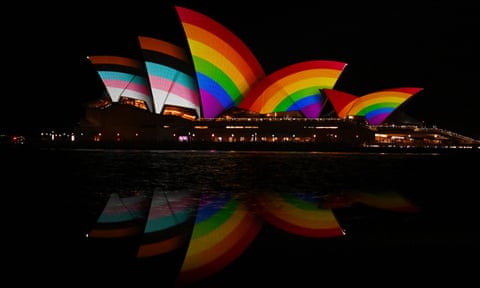
The NSW equality bill brings the state into line with others. Photograph: Dean Lewins/AAP
Rights and protections for LGBTQ+ people in New South Wales have been strengthened with the passing of a bill in the state parliament late on Thursday, after the legislation was watered down to gain Labor support.
The equality bill will give transgender people the ability to have their sex changed on their birth certificates without undergoing invasive surgery, bringing the state in line with others, and non-binary will become a gender option for birth certificates.
There were cheers in the chamber when the bill passed about 8.40pm. The independent MP Alex Greenwich, who introduced the package a year ago, embraced the leader of the government in the upper house, Penny Sharpe after the vote that succeeded without the opposition’s support.
Greenwich said the changes would “improve LGBTIQA+ dignity, safety and equality” and thanked Sharpe for her work getting the legislation through the upper house.
“We’ve got more work to do and we start that work now with new confidence from these significant wins for our community,” he said on Thursday night.
After months of stagnation, Greenwich convinced the premier, Chris Minns, to support the bill by making a number of major concessions, including dropping changes to the anti-discrimination act.
While advocates welcomed the remaining elements of the bill, many also raised concerns that protections for LGBTQ+ teachers and students at private schools had been dumped.
The Equality Australia chief executive, Anna Brown, thanked community members who shared their stories and all those who campaigned to garner support for the changes.
“These new laws will have no impact on the lives of most people in our state, but for a small number of people it will make their lives immeasurably better,” she said after the bill passed.
“It’s a journey that continues as we turn our attention to the state’s anti-discrimination laws and our ongoing efforts to protect vulnerable teachers and students in religious and private schools across the state.”
Greenwich had hoped the Coalition would allow MPs a conscience vote on the bill but earlier in the week the opposition leader, Mark Speakman, confirmed his party would stand against the reforms.
Despite that, the Liberal MP for the North Shore, Felicity Wilson, crossed the floor.
“Just because your party doesn’t have a conscience vote doesn’t mean you don’t have a conscience,” she told ABC Radio Sydney earlier in the week.
Greenwich said on Wednesday that the Coalition was moving further to the right and “using my community as a political football, as a political punching bag”.
“I am concerned that we are seeing a rightwing trend developing within the Coalition,” he said. “No other leader has denied their members a conscience vote on LBGT issues.”
The opposition attorney general, Alister Henskens, held a news conference with religious figures and community members opposed to the reforms earlier in the week.
Among the concerns he raised was about the “impact upon the privacy of women’s spaces”.
“It’s moving too far and it’s moving too quickly,” he said.
But the attorney general, Michael Daley, said the opposition was misrepresenting the package.
The bill also repealed offences for living off the earnings of a sex worker and made threatening to “out” a person’s LGBTIQA+ status an offence.
A broken window on an LGBTQ fashion boutique storefront in Manhattan, New York on June 12, 2023.Photo: Shutterstock
There has been a 112% increase in documented attacks on LGBTQ+ people nationwide, according to a newly unveiled Anti-LGBTQ Extremism Reporting Tracker (ALERT) from the queer media watchdog organization GLAAD. GLAAD hopes to use the tracker to provide comprehensive reporting and analysis detailing anti-LGBTQ+ hate in the U.S. and the specific communities and targets affected by it.
ALERT recorded 524 such incidents between June 2022 and 2023 and 1,109 incidents from June 2023 to 2024. These attacks have included over 450 protests, 330 propaganda drops, 320 acts of vandalism, 200 bomb & mass shooting threats, 130 assaults, and 45 cases of arson that have resulted in at least 161 injuries and 21 deaths, GLAAD’s ALERT Desk reported.
While the cases focus on drag bans and trans protections, they address larger issues of free speech and civil rights.
The attacks have also included over 567 attacks on transgender and gender non-conforming people, 360 incidents targeting educational institutions and libraries, 325 incidents targeting Pride flags and other LGBTQ+ community symbols, 160 protests and violent threats against drag performers, and 140 incidents targeting health care providers of gender-affirming care and their patients.
The tracker, which will be updated quarterly, includes data on criminal and non-criminal acts of hate from sources like news media, partner organizations (like the Human Rights Campaign or Anti-Defamtion League’s Center on Extremism), right-wing forums on social media sites like Gab or chat apps like Telegram as well as incident reports submitted via GLAAD’s website. All documented incidents must occur against groups or individuals within the U.S. and must include harassment, threats, or actual violence specifically targeting LGBTQ+ people.
GLAAD’s ALERT team will verify the validity of each incident to maintain credibility, remove duplicates, and exclude spam and trolling, the organization said.
“The ALERT Desk tells a story not entirely captured by the FBI’s hate crime statistics because many of these incidents, like protests at Pride events, don’t meet the criteria necessary to bring legal charges [and] aren’t included in most official hate crime counts,” GLAAD wrote in its recently released report on ALERT’s findings. “However, we must recognize that the impact of these acts on local LGBTQ communities is felt regardless of whether or not the incident is prosecuted.”
“We must recognize that the impact of these acts on local LGBTQ communities is felt regardless of whether or not the incident is prosecuted.”
GLAAD’s 2024 report on ALERT’s findings
During a press call, Barbara Simon, senior director of news and campaigns at GLAAD, noted that ALERT seeks to contextualize anti-LGBTQ+ incidents to help media and other experts understand larger systems of violence.
“[Recently], there was a bomb threat against a library in Massachusetts,” Simon said, a threat against a Drag Queen Story Hour at the public library in Somerville. “But it’s not just about that library. It’s not just about the inclusive materials and programs they had, about how the bomb squad had to come in and sweep the library, how children and families and patrons had to evacuate the library.”
“Our data shows how that incident is connected to the bigger picture, which is more of a broad-based, systemic attack against LGBTQ people, our visibility, our equality and our allies,” Simon added. “It is one of 365 attacks nationwide against drag artisan events. It’s one of 63 anti-LGBTQ attacks in Massachusetts alone, one of 15 attacks specifically against drag in Massachusetts.”
The quarterly reports will also include stories from those affected by the incidents.
GLAADA bar graph showing anti-LGBTQ+ hate incidents from GLAAD’s ALERT Desk. | GLAAD
For example, Dr. Jack Turban, pediatric psychiatrist and director of the gender psychiatry program at the University of California in San Francisco, said during the press call that bans on gender-affirming care for youth in 26 states have worsened the mental health of his young trans patients even though they live in a state where such health care is protected. Their mental health has been worsened, Turban said, because of an increase in anti-trans rhetoric nationwide whose indirect effects cross state lines.
“Kids are hearing things like being trans is a mental illness, or being trans is bad, or you shouldn’t be allowed to use the bathroom that aligns with your gender identity because trans people are sexual assaulters, or you shouldn’t be allowed to play on sports teams with your friends because you’re going to physically hurt them,” Turban said. “My patients know that none of those things are true, right? They can know that, but if you’re hearing it every single day, all over social media and all over the news and now right in their communities, even it’s impossible to not be impacted by that.”
GLAAD pointed out that media coverage tends to falsely frame medical care for transgender people as a “debate” despite every major medical association supporting the care. This coverage compounds the effect of hateful rhetoric from anti-trans politicians, protestors, and pundits.
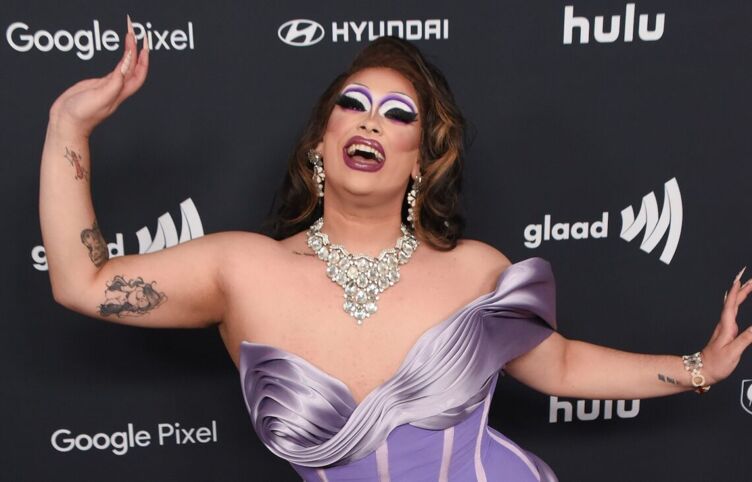
ShutterstockSalina EsTitties attends the 35th Annual GLAAD Awards on March 14, 2024 in Beverly Hills, California. | Shutterstock
The hateful rhetoric affects even LGBTQ+ celebrities and their fans, like Salina EsTitties, a competitor who appeared in Season 15 of RuPaul’s Drag Race. EsTitties told the press call that she’s generally insulated from hatred against gender non-conforming people since she lives in the very gay city of West Hollywood, California. However, she sees its impact whenever she travels to other states or posts social media videos about LGBTQ+ issues.
“There’s comments every single day of people being like, ‘This is not what God created. God created two genders. Oh, they keep adding alphabets. Oh, just shoot it between the eyes and get rid of it,’” EsTitties said. “The online hate is insane and there’s so much of it, and people are so willing to just let it all out, but it’s a clear representation of how people actually feel in America and across, you know, the U.S. here.”
“Not only are our LGBT community dealing with having to be their authentic selves,” she continued. “Being their authentic selves with just who they are outside of their queer identity is a lot to navigate, and it’s not easy, especially when people are telling you, ‘You’re the Devil, you’re a demon,’ or ‘It’s not acceptable to be that.’”
Hate crimes typically increase during presidential election years. Marie Cottrell, executive director for the New Jersey-based LGBTQ+ advocacy center Out Montclair, said she hopes that increased awareness of anti-LGBTQ+ hate incidents will empower communities to build intersectional coalitions between other demographic groups whose members are targeted by similar hate.
“I think that it’s really important that you be the person that the community needs,” Cottrell told the press call. “They need to see you stand for and with them. Find folks who in your community who will stand with you in the face of intolerance, build a community of support within your township — whether that’s forging a relationship with your LGBTQ liaison within the local police department … working with the township, the mayor, the town council, and really having open conversations … having conversations that address really hard questions and topics and that starts the process of understanding and healing in your community.”
“It’s a small step, but it’s a step forward and a step forward in helping others understand the community,” she said.
Subscribe to the LGBTQ Nation newsletter and be the first to know about the latest headlines shaping LGBTQ+ communities worldwide.
The stakes in United States v. Skrmetti are even higher than most Americans realize and could have wide-reaching consequences if the court rules to keep the ban on gender-affirming care in place.
This piece was published in partnership with The 19th, a nonprofit newsroom covering gender, politics, and policy. Sign up for their newsletter here.
A Supreme Court case that will decide whether Tennessee can continue to ban gender-affirming care for transgender youth could imperil the ability of all Americans to make decisions about their health care, experts say. The outcome depends on how far the court is willing to stretch its ruling that overturned federal abortion rights.
In United States v. Skrmetti, the court has agreed to take up the question of whether gender-affirming care bans for trans youth are unconstitutional, in response to the Biden administration petitioning on behalf of trans youth and their families in Tennessee — one of 26 states that has bannedsuch care for minors. The outcome of the case will grant much-needed clarity in a political landscape that has thrown the lives of trans people across the country into turmoil, as hospitals turn patients away, pharmacies deny prescriptions and families travel hundreds of miles to find care.
But with the case set for oral arguments on December 4, the stakes are even higher than most Americans realize, legal and policy experts say. Tennessee has banned gender-affirming care, such as puberty blockers and hormone replacement therapy, for a specific demographic — trans youth — while allowing those same treatments for cisgender youth. If the Supreme Court allows the state to keep its ban in place, that could imperil everyone’s access to health care.
“What the state of Tennessee is arguing is really dangerous for any person who has any sort of medical condition,” says Ezra Young, a civil rights lawyer and constitutional scholar. Tennessee is dictating what medical treatments people should or should not be allowed to have, Young said; that goes well beyond states’ authority to regulate medicine, specifically because giving health care to trans people is not a public health concern.
“The state can make sure that the doctor you see has a medical degree and has an active medical license, for instance,” he says. “What the state can’t do is micromanage the medical decision-making of patients or doctors, and that’s for good reason. Bureaucrats or lawmakers aren’t medical experts.”
Yet in half of U.S. states, Republican lawmakers have banned or restricted medical care that many trans people need to live, over the protests of the American Medical Association, American Psychiatric Association, and other leading medical groups. Federal judges have attempted to block these bans from taking hold, finding them to be likely unconstitutional. Appeals court judges have disagreed and overturned those decisions. Now, the Supreme Court will have the final say.
“If we don’t win here, it’s going to be open season on any health care related to transgender people,” says Shannon Minter, legal director of the National Center for Lesbian Rights. If the Supreme Court holds that banning gender-affirming care is not discriminatory, then trans people would no longer be protected under the Affordable Care Act, he argues. States and private insurers would be able to exclude gender-affirming care from coverage plans.
“It would be devastating. I mean, absolutely catastrophic,” Minter says.
Ultimately, the outcome of this case will have a wider impact beyond gender-affirming care. A Supreme Court ruling endorsing Tennessee’s argument that the state can ban safe medical care — just because it disagrees with who that treatment is being given to — would enable the government to control people’s health decisions and enact other blatantly discriminatory policies, legal experts say.
“I think this case has bigger and broader implications than a lot of people realize, even frankly within the legal community,” says Michael Ulrich, an associate professor of health law, ethics and human rights at Boston University’s School of Public Health and School of Law. If the Supreme Court agrees with Tennessee’s ban, there’s nothing stopping states from banning or restricting other kinds of health care, he said — like what gets covered under Medicaid.
Solicitor General Elizabeth Prelogar’s office, representing the Biden administration, will split argument time before the Supreme Court with Chase Strangio, co-director of the American Civil Liberties Union’s LGBTQ & HIV Project.
The United States v. Skrmetti case is focused on whether Tennessee’s gender-affirming care ban violates the 14th Amendment’s equal protection clause, which prohibits discrimination on the basis of sex. The state insists that its ban has nothing to do with sex and that it does not target trans people. Instead, the law “sets age and use-based limits,” Tennessee’s attorney general argues. Minors can still access hormones and puberty blockers for medical purposes, as long as those treatments are not being used as part of a gender transition or to alleviate gender dysphoria. The state claims such a distinction is not based on sex because “neither boys nor girls can use these drugs for gender transition.”
In Dobbs v. Jackson Women’s Health Organization, the Supreme Court found that there is no constitutional right to an abortion in the United States. This ruling overturned Roe v. Wade, the landmark case that had guaranteed the right to an abortion since 1973. When writing the majority opinion in Dobbs, Supreme Court Justice Samuel Alito briefly addressed a theory that suggests abortion could be covered under the 14th Amendment’s equal protection clause. This idea is not part of Roe, or at issue in Dobbs, but was invoked in a separate “friend of the court” brief. Alito dismissed it, saying that state regulations on abortion do not discriminate based on sex.
“So that’s what the state of Tennessee is now latching on to, this passing reference, this brief statement in Dobbs, and they’re pinning their whole argument on it,” says Minter. “Everything hinges on it.”
In Dobbs, Alito wrote that abortion cannot be protected under the 14th Amendment’s equal protection clause, citing the arcane Geduldig v. Aiello — a case about pregnancy-related disability benefits — and Bray v. Alexandria Women’s Health Clinic, a case dealing with the rights of anti-abortion protesters. These rarely cited cases found that state regulations on abortion and pregnancy, or opposing abortion, are not sex discrimination. Tennessee is now using this framework to argue that “any disparate impact on transgender-identifying persons” caused by its law does not single trans people out for discrimination in ways covered by the 14th Amendment.
If the state’s gender-affirming care ban is found by the Supreme Court to be discriminatory under the 14th Amendment, it is subject to heightened scrutiny — a more rigorous review to determine whether a law is constitutional or not. In that scenario, Tennessee is more likely to lose.
Using abortion case law to support bans on gender-affirming care is especially dangerous, experts say. Tennessee is taking the Supreme Court’s own decision in Dobbs out of context, according to lawyers who have worked in LGBTQ+ rights cases for decades. And, if the justices read Tennessee’s law, it is obvious that banning gender-affirming care for trans people is discriminating based on sex, they say.
The United States v. Skrmetti case is focused on whether Tennessee’s gender-affirming care ban violates the 14th Amendment’s equal protection clause, which prohibits discrimination on the basis of sex. The state insists that its ban has nothing to do with sex and that it does not target trans people. Instead, the law “sets age and use-based limits,” Tennessee’s attorney general argues. Minors can still access hormones and puberty blockers for medical purposes, as long as those treatments are not being used as part of a gender transition or to alleviate gender dysphoria. The state claims such a distinction is not based on sex because “neither boys nor girls can use these drugs for gender transition.”
But, although the question before the court has become more specific, this ruling still has the potential to broadly set back LGBTQ+ rights.
Tennessee argues that the Supreme Court’s 2020 ruling in Bostock v. Clayton County, which found that employment discrimination against LGBTQ+ workers is sex-based discrimination prohibited under the Civil Rights Act, has nothing to do with this case. But going down this road leads to more questions, Ulrich says: Is discriminating due to sexual orientation also not considered sex-based discrimination?
“Then you can see just a proliferation of discriminatory laws that are coming out thereafter,” he says. “That’s a really dangerous proposition for the entire LGBTQ+ community and it’s setting us back significantly.”
Sruti Swaminathan, an ACLU staff attorney who has been counsel in this case from the beginning, said United States v. Skrmetti will test how far the Supreme Court is willing to stretch its Dobbs decision. They are well aware that the outcome of this case could curtail bodily autonomy for everyone. And taking this challenge before a conservative-majority Supreme Court has stoked fears among trans people of worst-case scenarios.
“We’re already at the place where half the country has banned this care. We need to not let the 6th Circuit decision stand idly and be utilized in the way it has,” Swaminathan says.
But Tennessee’s tactics, and the consequences that they could have during a time when laws targeting reproductive and transgender health care are proliferating, still worry them.
“I’m terrified. What we learned from Dobbs is that these attacks won’t stop with abortion,” Swaminathan says. “Banning abortion seems to be one pillar of an effort to write outdated gender norms into the law.”
U.S. v. Skrmetti began as a lawsuit against Tennessee’s ban on gender-affirming care for minors.
Tennessee’s argument in this case illustrates a larger coordinated effort to attack abortion access alongside gender-affirming care, says Logan Casey, director of policy research at the Movement Advancement Project, a nonprofit that tracks LGBTQ+ legislation.
States across the country have attempted to define sex based on reproductive capacity at birth. These efforts open transgender people up to discrimination and ignore the realities of intersex people, as well as cisgender women with conditions like primary ovarian insufficiency. Proponents of gender-affirming care bans inaccurately portray the effects of hormone replacement therapy on trans people’s reproductive ability by conflating the treatment with sterilization.
This Supreme Court case exemplifies a much larger argument that’s been a through line across attacks on transgender care and trans issues across the country, Casey says: What is sex, and who is protected when we think about that?
“Many of these state actors and politicians and extremists are clearly very invested in the concept of sex and defining sex in a very restricted and extraordinarily old-fashioned way that focuses only on people’s reproductive capacity, and then they use that argument in whatever context they can to advance the policies that would match that worldview,” he says.
I’m not on Facebook; never have been. I do order from Penzey’s, and because of that, I get their emails, which are awesome. Here is the body of today’s email with links, and another shout-out to any Facebook users who are called to help out with this. And, I think anyone in a position to share in some fashion is welcome to do so!
(Here should be a photo of a veteran who may be the subject of this. I’m sorry it won’t post.)
This really isn’t a standard email, it’s a Facebook post sent by email. But with one week to go and everything seemingly all tied up, sharing a glimpse of our past that’s at risk of becoming our future seems right. Please read and share.Thanks.
October 25, 2024 George Mullins voted. June 6, 1944 George came ashore in Normandy. He voted by mail. He insisted that the ballot needed to be taken to the post office and handed directly to the postal worker. “Can’t take any chances in these times.”
It was LST #311 that brought him 100 yards from the shore of Utah Beach on D-Day. The water was cold and up to his neck. He kept an eye on the shorter soldiers to make sure their heavy packs would not drag them under. Together they all made it ashore. So many of those George went ashore with never made it home.
George Mullins lived through the unfathomable violence it took to face down fascism. He made it home but left so much behind. Forever since he has had to carry a hurt and a loss that thankfully most of us have never known.
His experience has left him with thoughts on this election and about those who would once again intentionally unleash the unspeakable horrors he had hoped were forever in the past.
Two weeks ago George posted his thoughts on his Facebook page for the book he wrote of his WWII experience, Foxhole.
As is the nature of Facebook, and social media, and the times we live in, one of the most valuable pieces that will ever be written about this election now sits there with just 72 likes.
George’s daughter and longtime Penzeys customer, Sheila, wrote hinting that maybe I could bring more attention to his words. Yes. A very big Yes. Coincidentally enough (if there are coincidences) his were exactly the words I was then searching for.
Not eight hours before Sheila’s email arrived I had just finished rewatching Spielberg’s Saving Private Ryan. I’m convinced it is in the unspeakable sacrifice of so many Americans eighty years ago where the key to understanding just how much is at stake on 11.5.24 lives or dies.
But where to find the words? I looked to Saving Private Ryan because Spielberg has good words, and there are good words there but his, like mine, are of an outsider looking in. Where could I find the words I needed? And as fate would have it they arrived all tied neatly with a bow and accompanied by a breathtaking photo.
And I won’t give away all George Mullins’s words, please read all of them for yourself. But in short, today he is deeply troubled by the direction he sees our country heading.
“I didn’t fight in World War II, standing on the front lines of history, so that we could one day find our country on the brink of dictatorship or authoritarian rule. The freedoms I defended, and believe in, the sacrifices my comrades and I made, were for the preservation of democracy—of freedom, fairness, and the right to live without fear of tyranny.”
There’s so much we take for granted, but all that George and those he fought alongside achieved came at a terrible cost. And as much as we know words like fascism, and Nazi, and even freedom, how much do we really understand this is about the difference between living free and having to live in fear of your government?
By 1944 everyone understood, but today it’s something we’ve forgotten, something we take for granted. George Mullins went ashore shoulder to shoulder with men like him willing to give their lives so that others may live free. Let that sink in.
And now the leaders of the Republican party are not only throwing that sacrifice away, they are forcing our children to relive it. Why? Because they don’t have the strength to stand up to Donald Trump’s never-ending need for ever greater power. We must do better. We must share George Mullins’s warning. (snip; an offer I’m not sure is appropriate to include here, but I can put it in comments if someone’s interested. I’m trying to stay on topic, without appearing to advertise, though advertisement is not the author’s intent. -A)
And two outstanding Steven Spielberg words. I’ve seen Saving Private Ryan several times since its release. Each time I’ve seen something new in it. This time I was struck by Tom Hanks’s Captain Miller’s words to Matt Damon’s Ryan. “Earn this.”
This time against the backdrop of this election it hit home more than before that these two words weren’t between two people but between all those who gave so much and all of us who have lived our lives with the gifts their terrible sacrifice brought. Earn this. We truly do owe them that much.
And I did ask George’s daughter Sheila about what was going through his mind as he cast his vote in this election. She asked him over dinner. He told her this: “When I voted I felt happy to place my signature on a ballot against the Dictator. I was hoping more people wake up and check the right box.”
That one of those white men struggling ashore on the 6th of June so many years ago should live to vote for America’s first Black woman President is a testament to this country and to all who serve.
And I admit that at first I felt uncomfortable with George’s word Dictator. It felt over the top. But then it set in that he is the one who knows, not me.
He is the one with the knowledge, and the experience, and the words we all must learn if we are to go through what his generation went through and re-emerge once again as America on the other side.
So much to earn. So much at stake. Please help us help George Mullins’s message reach everyone while it can still make a difference.
And please visit George’s Facebook page and share a like, a hug, or even a heart. He has already earned it and so much more. What a life.
In the last few decades, we have been witness to systematic failures in American life. Time and time again the guardrails we believed existed turned out to be illusions, or at best, guardrails without any teeth. The courts, the financial institutions, the legislators, and especially the media – entrusted as the watchdogs of democracy – have absolutely failed.
There is only one group that, more often than not, has been up to the task: The people. The people keep showing up and at the very least, voting to put people in charge to clean up the messes. Of course, once those people are in office they too often respond with timidity and reluctance and don’t go as far as necessary to exercise the mandate they have been given, but the people did their jobs.
In every presidential election since 1988, with the exception of 2004, a plurality or majority of the public voted for the Democratic candidate. That is a data point you rarely see repeated and I am quite certain that if it was Republicans with such a popular vote winning streak both the party and the media would never shut up about it. That is a triumph of decency. It would be easy for voters to be snowed under by the right’s avalanche of lies and hate, ably amplified by their buck-chasing friends in the press, but the voters keep seeing through it.
To be certain, there are structural barriers. Neither Al Gore nor Hillary Clinton became president even though the will of the American people said they should have been. And the presidencies of Bill Clinton, Obama, and Biden have had too many missed opportunities to push the ball forward, even though all three of these men had mandates to go quite far.
But what matters is that enough voters saw through the haze of absolute bullshit to send a message to do the right thing.
Here we are again. The Republican Party has always glowed bright with a hateful intensity, but Trump has allowed them to move that hate from Mitt Romney’s “quiet rooms” to spotlights like Madison Square Garden. The press and the oligarchs that own it at institutions like The New York Times, the Washington Post, the L.A. Times, CNN and others, are quite happy to make billions of dollars from GOP fueled hate, as long as they can make a buck. They just don’t care about the consequences.
Voters still care. It may be naïve or cringe, or corny, but they believe. Voters have shown us that a majority of them are opposed to hate, opposed to racism, opposed to misogyny, opposed to treating people as second class based on their orientation. And a majority of them are pro-decency.
Yes, most of the pro-decency vote has a liberal ideology but it is more than that. There are people who just don’t like being crude bigots that spend all of their time shoving the faces of the vulnerable into the dirt. There are more of us than there are of them, and they have to effectively cheat or rig the rules to overcome our numbers.
Decency is on the march, but we are at a breaking point, again. Election day or week is not a “fever break” moment. No matter the outcome, but especially if decency is victorious again, we cannot go to sleep. The bad boss at the end of the game has not been defeated. 2004 showed us that. 2008 showed us that. 2012. 2016. 2020. The forces of darkness and depravity do not respect the will of the people and if you retreat, expecting that everyone will finally accept the supremacy of decency – the other side will see that as an opening.
The decent people need to stand up for what they believe in and then keep standing, keep pushing back, until the other people are broken – and then decency most continue to advance and remain forever vigilant.
I voted for decency, and I always will. I know I’m not alone.
If you like this newsletter, please consider becoming a paying subscriber by clicking here to join. I won’t be putting any of my regular columns behind a paywall and they will always be free. Thanks to everyone who has subscribed so far!
(Honestly, the entire Don-Madison Square Garden “event” idea sickened me, but I didn’t think his campaign could afford to do it. Anyway, it happened, and the fact that there was any crowd at all nauseates me. One of my great grandfathers immigrated to the US before the 1st World War, earning his citizenship in part by fighting for the US and allies in that war. The other side of the family immigrated between the wars, as they could see what may have been coming, and did. I’m fairly certain all their spirits, including each and every US veteran in my family living or dead, are also nauseated and maybe angry about this “event.” I’m happy there are people like Heather Cox Richardson, who put sensible light onto historic events. So everybody do all you can to Get Out The Vote! The facts are all on our side. -A)
I stand corrected. I thought this year’s October surprise was the reality that Trump’s mental state had slipped so badly he could not campaign in any coherent way.
It turns out that the 2024 October surprise was the Trump campaign’s fascist rally at Madison Square Garden, a rally so extreme that Republicans running for office have been denouncing it all over social media tonight.
There was never any question that this rally was going to be anything but an attempt to inflame Trump’s base. The plan for a rally at Madison Square Garden itself deliberately evoked its predecessor: a Nazi rally at the old Madison Square Garden on February 20, 1939. About 18,000 people showed up for that “true Americanism” event, held on a stage that featured a huge portrait of George Washington in his Continental Army uniform flanked by swastikas.
Like that earlier event, Trump’s rally was supposed to demonstrate power and inspire his base to violence.
Apparently in anticipation of the rally, Trump on Friday night replaced his signature blue suit and red tie with the black and gold of the neofascist Proud Boys. That extremist group was central to the January 6, 2021, attack on the U.S. Capitol and has been rebuilding to support Trump again in 2024.
On Saturday the Trump campaign released a list of 29 people set to be on the stage at the rally. Notably, the list was all MAGA Republicans, including vice presidential nominee Ohio senator J.D. Vance, House speaker Mike Johnson (LA), Representative Elise Stefanik (NY), Representative Byron Donalds (FL), Trump backer Elon Musk, Trump ally Rudy Giuliani, Robert F. Kennedy Jr., right-wing host Tucker Carlson, Trump sons Don Jr. and Eric, and Eric’s wife, Republican National Committee co-chair Lara Trump.
Libbey Dean of NewsNation noted that none of the seven Republicans running in New York’s competitive House races were on the list. When asked why not, according to Dean, Trump senior advisor Jason Miller said: “The demand, the request for people to speak, is quite extensive.” Asked if the campaign had turned down anyone who asked to speak, Miller said no.
Meanwhile, the decision of the owners of the Los Angeles Times and the Washington Post not to endorse Democratic presidential candidate Vice President Kamala Harris seems to have sparked a backlash. As Will Bunch of the Philadelphia Inquirer noted, “in a strange way the papers did perform a public service: showing American voters what life under a dictator would feel like.”
Early on October 26, the Washington Post itself went after Trump backer billionaire Elon Musk with a major story highlighting the information that Musk, an immigrant from South Africa, had worked illegally when he started his career in the U.S. Musk “did not have the legal right to work” in the U.S. when he started his first successful company. As part of the Trump campaign, Musk has emphasized his opposition to undocumented immigrants.
The New York Times has tended to downplay Trump’s outrageous statements, but on Saturday it ran a round-up of Trump’s threats in the center of the front page, above the fold. It noted that Trump has vowed to expand presidential power, prosecute his political opponents, and crack down on immigration with mass deportations and detention camps. It went on to list his determination to undermine the North Atlantic Treaty Organization (NATO), use the U.S. military against Mexican drug cartels “in potential violation of international law,” and use federal troops against U.S. citizens. It added that he plans to “upend trade” with sweeping new tariffs that will raise consumer prices, and to rein in regulatory agencies.
“To help achieve these and other goals,” the paper concluded, “his advisers are vetting lawyers seen as more likely to embrace aggressive legal theories about the scope of his power.”
On Sunday the front page of the New York Times opinion section read, in giant capital letters: “DONALD TRUMP/ SAYS HE WILL PROSECUTE HIS ENEMIES/ ORDER MASS DEPORTATIONS/ USE SOLDIERS AGAINST CITIZENS/ ABANDON ALLIES/ PLAY POLITICS WITH DISASTERS/ BELIEVE HIM.” And then, inside the section, the paper provided the receipts: Trump’s own words outlining his fascist plans. “BELIEVE HIM,” the paper said.
On CNN’s State of the Union this morning, host Jake Tapper refused to permit Trump’s running mate, Ohio senator J.D. Vance, to gaslight viewers. Vance angrily denied that Trump has repeatedly called for using the U.S. military against Americans, but Tapper came with receipts that proved the very things Vance denied.
Trump’s rally at Madison Square Garden began in the early afternoon. The hateful performances of the early participants set the tone for the rally. Early on, comedian Tony Hinchcliffe, who goes by Kill Tony, delivered a steamingly racist set. He said, for example: “There’s literally a floating island of garbage in the middle of the ocean right now. I think it’s called Puerto Rico.” He went on: “And these Latinos, they love making babies too. Just know that. They do. They do. There’s no pulling out. They don’t do that. They come inside. Just like they did to our country.” Hinchcliffe also talked about Black people carving watermelons instead of pumpkins.
The speakers who followed Hinchcliffe called Vice President Kamala Harris “the Antichrist” and “the devil.” They called former secretary of state Hillary Clinton “a sick son of a b*tch,” and they railed against “f*cking illegals.” They insulted Latinos generally, Black Americans, Palestinians and Jews. Trump advisor Stephen Miller’s claim that “America is for Americans and Americans only” directly echoed the statement of Adolf Hitler that “Germany is for Germans and Germans only.”
Trump took the stage about two hours late, prompting people to stream toward the exits before he finished speaking. He hit his usual highlights, notably undermining Vance’s argument from earlier in the day by saying that, indeed, he believes fellow Americans are “the enemy within.”
But Trump perhaps gave away the game with his inflammatory language and with an aside, seemingly aimed at House speaker Johnson. “I think with our little secret we are gonna do really well with the House, right? Our little secret is having a big impact, he and I have a secret, we will tell you what it is when the race is over,” Trump said.
It seems possible—probable, even—that Trump was alluding to putting in play the plan his people tried in 2020. That plan was to create enough chaos over the certification of electoral votes in the states to throw the election into the House of Representatives. There, each state delegation gets a single vote, so if the Republicans have control of more states than the Democrats, Trump could pull out a victory even if he had dramatically lost the popular vote.
Since he has made virtually no effort to win votes in 2024, this seems his likely plan.
But to do that, he needs at least a plausibly close election, or at least to convince his supporters that the election has been stolen from him. Tonight’s rally badly hurt that plan.
As Hinchcliffe was talking about Puerto Rico as a floating island of garbage, Democratic presidential nominee Vice President Kamala Harris was at a Puerto Rican restaurant in Philadelphia talking about her plan to spread her opportunity economy to Puerto Rico. She has called for strengthening Puerto Rico’s energy grid and making it easier to get permits to build there.
After the “floating island of garbage” comment, Puerto Rican superstar musician Bad Bunny, who has more than 45 million followers on Instagram, posted Harris’s plan for Puerto Rico, and his spokesperson said he is endorsing Harris.
Puerto Rican singer and actor Ricky Martin shared a clip from Hinchcliffe’s set with his 16 million followers. His caption read: “This is what they think of us.” Singer and actress Jennifer Lopez, who has 250 million Instagram followers, posted Harris’s plan. Later, singer-songwriter and actress Ariana Grande posted that she had voted for Harris. Grande has 376 million followers on Instagram. Singer Luis Fonsi, who has 16 million followers, also called out the “constant hate.”
The headlines were brutal. “MAGA speakers unleash ugly rhetoric at Trump’s MSG rally,” read Axios. Politico wrote: “Trump’s New York homecoming sparks backlash over racist and vulgar remarks.” “Racist Remarks and Insults Mark Trump’s Madison Square Garden Rally,” the New York Times announced. “Speakers at Trump rally make racist comments, hurl insults,” read CNN.
But the biggest sign of the damage the rally did was the frantic backpedaling from Republicans in tight elections, who distanced themselves as fast as they could from the insults against Puerto Ricans, especially. The Trump campaign itself tried to distance itself from the “floating island of garbage” quotation, only to be met with comments pointing out that Hinchcliffe’s set had been vetted and uploaded to the teleprompters.
As the clips spread like wildfire, political writer Charlotte Clymer pointed out that almost 6 million Puerto Ricans live in the states—about a million in Florida, half a million in Pennsylvania, 100,000 in Georgia, 100,000 in Michigan, 100,000 in North Carolina, 45,000 in Arizona, and 40,000 in Nevada—and that over half of them voted in 2020.
In 1939, as about 18,000 American Nazis rallied inside Madison Square Garden, newspapers reported that a crowd of about 100,000 anti-Nazis gathered outside to protest. It took 1,700 police officers, the largest number of officers ever before detailed for a single event, to hold them back from storming the venue.
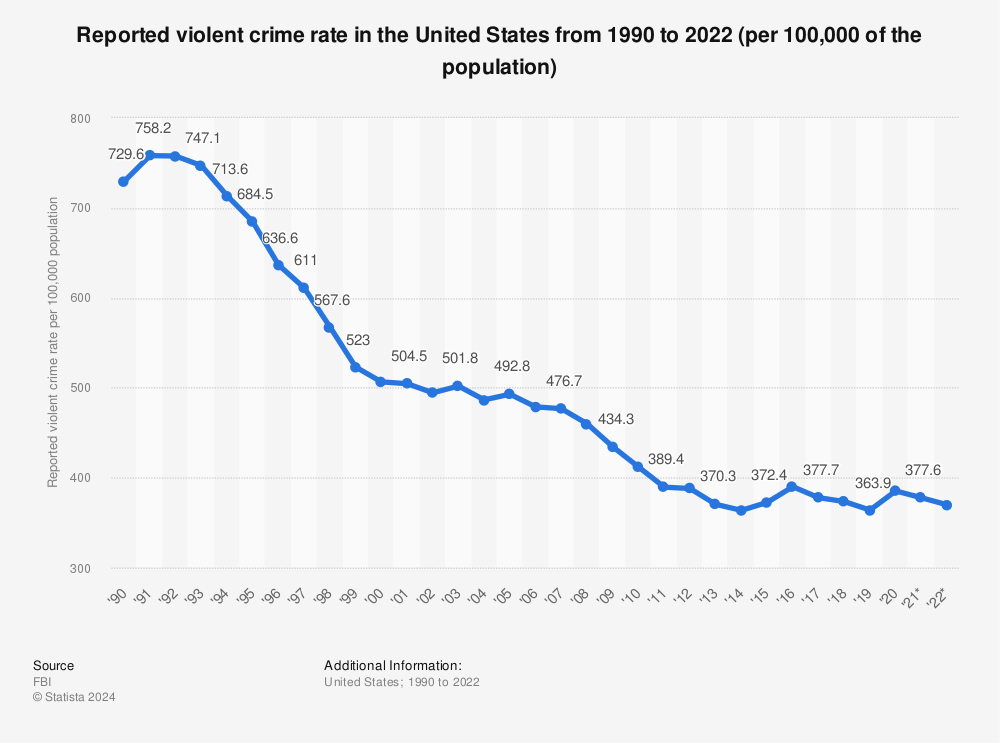
These took several days to wade through. I admit I do it not only for the news but for the memes in the comment sections which are pure gold. But just reading the headlines and blurbs can give you a great idea of how really dangerous and disastrous the right / republicans are. Fox is a totally unhinged media arm of cult tRump. The rest of the right wing media is desperate for their cult ideas of ruling people and having control of their private lives, sexual expressions, and how people simply exist. Please look these over and read the ones that interest you. This shit is serious and real and we have few days left before a direction is chosen for this country. Also notice that why the right claims that crime is up and people are terrified to step outside their homes, crime is way down. Hugs
Harris appeared here in June 2021 when he attempted to bring a loaded and concealed handgun onto the House floor. He then denounced calls for his resignation as “cancel culture.”
In October 2021 he had to be physically separated from Democratic Rep. Collin Allred after an argument over the certification of the 2020 election, which Harris had voted against.
Residents pleaded with the council, arguing that such proposals were divisive, stoked fear among the community, and would further stretch city services. “It is not only unnecessary but also a complete waste of the city’s time, money and resources,” Alexander Ermels, president of PFLAG’s Odessa chapter and a transgender man, said. Mayor Javier Joven [photo], who is up for reelection in November, has said his mission has been to help the city “repent.”
Penalties include a $500 fine and trespassing charges. Odessa, located in west Texas, has a population of 120,000.
For the past 13 months, when a 17-year-old applied for a driver’s license or state ID and marked that they would like to register, the DMV’s system did not transmit their voter registration application to the SEC. As a result, approximately 17,000 young voters were not registered to vote despite indicating a desire to do so. These voters were also not notified that their registrations had been rejected.

 Italian Prime Minister Giorgia Meloni
 A broken window on an LGBTQ fashion boutique storefront in Manhattan, New York on June 12, 2023.Photo: Shutterstock



 Scottie's Playtime