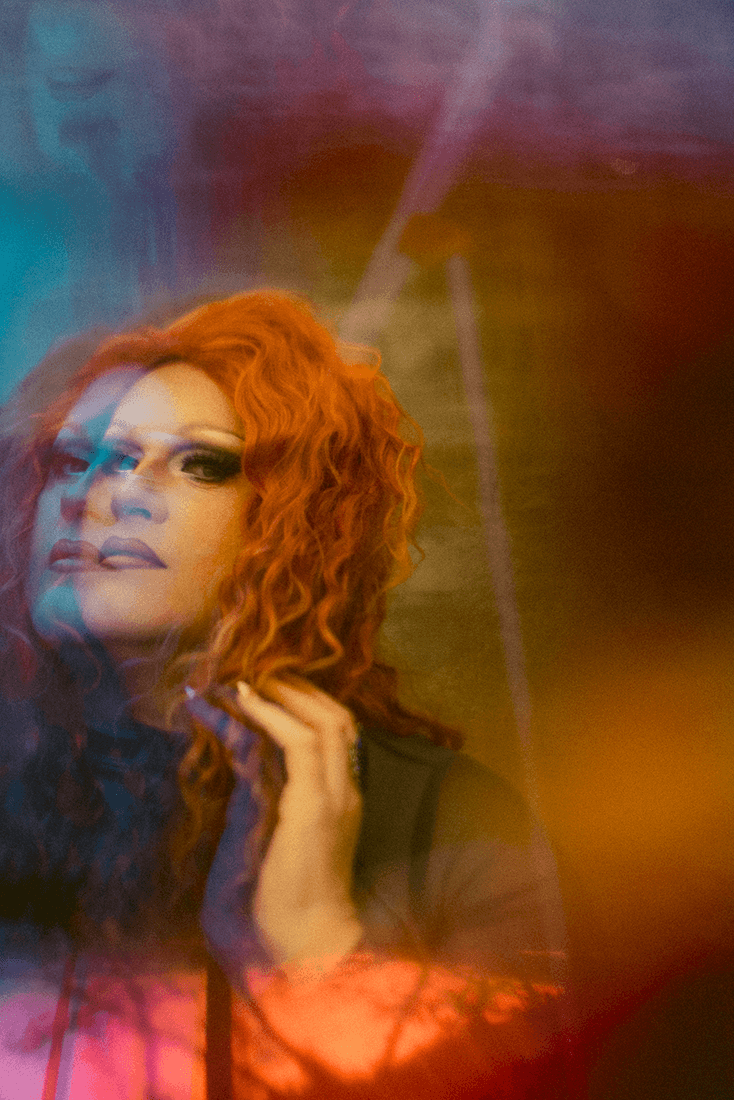
They’re part of a community ‘who have the most to lose.’ So they’re showing up for Harris.

(Note from Ali: I’ve seen a couple of headlines that the Don’s campaign plans to run heavy anti-trans ads in the swing states. I’ve used all my free NYT articles for life, but they have a story about it. So this is of interest to All Women.)

Black trans women are a small subset of trans voters, who make up a small portion of the electorate — but they’re also longtime leaders of the LGBTQ+ rights movement who know what’s at stake.

Originally published by The 19th

Your trusted source for contextualizing LGBTQ+ and Election 2024 news. Sign up for our daily newsletter.

Five years ago, Democratic presidential primary hopeful Kamala Harris stepped onto a stage at a CNN LGBTQ+ town hall in Los Angeles.

“My pronouns are she, her and hers,” Harris said in her introduction.

Offering her pronouns, which wasn’t nearly as commonplace in 2019 as it is now, showed solidarity with transgender and nonbinary Americans. It was a simple but impactful gesture for a community in the midst of an unprecedented homicide crisis, whose rights and humanity had been challenged by former President Donald Trump, who was in office at the time, and other Republicans

In standing shoulder to shoulder with transgender people, Harris began to shift a relationship that had been dogged by decisions of her past, like her support for bills cracking down on sex work during her time as a prosecutor in San Francisco and, while California’s attorney general, her state’s opposition to gender-affirming care for an incarcerated transgender woman in 2015.

Today, Black transgender women, some of the same people who questioned her candidacy five years ago, are supporting Harris on and off the campaign trail. One way they have shown up is by raising money and drumming up support, like a Zoom call in August that was joined by more than 1,000 transgender people, the brainchild of veteran Black trans activist Zahara Bassett.

“I felt that we need to let people know that our voices are at the ballot,” Bassett said. “When we speak to you about our rights, about our visibility of being here, that needs to be respected.” 

Bassett enlisted the help of several trans luminaries, including Precious Davis, who had long heard criticism of Harris among her LGBTQ+ peers. Davis, chief strategy officer of Center on Halsted, Chicago’s largest LGBTQ+ community center, said she knew it would be critical for Black trans women to show up for Harris, in part as a way of signaling to Black trans women and queer communities they had permission to vote for the vice president.

“We are a part of a community who have the most to lose,” Davis said of Black trans women. “Our rights and freedom are at stake. We have seen Donald Trump’s attacks against the trans community time and time again.”

Many LGBTQ+ advocates have argued that even if Harris has room for growth on LGBTQ+ issues, it’s nearly impossible to compare her with Trump, who regularly misgenders trans women and refers to trans people as “insane.” 

“I will say that I would rather have a fighting chance with her than have no chance at all with Trump,” said Hope Giselle-Godsey, executive director of the National Trans Visibility March, another organizer of the Zoom call for Harris. 

While she was roundly criticized four years ago for mixing up language in referring to transgender women, overall, Harris’ record on LGBTQ+ rights is largely viewed positively. She provided some of the earliest support for marriage equality of any presidential hopeful when, as district attorney in San Francisco, in 2004 she officiated a same-sex wedding in California. She also opposed so-called gay and trans “panic defenses,” where perpetrators attempted to claim that fear or disgust of LGBTQ+ people was reasonable motivation for attacking them. 

She lost significant ground going into 2020 after her support of FOSTA/SESTA, a  2018 package of bills that aimed to crack down on websites used by sex workers. Transgender people are disproportionately forced into underground economies like sex work due to a lack of employment opportunities.  

Trump, however, has fared much worse. During his four years as president, the National Center for Transgender Equality labeled his cabinet the “Discrimination Administration” and the media advocacy group GLAAD logged 210 attacks on queer people. He also barred transgender people from serving in the military, banned Pride flag displays at embassies and gutted transgender health care protections under the Affordable Care Act, among other things. 

Channyn Lynn Parker, CEO of the Brave Space Alliance, which serves trans and gender nonconforming youth on the south and west sides of Chicago, speaks about both candidates with resignation. She, too, helped organize the Zoom for Harris, though less enthusiastically than her peers. 

Parker has worked with street-based and unhoused youth for more than 10 years and has seen Democratic candidates come and go, all of them with different promises for the community; for example, Biden pledged to trans kids that he “had their backs.” 

Meanwhile, the kids she works with still face the same challenges. Many are still kicked out of their homes by their own parents and they’re particularly vulnerable to the anti-trans laws and hate that has also flourished across the country.

“I have never seen a candidate where I feel completely safe, and I’ve ever been able to breathe a full sigh of relief, never,” Parker said. “So, I don’t know if Kamala is going to be any different in that regard.”

Black trans women are a small subset of the transgender voters, who make up a small portion of the electorate. An estimated 825,100 transgender adults of all races will be eligible to vote in November, according to the Williams Institute at the UCLA School of Law. As of last year, 161 million Americans were registered to vote. 

Queer Americans now make up 7.6 percent of the overall population, Gallup reports. According to GLAAD, 94 percent of those LGBTQ+ Americans are motivated to vote.  Black trans women have an outsized influence on these voters, a group that tends to lean heavily Democratic. 

In recent years, advocates have invested heavily in giving credit to Black trans activists for leading the charge at the Stonewall uprising in 1969, where queer people famously fought back against homophobic policing in New York City. 

At the same time, Black trans women have been overrepresented in the numbers of trans homicide victims and often underrepresented in the media.

At the 2019 LGBTQ+ Town Hall, where Harris introduced herself with her pronouns, Black trans women made headlines by interrupting the event repeatedly, noting that not a single Black trans woman had been invited to ask candidates a question.

The town hall also included a gaffe: Immediately after Harris shared her pronouns, CNN’s Chris Cuomo replied, “Mine too.” To transgender people, the moment highlighted how, even at an event centered on LGBTQ+ communities, transgender issues could become an afterthought. And in the four years since, Trump and his running mate, Ohio Sen. JD Vance, have repeatedly attacked transgender people; 176 anti-trans bills have become law; and none of the debates have delved meaningfully into LGBTQ+ issues. 

The Black trans women backing Harris see the setbacks — and also an opportunity if Harris wins. Davis said she is ready to lobby Harris on trans issues the moment Harris takes the oath of office. Bassett has at the ready a wish list of policies that would make gender-affirming care more accessible and less stigmatized. 

And Parker is clear about one thing: Supporting a candidate doesn’t mean agreeing with them unconditionally. It means challenging them to be better. 

“We’re going to provide you with all the necessary tools and resources and individuals to help you to get this right,” she said. “If you don’t use those tools, meaning the individuals who are providing you with the level of access and education needed, then shame on you.”

To check your voter registration status or to get more information about registering to vote, text 19thnews to 26797.

Even more violence and asshole stuff from the right.

 Trump has a long history of endorsing police violence, having said that police reaction to the racial unrest in response to the murder of George Floyd in 2020 “was a beautiful thing to watch.”

The former president, who risks jail time and more criminal trials if he loses, has expanded his range of baseless attacks on U.S. voting procedures in recent weeks and months. Trump falsely claimed Monday that Democrats are exploiting an overseas ballot program for expats and military members in order to circumvent “any citizenship check or verification of identity.”

Look at the projection in the next story.  Look the only end might be the clawing back some of the taxes owned to the public treasury from the wealthy people who constantly want more and more public funds only for themselves.  The only loss will be a white majority nation, and Elon Musk is a full out South African racist bigot.  Full out racist bigot.  He is not worried about voting, he is a white man.  He is worried brown / black people will get to vote.   He and tRump talk bad about Haitians and immigrants while hiring them on the cheap.   Hugs.  Scottie

David Pakman recently released a video of Donald Trump’s greatest cognitive hits and when seen in total is something to behold:

These maga gang thugs think they can get away with anything and that they don’t have to obey any laws or rules.   Hate rules their lives.  It may have been this guy who said he wrote the bill because he couldn’t stand that kids were coming out at school and being accepted by other students instead of targeted for abuse.  He wants LGBTQ+ kids to be scared to be themselves and to stay in the closet hiding from them straight cis bullies.   Hugs.  Scottie

Fine was in court due to a lawsuit involving a Brevard County election official. As I’ve said here before, he is probably the most obnoxious of all Florida lawmakers, which is really saying something.

He last appeared here when DeSantis vetoed funding for a “woke zoo” because it wouldn’t host a fundraiser for Fine.

Fine also appeared on JMG in May 2022 when he tweeted what many interpreted as a threat to assassinate President Biden. That tweet remains online.

Before that, Fine appeared on JMG when he called for felony charges after Florida Democrats staged a sit-in over the racist US House map submitted by DeSantis. 

And before that, he appeared here when he threatened to defund a Florida Special Olympics event and called a local school board member a “whore” because she’d been invited its fundraiser gala and he was not.

Fine was a sponsor of the bill that stripped Disney’s self-governing status. His family owns annual passes to the “woke” theme park giant.

In 2022, he arranged for a Florida town to honor a war criminal who was convicted of executing four Iraqi prisoners. In April 2023 he declared, “Damn right, we ought to erase” LGBTQs.

Fine is also a sponsor of Florida’s bill criminalizing drag shows in view of minors. Of note, his wife runs a self-described “sultry” burlesque show that would violate her husband’s law.

As you’ll see in the video report, Feldman demanded that the school display the black and white version of the “straight pride” flag seen below.

Hit the link for other already known examples of Trump withholding federal relief from blue states. Earlier this week Trump posted that Biden was withholding relief from “Republican areas” in North Carolina.

Popp is posting screenshots of the threats on the bakery’s Facebook page.

Peace & Justice History for 10/7:

An especially sad item within.

October 7, 1989
Tens of thousands (estimates ranged from 40,000 to 150,000) from all over the country marched on Washington, lobbied Congress and Housing Secretary Jack Kemp to provide affordable housing for the homeless. Some of the signs read, “Build Houses, Not Bombs.”
Kemp signed a letter committing the George H.W. Bush administration to several steps to help the homeless, including setting aside about 5000 government-owned single-family houses for them.


===============

October 7, 1998


Matthew Shepard
Matthew Shepard, a gay student at the University of Wyoming, was beaten, robbed and left tied to a wooden fence post outside Laramie, Wyoming; he died five days later. His death helped awaken the nation to the persecution of homosexuals and their victimization as objects of hate crimes.
A play about the incident, and later an HBO movie, “The Laramie Project,” has been performed all over the country.

Watch a preview 
MatthewShepard.org 
Matthew’s Place 

https://www.peacebuttons.info/E-News/peacehistoryoctober.htm#october7

Bathrooms with a view: Cutting windows into student restrooms is a new level of weird

https://www.yorkdispatch.com/story/opinion/editorials/2024/10/02/bathrooms-with-a-view-cutting-windows-into-student-restrooms-is-a-new-level-of-weird/75479753007/

I bet the next election will be well attended and these people will lose their seats and new progressive inclusive people will win.  That is what has happened all over when the right bigots and haters snuck into school board seats, they go too far trying to erase the LGBTQ+ kids / people from existence, then they get kicked out.   Sadly by then the damage is done.  What they hell do they want people perving on kids in the bathrooms for?  To make the kids scared to use them and to make sure the weird kids are not doing weird gay stuff in them, right?    Hugs.  Scottie.

By the way.  We have a hurricane headed right at us.  It will be here Wednesday at around noon, but we have three days of wind and rain beforehand.  It will hit at a class three.  It is projected to hit just above us but could hit us directly.  We will be spending the next few days getting as much done as possible, stocking in cat food Ron forgot and getting more gas and propane for the generator.  It is unlikely that pole of ours will survive another storm as it is already leaning hard.  Repair crews are already stretched thin in other areas so won’t be able to come rescue us in our time of need.  Going to be a very long few months.  Hugs.  Scottie

YORK DISPATCH EDITORIAL BOARD
York Dispatch


At the risk of stating the obvious, South Western’s elected school board is making some strange decisions.

For the last two years, they’ve fixated on which bathrooms LGBTQ+ kids use. In 2023, officials in this Hanover-area district played musical chairs with school bathrooms in a misguided attempt to appease the loudest bigots among them — ending up with five different types of bathrooms.

After a low-turnout school board election in which several far-right members joined their ranks, they hired a Christian law firm, decided to begin banning books and reopened the bathroom issue. Board President Matthew Gelazela, who was elevated to his post after previously serving as the board’s most vocal bomb-thrower, pointed to Red Lion’s discriminatory policies as something to aspire to.

UPDATE:Amid parent complaints and national scrutiny, South Western School District boards up bathroom windows

Now, upon the advice of that law firm — the Harrisburg-based Independence Law Center — the board approved spending $8,700 to cut windows so passersby can look into the so-called “gender-identity” student bathrooms.

Yes, you read that correctly.

These adults want to make it easier for other people to watch your children while they’re in the bathroom. It’s absolutely mind-boggling.

For more than a year, South Western School Board officials have grappled with how LGBTQ+ students use the bathroom. Most recently, school officials cut windows into Emory H. Markle Middle School's gender neutral restrooms, allowing anyone passing by to peer inside.

For more than a year, South Western School Board officials have grappled with how LGBTQ+ students use the bathroom. Most recently, school officials cut windows into Emory H. Markle Middle School's gender neutral restrooms, allowing anyone passing by to peer inside.
 

Gelazela, who’s steadfastly refused to explain the logic here, said in a public meeting that the windows help “[add] privacy in the toilet facility” and that they “increase oversight of the wash area.”

There’s a reason public restrooms tend not to have windows — or, if they do, they have frosted glass.

No one wants to be spied on when they’re relieving themselves.

Gelazela, in pursuing his book ban, repeatedly said he’s trying to protect the children.

But this latest decision does just the opposite.

More:Parents question school that cut windows into student bathrooms amid anti-LGBTQ+ push

More:‘Our politics can be done with a sense of joy,’ Tim Walz tells York crowd

The parents who spoke to The York Dispatch about the latest bathroom renovations said their children no longer feel comfortable using these bathrooms. One of the parents went to the principal and asked for an exemption to allow her son to use a different bathroom further away from class.

Her 13-year-old doesn’t want to be spied on while he’s in the bathroom.

And we don’t blame him.

It’s creepy and weird.

And let’s not ignore the bigger picture: This is happening at a time when this and other York County school boards are pushing policies that would restrict what books students read, what sports teams they compete on and even which pronouns they use.

All of this is part of an attempt to erase LGBTQ+ people.

Cutting a window into these bathrooms is an intimidation tactic designed to make sure students who use the so-called “gender-identity” facilities — and, let’s be honest, any student who doesn’t fit neatly into the worldview of the school board’s far-right majority — know they’re being watched, controlled and judged.

In their quest to punish LGBTQ+ kids, however, the misguided “adults” on this South Western School Board are doing the things they accuse others of doing.

This is an invasion of privacy and a waste of taxpayer dollars.

It needs to stop.

‘It’s very powerful’: New Hampshire ruling protects trans kids from being outed

Nico Romeri, 17, joined an amicus brief supporting a policy that bars school personnel from disclosing students’ gender identities – and won

When Nico Romeri came out as transgender at 14 years old, he first shared the news with his closest friends and a therapist. The private conversations he had outside of the home helped him feel more comfortable to then approach his parents, who supported his transition. If anyone else had revealed his gender identity to his family on his behalf, he said it would have been disruptive to his coming out process.

“I really wanted to have a one-on-one discussion with them, where they knew I trusted them and they trusted me,” Romeri said. “Having that break of trust before you’re confident enough to tell other people is a huge deal.”

A recent ruling helps ensure that other trans students will have the protection to come out to their families when they’re ready. The case came about in May 2022 after a New Hampshire mother inadvertently learned from a teacher that her child used a different name and pronouns in school. The parent argued that the school policy, which advises school personnel not to disclose a student’s transgender status, infringed upon her ability to raise her child as she sees fit. Along with his mother, Heather, Romeri joined an amicus brief in support of the school policy.

In August, the New Hampshire supreme court upheld a lower court’s ruling on the school district policy, affirming trans and gender nonconforming students’ rights to privacy concerning their gender identities and presentation at school. The decision is the first such ruling to come out of a state supreme court, and according to Chris Erchull, senior staff attorney at GLBTQ Legal Advocates & Defenders, the ruling could set guidance for other states and federal courts fighting similar cases.

“When there’s no US supreme court precedent, federal courts have to look around at what other courts are saying for precedent,” said Erchull. “So it is going to be very powerful and persuasive.”

Erchull, who filed an amicus brief in the case, said it was critical for students to have a supportive framework that allows them to explore their gender identity in school.

Hearing that [my children are trans] from someone else would have been not good for our relationship

Heather Romeri

“It’s not a public school teacher or administrator’s place to make a decision about how and when to talk to families about these really intimate, sensitive matters,” he said. “It is in the best interest of everyone if the information comes from the student when the student is ready, on the student’s own terms.”

Policies on LGBTQ+ students’ right to privacy varies by school district throughout the nation. In 2015, the New Hampshire school board association issued a model policy to protect the privacy of trans students and to prevent discrimination, which was adopted by 48 of 196 school districts and charter schools, according to a 2020 ACLU New Hampshire report.

The policy was rescinded in 2022 due to conservative pushback, but some school districts, including Manchester, the largest in the state, continue to advise school personnel not to share a trans or gender nonconforming student’s identity to others without the child’s consent. In July, California became the first state to ban school district policies that require staff to notify parents when a child changes their name or pronouns.

Revealing a child’s gender identity or sexual orientation to their family when they’re not ready can lead to suicide and the child getting kicked out of their home, he added. LGBTQ+ youth are 120% more likely to experience homelessness than their cisgender and heterosexual counterparts.

For Heather Romeri, it is crucial that students make their own choices about who they disclose their gender identity to and when. “Two of my children are both trans, so they have both been able to come to me at their own time when they were ready to disclose the information they needed to,” she said. “Hearing that from someone else would have been not good for our relationship, not good for … our children [being able to come] out safely and happily.”

Nico Romeri has trans friends who haven’t shared their gender identity with their parents because they fear for their safety, Heather said. “They really believe they will be hurt or they will be kicked out of their house,” she explained. “They have [seen] others who have tried to come out to their parents, and it’s had negative repercussions to them emotionally.” She sees the victory of the New Hampshire ruling as a prime example for other states considering policies for LGBTQ+ students’ rights.

Now 17, Romeri said that he joined the amicus brief to support his friends who don’t have the same supportive environment to transition. “It’s really important to represent the people that can’t voice [their identity fully] and to keep the laws in place.”

https://www.theguardian.com/world/2024/oct/03/new-hampshire-trans-identities-outing

Federal judge dismisses Denver parent’s lawsuit seeking to put ‘straight pride’ flag in classrooms

https://www.coloradopolitics.com/courts/federal-judge-dismisses-denver-parents-lawsuit-seeking-straight-pride-flag-display/article_2c351eb4-7ee3-11ef-a4c4-3f644b322a60.html

The display of LGBTQ pride flags at the plaintiff’s children’s school is government speech not regulated by the First Amendment

Denver Public Schools hoping to return 'as close to full strength as possible' after spring break

Denver Public Schools

A federal judge on Thursday dismissed a lawsuit from a Denver Public Schools parent who sought to force the district to honor his request to display “straight pride” flags in his children’s classrooms.

Nathan Feldman brought suit on behalf of himself and his two children, alleging discrimination and a violation of the First Amendment stemming from DPS declining to add a straight pride flag in his children’s classrooms alongside displays of LGBTQ pride flags.

In a June 26 order, U.S. District Court Judge Regina M. Rodriguez determined the pride flags amounted to the government’s own speech, which the First Amendment does not regulate. Therefore, a decision by DPS not to display a flag did not violate Feldman’s rights.


“DPS policy reflects careful consideration about what views can be expressed and that any expressions must reflect DPS’s policy of equality and inclusion. Accordingly, the Court finds that DPS has maintained control over the flag displays,” wrote Rodriguez, an appointee of President Joe Biden.

Feldman filed suit after school administrators allegedly allowed “non-binary and non-cisgender students to have flags displayed that represent their genders but not allowing Plaintiffs to have flags displayed that represent their genders.” He asked for damages of at least $3 million and for an order allowing him to display the straight pride flag.

Straight pride flag

A “straight pride” flag. Source: Feldman et al. v. Denver Public Schools et al.

DPS, in moving to dismiss the lawsuit, noted Feldman’s allegations were contradictory, as he simultaneously asserted “each” classroom at Slavens School had a pride flag and that “not all teachers displayed these flags.” Nonetheless, the district argued the display of flags constituted government speech, as DPS policy endorsed the use of LGBTQ pride flags as “symbols consistent with the District’s equity-based curriculum.”

“Plaintiffs assert that passing a resolution recognizing LGBTQIA+ students or staff without providing equal recognition to those who don’t so identify is an actionable distinction. Not so,” wrote the district’s attorneys.

Feldman responded that individual teachers at his children’s school made the decision to display pride flags. Therefore, DPS was not in control of the displays and they did not constitute the government’s own speech.

In August, U.S. Magistrate Judge Scott T. Varholak recommended that Feldman’s claims be dismissed. He cited a 2022 U.S. Supreme Court decision involving Boston’s practice of allowing private entities to fly flags outside city hall. The court did not find such circumstances amounted to speech by the government.


However, wrote then-Justice Stephen G. Breyer, “when the government speaks for itself, the First Amendment does not demand airtime for all views.”

“Here, DPS selected the Pride Flag, and not Plaintiffs’ Flag, as representing the message that DPS wished to convey,” Varholak wrote in deeming the flag displays governmental expression. “Conversely, there is no allegation that DPS had a history of accepting for display other flags submitted by the public.”

Pridefest Parade

In this 2018 file photo, a supporters of the LGBTQ community fly a Pride flag in the Colorado Springs PrideFest Parade.

As for Feldman’s sex discrimination and equal protection claims, Varholak noted that unless there are allegations of unequal treatment, there is no legal claim based on the absence of a flag representing cisgender, heterosexual students.

“Plaintiffs plainly disagree with DPS’s selected messaging, and phrase this disagreement in constitutional terms,” he concluded, “but ultimately fail to allege any injury except exposure to a flag that they do not feel represented by.”

Feldman objected to portions of Varholak’s analysis, but Rodriguez, the district judge, concluded Feldman was either raising new arguments for the first time or had failed to show why Varholak was mistaken.

To the claim that displaying a flag is discriminatory when it repesents a different group’s sexual orientation or gender identity, “Plaintiffs offer no legal support for their argument,” she wrote, “and the Court finds none.” 

Attorneys for both parties did not immediately respond to a request for comment.

The case is Feldman et al. v. Denver Public Schools et al.

More Stuff to Read, About Stuff to Read

October 2024 Queer Romances

by Dahlia Adler · Oct 5, 2024 at 4:00 am

October’s a big month for seasonal/vibe readers, because if there are three things you can count on filling shelves, it’s spooky season reads, Hallmark vibes, and, despite Christmas and Hanukkah being months away, winter holiday romances. This month’s roundup’s got all three, and they are a delight.

  • Best Hex Ever
  • Best Hex Ever by Nadia El-Fassi
  • Author: Nadia El-Fassi
    Released: October 1, 2024 by Dell
    Genre:LGBTQIA, Paranormal, RomanceA kitchen witch with a penchant for baking and a (literally) cursed love life meets someone who’s worth breaking a hex for in this sweet and spicy debut romance.As a skilled kitchen witch, Dina Whitlock knows her way around a pastry recipe. In fact, she runs her very own London café serving magic-infused pastries for her loyal customers. But only a select few friends know about her magical abilities or the hex that has plagued her love life. It’s hard to fall in love when your partner is guaranteed to have a string of bad luck the second they start to have feelings for you.Scott Mason is back from traveling the world and is excited to begin his new job as a curator at the British Museum. After leaving London to heal from a brutal breakup two years ago, Scott only now realizes how much he missed out on. Now that his best friend’s wedding is right around the corner, Scott is determined to be the most amazing best man ever, but he doesn’t expect to be bewitched by the maid of honor, who also happens to be the owner of his new favorite café and, more surprisingly, a witch?!After a weekend in the countryside full of peculiar hedge mazes, palm readings by candlelight, and a midnight Halloween ritual, there’s no denying the chemistry between them. But there’s just one problem: The hex still holds, and Dina knows that Scott is in danger. In the past, she’s always cut her losses, but this time is different. Scott could be the one. Will Dina be able to undo the hex, before it’s too late?Neither this blurb nor this cover gave away to me that this was a queer romance, but in addition to Dina being the first main character of Moroccan descent I’ve read, she is indeed bisexual, which is pretty central to the story. If you love reading cozy, witchy romances in fall, especially with spice (literal and figurative), this one’s got all the delicious autumnal vibes.Add to Goodreads To-Read List → (snip-MORE)
  • ============
  • Queer Romances on Sale!
  • by Amanda · Oct 4, 2024 at 11:30 am
  • We Could Be So Good
    We Could Be So Good by Cat Sebastian
    RECOMMENDED: We Could Be So Good by Cat Sebastian is $1.99! Thanks to everyone who let us know about this deal; fingers crossed it’s still active! Lara gave this one an A:
    TL;DR: Read this book if you’d like to be swept along safely in a rising tide of emotion, predominantly love.
    Nick Russo has worked his way from a rough Brooklyn neighborhood to a reporting job at one of the city’s biggest newspapers. But the late 1950s are a hostile time for gay men, and Nick knows that he can’t let anyone into his life. He just never counted on meeting someone as impossible to say no to as Andy.
    Andy Fleming’s newspaper-tycoon father wants him to take over the family business. Andy, though, has no intention of running the paper. He’s barely able to run his life—he’s never paid a bill on time, routinely gets lost on the way to work, and would rather gouge out his own eyes than deal with office politics. Andy agrees to work for a year in the newsroom, knowing he’ll make an ass of himself and hate every second of it.
    Except, Nick Russo keeps rescuing Andy: showing him the ropes, tracking down his keys, freeing his tie when it gets stuck in the ancient filing cabinets. Their unlikely friendship soon sharpens into feelings they can’t deny. But what feels possible in secret—this fragile, tender thing between them—seems doomed in the light of day. Now Nick and Andy have to decide if, for the first time, they’re willing to fight.
    Add to Goodreads To-Read List →
  • (snip-More)

Transgender candidates are making history under fire in Brazil

Benny Briolly beams as she strides through the concrete favela alleyway of Brazil’s city of Niteroi in a snow-white ball gown, onlookers proudly wave campaign flags emblazoned with her face. The city councilwoman and nearly 1,000 other transgender politicians are running Sunday in every one of Brazil’s 26 states, where the number of transgender politicians has tripled since the last elections four years ago.

(AP Video/Mario Lobao and Diarlei Rodrigues)

Published 10:08 PM CDT, October 3, 2024

https://apnews.com/video/brazil-lgbtq-rio-de-janeiro-angela-davis-d8c8fc54a4c440da90ba8f75e660f312

(The video is right on the page linked above. The links wouldn’t embed today.)

Flamy Grant Pushes the Boundaries of Christian Music — and Drag

By Mitchell Atencio

Full confession; this is an article from Sojourners Magazine. I subscribe, and I brought the whole piece here, for those who may wish to read it but don’t want to go on a Christian site. I did not see anything besides that to warn about; there is discussion of church but not of bad happenings. However, if I missed something, I am so sorry; if you would be able to let me know in comments, that helps me learn what I should look for. This article struck me as something that should be at Scottie’s Playtime.

This interview is part of The Reconstruct, a weekly newsletter from Sojourners. In a world where so much needs to change, Mitchell Atencio and Josiah R. Daniels interview people who have faith in a new future and are working toward repair. Subscribe here.

Flamy Grant called in to her morning interview after participating in a day-long silent retreat. Well, not a silent retreat exactly — it was a vocal rest.

After spending the last year touring the U.S. off the success of her album, Grant, who prefers to use her stage name in interviews, needed to rest her voice. Since her rise to Christian music stardom — or infamy, depending on how one feels about a drag queen topping the Christian charts — she has performed in bars, clubs, and churches spreading the good news in glitter.

Since then, Grant has collaborated with artists like Semler, Derek Webb, and Jennifer Knapp. And she has spoken out for LGBTQ+ rights, joining a lawsuit against the state of Tennessee in 2023.

A few weeks before the release of her second album, CHURCH, Grant and I spoke about her time touring the country, writing songs in drag, leaving the church but still going to churches weekly, and more.

Coincidentally, as the interview ended, Amy Grant’s “Lucky One” began playing over the hotel lobby’s speakers.

[Editor’s note: This interview was performed before Hurricane Helene devastated many regions in the South, including Flamy Grant’s hometown of Asheville, N.C. Grant and her team canceled shows in North Carolina, but continue touring in Georgia and Nashville this week before touring the West Coast.]

This interview has been edited for length and clarity.

Mitchell Atencio: How is touring? What have you heard from folks while on the road?

Flamy Grant: I feel like I’ve been on tour pretty much nonstop for the past year. A year ago I quit my day job and moved back to Asheville, N.C., where I was born and raised. And honestly, this is not even an exaggeration, I’ve spent more time on the road than I have in my bedroom at home.

This [tour], though, is very different. I’m on a tour with two other acts and a full band. Mostly, I’ve just been solo on the road, which I love in a lot of ways because I’m actually very much an introvert.

We’re only in our second week right now of the “No More Trauma” tour, and the response has been amazing so far. Now that I’m a year in, there have been people who’ve come up to me to say hello afterwards, and [they say], “This is our third or fourth time seeing you!” And I’m like, I’ve really only been doing this full-time for a year. What do you mean the third or fourth time? It is really cool to know that there’s this community and fan loyalty.

My favorite moment on tour so far was in St. Louis. We were getting ready, there was no green room at the venue, so I was literally just painting my face in front of the windows, right outside where the line was forming to get in. There was this family — a mother and a little girl, around 7-9 years old. She had a sign, painted in full rainbow lettering, that said, “This is my first concert!” And she was just holding it up to the window. So I popped out to say hello, and they had driven two hours to St. Louis to come to this show. Her name was Claire, and I’m her favorite artist, and I’m her first concert.

That was wild because it just threw me back to when I was that age and excited about music and wanting to go to concerts for the first time. Everybody always asks that question, “What was your first concert?” throughout your entire life. And now Claire is always going to say, “I saw a drag queen in St. Louis.” 

Now I’m curious what your first concert was.

Clay Crosse. He had quite a big hit with that song “I Surrender All” in the ’90s. I just loved him. I probably had a crush on him, if we’re being honest. He had that classic jawline, that beautiful blonde hair, and yeah, I was obsessed with him. My parents couldn’t take me, so I roped one of my friends from church and got his dad to drive us down to this show. What I remember most about it was that Jaci Velasquez opened and she was so good. She was phenomenal.

Mine, for fairness, was the Newsboys back when Peter Furler was still leading them. Speaking of touring, I noticed you have a different booking process for churches and for “traditional venues” like bars and clubs. Why is that?

That’s been interesting to navigate. I feel like I’m definitely straddling two worlds. I very much want to be taken seriously as a musician and songwriter. The drag can sometimes be a little bit of a barrier to that, because people tend to see drag and think it’s a gimmick or, they just immediately associate it with Sunday drag brunch or weekend clubs.

I have done a fair bit of that, especially early on, but I’m a singer-songwriter and I write my own original music, and I happen to perform in drag. It’s been a challenge to convey that as we’re booking and marketing shows. My booking agent is fantastic, and she’s been really good at helping people understand that they’re booking a singer-songwriter who needs an extra hour in the green room to get ready.

What happened last year, with “Good Day” hitting number one, so many churches reached out and the first question was, “Can we do ‘Good Day’ in Sunday worship?” And I’m like, of course you can, just make sure they know it’s written by a drag queen. The next question was, “How do we get you to come?” Either on a Sunday morning or to do a special concert on an evening.

Because I know the church world and was a worship leader for 22 years, it just makes more sense for me to book those myself. I don’t generally go out seeking church bookings, those really do come to me, and that’s a gift in so many ways.

I’ve played in over 50 churches in the last year. Some want to integrate me into their Sunday morning service, I’ll be part of the service planning, and we’ll have a song during communion or the offertory. Others want to bring me in on a Saturday night and have me come sing to their congregation and community.

I have officially left the church myself. The last church I was involved in was in San Diego, I was a worship leader there for 8-and-a-half years and it closed down after the pandemic. I have not sought out a new church home since then, but I’m still in churches a lot.

You’re in churches about once a week — that’s more than many church members. What makes writing music as Flamy Grant feel different? How does one write songs in drag?

In some ways, there’s no difference at all. At the end of the day, I’m just writing about my experiences. Derek Webb says the artist’s role is just to look at the world and speak about it. That’s so much of what I’ve done since I was 9 years old when I wrote my first song. That process of songwriting doesn’t necessarily feel all that different.

And yet, there is this shift in the tone and subject matter of what I write about, because my life has changed so dramatically. And drag is a huge part of that change.

Flamy Grant poses for a photo. Photo by Ash Perlberg/Courtesy Flamy Grant

It’s been really fun to feel like I’m excavating parts of myself that have been dormant or suppressed for so long. [Drag] definitely changes the subject matter of what I’m writing about.

And it’s been there all along, I just haven’t allowed myself the pleasure and joy of exploring the range of my own gender identity, even the range of my physical voice. Being able to play with how I sing a song or a lyric, it’s opened up a world of songwriting to me. There are times now, when I’m writing, where I do think about what this is going to look and feel like on stage, in drag, in a big wig with sequins and glitter on my face and all of this.

I still love to write a gut-punch ballad; that’s one of my specialties. And I love doing that because that’s not really a thing you tend to associate with drag too much. That tends to be a more surprising moment for people in my concerts, when I get serious. People expect the fierceness and sass and qualities of drag that they’re used to.

Mostly it’s just a lot of fun. I really enjoy the opportunity to play with music in new ways.

It sounds like part of what you’re saying is that it offers an added element of creativity to a songwriting process, even in the “constraint” of writing as Flamy Grant.

That’s absolutely right, there is a constraining piece to it. Whatever music I put out, it’s going to be out under that name, Flamy Grant, and I know it’s going to be associated with drag.

In some ways it’s obviously pushing the boundaries of Christian music, but it’s also pushing the boundaries of what people might consider drag to be.

What has the response been like from the drag community?

I just got a message from a drag queen back in San Diego. Her drag name is Nadya Symone. I love this queen. She’s just one of the people I look up to. She’s a Southern queen who lives in San Diego now. She was there at my very first drag show; I was nervous, and she could tell. And she just said, “Baby, whatever happens, the show goes on. You make a mistake, you forget a lyric, you forget a line, your wig falls off, whatever — the show goes on.”

I just felt so taken in, included, and welcomed. And that’s never changed. The people who get [Flamy] the quickest are other drag performers. I don’t have to explain much to them. They’re like, “Oh you’re just bringing yourself to drag, which is what we all do.”

Anyway, the message that Symone sent me just yesterday was just, “I’m so proud of you, baby.” I don’t know what she had seen, but she’s still there and cheering me on. I had a lot of anxiety coming into this and a lot of imposter syndrome. Am I a real drag queen? Do I really belong in this community if what I want to do is write my own folk songs and sing them? And that has all been laid to rest by interacting with other performers.

Is there anything that you wanted to do differently between your first album, Bible Belt Baby, and your second album, CHURCH?

I’m so proud of Bible Belt Baby, but it did come together circumstantially and without a lot of intention. My initial conversation with my producer, Ben, who was my housemate in San Diego at the time, was, I think I want to sing in drag. And we were going to put together a five-song EP. I ran a Kickstarter, and we raised more than I expected. And it just continued to blossom and grow until it was a full album.

And in order to make it a full album, I was pulling from songs that predated Flamy. What was really cool about that was discovering that Flamy has been there all along, right?

But with CHURCH, I had the opportunity to really, for the first time, think about crafting a complete narrative. Thinking about themes that would all be contained on one record and writing, for the first time, a full album in Flamy’s voice intentionally.

The second thing was having the resources to go to Nashville and make a Nashville record with Nashville players. That was a really exciting prospect for me.

We sent them all the demos in advance. I, [pauses] I don’t know that they listened to them, but they didn’t need to. They heard the song one time, took a couple notes, went to their instruments, and five, six, seven takes later we had what we needed. It was wild to watch how, at the skill level of those musicians, they brought the songs to life in ways I could have only hoped for.

I really wanted a sound that was in this Nashville vein, but we also talked about how to make it still a drag record. How do we pull in some of this country disco feel? How do we make sure it stands on par with anything coming out of Nashville, but also uniquely Flamy. They did a phenomenal job.

[Lastly], with Bible Belt Baby, I didn’t know, up until a couple months before releasing it, whether I would even put it out as a Christian record. It wasn’t until we finished it that I was like, yeah, this absolutely belongs in the Christian genre. 

Now, Christian music is largely worship music, which I personally don’t care for. I like music that tells someone’s story. I want to hear what an individual person has gone through in their life and how they got to where they are.

And that’s why I loved artists like Margaret Becker, or Jennifer Knapp, Caedmon’s Call, and folks famous for writing really personal. What’s that thing people say? We find the universal in the specific — that’s what I love about singer songwriters. I don’t know if I’ll continue to make Christian music forever or what the next album will look like yet, but for this album, I [wanted] to be really intentional with the messaging. I think the tagline for the Kickstarter was “Flamy Grant’s Big Gay Christian Record.”

https://sojo.net/articles/interview/reconstruct/flamy-grant-pushes-boundaries-christian-music-and-drag

Update: