
They have TN St. Rep. Aftyn Behn on with them. Worth watching; she’s a candidate we should support however we can.
Category: Liberal / Progressive / Democrat
Clay Jones Draws-
First Pedophile by Clay Jones
What did Trump know and when did he know it in regards to Epstein? Read on Substack

This caricature of Trump is the first drawing I have attempted since the stroke. Isn’t it crazy that I haven’t drawn anything in over a month? This was done with my left hand, and it was extremely difficult. I still don’t have enough stability with my right arm. I did hold a guitar pick for a few minutes today while strumming my Taylor 214. I’m not selling my guitars just yet. No, I do not plan to draw in the future with my left hand. Coincidentally enough, I drew it while waiting for an occupational therapist to arrive.
Trump and Epstein
Donald Trump is a horrible person. He is vile, corrupt, petty, mean, narcissistic, immature, greedy, dishonest, selfish, cruel, and evil, so naturally, he would be best friends with a pedophile.
“I have met some very bad people,” Jeffrey Epstein wrote in a 2017 email. “None as bad as Trump. Not one decent cell in his body.”
It’s not Epstein’s opinion of Trump that we should care about. After all, Jeffrey Epstein was a pedophile. Who cares about Trump’s opinion when he disses Joe Biden or Barack Obama? Does anyone really believe Jack Smith is a lunatic just because Trump says it? If we don’t care about Trump’s opinion about people, then we shouldn’t care about Jeffrey Epstein’s. I’m sure people don’t get worse than Jeffrey Epstein. So I don’t care about Epstein’s opinion; I care about his recollections.
Yesterday, House Democrats released emails in which Epstein wrote that Trump had “spent hours at my house” with one of his victims. And another email, Epstein wrote that Trump “knew about the girls.”
Speaker Mike Johnson no longer has a choice, and next week, the House will finally vote on whether or not to release all the investigative material it has on Jeffrey Epstein.
In one email to Ghislaine Maxwell, Epstein wrote, “I want you to realize that that dog that hasn’t barked is Trump.. [VICTIM] spent hours at my house with him.”
Epstein goes on to write that Trump “has never once been mentioned”, including by a “police chief”.
Maxwell replied, “I have been thinking about that.”
I wonder why Trump spent hours at Epstein’s house with one of his victims. But I don’t think it’s a mystery as to why Trump doesn’t want any of the investigative material to be released.
I believe Maxwell will have her sentence commuted when Trump believes it is politically safe to do so. She’s been given treatment for now until Trump feels he can make that commutation. This is an exchange for her not implicating Trump with Epstein’s pedophilia or labeling Trump as a pedophile himself.
Death by Lightning is a four-episode mini-series on Netflix about the assassination of James Garfield. If you are a history buff, such as myself, I believe you will thoroughly enjoy this show.
Did you know that November is Diabetes Awareness Month? Fortunately, for me, I am aware now that I have type 2 diabetes. So far, it’s not really that big of a deal for me. I mean, it’s a big deal that I’ve had to adjust my diet, nothing really tastes good anymore, I have to stick a needle in my stomach every night, I have to reward salt, as if I was a snail, and I may not ever have sushi with soy sauce, ever again, but other than that, it’s not a big deal. My goal at this point is that I do not ever lose a foot to it. But so far, my numbers have been good since I started managing it about a month ago. I am currently wearing a sensor on my arm, and my numbers have been low. I have lost weight since I found out, but that’s mostly because I spent half the month eating hospital food. As soon as I can walk again (and I’m taking baby steps), I will exercise more.
My appeal to you is that if you’re not aware whether or not you have diabetes, please get yourself checked out. I suspected I might be diabetic for a few years, but being the coward that I am, I refused to see a doctor until I had to. It was the same thing with my high blood pressure. I suspected it was bad, but I didn’t see a doctor until a stroke gave me no choice. If you suspect that you have high blood pressure, don’t ignore it like I did. I implore you to see a doctor and do something about it so that you don’t end up where I am right now. However, despite what happened, I am extremely lucky. It could’ve been worse.
Get yourself checked out. (snip-there is MORE on his substack, which deserves the clicks. He drew! *\0/* )
Next Day Josh Day
All the usual keyboard protection alerts. Hip, hip, hooray!
A Couple From Waging Nonviolence
WNV linked each of these. Here are the original pages with snippets.
After No Kings, It’s Time to Escalate by Eric Blanc
We need bigger—and more disruptive—nonviolent campaigns that can go viral and peel away Trump’s pillars of support Read on Substack
American democracy is on the ropes. Trump and his billionaire backers are doing everything possible to transform our country into an authoritarian state like Hungary or Russia, where the trappings of institutional democracy mask brazen autocratic rule.
Our president’s sinking popularity numbers might not matter so much if his administration is either able to ignore electoral results or to distort the electoral map so badly that there’s almost no way to vote Republicans out.
Far too many Democrats and union leaders naively hoped that the courts would save us. But the Supreme Court has given a green light to Trump’s power grab, and it appears poised to overturn Section 2 of the Voting Rights Act, the last major legal roadblock to prevent Republicans from disenfranchising millions of Democrats and Black voters across the South.
Are we cooked? Trump would certainly like us to believe he’s unstoppable. Faced with the administration’s relentless offensive against immigrants, free speech, public services, and majoritarian rule, it’s normal to sometimes succumb to despair. But there’s no need to throw in the towel — and there are concrete next steps we can all take to win back the country through nonviolent resistance. As Chicago Teachers Union (CTU) president Stacy Davis Gates reminds us, Trumpism “won’t be stopped just in the courts or at the ballot box.” (snip-there is MORE on the page linked at “Read on Substack” above)
=====
The introvert’s guide to fighting for democracy by Protect Democracy
Six ways to protect democracy — without attending a protest Read on Substack
If you’re reading this, you’re concerned about our democracy’s slide into authoritarianism — and you want to do something about it. Wahoo! You’ve taken the first and most difficult step: committing to action.
Now come the fun parts.
I want to be really clear on a couple things to start out. First, there is no one-size-fits-all best way to exercise your First Amendment rights of speech and association. Every successful social movement has employed a wide variety of tactics and repeatedly adjusted to respond to facts on the ground. Opt for action over agonizing about optimal tactics.
Second, be realistic. We are all busy. Reflect on the commitments you can actually sustain with room to grow. It is far better to regularly move the ball forward on a smaller effort than to dive into and never complete an ambitious one.
Third, be unique! You have unique talents, skills, and passions. Let those guide your advocacy. Focus on projects that bring you joy, things you actually look forward to engaging with week after week. Lean into the comparative skills and expertise you bring to the movement.
With all that in mind, here’s a short list of six ways everyone can protect democracy — even (especially) if going to a protest or some other more public form of engagement isn’t for you.
1. Check in with your local library
Local libraries are the backbone of an informed democratic citizenry, and they provide crucial resources for underserved communities. But their funding is under attack by the administration, which has cut critical funds nationwide.
So, give the library in your neighborhood a call. See how they are doing in relation to funding cuts and if there are ways you can support them. Do they take book donations? Need volunteers? See if there are teach-in or reading groups you can join — or even lead. Offer to help curate pro-democracy reading lists for various ages. Many libraries are open to suggestions for books to add to the collection — here are some recommendations from our team.
2. Fill the gaps left by government programs
Taking care of one another is essential movement building. Check in on your food pantry and community kitchen — many of which have faced funding cuts — to see how you can help. (snip-MORE at the page linked above: “Read on Substack”)
=====
And more from Waging Nonviolence.org
Be Curious, Part II
This post continues my thoughts on the quote from “Ted Lasso” who said “be curious, not judgemental”.

Some time ago I learned that the psychotic magic of any supervisor or manager is the ability to take the attitude and issues of the workers in stride and gather them towards getting a task done. I’ve worked with some interesting people; rapists, drug dealers, people who were mentally disturbed, folks who used drugs and alcohol, the violent and even just the stubborn and immature.
Each of these men and women brought their own magic along with their own baggage, and I have been routinely blessed and amazed with what they can do. When working with rough people – those who rose above were a joy, others ultimately did not fit the organization, some went to jail, a few actually died.
But, this year, wow – it has really pushed me to lengths and depths I’d hoped never to see, and that has taken its toll on me. I’ve experienced depression, anger, and pain that required me to see a very unaffordable doctor – but not before I finally lost my temper. In that moment, the fear of the shop failing, the anger of the current political environment, the depression and the debilitating pain came together to have me behaving in an unprofessional, if verbally artistic and vulgar, manner.
Others who have been subject to this person’s ways were very understanding, two were quite giggly about it and no one was critical of me for my lost temper. Quite frankly, the guy is a prototypical engineer: thinks he’s smarter than everyone. But he’s also taking care of a recently disabled wife, is in financial hardship, frustrated that he’s tied the end of his career to this business. Once you get beyond his insecurities, he’s fairly funny, has had a lot of interesting experiences, and is surprisingly smart.

I knew I was wrong; took a short cut to feel self-righteous. Yet somehow I became a part of a group because I lost my temper and did something stupid. I responded unprofessionally because I was hurting, I was angry, I felt abused and disrespected. I responded unprofessionally not because of what he said that time, any time, but because of my own inability to deal constructively with my problems, and the task did not get completed.
That person is outside of my authority. And yes, the ceo should have put better controls on him so he wouldn’t abuse his people. But, it got me thinking. The aftermath of this had me curious about group mentality, shared grievances, and how maga people are acting.
Right or wrong, they feel they have grievances. They feel angry, abused, disrespected. I find it very interesting that they have chosen to latch on to the first charismatic fool that blasts out their pain for them to the point that they refuse to recognize this foundering wreck for what he is! Maga’ts follow his words like mana, respond violently when countered, and all for a person who doesn’t share their goals or their reality. In short, their pain and emotional turmoil has caused them to lose their curiosity.

Now there is fair evidence to say that magats have not been abused and disrespected, to which I would argue that they have. These folks have taken the words of faux news and those such to heart; they have had their fears stoked, they are defensive and angry because they confuse their fears and angers for a reality that doesn’t bear investigation.
So disillusioned and angry with reality in the scope of the manipulation their preferred information sources provide that they sometimes aggressively believe everyone is a liar except, ironically, those lying to them. Worse, they misconstrue opinion bias for research, and really don’t appreciate being told that.
So, some of you who have weathered this are screaming in your head “who cares!” – and some of you have actually screamed this out-loud. This is not our fault, I can hear you say – but it is our problem. As any of us who have tried to reach these folks can attest, seeking to change their outlook, to get them to consider things differently, to listen to f’ing reason! is incredibly difficult.

And, somehow, 70million of these fools voted in the last election. 70million defensive, angry, uninformed and misinformed people who can’t listen to anyone not associated with tRump are voting on our future. They think we are wimps, naive snowflakes because a 30-second news-cycle bombastically bullshitted them, and they liked it.
I find that very curious and extremely frightening, and I have no idea what to do about it.
Part III coming soon to a Scottie’s Blogs near you. 🙂
Hugs.
Randy.
What the GOP is Lying About
If you listen to the GOP, they will tell you this shutdown is the fault of the Dems. In a sense, they are correct. The Dems aren’t allowing the budget to go forward without ACA Healthcare Subsidies. They tell us that they will be more than happy to discuss the topic once the budget is signed. This is analogous to “…the beatings will continue until morale improves…”, and asks the Dems to give up the only tool they have to stop the gop’s continuing efforts to destroy the ACA and have the suffering of millions of people who don’t get their healthcare insurance from their employers or their personal wealth. The goopy is lying to us all, again, still, and the damn fools who routinely vote against their own personal interests believe them. Again. Still.
Simply said: The goopy ones have believed the lies because it is more important to them to believe the lies than to put out the effort to look further into the issues. They value the shared identity and emotional tickle of “getting the libs” over their own needs, their own health, and even the care of the community’s children.
Hugs.
Randy
News From Clay Jones
Stroke Updates by Clay Jones
So how am I doing? Read on Substack
I recently transferred to the rehab center, which is just across the street from the hospital. Today I took a cognitive test, I took a speech pattern test, and I took a physical test. Every day from here on out, I will be taking a physical test, which we call PT. They usually wanna work people till they wanna quit, but they haven’t had that problem with me yet, not because I’m super amazing or awesome, but because I really want to beat this shit as quickly as I can.
My friend Melissa Colombo came by and brought me some clothes. Nobody can go on Facebook and ask people to bring them shorts, T-shirts, and underwear while they’re in a rehab center, but I can. Hell, I once got people to send me self-addressed stamped envelopes for messed-up business cards. But I sent out a request on Facebook for someone to bring me some shorts and T-shirts to the rehab center. All I had this morning was just a road in the hospital, and my ass was hanging out.
A few people offered to ship me stuff, but that wasn’t the issue. I have money. I could easily order something. But I need something now because, let me put that again, my ass was hanging out. So my friend Melissa brought me some clothes. Funny thing is, someone else went ahead and quickly ordered me some stuff, and that was Leslie Elliott.
I want to thank Melissa and Leslie for literally saving my ass.
The next 10 days are going to be more PT. I am expected to be in this place for at least 10 days. After that, I’m expected to go home. The thing is, I live in a second-level apartment, and I want to be able to walk into my apartment and take care of myself again. Unfortunately, I’m nowhere close to that yet. Walking, taking steps, things are extremely difficult right now, and even grabbing things is impossible, but I am further today than I was yesterday.
If you have donated to me either by becoming a paid subscriber to my Substack, or donated through PayPal, or donated through Venmo, or donated through Zelle, and I have not sent you a message, please accept my apologies. I want to thank everybody who has supported me through this. The outpouring of support has blown me away. In fact, it’s blown away the entire cartooning community. We are all very impressed and overwhelmed by your support, especially me. I just wanna say thank you. I’m never going to stop saying thank you.
And on that note, I was just visited by a former photographer from the Free Lance-Star, Suzanne Carr Rossi. She brought me pants.
And now the Facebook updates from the past few days.
Today, October 16, 2025
Remember when Donald Trump took that cognitive test and bragged about it? Remember that he had to repeat “person, woman, man, camera, TV”. Trump said. “They said nobody gets it in order, it’s actually not that easy. But for me it was easy. And that’s not an easy question.” He is right.
It’s not an easy question when you have to answer five minutes later.
It’s not easy when the question is “bridge, Sarah, justice, banana.” It’s not easy when you have to remember photos that include car keys, a comb, and a helicopter five minutes later.
It’s not easy when you have to remember letters and numbers in the sequence of 1, A, 2, B, 3, C, 4, D, etc, to ten.
It’s not easy to count backwards from 20.
It’s not easy to have to draw a clock and other shapes with your left hand when you’re handed and your right hand is kind of dead from a stroke.
It’s not easy to do any of the stuff after having a stroke, but I did it. The thing is, nobody told me I was great or amazing for it. Sicophants didn’t fawn over me for it. Nobody threw a parade for me because I remembered five words. Idiots didn’t go until late-night TV to tell me I was a genius for it.
Donald Trump wants you to treat him like a baby for remembering five words.
Donald Trump never suffered from a stroke.
So why was Donald Trump given this cognitive test?
Who knew that my stroke would become part of my research?
October 16, 2025
Ok, Peezeheads!!! Who wants to volunteer to help out a stroke victim, and possibly an opportunity to see my ass?
I am at Encompass in Fredericksburg. I need someone to bring me a few button-up shirts. I can’t use a T-shirt because my shoulder is messed up from the stroke. I also need a pair of shorts. I just need athletic shorts, nothing with buttons or belts, or zippers. 
I could also use some underwear.
At this time, I am still wearing the gown from the hospital, and my ass is hanging out. Fortunately, the entire nursing staff has told me that my butt is not too hairy, but maybe they’re just being nice. 
Update: I am only asking local people to help. I need this stuff today, not delivered by Amazon. Thank you.
Update update: Melissa Colombo to the rescue, and then Leslie Elliott, and my friend Suzanne.
October 15, 2025
So many people have touched me this week, and I’ll never be able to you how much it means to me.
As I was being rolled out on a gurney to be taken to the rehab center, an old friend I hadn’t seen in nearly a decade was waiting outside my hospital room to see me.
I want to cry. I love you, Rhonda.
October 15, 2025
I had an MRI this morning after the procedure scan my heart. They were looking to see if there was a hole or any other abnormalities in my heart that may have caused the stroke. As it turns out, there’s nothing wrong with it.
But the MRI was brutal. You can’t move, your back hurts, you don’t know when it’s going to end, you are continuously being asked to hold your breath, and they’re playing 90s music made by other people. Instead of Pearl Jam, you’re getting Pearl lame.
It’s time to go. They want more blood.
October 15, 2025
I am being moved tonight to a rehab facility. I think this is good news. 
October 15, 2025
One of my nurses was training another nurse this morning. Just as the trainee was applying alcohol to my skin, in order for me to inject myself with insulin (yes they are making me inject myself), I decided let out a little scream. AAAAAGH! The trainee jumped, and the other nurse laughed her ass off, and said that was great.
They both said that they’re going to remember me.
Damn straight.
This is the GoFundMe set up by Kevin Necessary and Jack Ohman
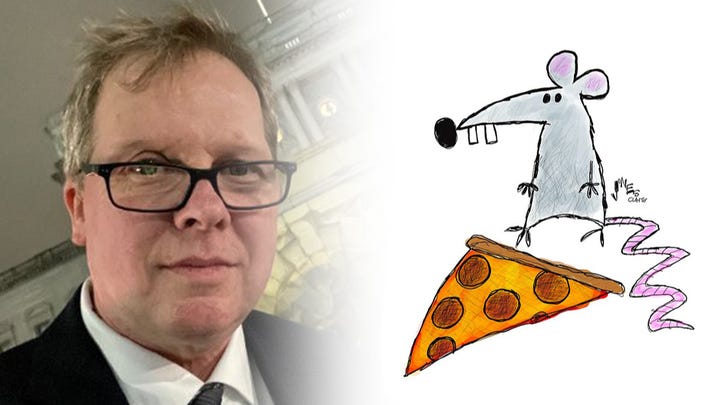
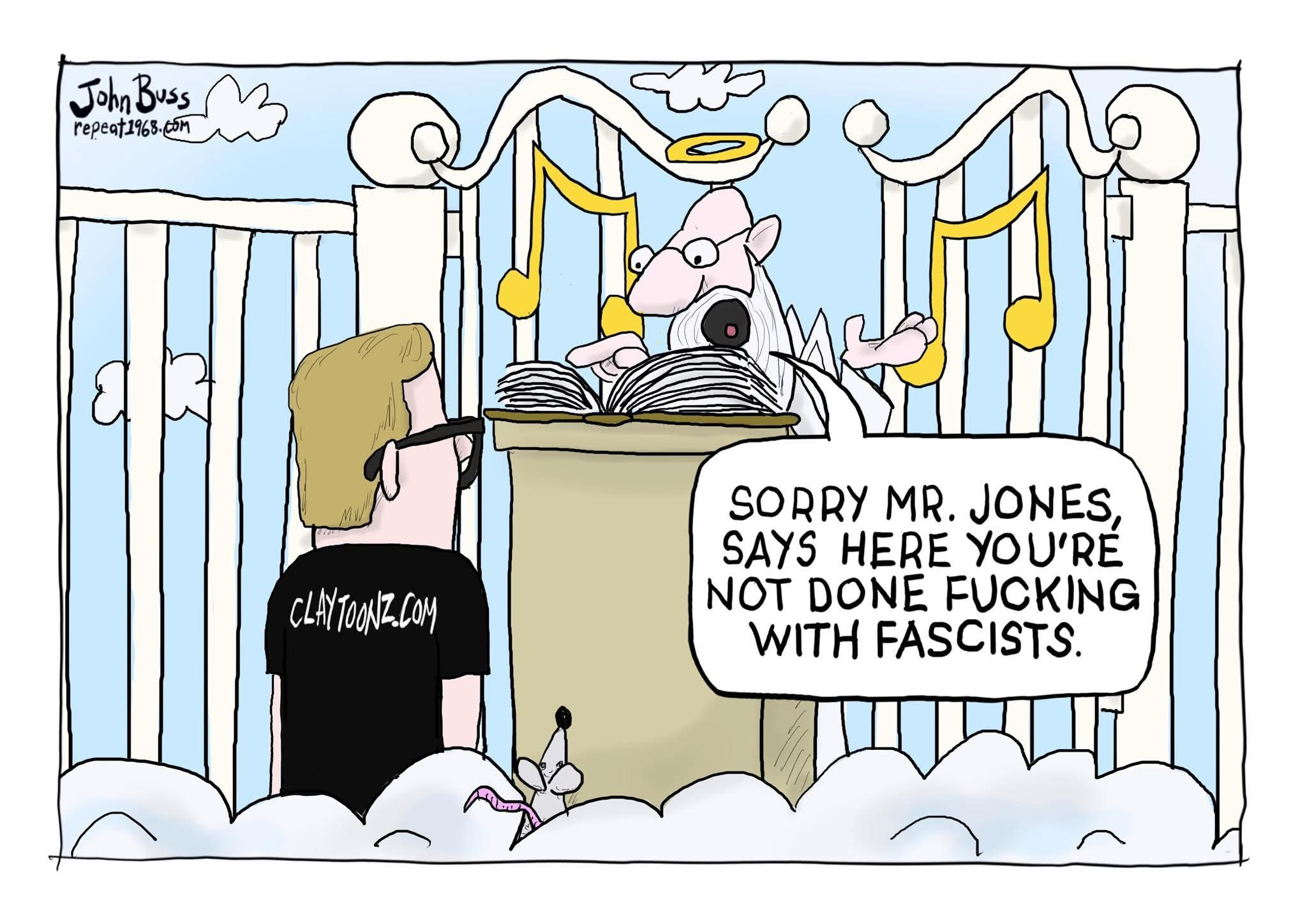
This is a cartoon drawn by John Buss.
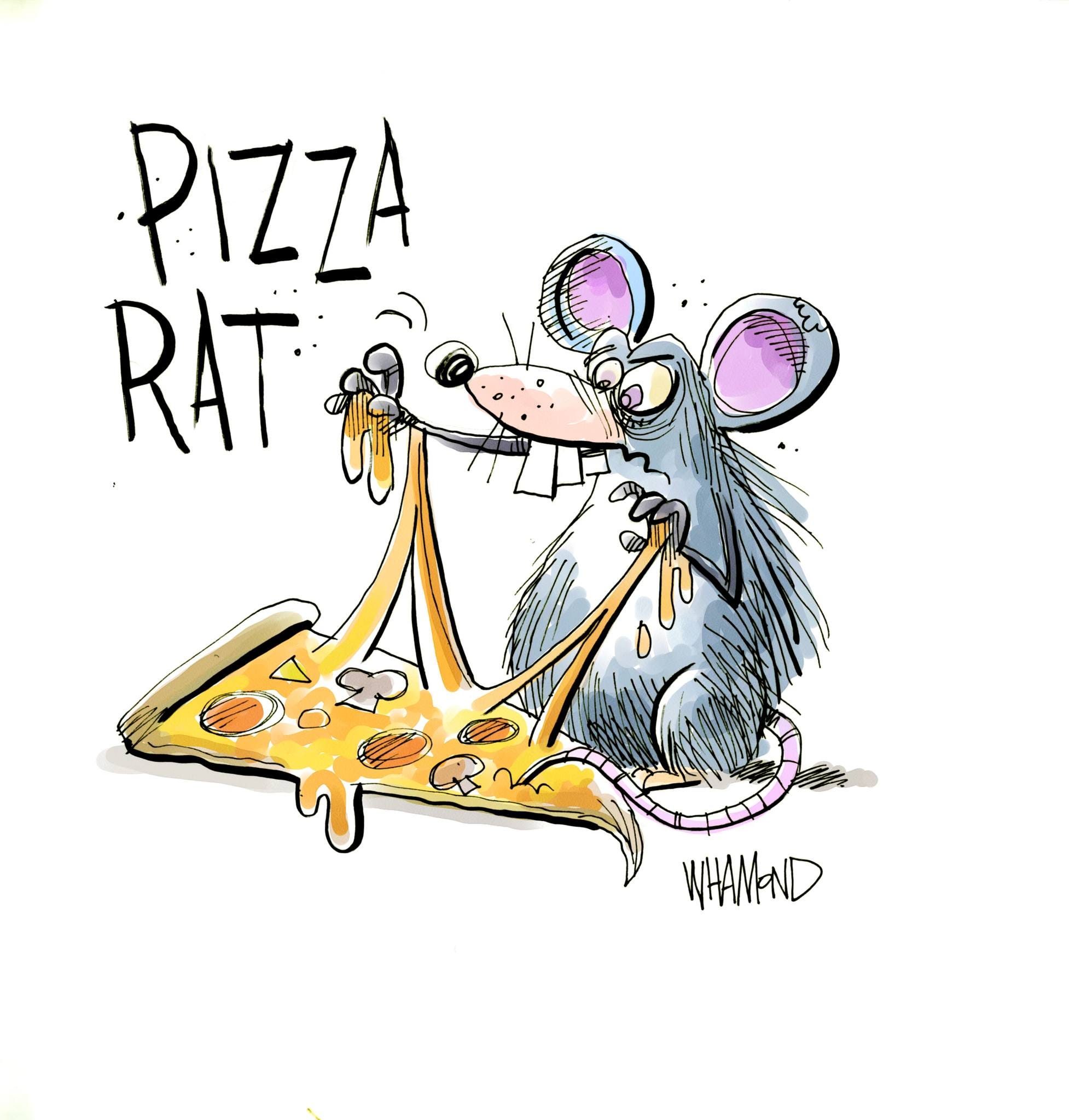
How to draw Peezy by Dave Whammond, and he’s trying to get more cartoonists to join in. I hope it happens because I would love to see more of my colleagues’ renditions of our favorite pizza.
Pertinent Info, Good Advice
as the temperature is way high these days.
We Are The Ones
Checking In; Love Is The Ultimate Resistance!
🫶 💖 🌻 ☮
Hi, there. I bet everyone who reads and writes here, is unhappy and at least a little apprehensive about the state of the USA. Everywhere we turn, there is another story of an illegal and outrageous action that our current administration has ordered our government to perform. So, I’m also certain I’m not the only one who feels the USA is in living nightmare territory. And then, we being who we are, we are also informed as to how the entire planet is undergoing increasing violence to itself and to people everywhere. Meanwhile, all that could be dissonant with our immediate surroundings, which increases the anxiety and/or whichever symptom/s we may have going.
For instance, while Ollie and I were outside playing this evening, we heard a great deal of “show-offy” driving in our area. Tonight’s high school game is Homecoming, which is celebrated by the town for a couple of days prior to the game, then the students get their celebration during half-time and after the game. Some of those students I had when they were kindergarteners and up, in the after-schools where I worked. Also, many alumnae have their reunions over Homecoming weekend. Fall Fest happens tomorrow and Sunday morning. Among other things, there are apple cider slushies at Fall Fest! So there is more traffic, and the younger people drive as if they’re Masters of the Universe (some of the old guys, if they have a muscle car to show off, drive just like that, too!) A person can almost forget about everything negative except hoping that no one is injured in the game, and that no one drives impaired tonight. A nice, relaxing evening, going into the night.
Then the other reality comes that some of the people who are here will not have a job to work on Monday, or a student won’t have a para, a nurse’s aide will be overworked and underpaid, and so on. Some of it due to the federal shutdown, or shutdown “related” cuts, some due to cuts that have been ongoing since January. Prices are still high; my own city has not cut services but has not replaced personnel who have moved on, so services are affected negatively for people who live here; more cities than not have done the same. It’s always something, everywhere. It’s a lot, and it’s overwhelming. And there are still the good and nice things happening within miles of us, or next door, or our own homes, too. It’s enough to explode a head!
So I thought I’d write in. None of us is alone. Everyone is at least stressed, so first, I want to check on people, see how you’re doing, see if you want to vent in comments, or ask questions, or share whatever you care to share. I know it’s a little late, at least on the East coast, but, well, this’ll be here all weekend.
I’ll share a little bit of a way to maybe work with/around what’s happening in everyone’s world. There is a saying: “Do small things with great love.” It may sound too easy, but it’s really not-it’s exactly what we all need: to show love and show how to show love so that everyone catches a ripple and does it, too. Most of us can do little if anything about the world-wide violence, but waving at our neighbor, offering a hello at the store or someplace, and simply smiling at people while looking at them will make a difference. And doing these things is actually being part of the resistance. Love is the ultimate resistance!
Finally, interestingly, when we do small things with great love, it’s almost as if someone did that for us, too, even if they really didn’t! It’s amazing how it works, but it does.
So, I hope everyone rests easily tonight, and gets some early sunshine when we get up. Enjoy the view at a local river side, and some chalk art I did during the pandemic.


Not-My-U.S.-Rep Sent Me A Constituent Message With Links
(Needless to say, state Republican legislators, with their supermajority here, are working to gerrymander her district to oblivion before the midterm filing deadline.)
The letter includes links for answers and help regarding the shutdown, seen below. If you click, those links will help all; Rep. Davids is a U.S. Rep and these are U.S. resources.
My actual rep did not send anything today. Over the weekend he referred to the “Schumer Shutdown” as if it was an inevitability; I’m sure he saw it that way as he’s all in on this administration’s actions (yep, Republican.) Anyway, here is this:
https://davids.house.gov/shutdown
Government Shutdown Help
I know many people are worried and upset about this government shutdown. I am doing everything I can to push for a bipartisan solution to end this crisis as quickly as possible. I understand Kansans are frustrated with Washington and are demanding solutions instead of more partisanship.
Right now, many government agencies unfortunately may be operating with limited staff. This will impact a variety of crucial services people depend on. My team created this web page to help answer questions, connect people with assistance, and to ask for your thoughts.
This is an evolving situation, so my team will continue to update this page as events warrant. Please know that we’re here to help however we possibly can. You can find the below menu to get answers to your questions. Please also feel free to call my office at (913) 621-0832.
- What is a government shutdown?
- What are the economic consequences of a government shutdown?
- When will the government shutdown end?
- Getting help during a shutdown.
- Share your concerns: Take the shutdown survey.
- What is the impact of a shutdown on:
- How can I learn more and see what other agencies are impacted?
(Snip-click on whatever you need or want to see.)
 Scottie's Playtime