In this interview Graham Platner responds to his detractors accusations against him. He discusses the tattoo and the Jewish times report that says he had talked about it while working at a bar during the time frame he was not working there. So there is not any credible evidence that he knew what the tattoo was. As he said why would he have danced with it in full display to his extended Jewish family? He makes sense. He understands that people may not like him because he is not polished as a politician. He also says he stumbles verbally and struggles to correct and improve himself. It was a hard hitting interview and Platner came off as very reasonable. Hugs
Now, in this must-watch interview, Mehdi Hasan speaks to Platner not just about his vision for a progressive “political revolution” in Washington DC but also about some of his controversies, including his social media and his tattoo that resembled a Nazi symbol.
“This idea of, ‘I won’t be erased,’ that’s something that brewed in my childhood,” she said. “I think that’s where the fight comes from. … I don’t want to fail, and I haven’t failed yet. I think that’s the scary part. I’ve never, ever had a floor beneath me.”
Brady-Davis is currently the only Black trans person holding public office in the United States, serving on the Metropolitan Water Reclamation District of Greater Chicago. She previously shared that title with Minneapolis City Councilor Andrea Jenkins, who retired in January.
And while water reclamation commissioner, a job that involves juggling budgets and managing wastewater and stormwater for Cook County, might not sound like a big title, those in the know are eyeing Brady-Davis carefully. She recently toured Washington, D.C., with Rep. Sarah McBride, who made history herself as the first trans person elected to Congress.
Brady-Davis doesn’t rule out the possibility of a congressional run. But she’s coy about her ambitions, talking around a bid for national office.
“For now, my focus is on being effective at the local level — but I’ve thought about how that work could expand to have a broader impact on issues like the environment, LGBTQ rights, and education,” she said.
“I absolutely think she could be a congressperson,” said Tracy Baim, co-founder of Chicago’s LGBTQ+ newspaper Windy City Times, who has watched Davis’ rise. “There’s no doubt in my mind she has the qualifications.”
Precious Brady-Davis speaks during an interview in her office. (Erin Hooley/AP)
Early life
Brady-Davis largely grew up with her grandparents but eventually wound up in foster care, where she was confronted with a version of Christianity that saw homosexuality as sinful.
In her memoir, “I Have Always Been Me,” Brady-Davis recalls going to a Pentecostal youth retreat and having a pastor call her out specifically: “I bind the foul spirit of homosexuality out of you,” she recalled him saying. “You are not a woman. You are a man.”
The preacher and others in the group lunged toward her; Brady-Davis later awoke prostrate on a kitchen floor, traumatized from the experience.
While she worked to conform for a while, as she learned about the world and herself, she gradually rejected those ideas. In college, she began performing in drag, first in her home state of Nebraska and then in Chicago.
At this time, two transitions were taking place. Brady-Davis was starting to live full-time as a woman. And her professional career was starting.
She took a job doing HIV prevention work among youth of color at Chicago’s Center on Halsted, the LGBTQ+ community center in the heart of Chicago’s Boystown neighborhood, amid tension over violence at the 2011 Pride parade and the subsequent crackdown on crime.
Center on Halsted, an LGBTQ+ community center in Chicago’s Northalsted neighborhood, where Precious Brady-Davis worked in HIV prevention among youth of color early in her career. (Jamie Kelter Davis for The 19th)
The job would prove difficult to impossible. While residents were angry with the Center, youth advocates claimed that the Center over-policed young people, calling law enforcement on homeless kids looking for safe places to sleep. Brady-Davis was forced to defend an institution that was being attacked from all sides. It would be her first political test.
“I advocated for those young people the best I could,” she said. “It was just cruel. … When I think that something is wrong, I’m going to speak up about it.”
Baim said she watched Brady-Davis turn every challenge into an advance.
“Precious has managed to navigate so many of the land mines that others have not survived, and came from a very, very grassroots approach to the work, and has really reimagined herself for each iteration,” Baim said.
Brady-Davis would do a stint with About Face Theatre, the LGBTQ+ youth theatre troupe in Chicago, and then join the Sierra Club, where she eventually became northeast communications director and battled President Donald Trump’s Environmental Protection Agency during his first term.
It was work that made sense for her, she said.
“How can I say that my work is invested in diversity, equity and inclusion when I’m not working in all kinds of diversity?” she asked. “Environmental justice felt like another kind of diversity.”
A family legacy
During Brady-Davis’ stint at Center on Halsted, a young man came literally knocking at her door without an appointment. The man, Myles Brady, was bald and eager to chat. He wanted to get involved in programs with youths. He shared that he was transgender, too. The fact surprised Brady-Davis. But he was so talkative that Brady-Davis didn’t know what to make of him.
“Like it was weird to me, and I was very protective of the young people at the Center,” said Brady-Davis. She decided to never follow up with him again.
Brady was persistent. He kept appearing at events. One night he asked Brady-Davis to dinner. She reluctantly agreed.
“I was like, at least I’ll get dinner out of it, right?” she said laughing. “I was like, I’ll go on this date, and I’ll never have to see him again.”
But a few months later Brady-Davis was headed to the Philadelphia Health Conference. She got an email from Brady. “I can’t wait to see you in Philly,” it said.
The message struck her as cute. Later that night while she was out to dinner with trans friends Brady walked in and sat down. Brady-Davis didn’t know it, but he had been invited by others at the table. She was being set up. Brady told Brady-Davis she was the most beautiful woman he had ever seen and that he wanted to build a life with her and take care of her.
“I saw him so differently that night,” she said. “It was the first time that I truly saw him.”
The two left the conference together and have been together ever since. They were married in 2016, and Brady-Davis appeared on TLC’s “Say Yes to the Dress,” the first transgender bride to be featured on the show.
Precious Brady-Davis and her husband, Myles Brady-Davis, wave to the crowd during the Chicago Pride Parade. The couple were the first transgender parents in Illinois history to be listed as their accurate genders on their children’s birth certificates. (Chicago Pride)
They had two daughters, Zayn and Zyon.
The birth of their first daughter, Zayn, provided another opportunity for advocacy. Brady, who was carrying the child, learned in 2019 that the state of Illinois would list him as a “mother” on the birth certificate and Brady-Davis as “father.” The two teamed up with Lambda Legal and petitioned the state, successfully changing the policy. Brady would be recognized as Zayn’s father, and Brady-Davis was listed as her mother.
“I always say it brings me the most joy to take my kids to school in the morning,” said Brady-Davis. “It’s one of the most normal things that I get to do as a human being. And it’s not about me being trans at all. It’s about me being a mom. …I’m proud of the ways in which I’m parenting my girls to be a part of a world that I hope is more inclusive, diverse.”
Into politics
Sierra Club positioned her well for her next big move, into electoral politics. In 2022, she vied for a spot as a commissioner on the Water Reclamation District. Though she fell short in the primary, the next year Gov. JB Pritzker appointed her to finish the term of the candidate who had beaten her, who had since joined the state legislature.
“Precious Brady-Davis distinguished herself as a trailblazer even before her historic appointment to public office in Cook County,” Pritzker said of Brady Davis in a statement to The 19th. “Throughout her political and nonprofit career, Precious consistently stepped up as the first — first to speak up for the LGBTQ+ community, first to share the story of her path to activism and public office, and first to encourage others to claim their seats at the table.”
Precious Brady-Davis speaks at a Metropolitan Water Reclamation District of Greater Chicago board meeting. After being appointed to the board in 2023, Brady-Davis won her primary this year by large margins. (Courtesy of Precious Brady-Davis)
When time came for her reelection bid this year, Brady-Davis won her primary by large margins.
But whether she finishes her six-year term remains to be seen. Apart from her time in D.C. with McBride, she has been chatting up major political donors. McBride says she would not be surprised to see Brady-Davis serving alongside her in Congress.
“I think the sky is the limit for her, and she is someone who I respect deeply,” McBride said. “It was personally meaningful to walk these halls with a trailblazer whose story is only just beginning.”
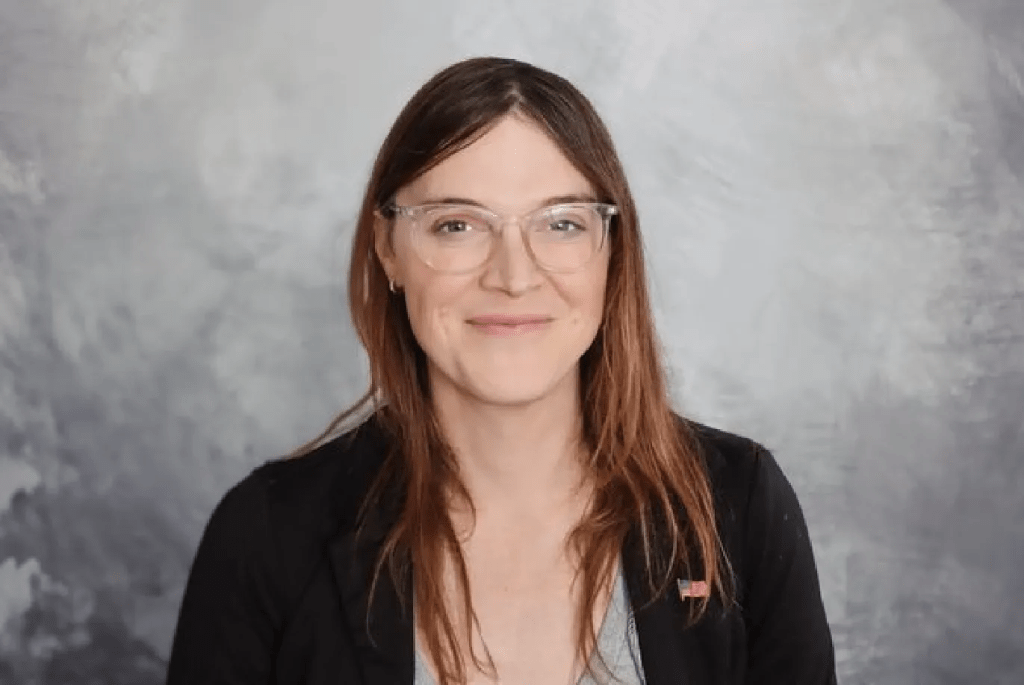
“While my opponent obsesses over my gender and uses cowardly tricks to try to avoid facing me, I will continue to fight for practical solutions to problems that actually impact our communities.”
Michigan Democrats are firing back after one of their own—a candidate in a state representative race—filed a complaint with the Wayne County Division of Elections, aiming to boot his primary opponent, Joanna Whaley, from the ballot. This is because Whaley is transgender and went through a legal name change process.
It seems that another contender for Michigan’s 2nd State House District seat, Frank Liberati falsely believed Whaley’s name change hadn’t gone through. So, last week, he accused her of running under a false name in violation of election procedures, official documents show, which were provided to Erin in the Morning by Whaley.
They also showed that Liberati went even further in his anti-trans rhetoric. The complaint invoked Whaley’s deadname (a given name a trans person no longer uses) at every turn, consistently misgendered her, or called Whaley “she/he.”
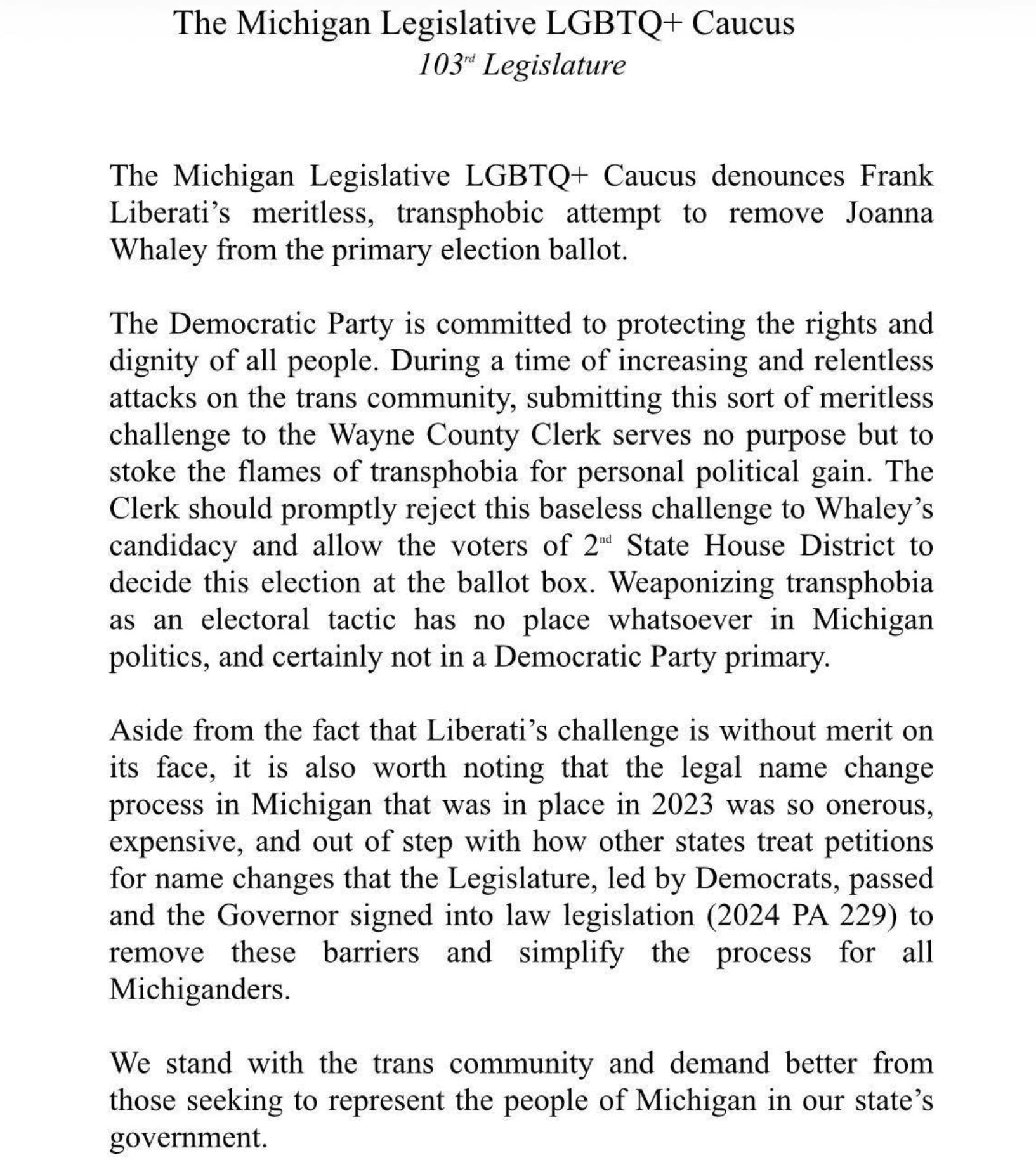
The Michigan Legislative LGBTQ+ Caucus denounced Liberati’s “transphobic tactics.”
“During a time of increasing and relentless attacks on the trans community, submitting this sort of meritless challenge to the Wayne County Clerk serves no purpose but to stoke the flames of transphobia for personal political gain,” a statement from the Caucus reads.
Democratic lawmakers further called on officials to throw out the complaint. “The Clerk should promptly reject this baseless challenge to Whaley’s candidacy and allow the voters of 2nd State House District to decide this election at the ballot box. Weaponizing transphobia as an electoral tactic has no place whatsoever in Michigan politics, and certainly not in a Democratic Party primary,” the statement said.
Whaley told Erin in the Morning that she expected to encounter transphobia when running for office, but she was shocked when she learned it was from a fellow Democrat.
At the same time, she also said she has been flooded with support from voters, Party members, and leaders who were outraged by Liberati’s maneuver.
“I spoke with the chair of the Michigan Democratic Party, and we are united across the state that this is not how Democrats act,” Whaley said. “This is not what we represent.”
Whaley said Liberati’s complaint was based on outdated court filings. When Whaley first came out, excessive state fees ended up delaying aspects of her legal transition. Since then, the state legislature has passed laws to make name changes less burdensome. Whaley filed again, got her name successfully updated, and has been going by Joanna ever since.
“When a candidate cannot run on their own merits, they resort to lies and distractions,” Whaley said in a public response when news of the challenge first broke. “Our campaign remains focused on the issues that matter to the residents of this district: lowering water and utility bills, expanding healthcare access, fixing our infrastructure, and protecting our freedoms.”
“While my opponent obsesses over my gender and uses cowardly tricks to try to avoid facing me, I will continue to fight for practical solutions to problems that actually impact our communities,” she continued.
This isn’t the first time that issues with name changes and state identification laws have been weaponized against trans voters and/or candidates. Gendered party seat positions, which were initially created to advance the representation of women in office, have since become a barrier for people of marginalized genders who want to run for a position.
Meanwhile, stringent voter ID policies are poised to hinder trans and gender nonconforming people’s ability to vote if their current documentation or gender expression doesn’t match their name and gender assigned at birth. (The name change issue extends beyond trans people; married women who take their husband’s last name have also reported barriers to voting.)
In addition to her candidacy, Whaley is a parent, a hospital chaplain, and a proud Democrat. She told Erin in the Morning she was in part inspired to run for office by Liberati’s brother: Sitting member Tullio Liberati, who crossed party lines last year to vote in favor of a bill that discriminated against transgender women and girls in sports.
Transphobia, it seems, runs in the family. Frank personally signed off on the complaint submitted to officials, notary and all.
Liberati did not immediately respond to a request for comment. Prior to this race, he had served for six years as a state representative in Michigan’s 13th District.
Whaley said she expects the complaint to be resolved and that she hopes to bring the conversation around her candidacy back to the issues that impact everyday voters.
“[Resorting to] this move in the first place shows that we are the campaign to beat,” Whaley said. These are tactics to “knock me out of the race, because [Liberati] can’t win on the issues.”
Lo, while billionaires gathered at the Met Gala to pretend they have class or culture, Amazon workers showed up outside to remind everyone what really funds their costume party.
Piss bottles.
1. The Workers Crashed The Party
Jeff Bezos paid $10 million to attend this year’s rich scumbag costume ball.
And lo, Amazon workers said: absolutely fucking not.
The Met Gala wanted to turn Bezos into a patron of the arts.
Amazon workers turned him back into the Lex Luther villain he is.
Behold, Chris Smalls and Amazon workers outside the Met Gala, reminding America who really built Bezos’ empire.
(There’s a little video embedded on the page that I can’t snag and bring back. Click above on the title, or here to see the videos, and to save yourself time, read the little bit of the rest there, too. Snip)
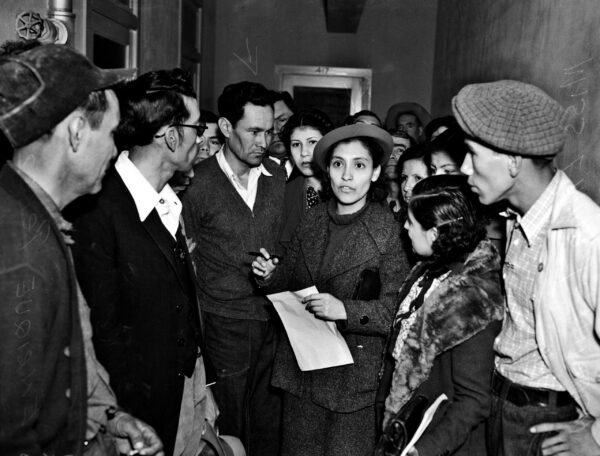
Emma Tenayuca was a labor organizer in Texas who is best known for leading a strike of pecan shellers in 1938. Workers called her “La Pasionaria“ which means “Passionflower.” From a young age, she survived violence and imprisonment in her quest to help workers get better working conditions and higher wages.
Tenayuca was born on December 21, 1916, and I know all of you December birthday people will identify with her plight – born too close to Christmas, she never got ‘birthday’ presents. Her family was Mexican American, and had lived in Texas for many generations. She was raised by grandparents who were interested in politics, and was also influenced by the speakers in the San Antonio town square. She was brought up with pride in her family and their roots, and she was encouraged to be educated and politically active by her family.
Emma Tenayuca in 1939, photographed for a Personality of the Week article in The San Antonio Light
Tenayuca was arrested for the first time at 16, for protesting alongside striking workers from the Finck Cigar Company. She used her bilingual language skills to help people with their problems and worked with many organizations working towards better pay and better conditions for Mexican-Americans.
One of the most common positions for Mexican-American women in the area was in the pecan industry. Pecan shelling for 6-7 cents a pound was difficult work (the meat of the shell must remain intact) for little pay. Additionally, the process filled the factory rooms with a fine dust that contributed towards tuberculosis.
In 1938, the factories cut pay to 3 cents a pound and Tenayuca, who was 21 years old at the time, found herself leading a strike of approximately 12,000 workers. The strike faced violent opposition, as detailed in the article “Remembering Emma Tenayuca:”
When Pecan production ground to a halt, the owners fought back: Tenayuca and hundreds of strikers were gassed and arrested by San Antonio police. Some were beaten as well. With the NWA rallying community support, the strike turned into a city-wide uprising of the poorest and most oppressed people in San Antonio.
Thirty-seven days after the strike began the pecan producers agreed to arbitration. A few weeks later, the workers had won a wage increase to seven or eight cents per pound.
Tenayuca faced opposition as a woman, as a Mexican-American, as a labor organizer, and as a member of the Communist Party (she left the Party in 1946). From Americans Who Tell the Truth:
Some entertaining; some, things about which to think. The first bit is somber; exceedingly somber. It is easy to just click through on the title to read the entire post; I subscribe for free, so I don’t want to just take the whole thing. Beneath, more stuff! Enjoy your May Day. 🌺
When the Supreme Court dealt the final blow to the Voting Rights Act, it completed its mission to erase the tangible results of the Civil Rights Movement.
The dictum,”once a free man, always a free man,” though founded about as deeply in law, history and reason as, that “all men are born free and equal,” … [is] unimportant and ineffectual to protect the rights of citizens of slave States.
— Judge Hamilton Gamble
On March 22, 1852, America made a slave.
America’s race-based, constitutionally enforced system that legally extracted labor and intellectual property through violence or the threat of violence existed long before the 13 English colonies staged an insurrection against their British master. Colonial law made the condition intergenerational and perpetual. The founders wrote the fugitive slave clause to ensure that people who had already been reduced to human chattel couldn’t free themselves. But the Constitution didn’t make someone a slave. (snip-MORE, and so worth the click!)
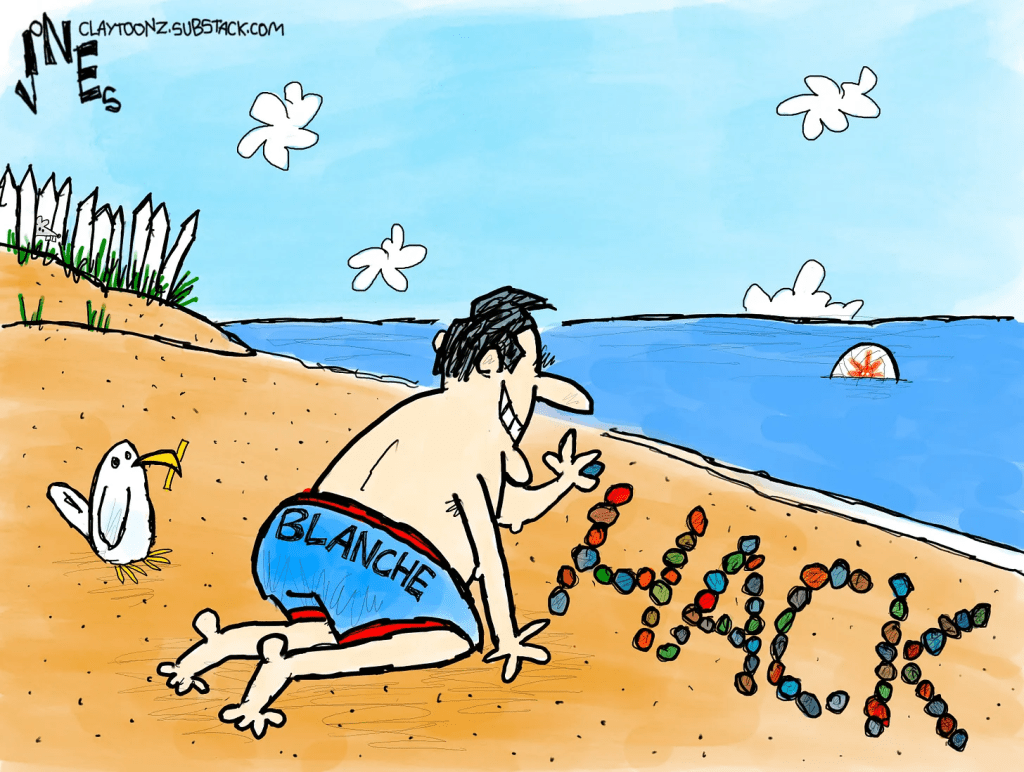
As you know, by now, Todd, Blanche, Donald Trump’s former personal lawyer and current acting Attorney General, is a political hack.
If you had read that someone was going to prison in another country for posting an image of seashells that spelled out 8647, you would think that it was from an authoritarian state. If this were North Korea, would James Comey be put to death by anti-aircraft fire?
Pam Bondi, Blanche’s predecessor, was fired for what many believe was for being too slow to prosecute Donald Trump’s enemies. She had already indicted James Comey once before, which was basically laughed out of court, and never had even the slightest possibility of ever going to trial.
Participation in the Supplemental Nutrition Assistance Program (SNAP) fell by more than 3 million people (8 percent) nationwide between July 2025 and January 2026. The drop followed the enactment of H.R.1, the Republican megabill that made unprecedented cuts to the program. SNAP typically expands to meet need and then shrinks when economic conditions improve. It took over three years for the caseload to drop by over 3 million people (or 7 percent) between its peak in December 2012 and February 2016, during the recovery following the Great Recession.
But economic conditions haven’t been improving as the number of people receiving SNAP has plummeted in recent months, representing the sharpest decline in decades. The last time there was such a steep decrease in participation in such a short period of time (other than temporary spikes following natural disasters) was nearly three decades ago, after Congress enacted very deep cuts to SNAP (then the Food Stamp Program) in 1996. SNAP participation dropped by 9.4 percent (2.2 million people) in the six months between March and September 1997.
SNAP participation has fallen in every state and in some, the drop is particularly alarming. (snip-MORE)
Leave it to Donald Trump to have to be taught about checks and balances by a king.
Donald Trump is enamored of King Charles and the British monarchy, even while disliking the British government. Donald Trump is envious because he wants to be a king. For most people, being president would be enough. (snip-MORE)
You might remember last year the documentary I’m involved in, Democracy Under Siege, was having trouble finding a U.S. distributor although it was received enthusiastically overseas. Well, we’re going rogue and here’s your opportunity to watch it for free from May 1-4. Sign up here.
* Also, Laura Nix and I will be speaking with the satirist and free speech defender Andy Borowitz on his podcast May 3rd. Don’t miss it!
The Secret Service has been praised endlessly for the job they did Saturday night, protecting Donald Trump. They did everything they could to make the ballroom at the Washington Hilton a safe space for Trump, and you must admit, they succeeded. Not one comedian got into the room.
What? Did you think I was talking about a shooter? (snip-MORE)