Florida Voters Did It!

Democrats flip seat in Florida state house in district that includes Trump’s Mar-a-Lago

Emily Gregory defeats Republican Jon Maples in district that is home to US president’s Palm Beach estate

Democrats managed to flip a seat in the Florida state house in the district that is home to Donald Trump’s Mar-a-Lago.

Emily Gregory, a Democrat, defeated Republican Jon Maples, who had an endorsement from the US president, in the special election in Florida’s 87th state house district. The Associated Press called the race on Tuesday evening, with Gregory, a public health expert and small business owner, leading by more than 2 percentage points.

The Republican who previously held the seat had won by 19 percentage points in 2024.

Trump voted in the race via mail-in ballot, despite criticizing the practice as “mail-in cheating” during an event in Tennessee this week. The president has long attacked voting by mail, describing it as a scam and arguing it creates fraud in elections. He still opted to vote by mail in the race although he was recently in Palm Beach, where early in-person voting was under way until Sunday.

The president had urged voters to back Maples, a financial adviser who describes himself as an “America-First patriot”. Maples had faced scrutiny in recent weeks over allegations that he did not live in the district in which he was running, claims that he denied.

Democrats have said that Gregory’s win shows voters frustrated over rising costs are moving away from Trump and the Republican party.

“Mar-a-Lago just flipped red to blue, which should have Republicans sweating the midterms,” Heather Williams, the president of the Democratic Legislative Campaign Committee, said on social media. “A Trump +11 district in his own backyard shouldn’t be in play for Democrats, but tonight proves Republicans are vulnerable everywhere.”

State Democrats have flipped 29 districts since Trump’s election, Williams said.

314 Action, a political committee that works to get Democratic scientists elected to office, had endorsed Gregory and praised her win, writing in a statement that “a Stem wave is coming”.

“Emily won because Floridians trust her to make decisions based on evidence not ideology,” said Shaughnessy Naughton, the group’s president. “She’s bringing science back to the state house and heading to the [state] capitol on a mission to lower costs, restore healthcare and bring down the temperature in Tallahassee.”

A Letter From God

Well, a video, anyway.

The women leading the farmworker movement won’t let it be defined by Cesar Chavez

The sexual abuse allegations against Chavez have rocked them. But their focus is still on protecting other women.

This story was originally reported by Chabeli Carrazana, Shefali Luthra and Marissa Martinez of The 19th. Meet Chabeli, Shefali and Marissa and read more of their reporting on gender, politics and policy.

Monica Ramirez has spent much of her life spotlighting the pervasiveness of sexual violence against women farmworkers. She, like many in that movement, considered civil rights leader Cesar Chavez an icon. 

Since allegations came to light this week that Chavez sexually assaulted women and girls as young as 12 — including fellow movement leader Dolores Huerta — Ramirez and the larger farmworker community have been left reeling. Now, they’re trying to reconcile how this man who so many revered — whose name is on streets, schools and even a holiday — could perpetrate the violence that has plagued women farmworkers for decades. 

The community has been “shaken to its foundation,” said Ramirez, the founder of Justice for Migrant Women, a civil rights organization focusing on farmworker and migrant women. She and other leaders are now trying to push forward the farmworker movement and continue the work that many women — not just Chavez — spearheaded. 

A woman with long dark hair wearing a white blazer stands against a black background, facing the camera with a serious expression.
Monica Ramirez, founder of Justice for Migrant Women, said the farmworker community has been “shaken to its foundation” by the allegations against Cesar Chavez. (Courtesy of Monica Ramirez)

“The farmworker movement is a leaderful movement, and women have always been part of that leadership,” Ramirez said. But their work has often been made invisible, sometimes by the very men who stood beside them in building worker power for Latinx people in the United States.

“In order to have a movement, in order to have a boycott, in order to organize any kind of action, it’s often women who are helping to organize the meetings, helping to bring their compañeras,” Ramirez said. 

Chavez was one of the most revered figures in the Latinx civil rights movement. The labor leader cofounded what became the United Farm Workers union alongside Huerta, and was most known for a series of strikes and protests that grew unionization efforts across California. After Chavez’s death in 1993, he was posthumously awarded the Presidential Medal of Freedom, the nation’s highest civilian honor. In 2014, former President Barack Obama designated his birthday, March 31, as a federal holiday to celebrate his legacy, which many states had already marked.

Now, many of those celebrations are being canceled or renamed after a bombshell, yearslong investigation published by The New York Times Wednesday found evidence of a pervasive pattern of sexual abuse perpetrated by Chavez. Two women said Chavez sexually abused them for years as girls, when the organizer was in his 40s and had already become a powerful global figure. Ana Murguia said Chavez first assaulted her when she was 13; Debra Rojas was 12. 

In the years following the abuse, both suffered from depression, panic attacks and substance abuse. 

“I feel like he’s been a shadow over my life,” Rojas told the Times. “I want him to stop following me around. It’s time.”

Huerta, the renowned activist who coined the rallying cry, “Sí, se puede,” spoke at length about emotional and physical abuse from her longtime organizing partner — a disclosure she had never made publicly. She told the Times that he raped her in a secluded grape field in 1966, and had pressured her to have sex with him another time during a work trip in 1960. Both encounters resulted in children. Huerta concealed the pregnancies and arranged for the baby girls to be raised by others. 

She was shaken upon hearing the allegations from other women, and told the Times she struggles to reconcile the man she knew and the one who assaulted her.

An older woman sits on a couch speaking to someone out of frame, wearing a black outfit with a colorful patterned jacket and gold jewelry, hands clasped as she listens intently.
Labor leader and civil rights activist Dolores Huerta sits during an interview in San Francisco, Saturday, June 8, 2024. Huerta revealed she was raped by Cesar Chavez and pressured into sex during their years organizing together, disclosures she kept private for decades while building the farmworker movement. (Stephen Lam/San Francisco Chronicle/AP)

In a statement released Wednesday, Huerta said she carried her secret for 60 years because “building the movement and securing farmworker rights was my life’s work. The formation of a union was the only vehicle to accomplish and secure those rights and I wasn’t going to let Cesar or anyone else get in the way.”

She said she spoke up because she learned there were others coming forward. 

“The farmworker movement has always been bigger and far more important than any one individual. Cesar’s actions do not diminish the permanent improvements achieved for farmworkers with the help of thousands of people,” she said. “We must continue to engage and support our community, which needs advocacy and activism now more than ever.”

Magaly Licolli knew exactly what Huerta was talking about in her statements about Chavez.

Licolli is the co-founder and executive director of Venceremos, an organization advocating for poultry workers in Arkansas, and she’s heard stories about sexual harassment and assault on women for years.

Before she started Venceremos, she was fired from another poultry worker organization after speaking up about multiple accusations of sexual harassment and assault against a well-known organizer.

“Women came forward and accused the organizer of sexually assaulting them or sexually harassing them. When I brought that to the board, they didn’t believe it,” Licolli said. “I had to stand with the women … I cannot do this work pretending I’m doing justice when I’m hiding injustice.” 

Licolli felt that echoed this week.

“Women of color, we are not trusted on what we go through. We have to prove with pictures, with testimony, our own stories for our own stories to be validated,” she said. “I’m happy that now it’s something that people are talking about, and I’m happy that people are now reflecting about what is the role of women in the movement and when we have to be silenced toward that kind of injustice to protect the work that we do.” 

A woman with long dark hair sits outdoors on a bench wearing a red and yellow patterned top and black skirt, looking directly at the camera with a composed expression.
Magaly Licolli, co-founder of Venceremos, pointed to a pattern in organizing spaces where women who report abuse are doubted, ignored or pushed out. (Courtesy of Magaly Licolli)

A growing share of farmworkers are women, according to the U.S. Department of Agriculture: about 26.4 percent in 2022, the most recent year for which data is available. Most are Latina.

A 2012 report by Human Rights Watch, an advocacy organization, found that women farmworkers are often at risk of sexual harassment or assault, with virtually every worker interviewed for the report saying they either had experienced harassment or assault or knew someone who had. Farmworkers work in mixed-gender settings, and they have limited worker protections But women typically lack avenues to report their experiences, the report’s authors wrote, in large part because of immigration status. As of 2022, most farmworkers were immigrants without U.S. citizenship.

“Sexual violence and harassment in the agricultural workplace are fostered by a severe imbalance of power between employers and supervisors and their low-wage, immigrant workers,” the report said. 

A 2024 review published in the Journal of Agromedicine suggested that as many as 95 percent of women farmworkers in the United States have experienced workplace sexual harassment. 

None of the women in the Times story spoke publicly until recently because of the shame and fear associated with reporting abuse against prominent organizers. 

But over the past decade, after the growth of the #MeToo movement and the release of millions of Epstein files that have implicated numerous people in powerful positions, survivors have been more willing to speak up about their experiences. 

Ramirez, who also founded the public awareness campaign known as the Bandana Project to raise awareness of sexual violence against farmworker women, said she now expects more women to come forward with their own stories. At an event Wednesday night shortly after the news broke, she said one woman came up to her to tell her how sexual assault was a problem in the fields where she worked as a teenager. 

“Now that we understand clearly that this issue of sexual violence is an endemic problem in our society … the question we have to answer is: Knowing that, how serious are we going to get in our commitment to ending the problem?”

California lawmakers already plan to change the name of Cesar Chavez Day on March 31 to “Farmworkers Day,” and efforts are underway to remove his name from landmarks. But the real work to come will be about investing resources and support to improve the culture that has protected perpetrators in organizing spaces over victims. 

Rep. Delia Ramirez, an Illinois Democrat who worked in organizing before entering politics, said it was “devastating” that the claims took so long to come out. She said when she became an executive director of a nonprofit at 21, she, too, had faced situations that in hindsight were not appropriate, and left the organization with a responsibility to create safer environments for other young women. 

“Oftentimes women, especially women of color, we end up having to hold so many things for the sake of the movement, family, community,” Delia Ramirez told the 19th. “I don’t believe that there is one hero for our movements. Movements are led by a collective, and you can’t create some pedestal for one person, because humans will always fail you.”

A woman speaks into a microphone at a rally, raising one finger as she addresses a crowd with signs and people behind her.
Rep. Delia Ramirez said movements are led by a collective and warned against placing any one individual on a pedestal. (Allison Bailey/NurPhoto/AP)

Moving forward, Monica Ramirez said people will be watching how leaders in the farmworker movement respond to the allegations. Do they take a defensive posture or question the veracity of the survivors’ accounts? The revelations about Chavez come at a time when sexual misconduct by powerful men has been in the spotlight, all while the country grapples with a wave of immigration enforcement actions that are targeting Latinx people. 

Licolli, the poultry organizer, said she has “never romanticized the immigrant community and the immigrant movement.” Sexual abuse happens in every movement and it doesn’t negate the work that’s been done to secure worker power, she said. 

And for the farmworker women who are leading this work, it feels more urgent than ever that they continue leading.

Rosalinda Guillen, a farmworker and organizer in Washington state, leads Community to Community Development, an explicitly feminist and women-led organization — a perspective that she said lends itself to advocating for workers who are also parents, and that she said offers space for women farmworkers to assert their needs. 

Guillen never met Chavez but was inspired to devote herself to organizing on behalf of farmworkers after his death. The news has been a “revision of everything that many of us know about the farmworker movement,” she said. 

Her organization is removing images of Chavez from its office, Guillen said. “We revisited our values and principles in how we work together, reiterating there is no room for that,” she said, referring to sexual misconduct.

On Wednesday, while staff were still processing the reports, five farmworkers walked in. They had just lost their jobs.

Her staff switched gears, turning to figure out what those workers needed and how they could support them.

“They walked in reminding us this is the focus,” Guillen said. “This is why we’re here: To protect farmworkers.”

Less Than 2 Weeks!

Remember Stormy Daniels?

Here’s an update.

For Lunchtime/BreakTime Reading

Losing the Plot: The “Leftists” Who Turn Right

What do we make of former friends who fell down the rabbit hole of the Right?

Kathryn Joyce and Jeff Sharlet December 12, 2023

How to name the rude currents eroding the Left, those which have claimed the hearts, minds and Substacks of so many former friends and fellow travelers? There are the journalist-provocateurs and the readers who have followed them rightward, the Trumpers-come-lately marching on to Glenn Greenwald’s Rumble or vanishing into Max Blumenthal’s Grayzone. There are those not quite yet there, such as Ana Kasparian of The Young Turks, currently mourning the leftism she now believes ​“gaslit” her about a ​“crime wave” it refuses to admit. ​“I’m going through something very real and very sincere,” she told a ​“disaffected Democrats” podcast in July, ​“and it’s uncomfortable.” It is, indeed. 

Consider the dislocation that flickers across the face of journalist Matt Taibbi in a TV interview this summer for the conspiracist, right-wing Epoch Times. Acclaimed by the Left during Occupy Wall Street as a scourge of corporate power, Taibbi is best known for his years at Rolling Stone. When the day eventually comes, the ​“vampire squid relentlessly jamming its blood funnel into anything that smells like money”— Taibbi’s unforgettable embodiment of Goldman Sachs in a 2010 article—will haunt his obituary.

While Taibbi insists his politics haven’t changed — an oddly conservative way to insist one hasn’t become conservative — his surroundings certainly have. Wearing a velvety brown jacket, jeans and his default smirk, he sat for his Epoch Times interview amid the libertarian FreedomFest conference. This year, in addition to Taibbi, it featured as speakers presidential candidates RFK Jr. (an Independent) and Vivek Ramaswamy (a Republican), along with former candidate Tulsi Gabbard (now a former Democrat, too), united in their contempt for ​“wokeness.” Epoch Times’ Jan Jekielek anointed Taibbi an ​“American Thought Leader” for Taibbi’s critique of a timid, consensus-driven press that, he says, is reminiscent of the Soviet Union. 

As Taibbi charges that the media is unwilling ​“to raise questions about things that have been ​‘decided,’” Jekielek’s eyes light up. It reminds him of his own experience bucking consensus, he says, when, as a university student, he realized the core tenet of evolutionary science ​“simply was untrue.” Gulp. In the midst of nodding along, Taibbi’s normally expressive, still-boyish face seems to freeze, his fingers to tense on his knee. It’s a moment recognizable from countless movies. Imagine the record scratch, the freeze frame, the familiar Hollywood voiceover: ​“You’re probably wondering how I got here.”

Taibbi’s far from the first. Consider the case of David Horowitz, once a founding sponsor of this magazine, more recently author of Blitz: Trump Will Smash the Left and Win. Or, after him, Christopher Hitchens, whose knowledge of Iraqi Ba’athism led him, after 9/11, to align first with U.S. neoconservatives and ultimately with the very kind of religious nationalists he’d so long derided. We might mark 9/11 as a moment when many who believed they were for peace gave in to the notion that it can only be won through war. Post-October 7 may prove another such moment.

But the present left-to-right acceleration began in earnest with the onset of the Trump years, in 2017.

There are the intellectuals-in-exile, the scholars whose once contained complaints about free speech or diversity initiatives metastasized into a broad contrarianism that found new patrons. There are the not-so-funny-anymore, the comedians once known for their left politics — Chappelle and Roseanne and Russell Brand — pulled rightward by ​“jokes” about trans people, pandemic panics and pedophiles. There’s the ​“new New Right’s” very own Kennedy — Robert F., Jr., of the bulging biceps. RFK Jr. may seem, with his campaign pushups, little more than a joke to young leftists, but his history as a champion of intersectional environmentalism is long: as a leader of activist organizations, a lawyer for poor communities of color and a host for the defunct progressive radio network Air America. But in recent years, he’s been having second thoughts: We all know about Bobby and the vaxx, but did you know he’s recently ​“learned” we must seal the Southern border to protect our food supply from a ​“tsunami” of ​“defecating” migrants, shitting on our greens?

These left-to-right sliders (or at least left-ish-to-right) — themselves migrants across the political divide — find themselves in strange constellation with those they might once have disdained. Pop feminist icon Naomi Wolf now conferences with hard-right student organizer Charlie Kirk over the prospect of ​“capital punishment” for Joe Biden and Kamala Harris. YouTuber Jimmy Dore, another once-left comedian who lost hold of the joke, now marvels over his meeting of the minds with Tucker Carlson: ​“We should do a show together!” Call it The Horseshoe Hour.

Except ​“horseshoe theory,” which imagines a political spectrum bending to meet at its extremes, doesn’t describe this drift. It goes in one direction. 

It’s easy to dismiss many of these high-profile defectors as crackpots or spotlight-seekers, as never truly serious in their political principles or as plain grifters. Because of course there is money to be made by saying, ​“Once I was blind, but now I see.” It permits the Steve Bannons of the world to affirm their political faith not as an argument, but just the truth. But, in some ways, the peculiarities of the celebrity drifters are beside the point.

The point is who they bring along.

Over the past seven years, they — the intellectuals, the comedians, their fans, the growing cohort of voters now leaning toward RFK Jr. (22% in one November poll) — have taken ​“red pills” a la The Matrix, tumbled down rabbit holes in the Wonderland sense. In moments of great flux — the 1960s from which Horowitz fled, the post-9/11 years, the current clusterfuck of crises so vast and interconnected that they might more simply be called our condition — such portals, from one reality to another, are plentiful. And currently they’re mostly riddling the Left as fascism gathers force, drawing together tendencies that didn’t previously align. There’s the rabbit hole of a Manichaean anti-imperialism, in which the enemy of my enemy is my friend, and the twisting logic by which some come to believe first in Vladimir Putin and then in the self-declared ​“illiberal democracy” of Hungary’s Viktor Orbán. There’s the gender confusion of ​“trans-exclusionary radical feminists,” who begin with a defense of women’s-only spaces and then fall, like J.K. Rowling, into alliances with the Christian Right. There’s the race vs. class debate, and the declaration that identity is just a distraction. There’s #MeToo, and the backlash of those who can’t let go of fallen heroes. There are genuine critiques of the concept of ​“white fragility” that collapse into white fragility, no quotation marks.

Matt Taibbi’s own slide began in 2017, after the release of his book about the police killing of Eric Garner, I Can’t Breathe, was derailed by the resurrection of his misogynistic exploits as a young expat reporter in post-Soviet Moscow. Taibbi’s apologies didn’t quell the criticism. Then he started talking about ​“cancel culture”; then liberal media bias; then, late in 2022, he made himself the mouthpiece for Elon Musk’s Twitter Files project. In March, he found himself in a congressional hearing, nodding along as Rep. Jim Jordan (R-Ohio) described Democrats as a McCarthyite mob. In November, Taibbi and two other Twitter Files reporters received a $100,000 award from a program of the Young America’s Foundation, long a bridge between establishment conservatives and each generation’s shoutiest right-wing youth.

In similar fashion, Naomi Wolf ​’s path from a liberal third-wave feminist writer of ​“big ideas” books to a regular guest on Steve Bannon’s War Room and Fox News began— or perhaps sped up — with a career humiliation. As Naomi Klein recounts in her recent book Doppelganger: A Trip Into the Mirror World, the premise of Wolf’s 2019 book Outrages collapsed on live air over a misunderstanding of an archaic legal term. By 2021, Wolf had emerged as a key purveyor of Covid-19 conspiracy theories, warning that ​“vaccine passports equal slavery forever.”

“We’re seeing people turn right for a number of different reasons,” argues journalist Eoin Higgins, author of a forthcoming book on formerly left-wing journalists who’ve aligned with reactionary tech billionaires. ​“There are financial incentives, there are attention incentives, there are culture war differences as people are becoming more conservative on culture; there’s a sense of being betrayed by progressives and the Left. There are so many different reasons that reducing this to people going too far [left] and going to the Right is an oversimplification.”

Maybe there’s a kind of gravity to the slide, the black hole of fascism sucking toward it all the loose particles of those whose commitments were never complex or whose convictions were snapped by despair. And the accusation that arises with almost every left-to-right slider, that they’re sell-outs, just doing it for the money? Yes, some are. Yes, and—because even when it starts that way, the transaction is transformational.

In the wake of Bernie Sanders’ loss in the 2020 presidential election, a small collection of leftists reconstituted themselves as ​“post-left,” still opposed to capitalism but scornful of ​“identitarian politics” and so disgusted with the liberal-left — from Democrats to the Democratic Socialists of America — that they saw little issue allying with the Right.

UnHerd, a U.K.-based ​“heterodox” opinion website founded by a Brexit supporter, covered the movement in a piece titled ​“Twilight of the American Left.” To the post-left, explained contributor Park MacDougald, the real U.S. ruling class is a Democratic oligarchy that uses the threat of creeping fascism and white nationalism to consolidate power, and deploys “‘identity politics,’ ​‘antiracism,’ ​‘intersectionality’ and other pillars of the progressive culture war” as ​“mystifications whose function is to demoralize and divide the proletariat.” Leftists, in this view, merely serve as that regime’s ​“unwitting dupes.”

But distinct from other ​“class-first” leftists, the post-left didn’t believe a real Left remained at all. Hence the double-edged title of the now defunct podcast What’s Left?, cohosted by Australian social media personality Aimee Terese, a former Sanders supporter who sought to “[heighten] the contradictions between left-liberal-identitarians and materialists” and who spent much of 2020 attacking progressive movements. After the primaries, the podcast gave voice to disillusioned Sanders supporters who railed against Sanders and other leftists for ​“sheep-dogging” people into the Democratic Party. Terese’s posts were shared by the likes of Mike Pompeo and Donald Trump Jr. The podcast began interviewing a range of right-wing leaders: ​“postliberal” scholars such as Harvard’s Adrian Vermeule, right-populists like hillbilly elegist J.D. Vance and former Mitt Romney campaign staffer Oren Cass, who recast himself as a champion of, as his book puts it, The Once and Future Worker.

But Terese went further than her guests, embracing some of the most vicious far-right rhetoric online: ​“demographic replacement” conspiracy theories, calls to ​“trust the (race) science” or for the homeless to be ​“warehoused.” These days, Terese cohosts a new podcast with friends from the ever-more-reactionary Independent Women’s Forum and The Federalist. She’s posted praise for the Confederacy, as well as a swastika, even as she aligns slightly more with Israel because her self-declared Islamophobia comes first. Such is the ouroboros of fascist contrarianism, the snake that bites its own tail.

It’s no insult to use the F-word with regard to such beliefs. Terese herself calls fascism ​“the necessary corrective called forth by the existence of insane communists.” It’s an unwitting rephrasing of the Italian novelist Ignazio Silone’s famous description of fascism as a ​“counter-revolution against a revolution that never took place.”

And yet the internet makes it possible for left-to-righters to believe that revolution has taken place. Such is the illusion cast by, say, Libs of TikTok, which scours social media for foolish statements — they do exist — to decontextualize and amplify. If you silo yourself in that rabbit hole, it’s easy to believe the most caricatured expressions of ​“wokeness” are overrunning our schools. It is a ​“very online” thing. But it isn’t only online. Schools targeted by Libs of TikTok have become subject to bomb threats — so far, fake ones, but resulting in very real closures. In their book Meme Wars, Joan Donovan, Emily Dreyfuss and Brian Friedberg describe a ​“wires to weeds” cycle that is its own kind of ouroboros: ​“Someone makes an appeal online (wires) that leads to a real-life event (weeds), and at this event … spectacle breaks out, which leads to media attention, which leads to conversation and action online (wires), which leads to a new event in the real world (weeds),” and so on. And each spectacle further cements a new underlying ideology.

In Manhattan, that sort of spectacle — call it the ​“cool factor” of bigoted rebellion — has been on display in real life in the widely chronicled, scene-y subculture of Dimes Square, where a group of mostly young, often arty people began to converge in 2020, in bars and pandemic-discounted lofts, eager to party despite Covid restrictions. Inspired by transgressing one boundary, they made a movement out of transgressing others. Reporters contrasted the young ​“downtown scene” as the inverse of earnest leftist politics, now recast as middle-aged moralism. One of the scene’s patron saints, playwright Matthew Gasda, said the combination of ​“repressive Covid governance following years of Trump-era moral panics” had ​“produced a moment of ideological uncertainty and openness” in which some leftists found common cause with conservatives and used ​“strategic irony” to counter what they viewed as a scolding, ​“woke” Left. Some declared the police killings that inspired the Black Lives Matter movement a racial ​“psy-op.” Slurs — ​“retard” is ubiquitous, along with anti-queer terms and even the N-word — became a marker of ​“heterodox” thinking.

Anna Khachiyan and Dasha Nekrasova, the glamorous (their word) cohosts of the podcast Red Scare, which had formerly espoused a quasi-socialist politics, became the scene’s queen tastemakers. They were beautiful, they came from Moscow and Minsk, they read difficult books and rolled their eyes and talked about far-right ​“race realists” like Steve Sailer, author of an anti-Obama book called America’s Half-Blood Prince.

In theory, artists shocking the bourgeoisie is an old story. ​“This sort of thing has been seen before,” says John Ganz, author of a forthcoming book on political volatility in the early 1990s. ​“A certain cultural elite thinking the transgression and vulgarity of fascism or right-wing populism is amusing and upsets all the right people. When Celine published his crazy antisemitic rant in the ​’30s, lots of French intellectuals thought he must be being ironic: ​‘This is such a wonderful provocation of middle-class sensibilities and hypocrisy.’” But, Ganz continues, ​“The problem is they also have to keep coming up with stuff to be provocative.”

In a 2017 article, political scientist Joseph E. Lowndes tells a cautionary tale about Telos, a once-Marxist journal founded in the 1960s that, by the 1990s, had become home to far-right thinkers who provided the intellectual backbone for the alt-right. Frustrated by their sense that all forms of dissent were co-opted and neutralized by capitalism, Telos’ editors had searched farther and farther afield for movements that truly challenged social norms. Much of what they found was on the nationalist, racist Right.

It was an instructive story for the Trumpocene, Lowndes writes: ​“Globally, there are two major responses to this era of vast inequality, or two off ramps from neoliberalism: one left, one right.” The right-wing response, he continues, is ascendant worldwide, transforming populist promises into nationalist policies. Meanwhile, too much of the Left is making the dangerous gamble that it can build power by avoiding issues ​“that divide the working class.” That path, Lowndes warns, leads not to socialism, but ​“toward a politics that will be played out entirely on the landscape that the fascists are trying to create.”

They have the money to do so, some of it from sources associated with venture capitalist Peter Thiel, whose strategic far-right funding has included the Senate campaigns of Arizona’s Blake Masters and Ohio’s J.D. Vance, an anti-immigration Super PAC and a contrarian Dimes Square film festival.

After 2016, right-wing intellectuals, flush with patronage, set about to retcon a theory of Trumpism. What was the movement that had just upended U.S. politics? Ideas came from the new New Right — critics of the political theory of liberalism — for both letting boundless social liberty undermine the country’s social foundation and for letting free markets immiserate the working and middle classes. They proposed a ​“realignment,” combining more generous economic policies with stricter social conservatism — a call since repackaged for mass consumption as Republicans try to rebrand as the party of the ​“multiracial working class.”

In October 2022, Ohio’s Franciscan University of Steubenville, perhaps the most conservative Catholic college in the country, hosted a conference lauding FDR and Amazon union leader Christian Smalls. It was an academic affair, but Vance interrupted his Senate campaign to deliver its closing address.

The conference was organized by Sohrab Ahmari, an Iranian-American immigrant who converted to Catholicism on his way to becoming one of the most public faces of this realignment, as cofounder of the ​“heterodox” journal Compact. Launched in 2022, Compact’s mission was to prosecute ​“a two-front war against the Left and the Right” by promoting ​“a strong social-democratic state that defends community — local and national, familial and religious — against a libertine left and a libertarian right.” The premise, Ahmari told one of us last year, was building a coalition that could agree to disagree on abortion and LGBTQ rights, but whose consensus on a social welfare state would ​“lower the temperature” of the culture wars.

What Compact’s project has looked like in concrete terms is eclectic: a blend of articles about labor and corporate monopoly alongside self-described ​“neoreactionaries,” anti-“woke” leftists who view corporate diversity statements as a smokescreen for capital, anti-immigration social democrats, anti-“gender ideology” feminists — and all that wrapped around Trump endorsements.

Online, leftists lampooned the interrelated post-left and new New Right projects. That the post-left was nothing more than ​“an internet clique waiting on a check”— perhaps from someone like Thiel. Or that Compact existed ​“to expand GOP agitprop production by .04% into a new microniche.” Or that the ​“New Right working class realignment” came with the disclaimer: ​“PRODUCT INTENDED FOR AESTHETIC/ENTERTAINMENT PURPOSES ONLY & NOT LIABLE FOR POLICY OUTCOMES.”

But aesthetics aren’t nothing and the blurring of political boundaries lends space for full-fledged fascists to develop crossover appeal. In 2022, Compact warmly profiled the hashtag movement #MAGACommunism, which derides leftists for ​“demonizing MAGA supporters as inherently racist, xenophobic, and so on,” arguing that they should instead be seen as ​“the only mass working-class and antiestablishment movement that currently exists in America.” What do such figures mean by ​“working class”? ​“Racists,” says one prominent #MAGACommunist, Jackson Hinkle, ​“hate me because I’m white.” He has 2 million Twitter followers. This October, numerous leftists warned that Hinkle was among the far-right actors opportunistically promoting the Palestinian cause to further their reach — he gained roughly 1.6 million of his followers in the first weeks of the war — and achieve their own, deeply different goals.

In mid-2022, just months after Compact launched, its main leftist founding editor, Edwin Aponte, was gone from the project. Later that year, he spoke with one of us, for a report at Salon, about why he’d joined in the first place.

“Why would this even be attractive to me?” he asked. He’s a Marxist; he sees culture as secondary to material conditions. Sanders’ first campaign had struck him as a mass movement coming around to his point of view. ​“And it all fell apart. … Famous stuff on the Left: To lose your mind after the failure of your movement.”

In the shifting aftermath, Aponte gravitated toward ​“right-leaning, right-curious leftists and Marxists” who echoed his thinking that ​“the cultural things actually don’t matter.” He felt he’d been isolated on the Left for his views and believed the same was true on the Right for Compact’s other founding editors, Ahmari and Matthew Schmitz.

Compact’s founders, Aponte said, pitched the project to him as one that sought ​“a strong, centralized and generous social democracy” and told him they weren’t interested in ​“relitigating settled issues” like abortion. (Ahmari and Schmitz insisted to Salon, in 2022, that their agreement ​“wasn’t to preclude articles about abortion, but to refract abortion — and all other cultural issues — through a material lens.”) After a draft of the Dobbs decision overturning Roe v. Wade was leaked that spring, Compact published what Aponte saw as a ​“triumphalist” proposal by a right-wing nationalist critic of neoliberalism: ​“One country can help us cut through the noise,” declared the author, thinking not of the abortion debate, now settled in his mind, but of next steps. ​“When Hungary set out to reverse its catastrophic population declines, it picked one goal that has enabled the rest: promoting marriage.”

Record scratch; freeze frame; voiceover: What, wondered Aponte, am I doing here?

Aponte realized the desire he shared with his right-wing co-editors for a social democratic state derived, for them, from a very different dream of the order that would result. Yes, like much of the postliberal new New Right, they saw the benefits of economic policy made with the working class in mind. ​“But more importantly,” Aponte suddenly understood, for his new comrades it was all ​“a way to forcefully apply their moral and cultural ideas”: ​“It’s a moral authoritarianism as centrally informing what the state would be. And everything flows from there.”

Back then, Aponte feared what would happen if politicians who shared those beliefs, such as Blake Masters or J.D. Vance, won their Senate races — as Vance did. He could see these ideas were spreading, in weird directions, among postleftists, people who used to tweet about how ​“identity politics” were a diversion from materialist concerns. ​“The next thing you know, they turn into actual racists, transphobes and homophobes. I’ve seen it. It’s real.”

The truth of it all, he says, isn’t in this theory or that. ​“People go where people accept them, or are nice to them, and away from people who are mean to them.” It wasn’t always coherent, but it didn’t have to be. ​“Historically speaking, authoritarian reactionary movements have been the result of, or have gained support and energy from, such incoherence and such contradictions,” Aponte said. ​“So, some dark shit is happening, and it sucks because I feel like I’ve had a hand in that.”

Since then, Aponte’s realization is finding echoes. On X (formerly Twitter) in September, a Dimes Square habitué wrote, ​“It is certainly not the case that everyone who participated in this scene to get clout for their lit mag is a ​‘fascist’ or should be ​‘canceled.’ However — it is also the case that simultaneously it is becoming the soil and recruiting ground for an actual 1930s style far-right movement that is organized and funded by venture capital.” The anonymous poster claimed that several prime movers now ​“explicitly endorse and advocate mass genocide.” A classic Page Six blind item, made over as murderous: ​“Everyone who is in the scene knows this at this point — presumably soon it will be public knowledge.”

That same month, Compact’s Schmitz tweeted his dismay that the post-left converts to the ​“dissident right” had ​“simply inverted the leftist frame,” swapping supposed ​“misandry” for misogyny and embracing ​“an increasingly open politics of white identity.”

“Fascists have been pushing red-brown politics for generations — sometimes openly, sometimes by repackaging their ideas to sound leftist,” writes Matthew Lyons, author of Insurgent Supremacists: The U.S. Far Right’s Challenge to State and Empire. The forerunners of fascism emerged from France in the late 19th century, when a movement arose combining anti-Marxists, Catholic traditionalists and disaffected leftists who’d grown pessimistic about democracy. The tendency has been overstated at times, but it’s rippled through Left movements since, from strange marriages of convenience within the Weimar Republic to Trotskyite-turned-fascist Lyndon LaRouche leaching off Left support from countless causes.

Today, Grayzone, the megasite created by once-leftist journalist Max Blumenthal, supports Putin’s authoritarian Russia and its international alliances, notably including Syrian president Bashar al-Assad, on putatively anti-imperialist grounds. But any far-left and far-right alliance against imperialism and globalization rests on shaky ground. While the Left sees globalization as entrenching inequality, argues economist Simon Choat, Trumpish anti-globalization is primarily concerned with the erosion of ​“supposedly traditional and homogeneous cultural and ethnic communities.” The Left critique calls for freedom of movement for people as well as capital; the Right seeks to reverse it through new forms of nationalism and xenophobia. Not to mention that ​“globalist,” in the Right’s usage, is an antisemitic dog-whistle.

This isn’t horseshoe theory. If there’s a commonality between far Left and far Right, says Lyons, it’s a common opposition to the status quo — but one that’s based on fundamentally different reasons. ​“And there are many more commonalities between the far Right and center in terms of investment in hierarchies and inequalities, which are not reflected in horseshoe theory.”

“It’s not the Left going to an extreme,” says Lowndes. ​“It’s choosing one element of left politics and abandoning all of its other historic principles.”

The publication of Naomi Klein’s Doppelganger has popularized an alternative interpretation: diagonalism, a theory developed by historian Quinn Slobodian and political theorist William Callison to describe 2020 Germany, where a coalition of primarily small business owners and apolitical ​“lifestyle leftists” joined to protest pandemic restrictions.

Diagonalism, argue Slobodian and Callison, functions like a post-Covid version of ​“digitally mediated” movements such as Brexit. It rejects conventional labels of left and right, even as it borrows elements from both, sharing ​“a conviction that all power is conspiracy.” It’s often marked by ​“a dedication to disruptive decentralization, a desire for distributed knowledge and thus distributed power, and a susceptibility to right-wing radicalization.”

The people who comprise diagonalist movements come in various forms: movement hustlers gamifying politics; left-to-right ideologues who claim they didn’t leave the Left, the Left left them; and far-right esoterics. It has drawn wellness enthusiasts as well as neo-Nazis, and has praised QAnon. Unlike a horseshoe, the diagonalist path draws from not just the Left but also the center and the greater hinterlands, where everyday people hadn’t previously thought much about politics at all.

But even for those with deeper political commitments, Callison told the podcast Conspirituality, ​“these left-to-right travelers tend to do something sort of sleight of hand, where they begin to put civil freedom above social justice. What should remain for them is a belief in the need for redistributive equality, or some kind of end state where economic inequality has been ameliorated somehow. But that seems to fade deep into the background, instead replaced by a kind of obsession with matters of speech and platforming.”

Diagonalist politics aren’t ending with Covid. They’re already transferring onto issues such as environmental protections. The ​“medical freedom” of the body becomes the corporate freedom of capitalism. RFK Jr., a former Riverkeeper, now calls himself a ​“radical free marketeer.” In his campaign, he told a podcast, ​“Climate has become a crisis like Covid that the Davos groups and other totalitarian elements in our society have used as a pretext for clamping down totalitarian controls.” It’d be just cynical if it wasn’t so sad: the retreat to 20th-century Cold War rhetoric in the face of a 21st-century totalizing threat, the ultimate denial of the passage of time, a morbid symptom of fascism’s growing attraction.

n October, Matthew Gasda, the playwright whose Dimes Square helped solidify the movement, wrote in Compact about his own regrets. The scene had once struck him as having ​“a nondenominational interest in questioning the way things worked.” He’d found it thrilling that ​“old political boundaries were temporarily porous and fluid.” But something had changed. ​“Edgelords” who’d once used ​“strategic irony” to challenge the status quo ​“began to believe their own rhetoric.”

This change is not entirely surprising — think of the white power ​“OK” symbol’s origins as a ​“joke” with which to ​“own” earnest ​“libs.” But how was Gasda to have known? He was just an artist. But then ​“new ideological silos were constructed” and now ​“significant downtown figures soft-peddle eugenics; others glamorize revolutionary terrorism; others worship political strongmen.” Gasda began to fear that, as he told a Compact podcast, ​“Memetic violence is going to produce real violence.” The podcast host noted that within online dissident right circles, cheering Kyle Rittenhouse — who killed two people during a Black Lives Matter protest in 2020 — had become a litmus test. ​“Certain masks seem to be coming off,” Gasda said.

In 2022, Red Scare’s Anna Khachiyan promoted ​“based literary publication” The Asylum, one of a new crop of ​“dissident right” journals. Alongside an extended interview with her ran a celebration of Rittenhouse — as an exemplar of ​“an heroic ethos that is manifested through action” — and an exploration of whether the blood libel, the centuries-old conspiracy theory that Jews ritually murder Christian children, might actually be true.

This fall, Nekrasova posted a picture of herself reading a book on ​“selective breeding” by Costin Alamariu — a Yale Ph.D. and the man behind far-right internet personality Bronze Age Pervert, who’s developed a following among right-wing political staffers for his advocacy of an Aryan warrior state.

Where does it end? Ask Oliver Bateman, a journalist who grew up in a conservative community, moved left and then post-left, for a time cohosting the What’s Left? podcast with Aimee Terese. By 2021, says Bateman, much of the post-left camp began acknowledging they were no longer on the Left at all. The breaking points centered around the racial justice protests following the murder of George Floyd and pandemic shutdowns. In time, says Bateman, even the fig leaf of leftist economic politics fell away. Post-leftists, now rebranded as the dissident right, began arguing against unions. ​“Labor pimps,” declared Terese. By the time the podcast ended in 2022, Terese was defending Alex Jones as he faced a defamation lawsuit over his claims that the Sandy Hook mass school shooting was a ​“false flag.”

Today, says Bateman, there’s no line between post-left and plain-old Right. ​“It’s just all this goofy soup, and the people that got off the crazy train are just”— like himself — ​“leftover Democrats.”

As for the rest? 

“This is all building toward a new push for people knowing their place,” says Bateman. ​“They’re fighting all the same battles the Right fought in the ​’80s, ​’70s, ​’60s: relitigating civil rights, gays, race in America, race and IQ. It’s this train that only goes in one direction, unless you have any sense of what the map looks like. Some of these podcasts are meme-ing George Wallace back into the discourse. They’re relitigating Germany in the ​’30s. Everything is in play. You can only be ironic for so long — you can only post so many George Wallace memes — before you start thinking that two sets of water fountains aren’t a bad idea.” 

It’s easy to feel contempt for such people. It’s more honest to acknowledge our losses. We may say, ​“They were never really Left” — Tulsi Gabbard’s connection to Hindu nationalism is a prime example — or, ​“Good riddance, we’re better off without them.” But are we?

What they’ve become, yes. But was any movement ever made stronger by subtraction?

Meanwhile, the Right knows the power of addition. For Steve Bannon, his new War Room regular Naomi Wolf is just one more wedge he can use to peel pandemic-aggrieved suburban ​“wellness moms” away from the Democratic Party, just as he’s pulled the ​“white working class” toward Trump.

For every Wolf, for every Taibbi, there are so many everyday people following them rightward. Not selling out but breaking up, sometimes cracking up, giving into knowingness and the elation of ​“seeing through” the con— of Covid, or pronouns, or ​“the Russia hoax” or ​“Trump Derangement Syndrome.” 

We, the authors of this article, each count such losses in our own lives, and maybe you do, too: friends you struggle to hold onto despite their growing allegiance to terrifying ideas, and friends you give up on, and friends who have given up on you and the hope you shared together.

Hope, after all, is earnest, and earnest can be embarrassing, especially now as the odds seem to lengthen. But as media critic Jay Rosen puts it, what matters more than odds are stakes. We, the authors of this article — such an earnest phrase — have spent much of the past 20 years documenting the mutations of the Right in the United States and around the world. We’ve taken courage from the fault lines such close examination reveals: that there is no singular Right, but many, so often squalling, like the GOP House conference that just spent a month searching for a speaker. 

But in this age of Trump, his presence and his shadow, we’ve witnessed more right-wing factions converging than splitting, putting aside differences and adopting new and ugly dreams. They, of course, do not see the dreams as ugly, but beautiful. Utopian, even, with MAGA as merely prelude to what the intellectuals among them sometimes refer to as ​“sovereignty,” ​“greatness” or ​“the common good”: sweet-sounding phrases that find their purest expression in the image of the gallows erected outside the Capitol on Jan. 6, 2021. The greater the spectacle, the stronger its gravity. That’s what makes fascism so scary when it genuinely flares. It consumes. It grows.

KATHRYN JOYCE is investigative editor at In These Times and author of The Child Catchers: Rescue, Trafficking and the New Gospel of Adoption and Quiverfull: Inside the Christian Patriarchy Movement.

JEFF SHARLET’S most recent book is The Undertow: Scenes from a Slow Civil War. He is the Frederick Sessions Beebe ​’35 Professor in the Art of Writing at Dartmouth College.

Tired, page 2

In the previous post, I spoke on how I was so very tired of the political climate. One of the issues that I described was this constant stress of chaos that the drumpf administration purveys upon the American public and the world in general. Stress is debilitating. It leaves a person living in a constant state of fight/flight, questioning what we should be doing to survive the madness that is maga and a perpetual attack upon our empathy for those not so fortunate to only be stressed.
There is a saying that goes generally that if you can’t do anything about it, don’t stress over it. But, I’m stressed.

Much of my stress is my own personal life challenges, but a lot of my stress comes in the realization that while I may hope to ignore those things that are beyond my control, others are not so free. How many lives have been destroyed in the turmoil of one man’s pursuit of totalitarianism? How many deaths do we lay at the feet of this conman? And worse, however reluctantly and contrary to our wishes, he is our leader and we are responsible for the atrocities he commits.

Let’s face it, he told us who he was before being elected – for the second damned time! He showed us he was a fraud, a rapist, a serial adulterer, a racist, a criminal. He stole from children, from his workers, from his wives.

So, right or wrong, earned or borrowed, stress presses down on me and many like me. And that chronic stress severely impacts our health by keeping us in that fight or flight reflex, leading to our burnout, mental impairment and physical illness. We struggle with chronic pain, insomnia, high blood pressure and a weakended immunity. We are anxious, depressed, and can’t remember why we came into the damned room!

Is this what it means to be an adult, or just an adult in the drumpf era? My god! I watch the news and find myself in line for ptsd treatment! What could be next? What ball will I drop next? What emotional eruption is next in line for me?

I’m so f’ing tired of being tired; I’m so f’ing tired of being depressed; I’m so very f’ing tired of being anxious.

Today one of my workers asked me if I was ok. He saw that I was angry, I guess. I laughed for a moment, told him I was fine and that my back was just hurting, that it was a typical Monday. He just stood there, in front of my desk and waited. And somehow I found myself very quietly saying no. I’m not ok.

I don’t really have the freedom to be anything but ok. I am the one that has to be there making sure things get done. I am supposed to be watching out for the morale of the team. I’m charged with the continuity of employment. I’m supposed to be the strong one, the boss. And there I was realizing that everything was broken, and there isn’t a damned thing I can do about it.

I don’t have answers to a damned thing, but today someone stopped what they were doing long enough to demonstrate that they cared, and I realized just how powerful that could be. It didn’t solve my problems, the sun didn’t shine any brighter and the birds weren’t singing overhead, but for a moment my burden was shared. For a moment I didn’t feel quite so alone. That made a huge difference. I hope I’m strong and wise enough to emulate that, and perhaps together we can outlast this too. Hugs.

OK, So. On The One Hand,

I really don’t care to dignify or even acknowledge that last night’s spectacle was an actual State Of The Union address, but it was what we get. I thought I’d simply ignore all of it and all surrounding it, but of course I read this article in The Guardian because old civic duties habits die hard (this one’s not dead yet!), and I thought I’d bring it here because it’s not sharp or negative. It’s simply what happened. (And what, no doubt, we all expected, though I’m certain some expected far less from the Democrats in attendance.)

Why the longest-ever State of the Union address was the most inconsequential

Amid Trump’s lies and xenophobic rants, people struggling to pay bills and make ends meet are unlikely to be moved

He wanted to give the king’s speech. Donald Trump entered the US House chamber on Tuesday like a medieval monarch, with Republicans lined up eager to touch his royal robes (or, in two cases, grab a selfie with him). But within moments, the illusion was shattered.

As the US president strolled by, soaking up adulation, Democratic representative Al Green of Texas held aloft a handwritten sign: “Black people aren’t apes!” – a reference to Trump recently sharing a racist video depiction of Barack and Michelle Obama.

When the first State of the Union address of Trump’s second term got under way, Republicans moved in on Green menacingly and tried to tear the sign away. But he persisted until being escorted out for the second year in a row. As he departed, there were more acrimonious exchanges with Republicans, a few of whom tried to start a chant of “USA! USA!”

(snip-embedded 3 minute video, on the page: “Donald Trump’s two-hour State of the Union address in 3 minutes – video”)

It was the first but not the last time that a person of color would take a stand during the wannabe autocrat’s record 107-minute speech while others remained silent or raucously egged him on. It was a night where Trump again sought to poison US politics and divide Americans along various fault lines, none more inflammatory than race.

The great salesman, sporting his familiar red tie and orange hue, began with a predictable pitch: “Our nation is back – bigger, better, richer and stronger than ever before.” In his telling, inflation, mortgage rates and gas prices are falling, while the stock market, oil production and foreign direct investment are booming along with construction and factory jobs.

Luckily for Trump’s speechwriter, the US men’s hockey team won Olympic gold two days earlier. The reality TV president hailed them in the press gallery, prompting applause and roars from both Democrats and Republicans. But while Republicans chanted “USA! USA!” with gusto, barely any Democrats did.

“We’re winning so much that we really don’t know what to do about it,” Trump declared. While he didn’t mention his gilded ballroom, it was still a Pollyannish version of America that will not be recognized by people struggling to pay bills and make ends meet. Trump is not the man to offer: “I feel your pain.”

Republicans ritually stood and clapped and cheered all the same. Democrats, who last year waved protest signs that looked like Marty Supreme’s table tennis paddle, this time remained bolted to their seats and grunted, rolled their eyes, dropped their jaws, shook their heads, waved their hands or got bored and studied their phones.

Trump moved on to his beloved tariffs, calling the supreme court decision to kill his pet project “very unfortunate” and “disappointing” as four black-robed justices wore inscrutable expressions on the front row. Compared with last week’s White House tantrum, when he threw all toys and decorum out of the pram, this was Trump showing self-restraint worthy of a child refusing a second ice cream.

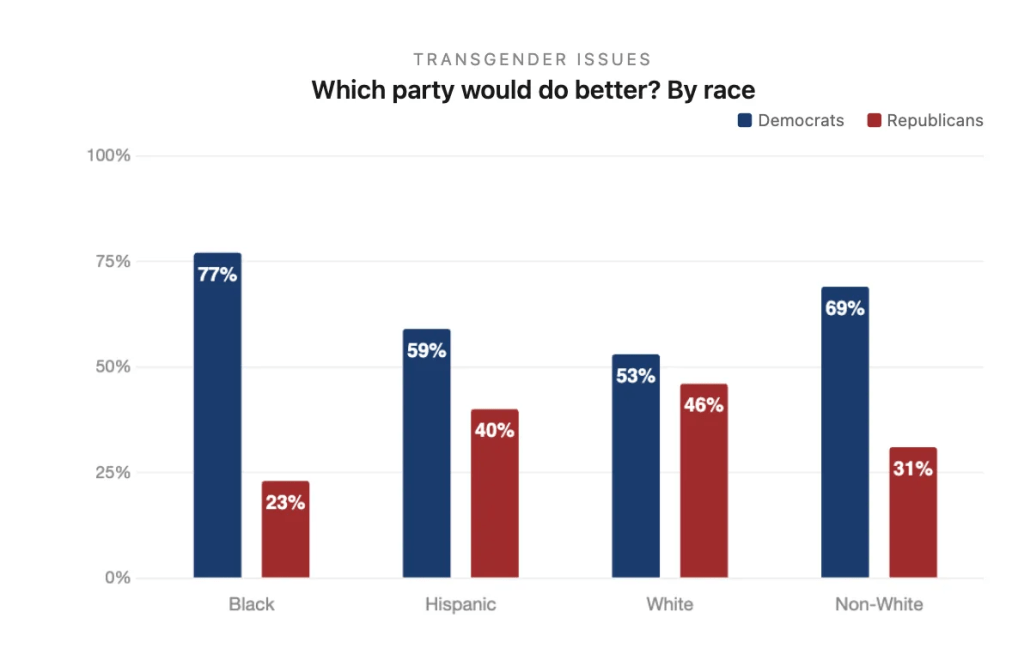
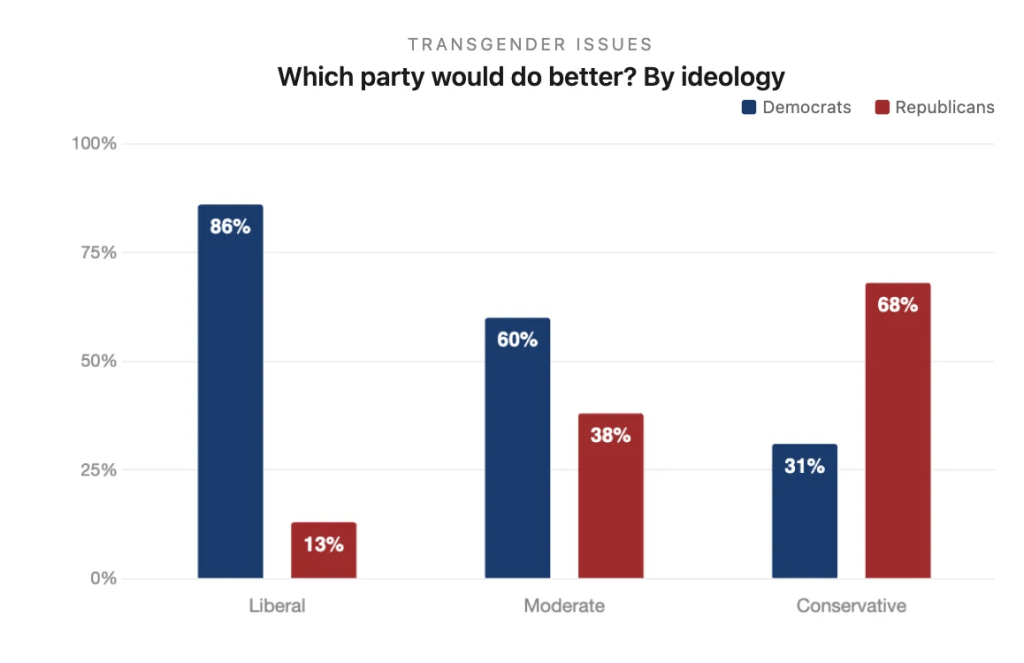
It didn’t last. As Trump riffed on crime, election integrity and transgender issues, he turned his fire on Democrats: “These people are crazy, I’m telling ya, they’re crazy. Boy, oh, boy, we’re lucky we have a country with people like this. Democrats are destroying our country, but we’ve stopped it just in the nick of time.”

He soon reminded everyone that, since the day he came down the golden escalator a decade ago and ranted about immigrants, race has always been at the heart of the Trumpist project. He gazed out at a chamber where Democrats – including the late Jesse Jackson’s son, Jonathan Jackson – somewhat resembled America in their diversity while Republicans presented a sea of white faces with only a handful of exceptions.

Trump announced a “war on fraud” led by vice-president JD Vance, citing a social services scam in Minnesota that he mendaciously and absurdly estimated to have cost $19bn. Ilhan Omar, a Somali-born representative from Minnesota, and Rashida Tlaib, a Palestinian American from Michigan, shouted: “That’s a lie!” and “You’re a liar!”

The president was just warming up. He went on a xenophobic rant: “The Somali pirates who ransacked Minnesota remind us that there are large parts of the world where bribery, corruption and lawlessness are the norm, not the exception. Importing these cultures through unrestricted immigration and open borders brings those problems right here, to the USA.”

Omar shook her head, perhaps more in sorrow than in anger.

Trump challenged Democrats: “If you agree with this statement, then stand up and show your support: the first duty of the American government is to protect American citizens, not illegal aliens.” Democrats remained seated. Trump retorted: “You should be ashamed of yourself, not standing up.”

It was rich from the man who sent a goon squad into Minneapolis that resulted in the needless deaths of two US citizens, Renee Good and Alex Pretti, who went unmentioned by the president (as did survivors of abuse by Jeffrey Epstein).

Omar, raising a hand to the side of her mouth to project her voice, yelled with piercing moral clarity: “You have killed Americans! You have killed Americans! You have killed Americans! You have killed Americans!”

Helpfully, Omar and Tlaib had set up a real-time factchecking service for the chamber. Trump boasted that he ended eight wars. Tlaib shouted: “It’s a lie! What are you talking about?”

Trump said: “No one cares more about protecting America’s youth – .” Tlaib interjected: “Then release the Epstein files!”

Trump vowed to halt insider trading by members of Congress. Mark Takano of California yelled: “How about you first!” Tlaib called out: “You’re the most corrupt president!”

The more Trump talked, the less he said. He had gone into the address with an approval rating of 39% positive and 60% negative, according to a Washington Post-ABC News-Ipsos poll, lower than any past president delivering his first State of the Union address. Over an hour and 47 minutes, he offered little to change that equation. The longest State of the Union speech in history was also one of the most inconsequential.

It was small wonder that Omar, Tlaib and several other Democrats walked out before the end. As for Green, his seat remained empty too save for a handwritten cardboard sign that simply and defiantly said: “Al Green.”

From W. Kamau Bell In Minneapolis:

Listen, read, or both; click through to hear it.

ICE Created a Restaurant That is 100% Free (And They Aren’t Allowed to Eat There)

Episode 4 of I SPENT THREE DAYS IN MINNEAPOLIS!

W. Kamau Bell

In the days after federal agents killed ICU nurse Alex Pretti (only days after other federal agents killed Renee Good), I saw a video of a haggard Minneapolis restaurant owner saying that he was going to give food away until the federal government’s occupation of Minnesota ends. His restaurant, Modern Times Cafe, was going to be 100% free… for everyone. It wasn’t just going to be free for people who proved they needed free food or for folks who asked for free food. It was going to be FREE. FOR. EVERYONE. Dylan Alverson, owner of the now-renamed Post Modern Times Cafe, was mad as hell, and he was not going to charge for pancakes anymore!

(Full Instagram bit on the page; above is a photo)

Actor and singer Mandy Patinkin’s son Gideon had shared Dylan’s video with me. Gideon runs Mandy’s verified Instagram account. The Patinkins’ IG page is filled with hopeful political messages, righteous leftist anger, and—most importantly—ways to help. At some point our Internet paths crossed, and we have tagged each other in posts ever since. Seeing Dylan’s video was yet another battery in my back that gave me the juice to go to Minneapolis. I saw the video on Monday, January 26, and by that Thursday, January 29 I was on a Zoom with the McKnight Foundation to figure out how we could work together to get me to the Twin Cities. Once we decided that I would go, I quickly put a visit to Post Modern Times on the agenda. I didn’t go there for McKnight. I went there for me. I really wanted to meet Dylan. He reminded me of people I met in Berkeley, back in the day. True believers who are more than excited to go against the grain. Luckily, Dylan was down to talk. As we discuss in the episode, he is not one for attention. He just wants to help his neighbors. I also found out that since he shared that initial video, he has decided that having a free restaurant feels so good that he wants to keep Post Modern Times Cafe free, even after Trump’s government leaves (which they finally announced they are going to do).

(Snip)

Dylan plans to turn his restaurant into a nonprofit organization. This just shows, yet again, that the effect this occupation has had on Minnesota is permanent. It doesn’t matter if the feds leave today, they have:

  • killed two people,
  • shot at least one more,
  • made schoolchildren afraid to go to school,
  • made some people (especially Latino restaurant workers) afraid to go to work,
  • hurt local business across Minnesota, because consumers are afraid to shop (or are too broke shop because they aren’t working), and
  • generally traumatized the state.

None of that gets erased, fixed, or healed just because the goons get gone. I truly hope that more people are able to sue the federal government like the teachers union, Education Minnesota, did. The only thing that has stopped the people of the Twin Cities and beyond from folding completely is that there are many, many, MANY people like Dylan Alverson who are committed to community. Like Dylan, they are committed above and beyond their own self-interest… or even their own commonsense.

While Dylan’s free restaurant may seem like a gimmick or a naive idea, Dylan sees it as part of a larger way to fight back against our authoritarian government. Dylan put it best in our interview:

“The world is watching, and they should. This could be the start of a revolution. We don’t know. But to me, it feels like it. And I’m willing to go as far as I need to if I can make that happen.”

Post Modern Times will only be able to keep up its anti-capitalistic “gamble” (gamble is Dylan’s word for what they are doing) if they also have community support. If you can, donate or spread the word about Post Modern Times Cafe’s bold plan.

(snip-MORE, including a podcast with Mandy Patinkin & Katherine Grody, helping MN teachers, and yet more!)

And So Now It Goes To Court

a-gain. And again. Possibly yet again, though it shouldn’t need to go past the state Supreme Court. But still. Statements within.

‘This bill spits on basic human decency’: Kansas Legislature passes bathroom ban without hearing

House Majority Leader Chris Croft suspended rules to force an emergency vote immediately after the Jan. 28, 2026, House debate on a bathroom bill forcing people to use facilities aligned with their biological sex at birth. The move pushed the bill through immediately instead of waiting one day as is usually required. (Photo by Sherman Smith/Kansas Reflector)

TOPEKA — The GOP-led Kansas House and Senate on Wednesday approved a “bathroom bill” targeting transgender people after House Democrats delayed passage by six hours, proposing multiple amendments to set the stage for a possible legal challenge. 

House Majority Leader Chris Croft, an Overland Park Republican, called for emergency action to take the vote immediately after debating the bill instead of waiting a day as rules require. House Substitute for Senate Bill 244 passed on an 87-36 vote along party lines, with one Republican opposed.

The Senate concurred with the bill Wednesday evening, voting 30 to 9, also along party lines. The bill will go to Gov. Laura Kelly, who is expected to veto the legislation. It passed both chambers with the two-thirds majority needed to override a veto. 

Democrats fought the bill’s passage in the House, basing their arguments on two primary concepts — that the bill was rushed through the legislative process, giving little time for public input, and that it is an inhumane attack on transgender people. 

“This bill spits on basic human decency, and I’m embarrassed we had to spend the entire day trying to defeat this thing,” said Rep. Susan Ruiz, D-Shawnee.

Ruiz also said she believed the bill was targeted at a specific legislator, referring to Rep. Abi Boatman, a Wichita Democrat who is a transgender woman. Boatman was selected to fill a vacant seat in early January.

“I have sat here for five and a half hours and listened to this entire room debate my humanity and my ability to participate in the most basic functions of society,” Boatman said at the close of debate. “From the bottom of my heart, I hope none of you have to ever sit through something like that.”

The legislation would require people to use the bathroom in government buildings that matches their biological sex at birth, rather than their gender, and requires governments to enforce the rule. Both the governmental body and individuals could face steep fines for violating the law.

The bill also requires that the sex listed on a driver’s license and birth certificate match the person’s biological sex at birth.

House Minority Leader Brandon Woodard, D-Lenexa, said in an interview after the House adjourned that the amendments and testimony presented by Democrats throughout the day “gave a lot of fodder” to Kansas courts to make a decision when the case is revived.

During debate, Democrats repeatedly referenced Kansas Attorney General Kris Kobach failed attempt in court to ban gender marker changes on driver’s licenses. Woodard said he didn’t think this bill would hold up in court, either.

“As long as Kris Kobach’s our attorney general, I think he’s going to continue to lose in court,” he said.

Rep. Alexis Simmons, D-Topeka, talks about her experience with sexual assault during a Jan. 28, 2026, House debate on a bill to regulate who can use a bathroom in a government building. (Photo by Sherman Smith/Kansas Reflector)

Emotional testimony

It was a long debate full of emotion, sometimes anger, often frustration. Several times legislators were accused of impugning another legislator, and loud exclamations resonated from both sides of the chamber, including emphatic shouts of “oh, baloney.”

Rep. Alexis Simmons, D-Topeka, said she hadn’t planned to talk about a personal trauma but felt compelled to speak up when she heard others testify about how difficult it would be for women who have been raped to share a bathroom with a man.

She referred to testimony by Rep. Charlotte Esau, R-Olathe, who said the bill protected the “silent” women who are unwilling to speak up about being assaulted and who need women-only spaces to feel safe.

“I’m a victim of a sexual assault and never once did I think it was somebody else’s responsibility to manage my trauma,” Simmons said. “I feel enormous sympathy for victims of trauma, that goes without saying, but I do not appreciate my trauma being used to justify legislation that we know will cause harm to people.”

Simmons said she felt more threatened by men than she had ever felt by a transgender person. 

“Here in this building, as an intern, as a committee assistant, as staff and as a legislator, I have been sexually harassed more than you would believe,” she said. “If we’re going to talk about women’s safety, we should address the real trauma, which is how women are treated, not putting the spotlight on one new member of our Legislature.” 

Rep. John Carmichael, D-Wichita, rejected claims made by Rep. Susan Humphries, R-Wichita, and Rep. Bob Lewis, R-Garden City, who argued the bill would protect women.

The bill instead will force transgender men, who live as and look like men, to use a woman’s restroom, Carmichael said. 

“He is going to sit down at the stall next to your granddaughter,” Carmichael said. “Is that what you really want? Not only that, there are other facilities which have locker rooms or the like. That hairy-faced man will be standing naked, showering next to your daughter. That’s what this bill requires.”

Other legislators spoke about concerns that the bill would embolden people to attack transgender individuals.

Rabbi Moti Rieber, with Kansas Interfaith Action, watched all six hours of debate, his face often grim.

“This bill is a combination of a culture war-obsessed supermajority and a broken legislative process, using every process trick in the book to get unnecessary and harmful legislation into law with no public input,” he said.

Rep. Dan Osman, D-Overland Park, opposes a bathroom bill during a six-hour House debate on Jan. 28, 2026. The bill forces people to use the bathroom that matches their sex at birth. (Photo by Sherman Smith/Kansas Reflector)

Process problems

Throughout the day, Democrats pointed to process problems surrounding the bill. The Judiciary Committee revealed a hearing on House Bill 2426 with less than 24-hour notice. At a later hearing, the bathroom portion of the bill was added with no advance notice and no chance for public input.

Then, in a procedure referred to as “gut and go,” the committee dumped the contents of HB 2426 into Senate Bill 244, which allowed the Senate to simply concur without ever holding a hearing on the overwritten bill.

“Procedurally, it is the absolute worst bill I have ever heard in the Kansas Legislature,” said Rep. Dan Osman, D-Overland Park, who also serves on the Judiciary Committee. “It was done with one purpose and one purpose only — to ensure that the absolute least number of people were available as opponents to this bill and that they were unaware that there would even be a hearing.”

Additionally, there is no fiscal note — a formal notice provided by budget analysts and researchers about how much a bill will cost — for the bathroom provision. That means it is unclear how much local governments could have to pay to ensure they are complying with the law.

Rep. Kirk Haskins, D-Topeka, said he was upset about the rushed schedule and the lack of a fiscal note.

“It upsets me when we rush things through that deal with my constituents, and my constituents, they don’t get a say. That’s what happened here,” he said. “This is a trend. I don’t know what’s going on. Yesterday, we had committee meetings without information. We heard a bill, we didn’t have a proponent, just because we have the power to do it.”

Some legislators focused on details, such as how enforcement would be handled and what would happen if someone violated the bathroom restrictions. Humphries, the Wichita Republican who chairs the Judiciary Committee, said complaints would be made to the governing body if someone suspected a person was using a bathroom that didn’t match their sex at birth. 

The bill outlines fines for individuals and also that governing bodies could be held accountable — to fines as high as $25,000 — if they don’t require people to use bathrooms as outlined.

In an interview after the House adjourned, Haskins said he would be comfortable seeing Boatman, as a transgender woman, in the men’s restroom at the Statehouse.

“I’m comfortable with anybody in the restroom,” he said. “I think the bill is based upon fearmongering on issues that are not critical to Kansas, and wherever she wants to go, Rep. Boatman, I’ve got her back.”

This story was originally published by the Kansas Reflector