I lol’d. Still grinning each time I look at it while I post it. 😄
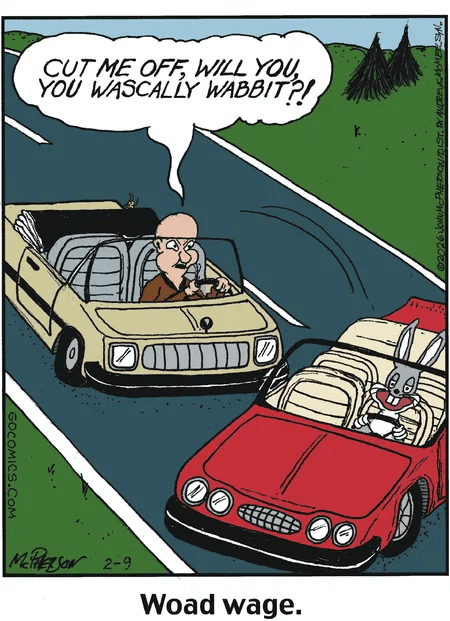

I lol’d. Still grinning each time I look at it while I post it. 😄
Friday and Saturday. Enjoy while taking a break from the big game, or just enjoy whenever!
===
http://youtube.com/post/UgkxYHx582PD9x35cjaAklWR1b99_pZOTHRm?si=eq76y1PWoI8ySXkx
WeRateDogs 1 day ago Javier, our CEO, wanted to check in with everybody. He hopes you’re doing alright. If not, you’re welcome to take a few deep breaths with him and think of something you’re looking forward to. Javi is looking forward to the Bad Bunny halftime show ❤️

http://youtube.com/post/UgkxIK9nsJmpxmiip5xhUxcnR-XGOkU2NcCX?si=atK_jV3EhVi8dcPO
Randy Rainbow6 days ago Punxsutawney Phil saw his shadow, predicting new videos coming this month… 💌🎶💖
http://youtube.com/post/UgkxmbD6u_T-UhBr1nwyqHjmqIWfPeVpavN2?si=Mymur9qFx0pA_6W6

http://youtube.com/post/UgkxpQ37vRwpotd2SoNyrV2HG4KLmx9EEQ0-?si=q8RF6NfuiNw0t99K
===
Dance Party!
And a simple quote:
“Dogs smell time. The past is underfoot; the odors of yesterday have come to rest on the ground.”
Alexandra Horowitz
Since I started reading here at Scottie’s, I’ve thought especially of Bayard Rustin during Black History month. I learned of him (aside from him being at the side of Rev. MLK Jr.) from The Nation magazine back in the early 1990s. Mr. Rustin finally got a movie in 2023, and I’ve wondered about other representation within. There is a veritable trove of information, so here is some of that. Enjoy with your favorite beverage. -A.
=====
God does not require us to achieve any of the good tasks that humanity must pursue. What God requires of us is that we not stop trying.
– Bayard Rustin
=====
By Tymia Ballard, Communities of Color Junior Associate
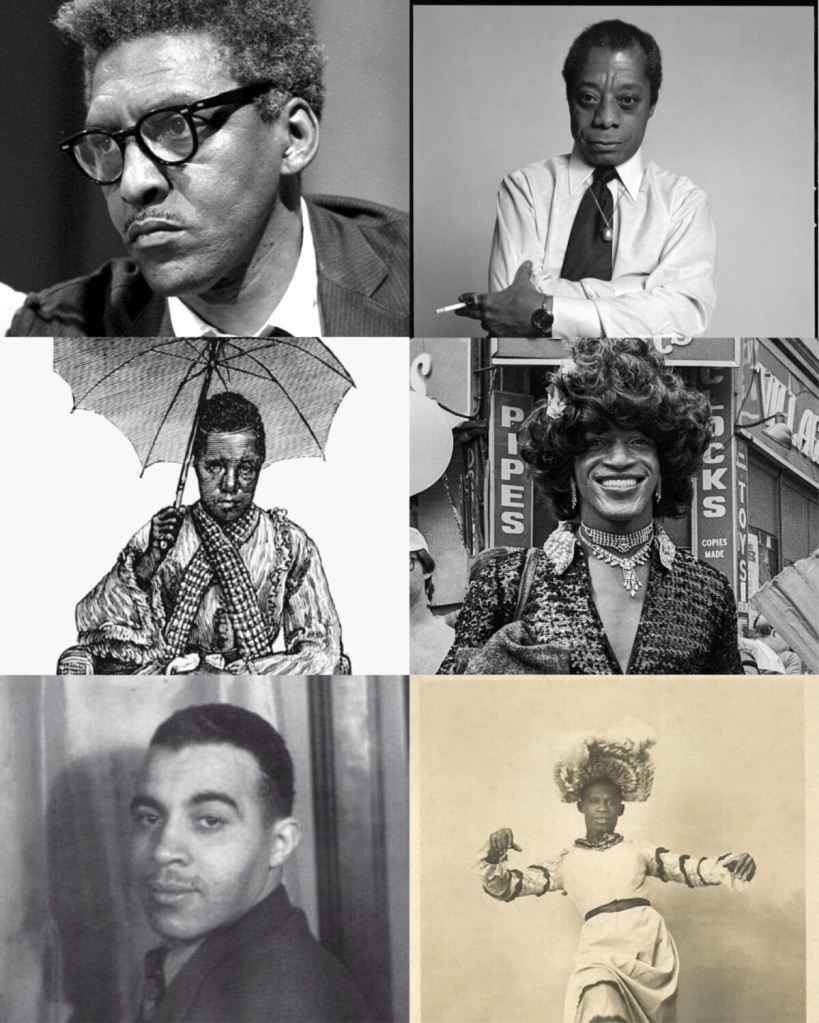
it’s important to note the amount of BIPOC Queer History that has been an integral part of American history but has unfortunately been largely erased. Queer history surrounding people of color is deeply interwoven with American history, revealing critical insights into the nation’s progress in civil rights, social justice, and cultural evolution. To understand American history fully, it’s essential to acknowledge how Black queer individuals have shaped and influenced pivotal movements, art, and thought in the U.S. Despite facing intersectional challenges related to both race and sexual orientation, Black queer Americans have persistently fought for visibility, acceptance, and equality, contributing a legacy that has strengthened America’s commitment to inclusion and diversity.
Black queer history includes significant contributions to American arts and culture. From the Harlem Renaissance to contemporary music and fashion, Black queer individuals have played central roles in defining American aesthetics and storytelling. The Harlem Renaissance of the 1920s, for example, was driven by several Black queer artists, including poets like Langston Hughes and novelists like Richard Bruce Nugent, whose works celebrated Black identity while also subtly addressing queer themes. These artists expanded narratives around Black life in America, blending the experiences of race and sexuality into a singular, expressive voice.
The contributions of Black queer Americans to political activism are also inseparable from American history, especially when considering the origins of LGBTQ+ advocacy. These activists confronted police harassment and societal prejudice, laying the groundwork for the LGBTQ+ rights movement in the U.S. (snip-click through to see the stories)
https://glaad.org/black-queer-history-is-america-history/
=====
The Harlem Renaissance in Black Queer History
African American literary critic and professor Henry Louis Gates once reflected that the Harlem Renaissance was “surely as gay as it was Black, not that it was exclusively either of these.” Gates’s comments point to the often-overlooked place of the Harlem Renaissance within queer history.
The Harlem Renaissance, a literary and cultural flowering centered in New York City’s Harlem neighborhood that lasted from roughly the early 1920s through the mid-1930s, marked a turning point in African American culture. Developments from Zora Neale Hurston’s folklore-influenced fiction to Duke Ellington’s colorful orchestrations reflected an assertive and forward-thinking Black identity that philosopher Alain Locke dubbed “The New Negro.”
Black queer artists and intellectuals were among the most influential contributors to this cultural movement. Like other queer people in early twentieth century America, they were usually forced to conceal their sexualities and gender identities. Many leading figures of the period, including Countee Cullen, Bessie Smith, and Alain Locke, are believed to have pursued same-sex relationships in their private lives, even as they maintained public personas that were more acceptable to mainstream audiences. From a modern vantage point, the work of these artists and their peers is part of the foundation of modern Black LGBTQ art.
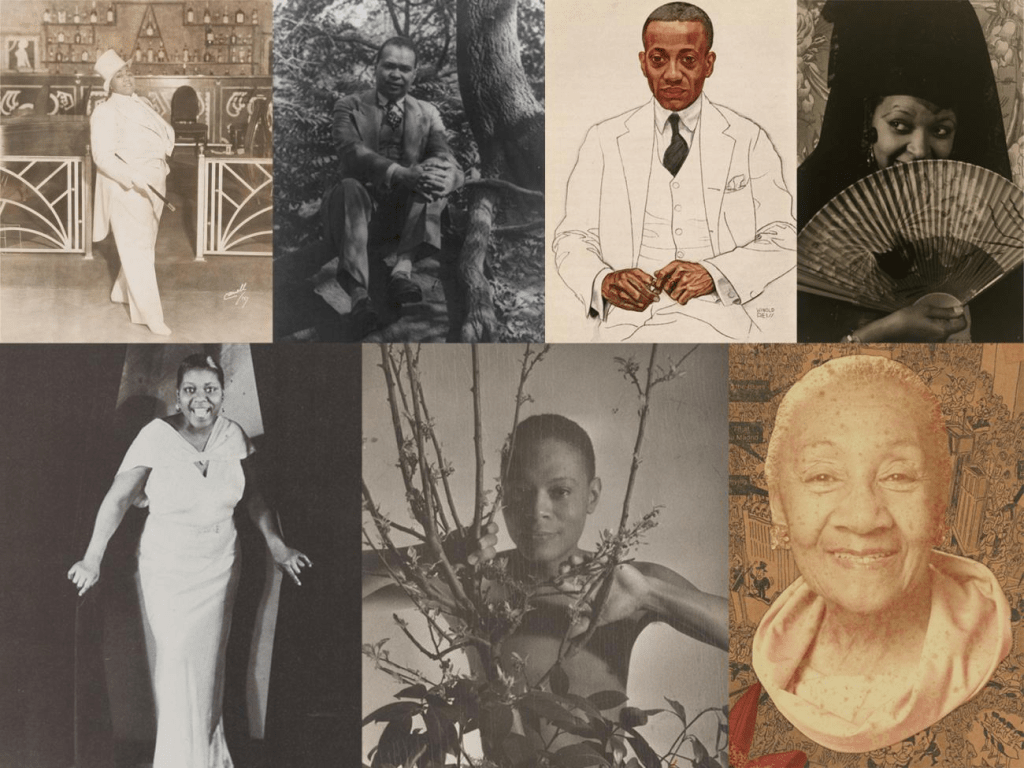
Top row l to r: Gladys Bentley, ca. 1940. 2013.46.25.82; Countee Cullen by Carl Van Vechten, 1941. Courtesy Library of Congress, Prints and Photographs Division; Alain Locke by Winold Reiss, 1925. National Portrait Gallery, Smithsonian Institution. Ethel Waters as Carmen by Carl Van Vechten, 1934. 2010.42.4
Bottom row l to r: Bessie Smith from Delegate magazine, 1975. Gift of Anne B. Patrick and the family of Hilda E. Stokely. 2012.167.9; Jimmie Daniels, early 1930s. Gift of Paul Bodden in memory of Thad McGar and James “Jimmie” Daniels. TA2020.19.3.1; Alberta Hunter, date unknown. Gift of Paul Bodden in memory of Thad McGar and James “Jimmie” Daniels. A2020.19.1.2
(snip-do click through to see. There is a wealth of history: writers, blueswomen, entertainers. There is even a video they cannot play due to restrictions, and then yet more historical information.)
https://nmaahc.si.edu/explore/stories/harlem-renaissance-black-queer-history
=====
Throughout February, in honor of Black History Month, we’ve been busy on Stonewall’s Instagram highlighting some of the lesser-known figures in queer Black history. These bold individuals lead with bravery and authenticity, moved the needle on LGBTQ liberation and racial justice, and paved the way for future generations. Each one of these icons should be a household name! Read on to learn some of the hidden history of our intertwining and ongoing struggles for equality.
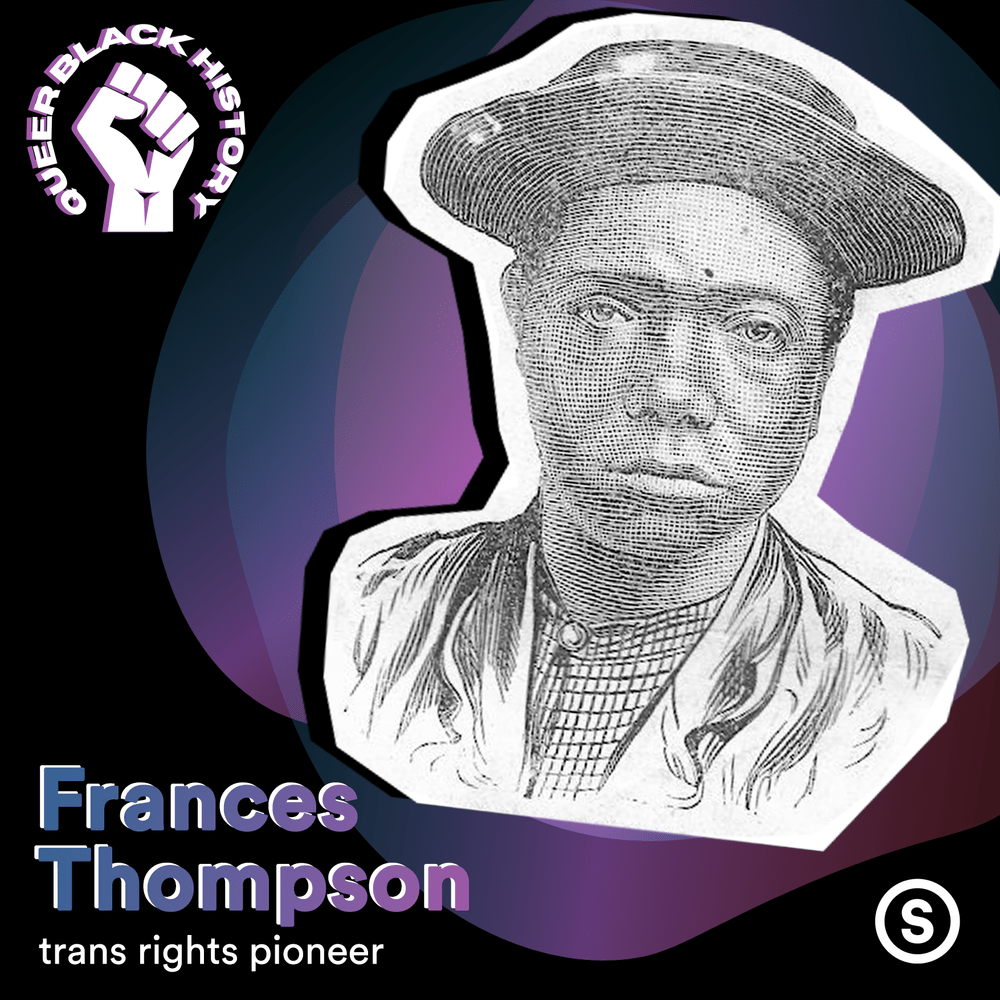
Believed to be the first transgender woman to testify before the United States Congress, Frances Thompson was born into slavery in 1840. Living as a free woman by the age of 26, Thompson was an advocate for bodily autonomy, an anti-rape activist, and she played a pivotal role in getting the US government to enact legislation protecting the civil rights of newly emancipated Black people.
Thompson’s bold legacy lives on today as we continue fighting for self-determination, dignity, and justice for queer and trans people. Her story serves as a reminder that queer and trans people have always been here, and we always will be. Always.
Learn more about Frances here.
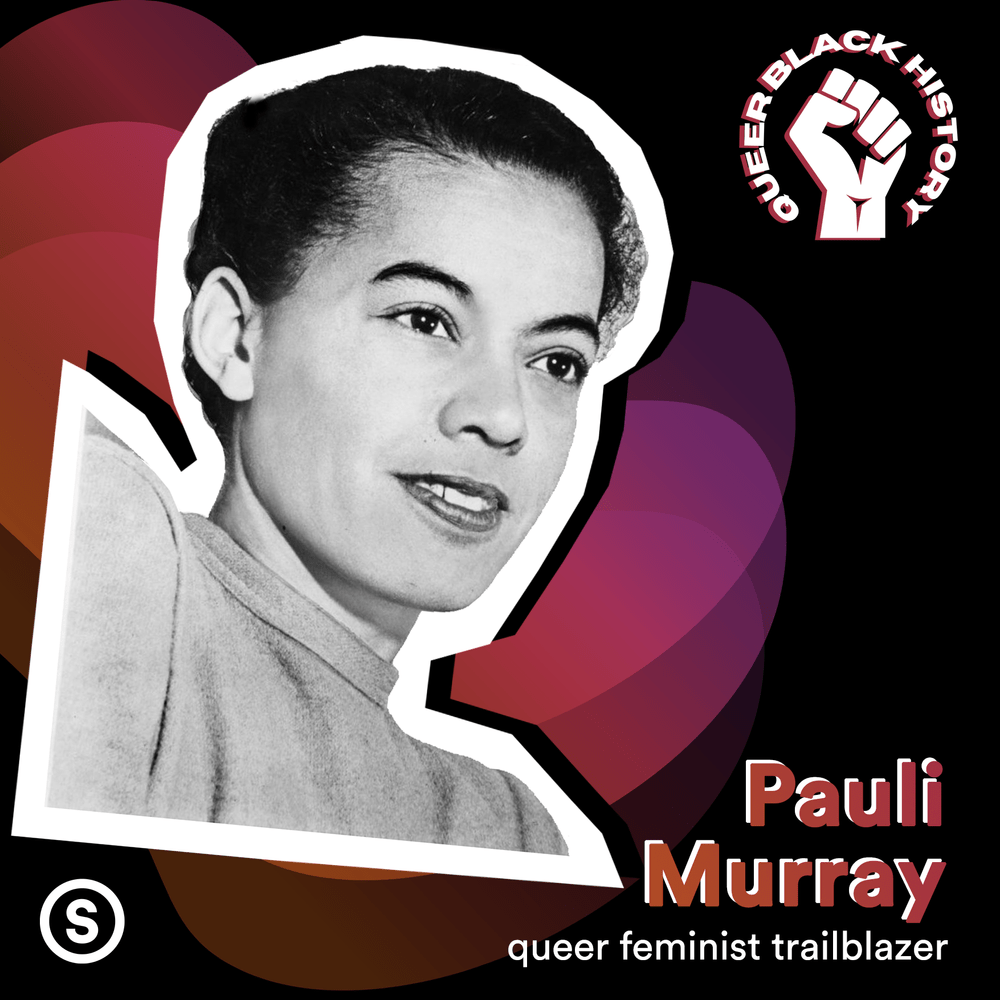
One of the most pivotal – yet often forgotten – figures of the Civil Rights Movement, Pauli Murray was a Black, queer, feminist lawyer who dedicated a lifetime to challenging preconceived notions of race, gender, sexuality, and religion. Murray pioneered many of the non-violent protest tactics of the Jim Crow era, and authored legal arguments that played a pivotal role in outlawing systemic racism and sexism.
Many of Murray’s contributions to the Civil Rights Movement were erased from the broader narrative as same-gender relationships and gender nonconformity disrupted the respectability expectations of the era. Many historians believe that if the language existed at the time, Murray may have identified as a trans man.
Later in life, Murray became an Episcopal priest, and was eventually canonized as a saint – a queer saint!
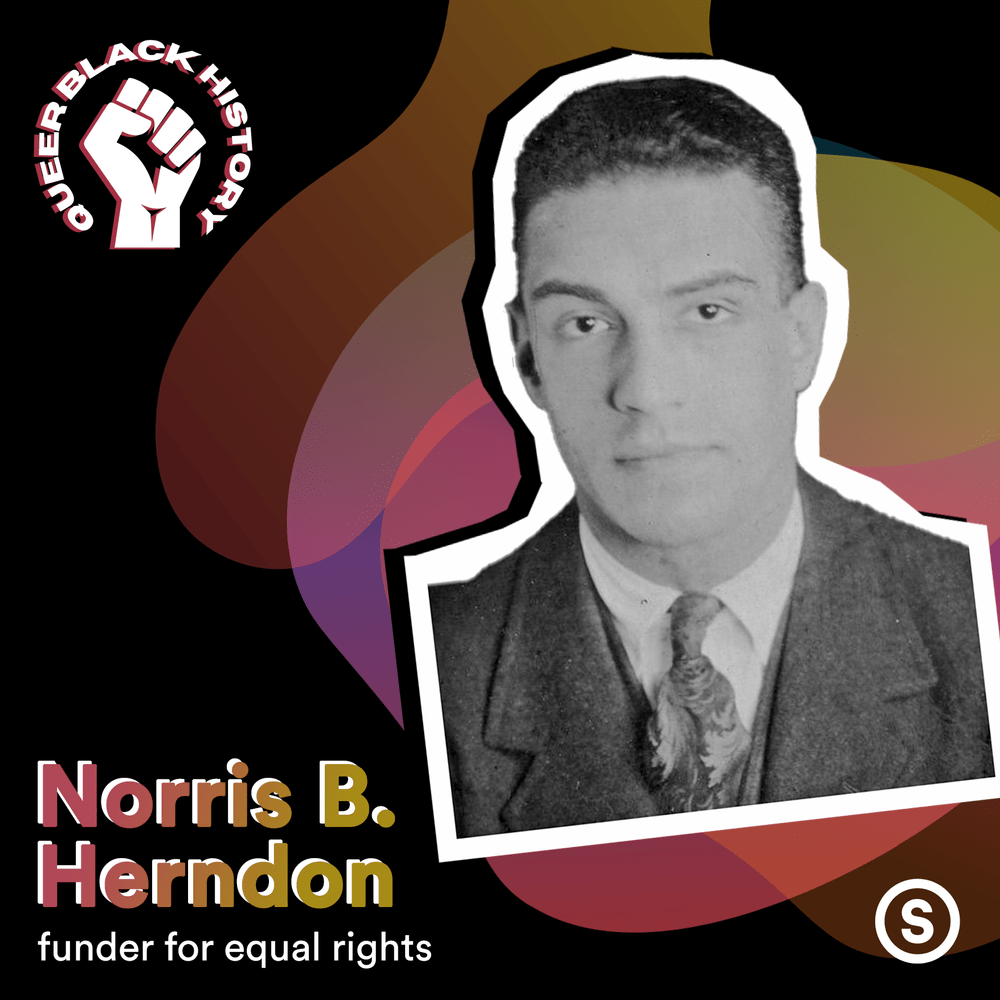
After the death of his father in 1927, Norris B. Herndon assumed the role of president of Atlanta Life Insurance, turning the company into one of the most successful Black-owned business in the US. Using his wealth and influence to support the Civil Rights Movement, Herndon was a critical funder of Civil Rights efforts, and regularly gave generously to support MLK, Jr., HBCUs, the NAACP, and more. He even allowed key Civil Rights activist to use his offices for training purposes.
While he never publicly identified as gay or bi, many in his inner circle were aware of his relationships with men throughout his life.
Herndon’s legacy serves as a reminder of the important role that Black queer individuals have played in shaping American history.
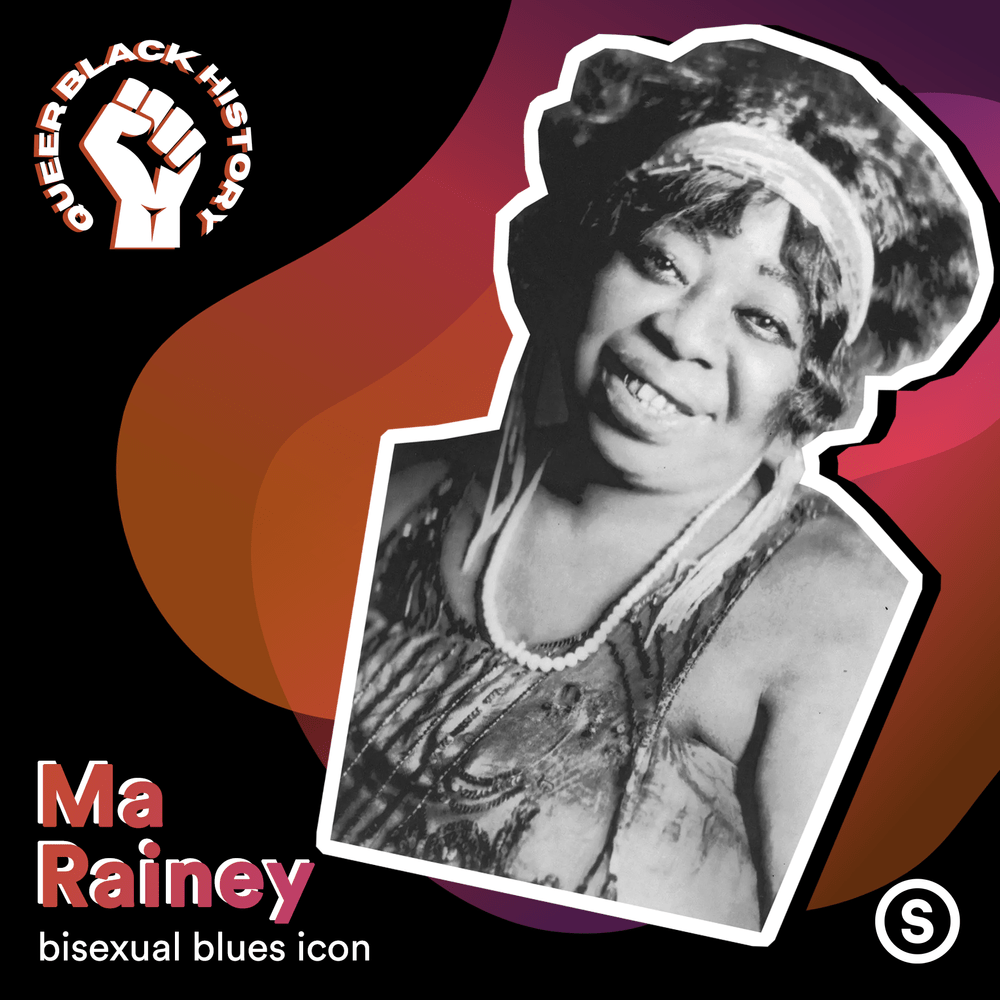
Ma Rainey, also known as the “Mother of the Blues,” was a pioneering blues singer and one of the first openly bisexual performers in the early 20th century. Her music often expressed themes of sexual freedom and gender identity that challenged prevailing attitudes of her time.
Rainey’s songs such as “Prove It on Me Blues” and “Sissy Blues” were widely considered to be bold and unapologetic expressions of her bisexuality, and her performances often featured drag queens and other gender-nonconforming artists.
Rainey’s visibility and outspokenness about her sexuality, at a time when queerness was widely stigmatized, helped pave the way for later LGBTQ performers and activists. Today, she is celebrated as an icon of queer representation in music history.
Learn more about Ma Rainey here.
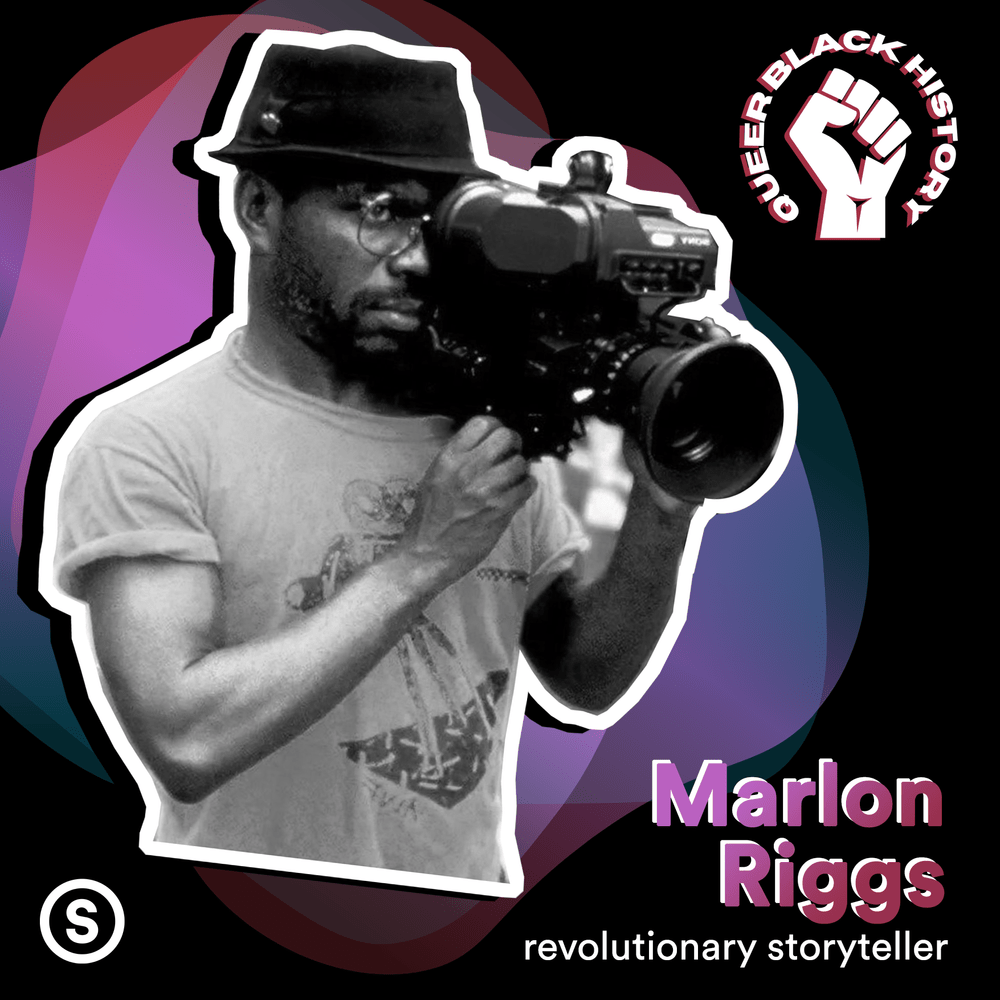
Marlon Riggs was a pioneering filmmaker and activist whose work focused on issues of race, sexuality, and identity, seeking to challenge and subvert stereotypes of LGBTQ and Black people.
In the early 1990s, Riggs’ films, including “Tongues Untied” and “Color Adjustment,” explored the experiences of Black gay men and the intersectionality of race and sexuality. His work helped to broaden mainstream awareness and understanding of LGBTQ and Black lives, and his films were highly influential in advancing Black and queer representation in media. Riggs also worked with organizations like the National LGBTQ Task Force and ACT UP to fight for the rights of LGBTQ people and folks living with HIV/AIDS.
Riggs’ legacy continues to inspire and inform the ongoing struggle for LGBTQ liberation and racial justice.
https://www.stonewallfoundation.org/impact-winter-2023/queer-black-icons
=====
Feb. 13, 2024 BY: Trevor News
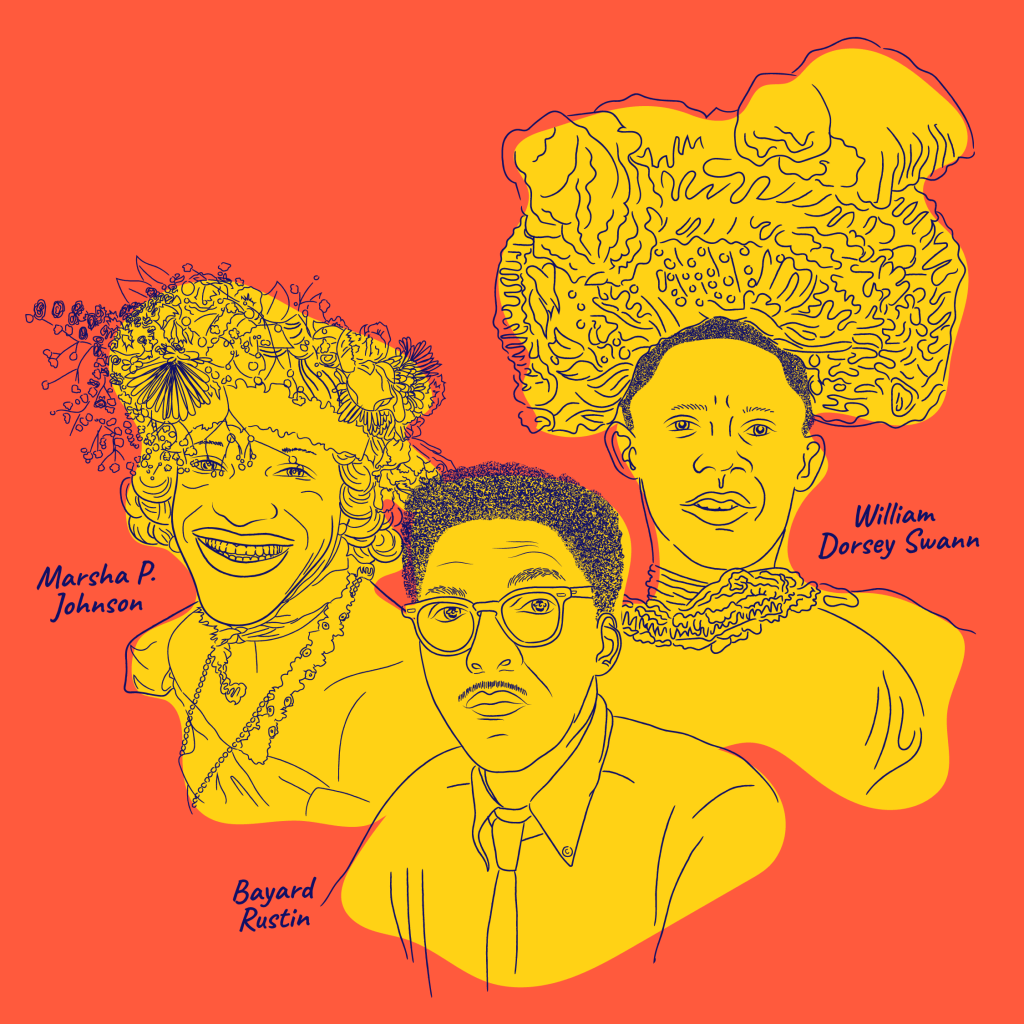
American history of resistance is a history of Black LGBTQ+ people. Advancements in civil rights and greater visibility of the LGBTQ+ community overall can be attributed to the efforts of Black LGBTQ+ folks; so much of what is popular and beloved in music, fashion, culture, and even language is because of the innovations and traditions of the Black queer diaspora. All of this is born out of the need to survive oppressive and violent conditions, distinguish themselves from their white LGBTQ+ counterparts who often enjoyed greater privilege.
When there are efforts to censor Black queer history in classrooms, to prevent trans folks from changing their gender markers or using the bathrooms they prefer, we must resist. Resistance of erasure is resistance to oppression.
This Black History Month, take a moment to learn about and honor the Black LGBTQ+ movements and people who have resisted throughout history.
The Cakewalk
What we know as the art of drag and ballroom today is born out of Black queer resistance to enslavement. The cakewalk, a dance performed by enslaved people, was meant to secretly mock plantation owners who frequently galavanted and gloated their expensive clothes. Their enslavers awarded the dancers cakes, unaware they were being blankly parodied. Later during the abolition period, “cakewalks” organized by the formerly enslaved served as a celebration of freedom and continued mockery of the enslavers, featuring attendees in extravagant costumes.
There is one particular person we can thank for the art of drag, and that is William Dorsey Swann, known now as the first drag queen. Swann, who was born into enslavement and survived to emancipation, was inspired by the “queens” of Washington D.C.’s Emancipation Day parades. He developed a form of dance for “glad rags,” also known as masquerade balls, and hosted cross-dressing balls for the community, many of which were raided by police.
This combination of dance performance and visual expression as a form of resistance survives in modern-day ballroom culture, famously depicted in the documentary film “Paris Is Burning.” Categories like “Executive Realness” serve as an opportunity for young Black queer folks — often denied positions of prominence in white society — to both mock the practices of the privileged and pretend to enjoy those privileges.
In the film, artist Dorian Corey notes: “Black people have a hard time getting anywhere. And those that do are usually straight. In a ballroom, you can be anything you want. You’re not really an executive, but you’re looking like an executive. And therefore you’re showing the straight world that ‘I can be an executive. If I had the opportunity, I could be one because I can look like one.’”
Bayard Rustin and the Civil Rights Movement
Many of us know about the work of Dr. Martin Luther King Jr., but not as many know about Bayard Rustin, an “angelic troublemaker,” his mentor and collaborator during the civil rights movement of the 50s and 60s. Rustin was in fact the primary organizer of the historic March on Washington in 1936, perhaps the most famous civil rights protest of all time. Rustin was also openly gay, and spent much of his life dealing with political and legal persecution because of it (recently depicted in the 2023 film “Rustin”).
(snip-do go and read the rest; it’s not too long)
Chelsea with some pointers:
And for no particular reason but that I ran across it; I guess it’s a Corgi thing:
And a protest video:
We are honoring all of the Black stars who left us in 2026.
By The Root Staff Published February 5, 2026

UNITED STATES – CIRCA 1969: Photo of Fifth Dimension, c.1969, California, Los Angeles, Fifth DimensionL-R: Ron Townson, Florence LaRueBilly Davis, Jr., Lamonte McLemore, Marilyn McCoo. (Photo by Michael Ochs Archives/Getty Images)
We’re not going to lie, 2025 was a tough year, as we lost many of the Black legends we knew and loved. Now, as 2026 gets underway, we must say goodbye to even more of those who had such a tremendous impact on the culture. Although they are gone, they will never be forgotten.
(snip-brief celebratory obits/photos on the page. A few of them have been posted here, lat year. While you peruse our losses, enjoy this next one from The Root, too! I would listen to Luther Vandross sing the phone book.)
The late Luther Vandross is still a trending topic thanks to the 2026 Grammys. So what better time than now to take a look at some of his best songs!
By Shanelle Genai Published February 3, 2026

LOS ANGELES – 1995: Singer Luther Vandross poses for a portrait in 1995 in Los Angeles, California. (Photo by Harry Langdon/Getty Images)
Although Kendrick Lamar and SZA walked away with the 2026 Grammy for Record of the Year for their song “luther”—which sampled the 1982 Luther Vandross hit “If This World Were Mine”—the late iconic singer still somehow became one of the hottest topics of the night.
This was thanks in large part to Cher’s hilarious and accidental flub, announcing Vandross as the winner instead Lamar. But still it made for a good reason to talk about the legendary singer and his musical contributions. It also got us thinking about our favorite Luther Vandross songs and so we’d figure what better way to wax poetic about them than by putting together our top favorite tracks of his for the best of the best playlist!
Fair warning though: this list will make you move and groove so make room wherever you are!
Their work has already racked up nearly 100 million views.
By Abby Monteil January 27, 2026
Amid the Trump administration’s ongoing attempts to erase queer and trans history, a University of California Berkeley professor’s students are working to right these wrongs — through Wikipedia edits.
Over the past decade, students in ethnic studies, gender and women’s studies, and performance studies professor María Rodríguez’s courses have edited and even created Wikipedia articles about LGBTQ+ history, with an emphasis on queer and trans people of color. The assignment currently replaces a final paper in three of her classes: “Documenting Marginal Lives,” “Queer of Color Cultural Production,” and “Queer of Color Critique.”
Rodríguez’s Wikipedia assignments take place in partnership with Wiki Education, a nonprofit that works with university professors in the United States and Canada. The professors’ students add content to course-related Wikipedia articles, which, according to the organization’s website, helps them gain skills like “media literacy, writing and research development, and critical thinking,” while simultaneously filling Wikipedia “content gaps.”
“Wikipedia is a public-facing project — it’s the largest encyclopedia in the world,” Rodríguez told UC Berkeley News in a December interview. “In a political moment where these histories are actively being erased from public view, having students work on a platform like Wikipedia becomes even more important.”
According to The Daily Californian, as of January 26, Rodríguez’s students have contributed over 300,000 edits and 3,000 citations to Wikipedia. At the time of writing, their work has garnered a whopping 96 million-plus views. Her students’ topics run the gamut, touching upon local history like the resonance of queer life in San Francisco’s Chinatown, as well as more international focus areas (for instance: worldwide sex worker movements).
As Rodríguez explained to UC Berkeley News, her students’ edits often help address the disparities between the amount of Wikipedia information about white, Anglo LGBTQ+ populations versus LGBTQ+ populations of color.
“It becomes particularly important to document these subcultures within these communities,” she said. “Because it’s not just queer Latinas — it’s queer goth Latinas, it’s queer comics of color, it’s African American slaying, right? It’s very specific topics that might really vary by region, by historical moment, and of course at different places around the world. Those topics, in Wikipedia and in real life, remain really under-studied and really under-researched.”
These contributions carry a newfound weight during the second Trump administration, in which officials have repeatedly attempted to erase references to queer and trans history. In February 2025, National Park Service websites removed the word “transgender” from multiple pages for historical programs and monuments, as well as references to trans figures such as Marsha P. Johnson. Meanwhile, in June, an unnamed Defense Department official told Military.com that Trump timed an order to remove LGBTQ+ icon Harvey Milk’s name from a military ship to coincide with Pride Month.
“Right now, the Trump administration is trying to erase the very existence of transgender people, so having information about those histories, as well as present challenges facing queer and trans communities, is particularly urgent,” Rodríguez told The Daily Californian via email. “Queer and trans people have always been here, and adding that information to the world’s largest open access encyclopedia is one way to make sure that these stories remain available.”
https://www.them.us/story/berkeley-college-students-wikipedia-lgbtq-history-edits
All the usual computer/phone protection protocols should be in place.
Jenny Lawson (thebloggess) Jan 26, 2026
Hell, friend.
That was supposed to say “Hello, friend” but I fucked it up and I’m leaving it because it feels equally fitting. Maybe you, like me, are in the darkness right now and are just trying to get by until the light comes back. It will. I promise. Between the weather, tricksy brains and (motions wildly to everything) all of the traumatic bullshit going on in the world right now, your body is just acting the way it probably should and you need to take care of it and be gentle to yourself.
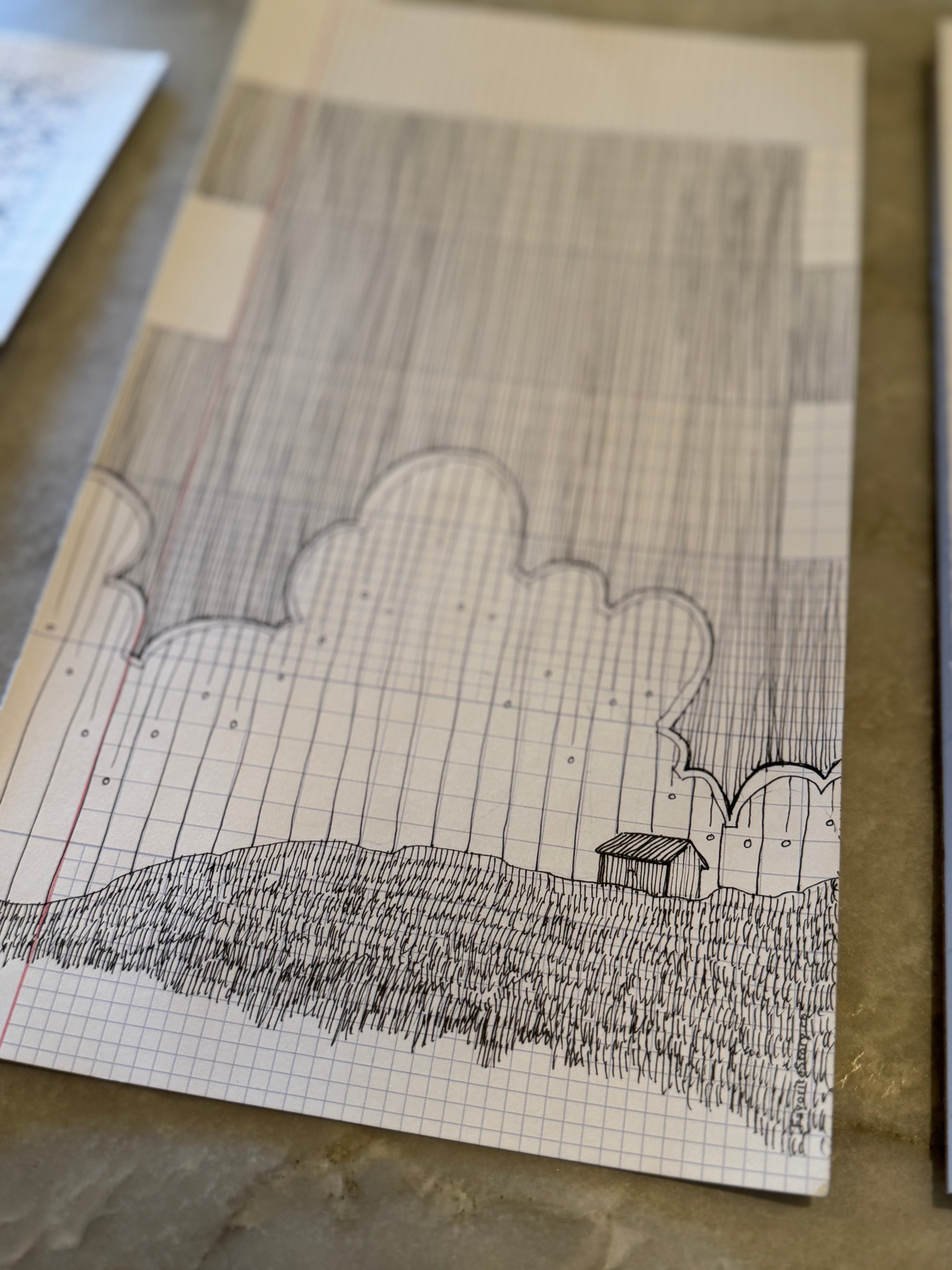
This week I was planning on getting organized but then a depression hit me and I found myself staring at the blank gridded planner I’d bought because SURELY THIS ONE WILL FIX ME but then it didn’t fix me and so instead of outlining all of the stuff I’m behind on I instead screamed into the internet for bit, donated to several important causes, amplified what I could and then I turned off my phone and found myself doodling on the planner because my brain was just not going to be able to work the way I needed it to.
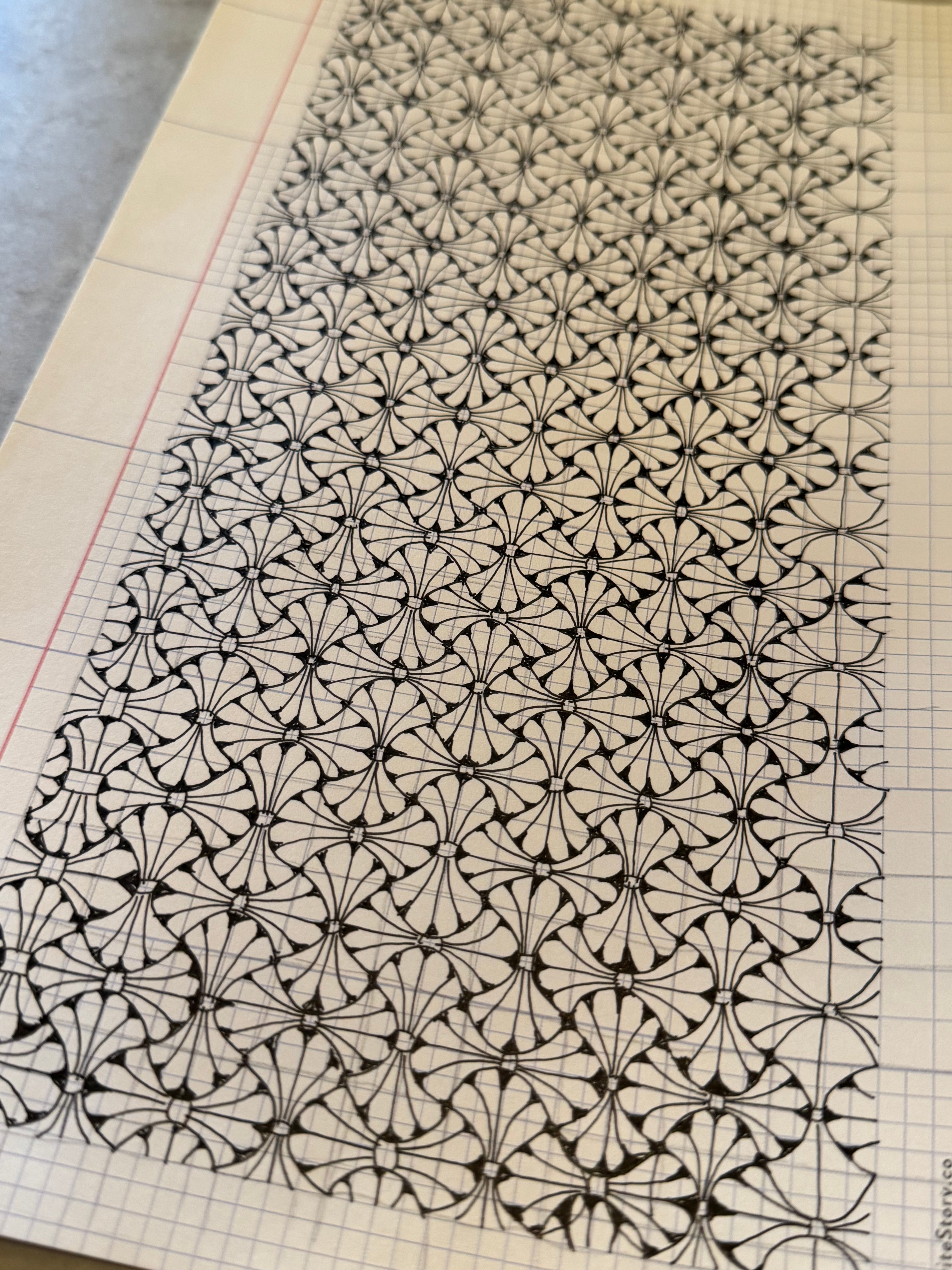
Each line counted off a moment. A sort of meditation.
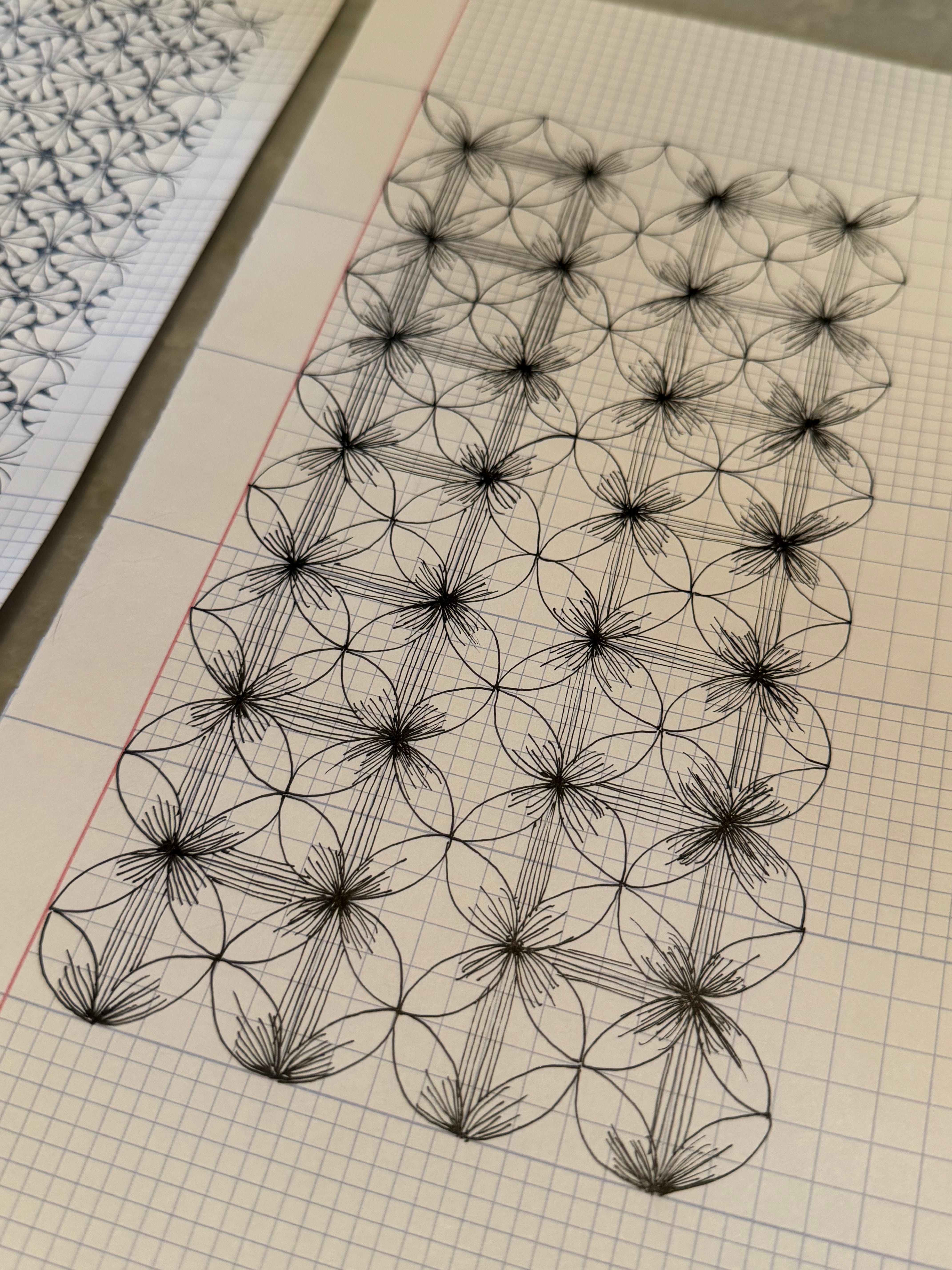
I didn’t even have the bandwidth to find my sketch book so I just kept drawing, using the strange grids to find my way, and knowing each mindless pattern would get me closer to the other side, when I’d have the energy to be human again.

Dorothy Barker helped.
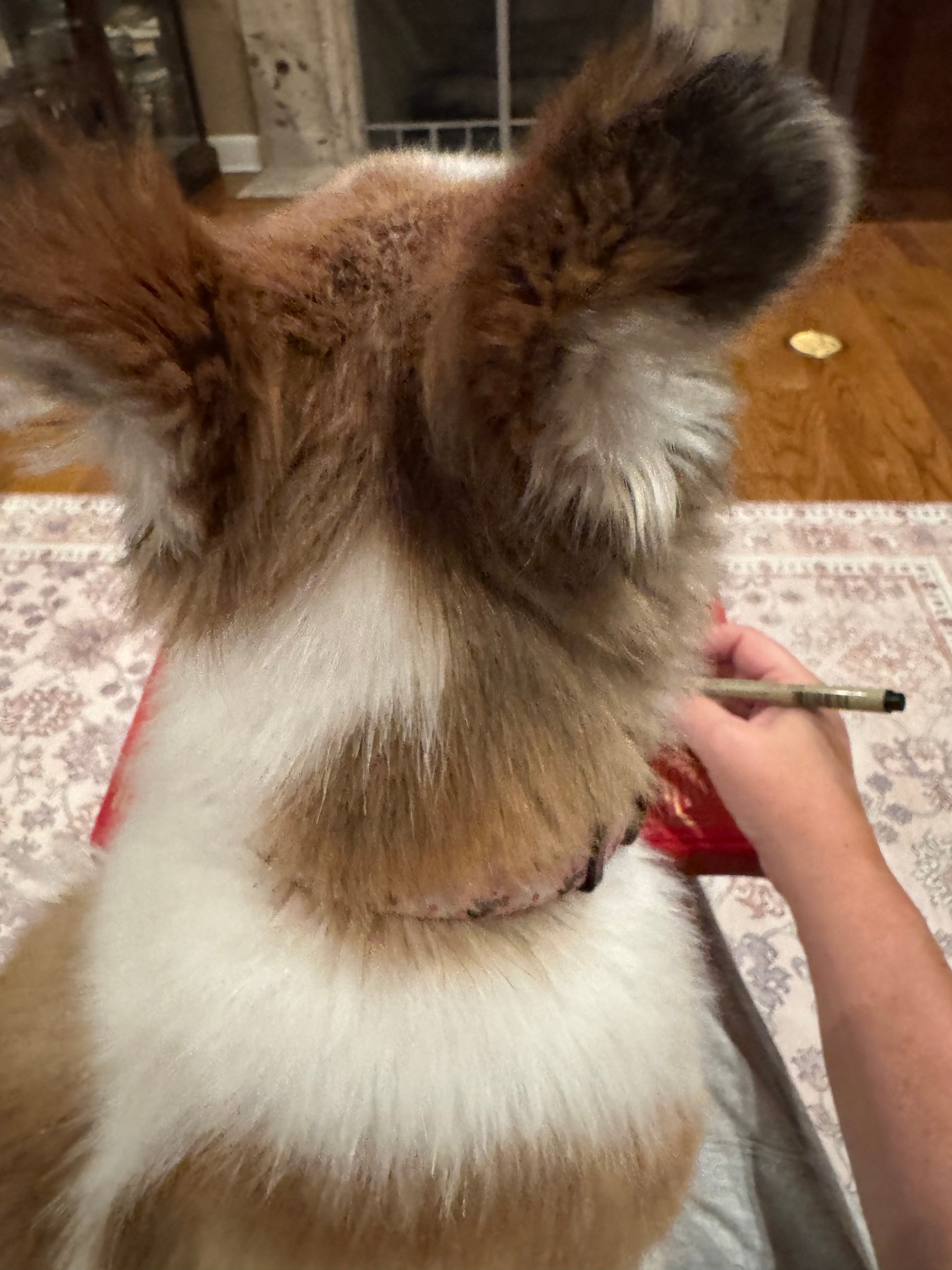
I’m using the word “helped” lightly.
And each doodle got me through a bad hour.
The terrible messy ones I drew when my hands shook from anger or anxiety.
And the calmer ones I drew in the quiet, small hours of the night when I needed to remember that there is peace and light out there even if we can’t always see it.
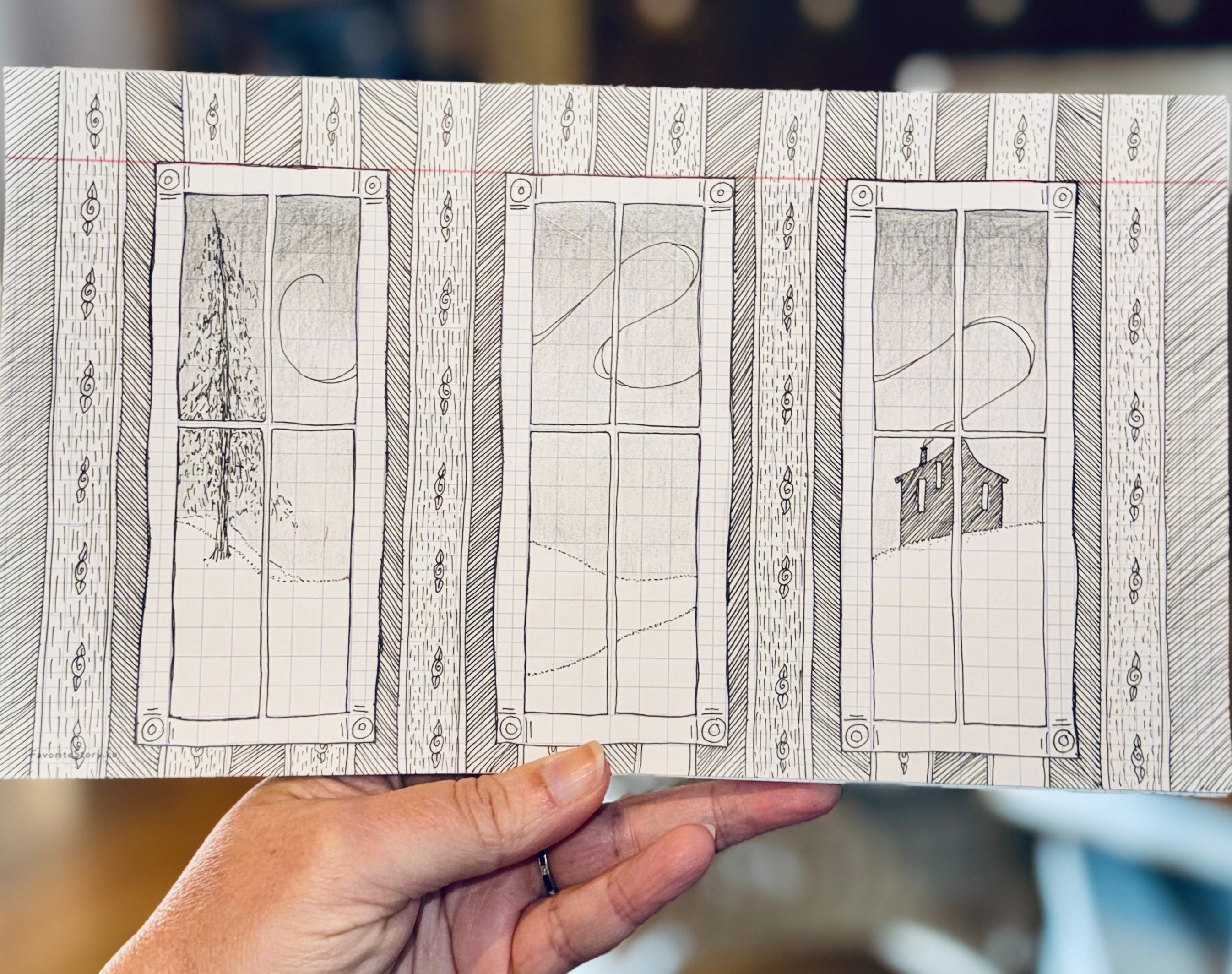
I drew and drew and dropped each picture onto the floor where the cats could lay on them and contemplate why I still wasn’t in bed yet.
And as of today I have not gotten anything organized at all and my planner is a mess of pointless drawings. Except (I remind myself) they’re not pointless at all, if you look at them with the right eyes.
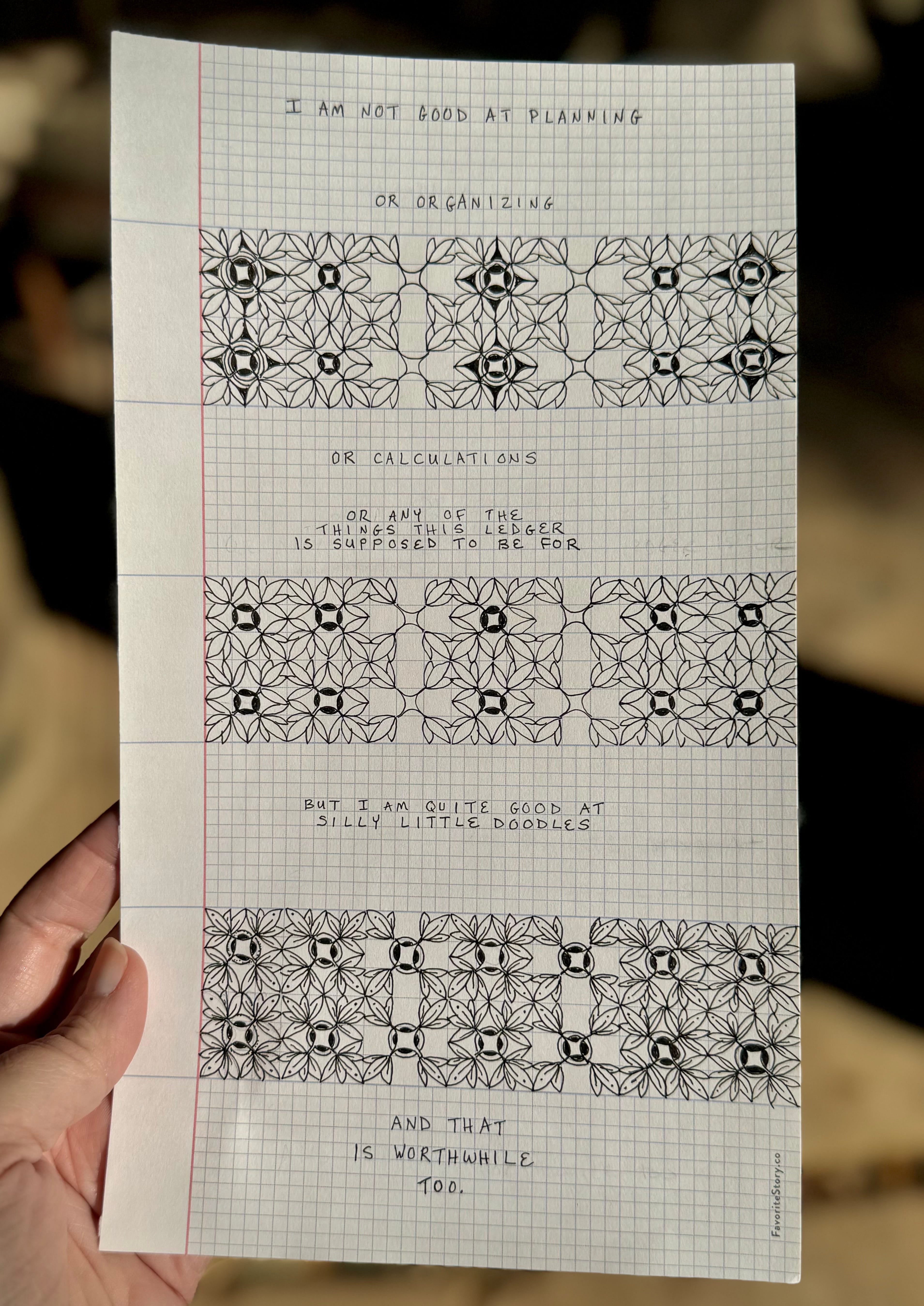
“I am not good at planning. Or organizing. Or calculations. Or any of the things this ledger is supposed to be for. But I am quite good at silly little doodles. And that is worthwhile too.”
So this is just my little reminder to you…find joy…create…don’t be afraid to use a ledger as an easel or a dog as a paperweight or this letter as a hug. It’s okay if all you are doing right now is surviving. That is sometimes one of the hardest things you will do.
Keep going.
It will get better.
Yours,
Jenny