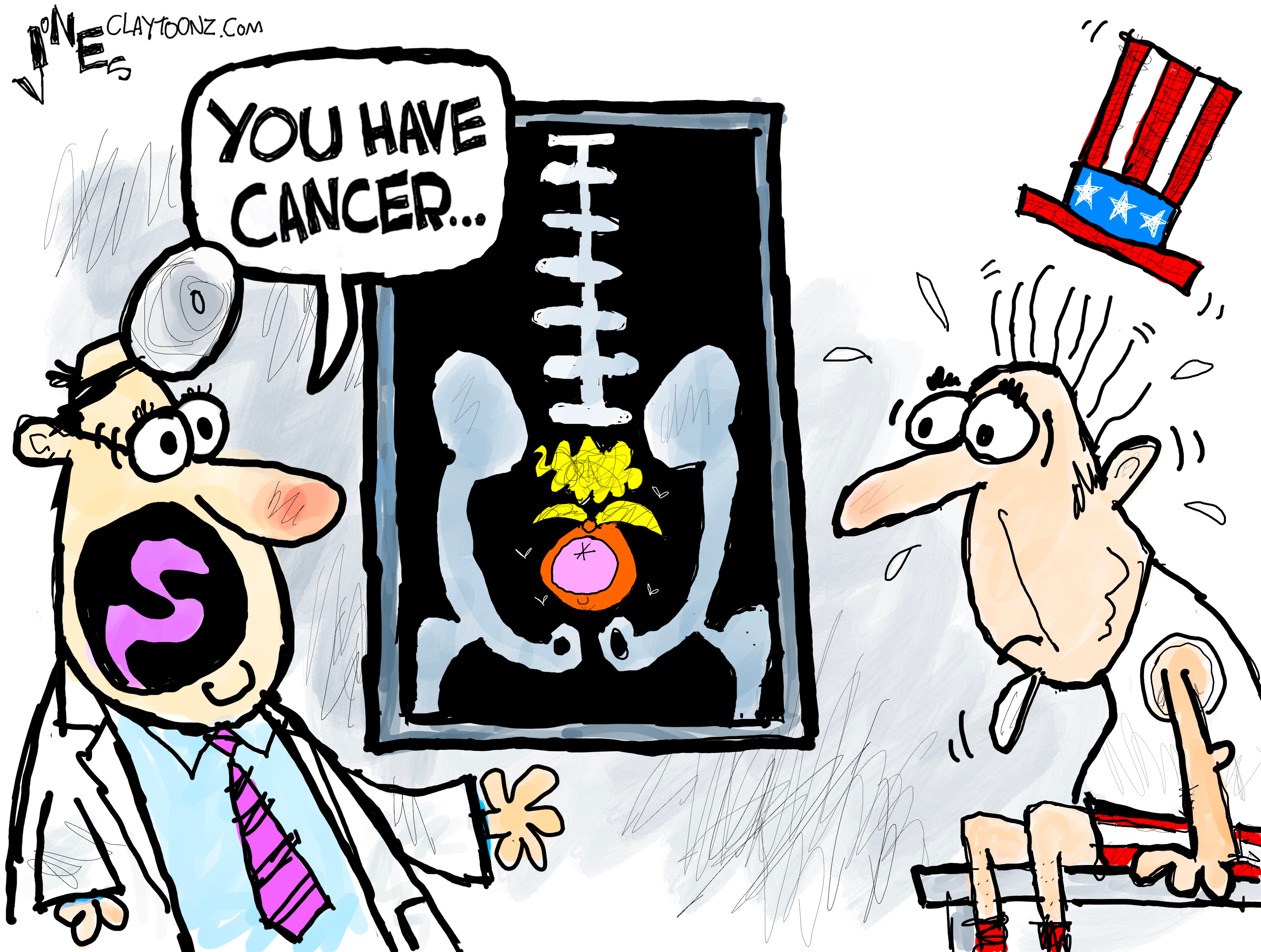
The Trump Cancer isn’t new. We got an early prognosis before he even ran in the 2016 presidential election, back when he began his birtherism campaign. He was a cancer before he went into the White House with Putin’s assistance in 2016, he was a cancer during the Biden administration, and he’s a cancer now.
Instead of 86ing this cancer (see what I did there?), nearly half of this nation let it rot and fester. This cancer will do what cancer does if not combated. It will destroy us.
Creative note: I got this idea while drawing my weather cartoon this morning. After yesterday’s Biden/Democrat cartoon, I felt good about it. I even nearly stopped the weather cartoon to do this instead (but I really loved “Old Man Yells at Cloud).
I was finally able to get to the post office today (your print is finally on the way, Greg, and Kathy…I got your check. Thank you), and started drawing this at a coffee shop downtown on Caroline. It didn’t take long to draw, and I colored it at home after taking the Fred Bus.
I didn’t know if this would work when I first thought of it. I didn’t know if the image would be clear. I didn’t know if a tiny Trump in the rump would be clear. But now, I do think it works.
Music note: I listened to Counting Crows, which isn’t a band I’m super crazy about, but Anna Begins reminds me of a past relationship. She talked in her sleep, she changed her mind, she changed my mind, and then she faded away.
May 20, 1916 Emma Goldman spoke to garment workers in Union Square about the benefits of birth control. Goldman speaking to a crowd of garment workers about birth control in New York City’s Union Square Read more about Emma Goldman: Birth Control Pioneer
May 20, 1961 A mob of 300 white segregationists, with the tacit assent of the local police, attacked a busload of both black and white “Freedom Riders” in Montgomery, Alabama’s bus depot. Among those beaten was Justice Department official John Seigenthaler who had tried to negotiate their safety. Freedom Riders challenged racial segregation at Montgomery bus depot. Attention to the violence forced Attorney General Robert Kennedy to send in U.S. Marshals to protect the Riders. They had been seeking to guarantee equal access to interstate transportation by riding the bus but had been met by violence elsewhere in Alabama as well as South Carolina. The Freedom Rides discussed NPR’s Fresh Air with Terry Gross (with transcript) Robert Kennedy and John Seigenthaler The Freedom Rider story 50 Years After Their Mug Shots, Portraits of Mississippi’s Freedom Riders
May 20, 1968 In the first such instance during the Vietnam War, Arlington Street Unitarian-Universalist Church in Boston offered sanctuary to Robert Talmanson and William Chase, both of whom had refused to participate in the war. Talmanson had been convicted of refusing induction, and Chase had gone AWOL (absent without leave) as an army private after having served nine months at Cam Ranh Bay in Vietnam. Church leaders had declared theirs a “liberated zone” on the first day of the trial of Dr. Benjamin Spock and four others in federal court for counseling draft resistance. They believed that individuals had a right to decide not to kill as nonviolent persons, most especially in a war they considered unjust.
May 20, 1971 A delegation of U.S. pacifists traveled to Cuba to exchange children’s art.
May 19, 1934 10,000 participated in a “No More War” march in New York City.
May 19, 1952 Playwright and activist Lillian Hellman advised the U.S. House Committee on Un-American Activities (HUAC) that she refused to testify against friends and associates, saying, “I cannot and will not cut my conscience to fit this year’s fashions.” Lillian Hellman Learn more about Lillian Hellman Text of her letter to HUAC
May 19, 1997 Two international human rights workers, Mario Calderón and Elsa Alvarado, as well as her father, were shot dead in Bogotá, Colombia, by a paramilitary gang. Their one-year-old was hidden and thus spared, her mother wounded. The couple worked for the Center for Investigation and Popular Education (Centro de Investigación y Educación Popular, or CINEP), a non-governmental organization founded by the Jesuits (the Roman Catholic Society of Jesus) to foster education, understanding, justice and sustainable development in Colombia. Mario Calderón and Elsa Alvarado CINEP’s peace program
We studied the Hays code and its effects on cinema in high school drama class during the film module, but Wendy has more info than we got! Turner Classics ran a day or two of films last year which had ended up withdrawn after the Hays Code; they ran them during Pride. I don’t get that channel anymore, but maybe someone else does and can catch one or more of these gems during Pride. -A Language alert, of course.
Queer History 114: Before The Fucking Hay’s Code, The Golden Era by Wendy🏳️⚧️🏳️🌈🌈
The Queer Golden Age: LGBTQ+ Representation Before Hollywood’s Great Erasure: The forgotten era when queer characters thrived on screen before censorship killed the party Read on Substack
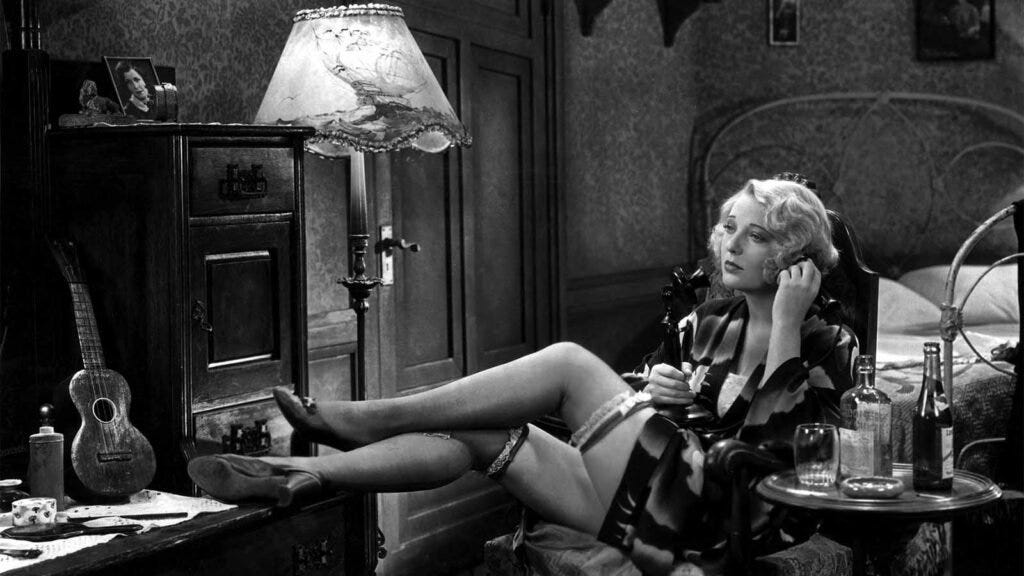
You think the 1930s was all straight-laced puritanism and sexual repression? Think a-fucking-gain. Before Will Hays and his moral crusaders stormed the gates with their production code in 1934, early Hollywood was a goddamn queer paradise compared to what came after. For a brief, glorious moment in cinematic history—roughly 1927 to 1934, known as the “Pre-Code era”—American films featured openly gay characters, gender-bending performances, same-sex kisses, drag performances, and discussions of homosexuality that wouldn’t be seen again until decades later. This wasn’t some underground cinema movement either—this was mainstream Hollywood, baby, playing in theaters across America to audiences who apparently weren’t clutching their pearls nearly as hard as history would have us believe.
Let me be crystal clear about something: the systematic LGBTQ+ erasure caused by the Hays Code didn’t correct some temporary deviation from the norm. It violently interrupted what was becoming a remarkably progressive trajectory in early cinema. The Code didn’t “restore morality”—it fucking killed the natural evolution of queer representation just as it was beginning to flourish. And that makes the story of Pre-Code Hollywood’s queer characters and themes not just interesting cinema history, but a painful reminder of what might have been if censorship hadn’t set LGBTQ+ representation back by half a century.
The Wild Fucking West of Early Cinema
The early days of Hollywood—particularly the silent era and the first years of sound—operated like an artistic Wild West. With few formal regulations and before conservative religious groups had mobilized their substantial political power against the film industry, filmmakers explored themes, characters, and stories that would soon be ruthlessly purged from American screens.
“Early Hollywood was far more sexually progressive than most people realize,” explains film historian Clara Rodriguez. “There was no central censoring authority with real teeth until the Hays Code enforcement in 1934, which meant filmmakers were relatively free to explore topics that would later become forbidden.”
This freedom allowed for a surprising amount of LGBTQ+ representation, often done with remarkable frankness for the era. Silent films like “Algie the Miner” (1912) featured sissy characters played for laughs but not necessarily contempt. “Manslaughter” (1922) included a lesbian party scene with women in tuxedos dancing together. “Wings” (1927)—which won the first Academy Award for Best Picture—contained a scene where two male fight-
er pilots share a kiss that’s played not for laughs but for genuine emotion.
When sound arrived in 1927, rather than becoming more conservative, Hollywood initially pushed boundaries even further. The pre-Code talkies of 1929-1934 featured not just coded queer characters but explicitly gay, lesbian, and gender-nonconforming figures who weren’t always punished for their identities.
The Gender-Bending Superstars Who Didn’t Hide
Marlene Dietrich wasn’t just flirting with gender boundaries—she was taking a fucking sledgehammer to them. In “Morocco” (1930), Dietrich performs in a man’s tuxedo, kisses a woman full on the lips, and portrays a character with explicitly fluid sexuality. This wasn’t hidden or coded—it was right there on the mainstream screen, and audiences ate it up. Dietrich’s gender-bending performances made her more popular, not less.
“Dietrich in a tuxedo kissing a woman wasn’t scandalized—it was eroticized and celebrated,” notes film scholar B.D. Grant. “She won an Academy Award nomination for ‘Morocco.’ This wasn’t career suicide; it was career-defining.”
Dietrich wasn’t alone. Greta Garbo played a cross-dressing queen in “Queen Christina” (1933), in which her character openly discusses her disinterest in marriage and her preference for dressing in men’s clothing. The film strongly implies Christina’s romantic feelings for her lady-in-waiting. Again, this wasn’t some art-house curiosity—it was a major MGM production starring one of the biggest names in Hollywood.
Mae West built her entire early film career on sexual innuendo and characters who openly acknowledged and enjoyed sex outside marriage. In “She Done Him Wrong” (1933), West’s character flirts with a woman, suggesting she might “be able to do something” with her, a line delivered with unmistakable sexual undertones.
These weren’t bit parts or villains—these were the fucking stars, the box office draws, the roles that made careers rather than ending them.
Explicitly Queer Spaces and Characters On Screen
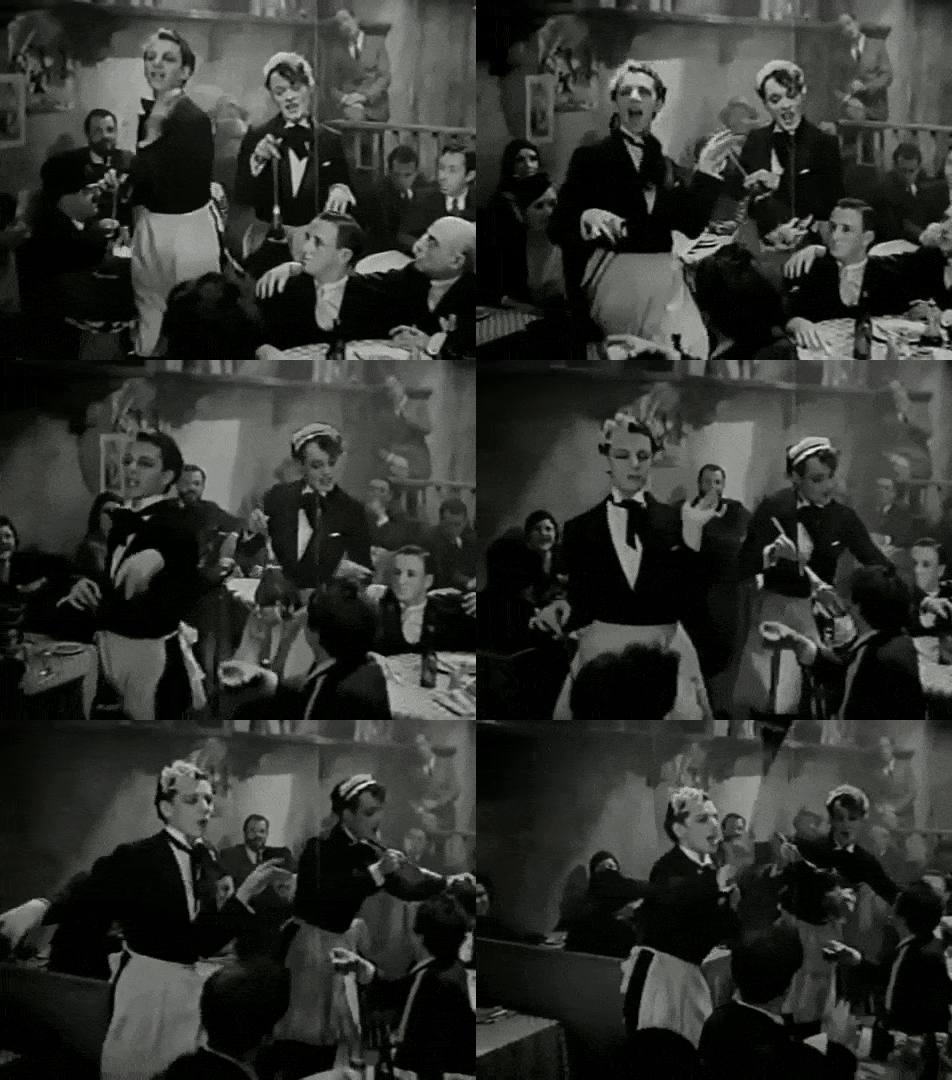
One of the most jaw-dropping aspects of pre-Code cinema is how openly it depicted queer spaces and communities. “Call Her Savage” (1932) features what may be the first gay bar depicted in American cinema, complete with effeminate male performers singing to tables of men clearly coded as gay. This scene isn’t brief or hidden—it’s an extended sequence in a major Fox Film production starring Clara Bow, the “It Girl” herself.
“Our Betters” (1933) features an openly gay character referred to as the “fairy designer” who speaks with a lisp and displays stereotypically effeminate mannerisms—problematic by today’s standards, certainly, but remarkable for presenting a gay character whose sexuality is acknowledged rather than punished.
“Sailor’s Luck” (1933) includes a landlady who is clearly coded as lesbian and whose sexuality is treated as unremarkable by the other characters. “Wonder Bar” (1934) features a brief scene where two men are dancing together, and when a woman tries to cut in, one man says, “No, I think you’re barking up the wrong tree”—an explicit acknowledgment of homosexuality
“Hell’s Highway” (1932) includes a fairly sympathetic portrayal of an effeminate prisoner called “Sneeze,” while “This Is the Night” (1932) features a fashion designer character who is flamboyantly gay and, remarkably for the time, not portrayed as villainous.
“These weren’t just quick scenes that censors missed,” explains film historian Parker Tyler. “These were deliberate inclusions that suggest filmmakers and studios understood there was an audience for these representations.”
The Trans Pioneering You Never Knew About
Perhaps most surprising to modern viewers is pre-Code Hollywood’s exploration of transgender themes. While the language and understanding of transgender identity was different in the 1930s, several films explored gender transition and identity in ways that were remarkably forward-thinking.
“Viktor und Viktoria” (1933), a German film that played in American art houses, centered on a woman living as a man who performs as a female impersonator—a complex exploration of gender performance that wouldn’t be attempted again in mainstream cinema for decades.
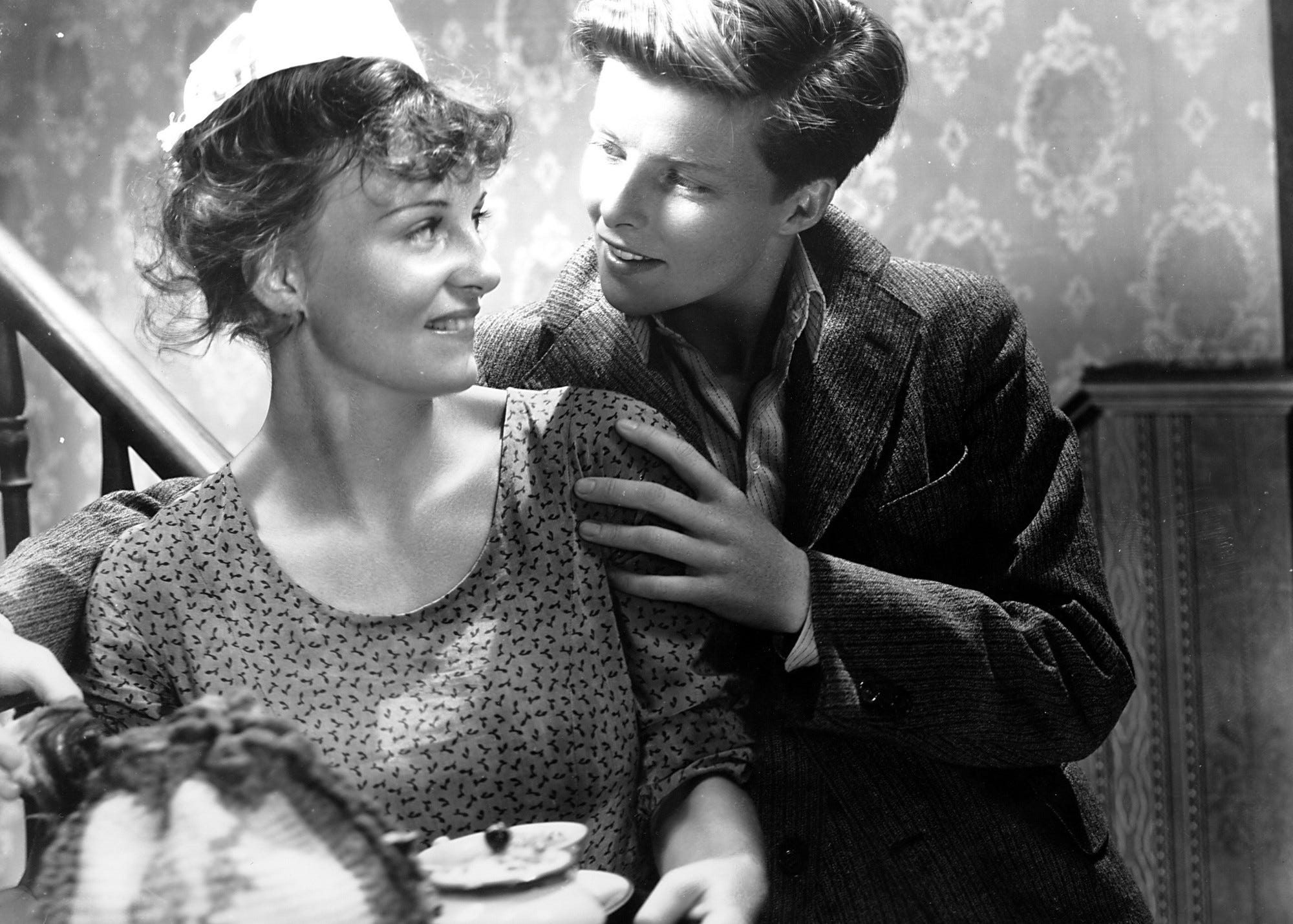
The American film “Sylvia Scarlett” (1935), released just as the Code was tightening its grip, stars Katharine Hepburn as a woman who lives as a man through much of the film. While ostensibly she does this for practical rather than identity reasons, the film explores her comfort in male identity and the romantic complications that arise when she develops feelings for a man while presenting as male.
“These weren’t just cross-dressing comedies,” argues transgender film historian Susan Stryker. “They were genuine explorations of gender identity that asked questions about how clothing and presentation relate to our inner sense of self. For the 1930s, that’s fucking revolutionary.”
Sex, Violence, and the Moral Panic That Killed Queer Cinema
It wasn’t just LGBTQ+ content that thrived in pre-Code Hollywood. Films openly depicted adultery, prostitution, drug use, and violence in ways that would be forbidden for decades after. Women’s sexuality was portrayed with remarkable frankness, with female characters who openly desired and pursued sex outside of marriage without necessarily being punished for it.
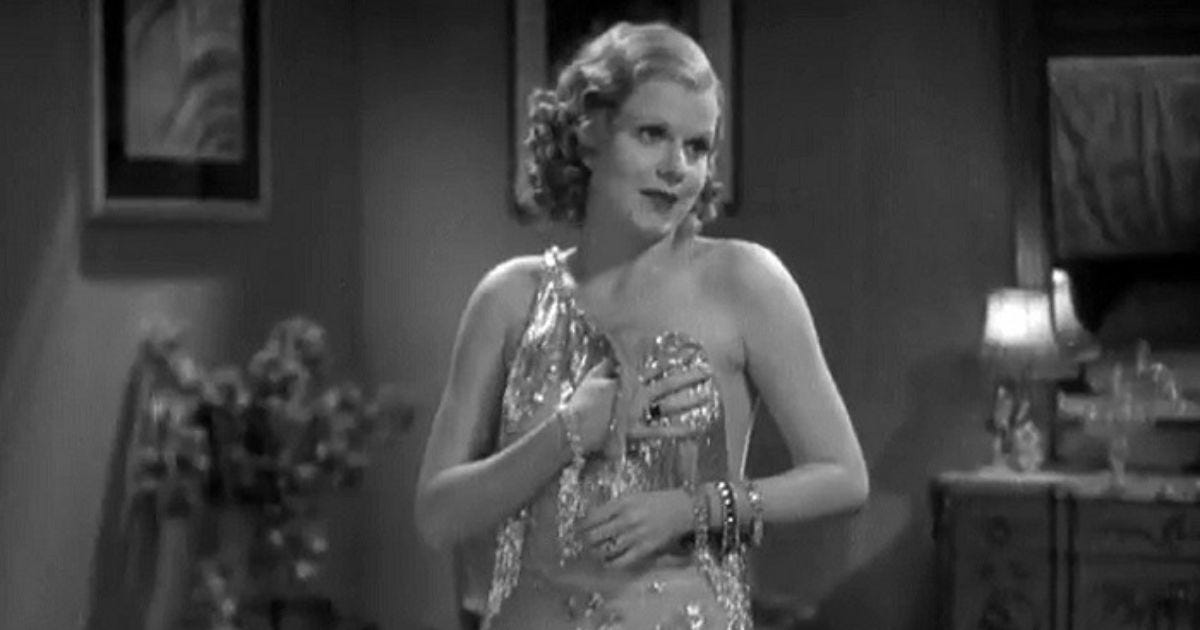
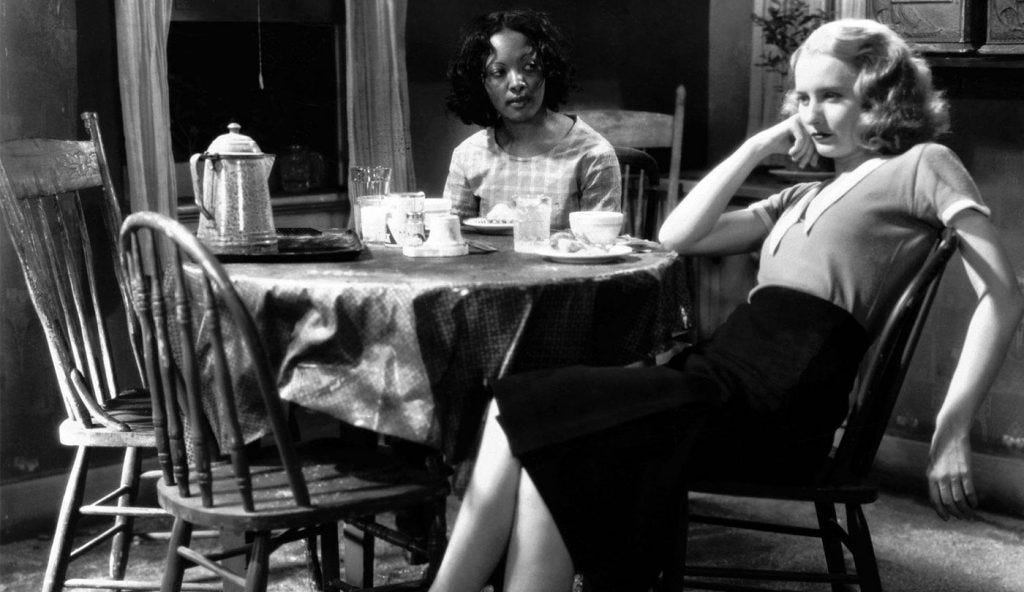
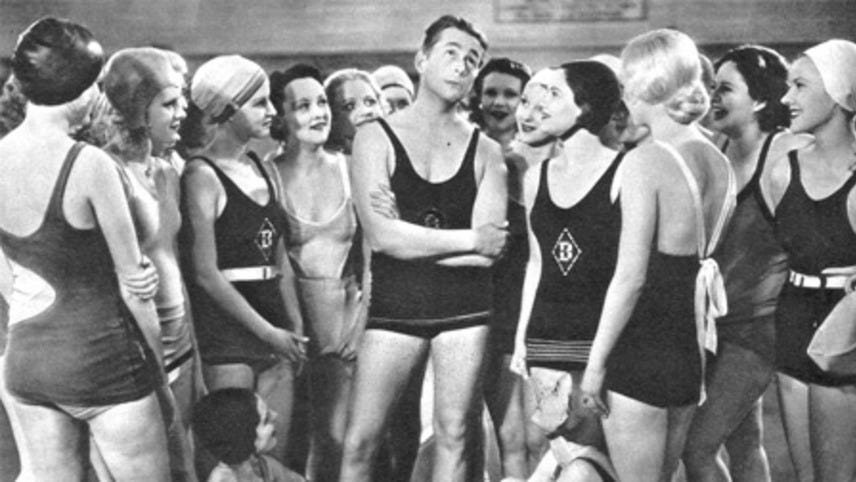
“Baby Face” (1933) stars Barbara Stanwyck as a woman who explicitly sleeps her way to the top of a corporation, floor by floor. “Red-Headed Woman” (1932) features Jean Harlow as an unrepentant home-wrecker who faces no significant consequences for her actions. “Safe in Hell” (1931) centers on a prostitute on the run after killing her abusive client.
This sexual frankness extended to the depiction of gay and lesbian characters, who were often presented as part of this sexually liberated landscape rather than as cautionary tales or villains.
“The overall sexual openness of pre-Code films created space for queer characters to exist without automatic condemnation,” explains film scholar Molly Haskell. “When straight sexuality isn’t being repressed on screen, queer sexuality doesn’t stand out as dramatically different.”
This openness eventually triggered a massive backlash from religious groups, particularly the Catholic Legion of Decency, which threatened boycotts of “immoral” films. Studio heads, terrified of losing audience dollars during the Great Depression, capitulated to these demands by agreeing to strict enforcement of the Production Code starting in July 1934.
“The moral panic wasn’t organic—it was orchestrated,” argues media historian Kathryn Fuller-Seeley. “Conservative religious groups deliberately framed Hollywood as a corrupting influence, and studios chose profit over artistic freedom.”
The Great Erasure Begins
Once the Hays Code enforcement kicked in during 1934, the change was dramatic and immediate. Films in production had scenes cut, storylines altered, and dialogue changed. Characters who might have been openly gay were either eliminated entirely or transformed into heterosexual figures.
The original script for “The Thin Man” (1934) contained clearly gay characters who were either cut or de-gayified before filming. “Dracula’s Daughter” (1936) had its lesbian overtones significantly watered down from the original script. Projects with prominent LGBTQ+ themes were canceled entirely or morphed beyond recognition.
“It was a systematic purge,” says film preservationist Robert Gitt. “Studios went through their own back catalogs and many pre-Code films were literally locked away in vaults, deemed too risqué for re-release under the new standards.”
This erasure didn’t just affect new productions—it altered our cultural memory of what early cinema had been. As pre-Code films were withdrawn from circulation, later generations grew up believing that early Hollywood had always been sexually conservative, when the exact opposite was true.
What We Lost: The Alternative Timeline of American Film
Perhaps the most tragic aspect of the Code’s implementation is contemplating what might have happened if this early progressive trajectory had been allowed to continue. If Hollywood hadn’t been forced into 30+ years of censorship right as it was beginning to explore LGBTQ+ themes with relative openness, how might American attitudes have evolved differently?
“The timing couldn’t have been worse,” laments film historian Thomas Doherty. “Sound technology had matured, allowing for more complex storytelling. The Depression had created an appetite for films that addressed social realities frankly. Studio systems were at their creative peak. And then—boom—the Code slammed the door shut, particularly on queer representation.”
If LGBTQ+ characters had remained visible in mainstream cinema throughout the 1930s, 40s, and 50s, how might that have changed public perception? Would the lavender scare of the McCarthy era have gained the same traction? Would the gay rights movement have had to start from scratch in the late 1960s?
“We’re still living with the consequences of that erasure,” argues activist and film historian Jenni Olson. “The Code didn’t just remove queer people from films—it removed them from the public’s understanding of American life. It created a false narrative that LGBTQ+ people suddenly ‘appeared’ in the 1960s rather than having always been part of the social fabric.”
Subversive Survival: How Queer Cinema Went Underground
When the Code slammed the door on explicit representation, filmmakers didn’t entirely give up—they just got sneakier. The era of “queer coding” began, with characters who couldn’t be explicitly identified as LGBTQ+ but who conveyed their queerness through mannerisms, costuming, interests, and subtle dialogue.
“Suddenly, filmmakers had to learn the art of the double entendre,” explains film critic Drew Casper. “They developed a sophisticated visual and verbal language that straight audiences might miss but that queer viewers would recognize.”
Alfred Hitchcock became a master of slipping queer-coded characters past the censors. The villains in “Rope” (1948) are clearly coded as a gay couple. “Strangers on a Train” (1951) features an antagonist whose queerness is conveyed through his style, mannerisms, and obsession with the protagonist.
“Ben-Hur” (1959) screenwriter Gore Vidal has revealed that he and Stephen Boyd (who played Messala) agreed that their character’s relationship had a romantic history, but never told Charlton Heston, creating a homoerotic subtext that the censors missed completely.
These coded representations were a double-edged sword. They provided some visibility, however limited, but they also established the harmful pattern of associating queerness with villainy, mental instability, or tragedy—tropes that outlived the Code itself.
The Forgotten Drag Kings and Queens of Early Film
Another fascinating aspect of pre-Code cinema was its relative comfort with drag and gender play. While often played for comedy, these performances weren’t always mean-spirited or contemptuous.
Julian Eltinge was one of the most famous female impersonators of the early 20th century and appeared in several silent and early sound films, including “The Isle of Love” (1922) and “Maid to Order” (1931). Rather than being portrayed as deviant, Eltinge was celebrated for his artistry and precision in female impersonation.
On the flip side, stars like Marlene Dietrich frequently performed in male dress without it being treated as scandalous or perverse. When Dietrich wore a tuxedo in “Morocco,” it was presented as the height of sophisticated sexiness, not as a joke or a perversion.
“Early film had a more fluid relationship with gender performance,” explains historian Judith Weisenfeld. “Drag wasn’t necessarily seen through the lens of sexual deviance until conservative forces deliberately constructed that association.”
This comfort with gender play extended beyond star performances. Films like “Their First Mistake” (1932) with Laurel and Hardy include casual cross-dressing played for laughs but not disgust. “The Warrior’s Husband” (1933) features Katharine Hepburn as a spear-carrying, athletic Amazon who kisses another woman on the lips.
After the Code, drag would be permitted only under very specific circumstances: if it was a temporary disguise used for practical purposes (like “Some Like It Hot”), if it was played entirely for laughs, or if it was eventually punished or “corrected” within the narrative.
The Queer Actors Who Couldn’t Be Themselves On Screen
The tightening grip of the Hays Code didn’t just affect fictional characters—it had profound implications for queer actors in Hollywood. Before the Code’s strict enforcement, there existed a certain “don’t ask, don’t tell” approach to actors’ personal lives. While few stars were openly gay, many lived in what were known as “lavender marriages” (marriages of convenience between gay men and lesbian women) or maintained relatively open secret lives within Hollywood circles.
William Haines, one of MGM’s top stars of the late 1920s and early 1930s, refused to hide his relationship with his partner Jimmy Shields. When Louis B. Mayer demanded Haines get married to a woman for appearances, Haines chose to end his film career rather than deny his relationship. Before the Code’s enforcement, his career had flourished despite industry insiders knowing about his sexuality. After 1934, that became impossible.
“The Code created a culture of terror for queer actors,” says historian William Mann. “Not only could they not play gay characters on screen, but their personal lives became subject to extreme scrutiny and control. The studios developed complex systems to hide actors’ sexualities, including arranged dates, fake engagements, and forced marriages.”
Actors like Cary Grant, Randolph Scott, Katharine Hepburn, Marlene Dietrich, and dozens of others had their queer relationships erased from public view. Studio publicity departments crafted heterosexual narratives for stars regardless of their actual lives.
“It was a double erasure,” explains Mann. “Queer characters disappeared from screens at the same time that queer actors were forced deeper into closets.”
The Birth of Camp: Rebellion Through Exaggeration
One of the most fascinating responses to the Hays Code was the development of camp as an aesthetic strategy. Unable to show explicit homosexuality, some filmmakers turned to exaggerated femininity, over-the-top performances, and stylistic excess as a form of coded representation.
“All About Eve” (1950) is filled with dialogue and performances that play as camp, particularly the character of Addison DeWitt. Films starring stars like Bette Davis, Joan Crawford, and later performers like Judy Garland and Liza Minnelli became touchstones for gay audiences precisely because they deployed camp as a strategy to communicate queerness without naming it.
“Camp became a survival strategy,” explains cultural theorist David Bergman. “If you couldn’t be explicit, you could be excessive. And that excess created spaces within mainstream culture where queer sensibilities could find expression despite censorship.”
This strategy created a peculiar cultural phenomenon: films that seemingly conformed to heteronormative standards while simultaneously winking at queer audiences who could read between the lines. “Johnny Guitar” (1954), with its intense rivalry/attraction between Joan Crawford and Mercedes McCambridge, became a lesbian cult classic despite containing no explicit lesbian content.
The International Contrast: European Cinema Kept Queer Characters Alive
While American cinema was forced into a heterosexual straitjacket, European filmmaking continued to explore LGBTQ+ themes with greater freedom. Films like “Mädchen in Uniform” (1931, Germany) depicted lesbian attraction between a student and teacher with remarkable sensitivity. “Michael” (1924, German) portrayed a gay relationship between an artist and his model.
Even after the rise of fascism curtailed some of this exploration in Germany and Italy, other European countries continued producing films with queer content. French cinema, in particular, maintained a more open approach to sexuality, with films like “Club des femmes” (1936) and later “Les enfants terribles” (1950) exploring same-sex desire.
“The contrast between American and European cinema during this period is stark,” notes film historian Patricia White. “While Hollywood was systematically erasing queer people, European filmmakers were continuing the exploration that American pre-Code cinema had begun.”
This international contrast created a bizarre situation where sophisticated American audiences might see European films featuring LGBTQ+ characters at art house theaters while mainstream Hollywood productions remained rigidly heteronormative.
The Painful Path Back: How We Slowly Recovered What Was Lost
When the Hays Code finally collapsed in 1968, replaced by the MPAA rating system, LGBTQ+ representation didn’t immediately bounce back to pre-Code levels. The damage had been done. Generations of filmmakers had been trained under the Code’s restrictions, and audiences had been conditioned to expect certain narratives.
The first post-Code films to feature gay characters, like “The Boys in the Band” (1970), often reinforced negative stereotypes of gay men as self-loathing and miserable. Lesbian characters remained primarily predatory or tragically doomed. Trans characters were portrayed as psychotic (as in “Psycho”) or as jokes.
“The legacy of the Code outlived its formal existence by decades,” argues film critic K. Austin Collins. “When you spend more than 30 years teaching filmmakers and audiences that queer people can only exist as villains, victims, or jokes, that doesn’t disappear overnight.”
It would take until the 1990s and early 2000s for mainstream American cinema to begin approaching the relative openness toward LGBTQ+ themes that had existed in pre-Code films of the early 1930s. Even today, certain types of queer representation remain controversial or limited in mainstream cinema.
“It’s mind-blowing to think that in some ways, films from 90 years ago were more progressive about LGBTQ+ representation than many films made in the last 20 years,” notes film preservationist Kassandra Harris. “We’re still catching up to where we could have been if the Code hadn’t interrupted the natural evolution of film.”
The Queer Archaeology Project: Rediscovering What Was Buried
One of the most exciting developments in recent film history has been the rediscovery and restoration of pre-Code films, many of which had been effectively buried for decades. Organizations like the UCLA Film & Television Archive, the Library of Congress, and the Queer Film Heritage Project have been working to restore these films and bring them back into public view.
“It’s like conducting archaeology,” explains film preservationist Dave Kehr. “We’re digging up evidence of a queer cinematic past that most people don’t realize existed.”
These restoration efforts have revealed just how extensive and explicit queer representation was in early cinema. Films that had been dismissed as minor or forgotten have been rediscovered as containing important LGBTQ+ content. Silent films once thought lost have been found in archives around the world, some containing surprising depictions of same-sex desire or gender nonconformity.
Turner Classic Movies, streaming services, and specialized distributors like Kino Lorber have begun making these restored pre-Code films available to contemporary audiences, allowing modern viewers to see for themselves how the Hays Code didn’t “maintain standards” but rather reversed an emerging progressive trend.
“When people actually see these films, they’re shocked,” says film historian David Pierce. “They’ve been told that old movies were naive and sexless, especially regarding LGBTQ+ themes. Seeing the reality challenges everything they thought they knew about film history and American cultural attitudes.”
Why This Forgotten History Still Fucking Matters
Understanding pre-Code cinema’s relative openness to LGBTQ+ themes isn’t just about correcting the historical record—it’s directly relevant to contemporary battles over representation. When conservatives claim that LGBTQ+ visibility in media is a recent “trend” or “agenda,” they’re erasing the fact that queer people have always been part of American culture and its artistic expressions.
The history of pre-Code cinema demonstrates that the systematic removal of LGBTQ+ people from American screens wasn’t an accident or a reflection of audience preferences—it was a deliberate act of cultural censorship driven by religious pressure groups and institutionalized through industry self-regulation.
“When people try to remove LGBTQ+ books from libraries or pressure streaming services to reduce queer content in children’s programming, they’re reading directly from the Hays Code playbook,” argues media scholar Melinda Hsu. “It’s the same moral panic, the same rhetoric, and the same goal: making queer people invisible.”
The pre-Code era stands as proof that American audiences were perfectly capable of accepting LGBTQ+ characters and themes until they were told not to. Films featuring gay characters, lesbian kisses, or gender-bending performances were commercially successful and critically acclaimed before censorship artificially constrained what could be shown.
“The most powerful weapon against those who want to erase LGBTQ+ people from media today is showing that we were there from the beginning,” concludes film historian B. Ruby Rich. “We weren’t added to American cinema—we were forcibly removed from it. And every push for representation since has been an attempt to reclaim what was taken from us.”
References
Russo, V. (1987). The Celluloid Closet: Homosexuality in the Movies.
Barrios, R. (2003). Screened Out: Playing Gay in Hollywood from Edison to Stonewall.
Mann, W. J. (2001). Behind the Screen: How Gays and Lesbians Shaped Hollywood, 1910-1969.
Doherty, T. (1999). Pre-Code Hollywood: Sex, Immorality, and Insurrection in American Cinema, 1930-1934.
Vieira, M. A. (1999). Sin in Soft Focus: Pre-Code Hollywood.
Lugowski, D. M. (2007). “Queering the (New) Deal: Lesbian and Gay Representation and the Depression-Era Cultural Politics of Hollywood’s Production Code.” Cinema Journal.
White, P. (1999). Uninvited: Classical Hollywood Cinema and Lesbian Representability.
Horak, L. (2016). Girls Will Be Boys: Cross-Dressed Women, Lesbians, and American Cinema, 1908-1934.
Stryker, S. (2008). Transgender History: The Roots of Today’s Revolution.
earlier today. Because it’s been particularly wild, especially just now at 10:35 PM CDT Sunday, I thought I’d write in. So far, so good where I live, we got winds, but no rain (it did rain before I mentioned the weather could impact my time online and posting,) and certainly no tornadoes. Temps stayed below 75 all day, with lower 60 degree dewpoints. Something could have twisted up, but not a huge something. So, that is good, with the exception that now the atmosphere here will lend itself to the same watching and hoping about the weather tomorrow (Monday.) But it is and has been safe here today and tonight. That’s the primary post.
The reason I thought I’d better write in is because, to the West of us, there is an ongoing tornado emergency. There have been tornadoes, a couple with extensive damages, in the late afternoon and evening, but this tornado now is one of what the weather people have been worrying about all the past week. It even was headed toward Greensburg, but did travel between Greensburg and another small town, so those cities are relatively safe. But the storm has been intensifying, and the tornado has been, also. I figure it’s going to make the AM news, and I didn’t want anyone to worry that we got hit; the area is somewhat North, and pretty far West of where I live, a few jogs South of Wichita. So that’s my weather check-in.
I don’t know what the news will tell about it, but the meteorologist I watch was visibly and audibly saddened by watching the reflexivity radar on the tornado, saying it is very bad. So it must be very bad, because he’s not an alarmist meteorologist. I’m yet again humbly thankful to have such weather avoid my area, and I hope there is not much population on the tornado’s path. We travelled by Greensburg for a karate tournament a couple of years after the Big One there, and I don’t recall a lot of homes on the road between towns, but there were houses around and about. We’ll see tomorrow, of course.
Photo: Acting NASA Administrator Janet Petro, who also serves as Kennedy Space Center director, a post she assumed in 2021. Trump elevated Petro to lead NASA after he ousted former Sen. Bill Nelson for believing in climate change.
Newly-released data shows that Oklahoma ranks 46th in per-pupil spending, but Walters, who is eyeing a run for governor, has called for cuts to his state’s “wasteful” education spending, including $250,000 to provide school districts with emergency inhalers.
In his KFOR interview, Walters did boast about getting new teachers a signing bonus, but as was widely reported the time, $290,000 of that money had to be clawed back because it had gone to teachers who did not qualify. Some of those teachers had already spent the money.
New: CBP seized a shipment of t-shirts from @cola.baby featuring a swarm of bees attacking a cop. The company also sells "ELIMINATE ICE" t-shirt and previously was threatened by LAPD for "FUCK THE LAPD" shirts and hats. Shirts to be "destroyed under CBP supervision"www.404media.co/cbp-seizes-s…
Rep. Beth Lear first appeared here in January 2024 when she defended her anti-trans bathroom bill by citing the “millstones” bible verse which calls for drowning anyone who hurts children.
She later blamed “depraved monster” Alfred Kinsey, liberals, and the ACLU for transgender people even existing.
Rep. Josh Williams first appeared here in July 2024 for his bill that would criminalize drag shows in the presence of children. Williams reintroduced his bill last week.