The Words of the Week – May 30
Dictionary lookups from Memorial Day, cryptocurrency, and the White House
😄

Dictionary lookups from Memorial Day, cryptocurrency, and the White House
😄
(This reminds me of Halliburton coming into a few lucrative contracts before and during the GWOT. -A.)

In early April, hundreds of military and tech companies exhibited their products at the Border Security Expo, which brought “government leaders, law enforcement officials, and industry innovators” together. During the two-day event in Phoenix, Immigration and Customs Enforcement Acting Director Todd Lyons said he would like ICE to operate more like a business: “like [Amazon] Prime, but with human beings.” He added that “the badge and guns” should do “the badge-and-gun stuff, everything else, let’s contract out.”
The event illustrates how companies are rushing to secure government contracts as the Trump administration ramps up its spending on ICE to reach its deportation goals. The House approved a spending bill in early May that sets aside $175 billion for immigration enforcement – about 22 times ICE’s annual budget – and includes $45 billion for detention, $14.4 billion for transportation and removal operations and $8 billion for hiring new ICE staff. The Trump administration ordered DHS to hire an additional 20,000 ICE officers.
OpenSecrets previously reported on the private prisons and air carriers that are poised to benefit from President Donald Trump’s plans to increase deportation. This final article in the series focuses on other for-profit companies benefiting from deportations.
(snip-It Matters! MORE on the page; click through above on the article headline.)
So I read all the advice on my stepper work out post. I did listen … sort of. I wish right now I had listened to the advice better. Several people said to do 2 minutes and then 12 hours later or the next day to do 2 minutes more.
Today was the day I wanted to do legs, tomorrow will be arms with light weights, as Sunday is the day for heavy ones. So I did two minutes like people advised. I waited 30 minutes and did not feel any issues, so I did another 2 minutes. Then I sat down at my desk and sharpened the house knives. It took a while. Then I made supper in the deep frier of breaded chicken strips and french fries. By the time I got halfway through frying the food, I was struggling to bend my legs as my thighs felt like tree trunks. I did not tell Ron as I put the food away and came into my office. I had already taken my evening morphines, muscle relaxers, and 800 mg Ibuprofen. And my legs still hurt. They ache.
I am sitting at my desk and my legs feel like they can’t fit inside my pant legs. As I sit they are better bent as if I stretch them out it hurts more.
Ok I goofed, you all can say I told you so. I thought since the first two minutes did not seem to cause pain I could do another 2 minutes. I know it was suggested at least 12 hours before doing more. I can clearly see I will have to do that at least if not wait longer. I guess I want to get healthier faster and I can see there is not going to be a shortcut with this. This is going to take far longer than even I had thought it would.
So I will wait two days, then do 2 minutes on the stepper then put it away for the next couple of days. Then do two more minutes. As several said and Ten Bears reminded me he had advised me about before, this is a slow process that I can not make go at the speed I would wish it to. Not and do it correctly and keep from being in pain. I just took a 15 mg instant morphine my legs hurt so bad. Ok I fucked up … again. But I just wanted my leg muscles to fill out again so I can walk and do stuff. Hugs
So below I will add the pictures of the torture device my husband insisted I needed. We have not been walking like we used to. There seems to always be a reason why but my husband worries about how thin my legs have gotten and that I have started to have swollen ankles and feet sitting at my desk so much. So
we got this device.

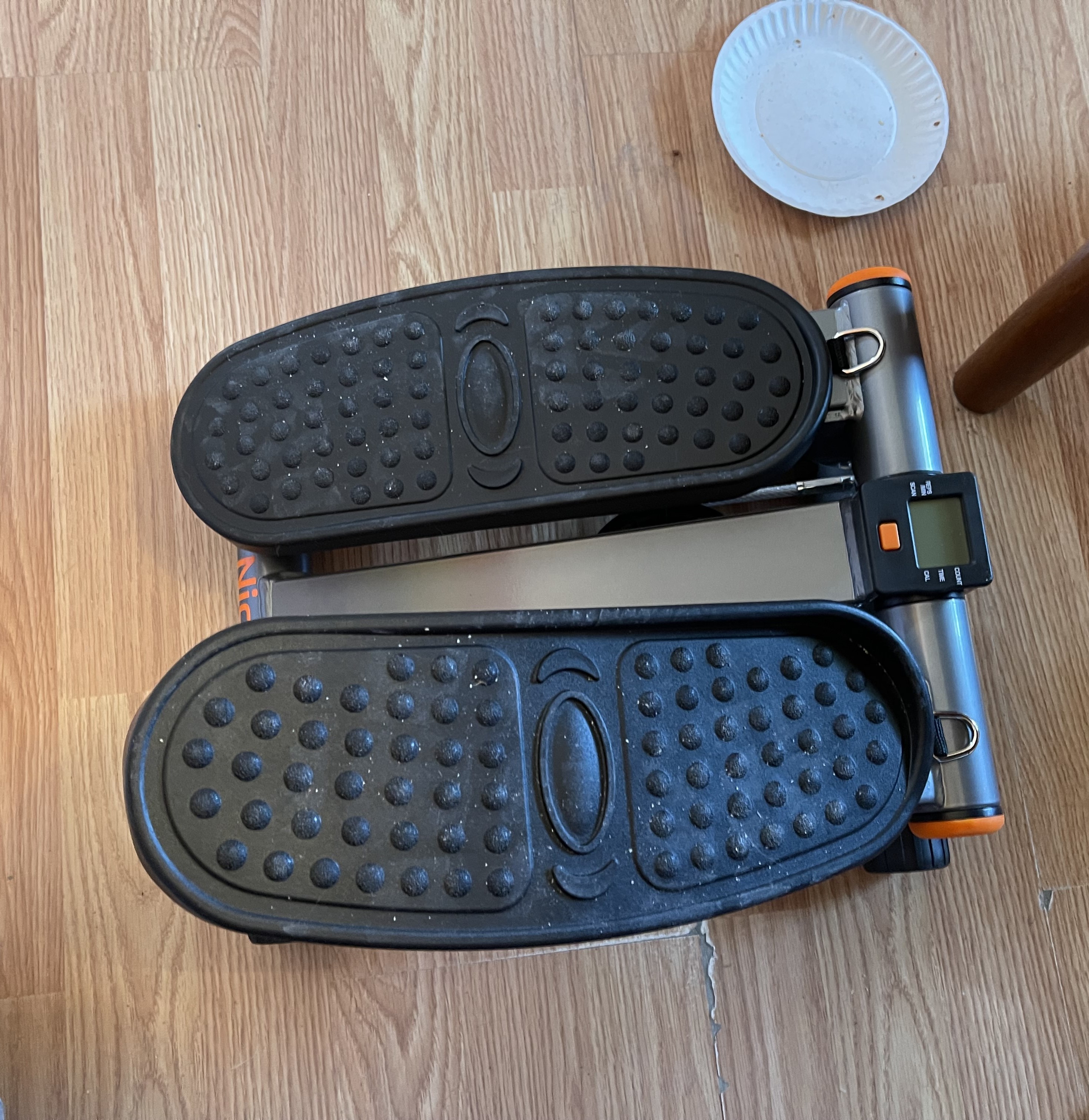
Now comes the punishment part. The first time I tried it I did 3 sets of 5 minutes of stepping, rested 10 minutes between sets. Two or three hours later as I was doing the dishes my legs started to really hurt and get stiff. I couldn’t bend my legs. My thighs were swollen. I was in agony so bad I couldn’t finish the dishes. I have not used it since. Can anyone tell me the proper amount of time to use it and how many minutes to rest between and how many sets to do. Thanks. I do want to get healthy and build back up my legs that have atrophied but I don’t want to die doing it. Hugs
I found it refreshingly interesting- A.
 Mary Robinson (center), former president of Ireland, shares her views on human rights at a Carter Center event in March. From the Center, CEO Paige Alexander (right) participated in the discussion, and Nicole Kruse, VP, Development, moderated.
Human rights pioneer Mary Robinson shares life lessons at Carter Center event
When Mary Robinson began her term in 1990 as the first female president of Ireland, she didn’t let her gender take a back seat to the office. She wanted to convince people that “I would actually do a better job because I was a woman,” she told an audience at The Carter Center in March.
Robinson went on to blaze trails not only in politics but human rights, women’s rights, and climate advocacy. She offered insight on her remarkable life during a public conversation and Q&A with the Carter Center’s Paige Alexander, CEO, and Nicole Kruse, vice president of development, following a screening at the Center of “Mrs. Robinson,” a new biographical documentary.
Robinson has several ties with the Center, including a long friendship with co-founders President Jimmy Carter and Rosalynn Carter. She also helped lead the Carter Center’s election observation mission to Myanmar in 2015.
But perhaps her strongest connection to the Center is a shared commitment to bolstering human rights around the world. “The universal values of human rights are indispensable,” Robinson said. “They are as valid today as they ever were, and they are more relevant today than they ever were.”
During her tenure as U.N. High Commissioner for Human Rights from 1997 to 2002, she traveled to many dangerous places — Chechnya, Kosovo, and Goma in the Democratic Republic of the Congo. “I always came back energized because I was meeting people on the ground,” Robinson said.
The world celebrated the 75th anniversary of the Universal Declaration of Human Rights last year and its 50th anniversary while Robinson was high commissioner. The document is as “relevant today as it was in 1948,” she said. “We have learned so much about how, hopefully, to do better in creating more understanding but also embedding it in the cultures of people.”
Despite her belief that “countries go up and countries slide” in their commitment to human rights, she remains optimistic about the future and the young people who will be inheriting the world older generations created.
As a member of the Elders, a group of former world leaders to which President Carter also belonged, Robinson said she has been involved in conversations about climate and energy that span several age groups. “Younger people are insisting at being at the table,” she said. “I’ve had incredible conversations with 13-, 14-, and 15-year-old climate activists.”
The motivation of younger generations will lead to sea change soon, Robinson believes, because they want the world to move faster. “We’re on the cusp of this much healthier clean energy, renewable energy, no-waste circular economy,” she said. Robinson marveled at the difference such innovations will make for people in Africa who have never had electricity.
Although Robinson has spent her career addressing societal ills across the globe, she believes joy and hope can be found anywhere and are essential components for a well-lived life. She once heard her mentor, Archbishop Desmond Tutu, describe himself as a “prisoner of hope.” It made an impression on Robinson. She thought, “what he’s saying is the glass may not be half full. There may be only a tiny bit in the glass. But hope is action. You work with that.”
Forum Participants Provide Perspectives on Human Rights
As a former U.N. High Commissioner for Human Rights and member of the Elders, Mary Robinson has fought for human rights around the world. Similarly, the Carter Center’s Human Rights Program works to advance the rights of protected groups. Last year, the Center hosted the Human Rights Defenders Forum, where activists and scholars came together to learn from and support one another. Below are perspectives from four participants, working on different aspects of a broad human rights agenda.

Colette Pichon Battle
Vision and Initiatives Partner, Taproot Earth
“One way for us to understand the climate crisis is to understand everybody’s going to be impacted.… The worst part of climate change is not the big hurricanes. It’s not the big storms that you can predict. It’s global temperatures that are going to take out more people than any storm ever could.”
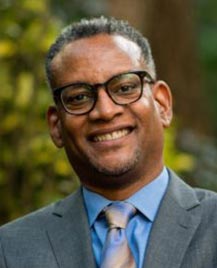
Vincent Warren
Executive Director, Center for Constitutional Rights
“States talk a lot about their rights, but states don’t have rights. What states have are power. And who has the rights? People have the rights.… What we have to do as human rights defenders is shift power to the people from the state.”
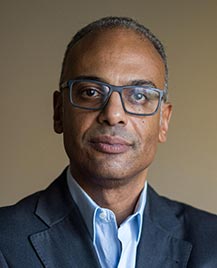
Hossam Bahgat
Founder, Egyptian Initiative for Personal Rights
“Our work can only succeed if we think of ourselves and execute our activities as a movement, not as a group of individual organizations working in individual countries, and not as a group of visionary individuals exercising leadership. To really make change, you need to build.”

Hina Jilani
Pakistani Lawyer and Women’s Activist,
Member of the Elders
“I cannot afford the luxury of either pessimism or cynicism or frustration, so I always have hope. I respect my struggle more than I expect achievement. I believe in my struggle. And because I have that belief, I have hope.”
with added thanks to MDavis. 💖
May 18, 1872 Bertrand Russell Birthday of Sir Bertrand Russell, British philosopher, logician, essayist, and social critic, a leading figure in his country’s anti-nuclear movement. In 1954 he delivered his “Man’s Peril [from the Hydrogen Bomb]” broadcast on the BBC, condemning the Bikini H-bomb tests, and warning of the threat to humanity from the development of nuclear weapons: “. . . as a human being to other human beings: remember your humanity, and forget the rest.” A year later, together with Albert Einstein nine other scientists, he released the Russell-Einstein Manifesto calling for the curtailment of nuclear weapons. Text of the Russell-Einstein Manifesto He became the founding president of the Campaign for Nuclear Disarmament in 1958. He resigned in 1960, however, and formed the more militant Committee of 100 with the overt aim of inciting mass civil disobedience, and he himself with Lady Russell led mass sit-ins in 1961 that brought them a two-month prison sentence, at the age of 89.  Bertrand Russell in front of the British Ministry of Defence, Whitehall, London |
| May 18, 1896 Supreme Court endorsed “separate but equal” facilities for those of different races with its Plessy v. Ferguson decision, a ruling that was overturned 58 years later. |
| May 18, 1972 Margaret (Maggie) Kuhn founded the Gray Panthers (originally called the Consultation of Older and Younger Adults for Social Change) to consider the common problems faced by retirees — loss of income, loss of contact with associates, and loss of one of society’s most distinguishing social roles, one’s job. The members discovered a new kind of freedom in their retirement — the freedom to speak personally and passionately about what they believed in, such as their collective opposition to the Vietnam War.  Maggie Kuhn, founder of the Gray Panthers  Gray Panther history |
| May 18, 1974 In the Rajasthan Desert in the state of Pokhran, India successfully detonated its first nuclear weapon, a fission bomb similar in explosive power to the U.S. atomic bomb dropped on Hiroshima, Japan. The test fell on the traditional anniversary of the Buddha’s enlightenment, and Indian Prime Minister Indira Gandhi received the message “Buddha has smiled” from the exuberant test-site scientists after the detonation. The test, which made India the world’s sixth nuclear power, broke the nuclear monopoly of the five members of the U.N. Security Council—the United States, the Soviet Union, Great Britain, China, and France. Detailed background on India’s nuclear weapons program and its first test |
| May 18, 1979 A jury in a federal court in Silkwood v. Kerr-McGee established a company’s responsibility for damage to the health of a worker in the nuclear industry. Karen Silkwood worked for the Kerr-McGee Nuclear Corporation at their Cimmaron, Texas, plant where plutonium was manufactured. Silkwood had become the first female member of the Oil, Chemical and Atomic Workers bargaining committee, focusing on worker safety issues, but had suffered radiation exposure in a series of unexplained incidents. The jury in Judge Frank G. Theis’s court awarded her estate $505,000 in actual damages, and $10 million punitive damages.  Karen Silkwood’s sisters and parents She had died in a car accident on her way to a meeting with a The New York Times reporter five years earlier. Karen Silkwood remembered The Supreme Court upheld the decision and the award |
https://www.peacebuttons.info/E-News/peacehistorymay.htm#may18
 Scottie's Playtime