I post this to again affirm that not all Christian denominations / churches are bigoted racist jerks using their holy book to bash others they don’t like. There are many good supportive Christians in the world as there are members of other faiths along with people of no faith. We should call out the bigots who use their religion to control others rather than as a guide for how they live their lives. But remember we must not blame all religious people / people of faith for the actions of those who are abusive of others. I am a live and let live person. I don’t want to control the lives of other people. I can barely handle being an adult in my own life, I don’t need the job of telling everyone else how to live. The caveat I will add to the live and let live way of life, it assumes others do not want to cause harm to others. Society has a responsibility to protect and care for each other and protect those who need such from those who do not respect the personhood of others. Hugs
Beth Bloom (L) and Pat Uleskey (R), among the couples getting married Saturday in downtown Rochester.
Love and resilience were on full display this past weekend at the inaugural Big Gay Wedding Day, held at Rochester’s First Universalist Church.
Organized by local Unitarian Universalist congregations, including First Unitarian Church of Rochester, First Universalist Church of Rochester and the Unitarian Universalist Church of Canandaigua, the free event offered LGBTQ+ couples the opportunity to marry in a safe and affirming environment.
The event came at a time of growing concern over potential shifts in federal policies that some worry could threaten marriage equality and other LGBTQ+ protections under the incoming administration. Advocacy groups have voiced fears that hard-won rights for queer and trans individuals may be at risk.
Stephanie Ballard-Foster
/
WXXI News
Caliana (L) and Angelas Rolon Torres (R) who were among the couples getting married Saturday in downtown Rochester.
Rev. Lane-Mairead Campbell, Minister of the First Universalist Church of Rochester and one of the event’s organizers, said the importance of providing certainty and support for LGBTQ+ couples in the face of these challenges cannot be overstated.
“We’re seeing anti-transgender legislation being upheld and passed like across our country, and so this is a way that we could provide some certainty for our community and be able to provide some space to be able to get married legally, safely, quickly, inexpensively,” said Campbell.
Local vendors were on hand to donate flowers, cakes and professional photography services to create a celebratory atmosphere. After the ceremonies, couples and their supporters gathered for a reception.
Rev. Shari Halliday-Quan, Lead Minister at the First Unitarian Church and an event organizer, said her own experience demonstrates why events like this are important. In 2012, same-sex marriage was illegal in New York, so she and her now-wife planned to marry in Massachusetts, where their Unitarian Universalist congregation welcomed same-sex weddings. By the time they wed, New York had legalized same-sex marriage, allowing them to marry at home.
Stephanie Ballard-Foster
/
WXXI News
A wedding cake at an event in downtown Rochester on Saturday, titled, ‘Big Gay Wedding.’ Local vendors donated flowers, cakes, and professional photography for the event which was organized by LGBTQ+ advocates.
Even though more than a decade has passed, Halliday-Quan said the need to create safe and affirming spaces for queer couples remains pressing.
“It matters deeply,” she said. “I think today, that right now, we’re helping couples secure rights that they’re worried will be taken away. We all hope that that won’t be the case. But what I want folks to know, and what I think today really celebrates and uplifts, is that queer and trans people have a place in our community, that you are loved and worthy.”
Among the couples married during the event were Caliana and Angeles Rolon Torres, who first discovered the opportunity while scrolling through Instagram. The couple, grateful for the chance to marry without financial barriers, said the event was especially meaningful after facing financial struggles.
“It means the world in that regard,” said Caliana. “The fact that we can do something like this, and there’s any organization doing something like this that enables people to get married, not only for free, but also before people are worried about it and things like that, is incredible. Like, outside of the marriage itself, the fact that this is happening is an amazing concept.”
Since the legalization of same-sex marriage in New York in 2011, more than 25,000 same-sex couples in the state have tied the knot. Nationally, there are an estimated 711,000 married same-sex couples in the United States.
Again Ethel is a woman I have been following since she was a teenager. She has gone through all the stages of transitioning, from doubt, trying to make it something else to finally admitting to herself and the world she is a woman and now living her life as one. The grand thing is she still fights so very hard for trans people despite the costs to her for taking on one of the growing popular atheist anti-trans people and others. She lost 2/3rd her income but never backed down, always telling the truth. She makes every video well researched and documents it, also she provides a transcript for those who would rather read than listen. I admit I admire her and her strength in her life struggles. But if you wish to learn more about those attacking trans stuff or the false idea that trans women are destroying female sports, I would watch her videos. Hugs
January 10, 1776 Thomas Paine Thomas Paine anonymously published his influential pamphlet, “Common Sense”. In it Paine questioned the fundamental legitimacy of the rule of kings, and advocated the doctrine of independence for Americans, and the rights of mankind. The entire text:
January 10, 1908 A prominent young Indian lawyer, Mohandas Gandhi, was jailed for the first time. He had refused to register as an Asian in Johannesburg, South Africa. He was released three weeks later. Gandhi, 1906 Gandhi and how his time in South Africa affected his life
January 10, 1917 The National Women’s Party began regular picketing of the White House, advocating the right to vote for women.
The first suffrage picket line leaving Congressional Union headquarters to march to the White House gates.
January 10, 1920 The League of Nations formally came into being when its Covenant (part of the Treaty of Versailles), ratified by 42 nations in 1919, took effect. In 1914, a political assassination in Sarajevo set off a chain of events that led to the outbreak of the most costly war ever fought to that date. As more and more young men were sent down into the trenches, influential voices in the United States and Britain began calling for the establishment of a permanent international body to promote international cooperation and to achieve international peace and security. Though strongly supported by President Woodrow Wilson (who served as Chairman of the Committee that developed the Covenant), the U.S. never joined.
January 10, 1930 In December 1928, Mohandas Gandhi attended a session of the Indian National Congress Party in Calcutta where it called for complete Indian independence from Great Britain. This was to be achieved through peaceful means, specifically complete noncooperation with the governmental apparatus of colonial British rule, known as the Raj. On this day, Gandhi drafted the declaration, which stated, in part: “The British government in India has not only deprived the Indian people of their freedom but has based itself on the exploitation of the masses, and has ruined India economically, politically, culturally and spiritually. . . . Therefore . . . India must sever the British connection and attain Purna Swaraj, or complete independence.”
January 10, 1940 Members of the Brethren, Mennonites and Friends religious groups sent a message to Presidend Franklin Roosevelt requesting alternative service in the event of war. Civilian Public Service workers Clark and Kriebel in the Duke University’s hospital sterilizer room. The Selective Training and Service Act of 1940 proclaimed that all persons who “by reason of religious training and belief were conscientiously opposed to all forms of military service, should, if conscripted for service, be assigned to work of national importance under civilian direction.” More on those who refused to serve in the “good war”
January 10, 1946 The first General Assembly of the United Nations convened at Westminster Central Hall in London, England, and included 51 nations.On January 24, the General Assembly adopted its first resolution, a measure calling for the peaceful uses of atomic energy and the elimination of atomic and other weapons of mass destruction.
January 10, 1966 Vernon Dahmer, a businessman and farmer in Hattiesburg, Mississippi, offered to pay the poll tax for those who couldn’t afford the fee that was then required before a citizen could vote (and which was made unconstitutional in federal elections by the 24th Amendment). Vernon Dahmer (foreground) former home of Vernon Dahmer Dahmer was known for saying, “If you don’t vote, you don’t count.” The night after a radio station broadcasted Dahmer’s offer, his home and store were firebombed. Dahmer died later from severe burns. The man responsible for the arson attack, Ku Klux Klan Wizard Sam Bowers, was not tried and convicted until 32 years later. The poll tax and other means of disenfranchising African Americans
January 10, 1971 The Peoples’ Peace Treaty between the citizens of the U.S. and Vietnam was endorsed by 130 organizations. Several million North Americans later signed it.
Hi Everyone. I woke at 12:22 last night. But I got up at 1 am and started making posts and doing things. So I just finished the asshat yesterday news posts. So now before I answer the comments … and I love comments everyone sends to me, I have to make a red sauce. Ron promised to make me a grand lasagna if I make the sauce. So with ear buds in, off I go to make the sauce. Hugs and loves to everyone. Remember that I really care for everyone. Add any questions or comments in the comments and I will reply there. Hugs.
If you criticize the dear leader of the maga cult then you are forever an enemy. Death to the nonbelievers. This is why the current republicans and maga is very much a cult. Hugs.
This is great. The tRump world crowed about this citizen of Greenland who praised tRump’s plan to take over Greenland. Yet the truth did come out … He was a tRump loving fanboy violent felon drug dealer prison escapee. Hugs.
The same goes for gender roles and gender stereotypes. We can advance our way of thinking on LGBTQ+ issues, on trans people being welcome in the gender spaces of the genders they identify as. The idea that well we always did it this way or we have believed that if it dangled it was a male and that was it. We can let go of that regressive thinking and embrace a new understanding progressive future. Hugs
For months, Meta has been restricting content with LGBTQ-related hashtags from search and discovery under its “sensitive content” policy aimed at restricting “sexually suggestive content.”
Posts with LGBTQ+ hashtags including #lesbian, #bisexual, #gay, #trans, #queer, #nonbinary, #pansexial, #transwomen, #Tgirl, #Tboy, #Tgirlsarebeautiful, #bisexualpride, #lesbianpride, and dozens of others were hidden for any users who had their sensitive content filter turned on. Teenagers have the sensitive content filter turned on by default.
When teen users attempted to search LGBTQ terms they were shown a blank page and a prompt from Meta to review the platform’s “sensitive content” restrictions, which discuss why the app hides “sexually explicit” content.
Meta reversed the restrictions on LGBTQ search terms after User Mag reached out for comment, saying that it was in error. “These search terms and hashtags were mistakenly restricted,” a Meta spokesperson said. “It’s important to us that all communities feel safe and welcome on Meta apps, and we do not consider LGBTQ+ terms to be sensitive under our policies.”
User Mag is a 100% reader-supported publication. To receive new posts and support my work, become a free or paid subscriber.
Subscribe
Under mounting pressure from lawmakers and amidst a moral panic about young people’s social media use, last year, Meta introduced a new set of “sensitive content” restrictions across Instagram, Facebook, and Threads, aimed at teenagers. “We will start to hide more types of content for teens on Instagram and Facebook,” the company said at the time.
In September, Meta doubled down, forcing users under the age of 18 to use “Instagram Teen Accounts,” a setting which could only be reversed by a parent or guardian. The goal of this change, in Meta’s words, was to “limit … the content [teenagers] see, and help ensure their time is well spent.”
These changes quickly resulted in LGBTQ+ content getting restricted across Meta apps. Meanwhile, heterosexual content, tradwife content, and content featuring straight cisgender couples (even those engaged in romantic activities) has flourished.
“Meta categorizing LGBTQ hashtags as ‘sensitive content’ is an alarming example of censorship that should concern everyone,” said Leanna Garfield, social media safety program manager at GLAAD.
Some LGBTQ teenagers and content creators attempted to sound the alarm about the issue, but their posts failed to get traction. For years, LGBTQ creators on Instagram have suffered shadow bans and had their content labeled as “non-recommendable.” The restrictions on searches, however, are more recent, coming into effect in the past few months. Meta said it was investigating to find out when the error began.
“A responsible and inclusive company would not build an algorithm that classifies some LGBTQ hashtags as ‘sensitive content,’ hiding helpful and age-appropriate content from young people by default,” a spokesperson for GLAAD said. “Regardless of if this was an unintended error, Meta should… test significant product updates before launch.”
Subscribe
Several LGBQT teenagers I spoke to said that they weren’t even aware of the sensitive content restrictions, but said that they struggled to find other LGBTQ young people to connect with through Instagram.
“For many LGBTQ people, especially youth, platforms like Instagram are crucial for self-discovery, community building, and accessing supportive information,” Garfield said. “By limiting access to LGBTQ content, Instagram may be inadvertently contributing to the isolation and marginalization of LGBTQ users.”
The downranking and hiding of LGBTQ+ content comes as LGBTQ rights across the country are under attack.
On December 4th, the Supreme Court heard a major case on banning healthcare for trans youth. Trump has pledged to roll back protections for LGBTQ students, and right wing groups like the Heritage Foundation are working together with Democrats to dismantle civil liberties and restrict young people from accessing social media under dangerous proposed legislation such as the very poorly named Kids Online Safety Act (KOSA).
KOSA co-sponsor Rep. Marsha Blackburn claimed that it’s essential to restrict teens access to social media to “protect minor children from the transgender [sic] in this culture and that influence.”
One of the most prominent voices pushing legislation like KOSA and boosting policies like Meta’s sensitive content restrictions is NYU Stern School of Business professor Jonathan Haidt, whose dubious book, The Anxious Generation falsely ties social media use to teen mental health issues in order to push a moral panic about kids and technology use. This moral panic is then used to justify harmful laws that restrict speech and civil liberties online, and do immense harm to marginalized LGBTQ youth.
“Meta categorizing LGBTQ hashtags as ‘sensitive content’ is an alarming example of censorship that should concern everyone”
Mark Zuckerberg recently dined at Trump’s Mar-a-Lago club in Florida and is seeking an “active role” in Trump tech policy as the two are “now warming to each other,” according to The Guardian.
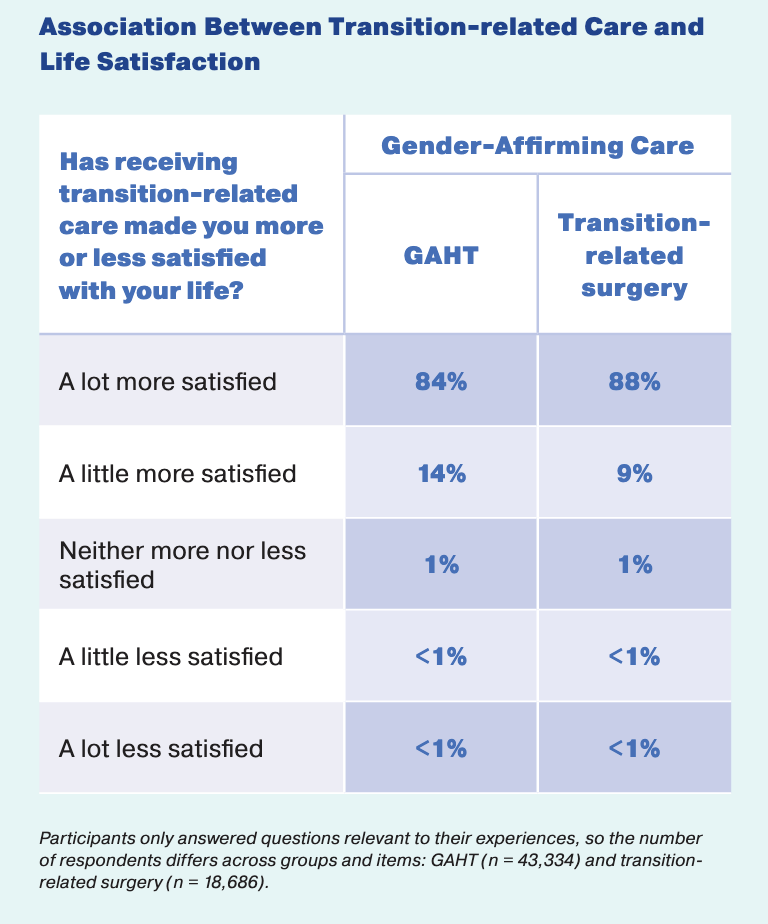
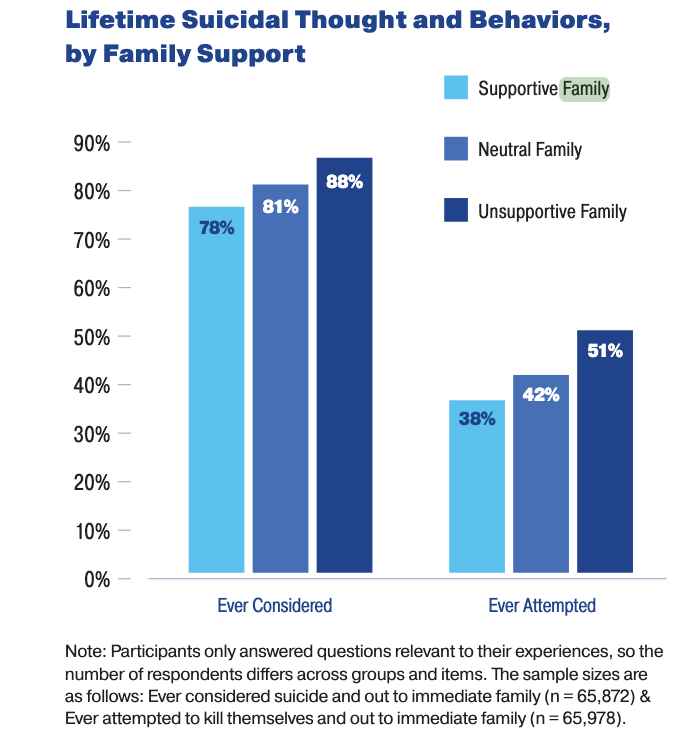
The increased censorship of LGBTQ content online is already having devastating effects on young people. For queer teens who rely on social media to connect with their peers and find support, these policies are cutting off vital access to community and representation.
“Meta should not only stop suppressing LGBTQ content in this way, it should also clarify how and why [this error occurred],” said Garfield.
User Mag is a 100% reader-supported publication. To support my work, become a free or paid subscriber. I could not do this work without your support.