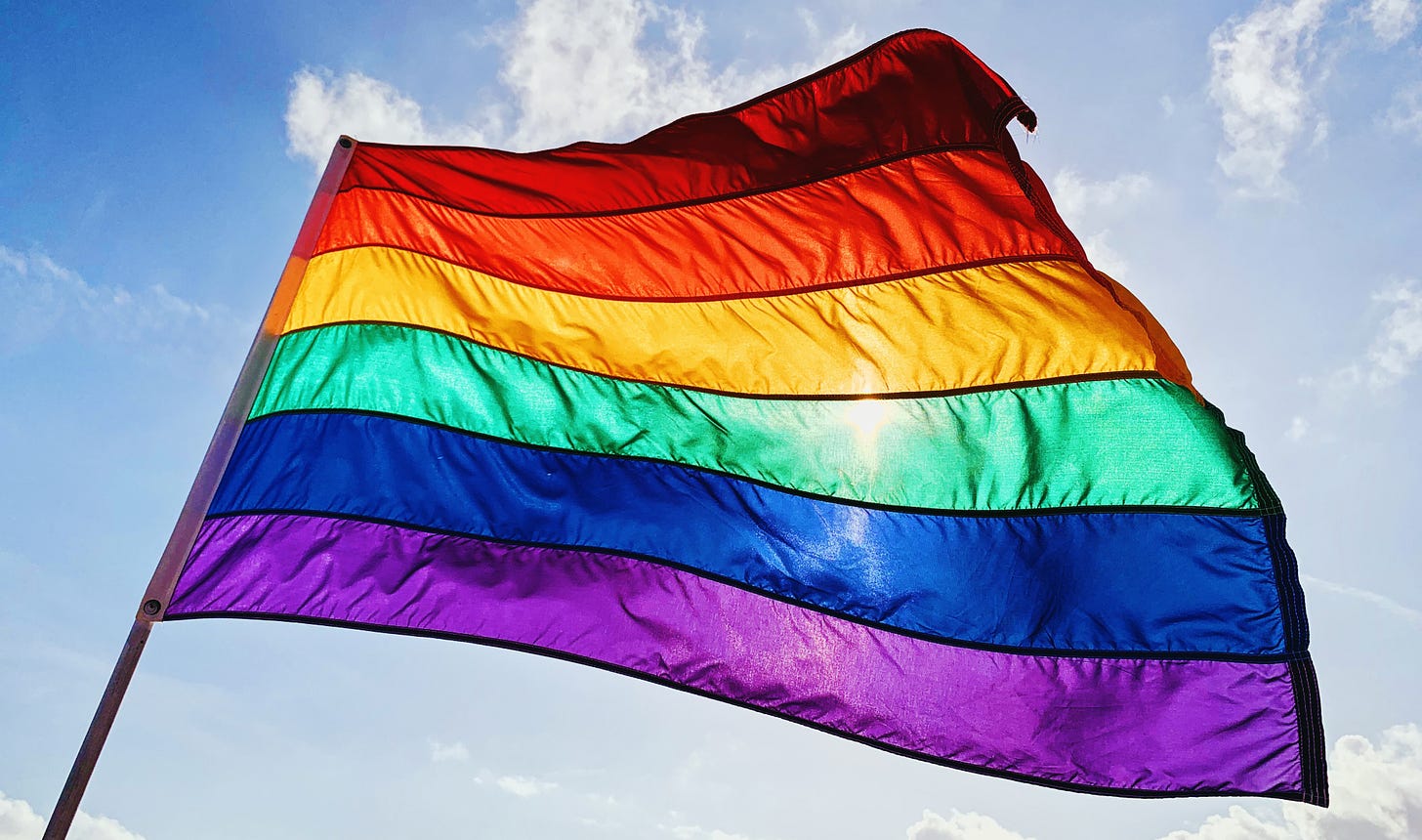
Federal court OKs Iowa’s “cruel” book ban law in stunning LGBTQ+ defeat

The idea behind these laws seems to be if they can hide that LGBTQ+ people / kids exist they can prevent the acceptance and tolerance of LGBTQ+ kids / people. In the minds of the haters who write these bills hopefully that will force people who are not straight or cis to stay hidden from society.  They are desperate to return to the 1950s when LGBTQ+ people had to stay hidden or risk losing everything they had, their job, housing, and friends.   They are pathetic in their need for everyone to be the same as they are, feel the same as they do, and to live as they do.  Why I did not know or understand.  The irrational hate for LGBTQ+ kids is really weird.  That they would rather have kids hurt, harmed, assaulted, ostracized, and possibly driven to suicide rather than give them acceptance or simply tolerance.   I don’t undestand what their gain is in this?   Hugs  

https://www.lgbtqnation.com/2026/04/federal-court-oks-iowas-cruel-book-ban-law-in-stunning-lgbtq-defeat/

April 2026

Photo of the author

John Russell (He/Him)April 7, 2026, 1:00 pm EDT· Updated on April 8, 2026
An empty classroomShutterstock

The U.S. Court of Appeals for the Eighth Circuit has ruled that Iowa can enforce a 2023 law restricting classroom instruction on LGBTQ+ topics and access to certain books while legal challenges against the law proceed.

On Monday, the three-judge panel overturned injunctions previously issued by lower courts in two separate lawsuits challenging aspects of the Senate File 496, according to the Associated Press and The Des Moines Register.

Passed by the Iowa state legislature and signed by Republican Gov. Kim Reynolds in 2023, the law prohibits “any program, curriculum, test, survey, questionnaire, promotion, or instruction relating to gender identity or sexual orientation” in kindergarten through sixth grade. It also bans materials featuring “descriptions or visual depictions of a sex act” from school libraries and classrooms — a provision which critics say is intended to ban books featuring LGBTQ+ characters and themes.

The law went into effect on July 1, 2023. The following November, the ACLU of Iowa and Lambda Legal sued the state on behalf of LGBTQ+ advocacy organization Iowa Safe Schools and seven students and their families, challenging SF 496’s classroom instruction ban.

Last May, a federal judge issued a split decision, upholding the law’s ban on discussion of gender identity and sexual orientation in K–6 classrooms, but blocking its ban on school “promotions” and “programs” that acknowledge the existence of LGBTQ+ people. U.S. District Judge Stephen Locher also blocked a provision of the law banning schools from providing “accommodation that is intended to affirm the student’s gender identity” without notifying their parents, writing that S.F. 496 was impermissibly vague about what constitutes an “accommodation.”

Writing for the Eighth Circuit on Monday, Judge Ralph Erickson held that the state’s interpretation of the law as requiring school “programs” and “promotions” to only encompass curricular activities does not violate the U.S. Constitution. However, the court did not address whether it is constitutionally permissible for the state to ban specific groups and extracurricular programs, such as Gender & Sexuality Alliance groups, because the Iowa Safe Schools lawsuit did not challenge specific applications of the law, according to the Register.  

The court also disagreed with Judge Locher’s ruling that the law’s language around “accommodations” was too vague, restoring S.F. 496’s ban on schools accommodating students’ gender identities without outing them to their parents.

In a separate November 2023 lawsuit, the Iowa State Education Association was joined by publisher Penguin Random House and several prominent authors of banned books in a challenge to S.F. 496’s book-banning provision. Last March, Judge Locher sided with the plaintiffs, issuing a preliminary injunction preventing schools from removing books it considers “obscene” from classrooms and libraries.

Again, writing for the Eighth Circuit in a separate decision Monday, Judge Erickson disagreed w  ith Locher’s ruling that school library books are not part a school’s curriculum. Erickson wrote that a school’s library catalogue constitutes government speech and can be restricted by state law, according to the Register.

The decisions on both cases send them back to the district court. But as the Register notes, the Eighth Circuit indicated in both rulings that the plaintiffs could not show a “likelihood of success on the merits” in their challenges to S.F. 496.

At the same time, in a joint press release the ACLU of Iowa and Lambda Legal noted that the rulings narrow “where and how the law may be applied.”

“The prohibition regarding sexual orientation and so-called gender theory applies only to specific, mandatory instruction on these topics during class time. The law, as currently interpreted, does not require schools to prohibit student expression of LGBTQ+ identity nor does it limit the sponsorship or promotion of GSAs,” ACLU of Iowa Senior Staff Attorney Thomas Story said.

“The court’s interpretation of the provision on banning books is that it applies only to those that specifically describe or depict one of those sex acts defined in Iowa’s criminal law. And with the forced outing provision, a report would be made to parents or guardians only if a student specifically requests a school accommodation for the stated purpose of affirming a gender identity different from their registration forms,” Story added.

In a statement responding to the court’s decision, Iowa State Education Association president Joshua Brown told the Register that the case was “about much more than legal technicalities.”

“It is about protecting the freedom of speech and the right to share ideas — values guaranteed by the First Amendment,” Brown said. “Our schools should be safe spaces where students are free to learn, teachers can use their professional expertise without fear, and families can trust that education is based on open inquiry rather than government censorship.”

A spokesperson for Penguin Random House indicated in a statement to the Register that the company intends to keep fighting against S.F. 496. Similarly, Lambda Legal Senior Attorney Nathan Maxwell called the ruling “a setback,” but noted that “it is not the end of this fight.”

“Iowa’s SF 496 is a cruel and unconstitutional law that silences LGBTQ+ children, erases their existence from classrooms, and forces educators to expose vulnerable students to potential harm at home,” Maxwell said in a statement. “We will continue to use every legal tool available to protect these young people. They deserve nothing less.”

Subscribe to the LGBTQ Nation newsletter and be the first to know about the latest headlines shaping LGBTQ+ communities worldwide.


John Russell is a writer and editor based in New York City. In addition to covering politics and entertainment for LGBTQ Nation, he has written for Vanity Fair, Slate, People, Billboard, and Out. He also writes about film, TV, and pop culture in his free newsletter Johnny Writes…

Riley Gaines Fails Again

Anti-trans failure tried to ban books about trans people.   As if banning things makes them not exist.  Hugs

Instagram blocked teens from searching LGBTQ-related content for months

Posts with LGBTQ+ hashtags were hidden under Meta’s “sensitive content” policy which restricts “sexually suggestive content”


For months, Meta has been restricting content with LGBTQ-related hashtags from search and discovery under its “sensitive content” policy aimed at restricting “sexually suggestive content.”

Posts with LGBTQ+ hashtags including #lesbian, #bisexual, #gay, #trans, #queer, #nonbinary, #pansexial, #transwomen, #Tgirl, #Tboy, #Tgirlsarebeautiful, #bisexualpride, #lesbianpride, and dozens of others were hidden for any users who had their sensitive content filter turned on. Teenagers have the sensitive content filter turned on by default.

When teen users attempted to search LGBTQ terms they were shown a blank page and a prompt from Meta to review the platform’s “sensitive content” restrictions, which discuss why the app hides “sexually explicit” content.

Meta reversed the restrictions on LGBTQ search terms after User Mag reached out for comment, saying that it was in error. “These search terms and hashtags were mistakenly restricted,” a Meta spokesperson said. “It’s important to us that all communities feel safe and welcome on Meta apps, and we do not consider LGBTQ+ terms to be sensitive under our policies.”

User Mag is a 100% reader-supported publication. To receive new posts and support my work, become a free or paid subscriber.

Under mounting pressure from lawmakers and amidst a moral panic about young people’s social media use, last year, Meta introduced a new set of “sensitive content” restrictions across Instagram, Facebook, and Threads, aimed at teenagers. “We will start to hide more types of content for teens on Instagram and Facebook,” the company said at the time.

In September, Meta doubled down, forcing users under the age of 18 to use “Instagram Teen Accounts,” a setting which could only be reversed by a parent or guardian. The goal of this change, in Meta’s words, was to “limit … the content [teenagers] see, and help ensure their time is well spent.”

These changes quickly resulted in LGBTQ+ content getting restricted across Meta apps. Meanwhile, heterosexual content, tradwife content, and content featuring straight cisgender couples (even those engaged in romantic activities) has flourished.

“Meta categorizing LGBTQ hashtags as ‘sensitive content’ is an alarming example of censorship that should concern everyone,” said Leanna Garfield, social media safety program manager at GLAAD.

Some LGBTQ teenagers and content creators attempted to sound the alarm about the issue, but their posts failed to get traction. For years, LGBTQ creators on Instagram have suffered shadow bans and had their content labeled as “non-recommendable.” The restrictions on searches, however, are more recent, coming into effect in the past few months. Meta said it was investigating to find out when the error began.

“A responsible and inclusive company would not build an algorithm that classifies some LGBTQ hashtags as ‘sensitive content,’ hiding helpful and age-appropriate content from young people by default,” a spokesperson for GLAAD said. “Regardless of if this was an unintended error, Meta should… test significant product updates before launch.”

Several LGBQT teenagers I spoke to said that they weren’t even aware of the sensitive content restrictions, but said that they struggled to find other LGBTQ young people to connect with through Instagram.

“For many LGBTQ people, especially youth, platforms like Instagram are crucial for self-discovery, community building, and accessing supportive information,” Garfield said. “By limiting access to LGBTQ content, Instagram may be inadvertently contributing to the isolation and marginalization of LGBTQ users.”

The downranking and hiding of LGBTQ+ content comes as LGBTQ rights across the country are under attack.

On December 4th, the Supreme Court heard a major case on banning healthcare for trans youth. Trump has pledged to roll back protections for LGBTQ students, and right wing groups like the Heritage Foundation are working together with Democrats to dismantle civil liberties and restrict young people from accessing social media under dangerous proposed legislation such as the very poorly named Kids Online Safety Act (KOSA).

KOSA co-sponsor Rep. Marsha Blackburn claimed that it’s essential to restrict teens access to social media to “protect minor children from the transgender [sic] in this culture and that influence.”

One of the most prominent voices pushing legislation like KOSA and boosting policies like Meta’s sensitive content restrictions is NYU Stern School of Business professor Jonathan Haidt, whose dubious bookThe Anxious Generation falsely ties social media use to teen mental health issues in order to push a moral panic about kids and technology use. This moral panic is then used to justify harmful laws that restrict speech and civil liberties online, and do immense harm to marginalized LGBTQ youth.

In an interview he did with PBS, Haidt boosted a false fringe conspiracy about trans youth known as social contagion or “rapid onset gender dysphoria” theory. Basically: Instagram is turning your kids gay and trans. In December, Barack Obama recommended the book at the top of his annual reading list.

“Meta categorizing LGBTQ hashtags as ‘sensitive content’ is an alarming example of censorship that should concern everyone”

Mark Zuckerberg recently dined at Trump’s Mar-a-Lago club in Florida and is seeking an “active role” in Trump tech policy as the two are “now warming to each other,” according to The Guardian.

The increased censorship of LGBTQ content online is already having devastating effects on young people. For queer teens who rely on social media to connect with their peers and find support, these policies are cutting off vital access to community and representation.

“Meta should not only stop suppressing LGBTQ content in this way, it should also clarify how and why [this error occurred],” said Garfield.

User Mag is a 100% reader-supported publication. To support my work, become a free or paid subscriber. I could not do this work without your support.