โ€˜Voting feels like a battleโ€™: In Mississippi, a group of Black women is reimagining voter turnout

The Mississippi Black Womenโ€™s Roundtable has traveled around the state for โ€œboot campsโ€ aimed at better mobilizing Black women to get out the vote. They face roadblocks in a state with a deep history of voter suppression.

Originally published by The 19th

This article is part of U.S. Democracy Day, a nationwide collaborative on September 15, the International Day of Democracy, in which news organizations cover how democracy works and the threats it faces. To learn more, visit usdemocracyday.org.

SOUTHAVEN, MISSISSIPPI โ€” The training in northwest Mississippi that Cassandra Welchlin led was focused on get-out-the-vote efforts, but the longtime community organizer wanted to make space to sing.

Ainโ€™t gonna let nobody turn me around, turn me around โ€ฆ

โ€œCome on, yโ€™all!โ€ Welchlin told the crowd of nearly 100, who joined in on the next verse. Turn me around โ€ฆ

Ainโ€™t gonna let nobody turn me around. Iโ€™m gonna keep on walking, keep on talking, marching up to freedom lane โ€ฆ

โ€œI am so happy to have yโ€™all in the house,โ€ she said at one point. โ€œIf yโ€™all could see what I see.โ€

What Welchlin saw that August morning were the faces of Black women โ€” and a lot of them. Their interests, varied and historically overlooked, are at the center of a new kind of intentional voter engagement training.

โ€œBlack women mobilize their communities,โ€ she told The 19th. โ€œThey are the catalyst.โ€

Welchlin is executive director of the Mississippi Black Womenโ€™s Roundtable, a civic engagement and policy advocacy organization whose members, all of them Black women, have traveled the state for months to host trainings called the โ€œPower of the Sister Vote Boot Camp.โ€

On paper, their goal with the boot camps is an increase in voter turnout among Black women in the Mississippi counties where they visit. They also want to create a years-in-the-making pipeline to better mobilize Black women, whom Welchin views as the glue holding together democracy, especially in a state and region that continues to be impacted by policies that have historically suppressed Black voters.

โ€œI was raised in a house of Black women โ€” my aunties, my grandma, and then the neighborhood of elders,โ€ she said. โ€œI know the power of Black women taking care of Black women, and taking care of the community.โ€


At the trainings, Welchlin and her staff dress in military fatigues โ€” a โ€œboot campโ€ theme that has manifested into the advertisement the group uses to promote the events and the T-shirts they distribute to attendees. But there is a deeper significance.

โ€œVoting feels like a battle in Mississippi,โ€ she explained.

Mississippi is one of just three states that does not offer early voting to all residents, and one of eight states that does not offer online voter registration. The 12-hour window that many residents have to cast a ballot on Election Day can be difficult for people with irregular work shifts, child care responsibilities and challenges to accessing transportation.

Welchlin said she knows Black women overwhelmingly run their households. They also take on the added responsibility of getting their communities to the ballot box.

Yet Black women in Mississippi are the largest group of women in low-wage jobs, face one of the highest rates of poverty in the country and rank among the lowest in elected representation at the statehouse.

โ€œI wanted to do something a little bit more strategic and formal that would bring excitement,โ€ Welchlin said. โ€œI just kind of sat with the idea of, โ€˜What would make people want to come?โ€™โ€

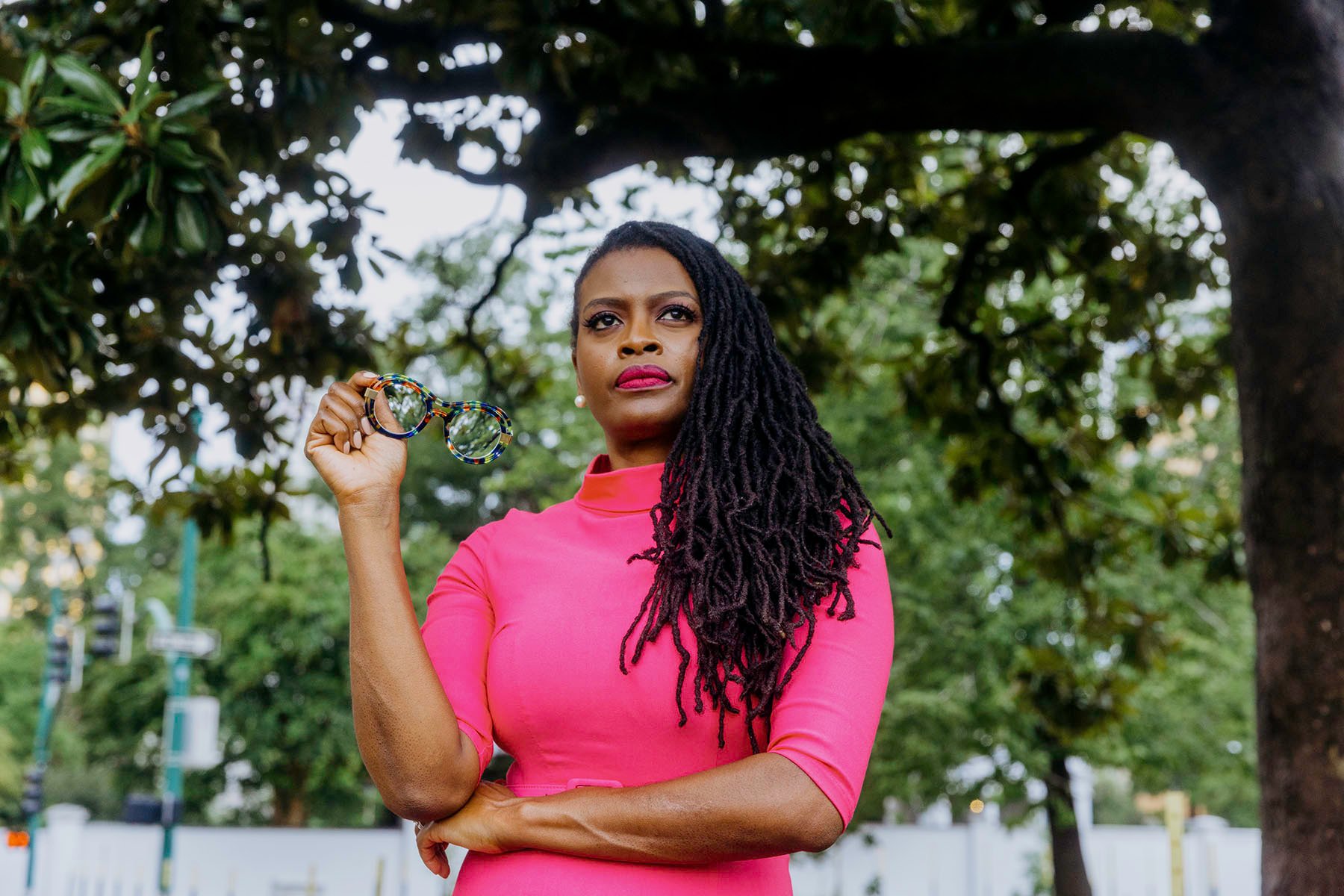
Cassandra Welchlin holding glasses in one hand, standing under a tree with a determined expression. She is wearing a bright pink dress, with her long locs draped over her shoulder, and the background features a park setting.
Cassandra Welchlin, executive director of the Mississippi Black Womenโ€™s Roundtable, emphasizes the role of Black women as catalysts for democracy and community change. (Imani Khayyam for The 19th)

The Mississippi Black Womenโ€™s Roundtable, which has long made issues like equal pay, Medicaid expansion and paid family and medical leave a priority in their work, is an affiliate of the National Coalition on Black Civic Participation. The organization has programming focused on Black womenโ€™s civic participation, including a โ€œSistervoteโ€ initiative.

Melanie Campbell, president and CEO of the National Coalition on Black Civic Participation, and convener of the national Black Womenโ€™s Roundtable programming, credited Welchlin for designing a training theme that not only has the potential to turn out more voters, but could lead to more Black women becoming leaders who run for office. She added that Welchlin is taking their political power โ€œto another level.โ€

โ€œHaving a Cassandra Welchlin in leadership, whoโ€™s doing unique things โ€” there could be more Black elected officials in the state of Mississippi, because the demographics are there. But when you talk statewide, itโ€™s not reached its full potential,โ€ she said.

There are about 1.9 million registered voters in Mississippi, where the governorโ€™s office, Senate and House of Representatives are controlled by Republicans. Welchlinโ€™s group estimates that more than 123,000 Black women in the state did not vote in the past three election cycles. The groupโ€™s  goal is to increase voter participation among these women by 10 percent this November. Black women voters in the counties the group has targeted for boot camps are among those who have voted most infrequently since 2021.

Itโ€™s part of why Allytra Perryman, deputy director of the Mississippi State Conference of the NAACP, which has partnered to help host some boot camps, also sees such potential in mobilizing them.

โ€œWhen you train a Black woman on how to do anything, you train a community,โ€ she said.


On the morning of the boot camp, Velvet Scott seemed to be everywhere.

As director of civic engagement and voting rights for the Mississippi Black Womenโ€™s Roundtable, she was ready to help roll out attendee tables and chairs; she was there to open boxes and hand materials to roundtable staff. She and Welchlin made sure the check-in table had updated registration lists, lunch was ordered and the child care in a nearby room was set up.

โ€œToday weโ€™re going to go through, of course, important information, but weโ€™re going to have fun while doing it,โ€ Scott told the women, many already wearing the matching boot camp T-shirts. 

Their meeting space was attached to a church on a hill โ€” New Hope Missionary Baptist Church โ€” nestled along a road filled with so many churches itโ€™s called Church Road. Among the permanent signage adorning the room were Biblical-themed messages of hope: โ€œWe will not fail nor be discouraged, till our mission is completeโ€ฆ.โ€

โ€œWe welcome you today to be energized and to be educated,โ€ said Pamela Helton, a leader within New Hope and the wife of the church pastor, in opening remarks.

Earlier, Welchlin seemed determined to shake the hands of every person who walked through the doors. For those she knew, she offered a hug. โ€œSo glad to see so many beautiful Black women,โ€ she said at one point. โ€œWe cominโ€™.โ€

When Welchlin helped host the first boot camp ahead of last yearโ€™ gubernatorial race, her organization did not collect data about the trainings. Anecdotal feedback showed a clear interest in organizing Black women around voter turnout, but the full scope of the programmingโ€™s reach in its pilot run is unclear.

โ€œWe realized that we had a gap,โ€ Welchlin said. โ€œBut part of it had to do with capacity on our end to collect that data and do the follow-up.โ€

Scott, who joined the Mississippi Black Womenโ€™s Roundtable late last year, has committed to doing things differently. She honed a data mindset while first working in insurance, a job that brought her into the homes of Black and Brown people who increasingly sought her guidance about available social services. In 2018, Scott began volunteering at a youth-focused civic engagement organization and then joined the staff full-time.

At the Mississippi Black Womenโ€™s Roundtable, Scott tries to capture more information about the organizationโ€™s approach to community programming. Thatโ€™s meant more of a focus on spreadsheets, more surveys and more individual follow-ups to ensure attendees have support afterward.
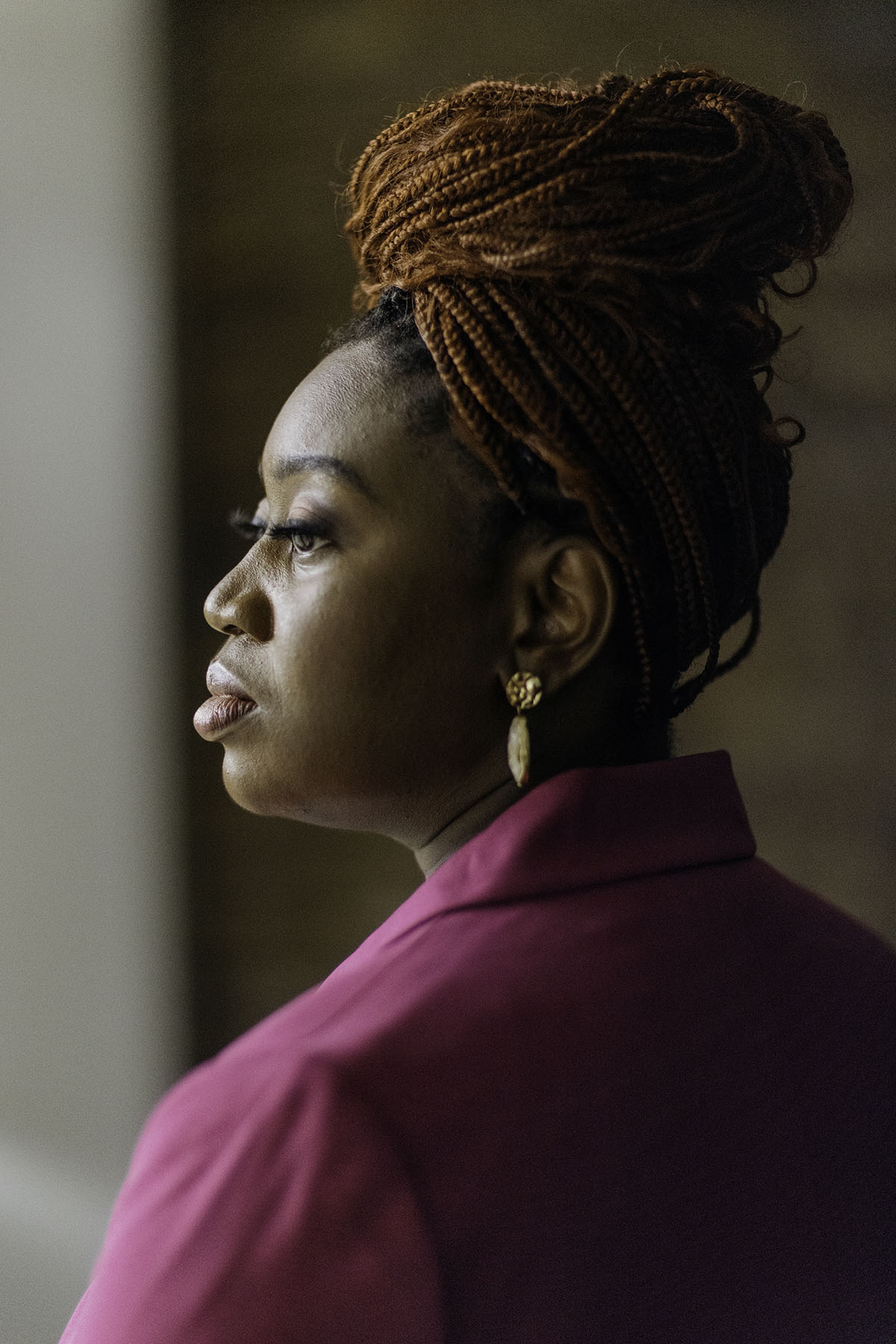
Profile shot of Velvet Scott in a pink suit, looking contemplative. Her braided hair is styled up, and she is wearing gold earrings.
Velvet Scott, director of civic engagement and voting rights for the Mississippi Black Womenโ€™s Roundtable, believes in the power of organizing and uplifting Black women in community spaces. (Imani Khayyam for The 19th)

Scott has tweaked the boot camps since they launched in April in order to make them more accessible. Sheโ€™s made some trainings available on weeknights instead of Saturdays, when people tend to be most busy with family responsibilities. She has sometimes shortened the hours of programming to see if a tighter agenda keeps up engagement. She recently helped organize a virtual training.

As a mother to a newly walking toddler, she tries to think about what the attendees might need. She, like Welchlin, feels strongly about onsite child care. (During the Southaven training, Scott stepped away to breastfeed her child.) She ensures that a meal is provided during the trainings, as well as a gift card. The group set aside roughly $50,000 to run the program this election cycle, according to Scott. Theyโ€™ve been under budget thanks to partnerships with other civic engagement groups.

Scott believes strongly in the power of Black women organizing their communities.

โ€œWe donโ€™t live single-issue lives,โ€ she said. โ€œSo to uplift Black women in the room is to say, โ€˜Hey, I see you. Weโ€™re going to work on this together, weโ€™re going to be in community together, and weโ€™re going to be in fellowship together.โ€™โ€

Scott also wants to find the balance in her work. Sheโ€™s tried to move away from an unspoken expectation in community organizing that she must be go-go-go. She doesnโ€™t want to burn out, and she wants to be present with her family.

โ€œRest is resistance,โ€ Scott said, who referenced research on the topic. โ€œAnd advocates deserve joy.โ€


When Jessica Orey hears Welchlinโ€™s singing, she perks up. Orey is attending alone, and the music comforts her.

As a young adult, Orey jumped into organizing through a local NAACP chapter. Those meetings also made space for โ€œfreedom songsโ€ used at the height of the Civil Rights Movement. Itโ€™s why Orey was impressed by its emphasis in Southaven.

โ€œSheโ€™s kind of bringing back the old school type-feel of it,โ€ Orey said of Welchlin. โ€œLike, hey, weโ€™re going to sing our way through. This is whatโ€™s going to push us to the next level.โ€

Welchlin said her mentor, Hollis Watkins, the late civil rights activist who founded the voting rights organization Southern Echo, taught her the freedom songs that he once sang at mass organizing meetings.

โ€œIt’s teaching a new generation about what the meaning of song is, and what these words mean,โ€ she said. โ€œAnd so it’s a history lesson, while it’s also a spiritual blessing to our souls.โ€

Sheneka Bell is also in the room alone, listening along.

At 45, Bell is a longtime voter but has not been active in voter turnout efforts. But politics continues to seep into her life โ€” from the national debate about reproductive rights, to local property rezoning. Last year, Bell joined the local county chapter of the NAACP.

โ€œI have a responsibility to understand whatโ€™s going on in my neighborhood and beyond,โ€ she said.

In some ways, Orey felt compelled to be at the boot camp: Her grandmother is Delores Orey, a longtime civil rights activist who worked alongside key leaders of the Civil Rights Movement.

โ€œThis is all I know. This is what Big Mama taught us,โ€ said the 36-year-old, referring to her grandmother. โ€œThis is what Big Mama pushed for. So if any injustice is around me, itโ€™s like, โ€˜What would Big Mama do?โ€™ A lot of this stuff is ingrained. Itโ€™s a part of my DNA.โ€

After her grandmother died in 2014, Orey stepped back from community organizing. But she wants to get involved again, and she felt like the boot camp was a first step. Orey has since signed up for roundtable updates and alerts from several civic engagement groups. She recently participated in a GOTV event in Jackson.

โ€œI know it’s time for me as a former advocate,โ€ she said. โ€œI need to get my shoes back in the game. Thereโ€™s work to be done.โ€

Since the boot camp, Bell has looked into signing up to be a poll worker. She is open to phone banking, and recently showed her nieces how to check their voter registration statuses.

โ€œIโ€™m new to this space,โ€ she said. โ€œIโ€™ve never done any of this before.โ€

Welchlin is not surprised that women like Orey and Bell are drawn to these endeavors in Mississippi, a state that played a key role in the long fight for universal voting rights. It is home to historic voter registration drives like Freedom Summer, and it is the birthplace of activists like Fannie Lou Hamer.

Civic engagement groups say the struggles continue.

In July, a federal court ordered Mississippi policymakers to redraw some state legislative maps that they established in 2022, after the court concluded that the maps illegally diluted the political power of Black residents.

Among the areas impacted by the racial gerrymandering is DeSoto County, which includes Southaven, the site of the August boot camp.

Some noted a recent state law over the voters rolls and technical issues at precincts during last yearโ€™s close governorโ€™s race. Some polling precincts in Hinds County, home to the capital city of Jackson, ran out of ballots. Long lines were reported and some people were seen leaving polling locations without voting. More than 80 percent of Jackson residents are Black.

The state also has one of the most restrictive disenfranchisement bans in the nation, taking away voting rights from people who are convicted of certain felonies, including nonviolent crimes.

Welchlin cautioned against ignoring inequity around the ballot box in Mississippi, especially as Republican lawmakers advance voting restrictions around the country. They have increasingly claimed without proof that there is widespread voter fraud, and such policies often appear in states with large Black and Brown populations.

โ€œMississippi is part of the fabric of the struggles in the South,โ€ Welchlin said. โ€œWe have a history, and a muscle, and a foundation in which we have built.โ€ 

As the boot camps in Mississippi wrap up this election cycle, its ripple effect is coming into focus. A state lawmaker recently expressed interest in running a boot camp. At least one organization is now trying to offer similar programming targeting Black men. And the umbrella organizationโ€™s Michigan affiliate has reached out about replicating some of boot camp programming. 

โ€œWe know that their data is going to look different, but weโ€™re giving them the template to adjust it the way they need,โ€ she said. โ€œItโ€™s a model, and Michigan is going to be testing it.โ€

Welchin has tried to lean into the joy of the work ahead, despite the obvious obstacles. With Black women by her side, she feels empowered to find a way.

โ€œGood things do come from the South, and we know that Black women have been a part of making that happen,โ€ she said.

To check your voter registration status or to get more information about registering to vote, text 19thnews to 26797.

Indeed, he should resign.

But he’s a Republican, so he won’t. This is really good. Zorba linked it on Politicians are Poody Heads.

Reblog Octoberfarm, 9/12/24

http://octoberfarm.blogspot.com/2024/09/blog-post_12.html

Arguments Against Taxing Unrealized Capital Gains of Very Wealthy Fall Flat

Middle Class Often Taxed on Unrealized Capital Gains

September 11, 2024

| By Chuck Marr and Samantha Jacoby

(This is long, but it’s better in full. The link is at the bottom, if you’d rather copy that, and go read this at your leisure. Also, this is why we the people who pay can’t have nice things.)

A proposal in the Biden-Harris Administrationโ€™s 2025 budget[1]ย would require households with more than $100 million in wealth to pay income taxes of at least 25 percent of their annual income, including their unrealized capital gains โ€” gains in the value of assets that they have not yet sold. Critics argue that unrealized capital gains, which are a primary source of income for many extremely wealthy households, are mere โ€œpaperโ€ gains that do not constitute real income (though they meet a textbook definition of income).[2]ย But unrealized gains make asset owners better off in very real ways. Claiming that unrealized gains are not โ€œrealโ€ is akin to claiming that individuals such as Jeff Bezos and Elon Musk are not rich unless they sell their companiesโ€™ stock.

Critics also claim the proposal would mark a radical departure from current tax practices, but this too is incorrect. Two of the main types of assets that middle-income households own โ€” their homes and defined-contribution retirement accounts like 401(k)s โ€” are already taxed in ways that resemble proposals to tax the unrealized capital gains of the very wealthy. A familyโ€™s property taxes typically rise as the value of their home rises, and middle-class people pay the tax year after year in amounts reflecting those gains without selling their homes. Retirement account holders are required to begin realizing their deferred gains in those accounts and pay the associated tax when they reach a certain age, and their heirs then pay tax on any remaining gains.

Homes and retirement accounts account for relatively small shares of the income and wealth of very wealthy households, who tend to directly own large amounts of corporate stock or other capital assets. These assets face no comparable required realization requirement or annual tax. Instead they often increase in value, tax-free, year after year, and if they are never sold, the income tax that would be owed on those gains is simply erased when their heirs inherit them.

Requiring very wealthy people to pay income taxes on their unrealized gains and ending their ability to permanently avoid income tax when they pass appreciated assets to their heirs would thus constitute a reasonable reform. It would make the tax code more equitable while raising $500 billion in revenue over ten years, according to the Treasury Department,[3] from a small subset of the wealthiest households in the country.

Substantial Income of Very Wealthy Households Escapes Annual Tax

The individual income tax is our main federal tax, accounting for roughly half of federal revenue. For households along most of the income spectrum, the progressive federal income tax generally works as it should, with higher-income households paying a larger share of their incomes in tax than households with lower incomes. But this relationship often breaks down at the very top. Thatโ€™s because very wealthy households accumulate a very large share of capital gains (increases in the value of stocks, bonds, real estate, or other assets), which enjoy two important tax advantages: deferral of unrealized capital gains and stepped-up basis.[4]

Deferral of capital gains income. Households that accumulate capital gains donโ€™t have to pay tax on those gains until, or unless, they โ€œrealizeโ€ these gains, usually by selling the asset. This ability to put off paying capital gains tax is known as โ€œdeferral.โ€ Deferral overwhelmingly benefits wealthy households because they own the overwhelming share of capital gains: nearly 70 percent of realized capital gains go to the top 1 percent of taxpayers.[5] (See Figure 1.)

The distribution of unrealized gains is also highly skewed toward the very wealthy. Because of deferral, wealthy households only report a small share of their total capital income on their tax returns.[6] Unrealized gains arenโ€™t taxed, so filers donโ€™t have to report them.

Research shows that unrealized gains constitute a growing share of a householdโ€™s total income as one moves up the wealth scale.[7] In 2021, for example, the Washington Post noted that โ€œthe wealth of nine of the countryโ€™s top [tech industry] titans has increased by more than $360 billion in the past year,โ€ and nearly all of the increase was due to the rising value of their holdings of their companiesโ€™ stock.[8] Without policy changes, much of this wealth increase might never appear on income tax returns.

Stepped-up basis. Under a tax code provision known as โ€œstepped-up basis,โ€ the income tax that a wealthy person would have owed on an assetโ€™s increase in value since they purchased it is erased when they die and pass their appreciated asset to their heirs. Neither they nor their heirs owe any income tax on this increase. (Technically, the assetโ€™s basis โ€” or the price paid for it โ€” is โ€œstepped upโ€ to its fair market value at the time of inheritance.) Stepped-up basis encourages wealthy people to turn as much of their income into capital gains as possible and hold assets until their death, when a lifetime of gains becomes permanently exempt from income tax.[9]

Together, deferral and stepped-up basis enable some of the countryโ€™s wealthiest people to go through life without paying income taxes on much or all of their income each year, or ever. Among other impacts, this worsens inequality in income and wealth, both overall and across racial and ethnic groups. Because of racial barriers to economic opportunity, households of color are overrepresented at the lower end of the income and wealth distributions, while white households are overrepresented among the wealthy. For example, the wealthiest 10 percent of white households โ€” a group that makes up just 7 percent of households โ€” holds 61 percent of the nationโ€™s wealth. By contrast, people of color account for 33 percent of all households but just 14 percent of the nationโ€™s wealth. (See Figure 2.)

Wealthiest 10 Percent of White Households Own Most U.S. Wealth
Figure 2

Policymakers can change the tax code in several ways to treat some or all of the unrealized capital gains of the wealthiest households as taxable income. One is to make the gains taxable each year, as in Senate Finance Committee Chairman Ron Wydenโ€™s proposal to shift to a โ€œmark-to-marketโ€ system for taxing capital gains.[10] A much more modest approach would be to repeal stepped-up basis: while wealthy people could still avoid tax on unrealized capital gains throughout their lives, they would have to pay taxes on those deferred capital gains at death. A third option, which the Biden-Harris Administration has proposed, would combine elements of both by essentially requiring very wealthy households to prepay some of their taxes on unrealized capital gains each year โ€” similar to the withholding system that applies to wages and salaries โ€” and paying any remainder when those gains are realized.

Biden-Harris Proposal Would Eliminate This Tax-Free Treatment

The Biden-Harris Administrationโ€™s 2025 budget would establish a minimum tax on total income, including unrealized capital gains, for the 0.01 percent of households with at least $100 million in assets โ€” the tax would phase in and apply fully to households with at least $200 million in wealth.[11] The proposal would also end the stepped-up basis loophole for wealthy households with significant unrealized gains: married couples with at least $10 million in unrealized capital gains or single filers with at last $5 million in capital gains.[12]

The proposalโ€™s critics argue that unrealized gains do not constitute โ€œrealโ€ income because the asset owner has not received cash in exchange for the asset, whose value can either rise or fall before the asset is sold. For example, a Heritage Foundation economist recently argued that โ€œuntil an asset is actually sold, any increase in value is purely speculative. It isnโ€™t real, hence the classification of unrealized.โ€[13] But this argument ignores the fact that the wealthy receive significant new value โ€” or income โ€” from their assets even before they sell. Unrealized gains make asset owners better off in very real ways: stock purchased 20 years ago for $20 million thatโ€™s now worth $100 million has the same value as $100 million of stock purchased today (that has no unrealized gains yet).

As Martin Sullivan, chief economist at Tax Analysts, has explained, โ€œ[U]nrealized gain is economic income. Unrealized does not mean unreal. The wealthy can see it very clearly on their brokerage statements, even if the IRS will not see it on tax returns.โ€[14]

In addition to watching their untaxed income grow, wealthy households can use this income to finance their (often lavish) lifestyles. โ€œIt is a simple fact that billionaires in America can live very extraordinarily well completely tax-free off their wealth,โ€ law professor Edward J. McCaffery writes.[15] They can do so by borrowing large sums against their unrealized capital gains, without generating taxable income.

For example, Larry Ellison, Oracleโ€™s chief executive officer and one of the worldโ€™s richest people, has pledged over 300 million shares of Oracle stock worth over $45 billion as collateral for a personal credit line.[16] This lets him obtain cash without selling shares; thus, he avoids paying taxes, and the stock can continue growing in value. Though he must pay interest on the debt and he or his heirs will eventually pay back amounts borrowed (e.g., using the proceeds of appreciated assets that were never subject to the income tax), this is often a much cheaper strategy than selling stock and paying capital gains taxes. As a recent article by two tax scholars observes, โ€œEllison hasnโ€™t just gotten richer on paper when he borrows against his stock to buy a Hawaiian island; heโ€™s used that income just as if heโ€™d sold the stock.โ€[17]

This doesnโ€™t mean that the gains only become income when they are leveraged to finance other investments or consumption. Quite to the contrary: the gains were always real income available to the filer to use to buy Hawaiian islands, yachts, or invest in other types of stock or business investments. The gains raise their purchasing power, making them better off, whether or not they use that purchasing power to actually purchase things.

Middle-Class People Often Taxed on Unrealized Gains or Required to Realize Gains

Critics of proposals to tax unrealized gains of wealthy people fail to acknowledge that two of the primary assets owned by non-wealthy people โ€” their homes and defined-contribution retirement accounts like 401(k)s โ€” are already taxed in ways that resemble the capital gains proposals. To be sure, there are important differences between the taxation of these types of assets and capital assets like directly held corporate stock; for example, property taxes are not income taxes and are applied by state and local governments, not the federal government.[18] But as explained below, the reality is that in certain long-standing and uncontroversial contexts, asset owners pay tax as their assets gain value over time or are required to realize gains at a certain age. This fact contradicts criticsโ€™ claim that taxing unrealized capital gains would be novel or untested.

Property Taxes Apply to Unrealized Gains From Increases in Home Values

Corporate stocks and privately held businesses are the largest appreciable assets for the wealthiest people, but for the middle class, the biggest asset by far is their home.[19] These homes are subject to annual state and local property taxes across the country. The methods of assessing property values and calculating taxes differ, but generally the tax is calculated by multiplying the assessed value of the property (minus any exemptions) by the local property tax rate.[20] When a family buys a house, the propertyโ€™s initial assessed value may be based on the purchase price of the house, and jurisdictions typically reassess the homeโ€™s value (based on what the house would sell for in a third-party transaction, for example) at specified intervals. As officials from the state of Illinois explained in a recent Q & A for residents:

Your propertyโ€™s value is determined by many factors. Your assessment can increase because your neighborhood is improving, the sales prices of homes in your area are increasing, and inflation. The value that the assessor assigns to your property is the amount that the assessor determines your property would sell for in todayโ€™s market.[21]

In a recent example from the end of last year, the state of Maryland announced that assessments for a segment of properties would rise 23.4 percent from the last assessment three years prior.[22]

A homeโ€™s assessed value often increases over time due to market factors, and if it does, the property tax is partially a tax on the homeโ€™s increase in value, or an unrealized gain. This is the case even though no sale has occurred, and no cash has flowed to the homeowner. Yet the taxation of the portion of a propertyโ€™s value that represents unrealized gains is a relatively uncontroversial aspect of a tax that accounts for over 15 percent of state and local general revenue, helping to fund public schools, for example.[23]

If middle-income homeowners can pay taxes that in part reflect the increase in value of their primary asset, very wealthy households can pay income tax on the increase in value of their primary assets: corporate stocks.

Retirement Account Holders Must Pay Income Tax on Accrued Gains

Middle-class families who own corporate stocks typically do so within retirement accounts such as 401(k) accounts, rather than in private brokerage accounts. Families between the 60th and 80th income percentiles have 28 percent of their assets in retirement accounts but only 12 percent in directly held corporate stock.[24] The situation is reversed for the top 1 percent of families: only 5 percent of their assets are in retirement accounts, versus 44 percent in corporate stocks.[25]

Under a typical 401(k), a person sets aside an average of about $5,000 per year from their paychecks on a pre-tax basis.[26] The underlying assets typically increase in value over time, and account holders do not pay tax each year on their gains. Thus, owners of retirement accounts, like direct owners of corporate stock, enjoy the benefit of deferral: their annual unrealized gains are not counted annually as taxable income. But the similarity in the tax treatment of directly held corporate stock and retirement accounts ends later in life.

Starting at age 73,[27] retirement account holders must take mandatory distributions โ€” about $4,000 annually for every $100,000 in account balance (increasing with the age of the holder) โ€” in part so they canโ€™t use their accounts as tax shelters. This begins the process of drawing down the accounts and effectively requires account holders to begin realizing their gains, even if they would not otherwise want to. The distributions flowing out of the accounts, including the original contributions plus the accrued gains, are taxed at ordinary income tax rates.[28]

Moreover, if a retirement account holder dies with an account balance and leaves it to a family member or other heir other than a spouse,[29] the heir must liquidate the account over a ten-year period. The heir also must pay individual income taxes at ordinary income tax rates on the distributions in each of those ten years.

The bottom line for middle-class people who hold stocks in retirement accounts is that, while they enjoy generous tax advantages during their working lives as they build up their accounts, all accrued unrealized capital gains must be realized by either the account holder starting at age 73 or by their heirs within ten years of receiving them. Also, their capital gains income is taxed at ordinary income tax rates, rather than the lower capital gains rate enjoyed by holders of corporate stock held outside of retirement accounts. Turning 73 thus has important tax consequences for middle-class retirement account holders.

In contrast, for wealthy people whose assets consist primarily of direct ownership of stock or other capital assets, 73 is just another birthday. They face no realization requirement for capital gains accrued over a lifetime of owning corporate stock. By the end of their lives, they could have millions, hundreds of millions, or even billions of dollars in unrealized capital gains from their privately held stocks or other assets โ€” income that has never faced the income tax. And after they die, the entire income tax liability on those gains is simply erased, for them and their heirs.[30]

Minimum Tax Would Be Paid Over Time, Raise Significant Revenue

Some critics have claimed that the Biden-Harris proposal to tax unrealized capital gains of extremely wealthy households would be unworkable or require business owners to prematurely sell their investments, such as shares in a closely held company, to pay the tax.[31] The proposal, however, includes several design mechanisms to make it easier to administer.

For instance, the tax would be paid over several years โ€” essentially a down payment on the tax that will be owed when the gains are realized (typically, when assets are sold).[32] Spreading out the payments in this way would also mitigate concerns about wealthy taxpayers who have large gains in one year and losses the next: if a taxpayer later has a large unrealized loss, those losses will also be spread out over several years and future tax payments will be reduced to reflect the losses, with refunds paid to taxpayers who have no minimum tax payments to offset. It would also mitigate concerns that public company founders would have to sell large amounts of stock to pay the tax, because their initial payments would be made over nine years.[33]

Another design feature would allow taxpayers who primarily own non-publicly traded assets โ€” like shares of a closely held company โ€” to defer tax (with a charge akin to interest) until they sell assets. Moreover, the proposal applies only to the approximately 10,000 U.S. taxpayers with $100 million in assets,[34] and these very wealthy people tend to own large amounts of highly liquid assets like publicly traded stock or other financial assets, not shares in small businesses.

The proposal would raise $500 billion over ten years, according to the Treasury Department,[35] generated from a small subset of the wealthiest households in the country โ€” those with more than $100 million in assets โ€” who today often enjoy extremely low average tax rates. Thus, the proposal would not only mark a step toward creating a fairer tax code but would also raise revenue that is badly needed to meet the nationโ€™s commitments to seniors, make high-value investments that will improve well-being and broaden prosperity, and improve the fiscal outlook.[36]

https://www.cbpp.org/research/federal-tax/arguments-against-taxing-unrealized-capital-gains-of-very-wealthy-fall-flat

Peace & Justice History for 9/9:

September 9, 1862
Minnesota Governor Alexander Ramsey declared that “The Sioux Indians of Minnesota must be exterminated or driven forever beyond the borders of the state.”
The previous month the Dakota, or Santee, Sioux, long burdened by treaty violations and late or unfair payments from Indian agents, killed four settlers and decided to attack settlers throughout the Minnesota River valley. The number killed was estimated between 300 and 800, until 9/11 the largest civilian death toll in the U.S. The number of Indian deaths was not recorded.
September 9, 1944
Religious conscientious objector Corbett Bishop was arrested after walking out of a Civilian Public Service Camp. During subsequent trials and imprisonments, he refused any type of cooperation with the government until he was released 193 days later.
ย 
“I’m not going to cooperate in any way, shape or form.
I was carried in here.If you hold me, you’ll have to carry me out.War is wrong. I don’t want any part of it.”
– Corbett Bishop, 1906-1961
September 9, 1963
Students at Chu Van An boys’ high school in Saigon tore down the government flag and raised a Buddhist flag to protest the corrupt Diem regime in South Vietnam; 1,000 were arrested.
September 9, 1971
The Attica (New York) State Penitentiary revolt began. The interracial revolt was led by blacks but featured cooperation between prisoners of different racial and ethnic backgrounds.


It was finally brutally suppressed by the state five days later, upon orders from Governor Nelson Rockefeller who refused to become directly involved. 29 prisoners and 10 guards were shot and killed by attacking state troopers in the bloodiest prison confrontation in U.S. history.

The prisoners had been demanding improvements in their living and working conditions at the increasingly overcrowded facility.
September 9, 1980
Eight activists from the Atlantic Life Community were arrested after hammering the nose cones of two missiles at the General Electric plant in King of Prussia, Pennsylvania.ย 
Read about Plowshares 8
ย 
The Plowshares 8 (in alphabetical order):
Daniel Berrigan, Philip Berrigan, Dean Hammer, Carl Kabat, Elmer Maas, Anne Montgomery, Molly Rush, and John Schuchardt.

This action would become the first of an international movement of dozens of “Plowshares” anti-nuclear direct actions.
ย A chronology of Plowshares actionsย 
September 9, 1997
Sinn Fein (pronounced shin fayn), the Irish Republican Army’s allied political party, formally renounced violence by accepting the principles put forward by former U.S. Senator George Mitchell (D-Maine) who was mediating the talks between the Irish Republicans and the British Unionists on Northern Ireland’s future.
Senator George Mitchell
The Mitchell Principles:
โ€ข To democratic and exclusively peaceful means of resolving political issues;
โ€ข To the total disarmament of all paramilitary organisations;
โ€ข To agree that such disarmament must be verifiable to the satisfaction of an independent commission;
โ€ข To renounce for themselves, and to oppose any effort by others, to use force, or threaten to use force, to influence the course or the outcome of all-party negotiations;
โ€ข To agree to abide by the terms of any agreement reached in all-party negotiations and to resort to democratic and exclusively peaceful methods in trying to alter any aspect of that outcome with which they may disagree; and,
โ€ข To urge that “punishment” killings and beatings stop and to take effective steps to prevent such actions.

https://www.peacebuttons.info/E-News/peacehistoryseptember.htm#september9

Did I just duplicate a post?

As a reminder, Trump has publicly floated Loomer to be his next White House press secretary and he has reposted hundreds of her tweets on Truth Social.

Molson Coors joins Ford, Harley Davidson, Lowes, Tractor Supply, John Deere, and the maker of Jack Danielโ€™s in retreating from diversity and pro-LGBTQ programs.

Coors beer, once the subject of a nationwide boycott by gay bars over its founderโ€™s anti-LGBTQ stance, has been prominent at Pride events in recent years. Last year, for example, Coors Light was the main sponsor of Denver Pride despite attacks by the cult.

In 2015, when the company was called MillerCoors, its chairman and then-US Senate candidate Pete Coors, dropped out of a speaking gig at the convention of Legatus, the ex-gay and pro-ex-gay torture Catholic group, after widespread criticism.

The companyโ€™s current brands include Coors, Coors Light, Blue Moon, Icehouse, Miller, Miller Light, Keystone, Molson, and dozens of others.

A Second Trump Term Scares Me…

This man understands, this person gets it!ย  Those of us not center, those of us not maga, those of us paying attention to what is happening and see what red states are doing to the LGBTQ+ and how hard they are trying to keep anyone not fully supporting them from voting … Yes we are scared.ย  We feel all the movement to the future acceptance of people who are different from the main stream, all the rights for black people, all the rights for minorities, all the rights for the disabled, all the rights for the poor, and all the rights that have been gained for the LGBTQ+ are being wiped away with the goal being removing us from public society so that we have no voice in the very country we live.ย  Welcome to the 1950s white cis straight men in charge society.ย  Hugs.ย  Scottie

Back To School…RUN!!!!!! | Georgia School Shooting | Christopher Titus | Armageddon Update

Georgia shooting: father of teen suspect charged with second-degree murder

(Now that things have calmed down media-wise, and there is solid information, here’s a post. I’m glad to see the parent and gun owner held accountable; for this, and always. I am never in favor of charging a minor as an adult, though there should be consequences laced heavily with rehabilitation. But the parent and gun owner should be fully responsible because they’re actual adults, and the parents (some child shooters will not have parents, so this goes to the caregiver.) Gun owners should always know that their guns are secure, and tell law enforcement when they’re not secure. Others’s mileage with these things may vary, and you’re welcome to chime in!)

Colin Gray faces four involuntary manslaughter, two second-degree murder and eight cruelty to children counts

The father of the teen suspected in the Georgia school shooting has been arrested, the Georgia bureau of investigation has said.

Colin Gray, 54, was arrested by the bureau in connection to the shooting at Apalachee high school. Colin is the father of Colt Gray, the 14-year-old who is suspected of fatally shooting two students and two teachers with an assault-style rifle at the high school on Wednesday.

He is charged with four counts of involuntary manslaughter, two counts of second degree murder and eight counts of cruelty to children, the Georgia bureau said.

โ€œHis charges are directly connected with the actions of his son and allowing him to possess a weapon,โ€ Chris Hosey, director of the Georgia bureau of investigations, told reporters on Thursday evening.

โ€œWhat are we facing? Heartbreak. A young person brought a gun into a school, committed an evil act and took lives, and injured people not just physically but mentally,โ€ said the Barrow county sheriff, Jud Smith, during the news conference.

The teenager has been charged as an adult in the deaths of the school students Mason Schermerhorn and Christian Angulo, both 14, and educators Richard Aspinwall, 39, and Christina Irimie, 53, Hosey said.

At least nine other people โ€“ seven students and two teachers โ€“ were taken to hospitals with injuries and all are expected to make a full recovery, Smith said.

Colin Gray is being held at the Barrow county detention center.

More than a year ago, the alleged shooter was interviewed by Georgia police after they received tips about online posts threatening a school shooting. Police did not have enough probable cause to arrest him then, according to the Georgia bureau of investigation.

In that 2023 inquiry, the father said he had hunting guns in the house but that his son did not have unsupervised access to them, and the son denied making the threats online, the FBI said.

Georgia state and Barrow county investigators say the younger Gray used an โ€œAR platform style weaponโ€, or semiautomatic rifle, to carry out the attack in which two teachers and two 14-year-old students were killed.

It remained unclear how the shooter obtained the weapon.

Investigators have yet to comment on what may have motivated the first US campus mass shooting since the start of the school year.

Jackson county sheriffโ€™s investigators closed the case after being unable to substantiate that either Gray was connected to the Discord account where the threats were made, and did not find grounds to seek the needed court order to confiscate the familyโ€™s guns, according to police reports released by the sheriffโ€™s office on Thursday.

โ€œThis case was worked, and at the time the boy was 13, and it wasnโ€™t enough to substantiate,โ€ Janis Mangum, the Jackson county sheriff, said in an interview. โ€œIf we get a judgeโ€™s order or we charge somebody, we take firearms for safekeeping.โ€

The younger Gray was taken into custody shortly after the shooting and was being held without bond at the Gainesville regional youth detention center, Glenn Allen, the Georgia department of juvenile justice communications director, said on Thursday.

His arraignment is set for Friday morning before a Georgia superior court judge in Barrow county by video camera.

While parents are not usually held criminally liable if their child shoots someone, recent high-profile events are evidence that they could face charges in the future. In November 2023, Deja Taylor of Virginia was sentenced to 21 months on two federal charges after her then six-year-old son shot his teacher in January.

The elder Grayโ€™s arrest also comes months after the unprecedented conviction of the parents of a Michigan high school student who shot and killed four students on 30 November. In February, Jennifer Crumbley was convicted on four counts of involuntary manslaughter. The next month, her husband, James Crumbley, was convicted on the same charges. The pair was sentenced to serve at least 10 years in prison.

โ€œI didnโ€™t really think about what precedent it was setting,โ€ Karen McDonald, the prosecutor for Oakland county who brought the case against the Crumbleys, told CNN on Thursday. โ€œIf nothing else I wouldโ€™ve hoped that the highly publicized details of this case would steer parents and make them think twice.โ€

โ€œItโ€™s enraging that this could still happen when itโ€™s so easily preventable,โ€ she continued.

 This article was amended on 6 September 2024. An early version said Deja Taylor was sentenced to 21 years, not 21 months.

https://www.theguardian.com/us-news/article/2024/sep/05/georgia-school-shooting-father-arrested?CMP=share_btn_url

Bad republicans

Some cultists in the caravan were armed.

Last year Texas police were ordered to pay $175,000 for failing to respond to frantic calls from people on the bus.

Marco Rubio, Trump Junior, and Jeanine Pirro were among the prominent cultists who celebrated the attack.

Trump later declared that the FBI should not investigate the attack, saying, โ€œThose patriots did nothing wrong.โ€