December 12, 1870 Joseph H. Rainey (R-South Carolina) took his seat in the U.S. House of Representatives, becoming the first African-American Member of Congress. More about Rainey
December 12, 1916 Dr. Ben Reitman was arrested in Cleveland for organizing volunteers to distribute birth control information at an Emma Goldman lecture on birth control. He was sentenced to six months in jail and a $1,000 fine plus court costs. Dr. Ben Reitman
December 12, 1947 The United Mine Workers union withdrew from the American Federation of Labor over the AFL’s failure to organize workers in mass production industries such as textiles, automobiles, steel and rubber.
December 12, 1969 The Philippine Civic Action Group, a 1350-man contingent from the Army of the Philippines, left South Vietnam. The contingent had been part of the Free World Military Forces, an effort by President Lyndon Johnson to enlist allies for the United States and South Vietnam, similar to President George Bush’s “Coalition of the Willing,” the multi-national force in Iraq.
December 12, 1983 Seventy people were arrested in Boston outside a hotel where a “New Trends in Missiles” trade conference was being held.
Inside the hotel, over 1,000 cockroaches were released to symbolize the likely survivors of nuclear war.
December 12, 1986 From a pershing plowshares action 1984 Plowshares activists disarmed a Pershing missile launcher in West Germany. In a statement of intent the four said, “With awareness of our responsibility we understand that we are the ones who make the arms race possible by not trying to stop it.” Details of their action in Pershing to Plowshares
12.9.2024 Xiajing Zhu and Cornelia (Connie) Pechmann
Many top Republicans, including Donald Trump and Senators Tim Scott (South Carolina), Marco Rubio (Florida), and Ted Cruz (Texas), refuse to accept the 2020 election results. Many other Republicans falsely assert the 2020 election was rigged and have stated that they stood ready to fight if Trump was not declared the 2024 winner.
In a new Journal of Marketing study, we explain what underlies these Republicans’ thought processes and behaviors and how the majority of news media and social media contribute to this problem.
The Lethal Combination: Polarization and Misinformation
Our team finds that political polarization triggers Republicans, but not Democrats, to spread misinformation that is objectively false. Although Republicans may understand the content is very likely false, they are willing to spread it. We also discover the reason why Republicans respond to political polarization by conveying misinformation, while Democrats do not: Republicans strongly value their party winning over the competition. Democrats do not value winning nearly as strongly; they place more value on equity and inclusion, seeing the world in a fundamentally different way than Republicans.
In other words, whenever there is political polarization—that is, fierce competition between political parties—Republicans feel their backs are against the wall and come out swinging. They are willing to convey misinformation that is likely untrue, but not definitively false, to help their fellow Republicans win and Democrats lose. Democrats are less triggered by political polarization—they do not value their party winning over other values, so they do not respond this way.
We conducted six studies that demonstrate this. Our first study examines fact-checked statements in the news media and on social media by public figures over 10 years (2007–2016). Our second study extends this analysis to 16 years (2007–2022). We find that when there was political polarization in the news cycle, Republicans conveyed significantly more misinformation than Democrats.
We verify our findings in three online studies where we surveyed U.S. adults who identified as either Republican or Democrat. We put these individuals in politically polarized situations—for instance, we showed them Senate Republican and Democratic leaders arguing. We then showed them misinformation from current social media. For example, Republicans saw news such as “Democratic Senators are secretly pro-Russia” and “Democratic Senators are purposely manipulating gas prices,” while Democrats saw news such as “Republican Senators are secretly pro-Russia” and “Republican Senators are purposely manipulating gas prices.” In politically polarized situations, Republicans were significantly more willing to convey misinformation than Democrats to gain an advantage over the opposing party.
Our last study examines the speeches of U.S. presidents over 94 years (1929–2023), spanning the 31st president Herbert Hoover to the 46th president Joseph Biden. We find that in political polarized situations, such as during election periods, Republican presidents talked more about “we” and “us” than Democratic presidents, indicating they were more focused on their own party and partisanship.
To summarize, Republicans react to political polarization by putting out partisan misinformation. This can have a deleterious effect on the state of democratic institutions and processes. For instance, in the year following the 2020 U.S. presidential election and accompanying misinformation about election fraud, 400 restrictive voting bills were introduced in 47 U.S. state legislatures. Additionally, 14 states passed restrictive voting bills that, for instance, shortened the mail-in voting period, eliminated election day registration, and/or reduced ballot drop box access. These changes have decreased voter turnout and engagement, particularly among minority voters. (snip-MORE; it gets more interesting as it goes along, to me)
Santa’s bedroom. Santa, looking very scrawny, is trying on his red suit. The jacket is way too big and the pants are falling down. Mrs. Claus, annoyed, says: “I told you not to get those stupid shots.”
Some people just look better fat.
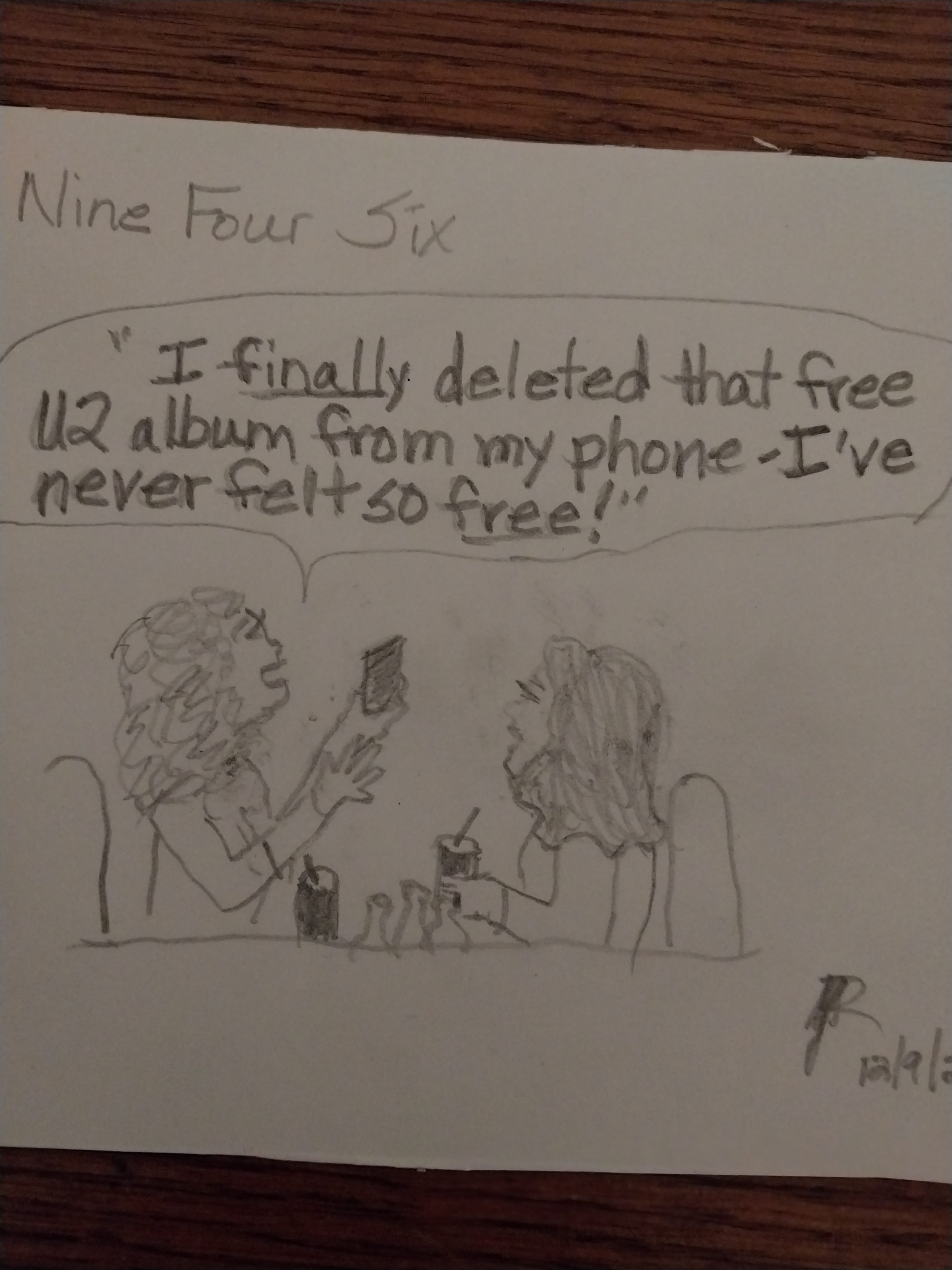
Ali Redford ends a long, long drought of reader art by submitting this wonderful nine four six:
Ali thought my cartoon was funny even though, she confesses, she’d never previously heard about the free U2 album that mysteriously appeared on peoples’ phones ten years ago. It occurred to me while I was writing it that I might mystify some of my younger readers. So yeah, while they were rolling out a new iPhone a decade ago, Apple and U2 rather presumptuously “gave” all iPhone users this new U2 album. Everyone woke up with it on their phone and just felt… invaded. Even U2 fans were a little put off. I think it bothered people to discover that they were not in charge of their own phone.
Most people deleted the album (or kept it and enjoyed it). Then there were people like me, who had the unwanted album follow them, from phone to phone, for a decade.
Ali, I love the cartoon you drew — it’s maybe your best yet. The women feel very real, and the speaker’s sense of liberation is palpable. Thank you!
An important video to watch and try to understand. Sensitive times. I have encrypted mail and encrypted text on both computers. Plus my computers have VPN’s of high quality that do not have any tracking, along with good security programs. I have what I can also on my phone. You might ask why I have such things. I talk to people who have been abused. I also have been abused. All mainstream programs scan such communications with computers, AIs, and they don’t differentiate from this happened to me from I am doing this to a child now. In the past I have known people who had police or other agencies target them thinking they were part of an abuse network when they were only talking to fellow survivors.
Having said that it is going to get worse. We know from Snowden the US government was illegally spying on all texts, calls, and other phone / computer activities of the public, now we must worry about foreign governments doing it also. Please listen to the video and protect yourself. Oh, for clarity I use NordVPN, no possible tracking, and I use Teleguard, Sessions, and Proton mail. Hugs
What he really means in the story below is that many people surging into the work force will depress wages and make workers even more desperate to get and keep a job no matter how bad or low wage it is. Hugs
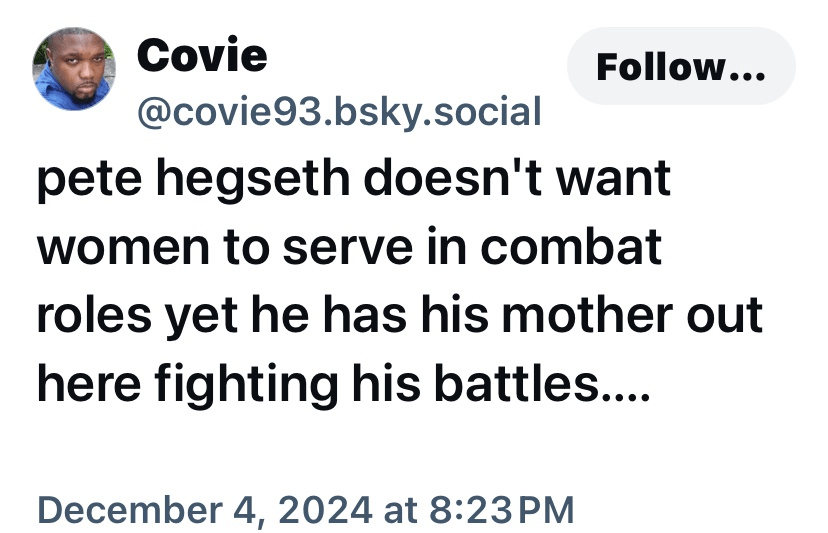
Megan Kelly who made her fame by writing a book about the sexual harassment / abuse at Fox Is trying to give a boost to a man who paid a woman he sexually abused and harassed. Everything Hegseth is accused or from adultery, sexual assault, and his excesses alcohol problem are all court-martial offenses. He would be in charge of people that if they did what he did they would face demotion, jail time, loss of money, and more. How he can be in that position if republicans really respect and care about the military they wouldn’t even let this guy near the job. Hugs
In the below story notice two things. He is picking Fox entertainment rage TV people to be in his cabinet because he is a media made billionaire personality and he loves the showmanship. That is what made him a great con man and politician is his love of the camera and the attention, he glories in it.
Read the full article. In 2017, Crowley registered as a foreign agent for a pro-Putin Ukrainian billionaire after withdrawing from consideration from a national security post when her book and PhD thesis were hit with accusations of plagiarism. She first appeared here when she spread claims that Barack Obama is secretly Muslim. Crowley is a Project 2025 contributor.
In this post notice the attack on immigrants along with the outright lies about no deaths. Anything for the maga base and the authoritarian fascist government is grand. Why? For me the question is why does the internet troll Marge want to see the tRump proclaimed goals? White supremacy! She is from a deep Georgia community that has long felt that the white people were superior to others. So white people attacked the capital and attempted to destroy democracy so what, they were white. Not those filthy non-white people who keep coming here trying to make our white supremacy culture less supreme. Hugs
The story below shows how desperate the right is to please donors by cutting the domestic spending part of the government. That is the part of the government that helps the people but puts nothing in the pockets of the wealthy. They fail to understand that the main function of the government is to promote the common good and the welfare of the people. From the preamble itself. … (P)romote the general Welfare … That means the government is to help the people. The reason the treasury is so shy of money is that the republicans when in power keep giving more of the general revenue generated in the US to the most wealthy instead of helping the general welfare with such as infrastructure, what the people need, and common defense. Basically so people understand every time the republicans reduce the corporate tax rate, the taxes charged against realtors, the taxes charged against wealthy people, the tax rate of wealthy estates, they are robbing from the US people and public all that money to run the country and help the public. Just like other countries of advanced incomes do. Which is why the republicans demand they stop doing it as it makes the US look bad for being a profit is king country. Hugs
The story below shows how fundamentalist Christians and right wing bigots attack the LGBTQ+ for being different and not following their faith … but at the same time they don’t live up to their own faiths doctrines. Hugs.
Read the full article. Yager first appeared here in 2020 for his successful bill that forces public schools to allow kids to miss class for up to one hour each day in order to attend church. Along with raft of anti-trans legislation, most recently Yager voted for a bill allowing county clerks to refuse to officiate same-sex marriages.
“The plans could mean that thousands, if not hundreds of thousands, of migrants would be permanently displaced in countries where they do not know any of the people or the language and have no connection to the culture.”
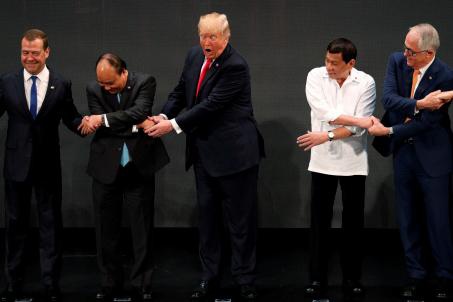
The Diapered Rapist a fucking idiot, who can’t handle a task a 6 year old can manage.
Read the full article. Boyd is now claiming that he was referring to a “bundle of sticks,” telling reporters “look it up in the dictionary.” Video of the exchange is below. Boyd, not incidentally, was named to Trump’s “South Carolina Leadership Team.”
Where are the pro left progressive big money trying to promote progressive ideals? This is why the right so often win, their big money backs them no matter what. Hugs
This is the woman on a crusade against the first trans person in the House of Representative also used to support the trans people. Her entire thing is being the center of attention. That is her entire goal. Hugs.
Read the full article. Roberts, who had threatened violence if Trump did not win, appeared here earlier this week when he called for seizing the endowments of public and private universities if they don’t hew to Trump’s anti-diversity edicts and end the “woke mind virus.”
Just how insecure are these republican people demanding everyone but themselves be Rambo and Chuck Norris in some super action movie. It is a stupid throw back to the religious stereotype of men and women they want to force the country into. The idea that men are always he-man moneymakers and women are all attractive women waiting at home to serve their man after cleaning their home and making their meals all day. Give it up already. The goat herders in the deserts of the Middle East may have felt that way over 2500 years ago but we know better now. Hugs
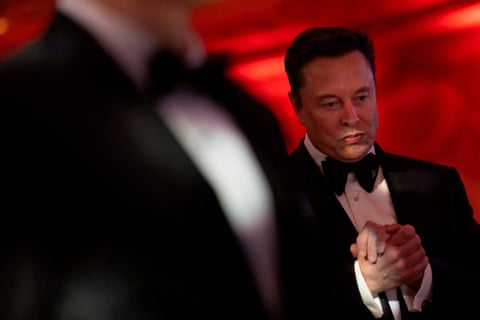
A man from racist South Africa who feels non-white people don’t have enough authority and black people have too many rights is pushing hard to repopulate the world with his and other wealthy white men’s sperm. Say what? Yes Musk is on record saying that he needs to father as many children as possible to ensure the white race continues. Similar to what Jeffery Epstein felt as he raped multiple young girls. Look these facts up and stop admiring these trust fund wealthy kids of exploiters. Hugs
So the following paragraphs show just what a person Musk is. His product can not meet the standards so he screams the program that won’t give him money is a waste of taxpayer’s money. Just like tRump, rather than fix the problem he instead attacks the standards demanding they be lowered so his product can qualify. Hugs
After years of negotiation, lawsuits and politicking, the FCC and the NTIA settled on a modern definition for broadband service: 100 megabits per second (Mbps) download speeds, 20Mbps upload speeds, with less than 100 milliseconds of latency.
Right now, Starlink doesn’t meet that standard. It has been getting slightly slower over time even as more people sign up for service, according to internet performance testing service Ookla’s speed tests. In 2022, the FCC rescinded a $900m grant from the Rural Digital Opportunity Fund to Starlink to connect rural communities to the internet, citing its failure to meet the speed and latency standards and declining network performance.
Sadly a lot of stories about Kennedy never mention the verified deaths his crusade against medical science. Below is a quote from the article which points the cost of his inability to understand or comprehend the science behind vaccines. Hugs
A measles outbreak began a few months after his visit. Eighty-three people died, most of them children, a staggering loss in a nation of about 200,000 people.
The health secretary pick and his organization have worked around the world to undermine longstanding policies on measles, AIDS and more.
Robert F. Kennedy Jr., an environmental lawyer, has spent years working abroad with organizations and associates that undermine longstanding global health policies, records show.Credit…Uli Seit for The New York Times
Robert F. Kennedy Jr., who is in line to lead the Department of Health and Human Services in the next Trump administration, is well-known for promoting conspiracy theories and vaccine skepticism in the United States.
But Mr. Kennedy, an environmental lawyer, has also spent years working abroad to undermine policies that have been pillars of global health policy for a half-century, records show.
He has done this by lending his celebrity, and the name of his nonprofit group, Children’s Health Defense, to a network of overseas chapters that sow distrust in vaccine safety and spread misinformation far and wide.
He, his organizations and their officials have interfered with vaccination efforts, undermined sex education campaigns meant to stem the spread of AIDS in Africa, and railed against global organizations like the World Health Organization that are in charge of health initiatives.
How Robert F. Kennedy Jr. Fights Health Policy Abroad:
Along the way, Mr. Kennedy has partnered with, financed or promoted fringe figures — people who claim that 5G cellphone towers cause cancer, that homosexuality and contraceptive education are part of a global conspiracy to reduce African fertility and that the World Health Organization is trying to steal countries’ sovereignty.
One of his group’s advisers, in Uganda, suggested using “supernatural insight” and a man she calls Prophet Elvis to guide policymaking. “We do well to embrace ethereal means to get ahead as a nation,” she wrote on a Ugandan news site this year.
These people, more than leading scientists and experienced public health professionals, have existed in Mr. Kennedy’s orbit for years. The ideas spread by him and his associates abroad highlight the unorthodox, sometimes conspiratorial nature of the world occupied by a man who stands to lead America’s health department, its 80,000 employees and its $1.8 trillion budget.
Mr. Kennedy did not respond to a list of questions about his organization’s work abroad. His personal email automatically replied with a link to a Google form for people to apply to work with him in government — and name their own job titles. Mary Holland, the chief executive of Children’s Health Defense, said that Mr. Kennedy was the group’s “chairman on leave” and had not been involved in the day-to-day operations in over a year.
As health secretary, Mr. Kennedy would have the opportunity to reshape health policy. The department has a hand in negotiations for an international pandemic-response treaty, is the parent agency of the Centers for Disease Control and Prevention, and finances global projects like vaccine campaigns.
He undermined confidence in the measles vaccine ahead of a deadly outbreak in Samoa.
Mr. Kennedy visited the Pacific island of Samoa in June 2019 in the aftermath of a public health tragedy.
During routine measles immunizations a year earlier, nurses had mistakenly mixed the vaccine with a muscle relaxant, leading to the death of two infants.
Measles, a highly contagious disease, is preventable, thanks to vaccines that have been proven safe since the 1960s.
But vaccine skeptics seized on the death of the two children as evidence that the vaccines should not be trusted. The Samoan government temporarily suspended its immunization program.
Image
Mr. Kennedy visited the Pacific island of Samoa in June 2019 and met with the prime minister.Credit…Misiona Simo/Samoa Observer, via Associated Press
Mr. Kennedy arrived in Samoa, on the invitation of a local anti-vaccine activist, and amplified doubts about the vaccine’s safety. It was a crucial moment. Vaccination rates had plummeted, and the World Health Organization called for Samoa to ramp up immunization as soon as possible.
Mr. Kennedy met with the prime minister and other officials. He told activists that vaccines shipped to Samoa might be of a lower quality than those sent to developed countries.
“With his last name, and the status attached to it, people will believe him,” said Dr. Take Naseri, who met with Mr. Kennedy at the time as Samoa’s director general of health.
A measles outbreak began a few months after his visit. Eighty-three people died, most of them children, a staggering loss in a nation of about 200,000 people.
During the outbreak, Mr. Kennedy falsely suggested that defective vaccines could have caused the deaths. He later dismissed the outbreak as “mild” and denied any connection to it. “I never told anybody not to vaccinate,” he said last year.
When Edwin Tamasese, the anti-vaccine campaigner who arranged Mr. Kennedy’s visit, was arrested and charged with incitement for interfering with vaccinations, Children’s Health Defense helped him obtain legal advice and paid for his lawyers, according to Mr. Tamasese.
The measles outbreak in Samoa ended after 95 percent of the eligible population received vaccinations, according to the W.H.O.
He and his organization promote AIDS falsehoods.
Sex education has been central to the global fight against the spread of AIDS in Africa for decades.
But officials with Children’s Health Defense Africa, one of Mr. Kennedy’s nonprofit groups, see a conspiracy at play.
Wahome Ngare, a Kenyan physician who sits on the group’s advisory board, argued at a conference in Uganda this year that contraception and health education were part of a global plot to reduce Africans’ fertility. He attended the conference alongside the head of the Children’s Health Defense Africa, who presented slides bearing the organization’s logo and web address.
Mr. Kennedy himself has questioned the accepted science behind AIDS. He falsely said that AIDS may have been caused by the recreational use among gay people of the drug amyl nitrite. It is caused by the virus H.I.V.
Last year, Children’s Health Defense posted a video promoting a book that questions the link between H.I.V. and AIDS. Another of the group’s interview subjects this year said that the former U.S. government scientist Anthony Fauci should be imprisoned or “taken off this Earth.”
Dr. Ngare is among the many people in Mr. Kennedy’s orbit whose views conflict sharply with those of the health agency that Mr. Kennedy stands to lead.
In an interview with NPR in 2015 before joining Children’s Health Defense Africa, Dr. Ngare mused about stories that “vaccines have been used for spread of H.I.V.” and called for a boycott of polio vaccines. The U.S. government is a major sponsor of polio vaccine campaigns worldwide. Dr. Ngare did not respond to requests for comment.
Ms. Holland, the chief executive of Children’s Health Defense, said those were Dr. Ngare’s personal views, not those of Mr. Kennedy’s organization.
At the conference in Uganda, Dr. Ngare spoke to far-right lawmakers and activists who support draconian punishments, including life in prison, for people convicted of having gay sex.
He aligned himself with fringe figures, including people who ended up on German security watch lists.
When Mr. Kennedy started his nonprofit group’s European chapter in August 2020, he floated questions about whether the Covid-19 pandemic was part of “a sinister game” played by governments to control people.
“A lot of it feels very planned to me,” he said in Berlin.
The next day, he rallied about 38,000 people at a protest over Covid-19 measures. The protest was organized by a German group called Querdenken. Its leaders have since ended up on a government watch list for fomenting antigovernment sentiment.
Image
Mr. Kennedy speaking during a protest over coronavirus pandemic regulations in Berlin in 2020.Credit…Clemens Bilan/EPA, via Shutterstock
Promoters used Mr. Kennedy’s name to drum up attendance, saying that he personally wanted people to take to the streets and fight back. After the event, hundreds of protesters tried to storm the Reichstag, Germany’s Parliament.
Mr. Kennedy was not in attendance at the Parliament. “That whole Reichstag thing was completely unrelated to the demonstration,” Ms. Holland said.
Mr. Kennedy’s influence in Germany lives on, at least in online forums. Recent data from CeMAS, a research group that monitors conspiracy movements, shows that his name is often invoked on conspiracy-focused German Telegram channels, coming up more than 6,000 times this year alone.
His European chapter paid a British lawmaker to speak at a conference promoting vaccine skepticism.
Children’s Health Defense’s chapter in Europe has cultivated relationships with members of the European Parliament.
In January 2022, the organization held a news conference in Brussels demanding a “moratorium on health restrictions.” An anti-vaccine rally that followed the event turned violent, with protesters smashing windows at the European Union’s diplomatic headquarters.
In April 2023, Children’s Health Defense Europe helped organize a conference on the grounds of the European Parliament in Strasbourg, France. At the conference, lawmakers criticized a proposed pandemic treaty being considered at the World Health Organization.
The chapter has hosted press events with European lawmakers and encouraged Parliament to reject vaccination certificate rules.
In 2023, the European chapter paid a member of Britain’s Parliament, Andrew Bridgen, to speak at a conference it had helped organize. The conference discussed opposition to government pandemic measures and promoted vaccine skepticism. The sum was small, at just under $800, according to Mr. Bridgen’s financial disclosures. Such payments are legal in Britain.
Image
Andrew Bridgen, left, a member of Parliament at the time, in London in 2022. He has compared the Covid-19 vaccine rollout to the Holocaust.Credit…Justin Tallis/Agence France-Presse — Getty Images
Mr. Bridgen has repeatedly compared the Covid-19 vaccine rollout to the Holocaust, including in an interview with the Children’s Health Defense online television station.
Children’s Health Defense spent $315,000 in Europe last year, including in Iceland and Greenland, its U.S. tax filings show. Ms. Holland said that as of this year, the European chapter was run by volunteers and no longer funded by the U.S. operation.
His Africa chapter pushes measles misinformation and risky remedies.
In 2021, a South African herbalist named Toren Wing reached out to Mr. Kennedy about his effort to ban 5G cellphone towers over health concerns.
In an email, Mr. Wing recalled in an interview, he invoked a rousing speech about liberty that Mr. Kennedy’s father had delivered as a senator visiting apartheid South Africa in 1966.
“This is so cool,” Mr. Kennedy responded, according to a copy of the email. He looped in a Children’s Health Defense lawyer. The anti-5G effort fizzled, Mr. Wing said, but it laid the groundwork for a Children’s Health Defense chapter in Africa.
At the chapter’s launch, Mr. Kennedy said the continent was “a testing and clinical trial laboratory for multinational pharmaceutical companies that see African people as commodities.” His group sent just over $15,000 for “setup expenses” in 2022, U.S. tax filings show.
Shabnam Palesa Mohamed, who leads the chapter, is a frequent host of the nonprofit’s online show. She interviews doctors promoting unproven Covid-19 remedies and rails against vaccines.
After a measles outbreak started in Cape Town, Ms. Mohamed appeared in a video discussing supposed negative effects of “alleged measles injections” in South Africa.
In 2023, Unicef reported a 30 percent decline in confidence in childhood vaccines in South Africa after the Covid-19 pandemic, coming amid the world’s “largest sustained backslide in childhood immunization in 30 years.” The group cited factors including “growing access to misleading information.”
Ms. Mohamed and others affiliated with Children’s Health Defense Africa pushed the discredited theory that the drug ivermectin will treat Covid-19. They also sued the South African government, unsuccessfully, to stop Covid-19 vaccinations. Ms. Mohamed thanked Children’s Health Defense for supporting the case.
Ms. Mohamed has promoted conspiracy theories against the World Health Organization, Bill Gates and two of the world’s biggest money managers, BlackRock and Vanguard. Ms. Mohamed declined to answer questions about her work.
“I don’t think she was speaking on behalf of C.H.D.,” said Ms. Holland, who said the Africa chapter was a volunteer organization. “She’s an individual. She has her own views.”
Kimon de Greef contributed reporting.
Selam Gebrekidan is an investigative reporter for The Times whose work focuses on accountability — of governments, companies and people who wield power.More about Selam Gebrekidan
A version of this article appears in print on Dec. 1, 2024, Section A, Page 13 of the New York edition with the headline: Kennedy Has Worked Abroad to Undermine Global Health Policies. Order Reprints | Today’s Paper | Subscribe
I got up at 4 am. All day I have been setting up posts and helping Ron make a grand TDay dinner. But as I went out to help him, I came back to find my blogging computer had restarted. No problem, as I have a setting that simply reloads the pages from the last 3 days. But … No. For some reason I can not explain everything I had done for the last 3 days was wiped out. I can’t explain it. If it happens again I will have to dump the computer. But really I can not think of anything that could have caused it. But I will try to resurrect the important anti trans post I was writing. Hugs
My week last week talking about how starting on Monday I needed to wipe the hard discs and reinstall the OS and all programs on both computers, the week long problems, and also the end of the week getting sick.
I saw the email come in and I wondered why I wasn’t blocked from their list.
It was addressed to me from Americans for Prosperity, a group founded and funded by the Koch brothers. Kansas billionaires who changed the American political landscape with their wealth. Kansas brothers who have made this country worse.
There is only one Koch brother still living, Charles, and he continues with the mission of breaking the government. He is anti-union. Anti-public education. Anti-social safety nets. Anti-climate justice.
He is a committed libertarian.
Since the 1980s, the Koch brothers have steadily ramped up their political involvement and have constructed a vast network of organizations that pool hundreds of millions of dollars from their own pockets and other wealthy donors each year in support of the conservative idea generation, leadership training, election campaigning, and policy advocacy. Yet for all the groups the Kochs have created and funded, there is just one group that sits at the center of their network: Americans for Prosperity.
The email I received included an invitation to a local coffee shop about 25 minutes from home. Americans for Prosperity (AFP) was in town looking to connect with like-minded people who value freedom and community.
Free people. Free Missouri. Free coffee.
I decided I would go because if I love anything, it’s freedom. I can afford to buy my own coffee.
You probably already know this, but I don’t mind stirring the pot. I like to cause good trouble when I can. I like to be a burr under the saddle of those in power — a constant annoyance. I like to take up space and get in the way. I do this by giving no quarter and no space to the bourgeoisie who plan to plunder the resources of communities like mine.
I show up.
I knew I wasn’t the first to the meeting at the coffee shop that morning because I saw a car with a dented and battered Missouri license plate — a plate with a Gadsden flag. I knew a libertarian must be in close proximity. I was right.
I saw him sitting in the comfortable leather seat at the front of the coffee shop. I knew he was with Americans for Prosperity because it said so on his green hoodie. The color of money.
I smiled at him as I walked to the back to order my coffee. He smiled back…he looked familiar. He said, “Hi, Jess.”
Ope.
I was caught red-handed. Not that I was trying to attend the meeting incognito, but I didn’t plan on one of the Directors of the Americans for Prosperity calling me by name. My infamy precedes me…actually it’s my big mouth and my propensity for calling out Missouri Republicans. So be it.
I kept walking to the counter in the back.
I never know what to order at a coffee shop and I get a little anxious with a big menu. I drink most of my coffee at home because I am plain like that…steaming hot coffee from my old Bunn, poured into my old Lake Superior mug. I don’t take sugar, but I do mix in a couple of teaspoons of Walmart powdered creamer. Yes, I know.
Poor folks have poor ways.
I decided on a chai at the counter — the barista said she could make it a dirty chai. Who doesn’t like tea with espresso?
I returned to the front of the building to wait for the meeting to start. The AFP Director was on his phone. I noticed another local Democrat walk in. We chatted for a minute and my Democratic friend sat down next to me. We kept looking for folks to come in. They never appeared.
Not one person came to the meeting except the AFP Director and two Nodaway County Democrats.
I asked the AFP Director if I could pepper him with a few questions since there would not be a meeting. He kindly obliged.
He told me his name and I then realized why he looked familiar. He is familiar. He is from a town just west of mine. We know the same people.
He is a small town libertarian.
AFP is a libertarian organization that actually funds the GOP agenda in Missouri. They consistently endorse GOP candidates in races across the state. They also fund some of the most extreme Republicans running for office. Many of the candidates they endorse believe in abortion bans. They believe in book bans. They are anti-union and pro-privatization of institutions like public schools.
That is where I started.
Why do you want to defund public schools? He told me that defunding was not the goal, but that every parent should have a “choice” about where their kid attends school and that a voucher is useful for funding that choice.
I asked him where that choice was in Nodaway County. He didn’t have an answer, but I do. There is no choice. There is a K-8 private Catholic school in Maryville. It does not offer a high school or a non-religious curriculum. They also don’t offer Special Education classes.
There is no school choice in Nodaway County and the libertarian goal of school vouchers would be a death sentence to several rural schools in our county. Rural schools that support all kids, including those with a disability.
The small town libertarian listened politely as I spoke and I listened politely as he spoke. I pointed to a particular habit of speech he consistently used when speaking of public schools: He called them “government schools.” I asked him why he doesn’t refer to private schools who receive taxpayer money as “government schools” and his answer shocked me…
He said private schools receiving taxpayer money are not “government schools” because they don’t follow state standards for schools.
Oh my god.
They don’t have to answer to anybody. They don’t have to take standardized tests and they don’t have to produce results. If they are good, parents will flock. If they are bad, parents will find another school. It’s the market, stupid.
I had to think about closing my mouth. My jaw hung open in horror.
Market solutions do not work in education. Kids aren’t coffee. Or blueberries.
If they attend a bad school that closes, they just lost a year of education. It isn’t a minor flaw in the school choice design. It’s part of the scam. Make money with choice schools…find a community and open a fly-by-night school in an old Pizza Hut or in a church basement. Accept the taxpayer dollars, produce no results, close the school, and then run out of town with the money.
This wasn’t the only topic of our conversation. The small town libertarian relied heavily on philosophers to make his points. He asked me often if I had read this philosopher or that one and I noticed that we actually agreed on several topics.
I was at the coffee shop for nearly an hour. On my way home, the scene played out in my head. I am an overthinker. I came to a very quick conclusion about the reason the libertarian and I had disagreements — libertarians have no plan for poverty. Or disability. Or women. Or any community that is oppressed or marginalized.
The ideal libertarian comes across as selfish. And privileged. They would likely deny both.
I know the only way out of our current political position is to be in our communities. To physically meet folks — to look them in the eye and talk about our shared and common needs.
But, it’s not easy when I know I can’t change their minds — at least not in just one encounter. Maybe I can make them think, though? Maybe I can put a thought or two in their head? Maybe I can also learn not to be so rigid in my own ideas?
The first rule is “do not obey in advance” and in my mind, it looks like showing up and pushing back.
I don’t know that I changed anything with my meeting with the small town libertarian, but I know it didn’t hurt.