
Looks like 24K Likes and What all. Thank you again! I hope it keeps moving!
Category: Vote / Voting
Someone will share the coffee-
An Ask for Facebook Users
I’m not on Facebook; never have been. I do order from Penzey’s, and because of that, I get their emails, which are awesome. Here is the body of today’s email with links, and another shout-out to any Facebook users who are called to help out with this. And, I think anyone in a position to share in some fashion is welcome to do so!
| This really isn’t a standard email, it’s a Facebook post sent by email. But with one week to go and everything seemingly all tied up, sharing a glimpse of our past that’s at risk of becoming our future seems right. Please read and share.Thanks. October 25, 2024 George Mullins voted. June 6, 1944 George came ashore in Normandy. He voted by mail. He insisted that the ballot needed to be taken to the post office and handed directly to the postal worker. “Can’t take any chances in these times.” It was LST #311 that brought him 100 yards from the shore of Utah Beach on D-Day. The water was cold and up to his neck. He kept an eye on the shorter soldiers to make sure their heavy packs would not drag them under. Together they all made it ashore. So many of those George went ashore with never made it home. George Mullins lived through the unfathomable violence it took to face down fascism. He made it home but left so much behind. Forever since he has had to carry a hurt and a loss that thankfully most of us have never known. His experience has left him with thoughts on this election and about those who would once again intentionally unleash the unspeakable horrors he had hoped were forever in the past. Two weeks ago George posted his thoughts on his Facebook page for the book he wrote of his WWII experience, Foxhole. Buy his book, I highly recommend it. As is the nature of Facebook, and social media, and the times we live in, one of the most valuable pieces that will ever be written about this election now sits there with just 72 likes. George’s daughter and longtime Penzeys customer, Sheila, wrote hinting that maybe I could bring more attention to his words. Yes. A very big Yes. Coincidentally enough (if there are coincidences) his were exactly the words I was then searching for. Not eight hours before Sheila’s email arrived I had just finished rewatching Spielberg’s Saving Private Ryan. I’m convinced it is in the unspeakable sacrifice of so many Americans eighty years ago where the key to understanding just how much is at stake on 11.5.24 lives or dies. But where to find the words? I looked to Saving Private Ryan because Spielberg has good words, and there are good words there but his, like mine, are of an outsider looking in. Where could I find the words I needed? And as fate would have it they arrived all tied neatly with a bow and accompanied by a breathtaking photo. And I won’t give away all George Mullins’s words, please read all of them for yourself. But in short, today he is deeply troubled by the direction he sees our country heading. “I didn’t fight in World War II, standing on the front lines of history, so that we could one day find our country on the brink of dictatorship or authoritarian rule. The freedoms I defended, and believe in, the sacrifices my comrades and I made, were for the preservation of democracy—of freedom, fairness, and the right to live without fear of tyranny.” There’s so much we take for granted, but all that George and those he fought alongside achieved came at a terrible cost. And as much as we know words like fascism, and Nazi, and even freedom, how much do we really understand this is about the difference between living free and having to live in fear of your government? By 1944 everyone understood, but today it’s something we’ve forgotten, something we take for granted. George Mullins went ashore shoulder to shoulder with men like him willing to give their lives so that others may live free. Let that sink in. And now the leaders of the Republican party are not only throwing that sacrifice away, they are forcing our children to relive it. Why? Because they don’t have the strength to stand up to Donald Trump’s never-ending need for ever greater power. We must do better. We must share George Mullins’s warning. (snip; an offer I’m not sure is appropriate to include here, but I can put it in comments if someone’s interested. I’m trying to stay on topic, without appearing to advertise, though advertisement is not the author’s intent. -A) And two outstanding Steven Spielberg words. I’ve seen Saving Private Ryan several times since its release. Each time I’ve seen something new in it. This time I was struck by Tom Hanks’s Captain Miller’s words to Matt Damon’s Ryan. “Earn this.” This time against the backdrop of this election it hit home more than before that these two words weren’t between two people but between all those who gave so much and all of us who have lived our lives with the gifts their terrible sacrifice brought. Earn this. We truly do owe them that much. And I did ask George’s daughter Sheila about what was going through his mind as he cast his vote in this election. She asked him over dinner. He told her this: “When I voted I felt happy to place my signature on a ballot against the Dictator. I was hoping more people wake up and check the right box.” That one of those white men struggling ashore on the 6th of June so many years ago should live to vote for America’s first Black woman President is a testament to this country and to all who serve. And I admit that at first I felt uncomfortable with George’s word Dictator. It felt over the top. But then it set in that he is the one who knows, not me. He is the one with the knowledge, and the experience, and the words we all must learn if we are to go through what his generation went through and re-emerge once again as America on the other side. So much to earn. So much at stake. Please help us help George Mullins’s message reach everyone while it can still make a difference. And please visit George’s Facebook page and share a like, a hug, or even a heart. He has already earned it and so much more. What a life. Time for us to be worthy, Bill bill@penzeys.com |
Only The Decent People Can Save Us (Again) by Oliver Willis
Decency Is On The Ballot Read on Substack
(Plus Kal El bonus at the bottom.-A)
In the last few decades, we have been witness to systematic failures in American life. Time and time again the guardrails we believed existed turned out to be illusions, or at best, guardrails without any teeth. The courts, the financial institutions, the legislators, and especially the media – entrusted as the watchdogs of democracy – have absolutely failed.
There is only one group that, more often than not, has been up to the task: The people. The people keep showing up and at the very least, voting to put people in charge to clean up the messes. Of course, once those people are in office they too often respond with timidity and reluctance and don’t go as far as necessary to exercise the mandate they have been given, but the people did their jobs.
In every presidential election since 1988, with the exception of 2004, a plurality or majority of the public voted for the Democratic candidate. That is a data point you rarely see repeated and I am quite certain that if it was Republicans with such a popular vote winning streak both the party and the media would never shut up about it. That is a triumph of decency. It would be easy for voters to be snowed under by the right’s avalanche of lies and hate, ably amplified by their buck-chasing friends in the press, but the voters keep seeing through it.
To be certain, there are structural barriers. Neither Al Gore nor Hillary Clinton became president even though the will of the American people said they should have been. And the presidencies of Bill Clinton, Obama, and Biden have had too many missed opportunities to push the ball forward, even though all three of these men had mandates to go quite far.
But what matters is that enough voters saw through the haze of absolute bullshit to send a message to do the right thing.
Here we are again. The Republican Party has always glowed bright with a hateful intensity, but Trump has allowed them to move that hate from Mitt Romney’s “quiet rooms” to spotlights like Madison Square Garden. The press and the oligarchs that own it at institutions like The New York Times, the Washington Post, the L.A. Times, CNN and others, are quite happy to make billions of dollars from GOP fueled hate, as long as they can make a buck. They just don’t care about the consequences.
Voters still care. It may be naïve or cringe, or corny, but they believe. Voters have shown us that a majority of them are opposed to hate, opposed to racism, opposed to misogyny, opposed to treating people as second class based on their orientation. And a majority of them are pro-decency.
Yes, most of the pro-decency vote has a liberal ideology but it is more than that. There are people who just don’t like being crude bigots that spend all of their time shoving the faces of the vulnerable into the dirt. There are more of us than there are of them, and they have to effectively cheat or rig the rules to overcome our numbers.
Decency is on the march, but we are at a breaking point, again. Election day or week is not a “fever break” moment. No matter the outcome, but especially if decency is victorious again, we cannot go to sleep. The bad boss at the end of the game has not been defeated. 2004 showed us that. 2008 showed us that. 2012. 2016. 2020. The forces of darkness and depravity do not respect the will of the people and if you retreat, expecting that everyone will finally accept the supremacy of decency – the other side will see that as an opening.
The decent people need to stand up for what they believe in and then keep standing, keep pushing back, until the other people are broken – and then decency most continue to advance and remain forever vigilant.
I voted for decency, and I always will. I know I’m not alone.

If you like this newsletter, please consider becoming a paying subscriber by clicking here to join. I won’t be putting any of my regular columns behind a paywall and they will always be free. Thanks to everyone who has subscribed so far!
— Oliver
Follow me, Oliver Willis, on Threads @owillis1977
Exclusive Kal-El Photo
Kal once again shows how excited he is to work by my side.

Indeed, ’tis time-
Let’s talk about giving North Carolina’s electoral votes to Trump….
cartoonists4kamala
It’s kinda been a day so I’m just finishing off comics at 9:30 PM Sunday; I found this on the GoComics Non Sequitur page! So cool!
It’s fun to window shop-enjoy!
Letters From An American
October 27, 2024 by Heather Cox Richardson Read on Substack
(Honestly, the entire Don-Madison Square Garden “event” idea sickened me, but I didn’t think his campaign could afford to do it. Anyway, it happened, and the fact that there was any crowd at all nauseates me. One of my great grandfathers immigrated to the US before the 1st World War, earning his citizenship in part by fighting for the US and allies in that war. The other side of the family immigrated between the wars, as they could see what may have been coming, and did. I’m fairly certain all their spirits, including each and every US veteran in my family living or dead, are also nauseated and maybe angry about this “event.” I’m happy there are people like Heather Cox Richardson, who put sensible light onto historic events. So everybody do all you can to Get Out The Vote! The facts are all on our side. -A)
I stand corrected. I thought this year’s October surprise was the reality that Trump’s mental state had slipped so badly he could not campaign in any coherent way.
It turns out that the 2024 October surprise was the Trump campaign’s fascist rally at Madison Square Garden, a rally so extreme that Republicans running for office have been denouncing it all over social media tonight.
There was never any question that this rally was going to be anything but an attempt to inflame Trump’s base. The plan for a rally at Madison Square Garden itself deliberately evoked its predecessor: a Nazi rally at the old Madison Square Garden on February 20, 1939. About 18,000 people showed up for that “true Americanism” event, held on a stage that featured a huge portrait of George Washington in his Continental Army uniform flanked by swastikas.
Like that earlier event, Trump’s rally was supposed to demonstrate power and inspire his base to violence.
Apparently in anticipation of the rally, Trump on Friday night replaced his signature blue suit and red tie with the black and gold of the neofascist Proud Boys. That extremist group was central to the January 6, 2021, attack on the U.S. Capitol and has been rebuilding to support Trump again in 2024.
On Saturday the Trump campaign released a list of 29 people set to be on the stage at the rally. Notably, the list was all MAGA Republicans, including vice presidential nominee Ohio senator J.D. Vance, House speaker Mike Johnson (LA), Representative Elise Stefanik (NY), Representative Byron Donalds (FL), Trump backer Elon Musk, Trump ally Rudy Giuliani, Robert F. Kennedy Jr., right-wing host Tucker Carlson, Trump sons Don Jr. and Eric, and Eric’s wife, Republican National Committee co-chair Lara Trump.
Libbey Dean of NewsNation noted that none of the seven Republicans running in New York’s competitive House races were on the list. When asked why not, according to Dean, Trump senior advisor Jason Miller said: “The demand, the request for people to speak, is quite extensive.” Asked if the campaign had turned down anyone who asked to speak, Miller said no.
Meanwhile, the decision of the owners of the Los Angeles Times and the Washington Post not to endorse Democratic presidential candidate Vice President Kamala Harris seems to have sparked a backlash. As Will Bunch of the Philadelphia Inquirer noted, “in a strange way the papers did perform a public service: showing American voters what life under a dictator would feel like.”
Early on October 26, the Washington Post itself went after Trump backer billionaire Elon Musk with a major story highlighting the information that Musk, an immigrant from South Africa, had worked illegally when he started his career in the U.S. Musk “did not have the legal right to work” in the U.S. when he started his first successful company. As part of the Trump campaign, Musk has emphasized his opposition to undocumented immigrants.
The New York Times has tended to downplay Trump’s outrageous statements, but on Saturday it ran a round-up of Trump’s threats in the center of the front page, above the fold. It noted that Trump has vowed to expand presidential power, prosecute his political opponents, and crack down on immigration with mass deportations and detention camps. It went on to list his determination to undermine the North Atlantic Treaty Organization (NATO), use the U.S. military against Mexican drug cartels “in potential violation of international law,” and use federal troops against U.S. citizens. It added that he plans to “upend trade” with sweeping new tariffs that will raise consumer prices, and to rein in regulatory agencies.
“To help achieve these and other goals,” the paper concluded, “his advisers are vetting lawyers seen as more likely to embrace aggressive legal theories about the scope of his power.”
On Sunday the front page of the New York Times opinion section read, in giant capital letters: “DONALD TRUMP/ SAYS HE WILL PROSECUTE HIS ENEMIES/ ORDER MASS DEPORTATIONS/ USE SOLDIERS AGAINST CITIZENS/ ABANDON ALLIES/ PLAY POLITICS WITH DISASTERS/ BELIEVE HIM.” And then, inside the section, the paper provided the receipts: Trump’s own words outlining his fascist plans. “BELIEVE HIM,” the paper said.
On CNN’s State of the Union this morning, host Jake Tapper refused to permit Trump’s running mate, Ohio senator J.D. Vance, to gaslight viewers. Vance angrily denied that Trump has repeatedly called for using the U.S. military against Americans, but Tapper came with receipts that proved the very things Vance denied.
Trump’s rally at Madison Square Garden began in the early afternoon. The hateful performances of the early participants set the tone for the rally. Early on, comedian Tony Hinchcliffe, who goes by Kill Tony, delivered a steamingly racist set. He said, for example: “There’s literally a floating island of garbage in the middle of the ocean right now. I think it’s called Puerto Rico.” He went on: “And these Latinos, they love making babies too. Just know that. They do. They do. There’s no pulling out. They don’t do that. They come inside. Just like they did to our country.” Hinchcliffe also talked about Black people carving watermelons instead of pumpkins.
The speakers who followed Hinchcliffe called Vice President Kamala Harris “the Antichrist” and “the devil.” They called former secretary of state Hillary Clinton “a sick son of a b*tch,” and they railed against “f*cking illegals.” They insulted Latinos generally, Black Americans, Palestinians and Jews. Trump advisor Stephen Miller’s claim that “America is for Americans and Americans only” directly echoed the statement of Adolf Hitler that “Germany is for Germans and Germans only.”
Trump took the stage about two hours late, prompting people to stream toward the exits before he finished speaking. He hit his usual highlights, notably undermining Vance’s argument from earlier in the day by saying that, indeed, he believes fellow Americans are “the enemy within.”
But Trump perhaps gave away the game with his inflammatory language and with an aside, seemingly aimed at House speaker Johnson. “I think with our little secret we are gonna do really well with the House, right? Our little secret is having a big impact, he and I have a secret, we will tell you what it is when the race is over,” Trump said.
It seems possible—probable, even—that Trump was alluding to putting in play the plan his people tried in 2020. That plan was to create enough chaos over the certification of electoral votes in the states to throw the election into the House of Representatives. There, each state delegation gets a single vote, so if the Republicans have control of more states than the Democrats, Trump could pull out a victory even if he had dramatically lost the popular vote.
Since he has made virtually no effort to win votes in 2024, this seems his likely plan.
But to do that, he needs at least a plausibly close election, or at least to convince his supporters that the election has been stolen from him. Tonight’s rally badly hurt that plan.
As Hinchcliffe was talking about Puerto Rico as a floating island of garbage, Democratic presidential nominee Vice President Kamala Harris was at a Puerto Rican restaurant in Philadelphia talking about her plan to spread her opportunity economy to Puerto Rico. She has called for strengthening Puerto Rico’s energy grid and making it easier to get permits to build there.
After the “floating island of garbage” comment, Puerto Rican superstar musician Bad Bunny, who has more than 45 million followers on Instagram, posted Harris’s plan for Puerto Rico, and his spokesperson said he is endorsing Harris.
Puerto Rican singer and actor Ricky Martin shared a clip from Hinchcliffe’s set with his 16 million followers. His caption read: “This is what they think of us.” Singer and actress Jennifer Lopez, who has 250 million Instagram followers, posted Harris’s plan. Later, singer-songwriter and actress Ariana Grande posted that she had voted for Harris. Grande has 376 million followers on Instagram. Singer Luis Fonsi, who has 16 million followers, also called out the “constant hate.”
The headlines were brutal. “MAGA speakers unleash ugly rhetoric at Trump’s MSG rally,” read Axios. Politico wrote: “Trump’s New York homecoming sparks backlash over racist and vulgar remarks.” “Racist Remarks and Insults Mark Trump’s Madison Square Garden Rally,” the New York Times announced. “Speakers at Trump rally make racist comments, hurl insults,” read CNN.
But the biggest sign of the damage the rally did was the frantic backpedaling from Republicans in tight elections, who distanced themselves as fast as they could from the insults against Puerto Ricans, especially. The Trump campaign itself tried to distance itself from the “floating island of garbage” quotation, only to be met with comments pointing out that Hinchcliffe’s set had been vetted and uploaded to the teleprompters.
As the clips spread like wildfire, political writer Charlotte Clymer pointed out that almost 6 million Puerto Ricans live in the states—about a million in Florida, half a million in Pennsylvania, 100,000 in Georgia, 100,000 in Michigan, 100,000 in North Carolina, 45,000 in Arizona, and 40,000 in Nevada—and that over half of them voted in 2020.
In 1939, as about 18,000 American Nazis rallied inside Madison Square Garden, newspapers reported that a crowd of about 100,000 anti-Nazis gathered outside to protest. It took 1,700 police officers, the largest number of officers ever before detailed for a single event, to hold them back from storming the venue.
—
Notes:
https://www.reuters.com/investigates/special-report/usa-election-proudboys/
New York Times, October 26, 2024, p. 1.
https://www.washingtonpost.com/business/2024/10/26/elon-musk-immigration-status/
https://www.axios.com/2024/10/27/trump-madison-square-garden-rally
https://www.politico.com/news/2024/10/27/trumps-madison-square-garden-racist-00185770
Imperial Valley Press, February 21, 1939, p. 4.
TeaPainUSA/status/1850277855135183022
LibbeyDean_/status/1850225746310320291
lifesafeast/status/1850541530685067715
AOC/status/1850649252642591209
juliettekayyem/status/1850545726423450102
MaxwellFrostFL/status/1850649928202375183
KamalaHQ/status/1850636070137762225
letsgomathias/status/1850612734347411953
shannonrwatts/status/1850628929113174477
Carrasquillo/status/1850643405971263796
cmclymer/status/1850647657662013587
yashar/status/1850656835575169145
AndrewLSeidel/status/1850702535159398527
DJJudd/status/1850692868265910436
Acyn/status/1850687521593962881
KateSullivanDC/status/1850650641640948181
Victorshi2020/status/1850701734706020556
BMeiselas/status/1850683055385534531
jason_kint/status/1850677514005336323
brianstelter/status/1850667210987241569
maddenifico/status/1850653571206811979
alecahernandez/status/1850701880730476895
Burning ballots pulled from inside smoking Vancouver ballot box; hundreds likely damaged
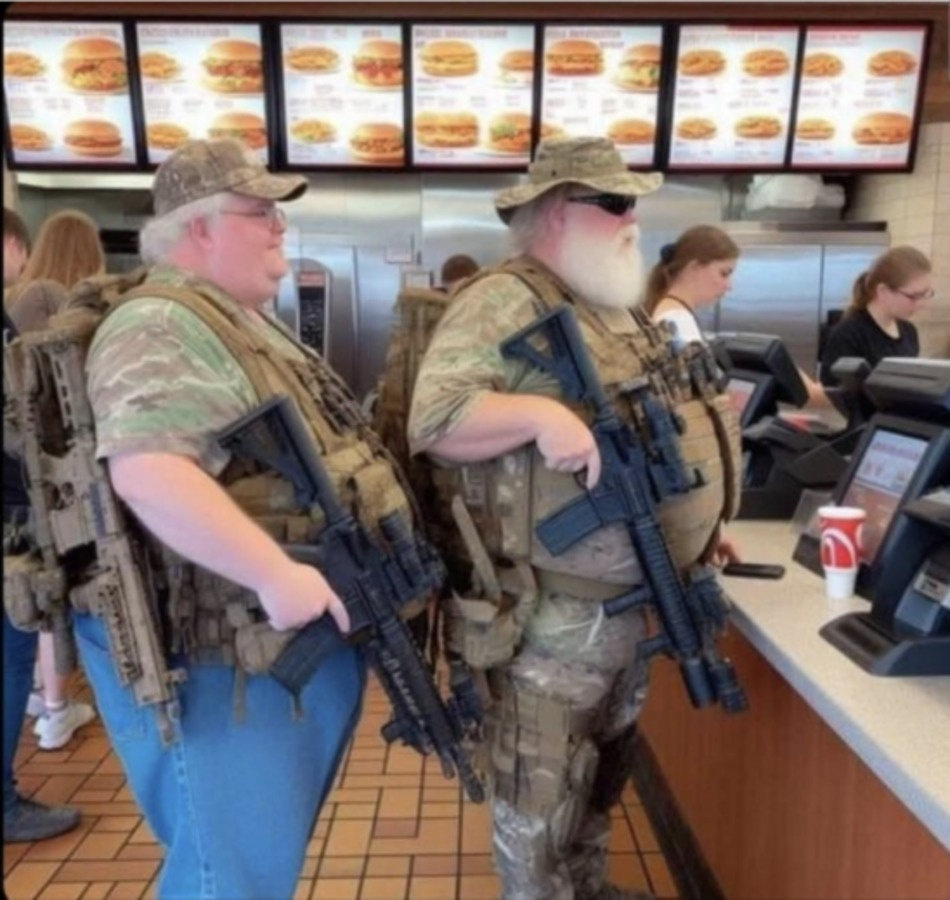
Republicans really hate people voting. They know they are unpopular and they know the more votes the more democrats win. So this is 1930s Germany brownshirt stuff, this is gang thug rule that the maga want. We need to understand what these people really are. In their world might makes right. In their world the most violent person wins. They grew up idolizing Rambo type movies. They are stunted child school yard bullies. Hugs.
A Vancouver ballot box was burned in an arson Monday morning, authorities report – with possibly hundreds of ballots damaged in the fire.
KATU was on the scene at Fisher’s Landing Transit Center in Vancouver shortly after 4 a.m., where heavy smoke was seen coming from inside a dropoff ballot box.
Our photographer Evan Bell captured grey smoke steadily billowing out of the Park and Ride ballot box at Fisher’s Landing Transit Center near Southeast 162nd Avenue just after 6 a.m.
Multiple police units were in the area, and the ballot box was cordoned off by police tape as it continued to smoke.
Around 6:30 a.m., KATU captured footage of first responders releasing a pile of actively burning ballots onto the ground, which continued to smolder and smoke heavily even after the flames were put out.
The Clark County elections auditor told us that the last ballot pickup at that location was 8 a.m. Sunday. Hundreds of ballots were inside at the time of the burning, and KATU was told there were maybe only a few that could be saved.
Voters who dropped off ballots at that location after 11 a.m. Saturday need to contact the Election Auditor’s Office IMMEDIATELY for a new ballot.
A link to the Clark County Elections page, with contact information for the Auditor’s Office, can be found HERE.
Vancouver Police released the following statement at 9 a.m.:
This morning at about 4:00 a.m., Vancouver Police responded to an arson at a ballot box located at 3510 SE 164th Ave. It was reported that the ballot box was smoking and on fire. Officers arrived and located a suspicious device next to the box. The ballot box was smoking and was on fire. Members of the Metro Explosive Disposal Unit (MEDU) arrived and safely collected the device, and the fire was extinguished. Detectives from the Vancouver Police Arson team and the Vancouver Fire Marshals also responded.
The FBI is continuing the investigation of this incident.
Just a few hours earlier, Portland police had responded to an arson at a SE Portland ballot box.
READ MORE:Incendiary device set off inside SE Portland ballot box, causing fire
Investigators say that an incendiary device was set off inside the box, causing a fire.
The fire was extinguished and the device was cleared, and the PPB is investigating the incident. The status of the ballots in the burned box has not been provided.
More rat fucking from the republicans.
 Scottie's Playtime