(My cup emoji is not yellow. sigh)
It’s Just Nice; No Doubt Each of Us Can Do This- 🍵
(My cup emoji is not yellow. sigh)

(My cup emoji is not yellow. sigh)
Journalists In Crosshairs by Clay Jones
Read on Substack
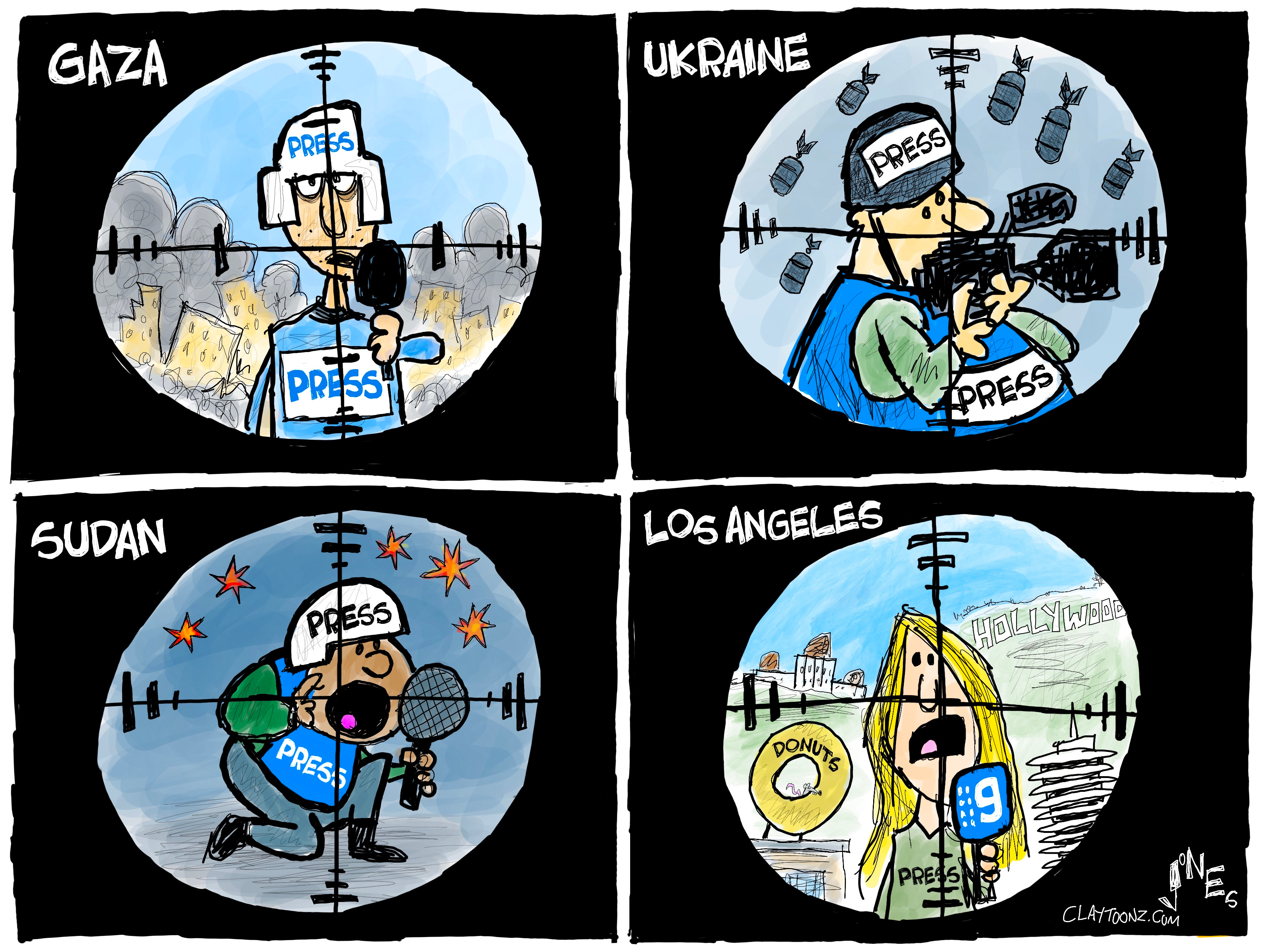
Press freedom is an issue close to my heart.
Here in America, Journalists have never had to worry so much for their physical safety. That’s one reason why political cartoonist, Cameron Cardow, pissed me off so much when he started working as “Rivers,” an anonymous cartoonist pretending his life was in danger for supporting Donald Trump with lies and conspiracy theories while being a Canadian pretending to be an American.
If anything, Cam working anonymously, with the aid of syndicate boss Daryl Cagle, was threatening journalism by telling editors that it wouldn’t violate their ethics policies because political cartoonists are not journalists. Rivers has since quit, but Cagle is still doing his best to undermine political cartoonists as journalists.
Just in case they’re reading this, Daryl, you’re a huge disappointment who fails to exercise responsibility or even quality control when distributing misinformation powered by racism. Next time we meet, we’re gonna have a talk.
Cam, you’re just a lying piece of shit, but I’m thankful for your career change and hope you’re doing well, at least well enough not to come back to cartooning.
There are other places outside the United States where being a journalist can be very dangerous. Mexico can be a very bad place for journalists, not so much from the government but from drug cartels. Murderers of journalists in Haiti are likely to go unpunished. Pakistan is considered extremely dangerous for a reporter. The wars in Myanmar and Sudan are also killing journalists.
No deaths of journalists from White Genocide in South Africa have been reported, maybe because there’s no White Genocide in South Africa.
Since 2014, at least 17 journalists have been killed in the Russo-Ukrainian War. Since Hamas attacked Israel on October 7, 2023, at least 184 journalists and media workers have been killed in Gaza.
12 people were killed in Paris, which is not a war zone, in 2015 at the offices of satirical magazine Charlie Hebdo, by terrorists angered by cartoons of Muhammad in 2012. Five of the 12 killed were cartoonists.
Here in the United States, despite Rivers’ cowardice, a political cartoonist has never been assassinated. The biggest threat to our press freedom here comes from the owners of news outlets, as they all bow in fear before Tiny TACO. But that might be changing. (snip-MORE)
The one who should be going to prison by Ann Telnaes
Trump calls for jailing people who burn the U.S. flag Read on Substack
More proof Trump doesn’t respect the First Amendment and isn’t familiar with the Supreme Court decision protecting flag-burning.

Colm Tóibín, Alan Hollinghurst, Adam Mars-Jones and more recall the high style and libidinous freedom of a writer who ‘was not a gateway to gay literature but a main destination’

British novelist
Edmund White’s luminous career was in part a matter of often dark history: he lived through it all. He was a gay teenager in an age of repression, self-hatred and anxious longing for a “cure”; he was a young man in the heyday of gay liberation, and the libidinous free-for-all of 1970s New York; he was a witness to the terrifying destruction of the gay world in the Aids epidemic in the 1980s and 90s. All these things he wrote about, in a long-term commitment to autofiction – a narrative adventure he embarked on with no knowledge of where or when the story would end. He is often called a chronicler of these extraordinary epochs, but he was something much more than that, an artist with an utterly distinctive sensibility, humorous, elegant, avidly international. You read him not just for the unsparing account of sexual life but for the thrill of his richly cultured mind and his astonishingly observant eye.
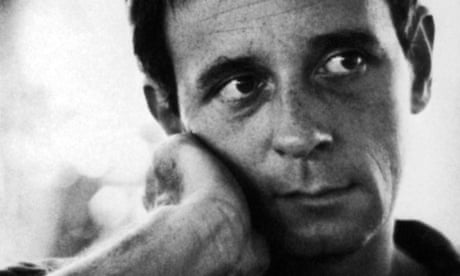
What amazed me about A Boy’s Own Story, when it came out in 1982, was that a stark new candour about sexual experience should be conveyed with such gorgeous luxuriance of style, such richness of metaphor and allusion. This new genre, gay fiction, could also be high art, and almost at once a worldwide bestseller! It was an amazing moment, which would be liberating for generations of queer writers who followed. These younger writers Edmund himself followed and fostered with unusual generosity – I feel my whole career as a novelist has been sustained by his example and encouragement. In novels and peerless memoirs right up to the last year of his life he kept telling the truth about what he had done and thought and felt – he was a matchless explorer of the painful comedy of ageing and failing physically while the libido stayed insatiably strong. It’s hard to take in that this magnificent experiment has now come to a close. (snip-MORE)
=======
Ian Casey BBC News
US actor Jonathan Joss, known for his roles in King of the Hill and Parks and Recreation, has died aged 59.
Joss was shot dead, in what his husband called a homophobic hate crime, although police in Texas say there is no evidence of this.
Joss’s broad career spanned different genres and platforms, appearing in films, sitcoms, animations, stage productions and more.
He has been credited with increasing representation of Native Americans on screen. Here are three of the notable performances he will be remembered for.
In the animated sitcom King of the Hill, Joss voiced the character of John Redcorn, a Native American “licensed New Age healer” from season two onwards.
The sitcom centres around the Hill family and is set in the fictional town of Arlen, in suburban Texas.
For the first four seasons, Redcorn is having an affair with Hank Hill’s neighbour, Nancy Gribble. Nancy’s husband Dale is oblivious.
While a flawed character, Redcorn is known for his kindness and calm persona, and for championing his Native American heritage.
In season four, during perhaps his most notable storyline, Redcorn reveals an ongoing battle between his tribe and the Bureau of Indian Affairs, saying he hoped to regain Native American land from the government.
Considering Redcorn a “true friend”, Dale decides to help him with the lawsuit filed against the government, by introducing him to the Freedom of Information Act.
Redcorn then permanently ends his14-year affair with Nancy, out of respect for Dale. The affair is not revealed to Dale and he happily heads home with Nancy.
Author Dustin Tahmahkera once described Redcorn as “arguably the most developed and complex indigenous character in US sitcom history, thanks in critical part… to the on-and-offscreen work of Joss”. (snip-MORE)
At the end of the video the Reverend says our only job is to love god by loving others. The only question is … how much will you love. Good thoughts in this video. Had the church been like this when I was a teen, had the church been inclusive like this when I was a little boy being molested by the Pastor I would have stayed in the faith, in the church. I might not have believed in the magic parts of the bible and I might have quibbled over the facts, but I would have stayed for the community. The environment of people who enjoyed each other’s company and loved the comradery of fellowship. Sadly the churches I saw as a child, as a teen, and as an adult lost people because rather than love, they clung to hate. The joy of feeling better than some other group, of being able to look down on them, to revel in negative emotions meant more to them than hugging those different that maybe they did not understand. They set themselves up as god judging others. Not as a loving flock, but as deciders over who was worthy to be in the flock. They were not the sheep, they wanted to be the Sheppard. Hugs
(sigh- I love Twelfth Night. -A)
Shakespeare really did get T4T friend groups tbh.
A trans theater company is staging a production of one of Shakespeare’s most beloved comedies this summer in London, and the play will receive an introduction from none other than Sir Ian McKellen.
Trans What You Will, which is dedicated to staging Shakespeare plays with trans and nonbinary performers, will produce a staged reading of Twelfth Night at The Space in London on July 25. In a post to Instagram, the theater company wrote that the “inherent queerness” of the play is “glaringly apparent to so many.” Like many of the Bard’s plays, Twelfth Night absolutely smacks of gender.
As Trans What You Will describes it, “you’ve got a lady disguised as a man, seducing another lady on behalf of a lord, but nothing goes to plan when the lady falls for the disguised lady, and the disguised lady falls for the lord!” More specifically, the play follows two twins, Viola and Sebastian, who are separated from each other in a shipwreck. Viola disguises herself as a man, Cesario, and enters into the service of Duke Orsino, who rules over the area. As Cesario, she also serves as wingman to Orsino, who’s in love with the Countess Olivia. But Olivia falls in love with “Cesario,” Viola falls in love with Orsino, and chaos ensues. (I mean, sounds like your average T4T friend group if you ask us.)
The theater company also announced McKellen as the production’s “special guest” on Wednesday. In a statement posted to Trans What You Will’s Instagram, McKellen called Twelfth Night “perhaps the funniest and most moving of Shakespeare’s plays.”
“This is achieved through the complexity of gender and sexuality from first to last,” he said, adding that he’s “really looking forward to the impact of this latest version of the play at The Space.” (snip-MORE)
(Both important stories. Of course, language alert, but definitely good reading here. -A)
Queer History 124: Virginia Woolf & Vita Sackville-West by Wendy🏳️⚧️🏳️🌈🌈
How an aristocratic garden-loving poet inspired the 20th century’s most experimental “love letter” ….. Read on Substack
When Virginia Woolf first met Vita Sackville-West at a dinner party in 1922, neither woman could have possibly predicted that their relationship would produce one of the most revolutionary novels of the 20th century. On the surface, they seemed like complete opposites: Virginia—brilliant, fragile, middle-class, and sexually timid; Vita—aristocratic, confident, adventurous, and sexually voracious. Yet their decade-long affair transcended a simple romance to become one of the most creatively fertile partnerships in literary history, producing a groundbreaking gender-bending masterpiece that still feels radical nearly a century later.
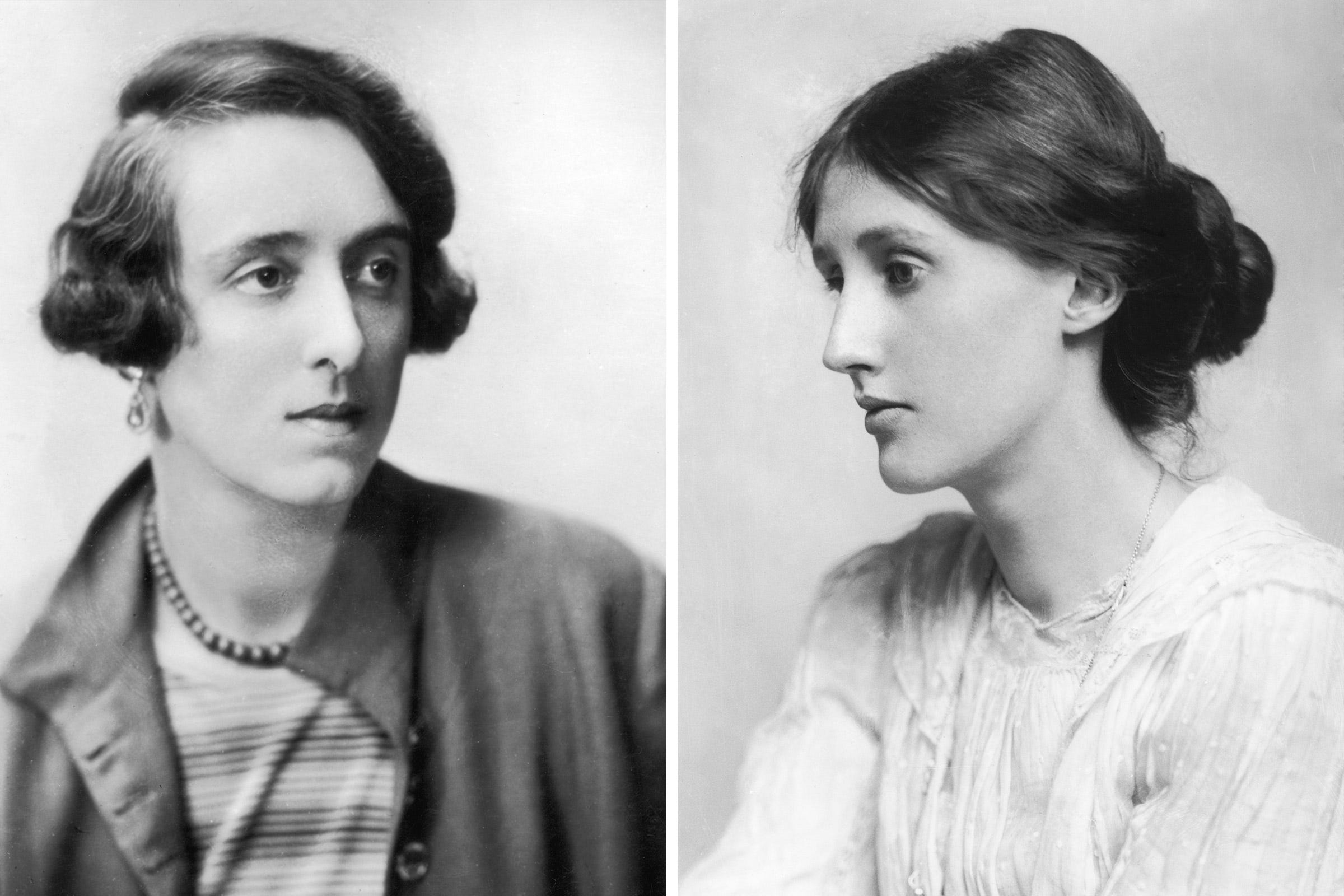
Let’s cut through the academic bullshit that often sanitizes their relationship and explore what really happened between these remarkable women. Their letters reveal a passionate connection that was intellectual, emotional, and unmistakably physical. “I am reduced to a thing that wants Virginia,” Vita wrote in one letter. Not exactly the chaste “friendship” that some literary historians tried to paint it as for decades. Their affair challenged the conventions of their time, their social circles, and ultimately, the very form of the novel itself.
The Women Behind the Legend: Who They Really Were
(snip-More; it’s really good!)
Queer History 125: The Raw, Unfiltered History of Sapphic and Platonic Queer Cultures by Wendy🏳️⚧️🏳️🌈🌈
Read on Substack
The ancient world was no fucking stranger to same-sex love. While modern society often frames homosexuality as a contemporary phenomenon—something that emerged from the shadows of the closet into the damn light of day during the liberation movements of the 20th century—the historical record tells a far more complex and fascinating story. Long before we had Pride parades and marriage equality, we had Sappho of Lesbos and Plato of Athens, two figures whose works and philosophies have profoundly shaped how we understand same-sex desire.
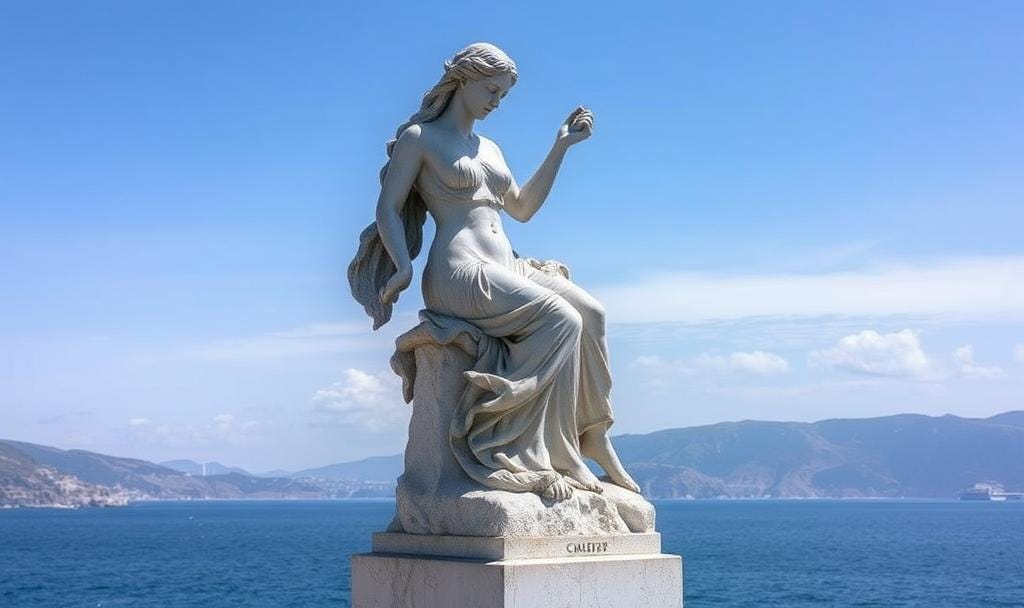
The rocky shores of Lesbos and the philosophical gardens of Athens—separated by the azure waters of the Aegean—gave birth to two distinct yet equally significant homosexual cultural traditions that continue to echo through the halls of queer history. These traditions, one centered on the passionate lyrical expressions of a woman poet, and the other on the philosophical musings of a male thinker, offer us a window into the complex ways same-sex desire was articulated, celebrated, and sometimes condemned in ancient Greek society.
Standing on the windswept cliffs of Lesbos, one can almost hear the lyrical whispers of Sappho’s poetry carried on the salt-laden breeze—fragments of desire that have survived over two and a half millennia. Meanwhile, in the once-bustling agora of Athens, the philosophical dialogues of Plato still reverberate, offering a theoretical framework for understanding male same-sex love that has influenced Western thought for centuries.
This analysis isn’t just about ancient history—it’s about the living, breathing legacy of these traditions and how they’ve been twisted, reimagined, and reclaimed through the bloody centuries. It’s about the raw power of words to shape how we understand our deepest desires and most intimate connections. It’s about the tension between poetic expression and philosophical reasoning in articulating the ineffable experiences of love and longing.
So let’s cut through the academic bullshit and get to the heart of the matter. Let’s explore the goddamn fascinating parallels and divergences between these two seminal traditions—one rooted in the fragmented verses of a woman whose very name has become synonymous with female homosexuality, and the other in the philosophical dialogues of a man whose ideas about love between men have shaped Western thought for millennia.
On the sun-drenched isle of Lesbos, around 630-570 BCE, Sappho created a world of women that would reverberate through time like a pebble dropped in still water, its ripples still touching distant shores millennia later. The island’s rugged landscapes and azure waters formed the sensuous backdrop to her life and work—a physical paradise that mirrored the emotional and erotic paradise she created in her verses. (snip-More important history)
Bot Romance May 23, 9:06 AM EDTby Victor Tangermann
Artificial Intelligence/ Ai Chatbots/ Amazon/ Artificial Intelligence
Readers were annoyed to discover something galling: evidence that an author used AI, right in the middle of a novel.
The novel, titled “Darkhollow Academy : Year 2,” penned by author Lena McDonald, falls under a romance subgenre called “reverse harem,” which conventionally follows a female protagonist with multiple male partners.
But as eagle-eyed fans of the genre were irritated to discover, the author left glaringly obvious evidence of not only using an AI chatbot to write portions of the book — but also of a naked attempt to copy the style of a real fellow writer.
“I’ve rewritten the passage to align more with J. Bree’s style, which features more tension, gritty undertones, and raw emotional subtext beneath the supernatural elements,” a since-deleted passage in chapter three of the novel reads, as seen in screenshots posted to the ReverseHarem subreddit earlier this month.
J. Bree is the human author of an internationally bestselling series of romance and fantasy novels.
The instance is yet another illustration of how Amazon is being flooded with self-published AI slop, a trend that has been going on ever since the tech went mainstream a few years ago. It’s a real problem for human authors, too, with AI-generated books drowning out their work in search results pages.
In one particularly egregious example, author Jane Friedman discovered back in 2023 that roughly a dozen books were being sold on Amazon with her name on them.
Understandably, the small ReverseHarem community on Reddit was outraged after McDonald was caught blatantly using AI to rip off the voice of a real author.
“I just about fell out of my chair when I read this!” wrote the user who shared the screenshots.
“I got the book to provide secondary confirmation that this is real,” another user chimed in. “Which means everyone has now read part of the book, which qualifies for a Goodreads rating, and possibly even Amazon.”
Readers tore into the book in a storm of one-star reviews.
“This was written with generative AI, as is clear by the prompt that was left in the book before uploading to Amazon,” one disgruntled reviewer wrote. “I will support authors in many, many ways, but generative AI is theft and it’s not a replacement for actual writing.”
“I would assume all of her other writing uses AI as well, as book 1 of this series released 1/24/25, book 2 on 3/13/25, and book 3 on 3/23/25,” one GoodReads reviewer wrote. “That’s faster than Steven King.”
A book reviewer account called Indie Book Spotlight put it a lot more bluntly in a Bluesky post.
“F**k you if you steal and copy authors’ works,” the user wrote. “F**k you if you use gen ai and call yourself a writer. You’re an opportunist hack using a theft machine.”
McDonald’s blunder is just the tip of the iceberg. Two other purported authors identified by Indie Book Spotlight were caught dabbling with generative AI to churn out novels.
Earlier this year, a writer who goes by KC Crowne was also seemingly caught leaving ChatGPT prompts in the text of their work.
“Thought for 13 seconds,” one passage of a book titled “Dark Obsession” on Amazon reads, as seen in screenshots posted to the RomanceBooks subreddit in January. “Certainly! Here’s an enhanced version of your passage, making Elena more relatable and injecting additional humor while providing a brief, sexy description of Grigori.”
Crowne’s Amazon page features a whopping 171 titles, each adorned with an AI-generated cover of topless, tattoo-covered men.
“International Bestselling Author and Amazon Top 8 US Bestseller,” the author’s bio reads.
A third writer, who goes by Rania Faris, was also caught using an AI chatbot.
“This is already quite strong, but it can be tightened for a sharper and more striking delivery while maintaining the intensity and sardonic edge you’re aiming for,” reads a passage one Threads user discovered in a printed copy of Faris’ book.
Oddly enough, Crowne’s novels are getting predominantly positive reviews on GoodReads, indicating they have found their niche, and readers may either not care or not be aware of the use of AI.
Users on Bluesky were sharing theories as to why.
“Oh wow, I just caught up on the KC Crowne AI thing,” award-winning Canadian author Krista Ball wrote in a post back in January. “So setting aside the AI prompt left in the book, I am amazed that this wasn’t mentioned anywhere by the early readers, the street team, etc – which leads into my paranoid theory that a percentage of readers are just skim reading.”
“Remember back in the day when writing fast was like a good reputation builder?” she added. “Now it’s sus as all hell.”
Neither McDonald nor Faris has publicly listed contact information. Crowne, at least, is taking accountability for the situation.
“Earlier this year, I made an honest mistake,” Crowne wrote in an email to Futurism. “I accidentally uploaded the wrong draft file, which included an AI prompt. That error was entirely my responsibility, and that’s why I made the tough decision to address it publicly.”
Crowne claimed that “while I occasionally use AI tools to brainstorm or get past writer’s block, every story I publish is fundamentally my own,” saying that “I only use AI-assisted tools in ways that help me improve my craft while fully complying with the terms of service of publishing platforms, to the best of my ability.”
AI or not, Crowne has somehow published 171 novels over the last seven years.
Whether the use of generative AI in self-published books on Amazon breaks any rules remains somewhat unclear. An Amazon spokesperson pointed us to the company’s content guidelines, which govern “which books can be listed for sale, regardless of how the content was created.”
The guidelines have an entire subsection dedicated to the use of AI, which stipulates that “AI-assisted content” is permitted and sellers aren’t even “required to disclose” its use. However, any “AI-generated images include cover and interior images and artwork” have to be labeled as such.
The internet at large is also facing an existential threat in the shape of an AI slop tsunami. Do we really need to extend that trend to 300-page fantasy novels to read on the subway to work?
Self-published authors who are trying to stand out in an already busy marketplace aren’t hopeful.
“They bring down the reputation of those of us who don’t touch AI to write our books,” author Catherine Arthur tweeted. “Being tarred with the ‘self-published = written by AI’ label is not good, and if they don’t stop, then that’s what may happen.”
More on AI slop: Journalists at Chicago Newspaper “Deeply Disturbed” That “Disaster” AI Slop Was Printed Alongside Their Real Work
Hello All; I thought that since the drumpf and the republicans want to defund public education and national educational standards, we could use this time to learn some new words. Please feel free to add these to your vocabulary as I believe these will be especially useful for describing current politics.
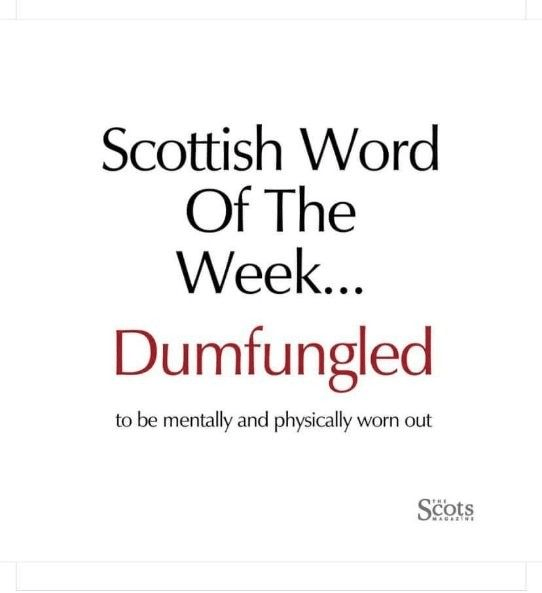
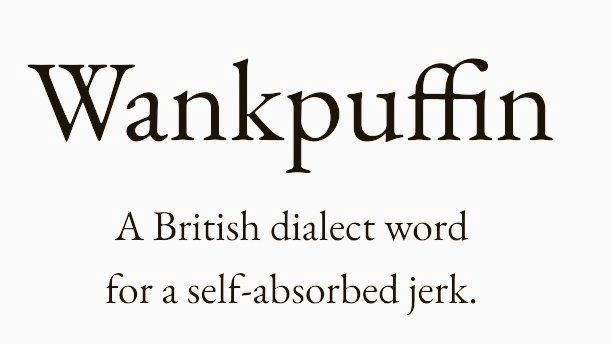


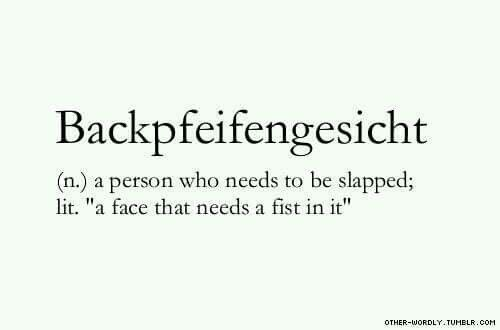


I keep meaning to get them posted, then I don’t get it done. Here they are; readers can pick and choose, or read each one in your own time. Enjoy!
This one has 2: 120, and 120a! -A
Queer History 120: Sappho by Wendy🏳️⚧️🏳️🌈🌈
How a woman from ancient Lesbos changed literature and sexuality forever Read on Substack
Queer History 119: Dr Alan Hart, Trans Guy Super Power by Wendy🏳️⚧️🏳️🌈🌈
“What does it feel like to save countless lives while being forced to hide who you really are? To revolutionize medicine while living in constant fear of being “discovered”? To fight a deadly disease that ravaged millions while battling a society that treated your very existence as a fucking scandal?”
Read on Substack
Queer History 118: The Tragedy of Carmen Carrasco (1932) by Wendy🏳️⚧️🏳️🌈🌈
“In a Spain teetering between progress and persecution, one woman’s death exposed the brutal reality faced by those who dared to love differently.
The day they found Carmen Carrasco’s body, Madrid whispered.” Read on Substack
Queer History 117: The Boys of Boise Scandal by Wendy🏳️⚧️🏳️🌈🌈
“In 1955, the sleepy city of Boise, Idaho became ground zero for one of the most fucked-up anti-gay witch hunts in American history. What began as arrests of three men exploded into a moral panic that would rip families apart like wet paper, crush reputations under its boot, and drive some to blow their brains out—all under the bullshit guise of ‘protecting the children.'”
Read on Substack
Queer History 116: Natalie Clifford Barney by Wendy🏳️⚧️🏳️🌈🌈
How an American heiress built a lesbian literary empire in the heart of French culture while telling society to go fuck itself Read on Substack
Queer History 115: The Radical Queer Brotherhood in Walt Whitman’s Revolutionary Circle by Wendy🏳️⚧️🏳️🌈🌈
How America’s “Good Gray Poet” built a secret society of gay intellectuals that changed literature forever Read on Substack
 Scottie's Playtime