The story below shows how lawless and belligerent ICE has gotten. The laws and the legal authority of a judge mean nothing to them. There is a video at the link below.
On a personal note I have a doctor’s appointment this morning for steroid injections. Depending on how it goes I may need them for the next three months. I will try to do a video to explain as it is too hard to type out. I am way too tired starting from when Ron and I had what we think is Covid a few months ago. Hugs
“If they had the wrong person, then they didn’t know who they were looking for, which calls into question whether they had the legal right to seize anybody,” Weizenbaum said. “It’s very frightening.”
Lieutenant Governor Sabina Matos referred to the ICE agents’ actions as an “attempted abduction,” adding that it only emphasizes “the danger of flooding our streets with masked thugs who can’t tell the difference between a hardened criminal and a high school student.”
A Rhode Island Superior Court intern was briefly taken into custody by Immigration and Customs Enforcement agents in Providence Thursday afternoon before a judge intervened, according to the state’s Judiciary office.
The student, a high school intern at Superior Court, was reportedly detained by the agents outside the Licht Judicial Complex on Benefit Street.
Superior Court Judge Joseph McBurney insisted the agents had the wrong person. It was not until ICE verified their information and admitted the intern was not their intended target that he was released.
Multiple sources told Target 12 that Rhode Island sheriffs earlier noticed someone taking photos of the intern inside the courthouse and in Superior Court Judge McBurney’s courtroom. When approached, the individual identified himself as an ICE agent and was told to abide by standard courthouse rules, and to stop taking pictures.
The intern was reportedly shaken, so McBurney offered to drive him home. ICE agents then surrounded the judge’s car and demanded everyone to exit the vehicle, threatening to smash in the windows if they did not comply.
Dana Smith, Head of Security Operations for R.I. Superior Court, confronted the agents and told both the judge and the intern to stay inside the car. After an argument, ICE confirmed they had misidentified the teen and left. The intern was released once his ID was checked.
Community reaction
“This egregious incident underscores both the community’s and the Judiciary’s concerns about how ICE is conducting its operations in Rhode Island,” R.I. Supreme Court Chief Justice Paul A. Suttell said.
Citing that climate, Suttell said the Judiciary understands recent calls to expand the use of virtual court hearings in Providence.
“The need to balance constitutional considerations, the public’s right of access, and the integrity of testimonial and evidentiary processes do not allow for a fully virtual court system,” Suttell said. “What occurred today, however, reinforces the Judiciary’s need to focus on ways to enhance access to virtual hearings and to educate the public as to how to request such hearings.”
Attorney Miriam Weizenbaum was outside the courthouse as the intern was being detained.
“If they had the wrong person, then they didn’t know who they were looking for, which calls into question whether they had the legal right to seize anybody,” Weizenbaum said. “It’s very frightening.”
Gov. Dan McKee described the intern’s wrongful detainment as being “an outrageous and indefensible act that could have completely upended a young person’s life. “
“Rhode Islanders should not have to fear federal agents operating with such reckless disregard for the law and human dignity,” McKee said. “This was not a harmless mistake. It was the direct result of callous and chaotic policies by the Trump administration. Moreover, ICE’s failure to exercise even a shred of due diligence is shameful and underscores just how broken and dangerous these federal policies are.”
McKee said he supports the judiciary’s commitment “to enhance access to virtual hearings and promote safe access to courts.”
Rep. Seth Magaziner called the incident “completely unacceptable.”
“This is yet another example of the disregard for civil liberties by immigration enforcement under the Trump administration,” Magaziner said, adding that he will “continue to call out the administration’s reckless actions.”
Lieutenant Governor Sabina Matos referred to the ICE agents’ actions as an “attempted abduction,” adding that it only emphasizes “the danger of flooding our streets with masked thugs who can’t tell the difference between a hardened criminal and a high school student.”
Matos commended Judge McBurney for using his position to speak up, while condemning those who continue to support ICE.
Tim White (twhite@wpri.com) is Target 12 managing editor and chief investigative reporter and host of Newsmakers for 12 News. Connect with him on Twitter and Facebook.
Thank you all for reading! You’re all giving me so much strength to carry on. What a privilege to have you as interlocutors. Unfortunately, I also have bills to pay, especially in the next few weeks, so I must do a bit of self-promo, even though I really hate it.
My work is entirely powered by you, dear readers! If you want to support my goal of making a living from these comics, the best way is to subscribe at www.patreon.com/assignedmale . It can be for any amount, you can get a yearly discount, and you can cancel anytime. If you wish to show your appreciation for the work I’ve been doing lately, you can send me a coffee at www.ko-fi.com/sophielabelle .
You can also get yourself some nifty gear with my designs on it at https://sophielabelle.dashery.com . Best way to ruin the Holidays, guaranteed!
Another great (and free!) way to support my work is to react to this post and leave a comment to make sure that more people see it.
Either way, keep shining, stay hydrated, and watch your posture. Love you all!! Sophie
California became the first state to ban most law enforcement officers, including federal immigration agents, from covering their faces while conducting official business.
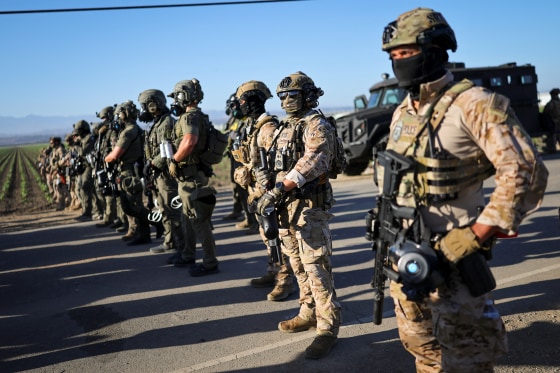
Federal agents stand guard while blocking a road leading to an agricultural facility in Camarillo, Calif., where federal agents and immigration officers carried out an operation on July 10.Daniel Cole / Reuters file
LOS ANGELES — The Trump administration filed a lawsuit Monday over California’s new laws banning federal agents from wearing masks and requiring them to have identification while conducting operations in the state.
The federal government has argued the laws threaten the safety of officers who are facing “unprecedented” harassment, doxing, and violence and said it will not comply with them.
California became the first state to ban most law enforcement officers, including federal immigration agents, from covering their faces while conducting official business under a bill that was signed in September by Gov. Gavin Newsom.
The law prohibits neck gaiters, ski masks and other facial coverings for local and federal officers, including immigration enforcement agents, while they conduct official business. It makes exceptions for undercover agents, protective equipment like N95 respirators or tactical gear, and it does not apply to state police.
Newsom also signed legislation requiring law enforcement to wear clear identification showing their agency and badge number while on the job. The laws require federal law enforcement agencies to issue a mask policy by July 1, 2026, and a visible identification policy by Jan. 1, 2026.
“California’s anti-law enforcement policies discriminate against the federal government and are designed to create risk for our agents. These laws cannot stand,” U.S. Attorney General Pam Bondi said in a press release.
The lawsuit said there have been multiple incidents where Immigration and Customs Enforcement officers were followed and their families threatened. It cites a case of three women in Los Angeles who are being accused of livestreaming while following an ICE agent home and posting the address on Instagram.
“Given the personal threats and violence that agents face, federal law enforcement agencies allow their officers to choose whether to wear masks to protect their identities and provide an extra layer of security,” the lawsuit said.
Newsom has called the practice of masked federal agents arresting people across the state “dystopian.”
Critics have raised concerns about the increased role of federal agents in local policing and often unidentified agents conducting immigration enforcement activities.
“If the Trump administration cared half as much about public safety as it does about pardoning cop-beaters, violating people’s rights, and detaining U.S. citizens and their kids, our communities would be much safer,” a spokesperson for Newsom’s office said in a statement.
The Federal Bureau of Investigation issued a memo in October to law enforcement agencies across the country advising officers to clearly identify themselves in the field. It cited several incidents where masked criminals posed as immigration officers robbed and kidnapped victims.
The federal government also said in its lawsuit that the laws violate the Supremacy Clause of the Constitution, which prohibits states from regulating the federal government. It said the law banning federal officers from wearing masks discriminates against the federal government because it exempts state police.
California Attorney General Rob Bonta’s office said it was reviewing the complaint.
“It’s problematic when Californians can’t tell the difference between a law enforcement officer who is charged with protecting them and a criminal who is attempting to cause them harm,” Bonta’s office said in a statement. “The FBI itself has warned that the practice of ICE agents obscuring their identity has led to a rise in copycats committing crimes, threatening public safety and eroding trust in law enforcement.”
Heather Scott [photo] last appeared here in January 2025 when the Idaho House advanced her resolution which would have launched a formal state lawsuit against Obergefell.
She appeared here in February 2024 for her bill to ban the composting of human remains because people might dig up the bodies and eat them. (Yes, really.)
Scott first appeared here in 2020 when she called Idaho’s Republican governor “Little Hitler” over COVID lockdowns, which she compared to concentration camps.
She appeared here in 2022 when she held a talk on “the war of perversion against our children” by the LGBTQ community and invited a militia group to the stage.
Scott first made national news in 2017 when she defended white nationalism in a Facebook post.
Later that year she was stripped of her committee posts when she said that women only get Idaho leadership posts if they “spread their legs.”
Photos show Scott, an Oath Keepers supporter, brandishing the Confederate battle flag at her campaign events.
The president of Boston University College Republicans wrote on X he called the U.S. Immigration and Customs Enforcement requesting it detain employees at Allston Car Wash, the site of a Nov. 4 raid where nine employees were arrested.
Boston University College Republicans President Zac Segal being interviewed at a club meeting. Segal posted on X that he called U.S. Immigration and Customs Enforcement to investigate the Allston Car Wash that was raided last week. (AVA RUBIN)
“I’ve been calling ICE for months on end. This week they finally responded to my request to detain these criminals,” BUCR President Zac Segal posted Nov. 7 above a Boston.com article about the ICE raid.
Segal declined to comment Thursday morning.
“As someone who lives in the neighborhood, I’ve seen how American jobs are being given away to those with no right to be here. Pump up the numbers!” Segal’s post concludes.
BUCR did not immediately respond to a request for comment Thursday morning.
The nine detained employees all had work permits, Allston Car Wash Manager Jose Barrera told Boston.com.
Barrera said around 22 federal agents arrived at the Cambridge Street car wash holding subpoenas, but agents began arresting employees before they could retrieve their documents from the locker room, Barrera told Boston.com.
ICE did not immediately respond to a request for comment Thursday morning.
This is a developing story and will be updated with more information.
Please notice she had documentation on her and was known to the jail personnel. ICE doesn’t care about a person’s documentation nor did the jail people, they seem to be racists who want brown people out of the US at any costs. Hugs
ICE is engaging in illegal Gestapo tactics based on the egregiously unconstitutional executive orders from the convicted felon and puppet of war criminal Vladimir Putin. These violent and fascist thugs must be abolished and their obscene funding reallocated to America’s crumbling infrastructure and woefully underfunded social services. These two areas of resource redirection would significantly improve the quality of life for millions of Americans, unlike the GOP’s incessant assaults upon our republic!
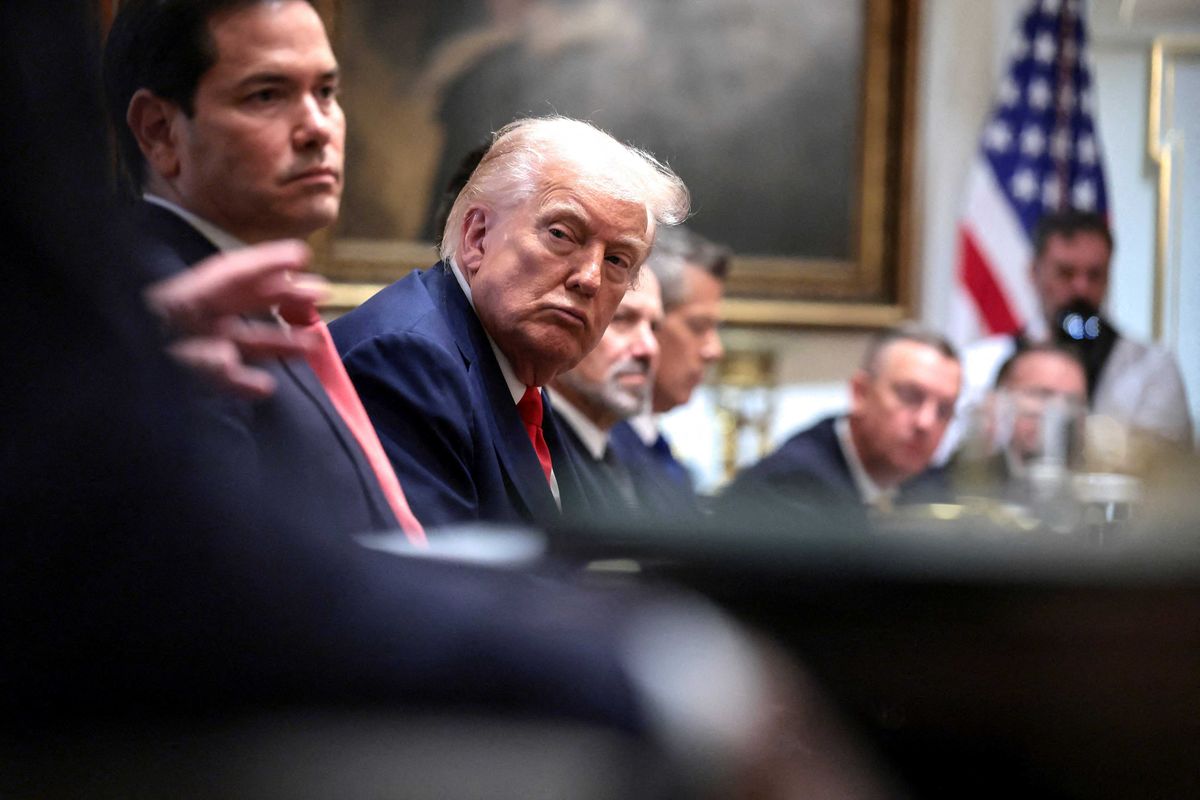
U.S. President Donald Trump and Secretary of State Marco Rubio attend a cabinet meeting at the White House, in Washington, D.C., U.S., October 9, 2025. REUTERS/Evelyn Hockstein
Something dramatic has happened.
Many people who consider themselves non-political or independent, or moderate Republican, or who even voted for Trump last November, can’t avoid seeing what’s now come so clearly into the open.
They’ve watched Trump order the Texas National Guard into Portland and Chicago, over the objections of the mayors of those cities and the governors of Oregon and Illinois. They’ve heard him call for jailing the mayor of Chicago and governor of Illinois for opposing these moves.
They’ve heard him threaten to invoke the Insurrection Act and send federal troops all over America.
They’ve watched Trump’s ICE agents drag people out of their beds in the middle of the night, zip-tie them and their children, and haul them away.
They’ve seen Trump’s prosecutors indict the attorney general of New York state because she held Trump accountable for fraud. And seen him threaten to do the same to a California senator because he conducted hearings in the House exposing Trump’s role in the attack on the Capitol.
They’ve heard Trump say he can kill anyone who he claims is an enemy combatant trafficking drugs.
They’ve heard Trump direct the IRS, FBI, and Justice Department against liberal groups that oppose him — George Soros’s Open Society Foundation; ActBlue, the Democratic fundraising organization; Indivisible, the community-based resistance organization.
And they watched him take off the air comedians who criticize him — Stephen Colbert, Jimmy Kimmel.
All across America, millions of people who have avoided politics, or identified as independents or moderate Republicans or even Trump voters, are shaken by what they’re seeing and hearing.
It’s no longer Democrat versus Republican or left versus right.
It’s now democracy versus dictatorship. Right versus wrong.
It’s no longer a war on undocumented immigrants. It’s now a war on Americans.
It’s no longer a foreign enemy. It’s now the “enemy within.”
Across the land, average Americans are realizing that they too could be dragged out of their homes in the middle of the night by Trump’s ICE agents, or tear-gassed and arrested by Trump’s National Guard, or targeted by Trump’s prosecutors, or shot by Trump’s military.
The Big Reveal is that all of us are now endangered.
Multiple polls show Trump’s approval tanking, but I think it runs deeper than this.
Something dramatic has happened over the last two weeks — as America sees more vividly than ever who Trump is, where he and his trio of lapdogs (Miller, Vought, and Vance) want to take the country, and how we’re all potential targets.
The Big Reveal is impossible not to see. Trump and his lapdogs are doing all of this completely in the open. They have no shame.
Most Americans abhor what they see, because what they see is abhorrent.
This is how the great sleeping giant of America awakens, roars, and puts an end to it.
Robert Reich is a professor of public policy at Berkeley and former secretary of labor. His writings can be found at https://robertreich.substack.com/.