
Some days living with soap allergic skin that makes me itch I often feel this way. Hugs 









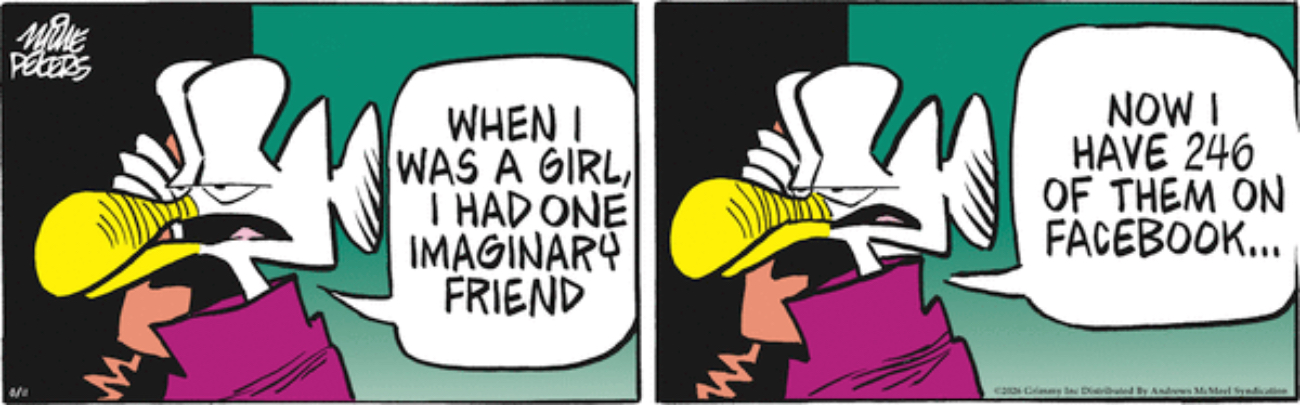


especially loves when Riley Gaines catches heck, especially with a bonus of Nancy Mace!
In the latest round of primary elections, voters in four states chose candidates for the November general elections, and something something national consequences, something something Donald Trump’s continued clammy grip on the Republican Party, yadda yadda. Primaries were held Tuesday in Maine, South Carolina, Nevada, and North Dakota. And in California, vote counting in last week’s primary for governor was complete enough that Republican Steve Hilton, a former Fox News host, secured the second spot in the at-large gubernatorial primary, so it’ll be him and Democrat Xavier Becerra facing each other in November. Funny how Democrats somehow only frauded up the LA mayor’s race, while the very same vote count process put Hilton on the ballot.
One might even think the cries of fraud were complete bullshit!
(snip-we know about Maine. Lets get Dems elected to our legislature!! Click through if you wish to read it, though.)
In the Palmetto State, Rep. James Clyburn (D) easily won his primary and is likely to hold the seat, for an 18th term in the House. Clyburn benefited from the Republican-dominated state Lege’s decision to not join the rest of the former Confederacy in redrawing every last majority-Black congressional district out of existence this year.
But before you get carried away and accuse South Carolina Republicans of having a fit of decency or ethics, several top Goopers in the Lege said last month they opposed redistricting because early voting was already underway for this very primary. Still, that’s better than Louisiana, slightly, in the voting rights race to the bottom. For this year.
The really big outcome from South Carolina was that Rep. Nancy Mace, of the House Republican Batshit Awful Caucus, finished fifth — dead last — in the state’s gubernatorial primary. After this year, she’s both out of Congress and maybe even out of elected office forever, though here we note that the evil baddies in slasher flicks never seem to stay dead, either.
True to hateful bigoted form, Mace was an asshole right up to the final days of the primary, pandering to xenophobes by introducing a constitutional amendment that would ban naturalized citizens from serving in Congress, serving as federal judges, or serving in any position requiring Senate confirmation. She insisted that three of her Democratic colleagues in the House — Reps. Ilhan Omar (Minnesota), Shri Thanedar (Michigan), and Pramila Jayapal (Washington) — are “all making clear every single day their loyalty is not to America.” Jesus, what a vile person.
While campaigning in Greenville County earlier this month, Mace screeched, “I didn’t come out of a slum in India. I am born and made here in America.” Gosh, we sure feel bad about Trump turning against her after she called for releasing the Epstein Files.
Trump’s endorsed GOP candidate in the governor’s primary, Lt. Gov. Pamela “not Nancy Mace” Evette, wasn’t able to get enough votes to secure the nomination outright, and will go up against state Attorney General Alan Wilson in a runoff on June 23. Mace endorsed Wilson, probably out of spite, although last year she had attacked Wilson, baselessly claiming he was protecting defendants accused of child sex abuse.
Always being very mature, after Trump endorsed Evette, Mace immediately went to Twitter and Facebook to lie about it in an attempt to gaslight voters.
“Pamela Evette is NOT ENDORSED by DONALD TRUMP,” Mace wrote, incorrectly. “Do not believe her LIES.” Mace posted an AI-generated image of herself posing with Trump.

Oh, and speaking of assholes, Lindsey Graham easily fended off a primary challenge from self-funded business guy Mark Lynch, clearing the 50-percent threshold to avoid a runoff with 56 percent of the primary vote. Trump had unironically warned that it’d be a “DISASTER for the Republican Party” if Lynch won, which, hmmm, sounds vaguely familiar to something we heard a decade ago … what was that?
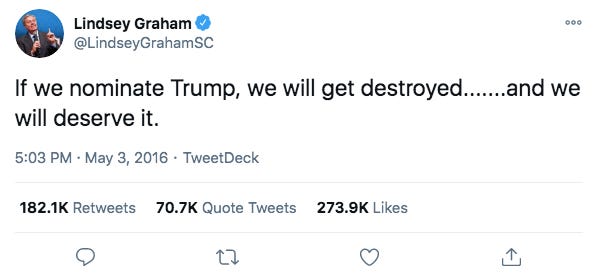
Oh yeah, that.
In the Democratic primary for Senate, Dr. Annie Andrews, who we like a hell of a lot, won the chance to run a long-shot bid against Graham. It’s a weird year, but probably not weird enough to dislodge Graham from the seat he’s clinging to like a goddamn candiru fish.
(snip; MORE re NV and ND; click on through! I wanted to cheer everyone with Nancy Mace being called the Riley Gaines of her election.)

Mo Turner — queer, Muslim and Black — faced discrimination and censure in the Oklahoma legislature. They have found healing through activism.
This story was originally reported by Orion Rummler of The 19th. Meet Orion and read more of their reporting on gender, politics and policy.
Mo Turner doesn’t often think about their time in the Oklahoma House of Representatives.
In that building, they were Mauree — the first out nonbinary state legislator in United States history; the first Muslim elected in Oklahoma; a Black, queer, gender non-conforming lawmaker in one of the most conservative states in the country. Elected at 27 to represent House District 88, which includes much of Oklahoma City, they stepped into a political institution that had never belonged to someone like them before.
The job almost broke them. Turner left office in November 2024, four years into their tenure, after the work took a toll on their health. They are still recovering.
“I spent January 2026 walking. And weeping. And reading,” Turner said. After the legislature took over their life, they had to find a way back to who they were before a national spotlight brought constant harassment, abuse and stress. They’ve found solace in a particular song near the end of the Hamilton musical, when the eponymous founding father takes long, quiet walks after losing his son and stepping away from politics.
Turner’s own walks can go on for three hours.
If there’s one lesson Turner took from their time at the statehouse, it’s that politics won’t help communities. People will.

“I want people to understand that policy is not coming to save you,” they said. “We get justice, we get faith, we get warm meals, we get community right here when we start talking to folks.”
Although the United States is a representative democracy, our political system still rejects anyone who strays too far from the norm. Turner’s story shows how far from equal the nation’s politics still are — and how being an out LGBTQ+ elected official today is just as revolutionary as it was five decades ago.
Elaine Noble was the first openly LGBTQ+ person ever elected to a state legislature, serving two terms in the Massachusetts House of Representatives in the 1970s. She described the campaign as ugly: her car was destroyed, her windows were shot through, her headquarters were vandalized. The harassment she received from colleagues in the statehouse was ugly, too. She routinely heard obscene profanities. Once, someone left human feces on her desk. Another time, a man stopped her as she walked to work and spat on her.
These are not just scenes from a distant past. Political violence against LGBTQ+ candidates is rising, according to a new report from the Victory Institute. Many LGBTQ+ candidates who ran for office between 2023 and 2025 experienced death threats on the trail. One candidate said their house was shot up by a neighbor. Another said that someone posted in a local newspaper’s online thread that a bullet should be put through their brain. Another candidate was shoved off a porch while door-knocking.
Some LGBTQ+ candidates receive death threats on social media at least once a week, according to the Victory Institute. A number of them respond to those threats by limiting voter engagement. Some avoid door-knocking and social media. Others decline public events entirely.

Rising violence against LGBTQ+ candidates doesn’t just scar candidates; it scars democracy, according to the authors of the report.
“This is changing who feels able to run for office, how candidates are showing up in their campaigns, whether they can even remain in public life at all,” said Pooja Prabhakaran, director of elected and appointed officials engagement at the LGBTQ+ Victory Institute. “The broader piece of it is, who is able to serve and participate in democracy?”
Death threats against Turner began as soon as they entered office. They received voicemails filled with racial slurs and obscene emails targeting their religion and LGBTQ+ identity. As a freshman lawmaker, they were surprised to learn that not everyone was treated that way. They thought death threats were commonplace.
Turner has dealt with harassment on a larger scale than many other LGBTQ+ candidates do, Prabhakaran said. For other trans people or LGBTQ+ people of color who consider running for office, there is a chilling effect: Do they want to be subjected to the same treatment?
Threats against Turner escalated after they were censured by the Oklahoma House of Representatives in 2023, during their second term. They were accused by the Republican leadership of “harboring a fugitive” — a trans person who went to the statehouse with their partner to protest a bill that would ban gender-affirming care for minors.
At the protest, the couple got into a scuffle with a state trooper after one of them threw water at a state representative. One was arrested. The other sought out Turner’s office.

“This person’s spouse was just arrested. They came to my office to process. That’s what happened,” Turner told The 19th at the time, in 2023. “I let folks get their affairs in order, because everyone was in agreeance that they were going to go ahead and turn themselves over.”
Democrats said Turner cooperated with law enforcement during the search for the protester. Still, they were punished. Republicans asked Turner for a formal apology in exchange for keeping their committee assignments. They declined.
“I think an apology for loving the people of Oklahoma is something that I cannot do,” they said at a press conference following the censure.
Many constituents already saw Turner as a trusted confidant. People would call to ask where they should move to escape anti-LGBTQ+ laws and how to crowdfund to help someone travel for an abortion. As politics restricted daily life, more and more people came to Turner for help.
Now, after earning that trust, they were silenced. They couldn’t shape legislation through committees or join caucus discussions to speak on behalf of voters in their district.
The threatening calls and emails got worse.
Some political violence is based on a candidate’s beliefs. Some of it is driven by a desire to intimidate them out of politics altogether because of their identity. Those who challenge the status quo often face the most backlash, said Kelly Dittmar, director of research at the Center for American Women and Politics at Rutgers University. And those conditions don’t just stop once someone gets into office, she said.
“I can have an elected position, but my power in that position is very much influenced by all of these other dynamics that are not formalized,” Dittmar said. There’s a difference between politics as usual within a two-party system, where everyone jockeys for influence, and being seen as a threat for being different or a minority, she said.
In 2023, Oklahoma lawmakers introduced 35 anti-LGBTQ+ bills, according to the American Civil Liberties Union (ACLU) — a lot more than most other states at the time. They passed laws enabling broad discrimination against trans people and restricting young students from learning about LGBTQ+ people. Inside the statehouse, Turner felt demoralized.
The next year, their Republican colleagues introduced 55 anti-LGBTQ+ bills. Oklahoma already had few legal protections for LGBTQ+ people, and things only got worse.
“I’m going into a job that doesn’t care about me in a state that it feels like doesn’t care about me,” they said, reflecting on how they felt at the time.
Still, Turner was making an impact. As the first out transgender lawmaker in Oklahoma’s statehouse, they inspired young people. Students told Turner that they had never cared about politics until seeing them in office. High school and middle school students would approach them in the capitol to ask questions about their tenure for class reports.
They represented more than just House District 88. They represented younger generations of queer people in Oklahoma and beyond. Turner felt the weight of the responsibility. That’s what made it so hard for them to leave.
Turner found an ally in then-Rep. Monroe Nichols, a Democrat who now serves as the first Black mayor of Tulsa. Nichols was the only one who seemed to genuinely care that Turner was receiving death threats. He was the only one who made them feel human.
“I do think that there was solidarity in him being a Black man from Tulsa of all places, understanding what it looked like to feel discrimination or oppression,” Turner said.

Once Turner took office, there were eight Black legislators in the Oklahoma statehouse — a record. Currently, there are six. Most politicians in the building are White. The status quo of power in Oklahoma is very much White, cisgender, heterosexual and male, said Dittmar of Rutgers University. And those who break that mold are seen by others as a threat, she said.
Then there’s this: In a state like Oklahoma, Democrats have very little leverage. On top of the low pay and high stress, there’s a small chance of achieving any concrete policy wins. Republicans sponsor most state laws because 80 percent of the lawmakers are Republicans. Barely any bill passes without Republican support. Being in the minority party means taking on the steep personal costs of being in office in exchange for little payoff.
Toward the end of those four long years, Turner didn’t feel like a good legislator anymore. In their words, they were phoning it in. Although they did spark a committee hearing on repealing the state’s HIV criminalization law, none of their bills advanced.
Turner would frequently sit in their car in the parking lot before work, trying to breathe through the rising panic and find the will to go inside. Walking into the statehouse each day was taking a deep toll on them.
The stress grew until they landed in the emergency room. At the beginning of their last legislative session, they were diagnosed with multiple sclerosis and underwent a procedure to have cancerous cells removed from their body. That health scare followed bouts of migraines, panic attacks and depression.
As their health cratered, they felt alone. After their visit to the emergency room, none of their colleagues checked to see how they were doing.
Turner knew something had to change. They were worried for their nephew, Anthony, whom they are raising on their own. While juggling their job and all the harassment that came with it, they were setting up daycare and school drop-offs — everything that comes with being a single parent. Sometimes, Anthony would join them on the House floor if work ran late. But they had to leave by 7 p.m. to make it home at a reasonable time for dinner, bath and bedtime.
“I remember one day thinking, I would like to see him grow up,” they said.
So they left. They walked away from politics.
“It was a tough decision to make because I know that representation matters. And some days, me just showing up to work is the representation that people need,” they said.
This is the passion that still fuels Turner: showing up for Oklahomans and showing up for young LGBTQ+ people who don’t feel heard by their elected representatives.
In March, Turner went back to the statehouse to help a friend, the executive director at Freedom Oklahoma,a state LGBTQ+ advocacy group, monitor anti-trans bills. But the building is still full of red tape: Initially, they were barred from entering the gallery by statehouse security. The experience became a reminder of why they left.
To actually make change in their community, Turner knew they would have to work outside of politics.
Here’s how: They’re working with the immigrant advocacy group Dream Action Oklahoma, making and distributing zines on how bystanders can intervene when Immigration and Customs Enforcement agents are out making arrests. They help serve community breakfast with the Foundation for Liberating Minds, a Black-led abolitionist group based in Oklahoma. And in their new job, they get to work with LGBTQ+ students from across the country.
Turner is the director of public policy and advocacy at GLISTEN, a national nonprofit that lobbies for LGBTQ+ students. They’re working to expand GLISTEN’s National Student Council, a leadership program for high schoolers. They’re working on the curriculum for that program and thinking about how these students want to grow. Many of them want to become activists, or already are. These students represent a future that is rapidly changing, regardless of how many anti-LGBTQ+ laws are passed; more and more young people are identifying as queer and trans.

Working with students is a bright spot for Turner. Their organization is asking LGBTQ+ students about their experiences, their school policies and what they think needs to be different. And amid so much anti-LGBTQ+ hostility in politics, kids are making it clear that they’re ready to make change on their own terms.
“Youth aren’t just saying, ‘Oh, god, policy is so bad, whatever.’ They’re saying, ‘No, maybe I will run for office. Or ‘I’ll work on my friend’s campaign.’ They’re being outspoken,” Turner said. “Our power lies in the streets, outside of any state legislature, and it always will.”
Turner doesn’t think they will ever go back to politics. But that doesn’t mean they’ve stopped paying attention. They still keep tabs on bills moving through Oklahoma’s legislature. Lately, they said, things have been going from bad to worse.
The legislature just passed a law to create criminal penalties for providing gender-affirming care to minors and adults. No public funds or property may be used to provide the care, which threatens state university hospitals. The state Medicaid program will also no longer cover gender-affirming care for any patients.
This bill is just another step in stripping health care from all Oklahomans, Turner said. They want people to respond to laws like this by doing more than signing a petition or calling their local reps. They can reach out directly to state agencies, donate to local healthcare fundraisers or just talk to their neighbors.
“When the government fails us, what do we have?” they said. For Turner, the answer is clear: community.
In a way, Turner has returned to their home turf as an activist. Before elected office, Turner worked with local branches of the ACLU, the NAACP and the Council on American-Islamic Relations. They learned the ways of the statehouse and now they know how to push for change outside.
And they don’t plan on leaving the state or their community in House District 88. Their brother went to college in this district. They worked an internship here. They met friends at Picasso Cafe and The Red Cup and had first kisses at local bars. Oklahoma City feels like such a queer place to them, and they have fallen in love with it.
“This is my home. I love it,” they said. “I’m going to stay and fight.”
(Normally, I hold with the idea of not giving a candidate’s opposition name-advertising, but it is a strategy that can work if one of our own candidates are getting dragged through the mud. Platner’s not the first. Keep it short, sweet, and truthful, like this.)


—————————————————————————————————————————————
For me it is self harm. The constant pain my body is in and painful memories want me to cause the pain I can control, which releases endorphins, causing temporary easing of the mental torture I feel all the time now. But I don’t, and I won’t. Not now, not this minute, not this hour, not this day, not … as long as I can say not. I promised Randy back in 2014 I wouldn’t start doing it without telling him first. I have held to that promise. Hugs. Scottie
———————————————————————————————————————————–




Ukranian soldiers advancing. That cat looks like it will personally take care of Putin as soon as the word is given.


The Trump administration’s actions aimed at making it more difficult for transgender minors to receive gender-affirming medical care regardless of state policies allowing or even protecting such care are facing strong pushback. And while the Justice Department has described a “nationwide” investigation into the care, it was those challenging DOJ who prompted hearings on both coasts on Tuesday.
The Justice Department’s efforts to obtain information about patients who received gender-affirming medical care by way of administrative subpoenas and, more recently, grand jury subpoenas are extreme — and lawyers say, unprecedented.
The pair of hearings Tuesday highlighted the extreme nature of DOJ’s requests — and the speed with which DOJ has moved to try and get the invasive patient data in recent weeks after nearly a year since the first requests went out in July 2025.
The administrative subpoenas have been blocked when challenged, leading a set of patients to seek a class-action order quashing the patient-specific requests in all of the administrative subpoenas.
At 10:00 a.m. ET Tuesday, U.S. District Judge Julie Rubin held a hearing related to that request at the Edward A. Garmatz U.S. District Courthouse in Baltimore.
Rubin, a Biden appointee, was one of the judges who had previously quashed the patient-specific requests, as to those who moved to quash the administrative subpoena issued to Children’s National Hospital (headquartered in D.C. but with locations in Maryland as well), finding that the “Subpoena lacks a legitimate purpose.“
The bulk of Rubin’s questions to Rachel Berg from the National Center for LGBTQ Rights on Tuesday related to whether Rubin could certify a class in a motion to quash an administrative subpoena and, if not, how far relief could go.
Ultimately, Berg acknowledged that, if Rubin did not certify a class, relief could only reach those with a connection to Maryland. In their filing, they had noted that “[a]t least two Movants currently reside in Maryland and four families received services from Children’s National Hospital in Maryland.“
That would, however, not accomplish what the litigation is seeking to do — stop DOJ from getting any of the patient-specific information in response to any of the administrative subpoenas. As such, if Rubin denies this request, there likely would be a further effort to accomplish that goal.
At the same time, Rubin pushed DOJ’s Scott Dahlquist on the opposite side nearly as strongly as she’d pushed Berg. When he insisted that the patients were seeking “sweeping, nationwide” relief, Rubin asked how that’s different from any class-action litigation. Dahlqust’s response was, essentially, that you can’t get class relief for an administrative subpoena.
On rebuttal, though, Berg responded that, though the patients’ request to the court might be without a perfect match from past litigation, the reason that is so is because there is no precedent for the Justice Department’s actions here.
Although it is not clear how Rubin will rule, the relevance of the administrative subpoena fight could be taking on less importance in short order. As Law Dork has covered in depth, DOJ’s apparent move to grand jury subpoenas issued in the Northern District of Texas in May is reaching a head — with at least two grand jury subpoenas having initially had a return date of Wednesday, June 10.
Over the past week, patients of Lucile Salter Packard Children’s Hospital at Stanford have made efforts to block the grand jury subpoena issued to Packard. After a first attempt to block Packard from turning over the information — in a lawsuit filed only against Packard — was rejected over the weekend, the patients filed an expanded lawsuit on Monday. In that, they added the Justice Department and Acting Attorney General Todd Blanche as defendants and asking for class-action relief for all who received gender-affirming medical care as minors in California and, specifically, Packard patients (similar to litigation in New York City). They also filed a request for a temporary restraining order barring DOJ from receiving patient-specific information, given the forthcoming return-date deadline.
At 10:00 a.m. PT Tuesday, U.S. District Judge Casey Pitts held a conference related to that request. Pitts was presiding over the remote hearing from his courtroom at the Robert F. Peckham Federal Building and U.S. Courthouse in San Jose.
The hearing before Pitts, another Biden appointee, ultimately, was less adversarial — for now — than the Baltimore hearing.

Late Monday, Pitts had issued a temporary order blocking Packard from turning over any more documents to the government and blocking DOJ from taking any further action to enforce any grand jury subpoenas that would affect the would-be class here while he considered the matter.
Everyone, more or less, was OK with keeping that status while taking up the TRO request on a slightly less rushed timeline.
Although it took a few minutes at the status conference for everyone to agree that everyone was on the same page, ultimately John Wollman, the assistant U.S. attorney from the Northern District of California representing the government at the hearing, while not acknowledging any grand jury subpoena, agreed to push back any Packard subpoena response date to June 25 to allow time for briefing and arguments on the patients’ request.
Although the parties need to submit a briefing schedule to Pitts for how to proceed, the outcome is similar to that reached temporarily as to the grand jury subpoena challenge in New York City, where the next hearing is set for June 22.
In short, the grand jury subpoenas that are known to have been challenged are on hold for now by agreement of the government while the litigation is considered.
Despite that, though, the return date was June 10 on both published grand jury subpoenas, so it is possible that others are out there that have not been challenged and will lead to productions on Wednesday. (Of course, it is also possible there are other challenges that have just flown under the radar.)
Regardless, and as NCLR’s Berg detailed Tuesday in Baltimore, this is an unprecedented, multi-pronged attack on a small handful of children. What’s more, given the way DOJ is going about this, they and their families might not even know that their records might be turned over to the government — or if their provider has even been subpoenaed.
Law Dork will continue to cover this story. If you know about any previously unreported subpoenas, other related DOJ efforts, or other challenges to those efforts, please reach out. Chris Geidner is available on Signal at crg.32 for more secure communications.
I first read about Bayard Rustin in “The Nation” in the late 1990s. His story was both sad and inspirational. Here is some background on an unrecognized star (not that article I read years ago, I’m sorry. I have no access.)
(1912–1987)
Bayard Rustin (1912–1987) was a human rights activist known for his work during the Civil Rights Movement
Rustin was a key organizer of the 1963 March on Washington for Jobs and Freedom and was one of Martin Luther King Jr.’s closest advisors, especially on techniques of nonviolent resistance. Rustin was extremely active in the Congress of Racial Equality (CORE) and helped to create the Southern Christian Leadership Conference (SCLC).
Early in his career, he was arrested for “moral cause” which led to his outing to the public. However, once outed, Rustin was completely open about his sexuality and was never ashamed. Criticism and discrimination over his sexuality led Rustin to have a more background role in the Civil Rights Movement. He never wanted his sexuality to have a negative effect on the Movement, which is often the reason that Rustin’s efforts are not widely known. (snip-MORE)
Bayard Rustin was an American leader in social movements for civil rights, socialism, pacifism and non-violence, and gay rights.
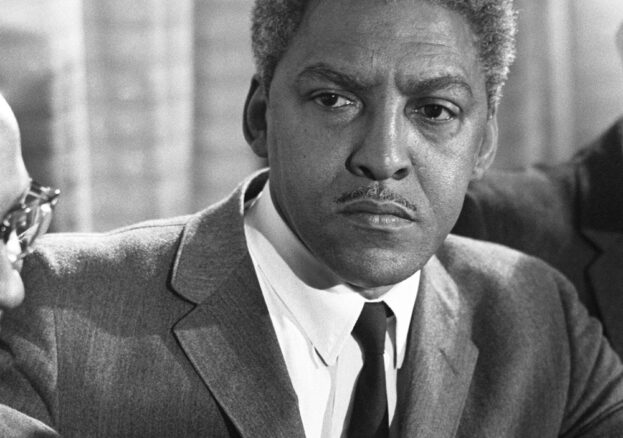
2HKJNR6 Bayard Rustin (1912-1987), American civil rights activist, attending Walter Reuther Press Conference, Warren K. Leffler, US News & World Report Magazine Collection, March 17, 1965
Born on March 17, 1912, in West Chester, Pennsylvania, Rustin was nurtured in a household steeped in activism and moral conviction. Raised by his Quaker grandparents, particularly his grandmother, Julia Rustin, a dedicated member of the NAACP, he absorbed the values of equality and social justice from an early age. This upbringing ignited a spark within him that would blaze throughout his lifetime.
Rustin’s early education at Wilberforce University and Cheyney State Teachers College further fueled his activist spirit. Though he did not complete his degree, these institutions were fertile ground for his burgeoning political consciousness. His move to Harlem in 1936 immersed him in the heart of African-American culture and political activism, setting the stage for his life’s work.
Rustin’s commitment to nonviolence was both a strategic choice and a deeply held belief. His association with the Fellowship of Reconciliation (FOR), a pacifist organisation, was pivotal. Under the mentorship of A. J. Muste, Rustin honed his skills in civil disobedience and nonviolent resistance, becoming a leading voice in the fight against racial injustice.
In 1947, Rustin co-organised the Journey of Reconciliation, a courageous precursor to the Freedom Rides of the 1960s. This daring initiative aimed to dismantle segregation on interstate buses through direct action. Facing arrests and brutality, Rustin’s unwavering resolve demonstrated the transformative power of nonviolent protest and set a powerful precedent for future civil rights campaigns.
Rustin’s encounter with Martin Luther King Jr. during the Montgomery Bus Boycott marked a turning point in the civil rights movement. Recognising King’s potential, Rustin became a crucial advisor, infusing the movement with his vast experience and strategic acumen. His efforts were instrumental in the formation of the Southern Christian Leadership Conference (SCLC) in 1957, strengthening the infrastructure of the civil rights struggle.
Rustin’s strategic brilliance shone through his emphasis on Gandhian principles of nonviolence. He played a key role in guiding King towards these philosophies, ensuring that nonviolent resistance remained at the heart of the movement. Rustin’s behind-the-scenes influence was a driving force that propelled the civil rights movement forward, even amidst escalating tensions and opposition.
And from Quakers In Action,
1912-1987
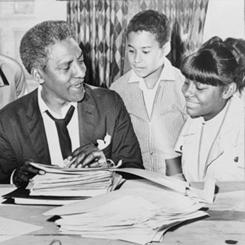
Bayard Rustin was a black Civil Rights activist, a close associate of Martin Luther King, and an advocate of gay and lesbian rights, and a Quaker.
Rustin was born in West Chester, Pennsylvania and was brought up by his grandmother, who had been raised as a Quaker. He himself became a Quaker in 1936, shortly before moving to New York where he lived most of his adult life. He was a pacifist and a primary influence in bringing non-violent resistance into the American Civil Rights Movement, much inspired by Gandhi’s approach in India.
In 1941, he joined the pacifist Fellowship of Reconciliation. He protested against segregation within the armed forces, and worked with the American Friends Service Committee to protect the property of interned Japanese Americans.
Despite his membership of the Society of Friends (one of the so-called ‘Historic Peace Churches’), Rustin was jailed in 1944 for his conscientious objection to cooperating with the draft. While in jail, he organised protests against segregated seating in the dining hall. In a letter to the prison warden, he wrote:
Both morally and practically, segregation is to me a basic injustice. Since I believe it to be so, I must attempt to remove it. There are three ways in which one can deal with an injustice. (a) One can accept it without protest. (b) On can seek to avoid it. (c) One can resist the injustice non-violently. To accept it is to perpetuate it.
After the War, he took part in the Journey of Reconciliation across four southern States, to protest against illegal segregation in inter-state travel. He was arrested, along with his fellow protestors, several times in the course of the journey and in North Carolina was sentenced to thirty days on a chain gang. The protest became a model for future ‘Freedom Rides’.
In 1956, he was asked to advise Martin Luther King on the application of non-violent resistance to the boycott of public transport in Montgomery, Alabama. In August 1963, Rustin had the mammoth task of organising the March on Washington for Jobs and Freedom – a rally attended by twenty thousand people that culminated in King’s ‘I have a dream’ speech. In 1968, shortly before King’s assassination, he drafted the ‘Economic Bill of Rights’ which called for – among other things – a meaningful job and a living wage for people of all colours.
Rustin’s concern for Human Rights was never confined to black Americans. In the 1940s and 50s, He supported independence movements in India, Ghana and Nigeria. In the 1970s and 1980s, Rustin became an election and human rights observer in countries like Chile, El Salvador, Grenada, Haiti, Poland, and Zimbabwe. As Vice Chairman of the International Rescue Committee he participated in the international March for Survival on the Thai-Cambodian border and helped raise awareness of the plight of the Vietnamese boat people. He was Co-Chairman of the Citizens Commission on Indochinese Refugees and helped found the National Emergency Coalition for Haitian Refugees.
Rustin was an openly gay man who had once been arrested for public indecency at a time when homosexuality was illegal in all US states. This fact was used against him more than once and contributed to his relatively low profile in the Civil Rights movement. However, in the 1970s and 80s he wrote a number of essays which drew parallels between the black civil rights movement and the gay liberation movement. In 1986, Rustin wrote:
Today, blacks are no longer the litmus paper or the barometer of social change. Blacks are in every segment of society and there are laws that help to protect them from racial discrimination… It is in this sense that gay people are the new barometer for social change… The question of social change should be framed with the most vulnerable group in mind: gay people.
Rustin fell ill during a human rights expedition to Haiti in 1987 and died shortly after from a perforated appendix.
His life was documented in the film Brother Outsider.
His collected writings were published in A Time On Two Crosses.
When there’s a decent though old Democrat in the race. I remember when Trent Lott resigned after what he said about how things would have been better under President Thurmond. IMEO, Moulton should drop out now, rather than wreck the race and elect a Republican. When there is oppo information, people should heed it before the primary
After Representative Seth Moulton’s transphobic comments in 2024, he’s had a rocky relationship with his LGBTQ constituents. So on June 6, when he and a contingent of his supporters marched in the Boston Pride parade, he received a classic Massachusetts reception: direct confrontation.
Multiple videos circulating on social media show the Congressman being booed along the parade route as he otherwise flashed a smile and waved to constituents. The Democrat is retiring from Massachusetts’ sixth congressional district to run for Senate, challenging iencumbent and reliable trans ally Senator Ed Markey. Moulton drew ire after he called transgender girls “male,” legitimized GOP narratives about trans athletes, and then doubled down on it, griping about identity politics as queer Americans faced increasing political violence.
(snip-embedded Blue Sky; click the title above to go see)
Parade-goers called out Moulton, as seen in a video posted to Bluesky. Aidan Kohn-Murphy, a 22-year-old recent Harvard graduate and progressive content creator, who told Erin in the Morning he took that video, said there was a large group booing Moulton all along the parade route. Detractors can be heard yelling “Transphobe!” and “Trans lives matter!” In another clip posted to Reddit, Bostonians shouted, “Shame on you!”
Moulton’s campaign office did not immediately respond to a request for comment on the incident.
Kohn-Murphy said he was moved to voice his discontent due to Moulton’s repeated comments belittling the trans community and scapegoating trans youth over Democrats’ loss in the 2024 election. “There’s no queer community without trans people,” Kohn-Murphy said. “Trans people have constantly led the way in our movement and in the path towards queer liberation.”
Moulton apparently doesn’t quite see it that way. “Democrats spend way too much time trying not to offend anyone rather than being brutally honest about the challenges many Americans face,” Moulton told The New York Times in November 2024. “I have two little girls. I don’t want them getting run over by a male or formerly male athlete. But as a Democrat, I’m supposed to be afraid to say that.”
There is zero evidence to suggest that including transgender girls in women’s sports leads to an increase in athletics-related injuries. LGBTQ community leaders were swift to denounce Moulton’s assertions. “Referring to transgender athletes as ‘male or formerly male,’ the Congressman’s remarks were both harmful and factually inaccurate,” a press release from Mass Equality, a state LGBTQ rights organization, said. “These statements contribute to the ongoing stigmatization of transgender people.”
Other Democrats had also called out his behavior at the time. A top aide of his resigned. Hundreds gathered outside his office in protest. Governor Maura Healey and Rep. Ayanna Pressley condemned his position. “It’s important in this moment that we not pick on particularly vulnerable children,” Healey told reporters. “That’s what I’ve been disappointed in seeing.”
Moulton inflamed the situation further in his comments to WGBH, where he seemed to call trans inclusion “weird.”
“I mean, here we are accusing Republicans of being weird, and we’re the ones who are suddenly requiring people to put pronouns in their email signatures,” Moulton said.
“I mean, that’s kind of weird, to be honest. You know, we went through the whole gay rights movement. We went through the whole Civil Rights Movement. We never had to say, you know, ‘Seth Moulton: Straight’ or ‘Seth Moulton: White.’ And all of a sudden, we have to change all our values to meet the needs or demands of one very small minority group.”
Parade attendee Monica Reina-Gonzalez simply wasn’t having it. “You can’t come here and act like you support our community when you’re blaming our kids for losing the election,” Reina-Gonzalez told The Boston Globe.
In a statement from March 2025, Moulton seemingly tried to cool the temperature. “Transgender individuals, in particular, have faced significant adversity, experiencing discrimination, hate crimes, attempts to limit bodily autonomy, and worsened mental health as a result,” he wrote. He further cited his own voting record in favor of protecting transgender Americans, including some trans athletes.
For example, Moulton did indeed cosponsor the Equality Act, which would explicitly include LGBTQ+ people as a protected class under the Civil Rights Act. He also rejected Congress’ proposed Protection of Women and Girls in Sports Act under the Trump regime. “Younger kids who simply want to play recreational sports and build camaraderie like everybody else should not be targeted by the federal government,” Moulton wrote.
At the same time, he lamented that “too many Democrats are afraid that they will be attacked for even entertaining meaningful dialogue and debate around contentious issues” like gendered athlete policies. But as transgender lawmakers find themselves silenced in their respective governing bodies, bombarded with violent threats and rhetoric, and banned from using the bathroom in their place of work by the very colleagues they must legislate alongside, many found his self-proclaimed martyrdom superficial.
“He’s a politician who does not have any concrete value system,” Kohn-Murphy said. “I think if he’s willing to throw some of the most vulnerable in our community under the bus, then he cannot be trusted.”
It’s the second time Moulton has been booed at a progressive event; he was met with jeers at a No Kings rally this past October.
Earlier today, Bay State Stonewall Democrats—a contingent of LGBT Democratic voters in the state—endorsed Moulton’s opponent, Senator Ed Markey, for the September primaries.
“From the Transgender Bill of Rights to the Transgender Health Care Access Act to the Elder Pride Act, he has spent decades fighting to protect LGBTQ+ lives,” a post from the organization said of Markey.
“And when things got tough politically, he didn’t throw trans people under the bus to score points with skeptical voters,” the endorsement continued. “At a moment when our rights are under serious attack, the Bay State Stonewall Democrats stand with the candidate who stood up for us and won’t sell us out for political expediency.”


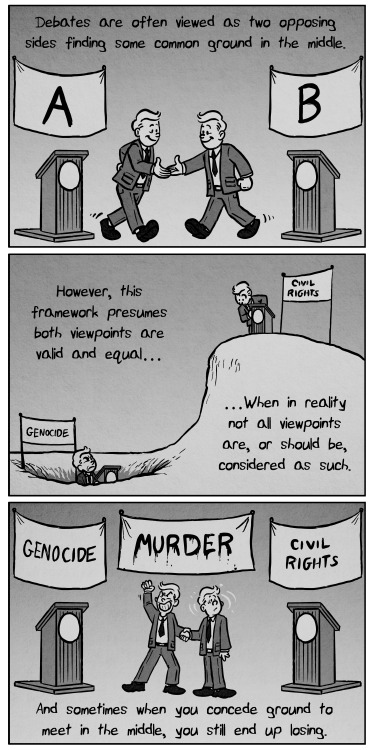
How I feel some days





How I hope to be to others


I heard someone say the best thing they could do is offer their hand to those in need of a hand to grab on to, give support to those in need, to be the person I need others to be sometimes for me. Hugs