
Tag: LGBTQ+
It’s In London-
(sigh- I love Twelfth Night. -A)
Ian McKellen Will Open All-Trans Production of Twelfth Night, Shakespeare’s Most Trans Play
Shakespeare really did get T4T friend groups tbh.
A trans theater company is staging a production of one of Shakespeare’s most beloved comedies this summer in London, and the play will receive an introduction from none other than Sir Ian McKellen.
Trans What You Will, which is dedicated to staging Shakespeare plays with trans and nonbinary performers, will produce a staged reading of Twelfth Night at The Space in London on July 25. In a post to Instagram, the theater company wrote that the “inherent queerness” of the play is “glaringly apparent to so many.” Like many of the Bard’s plays, Twelfth Night absolutely smacks of gender.
As Trans What You Will describes it, “you’ve got a lady disguised as a man, seducing another lady on behalf of a lord, but nothing goes to plan when the lady falls for the disguised lady, and the disguised lady falls for the lord!” More specifically, the play follows two twins, Viola and Sebastian, who are separated from each other in a shipwreck. Viola disguises herself as a man, Cesario, and enters into the service of Duke Orsino, who rules over the area. As Cesario, she also serves as wingman to Orsino, who’s in love with the Countess Olivia. But Olivia falls in love with “Cesario,” Viola falls in love with Orsino, and chaos ensues. (I mean, sounds like your average T4T friend group if you ask us.)
The theater company also announced McKellen as the production’s “special guest” on Wednesday. In a statement posted to Trans What You Will’s Instagram, McKellen called Twelfth Night “perhaps the funniest and most moving of Shakespeare’s plays.”
“This is achieved through the complexity of gender and sexuality from first to last,” he said, adding that he’s “really looking forward to the impact of this latest version of the play at The Space.” (snip-MORE)
Two More Histories From Wendy the Druid
(Both important stories. Of course, language alert, but definitely good reading here. -A)
Queer History 124: Virginia Woolf & Vita Sackville-West by Wendy🏳️⚧️🏳️🌈🌈
How an aristocratic garden-loving poet inspired the 20th century’s most experimental “love letter” ….. Read on Substack
When Virginia Woolf first met Vita Sackville-West at a dinner party in 1922, neither woman could have possibly predicted that their relationship would produce one of the most revolutionary novels of the 20th century. On the surface, they seemed like complete opposites: Virginia—brilliant, fragile, middle-class, and sexually timid; Vita—aristocratic, confident, adventurous, and sexually voracious. Yet their decade-long affair transcended a simple romance to become one of the most creatively fertile partnerships in literary history, producing a groundbreaking gender-bending masterpiece that still feels radical nearly a century later.
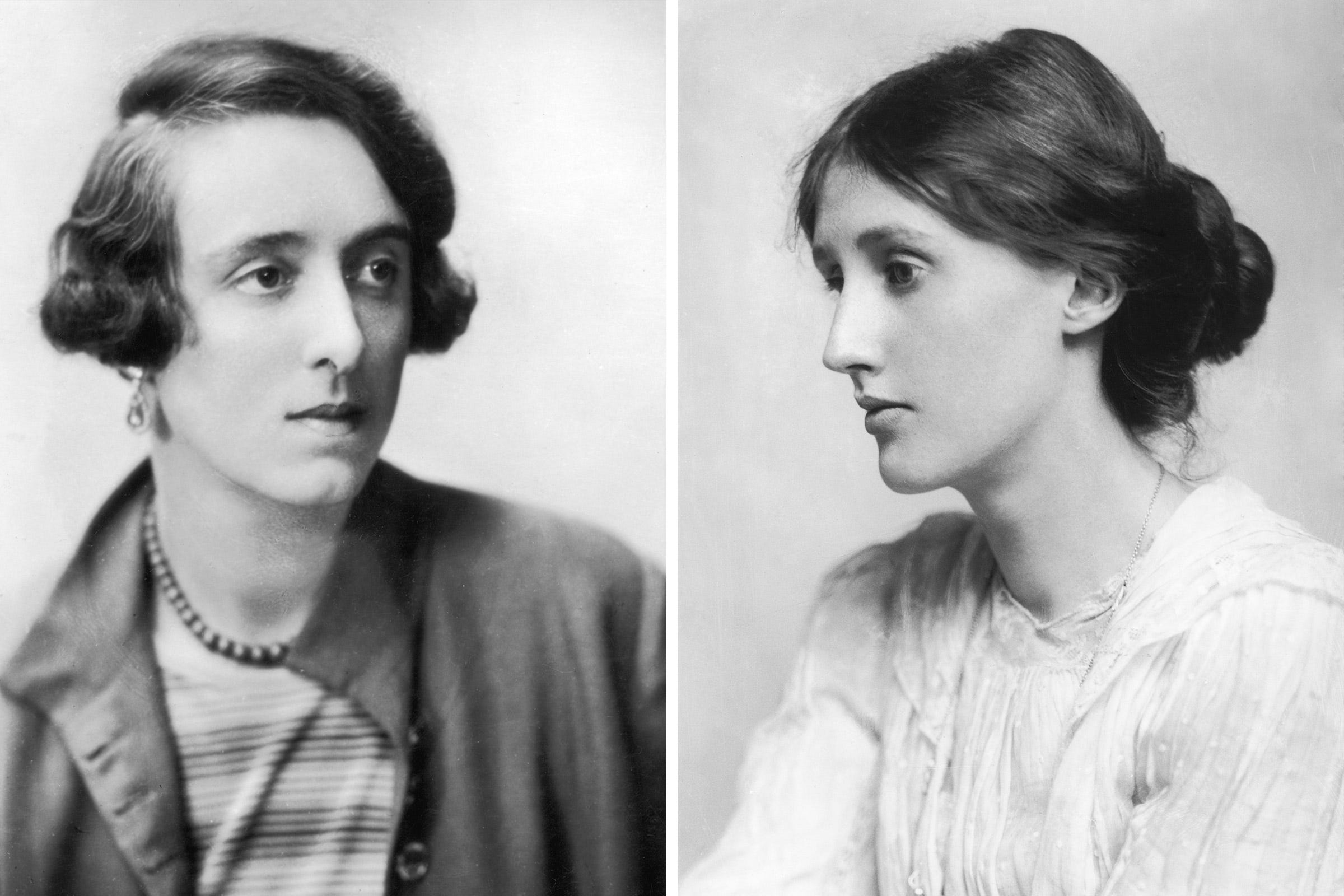
Let’s cut through the academic bullshit that often sanitizes their relationship and explore what really happened between these remarkable women. Their letters reveal a passionate connection that was intellectual, emotional, and unmistakably physical. “I am reduced to a thing that wants Virginia,” Vita wrote in one letter. Not exactly the chaste “friendship” that some literary historians tried to paint it as for decades. Their affair challenged the conventions of their time, their social circles, and ultimately, the very form of the novel itself.
The Women Behind the Legend: Who They Really Were
(snip-More; it’s really good!)
Queer History 125: The Raw, Unfiltered History of Sapphic and Platonic Queer Cultures by Wendy🏳️⚧️🏳️🌈🌈
Read on Substack
The Goddamn Poetry of Desire: An Introduction
The ancient world was no fucking stranger to same-sex love. While modern society often frames homosexuality as a contemporary phenomenon—something that emerged from the shadows of the closet into the damn light of day during the liberation movements of the 20th century—the historical record tells a far more complex and fascinating story. Long before we had Pride parades and marriage equality, we had Sappho of Lesbos and Plato of Athens, two figures whose works and philosophies have profoundly shaped how we understand same-sex desire.
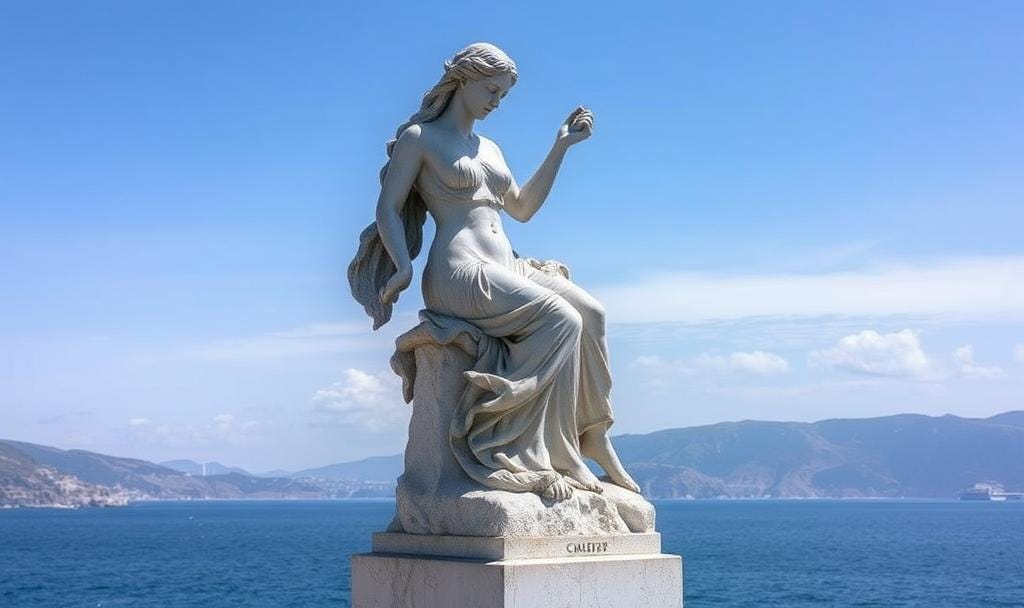
The rocky shores of Lesbos and the philosophical gardens of Athens—separated by the azure waters of the Aegean—gave birth to two distinct yet equally significant homosexual cultural traditions that continue to echo through the halls of queer history. These traditions, one centered on the passionate lyrical expressions of a woman poet, and the other on the philosophical musings of a male thinker, offer us a window into the complex ways same-sex desire was articulated, celebrated, and sometimes condemned in ancient Greek society.
Standing on the windswept cliffs of Lesbos, one can almost hear the lyrical whispers of Sappho’s poetry carried on the salt-laden breeze—fragments of desire that have survived over two and a half millennia. Meanwhile, in the once-bustling agora of Athens, the philosophical dialogues of Plato still reverberate, offering a theoretical framework for understanding male same-sex love that has influenced Western thought for centuries.
This analysis isn’t just about ancient history—it’s about the living, breathing legacy of these traditions and how they’ve been twisted, reimagined, and reclaimed through the bloody centuries. It’s about the raw power of words to shape how we understand our deepest desires and most intimate connections. It’s about the tension between poetic expression and philosophical reasoning in articulating the ineffable experiences of love and longing.
So let’s cut through the academic bullshit and get to the heart of the matter. Let’s explore the goddamn fascinating parallels and divergences between these two seminal traditions—one rooted in the fragmented verses of a woman whose very name has become synonymous with female homosexuality, and the other in the philosophical dialogues of a man whose ideas about love between men have shaped Western thought for millennia.
The Lyrical Fucking Fire: Sappho and Her Sacred Circle
On the sun-drenched isle of Lesbos, around 630-570 BCE, Sappho created a world of women that would reverberate through time like a pebble dropped in still water, its ripples still touching distant shores millennia later. The island’s rugged landscapes and azure waters formed the sensuous backdrop to her life and work—a physical paradise that mirrored the emotional and erotic paradise she created in her verses. (snip-More important history)
Options
I ran Harry Potter tours in Edinburgh – here’s why I’m stopping them for good
- May 28 Written by Fraser Horn

Fraser Horn is dropping Harry Potter tours from his roster (Dan Chiu-Lezeau)
The decision to drop Harry Potter tours in Edinburgh was not an easy one to make, but was necessary, says guide and Edinburgh Street Historians founder Fraser Horn, writing exclusively for PinkNews.
I was about 11 when I first got into Harry Potter, the kid looked a lot like me at the time.
My mum gave me a copy [of one of the books] and, like so many others, I felt the series captured the mood at the time: a sense of peril, mixed with optimism that the world could turn out OK if people stood up for what was right against what was wrong.
It was an instant classic of a kids book and that’s probably why so many millennials still hold such affection [for it] to this day. But we all grew after the series finished, some of us into decent people and others into cartoon villainy.
This is why today I’m announcing that following the success of the LGBTQ+ tour replacing Harry Potter, come July, the Harry Potter tour will not be coming back.
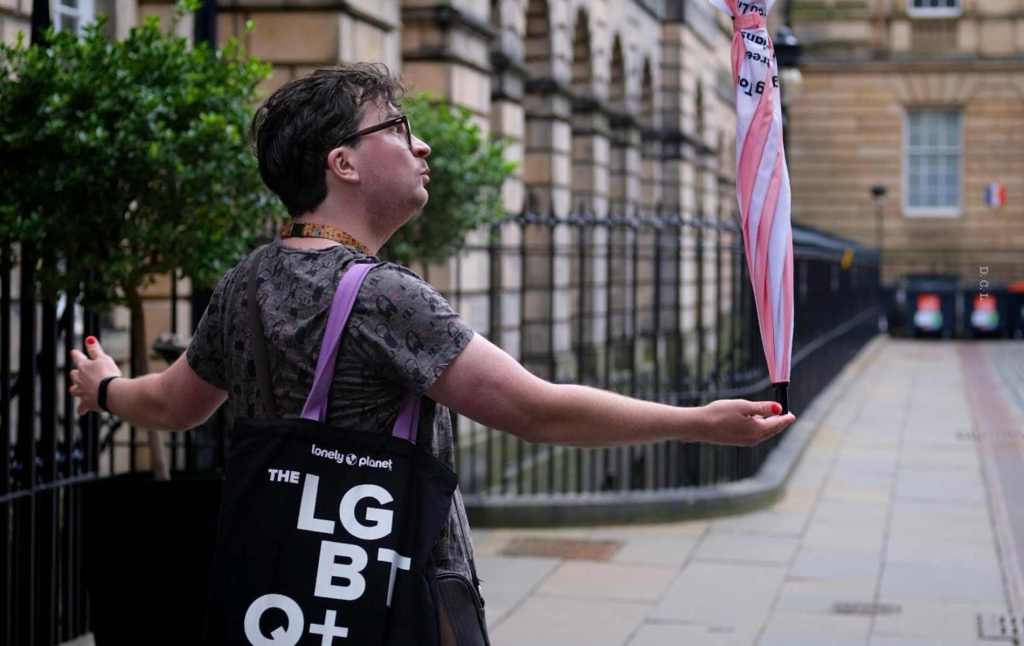
This decision was not made lightly. Although I wanted out of Potter ever since JK Rowling’s essay in 2020, the simple fact of the matter is that the story is so deeply ingrained in the Edinburgh tourism industry that it feels almost impossible to dislodge.
The connections between Edinburgh and Harry Potter very clearly involve Rowling, since it was [here] that the series was written. The films make demand stronger, bringing in a new audience, and repeat showings keep young people interested. With the new TV show, I expect Potter tourism to increase [here] and across the UK.
If any of those tourists are queer and want a tour that’s more important, they can book the LGBTQ+ one here.
I have been a guide since 2019 but went independent in February. Street Historians was a name that came from the idea that we would be like street magicians, but of history rather than magic. We’re fun, different and the best way to see Edinburgh, in my view.
The initial plan was to do a couple of tours – Edinburgh’s Old Town and Harry Potter – on a free/pay-what-you-want basis. I planned on doing this because I knew it worked. It was around March that I got in touch with LGBT Health and Wellbeing, a Scottish charity which focuses on supporting the health and wellbeing of LGBTQ+ adults. I wanted to discuss donating money from my Harry Potter profits to them but I also [said] I had offered an LGBTQ+ tour privately in the past.
They were particularly interested in the LGBTQ+ tour so I decided to run that every Friday at 6pm. It involves medical innovators, spies and [the] Aids [crisis], as well as how activists helped reshape society for the LGBTQ+ community. It is essential stuff.
I was motivated to drop Potter for Pride month because of the recent Supreme Court decision which will make our trans siblings unsafe. Rowling has confirmed she donated money to the organisation that advocated for the court decision and celebrated with a cigar picture on a boat, which made me want to drop Potter even more.
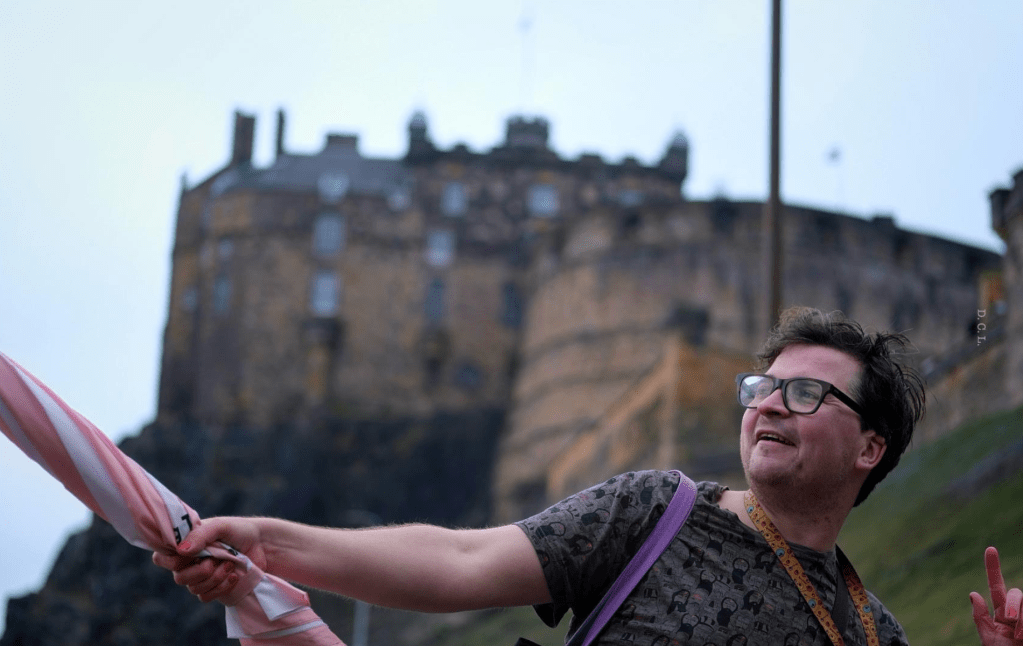
The response – both to the original LGBTQ tour and to replacing Potter with it – has been overwhelming.
People who have come on the LGBTQ+ tour love having an event which is a bit different from the standard fare, both in terms of walking tours and queer events. Guests have been making friends and these are the kind of life-long connections from which community is made. The decision to drop Potter for LGBTQ+ history has been a success and most have been positive about it.
However, some thought I was doing it for the wrong reason: rainbow capitalism, or purely to make money for Pride, before switching back to the Potter tours. It’s fair that the community might expect this sort of thing because as we’ve seen, companies change very quickly. A great example of this would be Barclays Bank, which has a very proud LGBTQ+ section. Then I read how they are banning trans people from using the toilets of their gender, based on the court ruling.
To reassure people, Potter will not be coming back to the Street Historians roster. We have been looking for more interesting stories to tell, for example on forgotten women.
Even with significant economic considerations, it seems necessary for me to drop Potter. The series may be a draw for other people but it is proving harder as time goes by to conjure up enthusiasm. Some may be upset, but I guess that’s the lesson I took from the sort of books I read growing up. We have to take a stand eventually or nothing will ever change.
Share your thoughts! Let us know in the comments below, and remember to keep the conversation respectful. (snip)
Some Memes.




A Bit Of A Sojo Article I Read Earlier
of interest here. OpinionPoliticsDemocracy, Voting, and Governance
The Church Can Offer Trans Refuge From Bad Theology and Bad Legislation
By Oisín Rowe
Snippet:
In the book The Great Open Dance: A Progressive Christian Theology, theologian Jon Paul Sydnor argues that even the apostle Paul calls for an allegorical reading of Genesis by citing his letter to the church in Galatia. In Galatians 4:21-31, Paul explains the significance of Sarah and Hagar. In verse 24, he tells his audience, “These things are being taken figuratively: the women represent two covenants.” If Paul didn’t read Genesis literally, then I think that permits Christians to interpret Genesis from a more open perspective when it comes to gender and sexuality.
I hold out hope that the Bible can be interpreted in such a way as to make room for me and other trans people. I grasp on to the idea that there is a Christianity out there that is safe and committed to fighting anti-trans legislation. Perhaps to my own harm, I even sometimes find myself hoping that fundamentalists and the Far Right can be persuaded. Persuaded to care, persuaded to see the shared humanity between themselves and transgender people, persuaded by their own good book to protect my community and change their ways. Though I know this is unlikely, I continue to cling to hope. As I am literally fed and cared for by a Christian community, I gain a better understanding of what faith looks like. Today, I am choosing to have faith in my identity as something beautiful and chosen, and good.
In Transgender, Intersex, and Biblical Interpretation, theologians Terese J. Hornsby and Deryn Guest write, “The trans body is not a minority exception to a two-gendered system; it is not an anomaly or a body that exists in the margins. The reality is that there are no margins.” This limitlessness, this abundance, is not only good theology, it is safety, it is belonging.

Janet Shares,
with a well-advised tissue alert.
Janet Brings Us Digby
Long-Weekend (US) Reads in LGBTQ+ History
I keep meaning to get them posted, then I don’t get it done. Here they are; readers can pick and choose, or read each one in your own time. Enjoy!
This one has 2: 120, and 120a! -A
Queer History 120: Sappho by Wendy🏳️⚧️🏳️🌈🌈
How a woman from ancient Lesbos changed literature and sexuality forever Read on Substack
Queer History 119: Dr Alan Hart, Trans Guy Super Power by Wendy🏳️⚧️🏳️🌈🌈
“What does it feel like to save countless lives while being forced to hide who you really are? To revolutionize medicine while living in constant fear of being “discovered”? To fight a deadly disease that ravaged millions while battling a society that treated your very existence as a fucking scandal?”
Read on Substack
Queer History 118: The Tragedy of Carmen Carrasco (1932) by Wendy🏳️⚧️🏳️🌈🌈
“In a Spain teetering between progress and persecution, one woman’s death exposed the brutal reality faced by those who dared to love differently.
The day they found Carmen Carrasco’s body, Madrid whispered.” Read on Substack
Queer History 117: The Boys of Boise Scandal by Wendy🏳️⚧️🏳️🌈🌈
“In 1955, the sleepy city of Boise, Idaho became ground zero for one of the most fucked-up anti-gay witch hunts in American history. What began as arrests of three men exploded into a moral panic that would rip families apart like wet paper, crush reputations under its boot, and drive some to blow their brains out—all under the bullshit guise of ‘protecting the children.'”
Read on Substack
Queer History 116: Natalie Clifford Barney by Wendy🏳️⚧️🏳️🌈🌈
How an American heiress built a lesbian literary empire in the heart of French culture while telling society to go fuck itself Read on Substack
Queer History 115: The Radical Queer Brotherhood in Walt Whitman’s Revolutionary Circle by Wendy🏳️⚧️🏳️🌈🌈
How America’s “Good Gray Poet” built a secret society of gay intellectuals that changed literature forever Read on Substack
 Scottie's Playtime