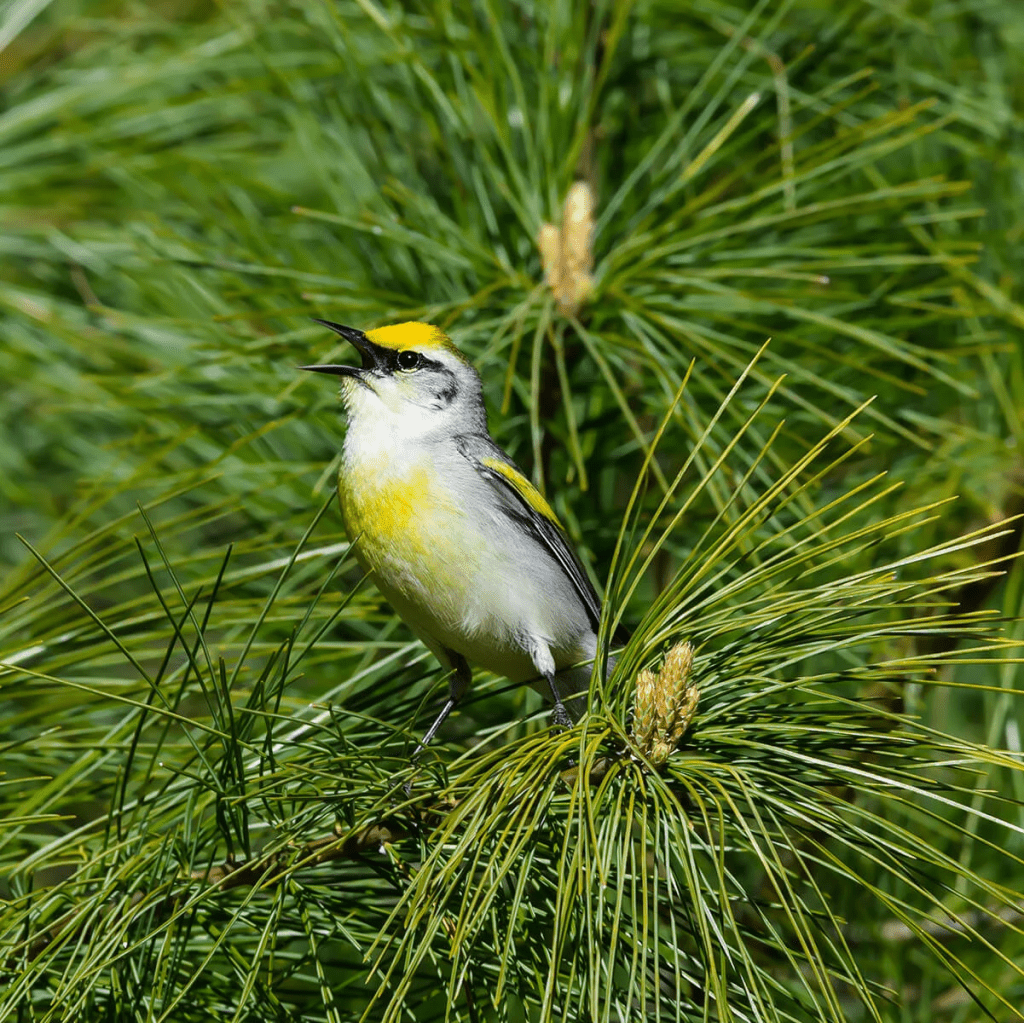
Two From The Birds

They just keep on keepin’ on!

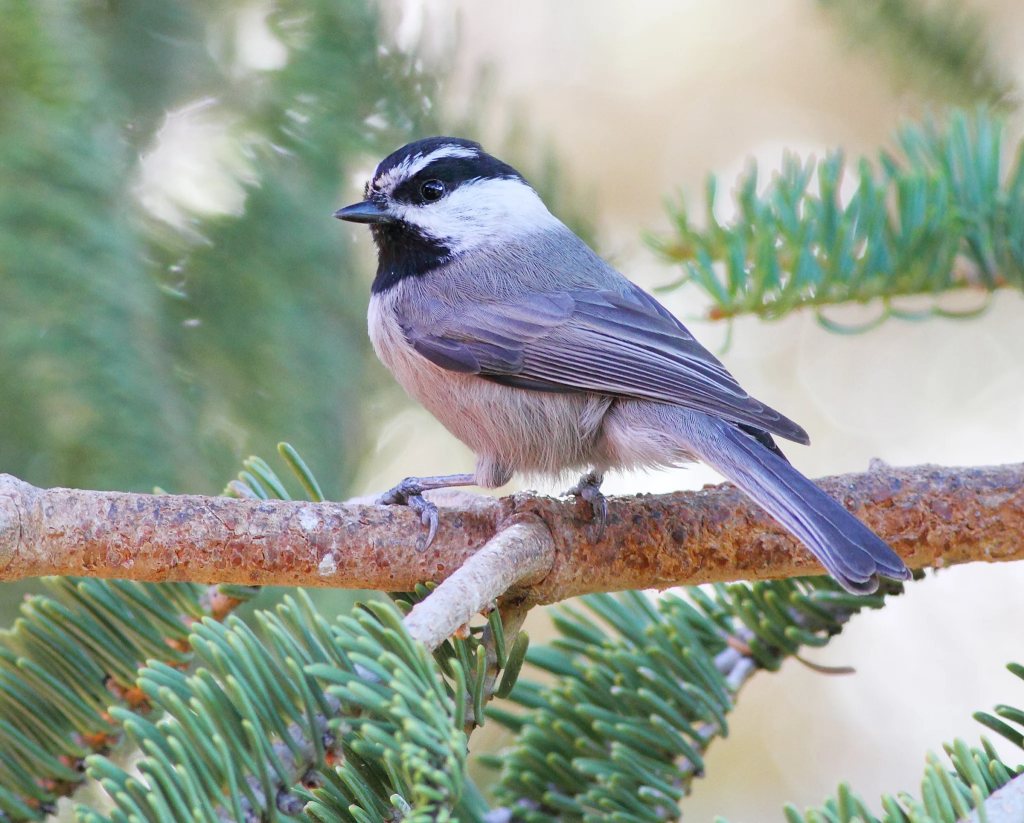
The Mountain Chickadee

Any season of the year, the Mountain Chickadee is a delight to encounter. In their breeding season, they form neighborhoods of adjacent territories in the conifer forests of western Canada and the U.S., which ring in the early spring dawn with dozens of cheerful whistled songs. In winter, groups of Mountain Chickadees are joined by other birds — nuthatches, woodpeckers, creepers, kinglets — to form large dispersed flocks that move together through the forest, following the chickadees’ namesake rallying call.

Mountain Chickadees are social birds, living in groups of up to three mated pairs and juveniles of the last breeding cycle for most of the year, only breaking off into territorial pairs for the breeding season. In fact, while we tend to think of the breeding season as the time when mates are chosen and territories are established, most of this actually occurs in the winter. This is when the social hierarchy is solidified between the individuals in a group, and come spring, the dominant birds will reliably take the best territories. While boundaries may shift somewhat, the same birds will usually hold the same territories year after year. Pair bonds are formed during the winter as well, and usually last for as long as both birds survive.

Mountain Chickadees are well-known for their caching behavior. To survive harsh mountain winters, these chickadees hide surplus food throughout their winter territories, a behavior known as “scatter hoarding.” A single chickadee may cache tens of thousands of food items — insects, conifer seeds, or goodies from bird feeders — over the course of a year. They may cache food any time they have extra, and may recover caches any time of the year, but spend the most time caching in the fall, and the most time eating from them in the winter. In fact, studies have shown that Mountain Chickadees living in harsher winter environments have better spatial memory and are more adept at remembering where they have cached food. Unsurprisingly, these birds also survive longer. (snip-MORE)
=====

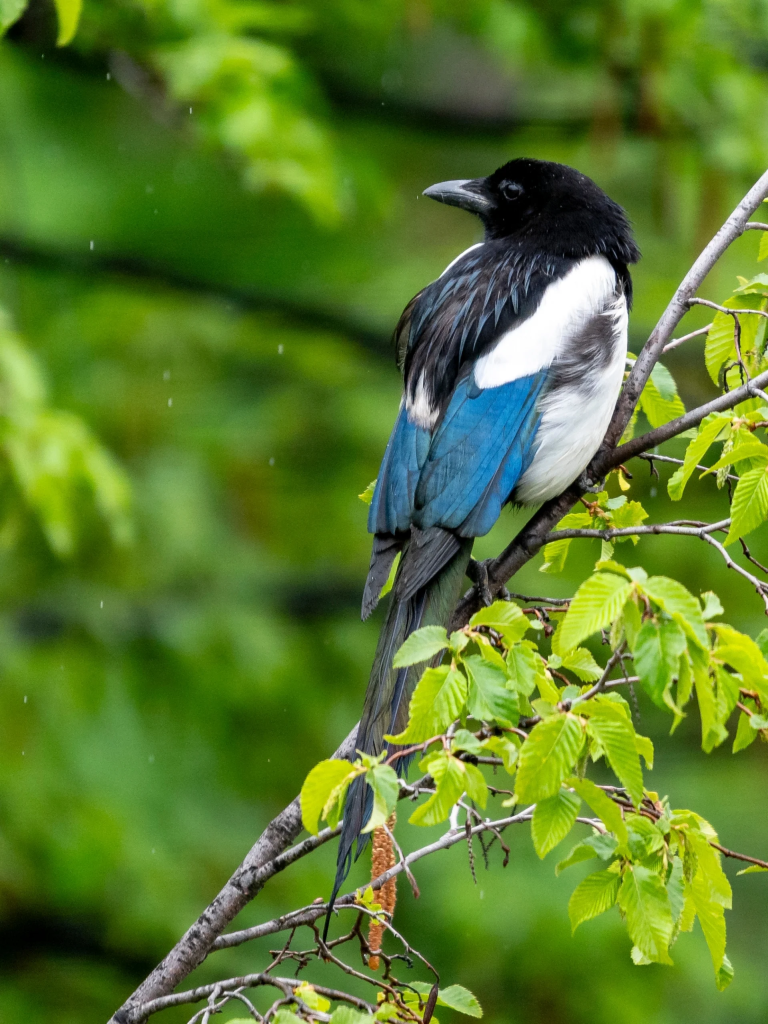
The Black-Billed Magpie

More than most, the Black-billed Magpie is a bird that inspires strong emotions in humans. A familiar species across much of the West, the Black-billed Magpie is intelligent, adaptable, and bold. For these attributes, they are both admired and loathed. While considered an annoyance or an inconvenience by some, they are also highly social and will occasionally leave “gifts” for humans who feed them.

Like many other intelligent and opportunistic corvids, magpies will take advantage of whatever resources they can. As such, the Black-billed Magpie is probably best known as a scavenger of garbage, carrion, and poorly guarded picnics. This has given these birds a bad reputation, with many regarding them as pests. A common folk belief is that magpies will wound cows to eat their flesh or drink their blood. Magpies will, in fact, stand on the backs of cows to probe and peck. However, the goal is typically not to eat the cow itself, but the parasites on the cow, such as ticks, that are doing just that. Cows are not the only beneficiaries of this behavior — magpies will eat ticks off of other large mammals, including bison, moose, elk, and deer.

The Black-billed Magpie holds a special place in mythology as well. Magpies are recognized as messengers in numerous Indigenous cultures of North America, sometimes to the aid of humans, sometimes to carry news to the Creator. One widespread story tells of how the magpie, for helping humans and birds alike, was given the honor of “wearing the rainbow” — a reference to the iridescent sheen on this bird’s wings and tail. (snip-MORE)

For Science & Beauty On Wednesday!

The Egg Nebula from the Hubble Telescope


Image Credit & Copyright: ESA/Hubble & NASAB. Balick (U. Washington)

Explanation: Ever wonder what it would look like to crack open the Sun? The Egg Nebula, a dying Sun-like star, can unscramble this question. Pictured is a combination of several visible and infrared images of the nebula (also known as RAFGL 2688 or CRL 2688) taken with the Hubble Space Telescope. The star has shed its outer layers, and a bright, hot core (or “yolk”) now illuminates the milky “egg white” shells of gas and dust surrounding the center. The central lobes and rings are structures of gas and dust recently ejected into space, with the dust being dense enough to block our view of the stellar core. Light beams emanate from that blocked core, escaping through holes carved in the older ejected material by newer, faster jets expelled from the star’s poles. Astronomers are still trying to figure out what causes the disks, lobes, and jets during this short (only a few thousand years!) phase of the star’s evolution, making this an egg-cellent image to study!

Tomorrow’s picture: spiral webb

Happy Valentine’s From The Birds

Hear the song, get more facts, on the page! (Title below is the link.)

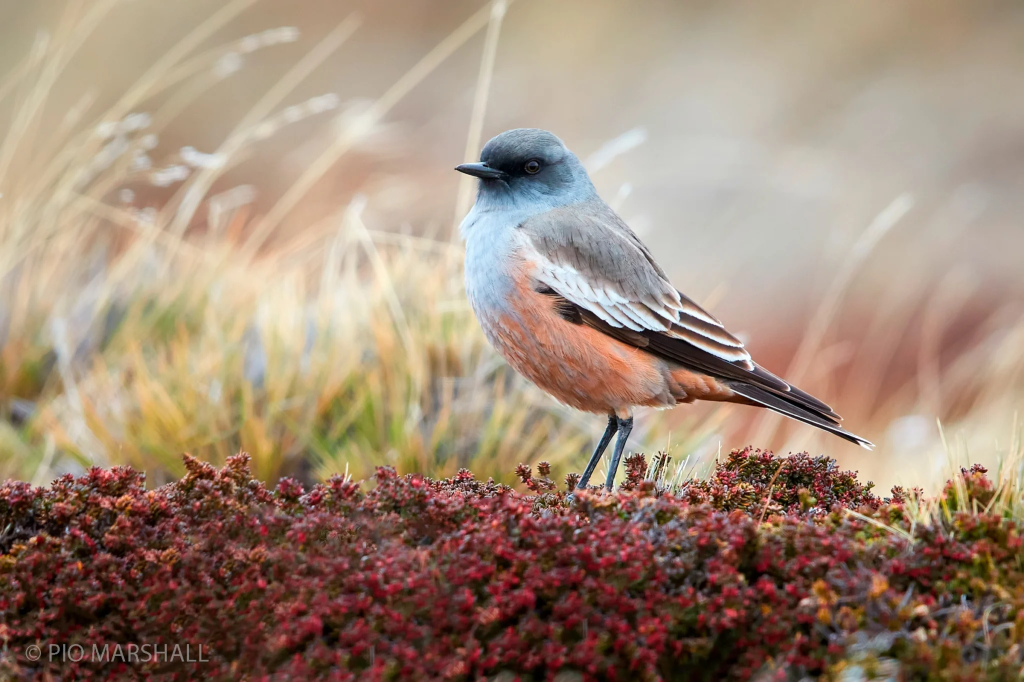
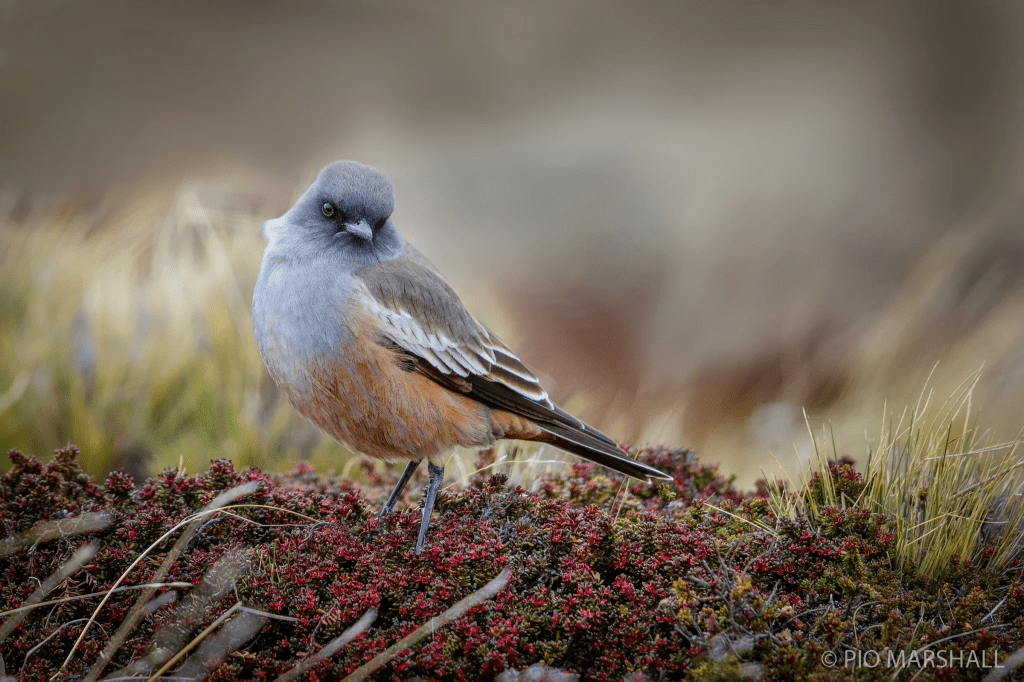
Chocolate-vented Tyrant

A handsome bird of open landscapes, the Chocolate-vented Tyrant is an unusual species to be included among the so-called “flycatchers.” Inhabiting flat grassland and scrub, this bird is primarily a ground-dweller, rarely seen higher than a fencepost or tussock. Furthermore, this flycatcher is not one to catch insects on the wing (to “fly-catch” in ornithology lingo), preferring instead to hunt its prey on the ground. In keeping with this terrestrial lifestyle, the Chocolate-vented Tyrant has notably long legs and is more likely to run or walk than to hop or fly. In combination with its large size and rusty belly, the tyrant’s appearance and behavior are reminiscent of birds in the thrush family, such as the American Robin.

The Chocolate-vented Tyrant breeds in the cold, dry, and infamously windy Patagonian Steppe, also known as the Patagonian Desert. In an environment largely devoid of trees, this bird takes advantage of the open sky to perform an expansive aerial display, similar to other birds like the Red Knot and American Woodcock that use flat, open habitat in the breeding season. The Chocolate-vented Tyrant is also known to forage alongside wintering shorebirds — yet another habit unusual for its family, but typical of others, like the groups of sandpipers and plovers it sometimes joins.

Threats

Birds around the world are declining, and many of them, including the Chocolate-vented Tyrant, are facing urgent threats. Throughout the tyrant’s range in South America, livestock grazing, agricultural expansion, and invasive species all hinder this bird’s ability to thrive. Furthermore, sparse protected areas may be insufficient to support the species, particularly on its nonbreeding grounds in the Pampas, the vast grasslands region east of the Andes.

Habitat Loss

The Chocolate-vented Tyrant is losing habitat in both its breeding and nonbreeding ranges. On the Patagonian Steppe, where this species breeds, overgrazing by sheep disrupts the limited vegetation afforded by a dry climate, resulting in erosion and eventually desertification. The Pampas faces similar threats from overgrazing by cattle, as well as the clearing of native habitat in favor of agriculture.

Habitat Loss

(snip)

Conservation Strategies & Projects

The Chocolate-vented Tyrant is a habitat specialist, making it particularly vulnerable to threats like habitat loss and degradation. In addition to protecting habitat through our network of reserves, ABC also works to reduce the threat of invasive species and restore habitat. At ABC, we’re inspired by the wonder of birds and driven by our responsibility to find solutions to meet their greatest challenges. With science as our foundation, and with inclusion and partnership at the heart of all we do, we take bold action for birds across the Americas.

Creating & Maintaining Reserves

Habitat is the foundation for birds’ survival. Working with dozens of partners and local communities throughout Latin America, ABC supports a growing network of protected areas in more than a dozen countries. Totaling more than 1.3 million acres, nearly one-third of the world’s birdlife (more than 3,000 species) is protected by an ABC-supported reserve.

(snip-MORE)

In Regard To Scottie’s Search:

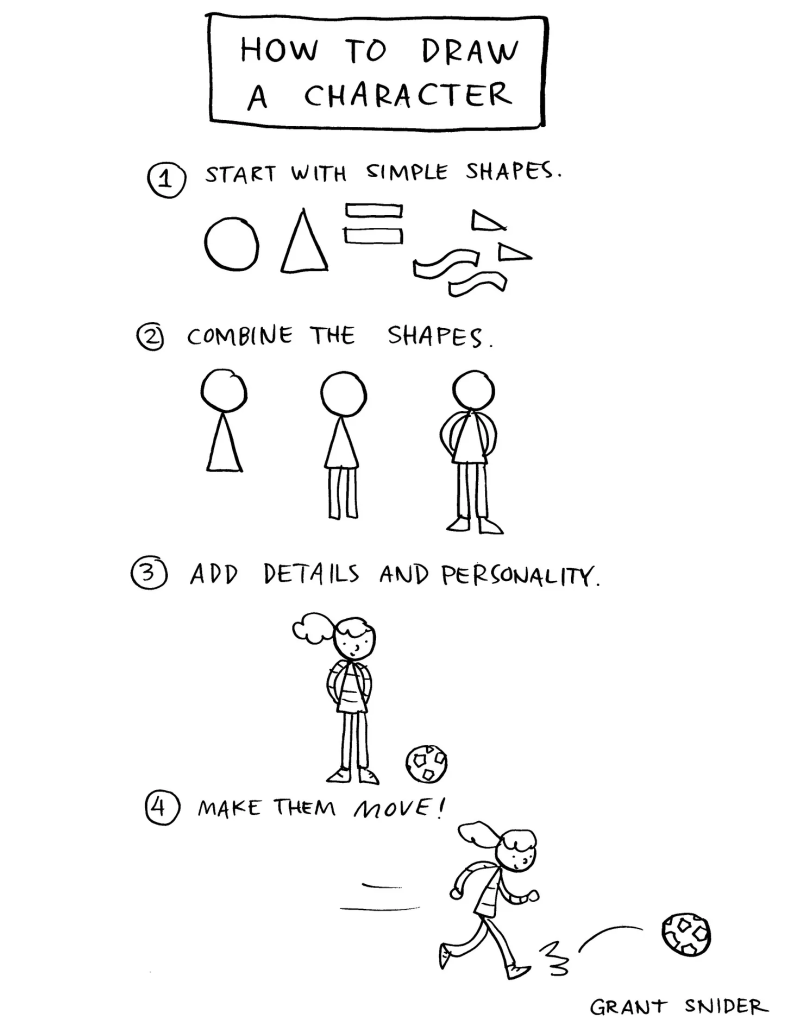
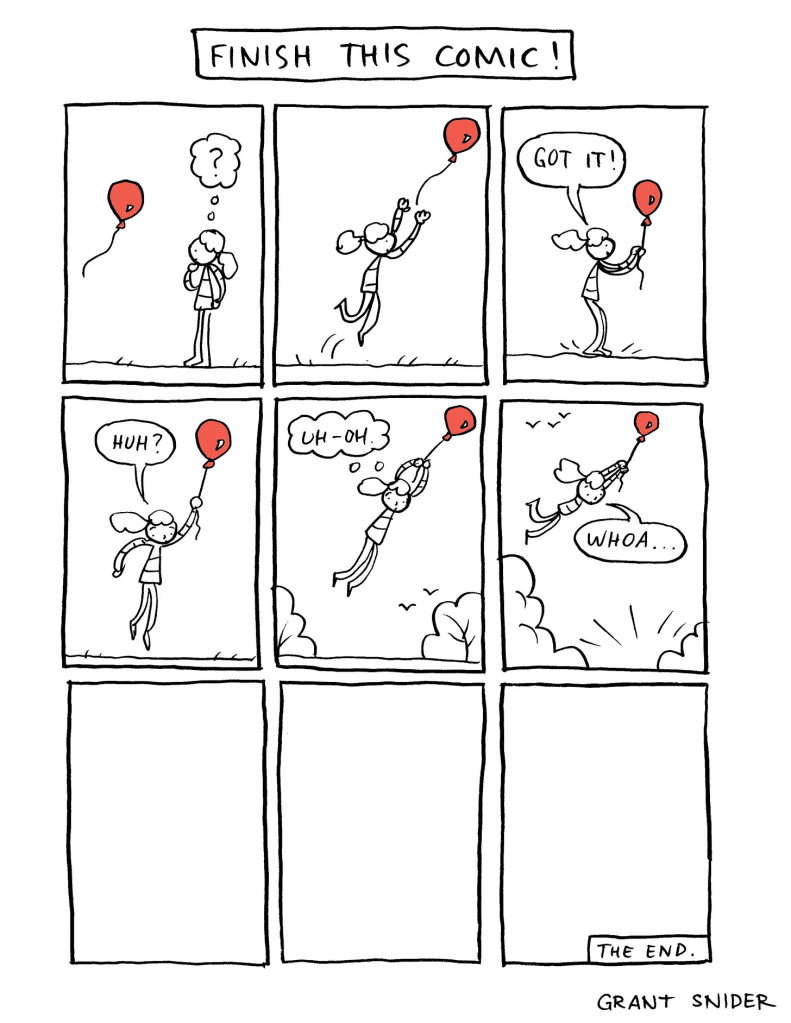
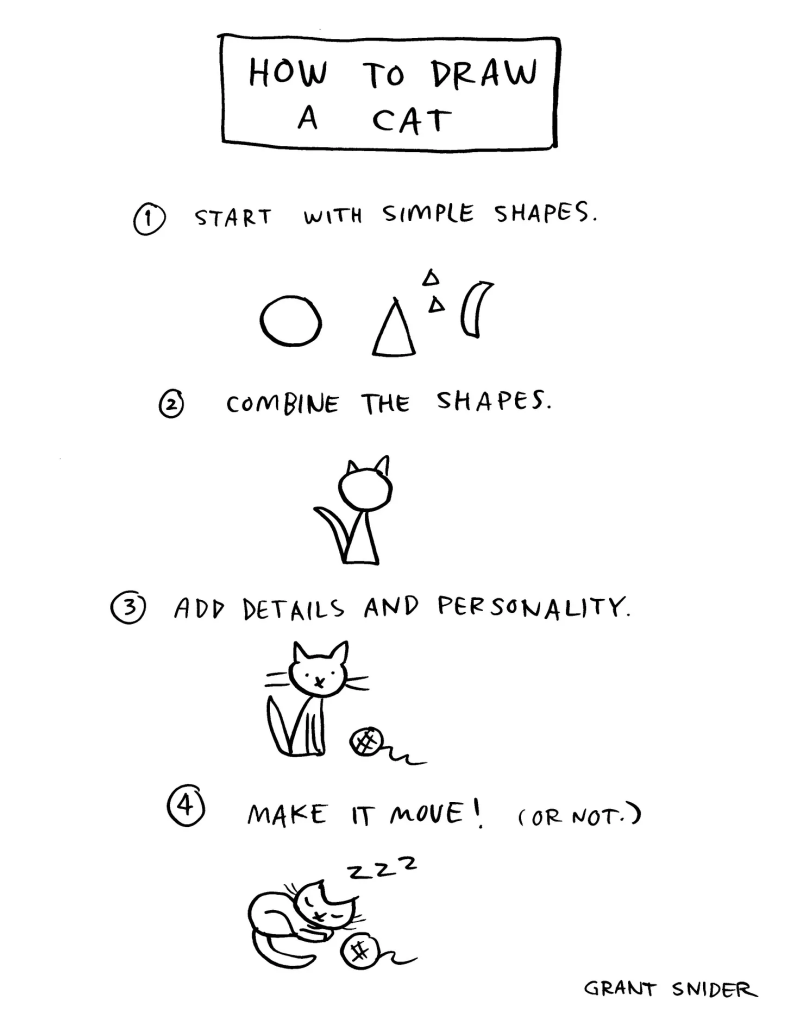
c’mon, everyone, Scottie can draw that toon! Cheer him on, and join him-draw one of your own! 🧑‍🎨

Make Your Own Comics

Exercises for the Classroom

Grant Snider

1. Start with a character

Will your character be an avatar of yourself? A plucky young heroine? A grizzled space pirate? A robot with feelings? Design your character with simple shapes that can easily be repeated from panel to panel. Put them in different poses, draw them far away and up close, from various views. Once the character starts moving on their own, you have the start of a story.

2. Journey from panel to panel

Draw the action from left to right, top to bottom across the page. The space between panels is called the gutter. In the gutter, time passes. This amount of time can be a millisecond (a character blinks) or an eon (a star collapses). Use small changes in expression and pose to show what the character is thinking and feeling. Add thought balloons and text bubbles for dialogue.

3. Create new characters

Make each character distinct in shape and personality. Let their form dictate their behavior and action. How do they complement or oppose the main character? What new direction can they take the story?

4. How does it end?

(Snip-this is a pretty long post with the art, so I’m snipping here. I wanted to leave the art big enough to be seen fairly clearly. We will know how our own toons end! Also, though I don’t recall thinking about it when I found this substack, no doubt there was subconscious inspiration from Michael Seidel’s blog. I read it over lunch.)

Stuff I Saw During My Jogs

Friday and Saturday. Enjoy while taking a break from the big game, or just enjoy whenever!

===

http://youtube.com/post/UgkxYHx582PD9x35cjaAklWR1b99_pZOTHRm?si=eq76y1PWoI8ySXkx
WeRateDogs
1 day ago Javier, our CEO, wanted to check in with everybody. He hopes you’re doing alright. If not, you’re welcome to take a few deep breaths with him and think of something you’re looking forward to. Javi is looking forward to the Bad Bunny halftime show ❤️

http://youtube.com/post/UgkxIK9nsJmpxmiip5xhUxcnR-XGOkU2NcCX?si=atK_jV3EhVi8dcPO

Randy Rainbow6 days ago Punxsutawney Phil saw his shadow, predicting new videos coming this month… 💌🎶💖

http://youtube.com/post/UgkxmbD6u_T-UhBr1nwyqHjmqIWfPeVpavN2?si=Mymur9qFx0pA_6W6

http://youtube.com/post/UgkxpQ37vRwpotd2SoNyrV2HG4KLmx9EEQ0-?si=q8RF6NfuiNw0t99K

===

Dance Party!

And a simple quote:

“Dogs smell time. The past is underfoot; the odors of yesterday have come to rest on the ground.”

Alexandra Horowitz

An Especially Good One From The Bloggess

It’s okay to make due with what you have

Jenny Lawson (thebloggess) Jan 26, 2026

Hell, friend.

That was supposed to say “Hello, friend” but I fucked it up and I’m leaving it because it feels equally fitting. Maybe you, like me, are in the darkness right now and are just trying to get by until the light comes back. It will. I promise. Between the weather, tricksy brains and (motions wildly to everything) all of the traumatic bullshit going on in the world right now, your body is just acting the way it probably should and you need to take care of it and be gentle to yourself.

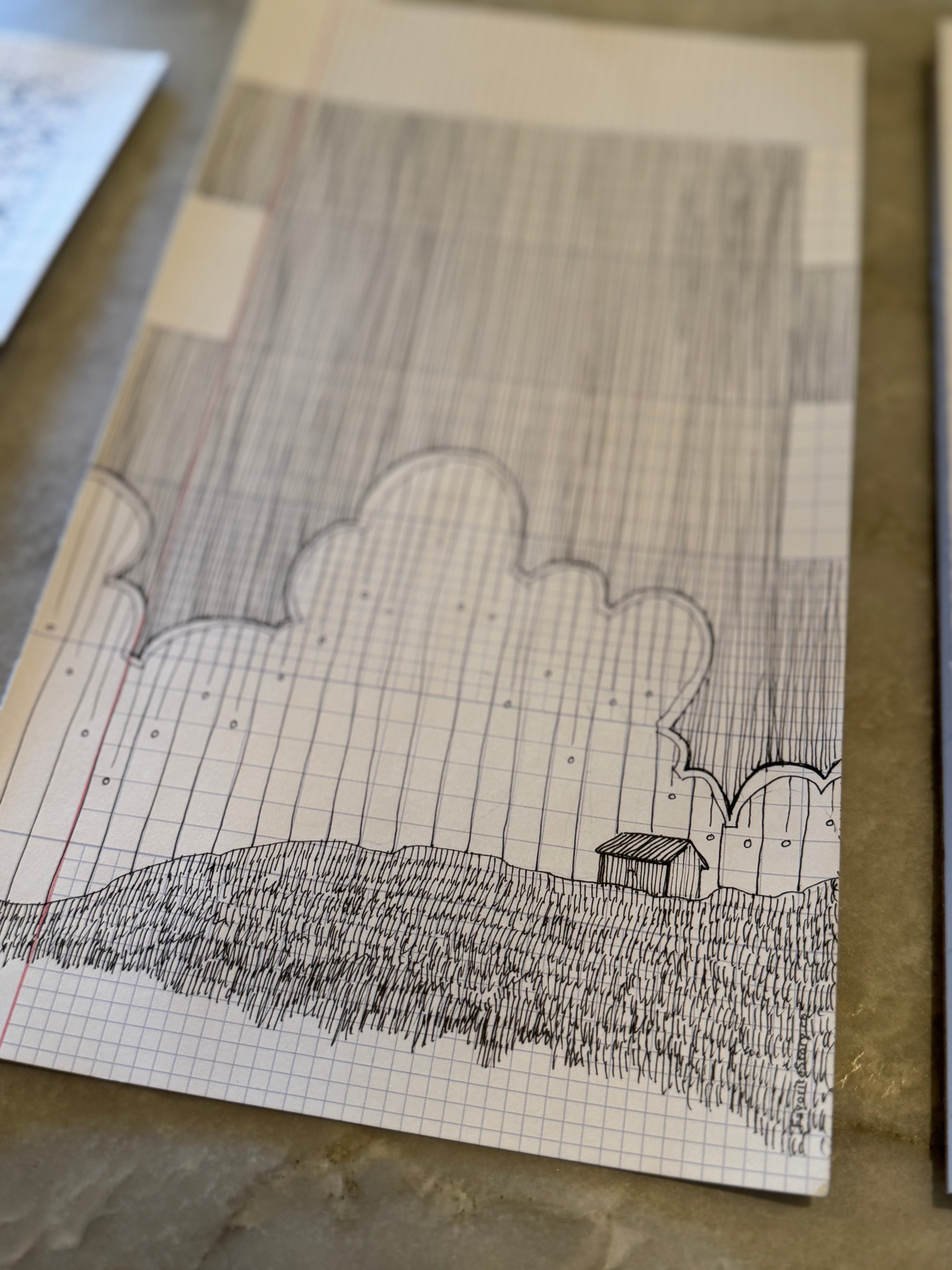
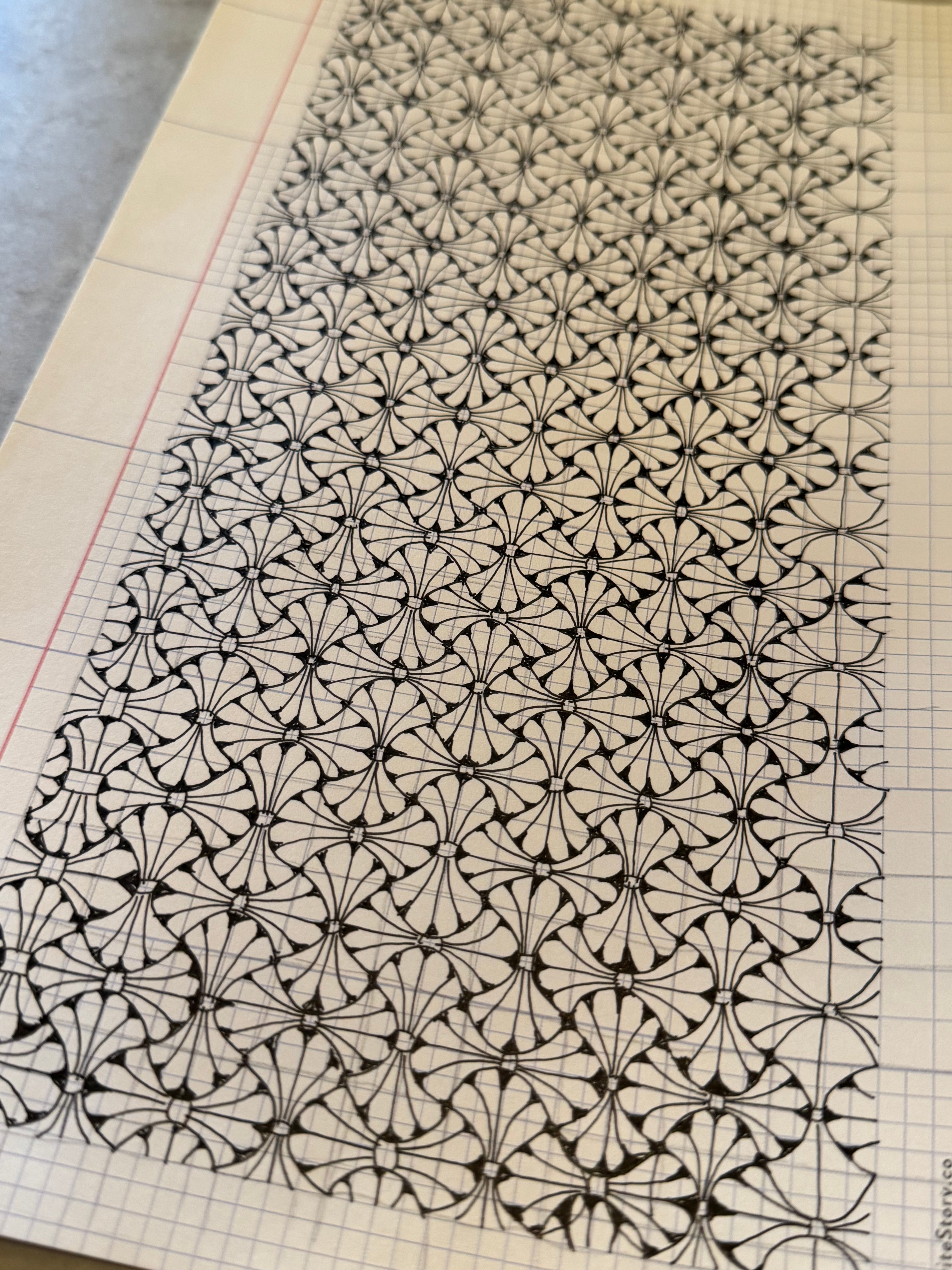
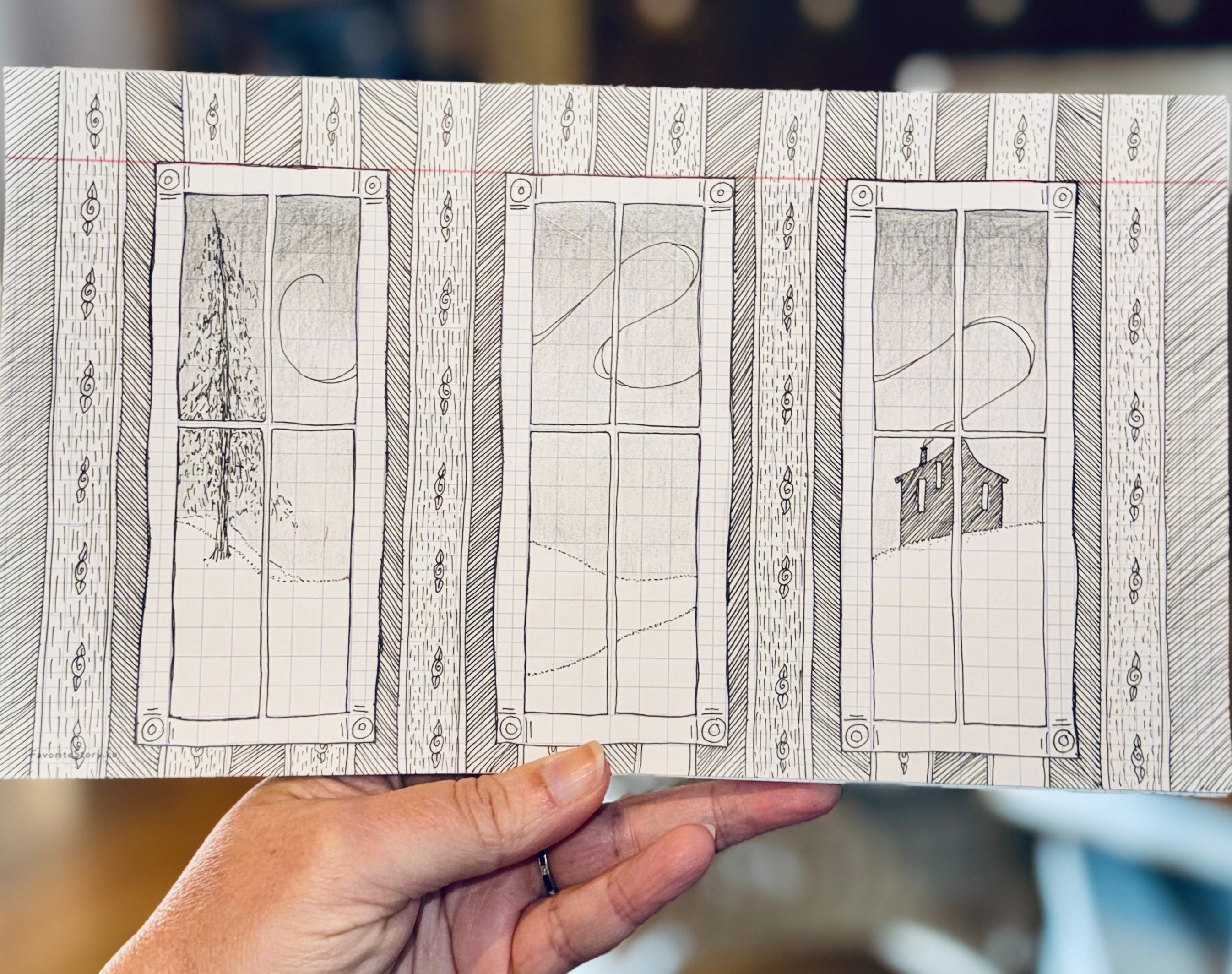
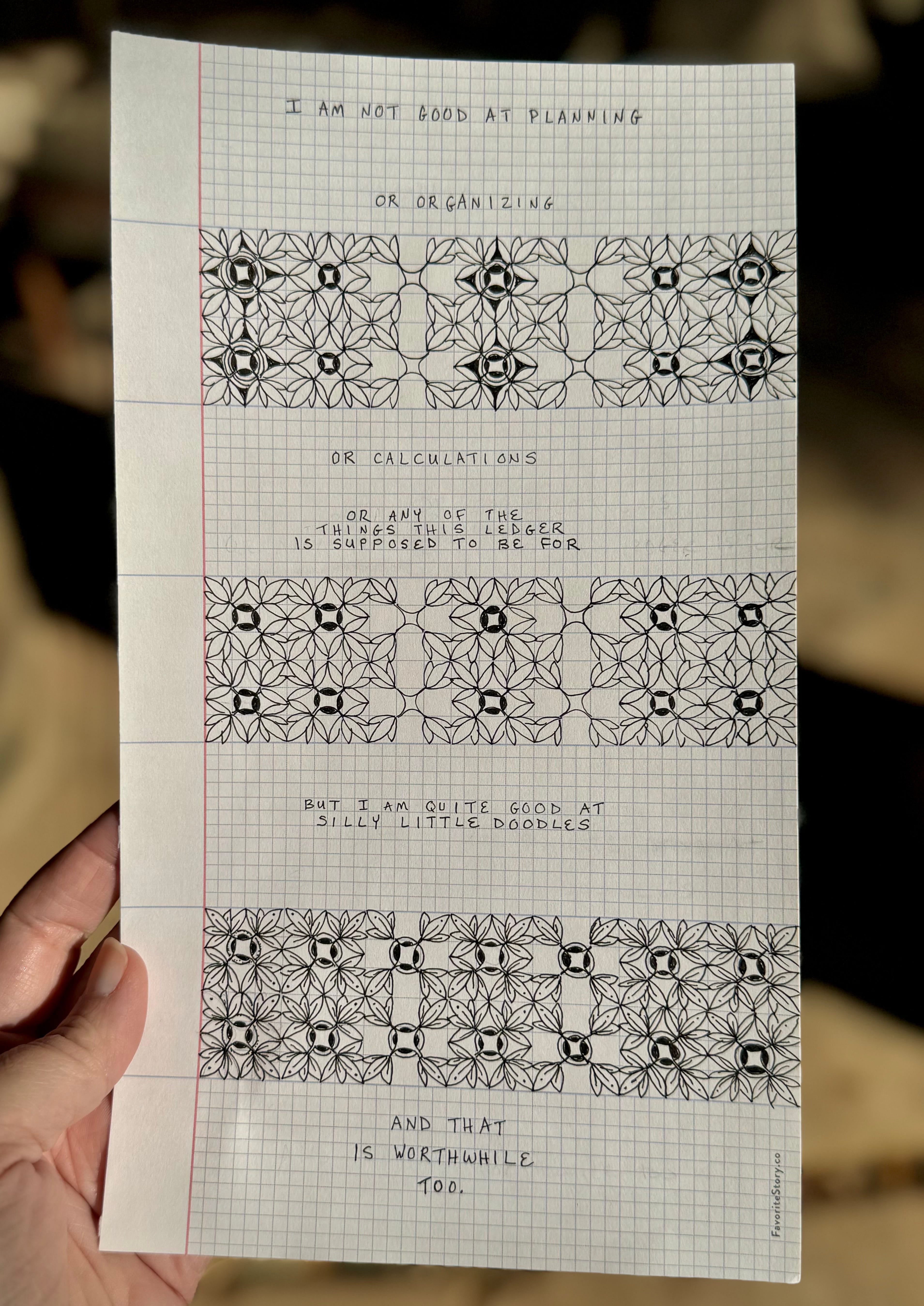
This week I was planning on getting organized but then a depression hit me and I found myself staring at the blank gridded planner I’d bought because SURELY THIS ONE WILL FIX ME but then it didn’t fix me and so instead of outlining all of the stuff I’m behind on I instead screamed into the internet for bit, donated to several important causes, amplified what I could and then I turned off my phone and found myself doodling on the planner because my brain was just not going to be able to work the way I needed it to.

Each line counted off a moment. A sort of meditation.

I didn’t even have the bandwidth to find my sketch book so I just kept drawing, using the strange grids to find my way, and knowing each mindless pattern would get me closer to the other side, when I’d have the energy to be human again.

Dorothy Barker helped.

I’m using the word “helped” lightly.

And each doodle got me through a bad hour.

The terrible messy ones I drew when my hands shook from anger or anxiety.

And the calmer ones I drew in the quiet, small hours of the night when I needed to remember that there is peace and light out there even if we can’t always see it.

I drew and drew and dropped each picture onto the floor where the cats could lay on them and contemplate why I still wasn’t in bed yet.

And as of today I have not gotten anything organized at all and my planner is a mess of pointless drawings. Except (I remind myself) they’re not pointless at all, if you look at them with the right eyes.

“I am not good at planning. Or organizing. Or calculations. Or any of the things this ledger is supposed to be for. But I am quite good at silly little doodles. And that is worthwhile too.”

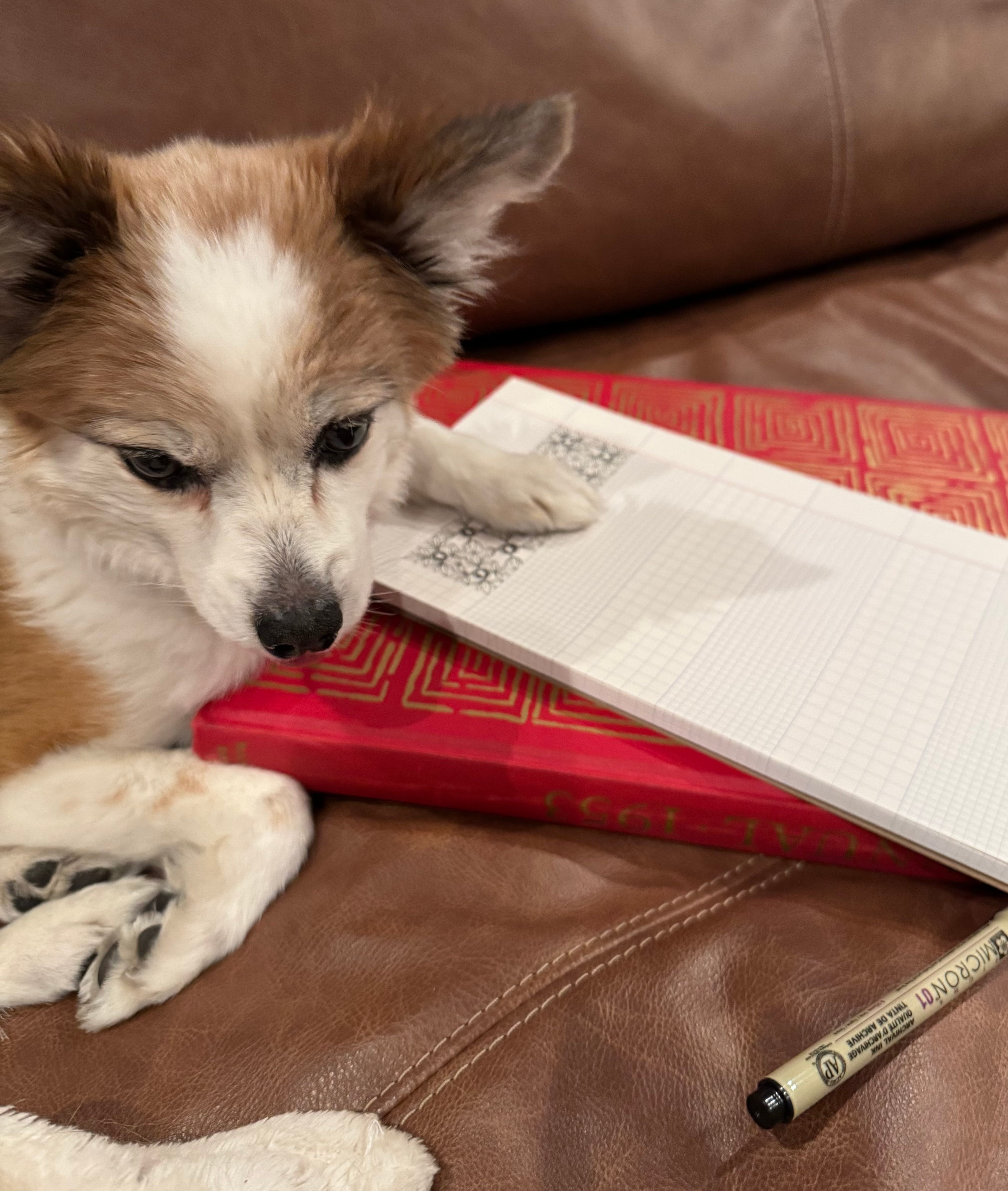
So this is just my little reminder to you…find joy…create…don’t be afraid to use a ledger as an easel or a dog as a paperweight or this letter as a hug. It’s okay if all you are doing right now is surviving. That is sometimes one of the hardest things you will do.

Keep going.

It will get better.

Yours,

Jenny

Extra Josh Johnson

I caught this on TV the other day while I did a jog. It’s great, not very long.

So What’s Everyone Reading These Days?

When not finding dependable news, and all the other things that make up your days? I just finished Judy Blume’s “Smart Women,” and am now reading a Courtney Milan M/M romance set during the US’s very early days; the protagonists are a white British absconder, and a freed Black US soldier, and they’re making their way to Rhode Island to the Black soldier’s family who they hope will be safe at home. I’m not very far into it, but they’ve self-acknowledged that they’re having feelings for each other, and had tacitly acknowledged they know, to each other. Tonight over supper, I will read on. It’s got a lot of humor, from the British guy.

OK, so I ran across this list from The Root, and thought a snippet could be of interest here I’m also leaving in the related-or-not links because those stories are also of interest. Enjoy!

January 2026 Books By Black Authors You Need To Read

From a Kenan Thompson picture book to a memoir from the CEO of The Honey Pot, the first month of 2026 is full of great Black books for lovers of every genre.

By Angela Johnson Published January 10, 2026

new year is here, and if one of your resolutions is to cut down on your screen time, you’re in luck…because with a new year comes great new books by Black authors for every kind of reader, so make room on your bookshelf!

Suggested Reading

Why the Tragic Shooting of Keith Porter Jr. by ICE Is Not the Same as Renee Good in Minneapolis

New Footage Shows Ice Agent’s View During Fatal Minneapolis Shooting, From George Floyd to Renee Good: Minneapolis Faces New Trauma After Shooting, Zohran Mamdani and Brandon Johnson React to Deadly ICE Shooting, Why ICE Agent Killing a White Woman Could Actually Make a Difference, Jasmine Crockett Calls Out Republicans in Emotional Response to Renee Good, Tim Walz Warns Minnesota Residents of Martial Law and Everything We Know About the Dec. 7 Tragedy

January 2026 Books By Black Authors You Need To Read

Samuel L. Jackson, John David and Malcolm Washington on ‘The Piano Lesson,’ Family and Legacy

SNL star Kenan Thompson’s hilarious picture book, The Honey Pot CEO Beatrice Dixon’s story of her road to success and Dr. LaNail R. Plummer’s guide to counseling Black women are just a few of the books by Black authors we can’t wait to read this month.

“Unfunny Bunny” by Kenan Thompson with Bryan Tucker (Jan. 13)

SNL star Kenan Thompson can add children’s book author to his already amazing resume. “Unfunny Bunny” is a picture book that centers around Bunny, who wants to be the funniest kid in his class, but worries when his jokes don’t land with his classmates.

“With Love, From Harlem” by ReShonda Tate (Jan. 27)

Amazon.com

Set in Harlem in 1943, ReShonda Tate’s novel, “With Love, From Harlem,” is inspired by the life of jazz performer Hazel Scott and her relationship with pastor-politician Adam Clayton Powell Jr. and how they balance their relationship with their personal ambitions.

You’ll love the references to Harlem legends, like Billie Holiday, Langston Hughes and James Baldwin.

“The Soul Instinct” by Beatrice Dixon (Jan. 27)

Amazon.com

“The Soul Instinct” is an inspiring memoir from The Honey Pot CEO Beatrice Dixon. In the book, she writes about a dream of her grandmother that led her on a journey to create a successful line of feminine care products now available in more than 30,000 stores across the United States, and how she had to learn to trust herself along the way.

“Sweet, Sweet Memory” by Jaqueline Woodson (Jan. 20)

Amazon.com

“Sweet, Sweet Memory” is a beautiful children’s book by Jaqueline Woodson about a young girl who learns about the power of community and our connection to our ancestors after the death of her beloved grandfather.

“Behind These Four Walls” by Yasmin Angoe (Jan. 1)

Amazon.com

“Behind These Four Walls” is a thrilling new novel from Yasmin Angoe. At the center of the story is Isla Thorne, who met her best friend, Eden Galloway, while the two were growing up in a group home. The two planned to run away to Los Angeles when they turned 16, but Eden never made it. Now, ten years later, Isla is determined to solve the mystery of her friend’s disappearance.

“The Book of Alice: Poems” by Diamond Forde (Jan. 20)

Amazon.com

Winner of the 2025 James Laughlin Award from The Academy of American Poets, “The Book of Alice” is a collection of poetry inspired by the life of Diamond Forde’s grandmother Alice, who found her way to New York City during the Great Migration. Using stories from the King James Bible, Forde draws parallels to the Black experience.

“Black Founder: The Hidden Power of Being an Outsider” by Stacy Spikes (Jan. 24)

Amazon.com

In “Black Founder,” MoviePass co-founder Stacy Spikes writes about his journey to becoming a successful tech entrepreneur and how he found power in his position as an outsider to fuel his success and disrupt the status quo.

“Fire Sword and Sea” by Vanessa Riley (Jan. 13)

Amazon.com

“Fire Sword and Sea.” is a page-turner based on the story of real-life female pirate Jacquotte Delahay, Set in 1675, Delahay is the mixed-race daughter of a wealthy tavern owner on Tortuga who hides her identity for the chance to explore life at sea.

“A High Price For Freedom” by Clyde W. Ford (Jan. 13)

Amazon.com

“A High Price For Freedom” is a new book by historian Clyde W. Ford. In the book, Ford explores some of the most fascinating moments in Black history and sheds new light on the stories we thought we knew.

“Just Right” by Torrey Maldonado (Jan. 20)

Amazon.com

“Just Right” is the first picture book by well-known middle grade author Torrey Maldonado. The story, which deals with the special relationship between a little boy and his uncle, emphasizes the power of positive adult role models.

“Getting to Reparations: How Building a Different America Requires a Reckoning with Our Past” by Dorothy A. Brown (Jan. 20)

Amazon.com

“Getting to Reparations” is a new book by Dorothy A. Brown, which explores the idea of reparations for Black Americans through the lens of other communities that have been compensated by the government for past wrongs throughout history.

“The Essential Guide for Counseling Black Women” by Dr. LaNail R. Plummer (Jan. 27)

Amazon.com

In “The Essential Guide for Counseling Black Women,” mental health expert Dr. LaNail R. Plummer shares a guide on how mental health professionals can best support Black women on their healing journey.

“The Ex Dilemma” by Elle Wright (Jan. 27)

Amazon.com

“The Ex Dilemma” is a fun romantic novel that tells the story of nepo baby Wesley Batchelor, whose dating life is put on blast by a mysterious social media influencer. Things get even more complicated when a private investigator, who just so happens to be Wesley’s ex, is hired to find out who is working against him. (snip)

Josh Day Next Day

Food reviews, other interesting bits from Australian travel Josh took. Of course protect your screen and keyboard in prep for those little unexpected reactions/remarks he makes while telling a story!

“Chickadee Warbler”

Golden-winged Warbler

About

Tiny, nimble, and sporting a bold black mask and “bib” under its bill, the Golden-winged Warbler might be mistaken for a Black-capped Chickadee at first glance. But it’s the long, thin bill and the splashes of vivid golden-yellow on its crown and wings that distinguish this long-distance migratory warbler.

Though they are denizens of shrubby, early successional habitats (areas that are in the early stages of regenerating following a disturbance, such as a fire or a clearcut) in the nesting season, Golden-winged Warblers and their recently fledged young relocate to nearby mature forests that provide adequate cover for fledglings from predators. The loss of quality brushy, young forest habitat across much of its breeding range has contributed to sharp declines in an already uncommon warbler.

Another threat comes from a close relative, the Blue-winged Warbler, which shares more than 99 percent of its genetic material with the Golden-winged Warbler. The two species regularly hybridize, and the once-uncommon Blue-winged Warbler has surged northward into the Golden-winged’s range. The Golden-winged Warbler has become much scarcer and is at risk of being genetically “swamped” by its more numerous and widespread relative where their ranges meet.

To gain a foothold and begin to recover from the loss of more than 60 percent of its population, the Golden-winged Warbler needs active habitat conservation throughout its annual life cycle, from the shrubby, early successional habitats where it nests to the open forests of Latin America and the Caribbean, where it spends its nonbreeding season.

Threats

Birds around the world are facing threats, and many species are declining. The Golden-winged Warbler has experienced a drop in its population of more than 60 percent, including a loss of nearly all of its population in the Appalachians. In addition to competition and hybridization with the Blue-winged Warbler, the Golden-winged Warbler faces challenges throughout its full annual cycle from habitat loss and degradation, and collisions. (snip-More on the page, including the songs)

https://abcbirds.org/birds/golden-winged-warbler/