The Universe

The Observable Universe
Illustration Credit & LicenceWikipediaPablo Carlos Budassi

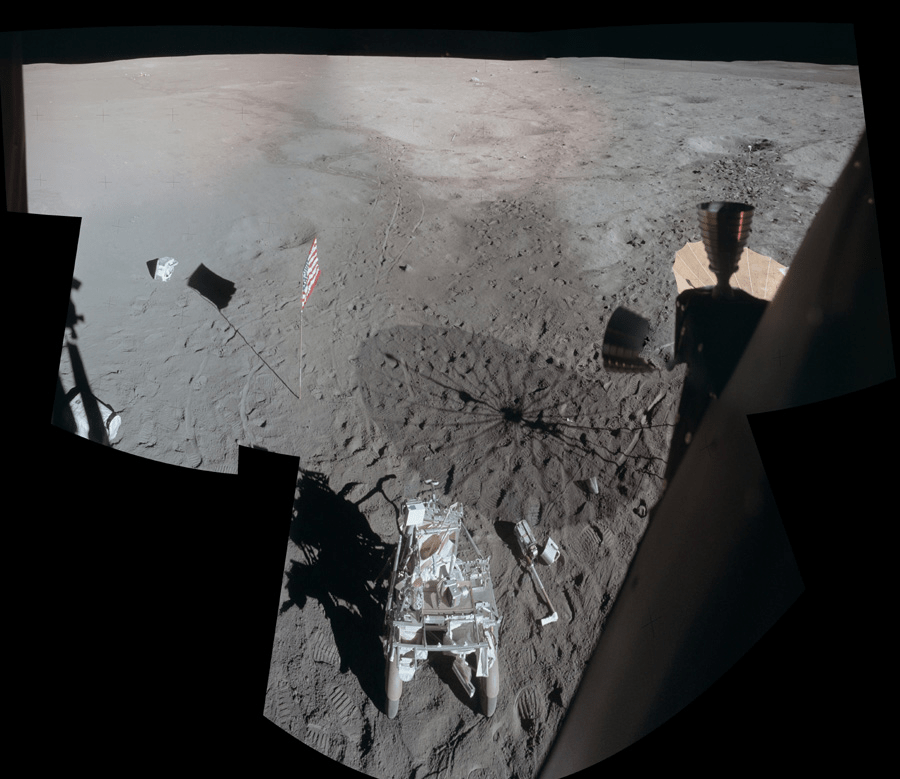
Explanation: How far can you see? Everything you can see, and everything you could possibly see, right now, assuming your eyes could detect all types of radiations around you — is the observable universe. In light, the farthest we can see comes from the cosmic microwave background, a time 13.8 billion years ago when the universe was opaque like thick fog. Some neutrinos and gravitational waves that surround us come from even farther out, but humanity does not yet have the technology to detect them. The featured image illustrates the observable universe on an increasingly compact scale, with the Earth and Sun at the center surrounded by our Solar Systemnearby starsnearby galaxiesdistant galaxiesfilaments of early matter, and the cosmic microwave background. Cosmologists typically assume that our observable universe is just the nearby part of a greater entity known as “the universe” where the same physics applies. However, there are several lines of popular but speculative reasoning that assert that even our universe is part of a greater multiverse where either different physical constants occur, different physical laws apply, higher dimensions operate, or slightly different-by-chance versions of our standard universe exist.

Explore the Observable Universe: Random APOD Generator
Tomorrow’s picture: stellar shell game

Music For Peace

Just a short bit with the video for today from Bee. Same from me, below hers.

=====

I choose this one, because the music of it brings me peace. I bet I’m not the only one. It’s a peaceful song.

Music For Peace

Bee brings us the Black Pumas, and a bit of commentary that begins, “One aspect of a peaceful existence is to consider our fellow humans as our family not our enemies.” Precisely!

My selection is this story, with The BeeGees performing Bob Dylan and then their own peace music. It’s an excellent story, and very good performances! Their own song is equal, at least, to Bob Dylan’s, but Barry Gibb discusses Bob Dylan’s influence on his music.

Barry Gibb recalls brave Bee Gees TV performance of Bob Dylan song to protest the Vietnam War

In 1962, the Australian Army began its formal military commitment to the U.S war in Vietnam. Two years later, young men were required to register for the National Service scheme and forced to fight in a bloody war that would enlist over 80,000 Australians. Over the next 11 years, 523 Australians died in battle and nearly 2400 were wounded before the country withdrew.

The fear of being sent to Vietnam to kill or be killed for the government struck fear into the hearts of many young Australians in 1963. That’s why three teenage boys, Barry (17), Robin (14), and Maurice (14) Gibb, The Bee Gees, took their big moment on Australian TV to speak truth to power by singing Bob Dylan’s “Blowin’ in the Wind.” The Bee Gees were relative unknowns that night on Bandstand, but by the end of the decade, they would be among the biggest acts in the world.

The Bee Gees sang ‘Blowin’ in the Wind’ on Australian TV in 1963

“Blowin’ in the Wind,” released earlier that year, asks fundamental questions about war, racial justice, and whether humanity will ever live in peace and equality. The song would become one of the most important anthems in the Civil Rights and peace movements of the ‘60s and beyond.

Barry Gibb, now 79, says that even as a teenager, he completely understood why Dylan’s song needed to be heard. “I was rapidly approaching the time when I would have to register for the draft,” he told Upworthy in an exclusive interview. “It’s hard to explain that period, except that everyone was very worried, very worried, and Bob Dylan was our hero.”

“The Vietnam War was such chaos to the Australian people that it shadowed everything. I wrote a song called ‘And the Children Laughing’ because of what Bob Dylan had written. It’s about life and dying, and the idea that you would die for your country or go and kill people you don’t know. And I don’t want to go kill people. It was not on the table for me. So everything he wrote touched me deeply,” Gibb continued.

Why don’t you get on your feet

It’s about time you got to think

Whatever happened to peace?

Well, open your eyes and you’ll see children laughing

Voices singin’, hearts a-beatin’ ah…

Barry Gibb has always believed in peace

(snip-there MORE; it’s not too long, but this is a long post with the music)

“Lotus Eater”

Mississippi Kite

We get Mississippi Kites in late Spring; they’re about gone now. They give amazing air shows! Watching them makes a day better.-Ali

About

With pearlescent gray feathers and a sleek silhouette, the Mississippi Kite glides gracefully through the skies on wingbeats that manage to look effortless. While this medium-sized raptor with long, pointed wings and a squared-off tail may resemble a Peregrine Falcon in flight, the Mississippi Kite’s bouyant and easy flight can quickly distinguish it from the rapid, businesslike flight of the falcon. Its aerial acrobatics have earned the kite nicknames like “Hovering Kite.”

A long-distance migratory species, the Mississippi Kite breeds throughout the southern and central United States, making use of wooded areas in a range of settings — in large, low-lying forest tracts, windbreaks (stands of wind-resistant trees and shrubs) in prairies, and even in urban settings. Their habitat use and even their social behaviors vary throughout their range, with kites in the west being more likely to nest in colonies than their counterparts in the east.

Threats

The global Mississippi Kite population is increasing, and its range has expanded into parts of the Southwest since the mid-20th century. Even so, the cumulative impacts from threats like habitat degradation and loss, pesticide use, and collisions may make the Mississippi Kite more vulnerable across parts of its range. 

Habitat Loss (snip-more on the page)

https://abcbirds.org/birds/mississippi-kite/

11/21 Is A Newsy Day In Peace & Justice History

November 21, 1945
200,000 members of the United Auto Workers went on strike against General Motors, the first major strike following World War II. The UAW’s demand for a 30% wage increase was based on the increase in the cost of living during the war (28% according to the Department of Labor), the wartime freeze on wages, and the cut in the average workweek with the disappearance of overtime pay in manufacturing.

But the UAW also considered profits and prices a subject for negotiation, a position rejected by GM. The union did not merely say that labor was entitled to enough wages to live on. It also said that labor was entitled to share in the wealth produced by industry. “… Unless we get a more realistic distribution of America’s wealth, we won’t get enough to keep this machine going.”–Walter Reuther, UAW President
More about the strike 
November 21, 1973
President Richard Nixon’s attorney, J. Fred Buzhardt, revealed the existence of an 18 1/2-minute gap in one of the subpoenaed White House tape recordings of Watergate conversations made by President Richard Nixon in the days after the Watergate break-in.The erasure was blamed on an accident by Nixon’s private secretary, Rose Mary Woods, but scientific analysis determined the erasures to be deliberate. White House Chief of Staff Alexander Haig later attributed the gap to “sinister forces.”

Rose Mary Woods, demonstrating how she might have created the Watergate tape gap
More about Rose Mary Woods 
November 21, 1974
Both Houses of Congress voted to override President Gerald Ford’s veto of updates to the Freedom of Information Act. Originally passed in 1966, it required federal agencies to release information upon request to citizens and journalists.The amendments put an end to governmental resistance to compliance, including excessive fees, bureaucratic delays, and the need to sometimes resort to expensive litigation to force the government to share copies of documents.
Ford advisors Chief of Staff Donald Rumsfeld, his deputy Dick Cheney, and government lawyer Antonin Scalia advised him to veto it.


Chief of Staff Donald Rumsfeld, President Gerald Ford, and Deputy Chief of Staff Richard Cheney April 28, 1975
What was the dispute?  (Verified the story is there.)
November 21, 1975
The Senate Select Committee to Study Governmental Operations with Respect to Intelligence Activities, led by Senator Frank Church (D-Idaho), issued a report charging U.S. government officials were behind assassination plots against two foreign leaders – Fidel Castro (Cuba) and Patrice Lumumba (Congo), and were heavily involved in at least three other plots: Rafael Trujillo (Dominican Republic), Ngo Dinh Diem (Vietnam), Rene Schneider (Chile).

Senator Frank Church, left, chairman of the Senate Select Intelligence Committee, displays a poison dart gun as co-chairman Senator John Tower (R-TX) watches.
The committee, a precursor to the Senate Intelligence Committee, was established to look into misuse of and abuse by intelligence agencies, particularly the CIA and FBI, some of which had been revealed by the Watergate investigations.
  
Fidel Castro / Patrice Lumumba / Rafael Trujillo / Ngo Dinh Diem / Rene Schneider
Read more  
November 21, 1981
More than 350,000 demonstrated in Amsterdam against U.S. nuclear-armed cruise missiles on European soil.
November 21, 1985
A full-scale summit conference, the first of five between the President Ronald Reagan of the U.S. and General Secretary Mikhail Gorbachev of the Soviet Union concluded. There was optimism over beginning a more productive and cooperative relationship between the two countries, each of which had thousands of nuclear warheads targeted at the other.The U.S. had proposed building a space-based anti-ballistic missile system, commonly known as “Star Wars,” which the Soviets had strongly opposed as an escalation of the nuclear arms race.In an unofficial meeting the previous evening, President Reagan had noted that he and Gorbachev were meeting for the first time at this level and had little practice. Nevertheless, having read the history of previous summit meetings, he had concluded that those earlier leaders had not accomplished very much. Therefore, he suggested that he and Gorbachev say, “To hell with the past, we’ll do it our way and get something done.” Gorbachev concurred.

Reagan and Gorbachev at their first summit
November 21, 1986
National Security Council member Oliver North and his secretary, Fawn Hall, began shredding documents that would have exposed their participation in a range of illegal activities regarding the sale of arms to Iran in an attempt to free hostages, and the diversion of the proceeds to an insurgent Nicaraguan group known as the contras.

Fawn Hall

Oliver North
More on Fawn Hall 
November 21, 1995
China officially charged well-known human rights activist and political dissident Wei Jingsheng with trying to “overthrow the government.” Wei had not been seen for a year and a half after disappearing into police custody after meeting with a U.S. assistant secretary of state for human rights and humanitarian affairs.“If the people allow the power holders, in the peoples’ name, to violate and ignore the rights of some of the people then, at the same time, they are giving the power holders the power to violate the rights of all the people.”
“ Most people wait until others are standing to make their move, very few are willing to stand up first or to stand alone. That’s why my friends call me a fool! But I don’t have any regrets.” 
– Wei Jingsheng

Wei Jingsheng
He had been imprisoned previously for his involvement with the Democracy Wall movement, including years in solitary confinement. He had also spoken out on behalf of the Tibetans.

https://www.peacebuttons.info/E-News/peacehistorynovember.htm#november21

Some Good Eco News-

Norway Turns Ocean Forests Of Seaweed Into Weapons Against Climate Change

Written by Matthew Russell

Off Trøndelag’s coast, long lines of kelp now do double duty. They grow fast. They also lock away carbon. A new pilot farm near Frøya aims to turn that promise into measurable removal of CO₂ from the air, according to DNV.

The site spans 20 hectares and carries up to 55,000 meters of kelp lines. First seedlings went in last November. The goal is proof of concept, then scale.

How the Pilot Works

The three-year Joint Industry Project, JIP Seaweed Carbon Solutions, brings SINTEF together with DNV, Equinor, Aker BP, Wintershall Dea, and Ocean Rainforest, with a total budget of NOK 50 million, Safety4Sea reports.

Researchers expect an initial harvest of about 150 tons of kelp after 8–10 months at sea. Early estimates suggest that biomass could represent roughly 15 tons of captured CO₂. This is a test bed for methods that can be replicated and expanded, DNV explains.

There’s a second step, as kelp becomes biochar. That process stabilizes carbon for the long term and can improve soils on land, SINTEF’s team told Safety4Sea. The project is designed to test both the removal and the storage.

Serene coastal landscape with rocky shores and calm water under a cloudy sky.

A Long History, A New Mission

Seaweed isn’t new here. Norwegians have cultivated kelp since the 18th and 19th centuries for fertilizer and feed. Scientists advanced modern methods in the 1930s, laying the groundwork for today’s farms, according to SeaweedFarming.com. Cold, nutrient-rich waters support species like Laminaria and Saccharina. They grow quickly and draw down dissolved carbon and nitrogen.

The country’s aquaculture backbone also helps. Norway already runs one of the world’s most advanced seafood sectors. That expertise now extends to macroalgae.

Policy, Permits, and Ecosystems

Commercial cultivation began receiving specific permits in 2014, and activity has expanded across several coastal counties, according to a study in Aquaculture International. Researchers detailed the risks that accompany scale: genetic interaction with wild kelp, habitat impacts, disease, and space conflicts. Integrated Multi-Trophic Aquaculture, where seaweed grows alongside finfish, can recycle nutrients from farms and reduce eutrophication pressures.

Vibrant yellow seaweed covers dark rocky surfaces near shallow water.

Engineering for Open Water

Getting beyond sheltered bays is crucial. One path is the “Seaweed Carrier,” a sheet-like offshore system that lets kelp move with waves in deeper, more exposed water. It supports mechanical harvesting and industrial output without using land, Business Norway explains. The same approach can enhance water quality by absorbing CO₂ and “lost” nutrients.

The Frøya project is small in tonnage but big in intent. It links Norway’s long kelp lineage with new climate tech: fast-growing macroalgae, verified carbon accounting, and durable storage as biochar. If these methods prove reliable at sea and on shore, Norway will have more than a farm. It will have a blueprint for ocean-based carbon removal that others can copy.

Music For Peace

I can’t believe this month is past half over! Anyway, I think the guys here will particularly enjoy Bee’s selection for Wednesday, “Peace Somehow.” It sounds like it fits with other music the guys have posted, genre-wise.

As Bee participates in the bloggers’s Global Strike For Gaza, here is her Thursday Peace Music post early (not to us, of course, as it’ll be Thursday when this post goes up.) Bee’s message with this one is important for each of us to take to heart.

My selection for today:

1st Indochina War Begins, Dr. Huet-Vaughn Refuses, 100,000 Chechnyans Link In Protest, & The State of VT Wins Over Baker, All In Peace & Justice History for 11/20

December 20, 1946
The morning after Viet Minh forces under Ho Chi Minh launched a nighttime revolt in the Vietnamese capital of Hanoi, French colonial troops cracked down on the communist rebels. Ho and his soldiers immediately fled the city to regroup in the countryside.
That evening, the communist leader issued a proclamation that read:

Ho Chi Minh, Paris 1946
“All the Vietnamese must stand up to fight the French colonials to save the fatherland. Those who have rifles will use their rifles; those who have swords will use their swords; those who have no swords will use spades, hoes, or sticks. Everyone must endeavor to oppose the colonialists and save his country. Even if we have to endure hardship in the resistance war, with the determination to make sacrifices, victory will surely be ours.” The first Indochina War thus began.
December 20, 1960
North Vietnam announced the formation of the National Front for the Liberation of the South (usually known as the National Liberation Front or NLF), designed to replicate the success of the Viet Minh, the umbrella nationalist organization that successfully liberated Vietnam from French colonial rule.

National Liberation Front flag 
Ho Chi Minh biography (2 separate links)
December 20, 1990

Kansas reservist Dr. Yolanda Huet-Vaughn refused orders to serve in the first Gulf War (Desert Storm) and was later sentenced to prison. The Kansas medical board withdrew her hospital privileges.“The issue was not whether I belonged in the military but whether the military belonged in the Middle East waging war. I did not want to focus on the personal decision. I was trying to focus on the decision for which each and every American would have to be responsible.” — Yolanda Huet-Vaughn
What if they gave a war and nobody came? 
December 20, 1994
100,000 Chechnyan civilians linked hands in a 65 km-long human chain (40 miles) to protest the Russian invasion of their country and attack on their capital, Grozny.

Read more  (It’s a NYT; if you can’t get it see it at Wikipedia.)
December 20, 1999
The Vermont Supreme Court rulled in Baker v. State of Vermont that homosexual couples were entitled to the same benefits and protections as wedded couples of the opposite sex.

History of the Freedom to Marry 

https://www.peacebuttons.info/E-News/peacehistorydecember.htm#december20

Josh Day Next Day

All the keyboard protection alerts. Enjoy!

Music For Peace

This time, Bee gives us music with which we might find peace within. It’s nice! Her words are inspiring for seeking peace.

I’ve been wanting to play this one, and today is the day. Rock on, peace out!