
Tag: Political
Politicians demonizing LGBTQ+ people for electoral success is a global phenomenon
 John Russell (He/Him)September 11, 2025, 2:00 pm EDT
Shutterstock
Politicians across the globe used anti-LGBTQ+ rhetoric in their campaigns last year, according to a new report from LGBTQ+ rights NGO Outright International.
The organization’s just-released report “Queering Democracy: The Global Elections in 2024 and How LGBTIQ People Fared” examines “how LGBTIQ people navigated, participated in, and shaped electoral processes” in 60 countries and the European Union last year. Among its key findings, the report says that anti-LGBTQ+ hate became a widespread campaign strategy around the world even as queer and trans people made gains in some of the same countries.
Related
Outright International describes 2024 as a “super election year” in which more than 1.5 billion people in 73 countries voted. But, they say, “this historic moment also came at a time of democratic backsliding, when LGBTIQ communities and other marginalized groups were among the first to feel the impacts of shrinking freedoms.” The organization describes LGBTQ+ communities as “canaries in the coal mine — among the first targets when democratic norms erode.”
According to Outright International, “In at least 51 of the 61 jurisdictions studied, political candidates weaponized anti-LGBTIQ rhetoric for electoral gain.” Politicians, the organization found, “demonized ‘gender ideology,’ labeled LGBTIQ people as ‘foreign agents,’ and scapegoated sexual and gender minorities to deflect from policy failures. In some countries, elections devolved into what one observer called ‘a competition of who was the most homophobic.’”
Insights for the LGBTQ+ community
Subscribe to our briefing for insights into how politics impacts the LGBTQ+ community and more.
* * *Frequency
- Daily Brief
- Week in Review
- Week in Good News
Sign UpThe report cites leaders in Jordan, Czechia, Portugal, and Namibia among those who scapegoated LGBTQ+ people in an attempt to distract voters from their own governance failures. Uruguay, Panama, Australia, Moldova, and the United Kingdom were among 27 countries in which politicians explicitly used the specter of so-called “gender ideology,” “gender madness,” and “indoctrination” to demonize LGBTQ+ people and particularly transgender people.
And leaders across Eastern Europe, Africa, and the Middle East stoked both xenophobia and anti-LGBTQ+ sentiment by describing gender and sexual diversity as the result of malign foreign influence. According to the report, anti-LGBTQ+ political rhetoric led to social media harassment and calls for violence as well as real-world crackdowns on the LGBTQ+ communities in Tunisia and Romania.
“You talk with a politician from Peru… or Hungary or the UK, you start to see common trends and you realize that it’s a global, coordinated and increasingly well-funded effort to diminish LGBTIQ people,” Outright International’s Alberto de Belaúnde told The Guardian.
Even ostensibly pro-LGBTQ+ parties and politicians in some countries appeared to turn on the community. As the report notes, Greek Prime Minister Kyriakos Mitsotakis claimed his New Democracy party “certainly suffered political damage” for supporting marriage equality. And in the U.S., some Democrats “blamed the party’s crushing defeat on the party’s perceived support for trans people’s rights, despite surveys showing that these issues were not a primary concern for voters.”
The report also includes a four-page case study on Republicans’ anti-trans messaging and misinformation during the 2024 U.S. election cycle, including the GOP candidate’s campaign’s $17 million investment in anti-trans ads. It concludes that the 2024 election cycle “highlights the vulnerability of marginalized communities to targeted misinformation, underscoring an urgent need for ongoing vigilance and robust advocacy to protect human rights amid escalating political adversity.”
The report also found that, while there was no evidence of laws explicitly denying LGBTQ+ people the right to vote, the community nonetheless faces significant barriers to participating in the democratic process around the world — fear of violence, political disillusionment, and lack of legal gender recognition among them.
Despite those barriers, Outright International says that LGBTQ+ communities consistently came out to defend democracy in the face of authoritarian movements in their home countries, most notably in Bangladesh, Türkiye, and Georgia.
Alongside its dire warnings about what de Belaúnde called a “weaponization” of anti-LGBTQ+ hate, the Queering Democracy report also highlighted significant political gains for LGBTQ+ people around the world. LGBTQ+ candidates ran for office in 36 countries last year, including for the first time in Botswana, Namibia, and Romania. It also notes trailblazing transgender candidates in Venezuela, El Salvador, Sri Lanka, Indonesia, and the U.S., where Rep. Sarah McBride (D-DE) became the first openly trans member of Congress.
The report includes a long list of recommendations for electoral management bodies, election monitoring organizations, political leaders, and candidates on how to combat anti-LGBTQ+ tactics. These include holding political parties and candidates accountable for hate speech, engaging with LGBTQ+ communities in developing political platforms, and supporting queer candidates.
Subscribe to the LGBTQ Nation newsletter and be the first to know about the latest headlines shaping LGBTQ+ communities worldwide.

Some clips from recent Majority Report that I enjoyed.
FBI’s War On Trans People | Ken Klippenstein | TMR
An important report on how the tRump bigots and trans people haters are targeting trans people. It shows how clearly they are lying and spreading disinformation so they can erase trans people from society. They flood the media at the first sign of violence yet never correct the misinformation when they are found to be wrong. The goal is to make the US a straight cis only society. They will be coming for the rest of the LGBTQ+ community as soon as they feel they win erasing the trans people. Remember they have made the pride flag political and forbidden to be displayed but the southern confederate battle flag is still allowed. Hugs
Investigative journalist, Ken Klippenstein joins the show to discuss the Trump administration’s manipulation of recent shootings to bolster their war on trans people. Live-streamed on September 25, 2025
Dr. Mo Returns From Gaza | Mohamed Mustafa | TMR
This is a doctor who served in Gaz and explains how horrible it is with Israeli soldiers shooting children as sport. He talks of dealing with children with their intestines hanging out and they have to operate with out pain killers. Please watch to see how horrific Israel is being at this point.
Sorry I have not been posting much. Really struggling right now. Hugs
Dr. Mohammed Mustafa joins us to discuss the horrors he has witnessed while volunteering at hospitals in Gaza. Here is a link to the fundraiser for a children’s hospital in Gaza. Live-streamed on September 23, 2025.
“There may be a subset of people pissed off that Kimmel is back on Sinclair’s airwaves, but you can bet even more would be pissed if they couldn’t watch LSU play Ole Miss on Saturday. That would hurt Sinclair’s real primary principle: always maximize profits.”
Sinclair Backs Down, Will Resume Airing ‘Jimmy Kimmel Live’ on Local Stations
The outrage machine has moved on.
By AJ Dellinger Published September 26, 2025
In a classic Friday news dump move, Sinclair announced that it will end its unofficial boycott of Jimmy Kimmel and will once again broadcast the comedian’s late-night show, ‘Jimmy Kimmel Live,’ to its ABC affiliate broadcast stations, ending its completely principled and not at all politically motivated stance to pre-empt the show after all of two days.
“Our objective throughout this process has been to ensure that programming remains accurate and engaging for the widest possible audience,” the company said in a statement. “We take seriously our responsibility as local broadcasters to provide programming that serves the interests of our communities, while also honoring our obligations to air national network programming.”
Sinclair—which operates 30 ABC affiliate stations in 27 markets, including cities like Portland, Baltimore, and Minneapolis—announced last week that it would choose to air “news programming” in place of Kimmel’s show, which returned to the air Tuesday after a brief hiatus. The program, which was briefly suspended by ABC after Kimmel made a frankly pretty innocuous comment about the political ideology of the person who allegedly shot and killed conservative influencer Charlie Kirk in Utah earlier this month.
Sinclair, along with fellow media conglomerate Nexstar, announced they would pull Kimmel’s show from the air following a statement from Federal Communications Commission head Brendan Carr, who warned broadcasters, “We can do this the easy way or the hard way,” and said, “These companies can find ways to change conduct to take action on Kimmel or, you know, there’s going to be additional work for the FCC ahead.”
Both companies currently have business in front of the FCC and are pretty motivated to show fealty to the Trump administration to ensure their deals get pushed through—not that they need that much motivation, considering both companies are owned by conservative-aligned media magnates. Sinclair CEO David Smith has been shifting its editorial coverage to the right for years, and Smith reportedly told Trump in 2016, “We are here to deliver your message.” Likewise, Nexstar chairman Perry Sook has repeatedly praised Trump and poured money into the coffers of GOP groups.
Sinclair attempted to get in front of the obvious criticisms that it would face as a result of both its initial decision not to broadcast ‘Jimmy Kimmel Live’ and its latest call to bring him back to the airwaves in Sinclair markets.
“Our decision to preempt this program was independent of any government interaction or influence,” the company said. “Free speech provides broadcasters with the right to exercise judgment as to the content on their local stations. While we understand that not everyone will agree with our decisions about programming, it is simply inconsistent to champion free speech while demanding that broadcasters air specific content.” It apparently took the company a solid week to remember that commitment to free speech, but it got there.
The reality is that Sinclair was going to back down eventually, if only for legal reasons. As a broadcast executive explained to Deadline, local affiliates contractually can only preempt a program so many times before it breaks the contract and loses the ability to broadcast the show entirely. Sinclair’s “principled stance” was destined to last for exactly as long as it didn’t actually cost them anything and likely not a second longer.
Once word started spreading that Disney might threaten to withhold live sports broadcasts from affiliates who pulled Kimmel, it was only a matter of time before Sinclair suddenly found its unwavering belief in “free speech” again. There may be a subset of people pissed off that Kimmel is back on Sinclair’s airwaves, but you can bet even more would be pissed if they couldn’t watch LSU play Ole Miss on Saturday. That would hurt Sinclair’s real primary principle: always maximize profits.
tRump in a Nut Shell
“Be advised: This newsletter uses profanity. It ain’t scared of escalators though.”
The Great Escalator Wars by Adam Parkhomenko
It’s Thursday. There are 404 days until the midterm elections. Disinformation from Dallas, Kimmel’s big ratings and making us defend Jim Comey. Read on Substack
Note: Well, Sexy Patriots, we went from the Tylenol meltdown to the UN pants-shittening to a total goddamn presidential freakout over a broken fucking escalator. We assume for today that Trump will be walking around with both of his feet and his head stuck in buckets of some kind. Despite all the dumb, we actually have some good news. One of the creepiest goddamn weirdos of all time will no longer be in a position to fuck with kids…
Na-na-na-na. Na-na-na-na. Hey Hey Hey. Goodbye! We’ve been kinda sorta paying attention to this freakshow’s tenure as superintendent and we have wondered for a while just how dumb the kids in Oklahoma must be by now. The poor little morons have been forced to eat Trump Bibles for months, half of them think Be Best is good grammar and the rest think 2 + 2 = Bigly. Plus, doesn’t this dude put off all the vibes of someone whose hard drive would get them sent away for life? That moustache definitely used to hang out on Epstein’s island. Dude is out here looking like Jim Dangle from Reno 911.
Anyway, congratulations to the children of Oklahoma who would be bursting out in song today if their music programs hadn’t been cut in favor of Trump Appreciation Class. As for Ryan, well, he can kiss our asses, eat shit and fuck all the way off. Goddamn weirdo. Y’all have a blessed day.
Note two: This has nothing to do with anything, but remember those switchblade combs? Those were cool. We want to bring those back in style. Also, we did a therapy session yesterday and you can catch it here if you missed it live.
JD Vance should pretend he’s a couch and…
Adam Parkhomenko and Sam Youngman Sep 24
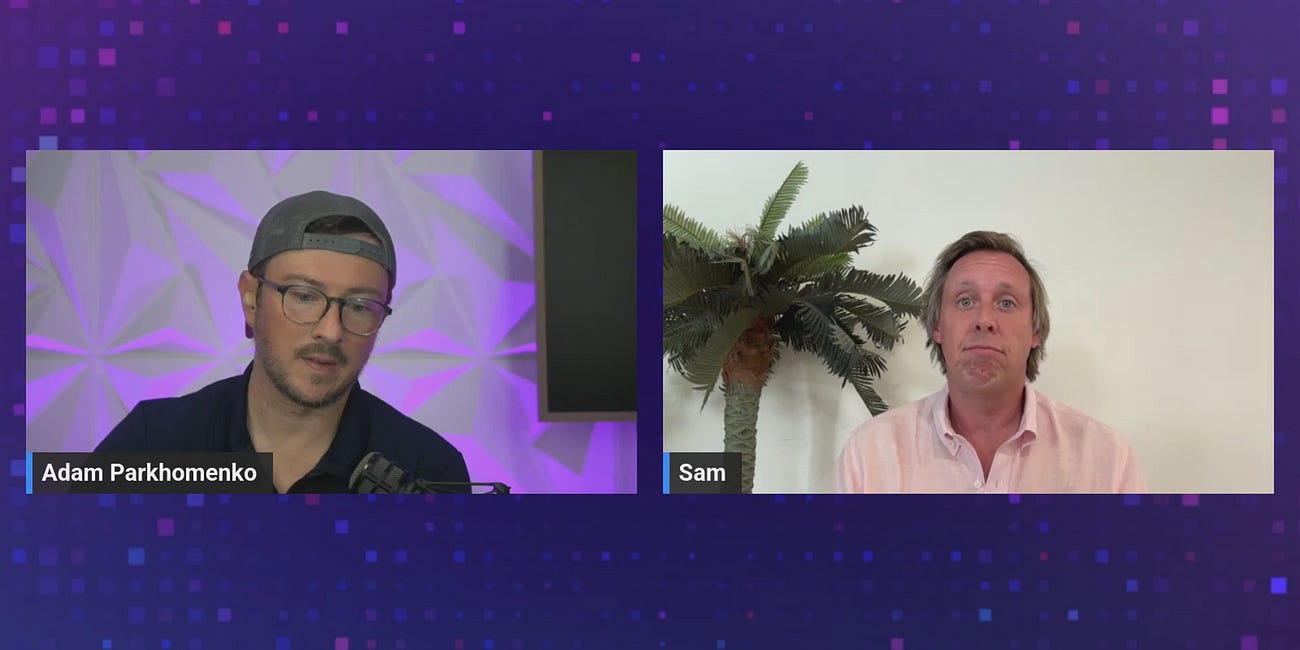
Thank you Leah Anderson, Jeanne Elbe, Kathryn, Maureen Drews, Jason Dyer, and many others for tuning into our weekly therapy session!
Note three: We’re getting closer to a government shutdown, and the White House’s big threat is that they would use a shutdown to fire federal workers. Someone should tell these assholes they already did that and they’re currently busy trying to rehire them all. Idiots. More: NBC News
Note four: We have got to hand it to the Onion. They made an Epstein documentary. Wired describes it as “absolutely unhinged.” It’s called “Jeffrey Epstein: Bad Pedophile.” It says a lot about where we are as a country that we rely on the Onion for this stuff instead of CNN. More: Wired
Note five: We wish we were kidding about our dumbshit president totally freaking out about a stopped escalator. He’s calling for investigations and Fox News has his back. It reminds us of the line from Ace Ventura — “Had I been drinking from the toilet, I could’ve been killed.” For a big tough guy, Trump sure is a whiny little bitch.
Note six: Senate Democrats are out with a report about what Elon Leon’s DOGE d-bags were really up to and it is infuriating. We can’t wait for a Democratic administration to lock these little shits up. More: Wired
Note seven: The French sentenced Sarkozy to five years. How the hell does every other country know how to do this except ours? More: NBC News
Note eight: Gross Stephen Miller’s gross wife is talking about having gross sex with him. Here’s a link, but we don’t recommend clicking on it. More: HuffPost
Note nine: Trump is upset that people are upset about his friendship with Epstein and the ensuing cover-up. He says Palm Beach in the 90s was a “different time.” Motherfucker child rape was still bad in the 1990s. More: Mediaite
Note 10: After a couple weeks off, South Park returned last night and Kyle’s mom (who is Jewish) went off on Bibi Netanyahu.
Note 11: The New York Times was very worried that a Trump official might get booed during one of their ass-kissing sessions. To that, we say BOOOOOOOOO!!!!! More: Mediaite
Note 12: The Tylenol thing was such a fucking disaster that Trump’s own allies are walking it back. Can you imagine the coverage if Biden… More: Independent
Note 13: Please don’t forget we have some big elections coming up in New Jersey, Virginia, California and Pennsylvania! Please get involved however you can. Those candidates need some Sexy Patriot energy. More: Pix11
Note 14: It’s honestly wild how much of a disconnect there is between Democratic leadership in D.C. and Democrats in the states. And it’s not hard to see which one is actually in touch with what voters are demanding. More: NBC News
Note 15: Just a reminder that before Kimmel was put through the ringer, plenty of corporate media outlets fired Black women with little to no public outrage. Thank you to Karen Attiah, formerly of the Washington Post, for firing back. And thanks to our friend Katie Phang for helping her.
Note 16: Two things to look forward to — Taylor Swift has a new album out next week, and the second part of Wicked will be out soon. Also, we don’t know about y’all, but we can’t freaking wait to see that new Paul Thomas Anderson movie. It seems pretty timely. More: USA Today
Note 17: It is fucking wild how hard the White House and the Republican Party are working to keep the Epstein files hidden. It’s even wilder how the people who used to want to see them don’t seem to give a shit anymore. More: CNN
Note 18: We’re starting to have a little hope that our country isn’t as dumb as it seems. The brain worm guy’s polling numbers are in the shitter. Which means he’ll probably swim in them. More: CNN, WSAV
Note 19: For today’s Happy Ending, we’re going back to South Park. If we’ve learned anything this week, it’s that comedy is leading the resistance while other institutions bend the knee and kiss the ass. We picked this clip because the Don Jr. impression had us fucking howling…
Note 20: And on that note, let’s go do some news! We sure hope y’all are having a great week. Except Ryan Walters. That dude and his creepy stache can smooch our taints. Love y’all! (snip-MORE news on the page)
Republican Caught With Porn Hides Behind Charlie Kirk
I have read rumors about this guy for a long time. But I was always hopeful he played for the straight team because of how hateful he is. He is an all out racist. But they claim to have checked it out and it is true. There clearly is some excitement in Ryan’s pants.
He’s SO Bad At This…
I believe that Chuck Schumer cares far more for his big money donors and mythical Baileys than for the lower income people. I think he was good at the game in the 1990s. I think he relied heavily on Pelosi during tRump’s first term. If you don’t watch the video, know that the candidates running in red states to unseat the republicans in those seats don’t want Schumer to campaign with them in any way. In state after state, the new democratic candidates for Senate say they won’t vote for Schumer. The only one who may would be Mills in Maine because she has not declared yet and Schumer is pushing her hard to enter … in her upper 70s. Screw those young upstarts in their 40s and 50s, those wet behind the ears kids. let’s put a seasoned 77-year-old in the Senate for a six year term. It seems that Schumer’s plan for the midterms is to do nothing, take no position on anything that might upset anyone and hope that tRump is so bad people will be so sick of him that they vote for the democrats. It did not work that way in 2024 and it won’t in 2026. He went on Morning Joe, no young voter is watching Morning Joe. Only older voters and donors are. Sam points out Schumer could be saying to the public that tRump’s wealth has doubled in 8 months, has yours? He could be doing interviews saying what the FCC is doing is bad so if we win we are going to X and X. But Schumer won’t even bring up Epstein. I find all that Sam Seder says and shows of Schumer to be true, which heralds that we are in big trouble in the midterms. Hugs

