War is very bad, but I read this news with relish.
Interesting News From Ukraine
War is very bad, but I read this news with relish.

War is very bad, but I read this news with relish.
A difficult anniversary—and a moment to remember Ukraine by José Andrés
Supporting recovery efforts with the Longer Tables Fund Read on Substack
Today is a day that I’m thinking about the people of Ukraine. It’s been a special place to me over the last few years, where I’ve spent over 100 days on the ground, as the team from World Central Kitchen has worked to keep communities fed since the Russian invasion in 2022.
This week marks three years since the invasion…and the beginning of our work there, so I hope we can all take a moment to remember.
Over these three years, we’ve learned so much about resilience, about innovation, about community—the Ukrainian people have been an incredible example to the world for how to live bravely in the shadow of war, in constant fear of losing their homes, their farms, their lives.
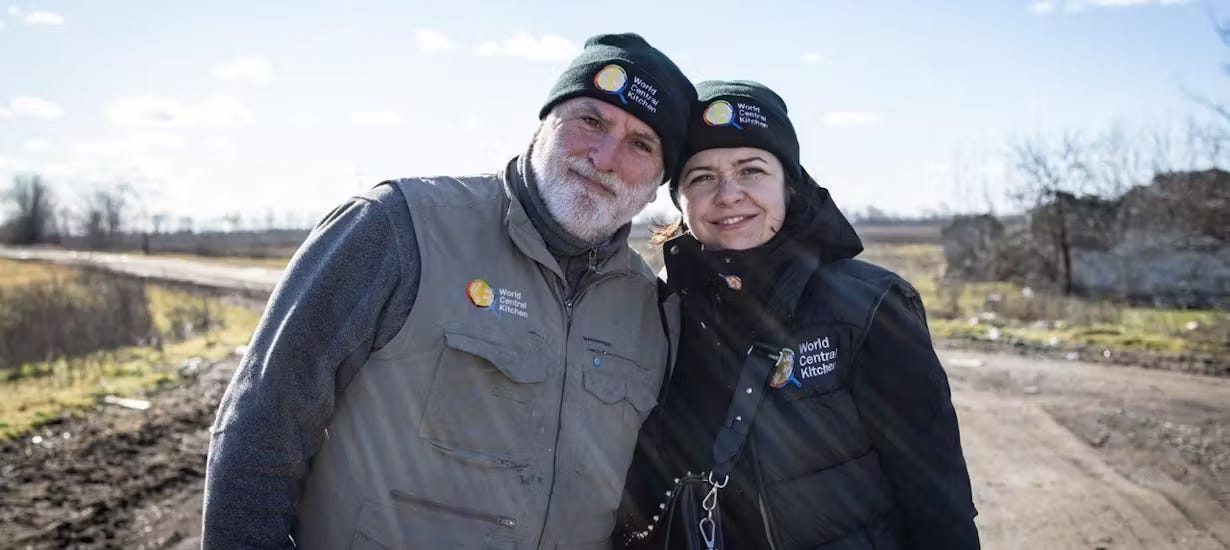
I’m proud of the part that WCK has played in the country, with leaders like Yuliya Stefanyuk, our Ukrainian Response Director. Yuliya has been with WCK from the beginning, first working to coordinate meal production in Lviv, then expanding operations across the country. She’s played a critical role to establish our food distribution networks, secure partnerships, and to make sure that meals are reaching people in need, even in the hardest-hit areas.
And I’m also proud to share that through the Longer Tables Fund, I am continuing to support some amazing organizations and people in Ukraine, to keep recovery efforts moving forward.
You might not have heard me talking about the Longer Tables Fund yet, but it’s one of the things I’m most excited about these days. (No relation to our Longer Tables newsletter here, though it’s a good name, right?) I launched it in 2022—powered by the Bezos Courage and Civility Award that I was honored to receive in 2021—to support people and organizations who believe, like I do, that food has the potential to solve some of humanity’s biggest problems.
Its goal is to make change in three areas: local food systems, where we are aiming to transform the way humanity is producing, accessing, and consuming food; education, where we are hoping to inspire the next generation of food leaders; and (re)building communities, where we are using the power of food to help people build resilience after times of crisis.
In Ukraine, we’re supporting a few amazing organizations doing incredible work to help the nation and its people respond, recover, and rebuild. I want to tell you a little about them—and I hope you’re inspired too.
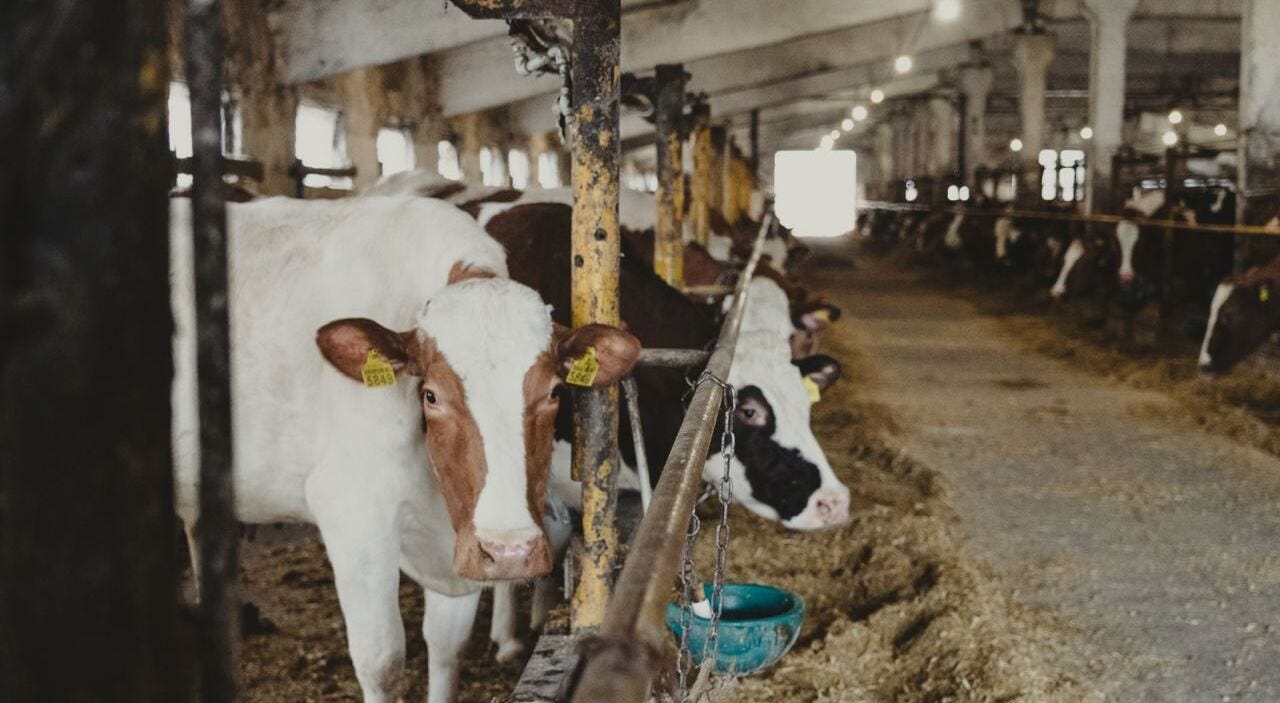
SaveUA
I’m really excited to announce that the Longer Tables Fund is now supporting the work of SaveUA. Representing thousands of Ukrainian farmers, SaveUA is an organization made to help the country’s agricultural system build resilience to the shocks of war. Ukraine historically has been one of the most important breadbaskets in the region, growing grain for Europe and beyond. Ukraine’s energy grid is in crisis due to the ongoing war, leaving many communities without reliable access to power.
We’re helping SaveUA purchase generators for dairy farmers on the front lines. These generators are more than just a source of electricity…they’re a lifeline. They will power milking equipment and refrigeration systems, ensuring that farmers can continue their work, sustain their communities, and feed their people even in the face of unimaginable challenges. This isn’t just about keeping the lights on—it’s about standing with the people of Ukraine as they seek to protect their land, their livelihoods, and their food supply.
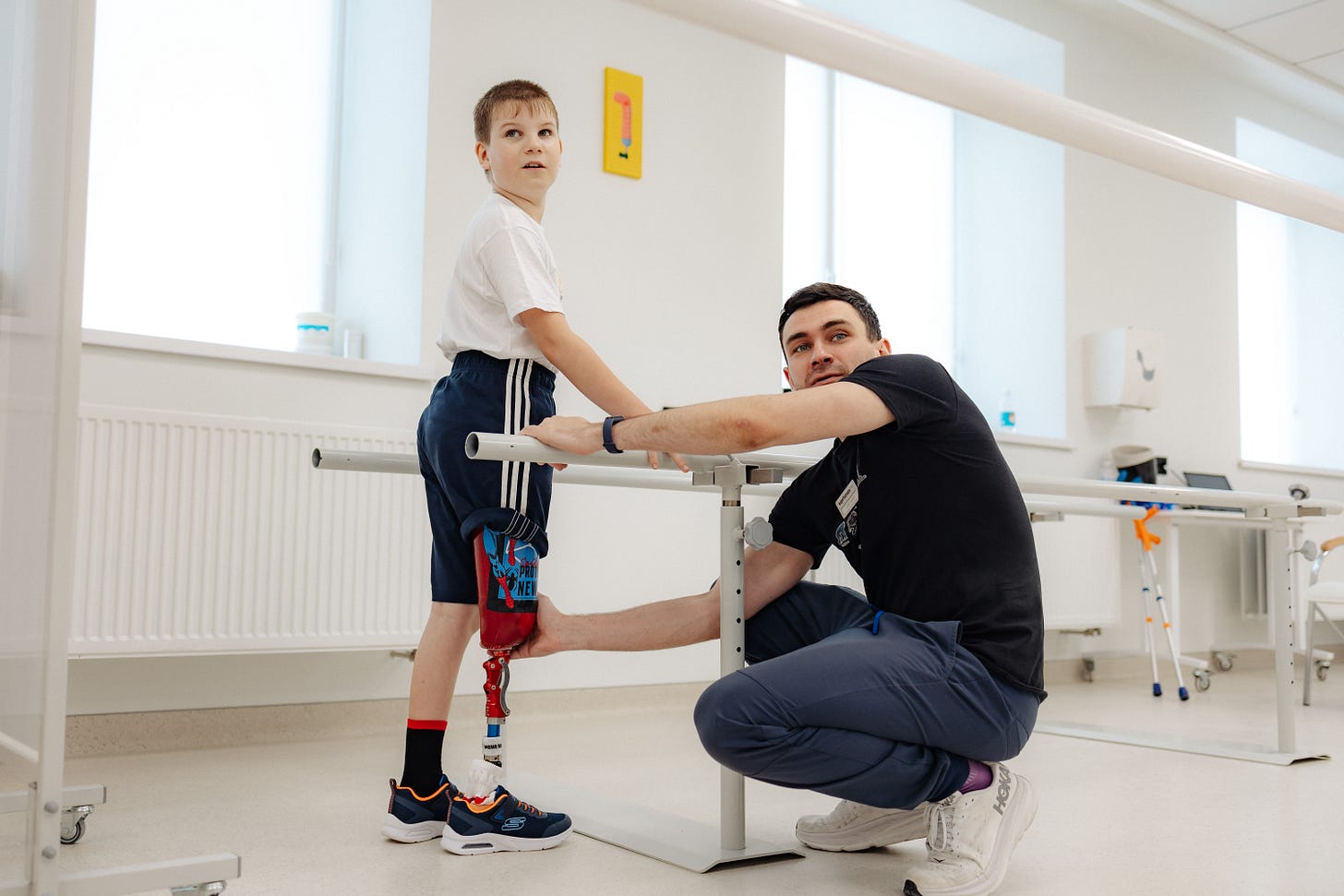
Superhumans
The next organization is doing some incredible work for the people of Ukraine who have been physically injured by the war. Over the last three years, thousands of Ukrainians have lost limbs due to mines and shelling, and with mines buried across a huge amount of the country, there will be many, many more people who will require prosthetics and medical support in the years to come.
Superhumans is a rehabilitation center that provides prosthetics, reconstructive surgery, rehabilitation, and psychological support—free of charge. The Longer Tables Fund has supported medical staff at Superhumans by helping invest in advanced surgical and 3D laboratory equipment, which will let the Superhumans team expand their services to include complex facial reconstruction procedures.
I love this project because prosthetics and reconstructive surgery lets people transform trauma into resilience, empowering a new generation of survivors—truly making them superhuman.
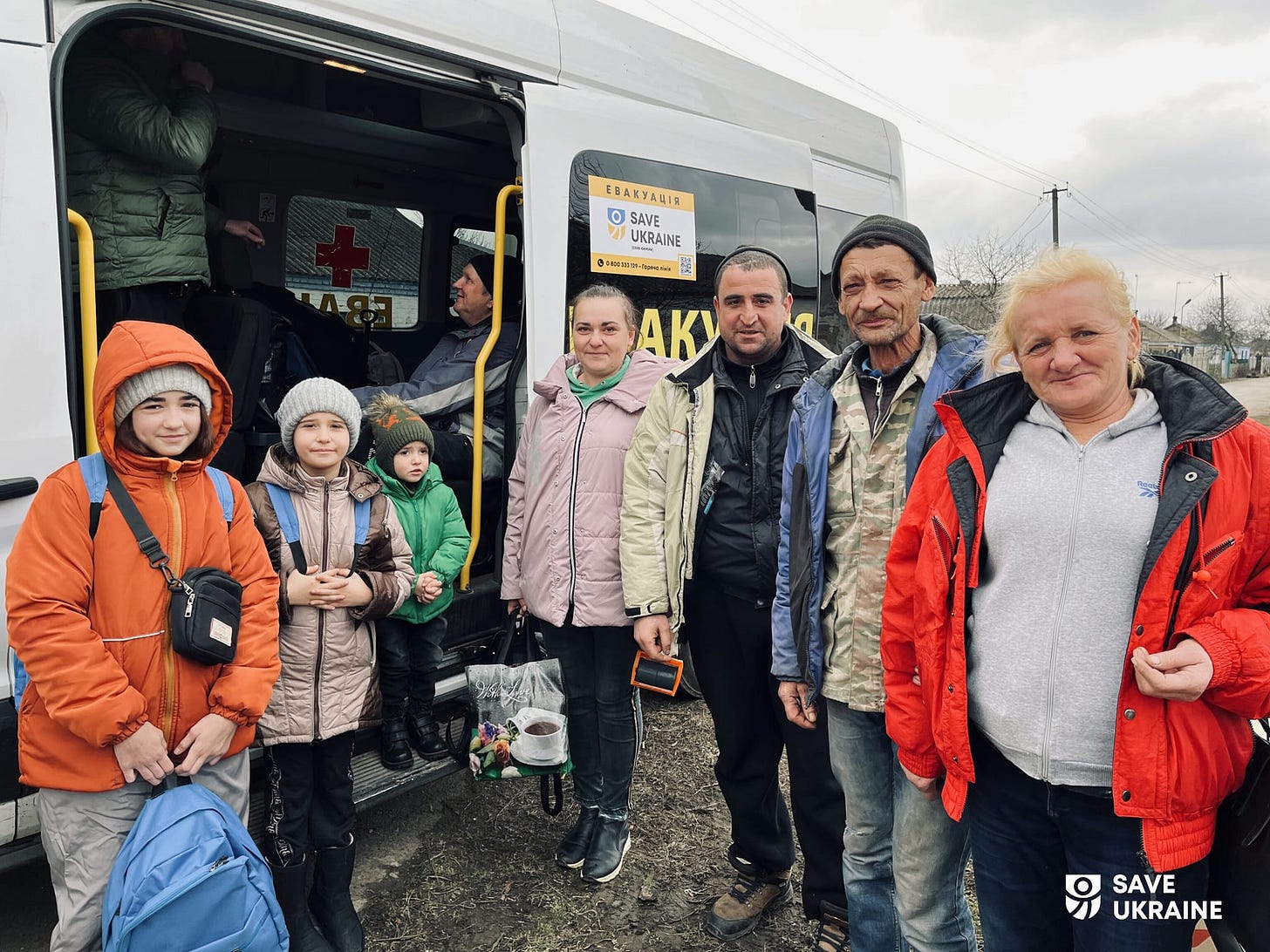
Save Ukraine
The third organization that the Longer Tables Fund is supporting is called Save Ukraine, an NGO focused on rescuing Ukrainian children that were deported to Russia at the beginning of the war and over the last three years. It’s important work that offers a lifeline to families affected by these deportations, which horribly tear into the heart of communities around the country.
Save Ukraine’s three-pronged approach—to rescue, to restore, and to rebuild—ensures that every child regains the safety, stability, and care needed to thrive.
We are supporting their Community Center and Bomb Shelter in Irpin, one of the cities that I visited in 2022 after it was liberated from Russian occupation. The center will provide comprehensive services for children with disabilities and their families and give them tools to rebuild their lives.
My friends—I think you will agree with me that this work is super important to the rebuilding of a strong Ukraine. I’m proud to support it in the small way we can, especially as we pass such a difficult moment of commemorating three years of war. Since the beginning, World Central Kitchen has been on the front lines, making sure communities are fed. Now, the Longer Tables Fund is the newest step in continuing to build longer tables – creating a community where no one is left behind, where survivors are empowered, and where resilience is born from the hardest of circumstances. With these new projects, I know that the people of Ukraine will continue to be supported today, tomorrow, and for years to come.
Take care of yourselves this week, and please keep Ukraine in your thoughts.
And, the Ramstein meeting gets postponed because of Hurricane Milton.
This week was a dark one for Ukrainian journalism.
On Oct. 9, Ukraine’s leading news outlet Ukrainska Pravda (UP) said the President’s Office was threatening their work by exerting “long-term and systemic pressure” against the newsroom.
UP said Zelensky’s office was blocking government officials from talking to the outlet or taking part in its events, as well as pressuring businesses to stop advertising collaborations with the outlet.
“These and other non-public signals indicate attempts to influence our editorial policy. It is especially outrageous to realize this at the time of Russia’s full-scale invasion of Ukraine, when our joint struggle for both survival and democratic values is extremely necessary,” UP said in a statement.
The statement also referenced the outright disrespectful exchange between Zelensky and UP’s star political reporter Roman Kravets during a press conference in late August. The President was visibly annoyed with Kravets, interrupted him, and eventually accused the outlet of having a secret agenda to undermine him with negative coverage.
It’s worth noting that all governments, even democratic ones, try to control media narratives and restrict access to journalists. All those anonymous American officials giving comments to journalists without authorization risk getting fired when doing it, for example.
However, what is happening to UP is worse than just normal politics. Pressuring businesses to stop collaborating with the outlet directly undermines UP’s ability to stay afloat, at a time when advertising already plunged because of the war.
To be frank, apart from being objectively worrying, this situation is also quite embarrassing. Every public-facing Ukrainian spends countless hours persuading the world that Ukraine is a democratic country that’s defending European values and is worth the world’s help. Why the Ukrainian government would shoot itself in the foot when the world’s patience and money for Ukraine are running out is a mystery to me.
Yet this wasn’t even the worst piece of news. On the next day, we learned that Ukrainian journalist Viktoriia Roshchyna died in Russian captivity.
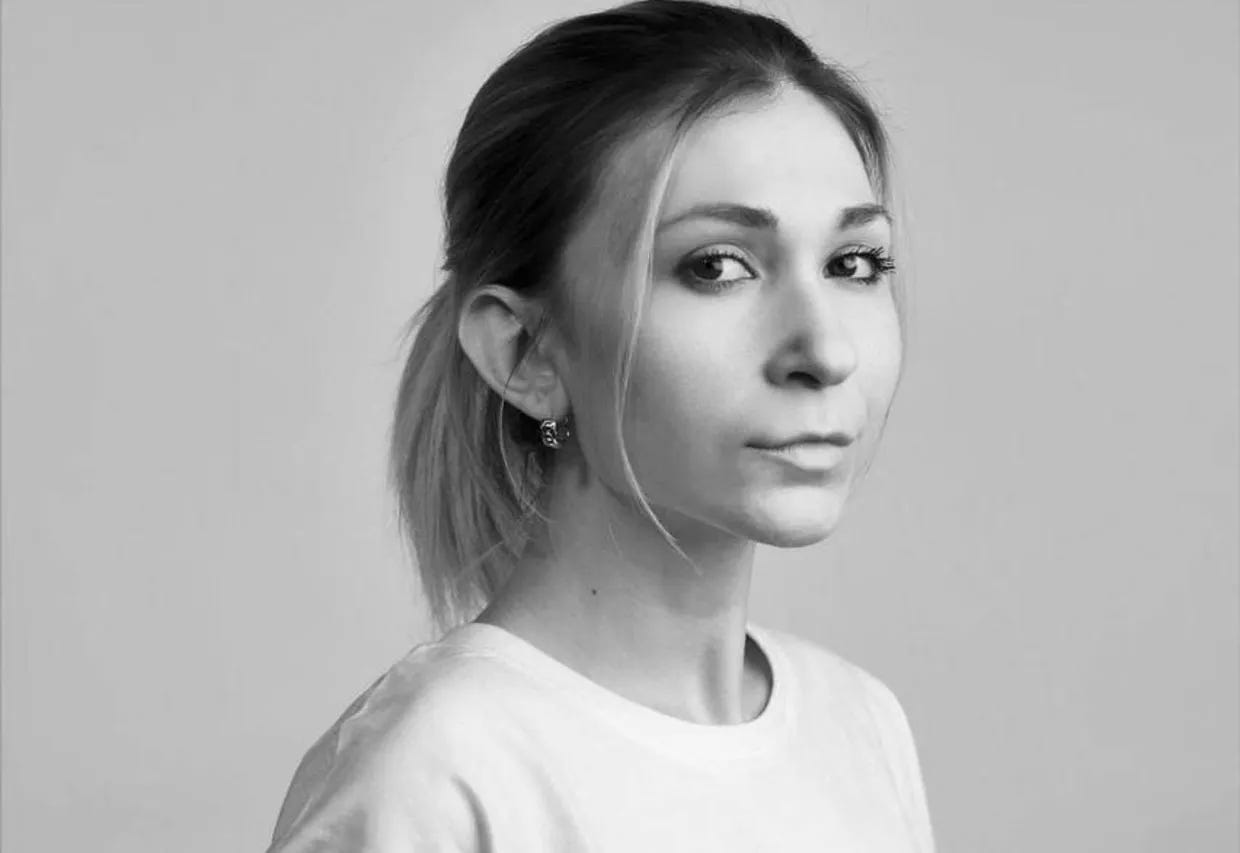
She was only 27, and was supposed to be included in the upcoming prisoner exchange, the government said. She was reportedly held in a brutal detention facility in the Russian city of Taganrok, known for its torture of prisoners.
I never met Viktoria, but her former colleagues say she was the embodiment of her profession – brave and determined, always the first one at every scene, working and bothering editors about her work 24/7.
She was taken captive while reporting from Russian-occupied territories in August 2023. But that wasn’t her first time in Russian captivity.
Viktoria was first detained by the Russian Federal Security Services (FSB) for 10 days in March of 2022. To the dismay of her colleagues, she was trying to get into occupied Mariupol, which was being obliterated by Russian fighter jets back then.
“Nothing could stop Vika if an idea was born in her head. Nothing was more important to her than journalism,” her former colleague Yevheniia Motorevska wrote on Facebook. “She was a force of nature that we failed to tame.”
On the geopolitical front, Ukrainians were disappointed with the postponement of the Ramstein group meeting because of Joe Biden’s preoccupation with Hurricane Milton.
The Ramstein group—which is called the Ukraine Defense Contact Group but steals the name from Germany’s Ramstein Air Base, where its meetings happen—is a coalition of more than 50 states who militarily support Ukraine in its war against Russia.
The group was scheduled to meet this Saturday, Oct. 12, at the level of state leaders, for the first time ever. Zelensky hyped up the meeting beforehand, saying it would be “special”, while the media reported that President Biden may even be ready to advance Ukraine’s NATO bid before he leaves office, perhaps making significant decisions during the Ramstein. Biden was supposed to chair the meeting. But it didn’t happen: The US President had canceled to stay in the US and deal with the hurricane.
With Ramstein postponed indefinitely, Zelensky went on a European tour with his “victory plan”, presenting it to leaders of France, the UK, and NATO.
Presidential Office advisor Mykhailo Podoliak said on Saturday that the President might reveal the plan to the Ukrainian public within days. I’ll keep you updated as soon as that happens.
That will be it for today. I’ll be back next week,
Cheers, and Glory to Ukraine
— Yours Ukrainian
Because we had a story from Ukrainian media though not this outlet, I thought it could be of interest to hear from someone who is also in Ukrainian media (probably not about the nuke plant story.) Benjamin Wittes is a diligent supporter of Ukraine. Here’s a snippet; I used the embed link to post. (It’s not as nice as a reblog WP to WP, is it?) The piece is actually a podcast; there’s a transcript button up top on the page.
“Last week, I wrote this piece urging people to support the independent Ukrainian media organization, Svidomi. In that piece, I promised a podcast with the organization’s chief and founder, Anastasiia Bakulina. Our conversation got delayed by a few days for technical reasons. First, my recording software failed for reasons that may or may not be related to the worldwide cyber outage. Then, just as we were ready to try again, the power in Lviv went out. Apologies for the delay, but here is the conversation. As you’ll see, Nastya has a remarkable story to tell—one I find inspiring and which I cannot help but think about in relation to the history of Lawfare, which like Svidomi, began as a volunteer project of three friends and has developed into something much more professional and substantial.”
Anastasiia Bakulina Discusses Svidomi Media by Benjamin Wittes
A chat with the 25-year-old head of an independent Ukrainian media organization
FILE PHOTO: Russian President Vladimir Putin speaks during a joint news conference with Greek Prime Minister Kyriakos Mitsotakis following their meeting at the Bocharov Ruchei state residence in Sochi, Russia December 8, 2021. Sputnik/Evgeny Odinokov/Kremlin via REUTERSREUTERS
President Vladimir Putin has lamented the collapse of the Soviet Union three decades ago as the demise of what he called “historical Russia” and said the economic crisis that followed was so bad he was forced to moonlight as a taxi driver.
Putin’s comments, released by state TV on Sunday, are likely to further fuel speculation about his foreign policy intentions among critics, who accuse him of planning to recreate the Soviet Union and of contemplating an attack on Ukraine, a notion the Kremlin has dismissed as fear-mongering.
“It was a disintegration of historical Russia under the name of the Soviet Union,” Putin said of the 1991 breakup, in comments aired on Sunday as part of a documentary film called “Russia. New History”, the RIA state news agency reported.
“We turned into a completely different country. And what had been built up over 1,000 years was largely lost,” said Putin, saying 25 million Russian people in newly independent countries suddenly found themselves cut off from Russia, part of what he called “a major humanitarian tragedy”.
Putin also described for the first time how he was affected personally by the tough economic times that followed the Soviet collapse, when Russia suffered double-digit inflation.
“Sometimes (I) had to moonlight and drive a taxi. It is unpleasant to talk about this but, unfortunately, this also took place,” the president said.
Putin, who served in the Soviet-era KGB, has previously called the collapse of the Soviet Union, which was ruled from Moscow, as the “greatest geopolitical catastrophe” of the 20th century, but his new comments show how he viewed it specifically as a setback for Russian power.
Ukraine was one of 15 Soviet republics and Putin used a lengthy article published on the Kremlin website this year to set out why he believed Russia’s southern neighbor and its people were an integral part of Russian history and culture. This view is rejected by Kyiv as a politically motivated and over-simplified version of history.
The West has accused Russia of massing tens of thousands of troops near Ukraine in preparation for a possible attack as soon as January. The Group of Seven wealthy democracies warned Moscow on Sunday of massive consequences and severe costs if it attacked Ukraine.
The Kremlin has said Russia has no plans to launch a fresh attack on Ukraine and that the West appears to have convinced itself of Moscow’s aggressive intentions based on what it calls false Western media stories.
Russia annexed Ukraine’s Crimea region in 2014 and has backed separatists who took control of a swath of eastern Ukraine that same year and who continue to fight Ukrainian government forces.

 Scottie's Playtime