I have long liked this young YouTuber. I started following him when he was more into debunking stuff while also producing atheist content. I felt he understood what a lot of people were going through in that he was trying hard to hide being an atheist from his parents and family which gave him an idea what many in the LGBTQ+ community were going through with their families. He himself noted that similarity. One of the things I like about him is his calm quiet fact filled delivery. If others have not noticed I don’t like aggressive angry yelling videos, they are too close to what I grew up with and suffered in my childhood. Drew is not a fervent anti-Christian like so many atheists are. Instead he simply is against the bad stuff some people do in the name of religion / Christianity. I like that. At the end of this video he again says if you are getting something good from your faith, don’t leave it, just change it to make it better. I agree. He explains how Christianity was abused by corporations and wealthy people to get people to do things against their own interest they otherwise wouldn’t do. In the name of god work more at a lower cost to make money for your employer type stuff. Hugs
Tag: US Politics
Let’s talk about what US debt means to you….
Republican Crimes Against The U.S.
King Stinks-A-Lot by Clay Jones
No room for tyrants Read on Substack

Tomorrow, we’re celebrating the anniversary of our independence from a monarchy. Yet, the guy in the White House envisions himself as a monarch.
He wants to ban protests, which is a First Amendment right. He didn’t send the military to California to stop riots. He sent them to stop the protests. Ice has arrested legal residents, without charges, but citing their protests. The regime is bullying colleges to stop protests against the war in Gaza. This is not freedom. This is not independence.
Trump asked the courts for immunity from criminal charges. Every court said no until it got to the Supreme Court. One man has been ruled to be above the rest of us, and he has immunity.
The Supreme Court allowed Trump to stay on the ballots despite his waging war against this nation.
Trump waged war against this nation to remain in office. He led a white nationalist coup attempt against our country. He attacked Congress to prevent it from doing its constitutional duty of certifying the 2020 election.
Now, Congress is in Trump’s pocket and failing to work as one of the three branches.
The Supreme Court has now ruled that lower courts shouldn’t make rulings against Trump that apply nationally.
The Supreme Court failed to address Birthright Citizenship, allowing Trump to violate a Constitutional amendment. Until SCOTUS acts on this, Trump will go unchallenged.
He is building concentration camps.
He’s ordering the Department of Defense to go after his enemies.
He’s violating the Emoluments Clause, using the White House to enrich himself.
He’s talking about running for a third term, but this would just be another violation of the Constitution. If he’s talking about running for a third term, then he will be running for a third term.
Trump will not allow another election to be fair.
He’s attacking the media, and soon, the only media that will be allowed to continue to exist will be Trump media.
I left a lot out, so go ahead and fill in the blanks in the comments.
(snip-MORE)
In 1776 we rejected a monarchy by Ann Telnaes
You can thank the oath breaking Republicans for where we are Read on Substack
“He has refused his Assent to Laws, the most wholesome and necessary for the public good.”

Mr. Abrego’s Account of Torture at CECOT in El Salvador
https://www.muellershewrote.com/p/mr-abregos-account-of-torture-at
Mr. Abrego has filed an amended complaint asking the court to declare the government’s actions unlawful and to order his release. He describes his torture in El Salvador in the complaint.
Let’s talk about Trump’s bill and the biggest cost….
Court rules talk-based conversion therapy is legal in Virginia
I am so depressed over the drive of the Fundamentalist Christian rights success at trying to erase the LGBTQ+ people. Now they are trying to again return to the discredited idea that sexual ordination can be changed if you torture a kid badly enough. I read so many horror stories of kids as young as 13 and 14 having their genitals hooked up to electrical shock devices, being beaten, being sexual abused so that they would be turned off by same sex hook ups, being curatively raped for both lesbian and gay boys, and so many more. And it doesn’t work. People can be forced to control behavior and lie about their feelings. But sexual attraction can not be changed.
I keep saying the same question to those straight cis people who think orientation or gender is simply a choice rebellious teenagers make. Can you willingly change your attraction from straight to gay and live that life for a year having sex with your same gender? Can you do happily what same sex couples do to please each other sexually? Can you stop being the gender you were assigned at birth and change every aspect of your gendered life and live that way for a few years to show me it is a choice? They tell me that is stupid and why should they … they are the normal ones!
I feel sorry for the kids because of the stories of abuse I have read about at these conversion camps, at these “therapist offices”. The male survivor site has an entire forum dedicated to this subject. Why is it so important to these people to wipe us out socially / publically. Why can’t they let the kids be, why must they sexually force them to be mini me straight cis clones of the parents.
As I said I don’t understand and I do know it is not all Christians. But seriously we need progressive Christian churches to stand up to these groups. After 9/11 we kept hearing people demand Muslims in the US denounce publically the terrorist act of other Muslims. Recently a Muslim won the democratic nominee for NY City and democratic politicians were demanding he denounce every bad thing ever done by a Muslim. Why is that a one way street? Shouldn’t white people be required to denounce bad white people? Shouldn’t Christians be required to speak out against hateful Christians.
I am seeing a return to the 1970s Anita Bryant rhetoric and no one seems to see the connection. She used her faith to claim that no one wanted to see gay teachers in public schools indoctrinating and recruiting (sexualizing) kids. Well these are the same words used against the gay teachers and trans people today by the republicans and hate Christians. It was the anti-Christian oppression Samuel Alito wrote in his ruling that just having books with people happy to celebrate a same sex wedding was discrimination against Christians who did not want people to be happy at same sex weddings. Read his ruling it really says that kids being read a picture book of people being happy at a same sex wedding is oppression and discrimination against Christians.
I am tired. I am 62 years old. I fought this fight as a child, suffered from it, faced the discrimination, lost jobs, got assaulted at work and school, lost promotions, and had hate poured out on me at every turn for at least 25 years. Hell as I was being raped as a child I had anti-gay bigotry screamed at me. Think on that for a mindfuck. Those raping me screamed I deserved it as a 7 year old because I clearly was a faggot. I lost my right to keep going with my Army career due to a new unit commander who bragged about his deep Christian faith. He called me into his office, told me he knew I was out to my unit and even though I was respected, well liked, and had the skills to save the unit even on the day I was leaving, he was not going to tolerate an “evil deviant homosexual” to be in the army or his unit. I feel so sorry for the kids kicked out of their homes to have to sell their bodies on the street to strangers for food and lodging due to this hate. I am so tired as history is repeating and I need to find the strength to fight for the LGBTQ+ kids once again. I don’t think I can. Hugs
——————————————————————————————————————
The therapy practice tries to influence gender or sexuality identity and has been denounced by experts for negative effects to patients’ mental or physical health.
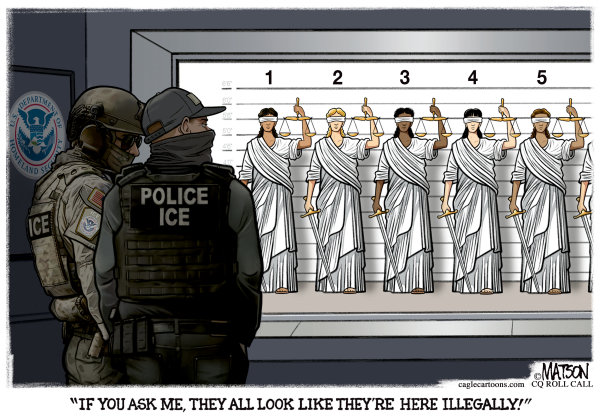
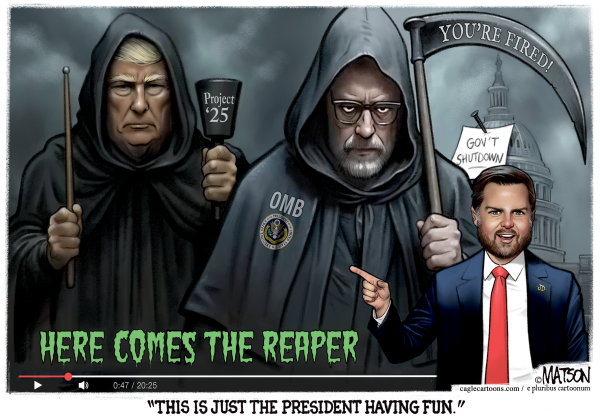
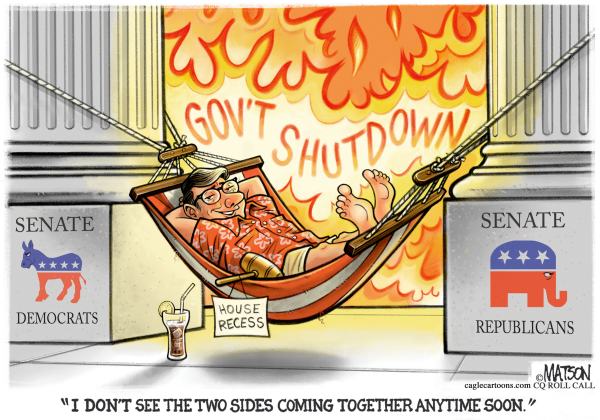
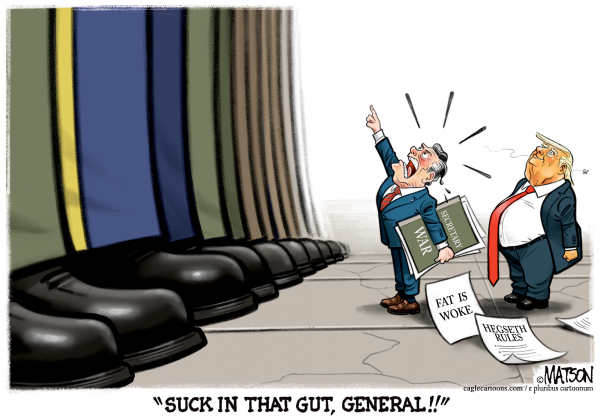
Political cartoons / memes /and news I want to share. 7-2-2025


The One Big Beautiful Bill Act in an image.
❌Health care
❌Clean energy
❌Education
❌Food assistance
❌Natural resources
All slashed in order to pay for tax cuts to the wealthy.


Living while disabled
Dems fear a gop legal blitz
“‘It’s proof of our existence’: This lesbian archive is recording history as it’s erased”
This story was originally reported by Amanda Becker of The 19th. Meet Amanda and read more of her reporting on gender, politics and policy.
CINCINNATI — The Ohio Lesbian Archives in Cincinnati’s Over-the-Rhine neighborhood started with a friendship.
Phebe Beiser said that when she and co-founder Victoria “Vic” Ramstetter met in the 1970s, they bonded over being “hidden, secret, teenage lesbians,” growing up in what was then a conservative city and region where there were few gay role models. For a time in their 20s, they shared group houses in Clifton, where they now joke that they “survived the lesbian commune together.” They were young and idealistic. They wanted to “turn being an activist lesbian into something fun and interesting, and maybe help change the world.” Beiser, now in her mid 70s, told The 19th that they had a mantra: “We never wanted to be invisible again.”
When the Crazy Ladies Bookstore, named for the women who history brushed off as “crazy,” opened in Northside in 1979, it became the center of gravity in the Cincinnati lesbian community of which Beiser and Ramstetter were a part. Women bought homes in the neighborhood, gathering at the feminist bookstore for coffee, tea and conversation about being women, and about being gay. In 1989, the Archives opened on an upper floor.
It seemed that the visibility of the Crazy Ladies Bookstore and the Ohio Lesbian Archives — and of the women who made them happen — would be cemented in history in 2023, when the Ohio History Connection, the state’s nonprofit historical society, “embarked on a three-year project to diversify Ohio’s historical markers to include ten new stories of LGBTQ+ Ohioans” via its Gay Ohio History Initiative, or GOHI. At the time, there were roughly 1,800 historical markers in Ohio’s program, but only two commemorated places, events or people from the state’s queer history. A third, recognizing Summit Station, a lesbian bar in Columbus that operated from 1970 to 2008, was dedicated during Pride Month that year. The Archives and bookstore were selected for joint recognition.
That long-overdue acknowledgement has been derailed by the Trump administration’s sweeping war on DEI, which extends beyond diversity, equity and inclusion programs to seemingly include anything that acknowledges the country’s diversity of experience. But the archives — and the volunteers who sustain it — are undeterred, carrying on as the queer community has throughout history, documenting their existence.
We never wanted to be invisible again.” Phebe Beiser

The Marking Diverse Ohio program was financed by a $250,000 grant from the Institute of Museum and Library Services, an independent agency created by a Republican-led Congress in 1996 that is the main source of federal funding for libraries and museums. Beiser and Branstetter were interviewed for an oral history. Ohio History Connection researchers visited the Archives to peruse the collection. A location was secured in a city park near where the since-shuttered Crazy Ladies Bookstore once was. By early this year, preparations to forever commemorate the Archives and bookstore with a plaque were all but complete. Its installation was expected in June, Pride Month.
Then, in late March, President Donald Trump issued an executive order regarding “The Continuing Reduction of the Federal Bureaucracy,” singling out seven agencies for elimination — including the Institute of Museum and Library Services, or IMLS. Nearly all of its employees were put on leave and their emails were disconnected. Days later, his administration’s Department of Government Efficiency, or DOGE, canceled $25 million worth of already-awarded IMLS grants, including the $250,000 for Ohio History Connection’s Marking Diverse Ohio program. The federal agency’s seemingly final Instagram post stated: “The era of using your taxpayer dollars to fund DEI grants is OVER.” The last photo listed erecting “LGBTQIA+ historical markers across Ohio” among the alleged government excesses that would be cut.
Svetlana Harlan, a former project coordinator for Marking Diverse Ohio, recalled that when she looked at the list, and saw the program with other projects she admired, “it almost seemed like a positive thing, I was like, ‘Oh yeah, these are nice initiatives!’”
“And it turns out that [DOGE] was just taking over the account. So then I was like, ‘Oh, they’re cutting those. Oh, our name is on the list,’” she said.
DOGE’s cancellation of the $250,000 IMLS grant to Ohio History Connection threw into question the future of the markers that were supposed to ensure that Ohio’s public displays of its history include LGBTQ+ people. Along with the Ohio Lesbian Archives and the Crazy Ladies Bookstore, there were markers in the works for an LGBTQ+ district in Akron; the first professor of gay and lesbian studies at Kent State University; 19th-century sculptor Edmonia “Wildfire” Lewis; LGBTQ+ journalism in Ohio; Toledo’s first LGBTQ+ member of city council; a Columbus hospice care center for HIV and AIDs patients; an open lesbian pastor in Athens; the screen-printing company Nightsweats and T-Cells in Lakewood; and the Rubi Girls, a Dayton-area drag group that has raised more than $3 million for HIV/AIDs and LGBTQ+ causes since the 1980s.

(Courtesy Ohio Lesbian Archives)
Preservation on hold
Marking Diverse Ohio and other programs recognizing specific communities weren’t the only programs impacted in the state when DOGE cut IMLS grants and the federal agency essentially shuttered. And, given that more than $250 million is granted annually to libraries and museums nationally, the economic chaos at the country’s museums, libraries and historical institutions wasn’t confined to Ohio.
In Ohio, other entities that received recent IMLS funding include the Frank Lloyd Wright-designed Westcott House in Springfield, for post-pandemic, on-site programming; the Cincinnati Zoo for a big cat breeding program; Dayton Metro Library programs that helped low-income Ohioans secure Internet access; and Cincinnati’s Contemporary Arts Center, which lost $175,000 slated for programming aimed at the 3,000 or more teens it serves each year.
Institutions in Pennsylvania warned the economic upheaval could scuttle the digitization of The Rosenbach museum’s collection of rare books and manuscripts; the Woodmere Art Museum was mid renovation on a building to house its collection and expected to be reimbursed. In Wisconsin, small-town libraries said without the $3 million from the IMLS they’d received the year before they would have to reduce staff and therefore services. The American Library Association, or ALA, and the American Federation of State, County and Municipal Employees, or AFSCME, the labor union representing government workers, sued the Trump administration. ALA President Cindy Hohl said at the time that, “Libraries play an important role in our democracy, from preserving history to … offering access to a variety of perspectives.” AFSCME President Lee Saunders added: “Libraries and museums contain our collective history and knowledge.”
Earlier this month, a federal judge ruled that the Trump administration could continue dismantling the Institute of Museum and Library Services as the case continues.
For now, Ohioans who want LGBTQ+ history represented among the 1,800 markers in the state will not get the federal funding that was granted and must search for alternative resources in their communities. A couple of the markers look poised to move forward with outside funding from community foundations and other organizations. Others, like the Ohio Lesbian Archives and the Crazy Ladies Bookstore, are still waiting. The remaining cost to install the marker would likely be $3,000-$5,000.
When The 19th reached out to Ohio History Connection to ask if any alternative funding sources were being explored to install the Archives’ marker, spokesperson Neil Thompson said that he was “not able to provide any additional information for an Ohio Historical Marker application that is not in the public domain” and that it is only considered in the public domain once “the markers are finalized, cast and ready to be installed and dedicated.”

‘A reflection of themselves’
The Ohio Lesbian Archives has always been a DIY endeavor, powered by a group of passionate volunteers.
When the Crazy Ladies Bookstore’s founder, Carolyn Dellenbach, moved out of the area, she handed it over to its patrons to be run as a feminist collective. A lesbian newsletter called Dinah operated out of the upper floor — they referred to the National Organization for Women’s Task Force on Sexuality and Lesbianism, established in 1973, as FOSAL, or fossil, and Dinah was a play on dinosaur. Beiser laughed explaining the name: It was the 1970s; maybe there were drugs involved. For a time she wrote for Dinah and loved interviewing famous arrivals from the “women’s music circuit” when they came to town.
At some point, the women working shifts at the bookstore, writing for Dinah and organizing talks and other events related to feminist and lesbian issues, realized that the community they had built, and the ephemera they were collecting and creating, were an important part of history — theirs, lesbians,’ Ohioans,’ and women’s.
“We held on to them because we knew they could not be replaced,” Beiser said of the collection. “It’s proof of our existence … so we held on to these things to never be invisible again.”
We held on to them because we knew they could not be replaced. It’s proof of our existence.” Phebe Beiser

In a 1991 issue of Dinah, letters to the editor included one from “Ma” who updated the “wimmin” in the community — they often spelled variations of their gender in ways that did not include “man” — that she was homesteading outside the city with her partner and building a log cabin. Another was from a woman who said she was “shocked” to find out that her being fired for being a lesbian was not a violation of civil rights laws and she was disappointed that the LGBTQ+ community did not come out to support her recent picket, writing: “I hope that in my lifetime I will see the gay and lesbian community get off their asses and together start fighting for their rights.”
Across from the metal filing cabinet at the Archives that houses the Dinah issues, a modern-looking poster from before the Supreme Court decided Bostock v. Clayton County in 2020, which extended employment protections to LGBTQ+ Americans, reminded Ohioans that it was still legal for them to be fired for their sexual orientation or gender identity. Today, Trump’s Equal Employment Opportunity Commission is aiming to curtail those hard-won workplace protections established by Bostock.
Lüdi Rich, a 27-year-old librarian, was working a recent Sunday afternoon at the Archives’ twice-weekly open hours, organizing books and research materials while the space was open to members of the community to drop in.
When Rich moved to Cincinnati nearly two years ago, she didn’t know anyone in the area, so she looked online for queer spaces so she could start building her community. When she attended a panel on local queer history, one of the speakers was Beiser, a longtime librarian herself in the country’s second-largest public library system.
Beiser mentioned at the panel that the Ohio Lesbian Archives would be having an open house that night at its new location next to Over-the-Rhine’s Washington Square Park, where Beiser was among those who met to march in Cincinnati’s first Pride Parade in April 1973. Rich asked Beiser how she could volunteer.
A couple months later, Rich showed up for her first shift, “And I’ve been here working ever since,” she said.
Nancy Yerian, the 34-year-old president of the Archives’ board, said that when she graduated from college in Massachusetts, she didn’t know if she could return to Cincinnati, where she grew up — until she discovered the Archives. “I thought that to live the kind of life I wanted to lead, I had to get out of what I thought was a very conservative place,” said Yerian, who has been volunteering at the Archives in some capacity since shortly after she finished school.
“Finding the Archives and the people I’ve met through the organization and the community we’re creating, as well as the history we’re preserving — it gave me a lot of hope that I could create a life for myself here,” she added.
It really is just us, preserving our history.”Lüdi Rich

The Archives’ volunteers have helped digitize old photos, some of which are now in a collection at the Cincinnati Public Library. They organize the books, arranged by first names instead of last, since so many women, especially in those early years, published works after taking on their husbands’ surnames. There are filing folders of Dinah newsletters. A cabinet holds multiple VHS and DVD copies of the early aughts television drama “The L Word.” A collection of buttons includes those from past Pride marches; supporting Hillary Clinton’s presidential campaigns; and one with “REMEMBER” and an inverted pink triangle, the Nazi symbol that Adolf Hitler used to identify gay and trans people. There is also one with the logo of the Crazy Ladies Bookstore, the silhouette of a woman reading while reclined in a chair, a cat by her side.
“Many people who are coming to the archives are looking for a reflection of themselves and in many ways that’s why Vic and Phebe started it. It shows models of ways to be in the world and a feeling of not being alone and not being the first queer person or lesbian,” Yerian said.
The Ohio Lesbian Archives, marker or not, is and will keep doing what it always has: making sure that lesbian Americans are visible in the country’s historical record.
“It really is just us, preserving our history,” Rich said.
Feeling overwhelmed by the news? The 19th is considering new ways to keep you informed. But we need your input! Fill out this quick survey to share your thoughts.