A broken window on an LGBTQ fashion boutique storefront in Manhattan, New York on June 12, 2023.Photo: Shutterstock
There has been a 112% increase in documented attacks on LGBTQ+ people nationwide, according to a newly unveiled Anti-LGBTQ Extremism Reporting Tracker (ALERT) from the queer media watchdog organization GLAAD. GLAAD hopes to use the tracker to provide comprehensive reporting and analysis detailing anti-LGBTQ+ hate in the U.S. and the specific communities and targets affected by it.
ALERT recorded 524 such incidents between June 2022 and 2023 and 1,109 incidents from June 2023 to 2024. These attacks have included over 450 protests, 330 propaganda drops, 320 acts of vandalism, 200 bomb & mass shooting threats, 130 assaults, and 45 cases of arson that have resulted in at least 161 injuries and 21 deaths, GLAAD’s ALERT Desk reported.
While the cases focus on drag bans and trans protections, they address larger issues of free speech and civil rights.
The attacks have also included over 567 attacks on transgender and gender non-conforming people, 360 incidents targeting educational institutions and libraries, 325 incidents targeting Pride flags and other LGBTQ+ community symbols, 160 protests and violent threats against drag performers, and 140 incidents targeting health care providers of gender-affirming care and their patients.
The tracker, which will be updated quarterly, includes data on criminal and non-criminal acts of hate from sources like news media, partner organizations (like the Human Rights Campaign or Anti-Defamtion League’s Center on Extremism), right-wing forums on social media sites like Gab or chat apps like Telegram as well as incident reports submitted via GLAAD’s website. All documented incidents must occur against groups or individuals within the U.S. and must include harassment, threats, or actual violence specifically targeting LGBTQ+ people.
GLAAD’s ALERT team will verify the validity of each incident to maintain credibility, remove duplicates, and exclude spam and trolling, the organization said.
“The ALERT Desk tells a story not entirely captured by the FBI’s hate crime statistics because many of these incidents, like protests at Pride events, don’t meet the criteria necessary to bring legal charges [and] aren’t included in most official hate crime counts,” GLAAD wrote in its recently released report on ALERT’s findings. “However, we must recognize that the impact of these acts on local LGBTQ communities is felt regardless of whether or not the incident is prosecuted.”
“We must recognize that the impact of these acts on local LGBTQ communities is felt regardless of whether or not the incident is prosecuted.”
GLAAD’s 2024 report on ALERT’s findings
During a press call, Barbara Simon, senior director of news and campaigns at GLAAD, noted that ALERT seeks to contextualize anti-LGBTQ+ incidents to help media and other experts understand larger systems of violence.
“[Recently], there was a bomb threat against a library in Massachusetts,” Simon said, a threat against a Drag Queen Story Hour at the public library in Somerville. “But it’s not just about that library. It’s not just about the inclusive materials and programs they had, about how the bomb squad had to come in and sweep the library, how children and families and patrons had to evacuate the library.”
“Our data shows how that incident is connected to the bigger picture, which is more of a broad-based, systemic attack against LGBTQ people, our visibility, our equality and our allies,” Simon added. “It is one of 365 attacks nationwide against drag artisan events. It’s one of 63 anti-LGBTQ attacks in Massachusetts alone, one of 15 attacks specifically against drag in Massachusetts.”
The quarterly reports will also include stories from those affected by the incidents.
GLAADA bar graph showing anti-LGBTQ+ hate incidents from GLAAD’s ALERT Desk. | GLAAD
For example, Dr. Jack Turban, pediatric psychiatrist and director of the gender psychiatry program at the University of California in San Francisco, said during the press call that bans on gender-affirming care for youth in 26 states have worsened the mental health of his young trans patients even though they live in a state where such health care is protected. Their mental health has been worsened, Turban said, because of an increase in anti-trans rhetoric nationwide whose indirect effects cross state lines.
“Kids are hearing things like being trans is a mental illness, or being trans is bad, or you shouldn’t be allowed to use the bathroom that aligns with your gender identity because trans people are sexual assaulters, or you shouldn’t be allowed to play on sports teams with your friends because you’re going to physically hurt them,” Turban said. “My patients know that none of those things are true, right? They can know that, but if you’re hearing it every single day, all over social media and all over the news and now right in their communities, even it’s impossible to not be impacted by that.”
GLAAD pointed out that media coverage tends to falsely frame medical care for transgender people as a “debate” despite every major medical association supporting the care. This coverage compounds the effect of hateful rhetoric from anti-trans politicians, protestors, and pundits.
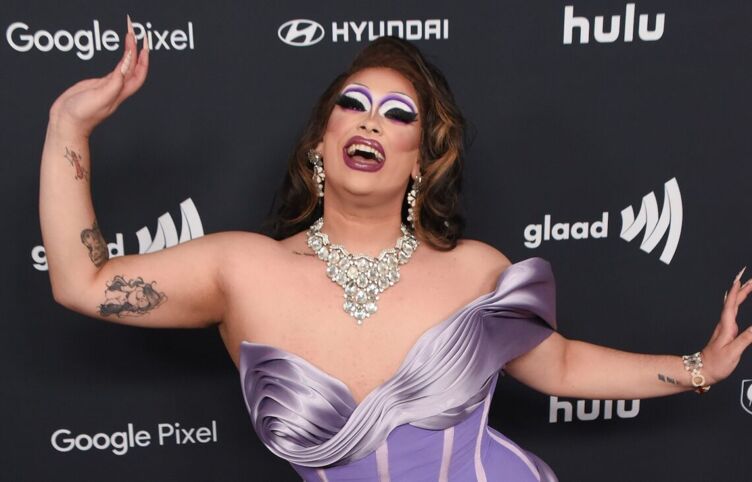
ShutterstockSalina EsTitties attends the 35th Annual GLAAD Awards on March 14, 2024 in Beverly Hills, California. | Shutterstock
The hateful rhetoric affects even LGBTQ+ celebrities and their fans, like Salina EsTitties, a competitor who appeared in Season 15 of RuPaul’s Drag Race. EsTitties told the press call that she’s generally insulated from hatred against gender non-conforming people since she lives in the very gay city of West Hollywood, California. However, she sees its impact whenever she travels to other states or posts social media videos about LGBTQ+ issues.
“There’s comments every single day of people being like, ‘This is not what God created. God created two genders. Oh, they keep adding alphabets. Oh, just shoot it between the eyes and get rid of it,’” EsTitties said. “The online hate is insane and there’s so much of it, and people are so willing to just let it all out, but it’s a clear representation of how people actually feel in America and across, you know, the U.S. here.”
“Not only are our LGBT community dealing with having to be their authentic selves,” she continued. “Being their authentic selves with just who they are outside of their queer identity is a lot to navigate, and it’s not easy, especially when people are telling you, ‘You’re the Devil, you’re a demon,’ or ‘It’s not acceptable to be that.’”
Hate crimes typically increase during presidential election years. Marie Cottrell, executive director for the New Jersey-based LGBTQ+ advocacy center Out Montclair, said she hopes that increased awareness of anti-LGBTQ+ hate incidents will empower communities to build intersectional coalitions between other demographic groups whose members are targeted by similar hate.
“I think that it’s really important that you be the person that the community needs,” Cottrell told the press call. “They need to see you stand for and with them. Find folks who in your community who will stand with you in the face of intolerance, build a community of support within your township — whether that’s forging a relationship with your LGBTQ liaison within the local police department … working with the township, the mayor, the town council, and really having open conversations … having conversations that address really hard questions and topics and that starts the process of understanding and healing in your community.”
“It’s a small step, but it’s a step forward and a step forward in helping others understand the community,” she said.
Subscribe to the LGBTQ Nation newsletter and be the first to know about the latest headlines shaping LGBTQ+ communities worldwide.
November 4, 1811 A group of men in Bulwell, near Nottingham, England, armed with hammers, axes and pistols in the dark of night, broke into the workshop of a master weaver named Hollingsworth and smashed six weaving machines the men thought threatened their jobs. They and their supporters opposed the industrialization that had turned home-based sustainable textile work into factory work with significant loss of jobs through mechanization (and those at much lower wages), as well as the attendant air and water pollution. Luddites smashing loom. They called themselves followers of the probably fictional General Ludd and continued their attacks for months, with over a thousand knitting machines destroyed. In response, thousands of troops were sent to stop the rebellion, and Parliament passed a law making destruction of weaving machines a hanging offense. Luddites has since become a term used for those who oppose technology.
November 4, 1956 Two hundred thousand Russian troops with 1000 tanks stopped an anti-Stalinist uprising in Hungary and installed a new pro-Soviet government. Although civilians had set up barricades along all the major roads leading to Budapest, the Soviet air force bombed the capital and troops poured into the city in a massive dawn offensive. Hungarian Army and National Guard troops participated in the resistance; only Communist Party functionaries and security police fought alongside the Warsaw Pact troops. The help promised from the U.S. to protect and aid the anti-Stalinists never came. 20,000 Hungarians ultimately died as a result (as well as 4000 troops), and ten times that many left the country permanently. Hungarian ‘freedom fighters’ temporarily forced back Soviet tanks and troops. Soviet tanks in Budapest. Pictorial history of the Hungarian Uprising
November 4, 1984 The first free elections in Nicaraguan history were held. Nicaragua’s ruling Sandinista Front claimed a decisive victory (70%), defeating six other parties, in the country’s first elections since the revolution the Sandanistas had led five years previous. The high-turnout election (83%) was monitored by 400 independent election observers who said the election had been fair. Read more
November 4, 1995 Israeli Prime Minister Yitzhak Rabin was fatally shot minutes after speaking at a peace rally held in Tel Aviv’s Kings Square in Israel. The rally in Kings of Israel Square Yitzhak Rabin Read more
November 4, 2008 The first African American ever nominated by a major political party as candidate for president went before the electorate. Senator Barack Obama of Illinois and his Democratic vice-presidential running mate, Senator Joseph Biden of Delaware, faced Republican Senator John McCain of Arizona and Alaska Governor Sarah Palin; independent candidates Ralph Nader and Matt Gonzalez; Green Party candidates former Representative Cynthia McKinney and Rosa Clemente; and former Repepresentatives Bob Barr and Wayne Allyn Root.
The stakes in United States v. Skrmetti are even higher than most Americans realize and could have wide-reaching consequences if the court rules to keep the ban on gender-affirming care in place.
This piece was published in partnership with The 19th, a nonprofit newsroom covering gender, politics, and policy. Sign up for their newsletter here.
A Supreme Court case that will decide whether Tennessee can continue to ban gender-affirming care for transgender youth could imperil the ability of all Americans to make decisions about their health care, experts say. The outcome depends on how far the court is willing to stretch its ruling that overturned federal abortion rights.
In United States v. Skrmetti, the court has agreed to take up the question of whether gender-affirming care bans for trans youth are unconstitutional, in response to the Biden administration petitioning on behalf of trans youth and their families in Tennessee — one of 26 states that has bannedsuch care for minors. The outcome of the case will grant much-needed clarity in a political landscape that has thrown the lives of trans people across the country into turmoil, as hospitals turn patients away, pharmacies deny prescriptions and families travel hundreds of miles to find care.
But with the case set for oral arguments on December 4, the stakes are even higher than most Americans realize, legal and policy experts say. Tennessee has banned gender-affirming care, such as puberty blockers and hormone replacement therapy, for a specific demographic — trans youth — while allowing those same treatments for cisgender youth. If the Supreme Court allows the state to keep its ban in place, that could imperil everyone’s access to health care.
“What the state of Tennessee is arguing is really dangerous for any person who has any sort of medical condition,” says Ezra Young, a civil rights lawyer and constitutional scholar. Tennessee is dictating what medical treatments people should or should not be allowed to have, Young said; that goes well beyond states’ authority to regulate medicine, specifically because giving health care to trans people is not a public health concern.
“The state can make sure that the doctor you see has a medical degree and has an active medical license, for instance,” he says. “What the state can’t do is micromanage the medical decision-making of patients or doctors, and that’s for good reason. Bureaucrats or lawmakers aren’t medical experts.”
Yet in half of U.S. states, Republican lawmakers have banned or restricted medical care that many trans people need to live, over the protests of the American Medical Association, American Psychiatric Association, and other leading medical groups. Federal judges have attempted to block these bans from taking hold, finding them to be likely unconstitutional. Appeals court judges have disagreed and overturned those decisions. Now, the Supreme Court will have the final say.
“If we don’t win here, it’s going to be open season on any health care related to transgender people,” says Shannon Minter, legal director of the National Center for Lesbian Rights. If the Supreme Court holds that banning gender-affirming care is not discriminatory, then trans people would no longer be protected under the Affordable Care Act, he argues. States and private insurers would be able to exclude gender-affirming care from coverage plans.
“It would be devastating. I mean, absolutely catastrophic,” Minter says.
Ultimately, the outcome of this case will have a wider impact beyond gender-affirming care. A Supreme Court ruling endorsing Tennessee’s argument that the state can ban safe medical care — just because it disagrees with who that treatment is being given to — would enable the government to control people’s health decisions and enact other blatantly discriminatory policies, legal experts say.
“I think this case has bigger and broader implications than a lot of people realize, even frankly within the legal community,” says Michael Ulrich, an associate professor of health law, ethics and human rights at Boston University’s School of Public Health and School of Law. If the Supreme Court agrees with Tennessee’s ban, there’s nothing stopping states from banning or restricting other kinds of health care, he said — like what gets covered under Medicaid.
Solicitor General Elizabeth Prelogar’s office, representing the Biden administration, will split argument time before the Supreme Court with Chase Strangio, co-director of the American Civil Liberties Union’s LGBTQ & HIV Project.
The United States v. Skrmetti case is focused on whether Tennessee’s gender-affirming care ban violates the 14th Amendment’s equal protection clause, which prohibits discrimination on the basis of sex. The state insists that its ban has nothing to do with sex and that it does not target trans people. Instead, the law “sets age and use-based limits,” Tennessee’s attorney general argues. Minors can still access hormones and puberty blockers for medical purposes, as long as those treatments are not being used as part of a gender transition or to alleviate gender dysphoria. The state claims such a distinction is not based on sex because “neither boys nor girls can use these drugs for gender transition.”
In Dobbs v. Jackson Women’s Health Organization, the Supreme Court found that there is no constitutional right to an abortion in the United States. This ruling overturned Roe v. Wade, the landmark case that had guaranteed the right to an abortion since 1973. When writing the majority opinion in Dobbs, Supreme Court Justice Samuel Alito briefly addressed a theory that suggests abortion could be covered under the 14th Amendment’s equal protection clause. This idea is not part of Roe, or at issue in Dobbs, but was invoked in a separate “friend of the court” brief. Alito dismissed it, saying that state regulations on abortion do not discriminate based on sex.
“So that’s what the state of Tennessee is now latching on to, this passing reference, this brief statement in Dobbs, and they’re pinning their whole argument on it,” says Minter. “Everything hinges on it.”
In Dobbs, Alito wrote that abortion cannot be protected under the 14th Amendment’s equal protection clause, citing the arcane Geduldig v. Aiello — a case about pregnancy-related disability benefits — and Bray v. Alexandria Women’s Health Clinic, a case dealing with the rights of anti-abortion protesters. These rarely cited cases found that state regulations on abortion and pregnancy, or opposing abortion, are not sex discrimination. Tennessee is now using this framework to argue that “any disparate impact on transgender-identifying persons” caused by its law does not single trans people out for discrimination in ways covered by the 14th Amendment.
If the state’s gender-affirming care ban is found by the Supreme Court to be discriminatory under the 14th Amendment, it is subject to heightened scrutiny — a more rigorous review to determine whether a law is constitutional or not. In that scenario, Tennessee is more likely to lose.
Using abortion case law to support bans on gender-affirming care is especially dangerous, experts say. Tennessee is taking the Supreme Court’s own decision in Dobbs out of context, according to lawyers who have worked in LGBTQ+ rights cases for decades. And, if the justices read Tennessee’s law, it is obvious that banning gender-affirming care for trans people is discriminating based on sex, they say.
The United States v. Skrmetti case is focused on whether Tennessee’s gender-affirming care ban violates the 14th Amendment’s equal protection clause, which prohibits discrimination on the basis of sex. The state insists that its ban has nothing to do with sex and that it does not target trans people. Instead, the law “sets age and use-based limits,” Tennessee’s attorney general argues. Minors can still access hormones and puberty blockers for medical purposes, as long as those treatments are not being used as part of a gender transition or to alleviate gender dysphoria. The state claims such a distinction is not based on sex because “neither boys nor girls can use these drugs for gender transition.”
But, although the question before the court has become more specific, this ruling still has the potential to broadly set back LGBTQ+ rights.
Tennessee argues that the Supreme Court’s 2020 ruling in Bostock v. Clayton County, which found that employment discrimination against LGBTQ+ workers is sex-based discrimination prohibited under the Civil Rights Act, has nothing to do with this case. But going down this road leads to more questions, Ulrich says: Is discriminating due to sexual orientation also not considered sex-based discrimination?
“Then you can see just a proliferation of discriminatory laws that are coming out thereafter,” he says. “That’s a really dangerous proposition for the entire LGBTQ+ community and it’s setting us back significantly.”
Sruti Swaminathan, an ACLU staff attorney who has been counsel in this case from the beginning, said United States v. Skrmetti will test how far the Supreme Court is willing to stretch its Dobbs decision. They are well aware that the outcome of this case could curtail bodily autonomy for everyone. And taking this challenge before a conservative-majority Supreme Court has stoked fears among trans people of worst-case scenarios.
“We’re already at the place where half the country has banned this care. We need to not let the 6th Circuit decision stand idly and be utilized in the way it has,” Swaminathan says.
But Tennessee’s tactics, and the consequences that they could have during a time when laws targeting reproductive and transgender health care are proliferating, still worry them.
“I’m terrified. What we learned from Dobbs is that these attacks won’t stop with abortion,” Swaminathan says. “Banning abortion seems to be one pillar of an effort to write outdated gender norms into the law.”
U.S. v. Skrmetti began as a lawsuit against Tennessee’s ban on gender-affirming care for minors.
Tennessee’s argument in this case illustrates a larger coordinated effort to attack abortion access alongside gender-affirming care, says Logan Casey, director of policy research at the Movement Advancement Project, a nonprofit that tracks LGBTQ+ legislation.
States across the country have attempted to define sex based on reproductive capacity at birth. These efforts open transgender people up to discrimination and ignore the realities of intersex people, as well as cisgender women with conditions like primary ovarian insufficiency. Proponents of gender-affirming care bans inaccurately portray the effects of hormone replacement therapy on trans people’s reproductive ability by conflating the treatment with sterilization.
This Supreme Court case exemplifies a much larger argument that’s been a through line across attacks on transgender care and trans issues across the country, Casey says: What is sex, and who is protected when we think about that?
“Many of these state actors and politicians and extremists are clearly very invested in the concept of sex and defining sex in a very restricted and extraordinarily old-fashioned way that focuses only on people’s reproductive capacity, and then they use that argument in whatever context they can to advance the policies that would match that worldview,” he says.
(I don’t know if this is gonna work; I’m not on Instagram, but I went there, and could see, hear, read, and got the embed link. MomsRising is asking for shares, so if anyone cares to share, thank you!)
November 2, 1920 Socialist Party candidate Eugene V. Debs received nearly one million votes for President though he was serving a prison sentence at the time for his criticism of World War I and his encouraging resistance to the draft. More on Debs
November 2, 1982 Voters in nine general elections passed statewide referenda supporting a freeze on testing of nuclear weapons. Only Arizona turned it down. Dr. Randall Forsberg, a key person behind the Freeze movement Dr. Randall Forsberg
November 2, 1983 A bill designating a federal holiday honoring Dr. Martin Luther King, Jr. (to be observed on the third Monday of January) was signed by President Ronald Reagan. King was born in Atlanta in 1929, the son of a Baptist minister. He received a doctorate degree in theology and in 1955 organized the first major protest of the civil rights movement: the successful Montgomery Bus Boycott. Influenced by Mohandas Gandhi, he advocated nonviolent civil disobedience of the laws that enforced racial segregation. The history of Martin Luther King Day (pdf)
Two Ballot boxes damaged overnight with incendiary devices in SE Portland at 11th and Belmont AND Fishers Landing Vancouver, WA. It’s not known at this time if any ballots were damaged.
Below is what the tRump campaign is all about, toxic masculinity. Gang thug 12 yr old boys on the playground standing around insulting other kids pretending to be tough guys. Is this what you want for president, for congress? People who feel that everyone different from them should be insulted and belittled? Hugs
NFL rules forbid political “messages or gestures” during games or on the field. Just ask Colin Kaepernick, who was attacked by Bosa for kneeling during the anthem. The cult is celebrating Bosa and attacking NBC for editing the incident out of their coverage.
8.2 billion people and he is desperate for more … white ones. Yes that is the truth of it. First he is so egotistical he thinks his genetics are superior to any others. Second the fear he has is that brown people will out number white ones and rule the world. As a member of South Africa’s apartheid system he hates the idea of whites not being firmly and securely ruling over everyone else. He is a sick man. Hugs
They are so sure the voter purges are hurting the democrats that they push deeper and deeper cuts to the voter rolls. Not realizing they are hitting their own people now also. Hugs
And she seethed at the idea that anyone would question the citizenship of a former federal employee with the “whitest name you could have.”
The elections office in Montgomery County, just north of Houston, had sent Howard-Elley a letter in late January saying that she had been flagged after she indicated that she was not a U.S. citizen in response to a jury summons. She had 30 days to provide the county proof of citizenship or she would be removed from the voter rolls, according to the letter.
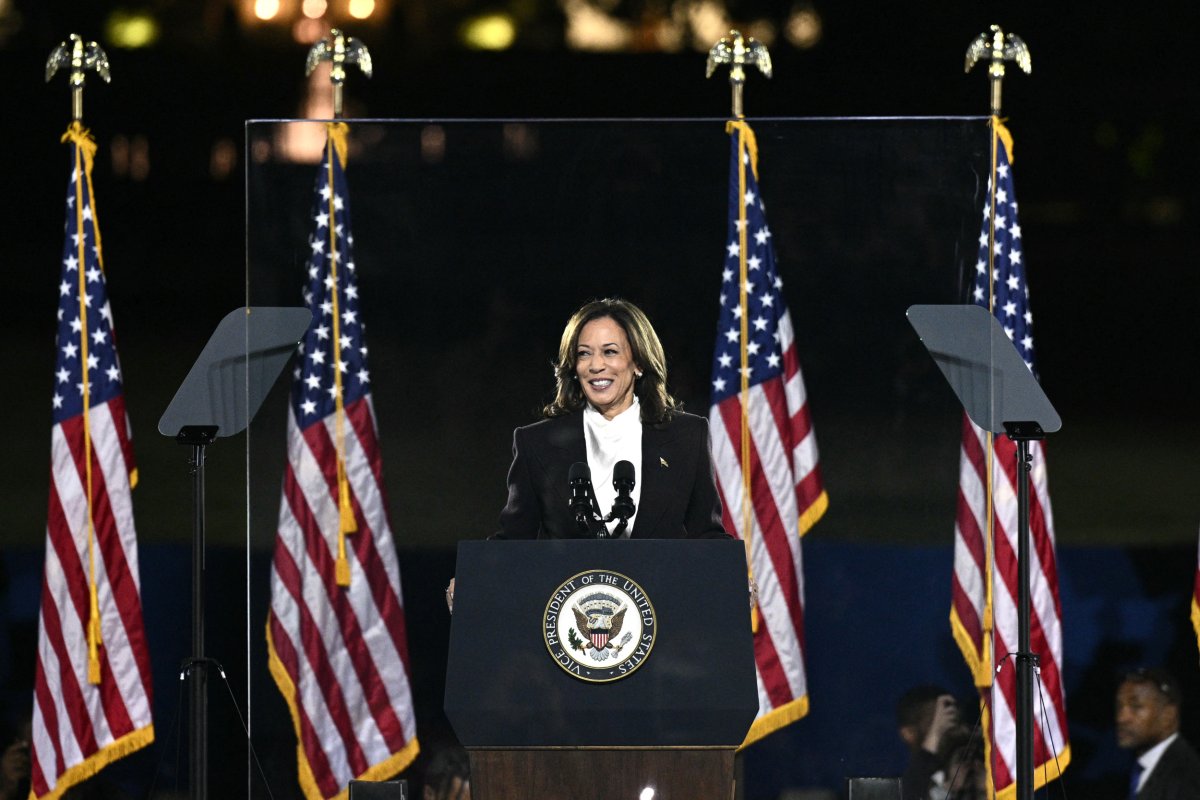
More than 75,000 spectators gathered in Washington, D.C., to hear Vice President Kamala Harris‘ closing argument speech at the same site of former President Donald Trump‘s infamous “Save America” rally that preceded the January 6 attack on the U.S. Capitol.
Harris’ event at the Ellipse arrived one week before Election Day and followed Trump’s closing arguments at Madison Square Garden on Sunday that received backlash for its inflammatory and racist rhetoric.
As the vice president took the stage Tuesday night, her campaign’s rapid response director, Ammar Moussa, posted to his account on X, formerly Twitter, that there were “OVER 75,000 people on the National Mall to watch Kamala Harris deliver her closing remarks.”
“Here. We. Go,” Moussa added.
CNN later reported that the Ellipse was at capacity and some guests were directed to an overflow area on the National Mall, per a Harris campaign official.
Democratic presidential candidate and Vice President Kamala Harris speaks at the Ellipse just south of the White House in Washington, D.C., on October 29. The Harris campaign said that more than 75,000 people gathered to… More BRENDAN SMIALOWSKI/AFP via Getty Images)
Trump held his January 6, 2021, rally at the Ellipse on the same day a mob of his supporters rioted at the U.S. Capitol while Congress was certifying the 2020 election in which Trump lost to President Joe Biden. According to the House Select Committee tasked with investigating January 6, around 53,000 people attended Trump’s speech before the attack.
Harris’ previous crowd size record was set on Friday at her rally in Houston, which included an appearance from Beyoncé. The vice president’s campaign said around 30,000 people showed up to the Shell Energy Stadium event, which was focused on reproductive rights.
Trump frequently touts his own rally sizes, although as Newsweek has reported, the former president often exaggerates his crowd numbers. Trump’s campaign said that the former president’s event in New York City on Sunday filled Madison Square Garden to capacity. The venue can fit a maximum of 19,500 people.
Sunday’s event was marred by racist remarks hurled about Latinos, Black people, Jews and Palestinians. Sexist comments were also made about Harris and former Secretary of State Hillary Clinton by several speakers.
Trump’s campaign has spoken out against one comment, made by comedian Tony Hinchcliffe, who said during his speech that Puerto Rico is a “floating island of garbage.” The former president’s team said that the “joke does not reflect the views of President Trump or the campaign.” Trump told ABC News’ Rachel Scott when asked about the joke on Tuesday, “I don’t know him. Someone put him up there. I don’t know who he is.”
The former president also failed to condemn other statements made at Madison Square Garden during a speech at Mar-a-Lago on Tuesday, saying instead, “There’s never been an event so beautiful.”
“The love in that room was breathtaking,” he added. “It was like a lovefest, an absolute lovefest. And it was my honor to be involved.”
Harris said during her Ellipse speech that Trump “has spent a decade trying to keep the American people divided and afraid of each other.”
“That is who he is,” she added. “But America, I am here tonight to say that is not who we are.”
The vice president also criticized Trump’s comments about going after the “enemy from within” if elected to the White House. Despite receiving immense pushback for the comments in recent weeks, Trump repeated the phrase during his Madison Square Garden speech, telling supporters, “We’re running against a massive, crooked, malicious leftist machine that’s running the Democrat Party. They are smart and vicious, they are the enemy within, we must defeat them.”
On Tuesday, Harris told supporters, “Donald Trump intends to use the United States military against American citizens who simply disagree with him. People he calls …’the enemy from within.'”
Harris added, “Unlike Donald Trump, I don’t believe people who disagree with me are the enemy. He wants to put them in jail. I’ll give them a seat at my table.”
Newsweek reached out to Trump’s campaign via email Tuesday for comment.

 A broken window on an LGBTQ fashion boutique storefront in Manhattan, New York on June 12, 2023.Photo: Shutterstock

 Luddites smashing loom.
 Hungarian ‘freedom fighters’ temporarily forced back Soviet tanks and troops.


 Yitzhak Rabin


 Scottie's Playtime