Majority of Americans Support Ban on Surveillance Pricing and Electronic Shelf Labels
Surprisingly, 3% saying it would make them more likely to shop at a store.
By Matt Novak
A whopping 68% of Americans say they worry about surveillance pricing increasing the cost of goods, while just 5% believe it will lead to lower prices, according to a new survey from GBAO Strategies distributed by the United Food and Commercial Workers International Union. Twenty percent say it will likely just keep prices the same.
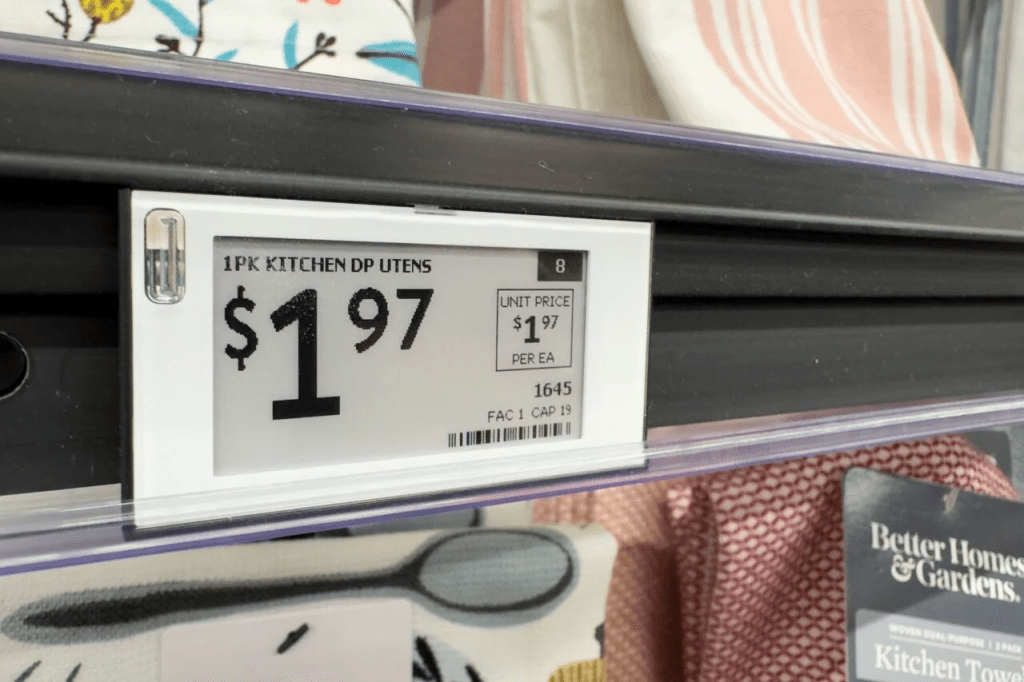
The new survey is part of the UFCW’s “Affordable Groceries and Good Jobs Campaign,” an effort to encourage states to pass laws banning surveillance pricing and electronic shelf labels (ESLs), the increasingly common price tags that some activists worry allow companies to rapidly change prices in stores several times per day.
The concern includes obvious dynamic pricing models, like increasing the cost of cold beverages when it gets hot outside, but also involves more sophisticated and as-yet theoretical examples like increasing the cost of food staples when a customer’s data is analyzed in store and it’s determined they’re willing to pay more.
Fifty-eight percent of Americans in the survey say digital price tags would make them less likely to shop in a store, with 35% saying it would make no difference, and 3% saying it would make them more likely to shop there. Sixty-seven percent are in favor of banning ESLs outright, according to the new survey.
Walmart, which has patented AI-powered price changes, has been rolling out electronic shelf labels across its stores, and it aims to feature them in every U.S. location by the end of 2026. But the company has insisted it’s not going to use ESLs for jacking up prices and insists that a human manager must be in the loop when prices change.
Unsurprisingly, 66% of those surveyed say they’re worried about the cost of groceries. And it’s no wonder, given the trajectory of inflation in recent months. The University of Michigan’s May sentiment index hit a record low last month at 44.8, down five points from April, according to Bloomberg.
In April, inflation rose 3.8% on an annualized basis, while wages rose just 3.6%, the first time wages have failed to keep up with inflation since 2023, according to CBS News. And that’s causing major concerns about supermarkets’ plans to squeeze customers for more money with new tech.
The new survey takers at GBAO Strategies noted that some grocery stores are replacing paper price tags with digital price tags and asked Americans whether that technology was likely to increase or decrease prices for consumers. Just 3% thought it would decrease prices, while 65% thought stores would use digital price tags to increase prices. 24 percent of participants believe it will keep prices about the same, with the remainder (8%) saying they don’t know.
UFCW International Vice President Ademola Oyefeso told Gizmodo that he believes electronic shelf labels are a tool for price gouging and that tech companies are marketing them for that purpose.
“The ESL industry sells the prospect of higher prices and job losses as positives,” said Oyefeso. “Across the country, families are having to make tough choices in the grocery aisle every day as a result of sky-high prices, and polling clearly shows that they want these predatory technologies banned.”
Proponents of digital shelf labels take issue with the idea of using the term surveillance pricing at all. They prefer terms like “personalized pricing” and believe that stores have an incentive to make pricing competitive. But unions like UFCW don’t believe that’s true and are urging legislation to be passed around the country to fight it.
“Federal and state lawmakers know these practices are wrong, and the UFCW urges them to get ahead of them before they appear in every store,” Oyefeso told Gizmodo. “Any lawmaker that is serious about cutting costs for hardworking families must support a ban on electronic shelf labels and surveillance pricing in grocery stores.”
At least a dozen states are currently considering legislation that would regulate surveillance pricing, with Maryland recently passing the first law banning the practice at grocery stores. But activists have spoken out about that law and worry that it has way too many loopholes.