as the temperature is way high these days.
Pertinent Info, Good Advice
as the temperature is way high these days.

as the temperature is way high these days.
(snork!! -A.)
Johnson announces campaign to get Trump a Nobel Peace prize by Ann Telnaes
The Speaker continues to display his fealty Read on Substack
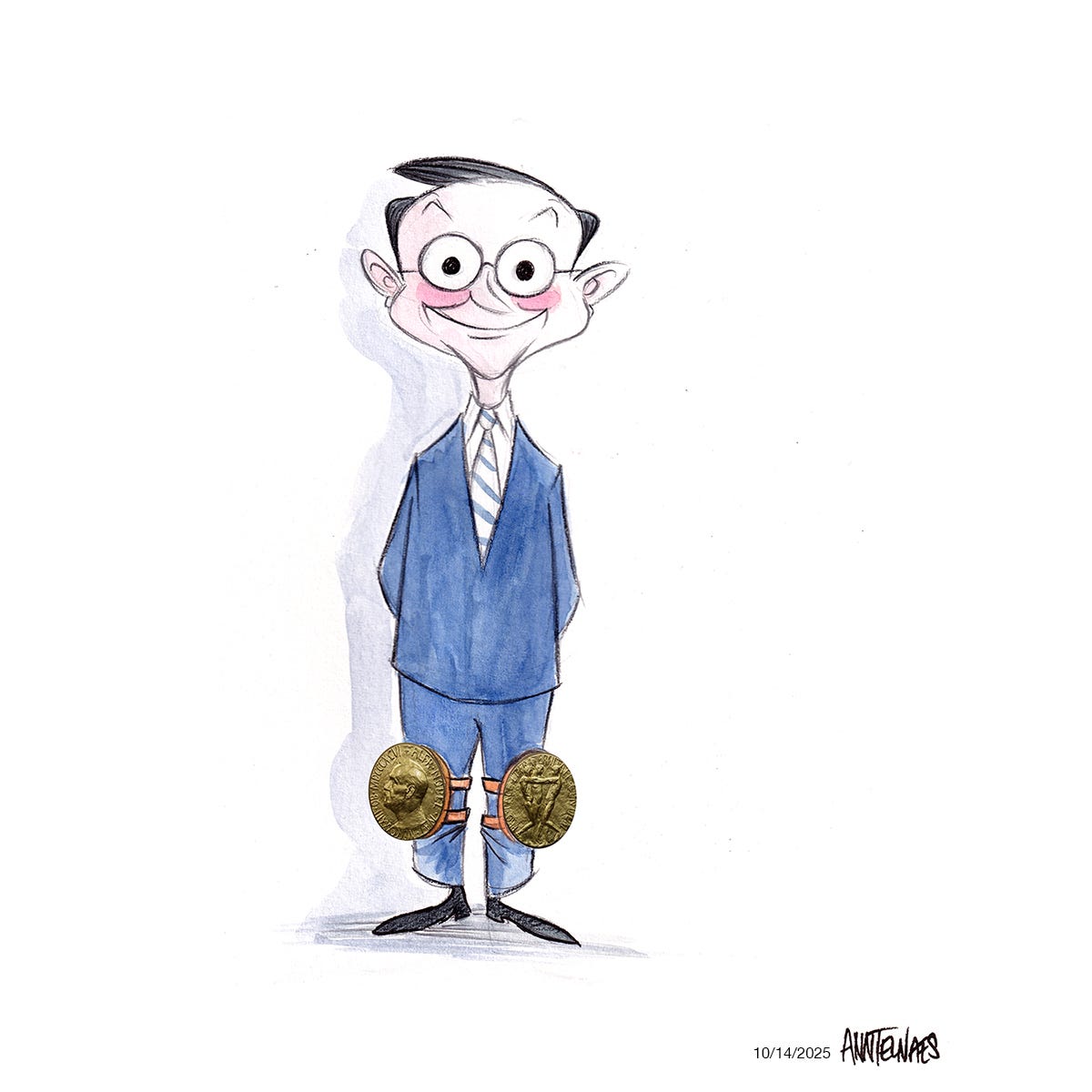
The Speaker of the House will lead the effort to convince international parliaments and presidents to nominate Trump.
is today in Peace & Justice History. Feeding people is my main “thing,” so I’m featuring it today. There is so very much that has happened on October 16, and it can all be seen on this page.
| October 16th every year |
| United Nations’ World Food Day is recognized every year. |
(I love the top piece, but after reading the story, I also love the second one! Wouldn’t they be great to color? -A.)
Another project I will start and probably never finish, but will enjoy until I forget to do it again. by Jenny Lawson (thebloggess) Read on Substack
Hello love!
It is spooky season and so I’ve been doodling dark little things. Last year I started writing and illustrating an eerie little children’s book that I will almost certainly never finish because I am the queen of distraction. I have a true crime story about my family I’ve written but has never published. I’m working on another weird project now about invisible women that I suspect will never find a publisher but is a passion project I can’t let go of. And then this week I started doodling and found myself accidentally making an alphabet book for dark children.

Will any of these projects ever get further than being shared with friends like you and then packed into a box for my maybe-grandchildren to be baffled by when I am gone? Doubtful. But still, I create. And I hope you do too. Because there is such delight in seeing something strange come out of your head and become real, even if no one ever sees it but you.
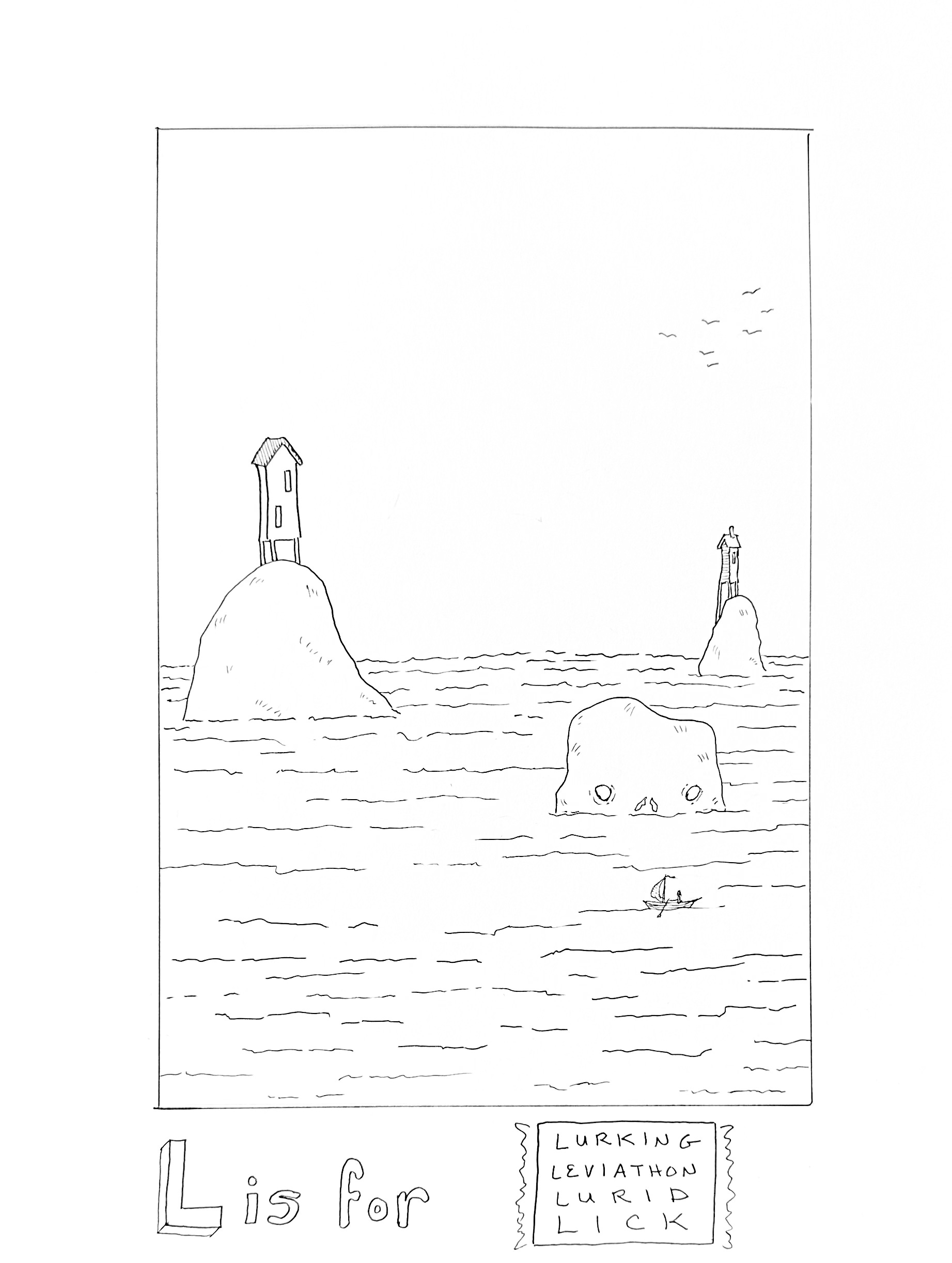
The doodle above this sentence came with a story in my head about a monster named Fred who was sad that none of the tiny beings ever built a hat on him. I wanted to find a way to show him licking the little boat but every time I tried to draw a tongue coming up from the water it looked like a penis and that’s not really the story I wanted to tell (but is one I’d read) so instead I’m imagining that his tongue is under the water and is keeping the little boat afloat because the man inside doesn’t realize there’s a hole in the bottom of his boat. He floats along…keeping his eyes peeled for sea monsters…unaware that he’s only alive because of one. There’s a story there. Maybe one day I’ll write it.
But not today because today I’m doing final-final-final edits on my new book (did you know that you have to do edits over and over with different types of editors?) and I’m STILL finding stuff to fix. I’m so worried about this book. It’s so different from anything I’ve written before. I hope it finds a safe harbor, with people who will love it even though it is so very strange. But no matter what, I’m giving myself a high-five for finally (almost) finishing a project. Celebrate those wins, y’all.
Hugs,
me
Definite beverage alert!
Jack Smith Speaks by Joyce Vance
Read on Substack
ABC reported today that the House Judiciary Committee wants to have former special counsel Jack Smith testify—behind closed doors—about investigating the Mar-a-Lago, January 6, and Donald Trump. Jim Jordan, the Ohio Republican who chairs the Committee, wants an interview by October 28. He is calling for Smith to turn over documents and communications too.
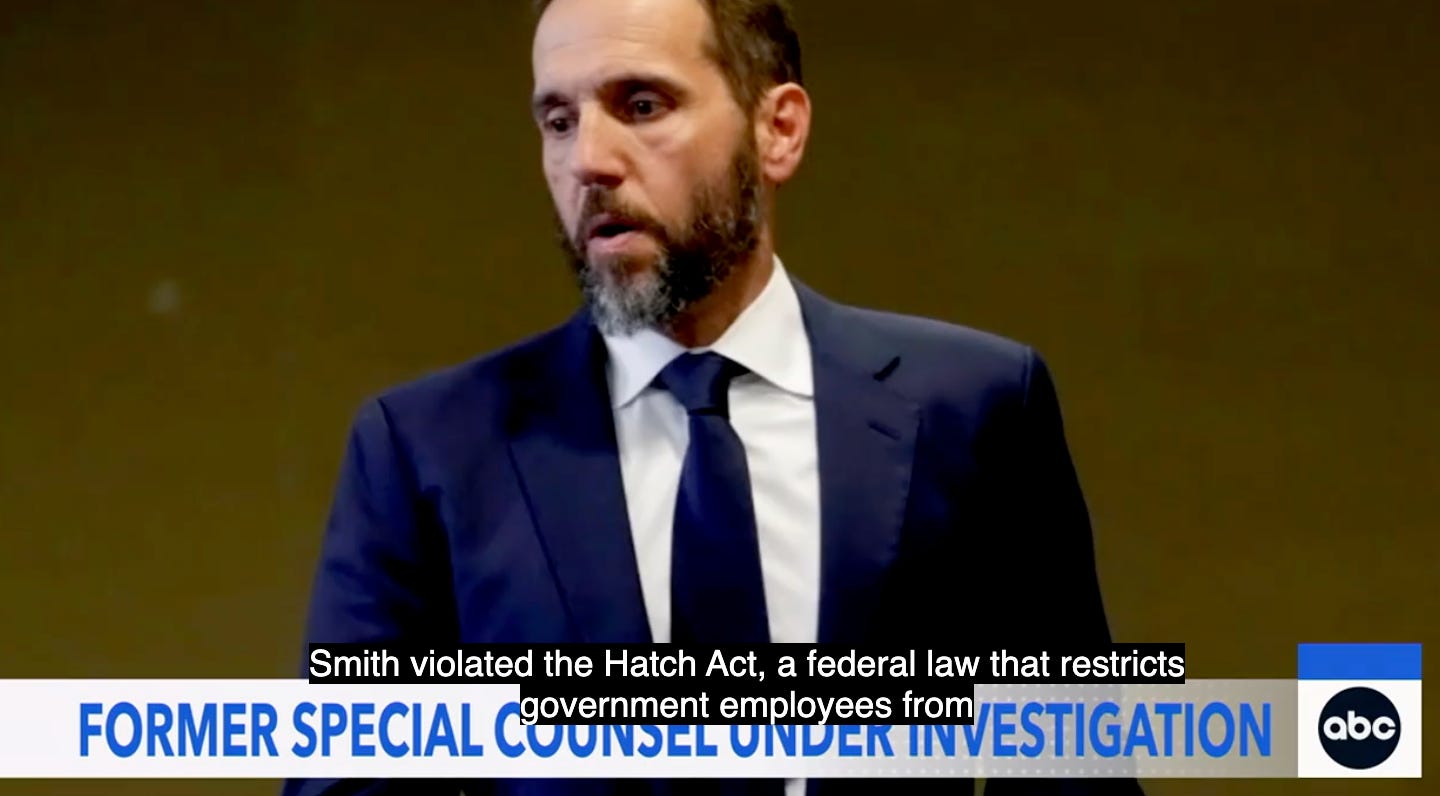
Why now? Last week, there was reporting (very unsurprising to anyone who has ever investigated a federal case) that Smith’s probe obtained phone records regarding a number of Republican lawmakers as part of the January 6 case investigation. Jordan wrote to Smith, “As the Committee continues its oversight, your testimony is necessary to understand the full extent to which the Biden-Harris Justice Department weaponized federal law enforcement.”
Republican Senator Josh Hawley of Missouri complained that “The F.B.I. tapped my phone.” He said he’d been wiretapped.
Not so fast, though. Obtaining phone records means getting call information—that can mean which phone number called which other phone number, when, and possibly, how long the call lasted. It’s easy to understand why prosecutors would want that information in virtually any case they’re investigating. Here, given reports that Trump had numerous calls leading up to and on January 6 (for instance, one with brand new Alabama Senator Tommy Tuberville), it would be surprising if they hadn’t done so. The New York Times reported that “The calls were scrutinized because at the time, prosecutors were trying to identify relevant communications between the president and his inner circle with members of Congress on the key days surrounding the violence.”
Call information, which frequently produces investigative leads, is acquired routinely by investigators. But it is not the same thing as a wiretap, which lets law enforcement listen in on a target’s phone calls. To get a wiretap, prosecutors and agents have to get an order from a federal judge in compliance with the strict requirements of Title III of the Omnibus Crime Control and Safe Streets Act of 1968. They have to establish probable cause and show that less intrusive investigative methods were tried and failed. A wiretap only lasts for 30 days, and prosecutors must go back to the judge, with fresh proof, in order to reup the wiretap for an additional 30 days.
Jordan’s allegation that this is the weaponization of the DOJ should fall on deaf ears. Jack Smith was investigating one of the most serious situations our country has ever faced—an effort to interfere with the smooth transfer of power between two American administrations, with involvement by the outgoing president who had lost the election—using routine investigative techniques. Jordan and other Republicans should be able to differentiate between that and wiretaps, since these are statutory creatures and Congress sets the requirements for when they can be used.
Jordan admonished Smith that he was “ultimately responsible for the prosecutorial misconduct and constitutional abuses of your office,” a comment that is a not-too-veiled threat in the era of revenge prosecutions.
Smith spoke out earlier this week, in an interview in London with Andrew Weissmann. Smith praised the integrity, competence, and selflessness of professionals at DOJ and the FBI—many of whom were subsequently fired by the Trump administration. Why prosecute Trump for classified documents when Biden didn’t get prosecuted, Smith was asked. He responded that it was simple because the facts were starkly different; with Trump, there was evidence of willfulness and intent to violate the law regarding protection of classified documents. Trump obstructed justice, even lying and saying he had returned all the documents he retained. Of course, when the search warrant was executed at Mar-a-Lago, it conclusively proved that was a lie.

At a talk he gave last month at George Mason University in Washington, D.C., Smith said, “The heart of the Rule of Law is treating people equally under the rule of law. Good prosecutors do not care about politics. They bring cases that are supported by facts.”
That’s what good prosecutors do. What is the difference between the prosecution of Donald Trump for possessing classified documents and the decision not to prosecute Joe Biden? It’s evidence. Evidence of willfulness and intent and of Trump’s effort to obstruct justice by keeping classified documents from being recovered by the government after claiming his lawyers claimed he’d returned everything in his possession. What makes the prosecution of Jim Comey a perversion of our criminal justice system? It’s the absence of evidence that he committed a crime and the clear direction from the President of the United States to his Attorney General to go after him. We do not need to engage in bothsidesism here; one of these things is not like the other. The people who are complaining that the prior administration weaponized the Justice Department are, in fact, the ones who are doing exactly that, but all of the noise can get confusing and exhausting.
But this is no “he said, she said” controversy. When even Chris Christie, the former New Jersey U.S. Attorney and Governor, who is no stranger to legal controversy like the Bridgegate Scandal, condemns what is happening in this administration, there is every reason to pay attention.

It was the ranking Democratic member of the House Judiciary Committee, Maryland Representative Jamie Raskin, who got it just right, as he so frequently does. With his sarcasm font on full blast, Raskin congratulated Jordan for also “demand[ing] the release of Smith’s full report, and all accompanying records, from his investigation into Donald Trump’s hoarding of classified documents and obstruction of justice at Mar-a-Lago” after “an extraordinary years-long MAGA cover-up has deprived the American public of the opportunity to read this special counsel report that the taxpayers paid for.” Republicans, of course, have not. This is not about a commitment to transparency. This is not about being the party of law and order. It’s certainly not about following the rule of law.
The details about the documents Trump took with him to Mar-a-Lago, and for all we know, keeps there to this day, remain largely undisclosed. Just like the Epstein files are still being kept secret. Donald Trump is committed to an all-powerful presidency. It’s easy to understand why he thinks that’s so desirable—it’s not about doing justice.
We’re in this together,
Joyce
The needs are real – and you have so much power.

was privileged to deliver the opening keynote at this month’s FediForum, a conference for people building and supporting the open social web. My talk touched on what’s happening now, drew on my experiences building Elgg and Known and investing at Matter Ventures, and gave participants three important questions to ask themselves as they build platforms and serve communities.
Here’s the talk in its entirety, courtesy of FediForum. The transcript [is on the page.]
Miss Major Griffin-Gracy, activist since Stonewall, has died
Trudy Ring October 13 2025 7:29 PM EST

Miss Major Griffin-Gracy, a legendary transgender activist who had been in the movement since Stonewall, died Monday at age 78.
Her death was announced by the House of GG—Griffin-Gracy Retreat and Educational Center, which she founded. She died “in the comfort of her home and surrounded by loved ones in Little Rock, Arkansas,” says a statement from the center. “Her enduring legacy is a testament to her resilience, activism, and dedication to creating safe spaces for Black trans communities and all trans people — we are eternally grateful for Miss Major’s life, her contributions and how deeply she poured into those she loved.”
Miss Major had suffered from health problems for some time and had recently begun receiving hospice care.She spent more than 50 years fighting for the “trans, gender-nonconforming, and LGB community — especially for Black trans women, trans women of color and those who have survived incarceration and police brutality,” the statement continues. Major’s fierce commitment and intersectional approach to justice brought her to care directly for people with HIV/AIDS in New York in the early 1980s, and later to drive San Francisco’s first mobile needle exchange. As director of the TGI Justice Project, she’d return to prisons as a mentor to her ‘gurls’ inside.”
She founded House of GG in 2019 as “a space for our community to take a break, swim, enjoy good food, laugh, listen to music, watch movies, and recharge for the ongoing fight for our lives,” the statement goes on. “Miss Major fought tirelessly for her people, her love as vast and enduring as the universe she knew herself to be a part of. She was a world builder, a visionary, and unwavering in her devotion to making freedom possible for Black, trans, formerly and currently incarcerated people as well as the larger trans and LGB community. Because of her, countless new possibilities have been made for all of us to thrive — today and for generations to come. She affirmed that our lives hold meaning and that we stand on the shoulders of giants like her, whose courageous love and relentless fight assured our right to live with dignity. We will forever honor her memory, her steadfast presence, and her enduring commitment to our collective liberation.” (snip-MORE good history and story on the page)
No Kings Day- October 18th by Ann Telnaes
Suggestions for posters Read on Substack
As I’ve said before, please feel free to use my cartoons for your posters (just no altering text or images, please). Contact me either in the comments or email for the hi-res file (atelnaes@anntelnaes.com) . Here’s also a few suggestions from my archives if you don’t have a particular one in mind.
Stay safe and be loud with your First Amendment Rights.
UPDATE: Thank you for all your requests and my apologies for not being able to respond to your added kind messages. Even if you’re only getting the attached file, I’ve read and appreciated them all.
***Liza Donnelly and Steve Brodner are both offering their excellent editorial cartoons to download for posters.




(Well, the Science and Art parts, anyway! This is originally a year-old story, republished by Cosmos today. I scouted around for some sort of an update, but didn’t find one. I still thought this is interesting, and at least now we know another area in which A.I. might be applied. I think that’s good to know, since A.I. does make mistakes, as noted below.)
The artificial intelligence program AlphaFold is proving to be a gamechanger for biological research, Imma Perfetto reports. This article was originally published in the Cosmos Print Magazine, September 2024.
October 11, 2025 Imma Perfetto
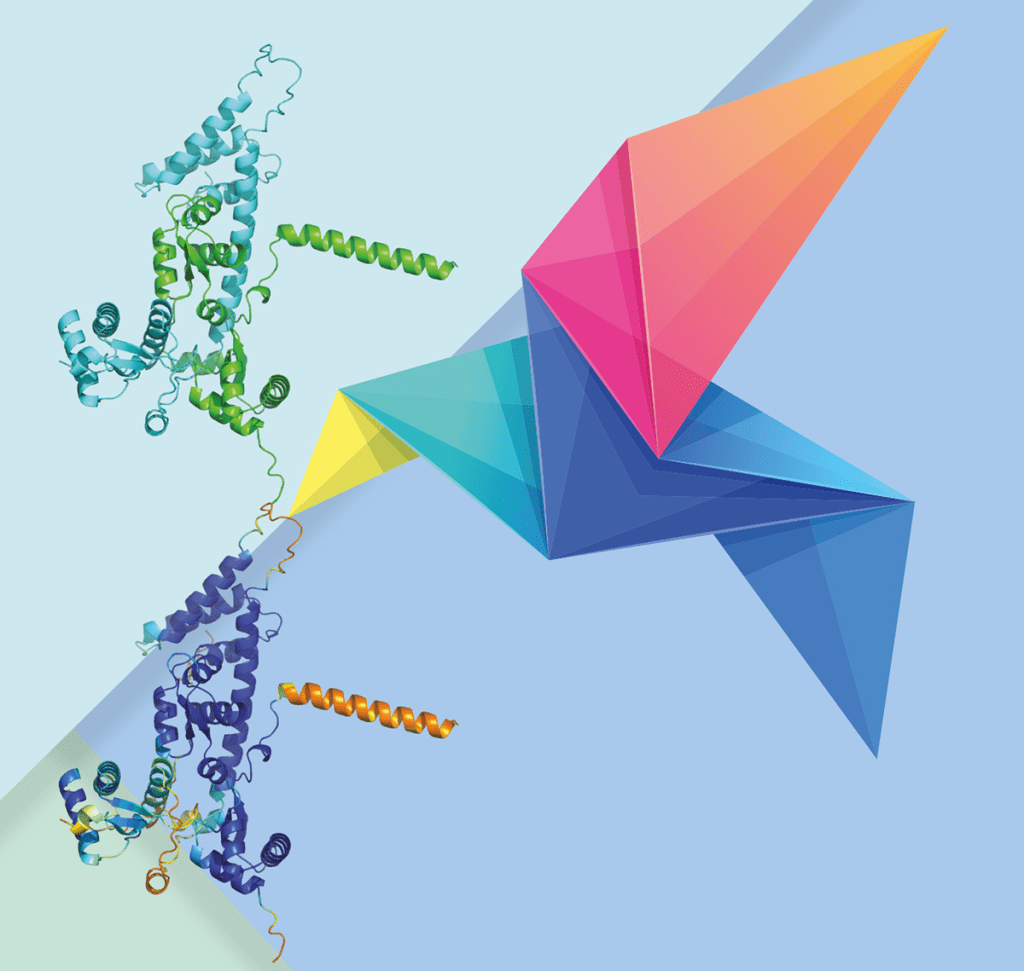
This artwork of an origami bird holds AlphaFold 3 predictions of a complex of two proteins (ScpA and ScpB) in its beak. The protein complex is important during cell division in bacteria. Top: ScpA is cyan and ScpB is green. Bottom: Confidence measures, where dark blue is very high confidence, light blue is confident, yellow is low confidence, and orange is very low confidence in the structural prediction. Credit: AlphaFold 3, Katie Michie.
A protein is made from of a chain of amino acids strung together like beads on a necklace. This chain spontaneously folds, like origami, into intricate pleats, folds, and loops through interactions between its amino acids. The resulting unique 3D structure largely determines its vital function within the lifeform. Solving the structure allows biologists to better understand how the protein works and design experiments to affect and modify it.
The smallest known protein, TAL, influences development of the fruit fly Drosophila melanogaster and has just 11 amino acids. The largest, Titin, is found in human muscle cells and is made up of roughly 35,000.
Proteins are far too tiny to inspect under a regular microscope. For decades researchers used complex experimental techniques, such as X-ray crystallography, nuclear magnetic resonance (NMR) spectroscopy, and cryogenic electron microscopy (cryo-EM) to solve their structures. It’s painstaking, time-consuming work that takes specialised skill and sometimes hundreds of thousands of dollars. And, as Kate Michie can attest, success is not always guaranteed.
“I spent four years trying to solve the crystal structure of a complex of two human proteins and got scooped. You know, I got nothing out of four years. I worked really hard at it, and it was a really difficult project. AlphaFold can calculate those in a few hours,” says Michie, who is chief scientist of the Structural Biology Facility at the Mark Wainwright Analytical Centre, of the University of New South Wales Sydney.
On 8 May 2024 Nature dropped a paper introducing the third and latest iteration of the artificial intelligence (AI) system AlphaFold, which predicts the 3D structure of proteins from their amino acid sequences. Google DeepMind and Isomorphic Labs, both subsidiaries of Alphabet, co-developed the new model. They say AlphaFold 3 (AF3) is “a revolutionary model that can predict the structure and interactions of all life’s molecules with unprecedented accuracy”. But, while AF3 has generated significant interest since its release, it has simultaneously sparked criticism among those in the scientific community.
Let’s take a closer look at how AI is changing the world of structural biology.
AF3’s predecessor, AlphaFold 2, was released as open source code in July 2021 and immediately changed the game in structural biology.
“I contacted the high-performance computation people and said, ‘we really need to get this piece of code running’. And then I asked my colleague, ‘Do you have any structures that you never submitted to the Protein Data Bank?’” says Michie.
The Protein Data Bank (PDB) is the global archive of all the experimentally solved structures for large biological molecules. As of June 2024, its estimated to include more than 220,000 proteins, which sounds like a lot until you consider the number of proteins we know of exceeds 200 million.
“My colleague sent me a sequence of a small protein he never submitted to the PDB, I ran it, and I just sent him the result. His email response to me was: ‘My mind is blown!’ And he said, ‘I immediately thought someone else must have solved the structure.’”
But they hadn’t, AF2 had accurately predicted the 3D structure of the protein from its amino acid sequence alone. What had taken years to describe experimentally had been done in just a few hours.
AF2 is a deep learning algorithm. In the world of AI that means it simulates the neural networks found in human brains. First, it takes the protein sequence of interest and searches several databases for similar proteins. By comparing these sequences, it can identify areas of similarity and difference to understand how the protein has changed across evolution.
For instance, if two amino acids are in close contact in 3D space then a mutation in one will usually be accompanied by a mutation in the other (to conserve the structure of the protein). But if they are far apart then they tend to evolve independently from each other. Using this to work out the relative positions of the amino acids, AF2 then takes its training on PDB structural data and iteratively constructs a 3D model of the protein’s structure with relatively high accuracy.
Scientists can take advantage of that predicted structure to accelerate their science by doing smarter, more strategic experiments in the laboratory right off the bat. “I’ve done work with some scientists working with immune complexes, and the models coming out of AlphaFold enable them to really trim down the number of animal experiments they do,” says Michie. “So instead of making say 20 CRISPR mice, they only might make two.”

An accurate AlphaFold structure can also be the crucial missing piece of the puzzle that allows researchers to experimentally solve the structure using X-ray crystallography.
“One of my other colleagues is virologist and he’d been working on a protein that had eluded structural elucidation for 20–30 years. It was from the world’s first known retrovirus,” says Michie.
“The trick of crystallography is you need to know two components of the maths to solve them,” she continues. The diffraction data provided by X-ray crystallography gives you one of those components, but you don’t have the other: the phase.
Traditional methods of obtaining phase information had proved unsuccessful, until Michie suggested using AlphaFold instead.
“Immediately the structure came out. AlphaFold helped him get the crystals but then actually enabled him to phase the structure. It told us that the Alpha Fold model was very good, but it also fixed up this problem in structural biology.”
To Michie, AlphaFold represents a massive step forward: “it’s genuinely the biggest scientific advance in my career”.
“The Alpha Fold model was very good, but it also fixed up this problem in structural biology.”
Proteins don’t exist in a vacuum. They move around, bind to and modify each other, and even form large, complicated complexes.
Peter Czabotar, joint head of the Structural Biology Division at WEHI, the oldest medical research institute in Australia, says one of the early limitations of AF2 was you could only ever get structural predictions of one protein, alone. “Often what you’re interested in is how different proteins will interact with each other. For example, we work on proteins that are involved with cell death and the interactions between those proteins will dictate whether a cell will live or die.”
The gap has since been bridged by other research groups adapting and building upon AF2’s open source code, and with the AlphaFold-Multimer extension in October 2021.
The newest version, AF3, extends upon this capability by predicting interactions of multiple proteins, and nucleic acids (DNA and RNA). It can predict the impact of ions and post-translational modifications – the addition of chemical groups to amino acids – on these molecular systems too. AF3 can also be used to predict how a selection of small molecules called ligands bind to proteins, though this is restricted to ligands that have high-quality experimental data available in the PDB.
“But where the real power is, something that we do a lot of, is in the drug discovery world,” says Czabotar. “And it is extremely powerful for that, potentially, but they haven’t enabled that in the way that it’s released. We’ve done drug discovery against cell death proteins, for example. I can’t take one of the drugs that we’ve worked with and see how it interacts with my target protein, I can only use the [ligands] that they’ve enabled us to use.”
That capability to predict the structure of novel drug molecules interacting with target proteins seems to be restricted to Isomorphic Labs, which was launched in 2021 to pursue commercial drug discovery.
AF3 uses a very different approach for this new suit of predictions: generative AI. After processing the sequence inputs, it assembles its predictions using a diffusion network, the likes of which power AI image generators. According to Isomorphic Labs’ website: “the diffusion process starts with a cloud of atoms, and over many steps converges on its final, most accurate molecular structure”. Diffusion has been applied to protein structure prediction before, for example, in the seminal RoseTTAFold diffusion (RFdiffusion) by the Baker Laboratory at the Institute for Protein Design, the University of Washington.
But generative AI is not without its limitations. AF3 will occasionally produce structures with overlapping atoms (this is physically impossible) or replace a detail of the structure with its mirror image (chemically impossible). As a generative model, it is also prone to hallucinations in which it invents plausible-looking structures – particularly in disordered regions of the protein that lack a stable 3D structure – similarly to how a text to image AI struggles to create realistic-looking hands. In-built confidence measures help to identify when AF3 isn’t so sure about its structural prediction, but ultimately it takes a scientist with understanding of the underlying structural biology to come along and identify what’s gone wrong, and why.
“It’s very, very powerful. But it doesn’t exclude the need to necessarily confirm things experimentally. Whether that is by solving structures themselves or by, for example, testing the structures in some way in an experiment,” says Czabotar.
In a major departure from AF2, access to the newest iteration of AlphaFold is limited to a web server and for non-commercial research only. “We have various structure-based drug discovery projects and some of them are purely academic, as students, PhDs and honours projects. But we also have had commercial partnerships, because that’s a way to push your discoveries into a clinical setting,” says Czabotar. “So generally, anything that is going to make an impact is done by an academic lab in a commercial partnership. Now, I guess it puts us in a bit of an awkward situation. Even if we could look at our compounds bound to the target [protein], there’s some projects where we won’t be able to do it because, you know, we’ve ticked a box.”
AF3’s accompanying Nature paper was also published without the source code, but with a ‘pseudocode’ instead – a detailed description of what the code can do and how it works. This prompted an open letter to the Editors of Nature, published 16 May and endorsed by more than 1,000 scientists as of June.
The letter raised concerns that “the absence of available code compromises peer review” and that the pseudocode released would “require months of effort to turn into workable code that approximates the performance, wasting valuable time and resources”. Access to the web server was also initially capped at 10 predictions per day, which the letter stated, “restricts the scientific community’s capacity to verify the broad claims of the findings or apply the predictions on a large scale”.
The sentiments appear to have hit home. Shortly after the letter’s release, DeepMind’s Vice President of research, Pushmeet Kohli announced via X that they would double the daily job limit to 20 and are “working on releasing the AF3 model (incl weights) for academic use … within 6 months”.
On 22 May Nature responded in an editorial, stating its reasoning for publishing the paper without code: “the private sector funds most global research and development, and many of the results of such work are not published in peer-reviewed journals. We at Nature think it’s important that journals engage with the private sector and work with its scientists so they can submit their research for peer review and publication.”
In the meantime, other researchers won’t be sitting idly by until the code release at the end of 2024. Already, multiple teams are racing to develop their own open source versions of AlphaFold 3, without any strings attached.
 Scottie's Playtime