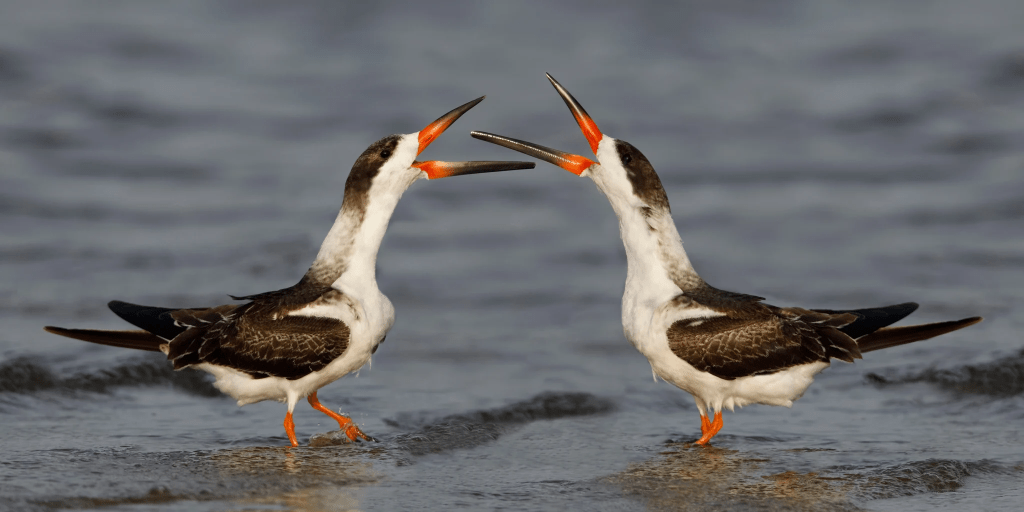
A group of Black Skimmers in flight resembles an aerial ballet, circling, banking, and gracefully alighting as one. Although taxonomists place this unique, long-winged waterbird in a separate genus, it’s closely related to gulls and terns.
The Black Skimmer’s most striking feature is its gaudy red-and-black bill: Both jaws are long and narrow like a knife blade, with the lower jutting out well beyond the upper. Its unique appearance lends the Black Skimmer a number of evocative folk names, including Scissor-bill, Cutwater (Cortagua or Corta-agua in South America), and Seadog (after its calls, often compared to dog barks).
This odd bill is what affords these birds their distinctive foraging style, and the name “skimmer.” A feeding skimmer flies low over the water with its beak open and lower mandible partially submerged. Where a broader bill would send a continuous spray of seawater straight down the throat of another species, the uniquely narrow mandible of the skimmer cuts through the water like a fin. When the extended lower mandible touches prey, such as a small fish, the bill’s upper mandible snaps down, securing the bird’s meal.
Another remarkable feature of the Black Skimmer is its eyes, which have large pupils that can narrow to vertical slits, like a cat’s pupils. This adaptation compensates for glare off the water’s surface and may enhance the bird’s vision as it hunts in dim light or at night.
Threats
According to the North American Breeding Bird Survey, Black Skimmers have declined in the United States by almost 90 percent since 1966. This is largely due to habitat loss and human disturbance at nesting colonies. These birds are also affected by oil spills and chemical pollution in coastal waters, and may face additional threats during the breeding season with climate change as sea levels continue to rise. (snip-MORE)
Life has been happening here with me this couple of weeks, and I have a few things I’ve picked up here and there to post when I’m busy. Most of this is positive, because why not?
Hey-today is World Environment Day! Let’s be proud to care for our home; we all get overheated.
June 5, [since 1972]
World Environment Day was established by the U.N. General Assembly to commemorate the opening of the Stockholm Conference on the Human Environment in Sweden. The United Nations Environment Program (UNEP) was established as a result of the conference.
UNEP’s mission: To provide leadership and encourage partnership in caring for the environment by inspiring, informing, and enabling nations and peoples to improve their quality of life without compromising that of future generations.
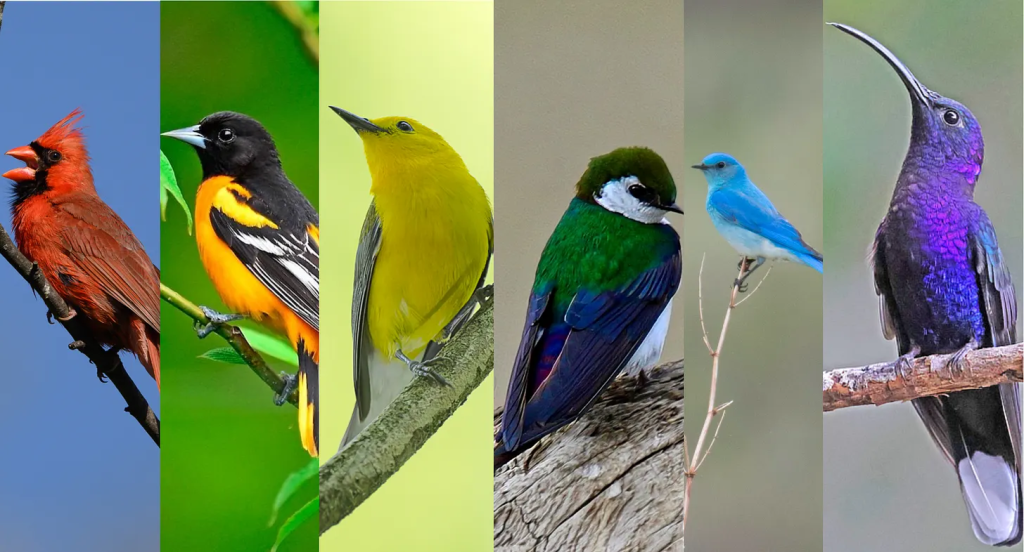
Birds (Sources: Birdsandblooms, Blair Benson, Bill Duncan, Blair Benson, JM Arment, Hummingbird centarl)
It’s June 1, which means Pride Month begins again today. It’s my seventh Pride. I remember my first one, seven years ago—terrified and excited, going out dressed in the clothes I felt best in, using the name I wanted to use for the first time in public. I had people with me that day, people I found safety with, people who helped me grow into the person I am now. Seven years later, so sure of myself and so comfortable in my skin, I look back on those moments as some of the best of my life. And now, this year, as I have every year, I watch the new flock—countless in number—who are wearing rainbow colors and joining a family that will show them more love than they have ever known. They are arriving even after a political winter that was, by any measure, cold and brutal to all of us. It is watching them that has me thinking about the beauty of what we witness starting today.
This year, I took up birding. I always thought it was a silly hobby, but my wife Zooey encouraged me to point my camera at a new subject. I first did so on the Pattee Canyon trail up in Missoula—and caught, soaring in place, a single red-tailed hawk, just hovering, watching the ground below. I stared at it for a while in awe. That was all it took. And the timing was perfect, because in the weeks that followed I stumbled into the best time to be a birder: spring migration. Wave after wave of orioles, tanagers, flycatchers, and warblers of every different color and size came pouring through. I didn’t even know there were so many birds. It made me realize that for most of my life I had been walking through the world completely unaware of the beauty around me—that there was this entire world that had always been there, just waiting for me to lay eyes on it.
What I also didn’t know was the incredible journeys so many of these birds had taken just to be here—how far they had traveled to find the flocks they’d spend the season with, to build nests, to raise families, to simply exist in a place that could sustain them. The Prothonotary Warbler I spotted in the marsh? It spent the winter in the mangrove swamps of Central America, then crossed the entire Gulf of Mexico in a single flight—more than 600 miles of open water, eighteen hours in the air with nowhere to land. It had to travel that far just to find its family. And the most stunning thing about a bird like that—one that has gone through so much, that has flapped its wings until it has exhausted itself and left everything behind? It arrived here in the most brilliant gold you’ve ever seen, and began to sing. The Prothonotary Warbler isn’t nearly the only species that does this. Ruby throated hummingbirds, blackpoll warblers, bobolinks… all take incredible journeys.
I was unaware of all of this before I took up birding. It makes me wonder how much else I walk right past without seeing. I remember before I came out, I didn’t know how rich this chosen family was, how many different people were also queer like me. I had no idea that once I came out, I’d find so many of them had been here all along. They were just waiting for me, and all I had to do was stop and look and embrace something new. And I did, and an entire world opened up. I love moments like this, where life teaches you something about itself, and you realize that diversity and surprise might just be the best things it has to offer.
Today, as Pride begins, I am reminded that every single person who has made it here, put on their colors, and found their family has survived something difficult. Every one of them has just lasted through a winter where our rights were systematically stripped away. Politicians who hate us have spent the year dismantling everything we built—healthcare ripped from hospitals, identities stripped from documents. Corporations that once draped themselves in rainbows every June are nowhere to be found. Some of us have quite literally migrated to entirely new states looking for safety. And our gulf crossing this year was met with heavy headwinds.
And yet, so many of us still made it. This year, you will see your city streets filled with rainbows. This year, countless new people will celebrate their first Prides. People will put on the clothes that fit them best. People will love in ways they didn’t know how to before. People will dance and sing, and others will have no choice but to acknowledge our existence, because when we arrive, we do not do so quietly. Every single person you see in the streets this month is a testament to our resilience, and a reminder to the fact that this is a journey we have been making since the beginning of human existence. We call it something different now. We carve out a specific month for it. But we have always been here, and we have always had to search for ways to express ourselves, be ourselves, and find our kin.
Maybe birding is a silly hobby. Maybe dragging myself out of bed before dawn—and I am not a morning person, I might add—is more trouble than it’s worth. Birders look ridiculous. We stuff our pants into our socks so the ticks don’t climb up our legs. We carry binoculars and absurdly large cameras into places where everyone else is just taking a walk. But I think there is something more to it than that, something that opened my eyes to the way the world moves around me—something I wasn’t expecting to find when I first pointed a camera at a hawk and couldn’t look away. I think I understand something about this month that I didn’t understand before because of it. Pride isn’t just a celebration, it’s a testament to survival and a refusal to be quiet even after the journey. It’s putting on your most brilliant colors after the longest winter of your life. And I’m so glad we made it one more year.
This sunlight-powered desalination breakthrough turns seawater into fresh water while harvesting valuable minerals.
Date: May 31, 2026
Source:University of Rochester
Summary: Scientists have developed a solar desalination system that turns seawater into drinking water without creating environmentally damaging brine. Special laser-textured metal panels use sunlight to evaporate water while automatically moving salt deposits away from the working surface, preventing clogging. The process was successfully tested with water from three oceans and can recover nearly all salts as solids. Those leftover materials could even become a source of valuable lithium for batteries.
Irrefutable proof of what Spanish researchers and wildlife experts had long suspected, and long feared, finally presented itself in the form of a grainy video that was shot on a minuscule island in the Balearics in April 2024.
Ribboning its way through the turquoise waters that separate the east coast of Ibiza from the islet of Santa Eulària 450 metres away, came a pale and solitary horseshoe whip snake in search of new territory and fresh sustenance.
The arrival of the snake on Santa Eulària, recorded by a local wildlife ranger, confirmed that the insatiable invader from the Spanish mainland – which has almost wiped out Ibiza’s endemic population of dazzlingly coloured wall lizards – had opened up a new front.
“There’d beenincreasing anecdotal evidence from fishermen and tourists who’d seen the snakes swimming, so we’d thought it was happening very often,” said Oriol Lapiedra, a biologist at the Centre for Ecological Research and Forestry Applications (Creaf) in Catalonia. “But this was the first proper [evidence] we’d had of a snake swimming from Ibiza to the islet.”
The horseshoe whip snake, a non-venomous reptile found across southern and eastern Spain, has become an existential threat to the lizards since it began appearing on the island two decades ago.
Its rapid colonisation has been attributed to the fashion among wealthy property owners in Ibiza for importing ancient olive trees from mainland Spain to adorn the grounds of their homes. Unbeknown to them, however, the trees – replete with their nooks and hollows – have provided ideal travel berths for hibernating snakes and snake eggs. (snip-MORE)
Getting rid of The Late Show with Stephen Colbert to appease Donald Trump isn’t the only poke in the eye of CBS by Paramount Skydance.
Bari Weiss, the network’s editor in chief, appointed by Paramount Skydance CEO and Trump ally David Ellison, has been accused by Scott Pelley of murdering 60 Minutes.
Ellison really wants to be on good terms with regulators in the Trump administration. He was at the inauguration, has attended UFC fights with Trump, and even hosted an invite-only Washington DC party for him.
Tech journalist and filmmaker Nick Bilton is the new executive producer of 60 Minutes, who was appointed last week after the firing of former producer Tanya Simon and her deputy, along with correspondents Sharyn Alfonsi and Cecilia Vega. Bilton held a morning meeting in Midtown Manhattan, which was a formal introduction to the staff of 60 Minutes, where he was told by Pelley that he had “slender” qualifications for the job and that Beri Weiss was “murdering” 60 Minutes.
This is Bodie. His presence indicates the beginning of Pride Month. May his whimsy and steadfastness bring joy and confidence to all. 14/10 the parade starts right behind him 🌈🐾
By James Jordan, Sumner Newscow — The month of May is barely over, and the wheat harvest has already started in Sumner County. That is not a good thing. Last year, the harvest didn’t get going well until mid-June, which is still on the early side.
Drought conditions over the winter and early spring caused the wheat to mature earlier than it should have, resulting in poorer yields.
Recent rains are likely too little too late; wet conditions may even hamper the harvest.
Last year, there was good wheat in the fields, but wet conditions prevented a bumper harvest.
State and local wheat officials say the wheat that is out there is not in very good shape.
According to the Kansas Wheat Association, the crop generally looked good as it went into its dormant stage in the late fall. There was not much rain in March and April, which is the primary growing stage, turning a promising crop into a dismal one.
The drought conditions in that growing stage force the wheat to develop faster. It limits the yield and accelerates growth, which is why we have wheat ready to harvest so early.
There are still some areas in Sumner and Cowley County that may get good yields. Conditions are much worse in western and central Kansas.
According to USDA statistics, as of the beginning of May, 41 percent of the wheat was very poor or poor, with 35 percent being fair. Only 24 percent was rated good or excellent.
As of last week, the wheat commission reported 55 percent as poor to very poor, and 30 percent as fair. Only 15 percent was rated good.
Last year at this time, 48 percent was rated as good to excellent.
The USDA estimates that this year’s crop could be the smallest nationwide since 1965 and 25 percent smaller than last year.
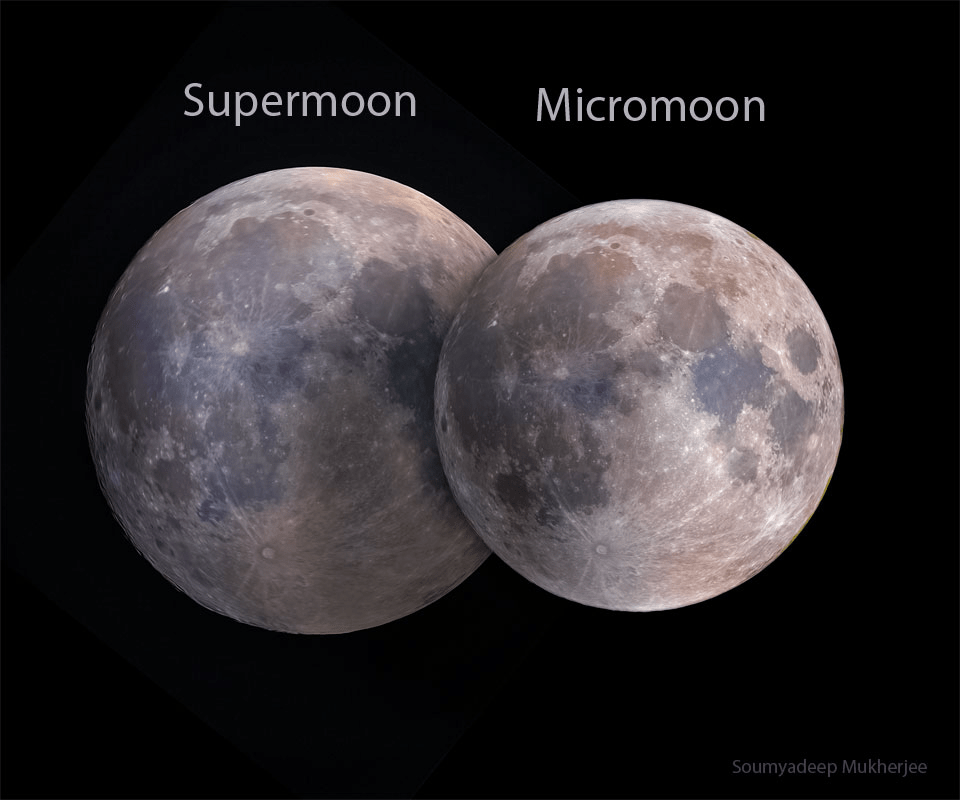
Explanation: What is so micro about tonight’s blue micromoon? Just after sunset, a full moon will appear slightly smaller and dimmer than usual. The reason is that the Moon’s fully illuminated phase occurs within a short time of apogee – when the Moon is farthest from the Earth in its elliptical orbit. In fact, tonight’s micromoon will be the farthest, smallest, and dimmest Moon this year. But tonight’s micromoon is notable for yet another reason: it is also a blue moon, meaning that it is the second full moon in the same month (moon-th). Pictured here, a supermoon — when the full moon appears near its largest — is compared to a micromoon as photographed from Kolkata, India in May and December of 2021. Although the next micromoon occurs next month, and the next blue moon at the end of 2028, the next blue micromoon will not occur until 2053.
(And in case you got an unwanted earworm from the title, maybe try this lively one, instead! – Ali)
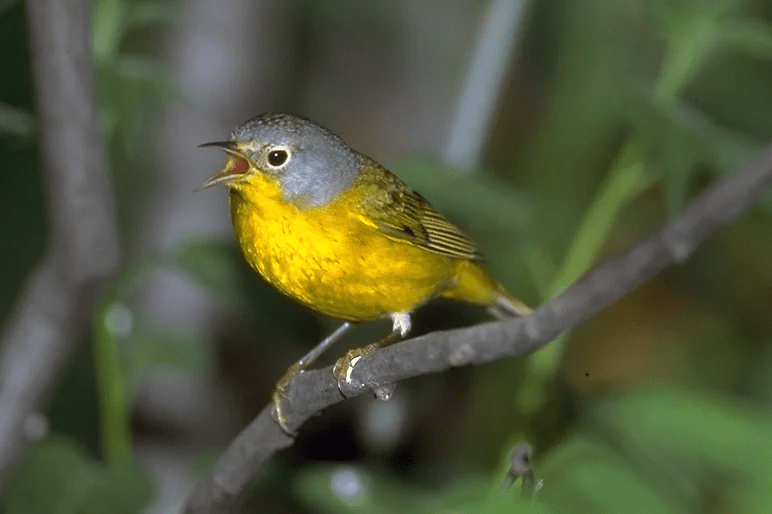
The Nashville Warbler is a lively songbird with elegant, understated plumage and a special fondness for sunny forests, brushy undergrowth, and juicy caterpillars. It is also one of several birds in the Western Hemisphere with a rather misleading name. This bird is only in the southeastern United States for a few weeks during migration on its way between the northern forests where it breeds and its wintering grounds in Mexico, Central America, and the California coast. The species was first documented in Tennessee, and the “Nashville” name stuck, although it only stops over in the area during migration.
The Latin name is also rather misleading to anyone watching this bird in the field — the species epithet ruficapilla refers to a small patch of reddish feathers on the bird’s crown, usually invisible among the gray feathers of the rest of the head. Like the Ruby-crowned Kinglet, Orange-crowned Warbler, and Yellow-rumped Warbler (scientific species name coronata, for the rarely seen yellow crown), this name may be mystifying to beginning birders, but it might also provide an avenue into the secret social life of the bird.
The ability to hide and reveal this bright, contrasting color patch allows these birds to produce a striking visual signal, which they use to communicate agitation and excitement, particularly in aggressive interactions between males at close range. The closely related Lucy’s and Virginia’s Warblers also have hidden reddish crowns, apparently used in similar contexts. In fact, colorful hidden crown patches have also evolved in distantly related species, like the Western Kingbird, suggesting they may play important roles in these birds’ lives. However, birds are rarely seen actually raising their crowns, and our understanding of their social use is only rudimentary.
Nashville Warblers are quite social. Once the young of the year are independent from their parents, these warblers begin to form large foraging flocks, numbering up to 100 birds. On their nonbreeding grounds, these birds are often at the center of equally large flocks with dozens of species, their persistent contact calls allowing other birds — and birders — to locate them in the forest canopy. In fact, Nashville Warblers may be a “nuclear species,” facilitating the formation of these large and diverse flocks with help from another energetic northern migrant, the Blue-gray Gnatcatcher. Typically, nuclear species are resident birds, not migrants. But when this warbler-gnatcatcher pair comes to town, they bring the party. (snip-MORE)
Imagine being a scientist scanning the ocean floor when suddenly a powder blue, golf ball-sized, eight-legged critter that looked like it’s been put through a kawaii filter shows up. Obviously, all professionalism goes out the proverbial window.
That is exactly what happened for the Charles Darwin Foundation when they unexpectedly discovered a brand new species of (very cute) octopus deep below the water’s surface near the Galapagos Islands.
A tiny scene-stealer enters the underwater chat
“He’s tiny!” “It’s blue!” These are the remarks that can be heard over the audio of footage captured by a remotely operated vehicle (ROV) camera as the cerulean cephalopod made its grand entrance.
Unsure which species this mysterious and adorable creature belonged to, the team sent octopus expert Janet Voight, who immediately knew “it was something really special.”
“I’d never seen anything like it,” noted Voight, who used X-Ray images from CT scans to make a 3D model of the octopus, revealing its insides, rather than cutting open the one specimen she had.
A built-in survival superpower that feels like a fashion statement
While its top side features blue, nature’s rarest hue, the new species, dubbed Microeledone galapagensis, has a “very deep purple” underside, which researchers believe is to camouflage itself while eating.
“We think this color pattern helps keep it safe. If the octopus grabs a prey item that emits light, that light may attract predators that might then eat the octopus. So the octopus puts its dark-colored web over the prey item, keeping itself safe,” explained Voight.
This little guy showed up where nobody expected it
But unusual coloring aside, what’s also remarkable about this newly discovered octopus is that no other similar species lives anywhere near it. Members of the Megaleledonidae family, distinguished by their single row of suckers, are normally much larger and inhabit cold Antarctic waters…a little ways away from the Galapagos.
The Microeledone galapagensis joins the four new species of octopus that were discovered in Costa Rica in 2024, all of which are part of a 300-ish species of octopus family living throughout all of the world’s oceans.
The ocean still has plenty of surprises left
The wild thing about ocean exploration is how much remains hidden from us. Scientists estimate that huge portions of the deep sea are still largely unexplored. Entire landscapes, unusual animals, and species no one has documented yet may still be waiting below. (snip-a bit MORE)
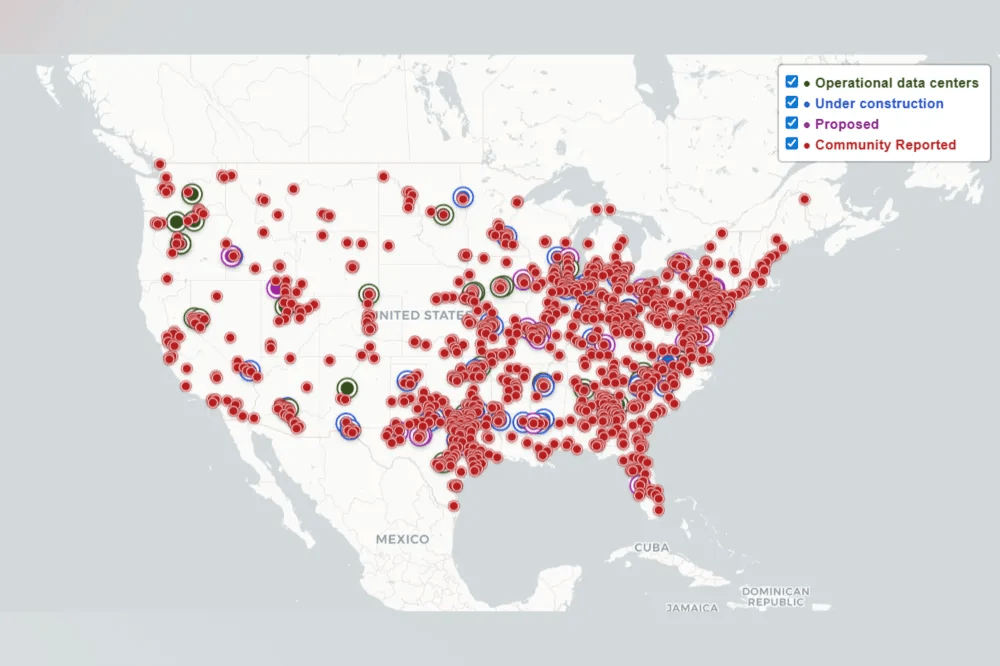
Environmental activist Erin Brockovich is appealing to the public for help after launching a website to report data center concerns as the rapid expansion of AI-driven facilities across the United States increasingly clashes with local communities.
The appeal threatens to thrust an iconic anti-corporate activist into the heart of the battle to expand AI infrastructure at a time of growing public skepticism about the technology’s impact on jobs, safety and the environment.
The website, brockovichdatacenter.com, lists several “key concerns” surrounding such data centers, including high energy consumption that drives environmental impacts and costs, substantial water use for cooling that can strain local supplies, increased e‑waste from frequent hardware upgrades, exposure to location risks such as natural disasters or geopolitical instability, growing scalability pressures that can outpace local infrastructure, and constant noise from cooling systems and generators that can disrupt nearby communities.
“These challenges highlight the need for sustainable, secure, and efficient AI data center practices,” the website says. “Self-reporting is the best way we can get this information out to the public!”
A map on brockovichdatacenter.com shows major AI data centers in the U.S. that are either operational or under construction, overlaid with locations w…Read More | brockovichdatacenter.com
There are now more than 4,200 data centers—built to train, deploy and deliver AI—across the U.S., according to Data Center Map.
According to the website’s statistics, more than 2,716 reports have been submitted, with the most in Texas (612), as of Monday. The state is home to more than 460 data centers, according to Data Center Map.
The greatest concern among communities was water, followed by electricity, health and wildlife.
“The race to build AI infrastructures is unfolding town by town across America. In some places, data centers are welcomed. In others, they are delayed, contested or abandoned altogether. This map captures the real-world footprint of that race—revealing patterns of growth, conflict and uncertainty,” Brockovich said.
Virginia Long a hub for government contractors and cloud infrastructure, Virginia—particularly Northern Virginia’s “Data Center Alley”—offers proximity to federal agencies and one of the world’s densest fiber networks. Established infrastructure reduces build times and attracts hyperscalers looking to scale quickly.
Texas Texas combines vast, inexpensive land with a deregulated energy market that gives companies flexibility in securing large power loads. Cities like Dallas and Austin also bring a growing tech workforce and business-friendly policies that appeal to major AI investors.
Ohio Ohio has positioned itself as a Midwestern data hub, with strong incentives and central geographic access to U.S. population centers. Its legacy industrial sites are often repurposed for data centers, offering space and existing infrastructure at competitive costs.
Arizona Arizona’s dry climate is favorable for certain cooling technologies, while its abundant land and aggressive economic development incentives have drawn major tech firms. Phoenix, in particular, has become a key destination for new AI and cloud infrastructure builds.
Georgia Georgia, anchored by Atlanta, offers strong connectivity as a Southeast internet exchange hub. State and local tax breaks, combined with access to both talent and transport infrastructure, have made it increasingly attractive for large-scale data operations.
Utah Utah benefits from lower real estate costs, a stable regulatory environment, and access to renewable energy sources. Its growing tech sector, known as “Silicon Slopes,” provides an emerging talent pool to support AI-focused expansion.
Why companies are choosing these states:
Cheap land: Large-scale AI data centers require vast footprints; these states offer space at significantly lower costs than coastal markets.
Power access: Reliable, high-capacity energy grids, often with options for renewable sourcing, are critical for AI workloads.
Tax breaks: State and local governments are competing aggressively with incentives to attract long-term infrastructure investment.
Fewer regulations: Streamlined permitting and business-friendly policies enable shorter development timelines and reduced compliance burdens.