Germany Laughs at Trump With the Rest of The World
Germany is denying an assertion made by former President Donald Trump during the presidential debate Tuesday about the country’s renewable energy industry.
“You believe in things like we’re not going to frack, we’re not going to take fossil fuel, we’re not going to do things that are going to be strong, whether you like it or not,” Trump said in his debate against Vice President Kamala Harris. “Germany tried that, and within one year, they were back to building normal energy plants.”
But on Wednesday, Germany’s Federal Foreign Office decided to issue a rebuttal, echoing the former president’s language.
“Like it or not: Germany’s energy system is fully operational, with more than 50% renewables,” the Federal Foreign Office shared on X. “And we are shutting down – not building – coal & nuclear plants. Coal will be off the grid by 2038 at the latest.”
The German Foreign Office also poked at Trump for another comment he made during the debate.
The presidential election has turned into a contest between a capable, smart woman who emphasizes what Americans can achieve when they work together for the common good, and a sundowning old racist creep who would be pathetic if he weren’t so dangerously close to returning to power.
In case you’re wondering what the difference looks like, compare the hate and division the old racist creep is spreading with some recent announcements from President Joe Biden’s administration, nearly all of them about programs funded by one or another of Biden’s big legislative packages. Just a little reminder of why elections matter, and of the legacy that Kamala Harris is committed to building on. For, y’know, the people.
It’s about the Vances. A commenter on MPS posted the link. I was fighting with myself about posting it because it’s awful, but I’m going to because it’s information to be used to determine a vote. But I’m only putting a snippet and the link, so people can decide if they want to read (and see) all of it.
JD Vance’s wife, lawyer Usha Vance, has been conspicuously absent from the campaign trail thus far except for a few brief appearances, prompting speculation and concern. But after a recent campaign appearance, folks who were previously sympathetic to Usha Vance’s plight (marrying a guy who may or may not have f*cked a couch) are thinking twice.
Last week, Usha Vance was seen with her husband at the stalwart Erie, Pennsylvania butcher shop Gordon’s Butcher & Market, where the owners talked to the couple about the shop’s importance in the community.
There are just a few problems with this. Usha Vance is a vegetarian and a practicing Hindu. In Hinduism, the figure of the cow is not only celebrated, but sacred. Cows represent the divine and as such are associated with multiple deities, such as the Lord of Cattle and fertility god Shiva, Krishna, and the bull god Indra. (snip-MORE)
In the flurry of post-debate spin and endorsements you may have missed what is, to my eye, one of the most disgusting things a man has ever said to a woman.
Despite a dominant performance by Vice President Harris followed by the ringing endorsement of Taylor Swift to her 283 million Instagram followers, we were quickly reminded that misogyny will always try to win the day. Elon Musk, a scumbag who needs no introduction, took to his cesspool of a platform in the moments following Swift’s post in an attempt to put her in her place.
(The tweet embed code doesn’t work here; I’m not on Twitter, so I can’t do much. You can see it on Marisa’s page, linked below, or I transcribed it; it is from Mr. Musk, who says, “Fine Taylor … you win … I will give you a child and guard your cats with my life” )
Understanding these 17 words requires a bit of context which I’m loath to repeat but feel duty-bound to explain. (Swift has not made any public comment regarding the tweet so far.)
First, let’s look at Swift’s endorsement of the Harris/Walz campaign. After explaining her process of researching and watching the presidential debate, she wrote:
“I will be casting my vote for Kamala Harris and Tim Walz in the 2024 Presidential Election. I’m voting for @kamalaharris because she fights for the rights and causes I believe need a warrior to champion them. I think she is a steady-handed, gifted leader and I believe we can accomplish so much more in this country if we are led by calm and not chaos. I was so heartened and impressed by her selection of running mate @timwalz, who has been standing up for LGBTQ+ rights, IVF, and a woman’s right to her own body for decades.
She then reminded people to register to vote and to vote early if possible, providing links to resources in her Instagram story. And she signed it “With love and hope, Taylor Swift, Childless Cat Lady.” This was, of course, a reference to Trump’s veep candidate JD Vance saying the Democratic party is run by these sorts of women—meaning they couldn’t possibly care about the future of [white] children in this country.
Swift’s endorsement was a seminal moment in the too-close-for-comfort-and-sanity race between Harris and Trump, and one many have been breathlessly waiting for. While a Swift endorsement doesn’t mean everything, it certainly means something to a lot of people: In the 24 hours following her post, 406,000 people had visited Vote.gov via Swift’s custom link.
Now let’s break down Musk’s disgusting tweet piece by piece:
“Fine Taylor”
Right off the bat, I’m pissed. The Taylor in question is obviously Swift, arguably the most famous celebrity in the world. She’s an artist, a brand and an economy all at once. I may not be a Swiftie but I’ll be damned if the most divorced man of all time doesn’t show her a little respect. You’re not on a first name basis with her, you creep. She does not know you. But we’ll get back to that later.
“you win”
Winning implies that Swift willingly entered into some sort of bet or game with Musk, one in which he’s been forced to concede. As far as we know, Swift and Musk have never communicated in any capacity. In fact, as one Twitter user pointed out, Musk has replied to her a number of times over the years to no avail. Nevertheless, he persisted.
“I will give you a child”
This is where things get really dark. As established in the first two points, these two people do not know each other. Yet Musk is offering to impregnate Swift which, again, is not something she has ever expressed wanting. In fact, impregnating someone against their will is a heinous crime.
Musk has long shown that the rules don’t apply to him, and so far he’s right. From tanking the value of every company he’s touched to saying heinous things about immigrants, he remains a free man and a billionaire with no consequences to speak of. He’s the father of at least 12 children with at least three women, one of whom is an executive at Neuralink, his company that creates chips to be implanted in the brains of humans.
(There is a tweet here on the page; the embed code doesn’t work. See below, or here it is transcribed. “Doing my best to help the underpopulation crisis. A collapsing birth rate is the biggest danger civilization faces by far.” )
He quite literally thinks spreading his seed will save humanity, and Musk thinks he’d be doing Swift a favor—saving her life and giving it meaning, even!—by getting her pregnant. For any man to presume such a thing is vile; for a deadbeat dad with a white supremacy problem, it’s unconscionable.
“and guard your cats with my life”
As if being a predatory misogynist wasn’t enough, Musk decided to throw in some casual racism which also served as a callback to one of Trump’s most unhinged moments in the debate. Trump, echoing claims first trumpeted by Vance, furthered the total and complete lie that Haitian migrants in Springfield, Ohio are eating white people’s pets. It started with an accident last year wherein a Haitian migrant drove into a school bus and killed an 11-year-old white boy, sparking a racist backlash against the migrant community that has rapidly grown in Springfield since 2020. The boy’s parents have told Trump and Vance to stop using their son to spread “incessant hate.”
In Musk’s telling, not only does Swift need to be impregnated to fight against a non-existent population crisis, but her beloved pet cats need protection from the non-existent cat-hungry migrants.
Dave Rubin, a far-right media personality who works for Tenet Media (the company that it was revealed unwittingly worked for the Russian government) managed to somehow take Musk’s threat a step further.
(The tweet embed code doesn’t work. It’s awful, but transcribed, it says, “Dave Rubin asks Taylor Swift to reconsider her endorsement: ‘Taylor Swift, you are a young pretty girl, do you know what the gang members from Venezuela do to young pretty girls? It ain’t pretty!'”. Or, go to Marisa’s page to read; it’s all there.)
The mention of Venezuela was a reference to another anti-immigrant remark Trump made during the debate. Here Rubin deftly combines racism with a rape fantasy, though a different one than Musk had in mind. These are the minds of deeply troubled men.
Following Musk’s post, his estranged daughter Vivian Jenna Wilson bravely posted on Threads about it.
Wilson has recently started speaking out against her father who claimed his child was, in his view, “dead, killed by the woke mind virus,” because she’s transgender. In her first-ever public interview, Wilson told NBC News of Musk in late July, “He was cold. He’s very quick to anger. He is uncaring and narcissistic.”
That narcissism reared its ugly head this week, making even his most fervent supporters uneasy.
While far right zealots have the luxury of laughing off Trump, Vance and Musk’s cruelty, the migrant community in Springfield remains at active risk. On Thursday multiple city buildings and schools were forced to shut down after receiving a bomb threat. The Haitian Times reports that some families have been afraid to send their kids to school since they became caught in the racist crosshairs, with cars being vandalized and Haitian residents considering moving elsewhere. This is all despite the fact that, as a PBS Newshour report demonstrated, Springfield’s businesses are thriving thanks to the town’s newest residents.
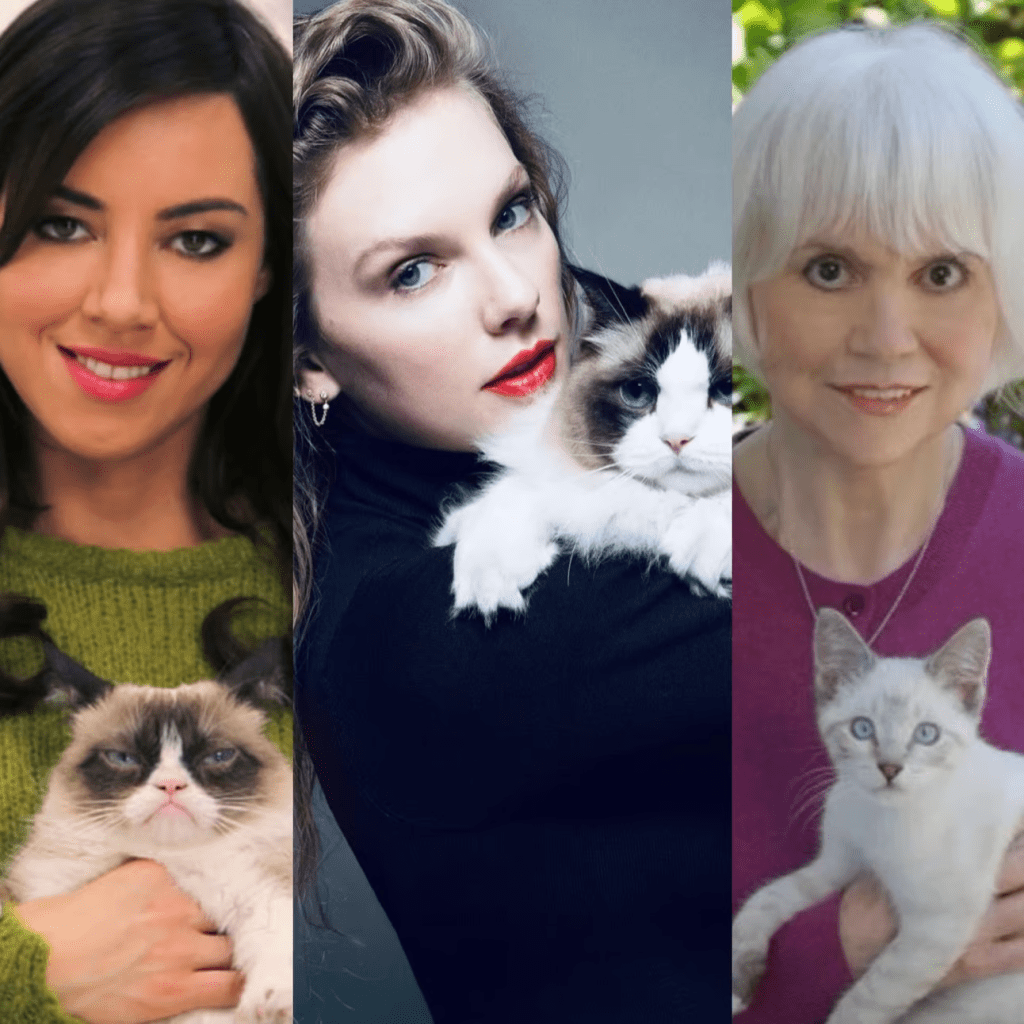
Meanwhile, the childless cat (and dog) ladies are assembling: From Swift to Stevie Nicks, Linda Rondsadt and Aubrey Plaza, famous women are using their platforms to tell the wannabe dictators of the Republican ticket that they have no control over us or our bodies. Not now, not ever.
And in the coming days as conservatives continue to direct hate at immigrants in Springfield and beyond, it’s incumbent upon those with large followings to stand in solidarity with them—because we’re all fighting the same monsters.
(I want to guess that it’s the same everywhere, and ask: did they put these treadmills on bananas?)
Fruit flies on treadmills are giving scientists insights into how insects walk in ways that previous, more invasive techniques could not.
Fruit fly on a treadmill. Illustration by Alice C. Gray.
Researchers want to understand how insects’ nervous systems respond to rapid changes underfoot. All animals must navigate potential hazards and changes in terrain, otherwise injury from falls would be likely (send this to your clumsy friend or relative).
Animals as diverse as flies, cockroaches, rats and humans all show similar ways of readjusting after a trip, for example.
Studying how insects adjust their walking will help scientists understand proprioception: how the body continually senses its articulation and movement.
These techniques have been helpful in evaluation and treatment of people, such as stroke patients, who have locomotive issues.
Graphical abstract. Credit: B G Pratt et al. Current Biology.
University of Washington researchers published in Current Biology their findings when fruit flies – Drosophila melanogaster – were put on specially-designed miniature treadmills.
Fruit flies are a good model for mapping neural locomotion control because they have a compact, fully mapped nervous system. Previous studies have also given scientists a suite of genetic tools to perform precise and specific manipulations of the fly’s nervous system.
Traditionally, researchers have studied insect locomotion either free walking or tethered.
Tethered insects have a small camera mounted on a stick attached to their backs. Unsurprisingly, this method is not the most comfortable for the insect, but an advantage of this approach is that it allows the fly’s movements on 3D surfaces to be studied.
“One disadvantage of studying locomotion in tethered flies is that their posture is constrained and normal ground reaction forces may be disrupted, which could affect walking kinematics,” the authors of the new study write.
Enter the Drosophila’s very own treadmill.
The researchers were able to track fly walking over long periods of time. Split-belt treadmills were used to investigate how the flies reacted to belts with different speeds on either side of the body.
Without the burden of a tethered camera, the flies were able to strut their stuff freely.
“At the extremes, flies on the treadmill were able to sustain walking at a max belt speed of 40 mm/s and surpassed an instantaneous walking velocity of 50 mm/s [about 0.18km/h], which is the fastest walking speed ever reported for Drosophila melanogaster,” the researchers say. (snip-MORE)
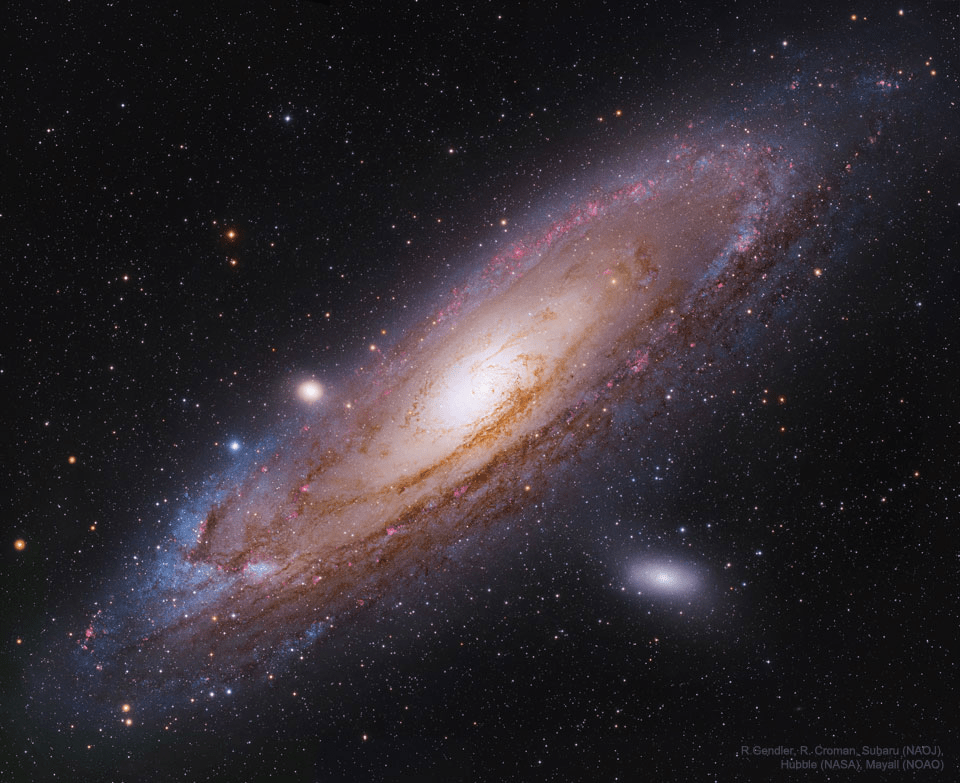
Discover the cosmos! Each day a different image or photograph of our fascinating universe is featured, along with a brief explanation written by a professional astronomer.
(These fill me with wonder almost every day. There are far worse ways to start the day!)
September 7, 1948 3,000 attended a rally to publicly launch the Peace Council in Melbourne, Australia.
September 7, 1957 Barbara Gittings leading a picket in the ’60s Barbara Gittings organized the first New York meeting held for the Daughters of Bilitis, a pioneer lesbian organization. The group was founded two years earlier in San Francisco. Barbara Gittings: Mother of the Gay Rights Movement (This link requires a sign-in on Medium, so I’m going to post it in another entry on its own.)
Cover from their magazine “The Ladder”, October,1968
September 7, 1990 Two British peace activists, Stephen Hancock and Mike Hutchinson known as the Upper Heyford Plowshares were sentenced to 15 months in prison for disabling an F-111 bomber in Oxford, England. A brief History of Direct Disarmament Actions
September 7, 1992 South African troops killed at least 24 people and injured 150 more at an African National Congress (ANC) rally on the border of Ciskei, in South Africa. 50,000 ANC supporters had turned out to demand Ciskei’s re-absorption into South Africa. Ciskei was one of ten black “homelands,” so designated to keep blacks from claiming citizenship in South Africa itself. They were a legal fiction, not recognized by any other country, that was part of the racially separatist apartheid regime. News at the time BBC
September 7, 1996 Two women were arrested for trespass at the Norfolk (Virginia) Naval Base after walking into the base with a banner reading, “Love Your Enemies.”




 Barbara Gittings leading a picket in the ’60s