For months, Meta has been restricting content with LGBTQ-related hashtags from search and discovery under its “sensitive content” policy aimed at restricting “sexually suggestive content.”
Posts with LGBTQ+ hashtags including #lesbian, #bisexual, #gay, #trans, #queer, #nonbinary, #pansexial, #transwomen, #Tgirl, #Tboy, #Tgirlsarebeautiful, #bisexualpride, #lesbianpride, and dozens of others were hidden for any users who had their sensitive content filter turned on. Teenagers have the sensitive content filter turned on by default.
When teen users attempted to search LGBTQ terms they were shown a blank page and a prompt from Meta to review the platform’s “sensitive content” restrictions, which discuss why the app hides “sexually explicit” content.
Meta reversed the restrictions on LGBTQ search terms after User Mag reached out for comment, saying that it was in error. “These search terms and hashtags were mistakenly restricted,” a Meta spokesperson said. “It’s important to us that all communities feel safe and welcome on Meta apps, and we do not consider LGBTQ+ terms to be sensitive under our policies.”
User Mag is a 100% reader-supported publication. To receive new posts and support my work, become a free or paid subscriber.
Subscribe
Under mounting pressure from lawmakers and amidst a moral panic about young people’s social media use, last year, Meta introduced a new set of “sensitive content” restrictions across Instagram, Facebook, and Threads, aimed at teenagers. “We will start to hide more types of content for teens on Instagram and Facebook,” the company said at the time.
In September, Meta doubled down, forcing users under the age of 18 to use “Instagram Teen Accounts,” a setting which could only be reversed by a parent or guardian. The goal of this change, in Meta’s words, was to “limit … the content [teenagers] see, and help ensure their time is well spent.”
These changes quickly resulted in LGBTQ+ content getting restricted across Meta apps. Meanwhile, heterosexual content, tradwife content, and content featuring straight cisgender couples (even those engaged in romantic activities) has flourished.
“Meta categorizing LGBTQ hashtags as ‘sensitive content’ is an alarming example of censorship that should concern everyone,” said Leanna Garfield, social media safety program manager at GLAAD.
Some LGBTQ teenagers and content creators attempted to sound the alarm about the issue, but their posts failed to get traction. For years, LGBTQ creators on Instagram have suffered shadow bans and had their content labeled as “non-recommendable.” The restrictions on searches, however, are more recent, coming into effect in the past few months. Meta said it was investigating to find out when the error began.
“A responsible and inclusive company would not build an algorithm that classifies some LGBTQ hashtags as ‘sensitive content,’ hiding helpful and age-appropriate content from young people by default,” a spokesperson for GLAAD said. “Regardless of if this was an unintended error, Meta should… test significant product updates before launch.”
Subscribe
Several LGBQT teenagers I spoke to said that they weren’t even aware of the sensitive content restrictions, but said that they struggled to find other LGBTQ young people to connect with through Instagram.
“For many LGBTQ people, especially youth, platforms like Instagram are crucial for self-discovery, community building, and accessing supportive information,” Garfield said. “By limiting access to LGBTQ content, Instagram may be inadvertently contributing to the isolation and marginalization of LGBTQ users.”
The downranking and hiding of LGBTQ+ content comes as LGBTQ rights across the country are under attack.
On December 4th, the Supreme Court heard a major case on banning healthcare for trans youth. Trump has pledged to roll back protections for LGBTQ students, and right wing groups like the Heritage Foundation are working together with Democrats to dismantle civil liberties and restrict young people from accessing social media under dangerous proposed legislation such as the very poorly named Kids Online Safety Act (KOSA).
KOSA co-sponsor Rep. Marsha Blackburn claimed that it’s essential to restrict teens access to social media to “protect minor children from the transgender [sic] in this culture and that influence.”
One of the most prominent voices pushing legislation like KOSA and boosting policies like Meta’s sensitive content restrictions is NYU Stern School of Business professor Jonathan Haidt, whose dubious book, The Anxious Generation falsely ties social media use to teen mental health issues in order to push a moral panic about kids and technology use. This moral panic is then used to justify harmful laws that restrict speech and civil liberties online, and do immense harm to marginalized LGBTQ youth.
“Meta categorizing LGBTQ hashtags as ‘sensitive content’ is an alarming example of censorship that should concern everyone”
Mark Zuckerberg recently dined at Trump’s Mar-a-Lago club in Florida and is seeking an “active role” in Trump tech policy as the two are “now warming to each other,” according to The Guardian.
The increased censorship of LGBTQ content online is already having devastating effects on young people. For queer teens who rely on social media to connect with their peers and find support, these policies are cutting off vital access to community and representation.
“Meta should not only stop suppressing LGBTQ content in this way, it should also clarify how and why [this error occurred],” said Garfield.
User Mag is a 100% reader-supported publication. To support my work, become a free or paid subscriber. I could not do this work without your support.
Wow! This has taken a long time. I had hoped to do it every day. But I have been at this since 4 am and it is now 12 pm when I am finishing it. I love sharing the horrible shit the right wing thinks, the things the cult wants to do. If everyone likes these posts so they can choose what to read or ignore let me know. If no one wants them then I am wasting 8 hours of my life. Love and hugs to all. PS. On the other side even with my issues I am feeling a lot more energized. It seems I go one 24 hour period with no sleep and then sleep nearly 12 hours … and repeat. Love all of you, really feel good right now.
But please let me know what you feel of these posts. Do they keep you informed? Do they help? As to if I listen yes, I have decided to post the meme post twice a week because the majority of the few responces I got implied they were too many in each post. So the one I have now worked on for several days will be posted tomorrow morning and since only one person said they cared about the day, I will now try to do them on Wednesday and Sunday. However the voting is still open if I get a new majority of people who feel a different day is better for them. Again as always, loves and hugs. Scottie
Trump supporter crashes his car while speeding in the snow, screaming about Trump, and blasting "maga music". He was livestreaming WHILE DRIVING 💀 pic.twitter.com/uOinMINwa2
White male bosses, black / brown low level employees without a chance of promotion. White women secretaries / assistants. In other words, 1950 to 1960.
PREVIOUSLY ON JMG: Kat Kerr declares that people who stole the election will “hang on meat hooks in hell right next to Hitler.” Kat Kerr says 150-foot angels will kill her critics. Kat Kerr says a talking scroll in heaven will soon prove the “legality” that Trump is still president. Kat Kerr says she heard God “laughing loudly” at Biden’s fake electoral college count. Kat Kerr says Jesus took her to a football game in heaven where he always wins at every sport. Kat Kerr says Jesus personally gave her the commission to draw a portrait of God and that she touched God’s hair while visiting heaven to create the drawing. Kat Kerr personally dispatches 1000 “special ops angels” to ensure Trump is reelected. Kat Kerr assigns 100 million angels to guard the Republican convention. Kat Kerr claims God destroyed the Bahamas with a hurricane due to all the underground sex trafficking tunnels. Kat Kerr claims she saw angels bombarding Trump protesters to drive out their “demonic infections.” Kat Kerr claims she waved at the blond angels guarding the tomb of Jesus. Kat Kerr claims she met Whitney Houston in heaven. Kat Kerr claims the GOP secretly won the 2018 House midterms by pretending to be Democrats. Kat Kerr claims all the aborted babies in heaven had a dance party after Kavanaugh was sworn in. Kat Kerr claims God has a rainbow colored pet unicorn. Kat Kerr claims she met Jesus in person and he was totally hot. Kat Kerr clams that once you reach heaven, Jesus personally throws you a dance party in his mansion and serves you the delicious desserts he baked himself. Kat Kerry claims God personally told her the results of the next five presidential elections. Kat Kerr “takes authority” over volcanoes, hurricanes, and wildfires in the name of Jesus, failing to stop each event.
Trump’s plan redirects even more wealth to top 5%. It shifts the tax burden onto everyday Americans to fund tax cuts that primarily benefit the wealthy. It increases inequality. Removing tax on tips is a symbolic gesture to appease MAGAs while they're sold out to the top 5%.… pic.twitter.com/noGH4Mp3fI
When I was in the service in the 1980s it was illegal for gays to serve. But I was mostly openly gay. I had to be careful as did the many “straight” guys who from training on wanted to have sex with me, and worked / asked / begged for us to take an afternoon drive together somewhere remote on the base to those that begged me to take a four day pass with them to travel a little ways away and get a hotel somewhere. The reason if someone asked was we were seeing such … or visiting a theme park … what ever was plausible even though no questions were ever asked. I never thought about that then … no one ever questioned anything.
Not that you need to know this but I was having same sex relations with fellow service members several times a week and at least every month having a four day pass to have sex. Once it took me by surprise when on the way back to the base I got my first blowjob while driving. When I asked gratefully why, the guy told me he wanted me to remember him in case he asked to go on another pass. He did afterward … repeatedly.
Hey people we were all young really fit horny guys. Were they gay? Were they just straight who understood it would be a way to have enjoyable sex? The only thing I will say is that for every act I performed for them both passive and aggressive, they also performed eagerly for me. You make your own judgments.
Again this was the 1980s. I knew so many Marines who went into the Marines to have the gay worked out of them by becoming a real man. Others were like me, gay with nowhere to go, some were gay like my long term boyfriend who were gay so went where hunky young guys were. Remember what I have said about my time in. I was very skilled at my job as a technician. But as far as being in the Army … well not so much. But the day I was due to leave my warrant officer, my upper staff, two of who had walked in on me fucking my boyfriend on my bed with his legs up in the air and everything in view … left the room, made a big show of about to enter with lots of rattling keys to come in to our room for an unannounced room inspection finding us flushed with our pants hastily pulled on, look around and then the senior guy Sgt Emory winked as he told us … everything looks great guys … go back to what you were doing before we came in. My boyfriend about wilted and died, but I gave a hardy OK will do. And we did. I managed to get the satellite site back up online with modulation while in civilian clothing, which the others had been frantically trying to do before I jumped in. As I said, not to brag I had a talent for more than sex. They begged me to reenlist. I asked them if they could protect me from the new Company Commander who was from infantry and hard right wing who had told me if I did not leave when my contract was ended would see me court marshaled and given an unfit for service discharge. Like the people of this article. They admitted they couldn’t … so I left and became a civilian with the military losing my skills.
That is what tRump and the bigot LGBTQ+ haters want to return to. The military already is way behind on recruitment due to increasingly better economic times, so this will make recruitment worse. Making trans care for minor dependents unavailable and removing travel pay / time for abortion services will also cut down on retention. Removing the 15,000 to 20,000 trans people will also cut down on military people. Removing women from combat? What is the goal, to gut all the US military? To reinstate the draft? Anyway here is the article. Please feel free to ask me anything about this post / my time in the military you feel you need answers to. Hugs
The Pentagon has reached a historic legal settlement with more than 35,000 gay and lesbian military veterans who were dismissed because of their sexual orientation, and in many cases denied an honorable discharge and the array of services they had earned, CBS News has learned.
Under the terms of the agreement, veterans whose discharge papers reference their sexual orientation as a reason for their separation from the military can now avoid a cumbersome legal process and be re-issued paperwork that eliminates any reference to their sexuality. If they were denied an honorable discharge, they will also be eligible for an immediate upgrade review, the agreement says.
“When I was discharged because of my sexual orientation, I felt that my country was telling me that my service was not valuable – that I was ‘less than’ because of who I loved,” said Sherrill Farrell, a U.S. Navy veteran who was a plaintiff in the case. “Today, I am once again proud to have served my country by standing up for veterans like myself, and ensuring our honor is recognized.”
The settlement, which still must receive approval from a federal judge, would resolve the claims from a group of LGBTQ+ veterans who were kicked out of the military years ago because of their sexual orientation. The veterans filed a federal civil rights suit in August 2023 over the Defense Department’s failure to grant them honorable discharges or remove biased language specifying their sexuality from their service records following the repeal of “don’t ask, don’t tell” in 2011.
The class action lawsuit, which was brought in the U.S. District Court for the Northern District of California, claims the Pentagon’s failure to correct this “ongoing discrimination” represents a violation of constitutional rights.
It’s been more than a decade since the military lifted its longstanding ban on openly gay and lesbian troops. But thousands of those discharged under past discriminatory policies like “don’t ask, don’t tell” are still carrying less than honorable discharges today, depriving them of the full spectrum of benefits including VA loan programs, college tuition assistance, health care and some jobs.
A CBS News investigation has documented the Pentagon’s long-running failure to restore honor to the service records of thousands of veterans who were deprived of veterans benefits after their military careers were cut short. A series of reports documented the ways these veterans’ often traumatic separation from the military shaped the course of their lives.
The settlement would establish a streamlined process for LGBTQ+ veterans who were discharged honorably but whose dismissal was attributed to their sexual orientation — enabling them to be re-issued papers that make no reference to it. And for those who were denied an honorable discharge, the Pentagon would commit to a streamlined upgrade review process.
“This proposed settlement delivers long-overdue justice to LGBTQ+ veterans who served our country with honor but were stripped of the dignity and recognition they rightfully earned due to discriminatory discharge policies,” said Elizabeth Kristen, a senior staff attorney with Legal Aid at Work, a group that helped file the suit. “It marks a crucial step in addressing this deep-seated injustice and ensuring these veterans receive the acknowledgment and respect they have long been denied.”
The Pentagon has issued a series of pledges in the past year to right the wrongs inflicted on gay and lesbian service members in the past year. Both the Pentagon and the Department of Justice declined comment on the proposed settlement when reached Monday.
At the time the civil rights suit was filed, a Pentagon spokesman said the military had made attempts to streamline the upgrade process to a short, two-page application. The department said legal representation was no longer required to apply for a discharge review and that the discharge review boards “continue to strive to finalize 90% of all cases within 10 months as required by statute.”
But the lawsuit, prepared by the Impact Fund, Legal Aid at Work and the law firms King & Spalding LLP and Haynes & Boone LLP, called that a “constitutionally inadequate” response, saying it placed the burden on individual veterans to spend months or years obtaining old personnel records before they could file the applications. Those reviews would then take months or years to be processed, they alleged.
The lawsuit did not seek monetary damages, though the settlement allows the court to approve a $350,000 payment by the Pentagon to cover the plaintiffs’ legal costs.
“This case is not about damages,” Jocelyn Larkin, one of the lawyers representing the plaintiffs, said at the time it was filed. “This case is about simply changing that piece of paper because the effect of changing that piece of paper is so incredibly consequential for our clients.”
While the full scope of past discrimination against gay and lesbian service members remains unknown, Larkin believes the lawsuit could at least help some 35,000 veterans already identified by a Defense Department Freedom of Information Act request, first reported by CBS News in June 2023. The true figure could be significantly higher. According to the most recent data available from the Pentagon, just 1,375 veterans have been granted relief in the form of a discharge upgrade or correction to their record.
The thing I like about the video is that she points out how the state claims it must do this to protect kids from the dangerous drugs yet allows their use for straight cis children just not for trans children. The law states it is about making kids accept their birth assigned gender and keeping them from transitioning.
They tried these laws with kids who were gay decades ago and some still fight for it. Force gay kids to accept a heterosexual orientation through conversion methods and then outlaw being homosexual along with erasing anything homosexual from society. It did not work. The courts vigorously defended and backed up gay people’s rights to exist as themselves and have full equality of societies benefits as straight people do.
Sadly we have much different courts now stacked with bigots and racists by bigots and racist who will push and promote the bigotry. But in the law itself they wrote the bigotry out loud, clear, and easy to see. The republican lawmakers are making it plain this is about erasing trans kids and that will make erasing trans adults much easier. I wonder if they will succeed, but I am worried. The video is well worth the watch. If you do not wish to watch the video but prefer to read the transcript she provides a link to it in the description box. Many of the podcasters now do. Hugs
“We’re not looking to arm up and storm the Capitol,” one gun owner said. “We just don’t want to be put in concentration camps.”
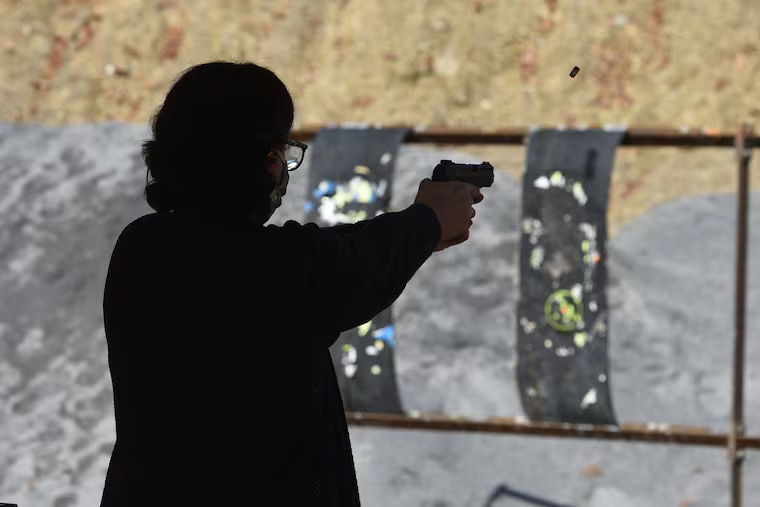
A., who the Inquirer is identifying by the first letter of her first name for safety reasons, stapled two paper plates to the range for her target practice.Bradley C Bower / For The Inquirer
On a brisk Saturday afternoon, A. crouched in a boxer’s stance, knees bent, one hip forward, raised her new Ruger Security-380 pistol aloft with both hands, and pulled the trigger. Spent gold casings clinked to the ground as a paper plate across the range filled with bullet holes. Next to her, a row of men in sweatshirts and earmuffs affably shot their own marks.
A., who The Inquirer is identifying by the first letter of her first name because of safety concerns, is new to the world of shooting ranges and target practice. As a trans woman who lives in Philadelphia, she began seriously considering armed self-defense this summer, as she saw Texas uphold a ban on gender-affirming care for minors and Florida prohibit nurse practitioners from prescribing hormones to transgender people. She watched with increasing dread as Republicans spent nearly $215 million on network TV ads portraying people like her as a dangerous threat to the country.
“Three months before the election, that’s when the alarm bells started to ring,” A., who is 24 and speaks carefully and thoughtfully, said recently. When she mentioned wanting to learn how to fire a gun to friends, they stared at her blankly.
But she felt she couldn’t have been more rational. On Nov. 2, she bought her first gun, at Delia’s Gun Shop in Northeast Philly.
“Minorities that are armed are more difficult to legally oppress,” she said. She was reassured by the idea that “in the event of hate crimes or terrorist attacks, knowing that, ‘OK, I’m personally armed and I can protect my property and people that are close to me.’” She is applying for a concealed carry permit in Pennsylvania, though she doesn’t plan to carry the gun with her every day.
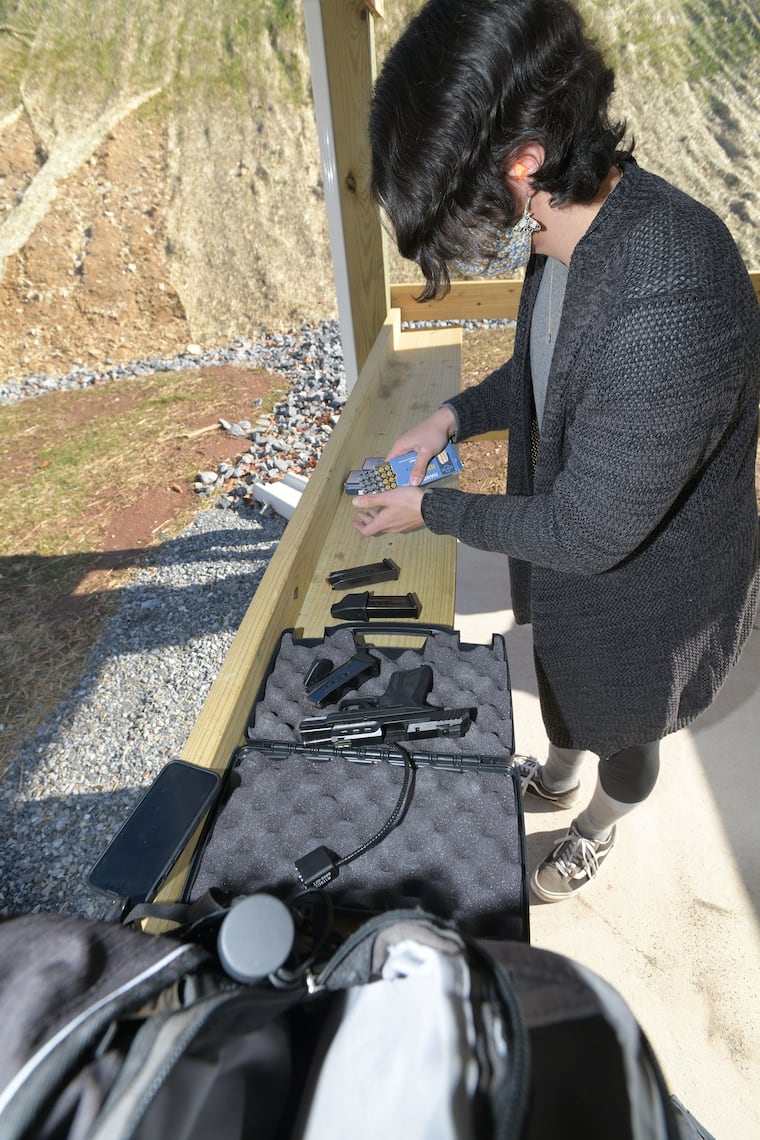
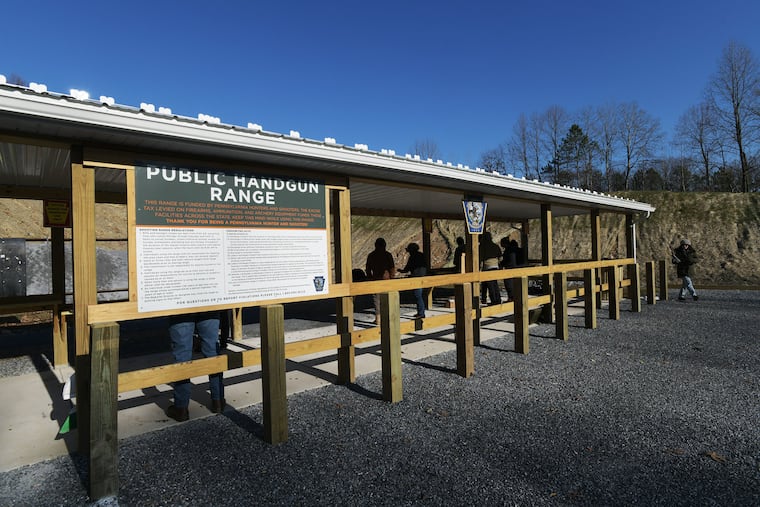
By the end of her practice at the outdoor range at French Creek State Park, bullet casings littered the ground near her backpack and water bottle, which was decorated with rainbow hearts and a “Protect Trans Kids” sticker.
A. prepared to shoot at the French Creek State Park outdoor range.Bradley C Bower / For The Inquirer
‘If I can’t protect myself, who will?’
Since Donald Trump’s reelection in November, nontraditional gun groups across the city and country have seen a flood of interest. The national Liberal Gun Club said it has received thousands of training requests since the election, more than in all of 2023. A spokesperson for the group estimated that roughly a quarter were from LGBTQ people.
In Philadelphia, in the waning weeks of the year, residents peppered local queer Facebook groups with questions about guns and training. The local chapter of the Socialist Rifle Association, a leftist analogue to the National Rifle Association, said it saw a surge in paid memberships; its regular classes about gun safety filled up immediately, so they added more. The head of the Delaware Valley chapter of the Pink Pistols, a longtime gay gun group with the slogan “Armed Gays Don’t Get Bashed,” said he received a sudden flurry of emails inquiring about gun training.
“There’s definitely a feeling among a lot of LGBT individuals: ‘If I can’t protect myself, who will?’” said Madeline Shearman, a trans woman based in Glen Mills who runs a casual and growing “2A social group” in Pennsylvania. “I feel that way myself.”
In Pennsylvania, overall gun sales were down in 2024, according to figures from the State Police: 666,759 firearms were lawfully purchased or privately transferred through the end of October, a drop from the 2020 record high of 1.1 million.
It’s difficult to track rises and falls in LGBTQ gun ownership because there are few published studies about the relatively small population, said David Yamane, a professor of sociology at Wake Forest University and author of the book Gun Curious.
But in general, Yamane argues that American gun culture has dramatically shifted in recent years, away from a focus on hunting and recreation and toward a focus on self-defense, the core of what he calls “Gun Culture 2.0.” As the culture has shifted, people who own guns have become far more diverse. He pointed to 2020 as a pivotal year.
“It was a period of tremendous social unrest and social uncertainty. And a large number of people in the United States, under those conditions, look to firearms to reestablish some sense of safety and security,” Yamane said. He added that racial and gender minorities “led the way” in terms of new gun ownership rates in 2020 and afterward.
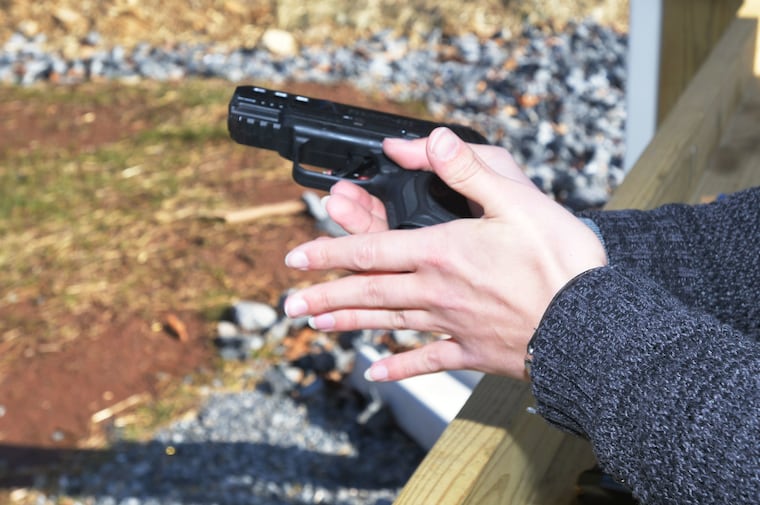
A. purchased her gun on November 2, 2024.Bradley C Bower / For The Inquirer
Yamane also pointed to other political moments that have fueled gun interest in the LGBTQ community. Pink Pistols, which has more than two dozen chapters across the country, was originally founded in 2000 after the writer Jonathan Rauch proposed in a Salon article that “homosexuals should embark on organized efforts to become comfortable with guns, learn to use them safely and carry them. They should set up Pink Pistols task forces, sponsor shooting courses and help homosexuals get licensed to carry.”
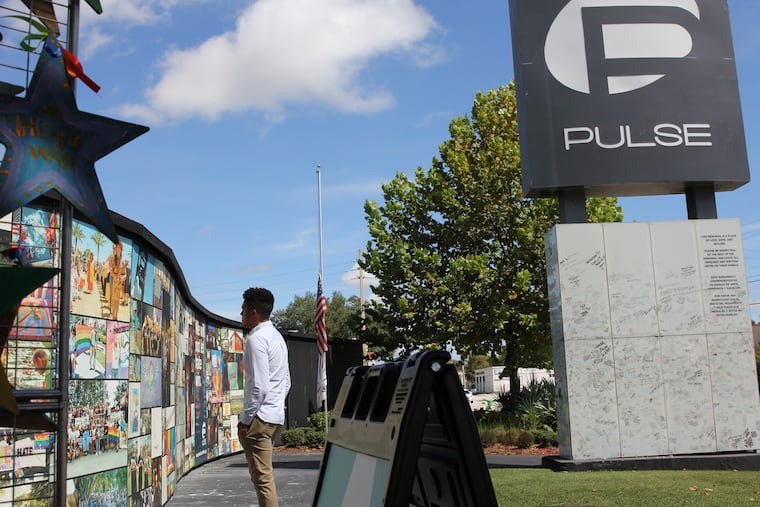
Brandon Wolf, a survivor of the Pulse nightclub shooting and activist, looks at the photos that were part of a Pulse memorial in Orlando, Fla., in 2022.Cody Jackson / AP
The devastating mass shooting at the Pulse nightclub in Florida in 2016 was another catalyst. That’s when Matthew Thompson, who lives in Oakland, N.J., purchased his first gun. A gay man and custom leather worker, Thompson often travels to leather and bear events on the weekends, and feared what might happen. He began practicing drills at home — setting a timer on his phone, wearing his unloaded gun around the house, and drawing it quickly when the timer went off.
Days after the presidential election, he began pursuing his concealed carry permit in New Jersey. He is also organizing other LGBTQ people to practice at a local gun range.
“The people I’ve been seeing on the left and the gay people who are out purchasing guns for the first time, it’s all about self-defense and fear,” said Thompson, who is 36. “We’re not looking to arm up and storm the Capitol. We just don’t want to be put in concentration camps.”
Gun safety with the Socialist Rifle Association
In mid-December, the Socialist Rifle Association’s local chapter held its monthly “Gun-damentals” class. A dozen people gathered in a ramshackle room at the Lava Community Center in West Philadelphia, where a range of unloaded firearms were displayed on the front table. Many of the attendees said they had little or no experience with guns.
The organization, founded nationally in 2018, tries to take a community-based approach to defense, organizers said. Once a month, its volunteers distribute food and medical supplies to people living on the street in Kensington, and the group also leads first aid and de-escalation training classes.
The recent gun-safety class was earnest and efficient: two organizers led the group through an information-packed PowerPoint presentation, explaining the legal landscape in Pennsylvania, the process of purchasing a gun, and basic safety tips, using a laser pointer to emphasize certain points.
Despite people’s hopes about increasing their safety, researchers have found that higher rates of gun ownership and access is correlated with higher rates of gun-related homicides, suicides, accidental deaths, and injuries. In an effort to reduce that danger, the SRA said it focuses on teaching responsible firearm ownership and safe storage.
The public handgun range at French Creek State Park.Bradley C Bower / For The Inquirer
An organizer wearing an Eagles cap and a black sweatshirt lingered on a slide about mental health.
“So guns are weapons, and they’re really good at what they do, which is killing things,” he said, as some attendees nodded and took notes. “85% of suicides attempted with firearms lead to death. … So you have to be mindful, if this is something that you do want to bring into your life, that you’re aware of your own mental health going into it.”
Doug, a therapist who asked to be identified solely by their first name to maintain professional privacy, joined the SRA after the election. They had been in the Boy Scouts growing up, had shot BB guns at camp, and gone to the shooting range occasionally with friends. But they had never owned a gun.
They attended the gun-safety class. Then in early December, they purchased their first gun, an AR-15. Doug was partly motivated by the fact that their official identifications are gender nonspecific, which could alert authorities to the fact that they are nonbinary. They feared they might not be able to buy a gun in the future.
“This country is not, I wouldn’t say, on very solid footing,” Doug said. “As a Boy Scout, I’d rather be prepared.”
President-elect Donald Trump repeatedly pledged to roll back rights for transgender people during his campaign. Kate Sosin, LGBTQ+ reporter for The 19th, joins “America Decides” to discuss how those Americans are preparing for the incoming Trump administration.
Three transgender youths and their families from Arizona traveled across the country to ensure their voices were heard on the steps of the Supreme Court as justices heard oral arguments for the most important transgender rights case the court has ever reviewed — one that could have significant consequences on the future of lifesaving gender-affirming care for youth in the country. About a third of the teenagers in the United States who identify as transgender live in states that have limited access to puberty-blocking medication and hormone therapies. In an election cycle that saw Republicans spend at least $215 million on attack ads about transgender rights, these families share their fears, hopes, and determination to fight for their right to exist. Lucy Kafanov explores the emotional toll of anti-trans legislation, the fight for bodily autonomy, and what it means for trans youth to lose access to life-saving care.
Ben Shapiro vs Neil deGrasse Tyson: The WAR Over Transgender Issues
Ok I know I posted a clip of this from a different channel but this one gives more of Neil deGrasse Tyson’s full answer with a calmer host who did not chop it up. I like this version better because you can see how forceful and direct Tyson is being and that he is clearly amused by the trans hater who think someone’s gender expression is their business. It also shows Shapiro’s growing apprehension as he realizes that Tyson doesn’t agree with him. He clearly thought incorrectly that Tyson would echo his own bigoted opinion. He gets flustered because at the point he normally bullies someone and talks over them, Tyson doesn’t let him do it. This is a beautiful short well crafted answer to any transphobe. Hugs
Join renowned astrophysicist Neil deGrasse Tyson and political commentator Ben Shapiro in a thought-provoking debate exploring one of today’s most complex and polarizing topics: transgender identity and rights.
In this intellectual face-off, Tyson brings his scientific expertise and philosophical perspective, emphasizing individual identity, societal progress, and inclusivity. Meanwhile, Shapiro approaches the topic from a traditionalist and legalistic angle, focusing on biological realities, societal norms, and policy implications.
The discussion between Ben Shaprio and Neil deGrasse Tyson dives deep into the intersections of science, culture, and ethics, tackling questions about gender identity, biological sex, free speech, and the role of government in regulating such matters. As always, both figures present their arguments with their characteristic wit and rigor, challenging viewers to think critically about the nuanced dimensions of the topic.
Whether you’re here to learn, debate, or deepen your understanding of the issues, this conversation promises to spark reflection and dialogue. Don’t forget to share your thoughts in the comments below—respectful discussion is encouraged!
Please notice the part of the story that talks about Robby Starbuck, if you don’t know of him clicking on his blue highlighted name leads to another story of how he coerced John Deere. McDonald’s claims they are doing this because of the SCOTUS actions on school admissions, but sorry they are not colleges or universities. They are a private business and have the right to set their own no discrimination goals and policies. By blaming the court ruling they are trying to divert attention from the real reason.
Back to Robby Starbuck, This sub human pond scum is winning because he uses threats of hurting the profit of these companies. Now maybe the shareholders are predetermined to be racist bigots. But if we want this coercion to stop, we must be as loud, willing to band together, and use our money even when it hurts. So far only one company has stood against him and Stephen Miller’s white power legal company. We must rise up as we once did, make the haters ashamed again like we did over 1970s to 1990s. We can retire meekly to our self-imposed prisons of our homes and acting straight or cis, but that will only encourage them. This is how it went down in Russia and the Russian controlled influenced nations. The maga cultist and fundamentalist Christian bigots are following the Putin playbook in lockstep. We have to show them the playbook won’t work here. And trust me it is easier to do now than in a future where they have removed all sign of the LGBTQ+ people from society. Hugs
Four years after launching a push for more diversity in its ranks, McDonald’s is ending some of its diversity practices, citing a U.S. Supreme Court decision that outlawed affirmative action in college admissions.
McDonald’s is the latest big company to shift its tactics in the wake of the 2023 ruling and a conservative backlash against diversity, equity and inclusion programs. Walmart, John Deere, Harley-Davidson and others rolled back their DEI initiatives last year.
McDonald’s said Monday it will retire specific goals for achieving diversity at senior leadership levels. It also intends to end a program that encourages its suppliers to develop diversity training and to increase the number of minority group members represented within their own leadership ranks.
McDonald’s said it will also pause “external surveys.” The burger giant didn’t elaborate, but several other companies, including Lowe’s and Ford Motor Co., suspended their participation in an annual survey by the Human Rights Campaign that measures workplace inclusion for LGBTQ+ employees.
McDonald’s, which has its headquarters in Chicago, rolled out a series of diversity initiatives in 2021 after a spate of sexual harassment lawsuits filed by employees and a lawsuit alleging discrimination brought by a group of Black former McDonald’s franchise owners
“As a world-leading brand that considers inclusion one of our core values, we will accept nothing less than real, measurable progress in our efforts to lead with empathy, treat people with dignity and respect, and seek out diverse points of view to drive better decision-making,” McDonald’s Chairman and CEO Chris Kempczinski wrote in a LinkedIn post at the time.
But McDonald’s said Monday that the “shifting legal landscape” after the Supreme Court decision and the actions of other corporations caused it to take a hard look at its own policies.
A shifting political landscape may also have played a role. President-elect Donald Trump is a vocal opponent of diversity, equity and inclusion programs. Trump tapped Stephen Miller, a former adviser who leads a group called America First Legal that has aggressively challenged corporate DEI policies,as his incoming deputy chief of policy.
Vice President-elect JD Vance introduced a bill in the Senate last summer to end such programs in the federal government.
Robby Starbuck, a conservative political commentator who has threatened consumer boycotts of prominent consumer brands that don’t retreat from their diversity programs, said Monday on X that he recently told McDonald’s he would be doing a story on its “woke policies.”
McDonald’s said it had been considering updates to its policies for several months and planned to time the announcement to the start of this year.
In an open letter to employees and franchisees, McDonald’s senior leadership team said it remains committed to inclusion and believes a diverse workforce is a competitive advantage. The company said 30% of its U.S. leaders are members of underrepresented groups, up from 29% in 2021. McDonald’s previously committed to reaching 35% by the end of this year.
McDonald’s said it has achieved one of the goals it announced in 2021: gender pay equity at all levels of the company. It also said it met three years early a goal of having 25% of total supplier spending go to diverse-owned businesses.
McDonald’s said it would continue to support efforts that ensure a diverse base of employees, suppliers and franchisees, but its diversity team will now be referred to as the Global Inclusion Team. The company said it would also continue to report its demographic information.
The McDonald’s Hispanic Owner-Operators Association said it had no comment on the policy change Monday. A message seeking comment was left with the National Black McDonald’s Operators Association.
Durbin is an Associated Press business writer focusing on the food and beverage industry. She has also covered the auto industry and state and national politics in her nearly 30-year career with the AP.
A small conservative group in Lancaster, Ohio targeted local businesses and institutions that were LGBTQ+ friendly in response to an annual family-friendly pride event that held an outdoor drag show. When the group failed to get the city to penalize drag performers—and ban drag altogether—they then circulated a boycott list. Local business owners, however, were not harmed by the boycott. In fact, they saw a major influx in traffic after people drove from out of town to support the businesses after seeing them on the anti-LGBTQ+ boycott list.