Hair during childhood

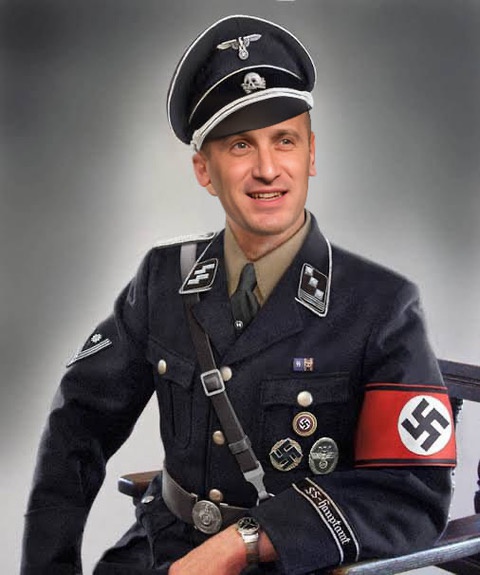
I have very few photos of me as a child.  I only have these few.  I wish I had more.  I did have a small book given to me by someone who knew my adopting adults but hurricane Ian took them from me and I did not have them saved digitally.  Notice that until I was 17 and in the church boarding school was I allowed to have long hair.   Hair was used as a way to set me apart from other kids, to reenforce the idea that I was less than the others, I was the one to be hurt and used.  As I have mentioned while the other kids could have their hair the current style I was required to have my hair as short as possible.  When I was young my adopting father cut it himself and would often leave bald spots and make it as ugly as possible.  Hugs

Me at 7 months

These two pictures below I do not know how old I am, but again notice the hair.  In the top picture we are at the large farm my grandparents owned.  It was a place the entire family gathered at holidays.  I was happy to be outside because inside the big farm house with a dozen bedrooms I was constantly being raped or made to please “my” siblings, cousins, and uncles.  Even at that age of 4 or 5 I was no stranger to the emotional, physical, and sexual abuse that started at age 3.   The clothing was always decent when we were there, to be taken from me once we left. At the farm house I had food to eat when hungry, and grandmother was always talking to me, hugging me, and just letting me stay near her.  No one yelled at me even though I was scared of some of the adult men.  But when we left the good times stopped and the abuse began.

The lower one I think was taken after we have had moved to the small cow town to evade the abuse charges against the adults.  I think this might have been my second grade school photo.  By now the light was going from my eyes and I learned not to talk.  I simply looked at everyone as possibly the next one I would have to “make happy” or perform for.  It was now happening at school, by the one of the town police officers, and of course at home.  My siblings would drug me and take me to parties or simply have them at the house we lived in and I would be a party favor.  

In this picture below I am about 11 or 12.  I am about to go to be taken somewhere to some event to be displayed.  I think it might have been to church where for a while the adopting adult female and her daughters were going to hopefully to buy their way past their guilts.  The pastor there was regularly abusing me, I have talked about that before.  I was grateful he only wanted to play with my nude body or have me suck him, never put something in my butt as normally I would have been raped at least once before getting ready for church.  By now I had no fight left in me.  Notice the always long sleeves to cover the marks and bruises and the long pants to cover the welts and marks.  Again notice the short hair at a time when longer flowing hair was being worn by boys my age in school.  This would have been in the early 1970s.  By now at this age I had accepted I was a toy to be used or displayed, moved and directed by them.  I had no agency, no authority, no say in my life.  My retreat was in my head, the place I lived, the dreams and stories I told myself that no one else could hear. 

Below is me at 18 at the church boarding school.  This is the first time in my life I was allowed to grow my hair out.  The adopting adults hated it.  The adopting adult female constantly bitching and insulting me over.  At this point the adopting male refused to speak to me or be in any room I was in if I had to be at their home during the school year.  I tried to remain at the school as much as possible.

Below is me at age 23 or early 24 when I had just gotten out of the military.  I had already started to let my hair grow over my ears.  This was the way I kept my hair most of my life just longer on the sides and back.  Parted on the left and swept to the right.   Hugs

This is me at age 23 or early 24 when I had just gotten out of the military.  I had already started to let my hair grow over my ears.  This was the way I kept my hair most of my life just longer on the sides and back.  Parted on the left and swept to the right.   Hugs

Options

I ran Harry Potter tours in Edinburgh – here’s why I’m stopping them for good

  • May 28 Written by Fraser Horn

Fraser Horn is dropping Harry Potter tours from his roster (Dan Chiu-Lezeau)

Fraser Horn is dropping Harry Potter tours from his roster (Dan Chiu-Lezeau)

The decision to drop Harry Potter tours in Edinburgh was not an easy one to make, but was necessary, says guide and Edinburgh Street Historians founder Fraser Horn, writing exclusively for PinkNews.

I was about 11 when I first got into Harry Potter, the kid looked a lot like me at the time.

My mum gave me a copy [of one of the books] and, like so many others, I felt the series captured the mood at the time: a sense of peril, mixed with optimism that the world could turn out OK if people stood up for what was right against what was wrong.

It was an instant classic of a kids book and that’s probably why so many millennials still hold such affection [for it] to this day. But we all grew after the series finished, some of us into decent people and others into cartoon villainy.

This is why today I’m announcing that following the success of the LGBTQ+ tour replacing Harry Potter, come July, the Harry Potter tour will not be coming back.

Fraser Horn. (Dan Chiu-Lezeau)

This decision was not made lightly. Although I wanted out of Potter ever since JK Rowling’s essay in 2020, the simple fact of the matter is that the story is so deeply ingrained in the Edinburgh tourism industry that it feels almost impossible to dislodge.

The connections between Edinburgh and Harry Potter very clearly involve Rowling, since it was [here] that the series was written. The films make demand stronger, bringing in a new audience, and repeat showings keep young people interested. With the new TV show, I expect Potter tourism to increase [here] and across the UK. 

If any of those tourists are queer and want a tour that’s more important, they can book the LGBTQ+ one here.

I have been a guide since 2019 but went independent in February. Street Historians was a name that came from the idea that we would be like street magicians, but of history rather than magic. We’re fun, different and the best way to see Edinburgh, in my view. 

The initial plan was to do a couple of tours – Edinburgh’s Old Town and Harry Potter – on a free/pay-what-you-want basis. I planned on doing this because I knew it worked. It was around March that I got in touch with LGBT Health and Wellbeing, a Scottish charity which focuses on supporting the health and wellbeing of LGBTQ+ adults. I wanted to discuss donating money from my Harry Potter profits to them but I also [said] I had offered an LGBTQ+ tour privately in the past.

They were particularly interested in the LGBTQ+ tour so I decided to run that every Friday at 6pm. It involves medical innovators, spies and [the] Aids [crisis], as well as how activists helped reshape society for the LGBTQ+ community. It is essential stuff.

I was motivated to drop Potter for Pride month because of the recent Supreme Court decision which will make our trans siblings unsafe. Rowling has confirmed she donated money to the organisation that advocated for the court decision and celebrated with a cigar picture on a boat, which made me want to drop Potter even more.

The Harry Potter tour will be replaced with a queer-related one. (Dan Chiu-Lezeau)

The response – both to the original LGBTQ tour and to replacing Potter with it – has been overwhelming. 

People who have come on the LGBTQ+ tour love having an event which is a bit different from the standard fare, both in terms of walking tours and queer events. Guests have been making friends and these are the kind of life-long connections from which community is made. The decision to drop Potter for LGBTQ+ history has been a success and most have been positive about it. 

However, some thought I was doing it for the wrong reason: rainbow capitalism, or purely to make money for Pride, before switching back to the Potter tours. It’s fair that the community might expect this sort of thing because as we’ve seen, companies change very quickly. A great example of this would be Barclays Bank, which has a very proud LGBTQ+ section. Then I read how they are banning trans people from using the toilets of their gender, based on the court ruling.

To reassure people, Potter will not be coming back to the Street Historians roster. We have been looking for more interesting stories to tell, for example on forgotten women.

Even with significant economic considerations, it seems necessary for me to drop Potter. The series may be a draw for other people but it is proving harder as time goes by to conjure up enthusiasm. Some may be upset, but I guess that’s the lesson I took from the sort of books I read growing up. We have to take a stand eventually or nothing will ever change.

Share your thoughts! Let us know in the comments below, and remember to keep the conversation respectful. (snip)
 

My Favorite Sport is Spelling Bees

Leave it to the Republicans to mess up sports. They don’t like anybody, and they don’t want anybody to be happy. The word in question is a word: it’s in the dictionary, is used by people, and it makes sense in a sentence. What a story! Peace and good spelling to all. ☮

How the word ‘womyn’ dragged the National Spelling Bee into the US culture wars

In an age of division where authoritarianism is seeping into every corner of American discourse, the Spelling Bee offers up a reminder of what America should truly be

Scott RemerTue 27 May 2025 05.00 EDTShare

We’re living through turbulent times, to say the least. Authoritarianism and fascism threaten the United States. The conspiracy thinking, paranoia and manufactured outrage so characteristic of QAnon and the big lie about the 2020 election have colonized our political discourse like a fungus. Even the National Spelling Bee, a cultural institution which will be celebrating its centennial this year and which is generally exempted from the far right’s paranoid vitriol, hasn’t been immune. Earlier this year, a foofaraw erupted when right-wing outlets reported on the acceptance of “womyn” as an alternate spelling of “women” in the regional-level wordlist which the National Spelling Bee issues each year.

The reason “womyn” was included in the wordlist wasn’t some shadowy feminist plot by the Bee’s organizers. The competition simply allows any word in the Merriam-Webster Unabridged dictionary, unless it is obsolete. “Womyn” is in the dictionary, along with tens of thousands of other words, such as “pointless”, “culture” and “war”.

With zero self-awareness, an anti-trans podcast host raged that the Bee’s uncontroversial decision to allow “womyn” was a manifestation of “fabricated issues” and “totally manufactured outrage.” On Fox News, she snarled, “How lucky are we to live in the United States of America, where the spelling of women, never mind the definition, has become a national debate.” Samantha Poetter-Parshall, a Kansas state representative, joined in the criticism, calling the inclusion of womyn an instance of “crazy indoctrination of our children.” A parent quoted in reportage on the faux scandal shared Poetter-Parshall’s concern, asserting, “This is supposed to be about spelling and language, not ideology.”

George Orwell, the author of Animal Farm, 1984, and the essay Politics and the English Language, would be startled to hear such a complaint. Orwell deeply understood the intimate relationship between language, thought, and politics. He keenly observed how “in our time, political speech and writing are largely the defense of the indefensible … Political language has to consist largely of euphemism, question-begging and sheer cloudy vagueness. Defenseless villages are bombarded from the air, the inhabitants driven out into the countryside, the cattle machine-gunned, the huts set on fire with incendiary bullets: this is called pacification. Millions of peasants are robbed of their farms and sent trudging along the roads with no more than they can carry: this is called transfer of population or rectification of frontiers. People are imprisoned for years without trial, or shot in the back of the neck or sent to die of scurvy in Arctic lumber camps: this is called elimination of unreliable elements.”

In our time, imprisoning and attempting to deport legal residents of the US for their political views and sending legal residents and gay people fleeing persecution in Venezuela – and potentially US citizens – to prisons in El Salvador where torture is widespread based on flimsy evidence from disgraced police officers is called “securing our homeland”. The announcement of economically ruinous tariffs which have wiped trillions off the stock market is called “liberation day.” Orwell believed that “to think clearly is a necessary first step towards political regeneration.” To combat the creep of Orwellian language, he argued that we should “recognize that the present political chaos is connected with the decay of language, and that one can probably bring about some improvement by starting at the verbal end,” aiming to always use “language as an instrument for expressing and not for concealing or preventing thought”.

In its emphasis on linguistic precision and its heartfelt delight in words, the National Spelling Bee is already political in Orwell’s sense. The Bee also has an implicit politics of appreciation for cultural and linguistic diversity. Though most spellers are American, the competition has an international flavor: it regularly features participants from Ghana, Canada, Jamaica, South Korea, China, and Nigeria, and spelling bees have sprung up in countries like Zimbabwe too. The welcome which the Bee extends to logophiles from all over the world inculcates in kids an appreciation of other cultures and promotes a cosmopolitan worldview. Spellers study words from Latin, French, Greek, Italian, Portuguese, Spanish and German; this cultivates their love of linguistic variety. What’s more, the fact that the South Asian community regularly dominates the upper echelons of the competition reaffirms the importance of immigration to our society.

These days, even if many Americans reject the Trump regime’s ugly attitudes and practices, xenophobia and racism are rampant, hearkening back to the bad old days of the Know-Nothing Party and the Chinese Exclusion Act. The US government has become increasingly hostile to international travelers: there have been a spate of horrific stories of tourists, visitors, and legal residents from GermanyCanadaFrance, the United KingdomAustralia, and elsewhere who have done nothing wrong being arrested, detained, and held for weeks by Ice, or being refused entry to the US and deported. In such a context, the National Spelling Bee’s steadfast commitment to multiculturalism is all the more essential.

Despite its unfortunate Covid-induced cancellation in 2020 and some turbulence from rule changes and regional sponsor attrition in 2021 and 2022, the National Spelling Bee has been a relative constant for students in an age of extreme dislocation and upheaval. In these politically polarized times, it offers Americans an opportunity for joy and collective uplift. It celebrates education, attention, focus, dedication, and quiet, patient effort. It teaches students grit, discipline, and linguistics. It reminds us of the importance of the human in an age of AI. It reinforces the importance of good sportsmanship and fair play. It promotes respect and friendship towards humanity at large. It invites us to honor and remember the values that ought to unite us all. The National Spelling Bee is a reminder of what America has been – and what it must continue to be.

Scott Remer is a professional spelling bee tutor, freelance writer, and the author of the textbooks Words of Wisdom: Keys to Success in the Scripps National Spelling Bee, Sesquipedalia!: A Rigorous Vocabulary Study Guide, Regional Bee Ready!, and A Few Final Words of Wisdom.

A Bit Of A Sojo Article I Read Earlier

of interest here. OpinionPoliticsDemocracy, Voting, and Governance

The Church Can Offer Trans Refuge From Bad Theology and Bad Legislation

By Oisín Rowe

Snippet:
In the book The Great Open Dance: A Progressive Christian Theology, theologian Jon Paul Sydnor argues that even the apostle Paul calls for an allegorical reading of Genesis by citing his letter to the church in Galatia. In Galatians 4:21-31, Paul explains the significance of Sarah and Hagar. In verse 24, he tells his audience, “These things are being taken figuratively: the women represent two covenants.” If Paul didn’t read Genesis literally, then I think that permits Christians to interpret Genesis from a more open perspective when it comes to gender and sexuality.

I hold out hope that the Bible can be interpreted in such a way as to make room for me and other trans people. I grasp on to the idea that there is a Christianity out there that is safe and committed to fighting anti-trans legislation. Perhaps to my own harm, I even sometimes find myself hoping that fundamentalists and the Far Right can be persuaded. Persuaded to care, persuaded to see the shared humanity between themselves and transgender people, persuaded by their own good book to protect my community and change their ways. Though I know this is unlikely, I continue to cling to hope. As I am literally fed and cared for by a Christian community, I gain a better understanding of what faith looks like. Today, I am choosing to have faith in my identity as something beautiful and chosen, and good.

In Transgender, Intersex, and Biblical Interpretation, theologians Terese J. Hornsby and Deryn Guest write, “The trans body is not a minority exception to a two-gendered system; it is not an anomaly or a body that exists in the margins. The reality is that there are no margins.” This limitlessness, this abundance, is not only good theology, it is safety, it is belonging.

Oisín Rowe

Let’s talk about Trump’s cut hurting those making less than $50,000 per year….

In Regard To GoComics

I think others here read on GoComics, so likely are aware that they did some work on their site. I’m an almost-daily reader there, but I have no account; I just go there and read the ones I want to read.

One of those is “Fur Babies.” Nancy Beiman has not only created a genius little toon about a girl and pets, she’s also mentioned other ‘toonists and their work, and I read those now, most of the time, as well.

Since I don’t have an account, I’m not aware of the issues Ms. Beiman mentions here in her substack. I do see, in comments when I bother reading those, that people have trouble getting in, getting around, and seeing what they go to GoComics to see. So, all of that is the background for this, from Nancy Beiman. Maybe none of you read her comic, and don’t mind what she or any other artist does. But, maybe some of you do, so please read this and give her your thoughts, all right? You’ll need to click through to Substack to do so. And thanks!

A Question and a Poll by Nancy Beiman

Two year anniversary…then what? Read on Substack

FurBabies will have its second GoComics publication anniversary on June 5, 2025.

I was told that I should allow two years for the strip to get off the runway. The time is nearly up, it’s still on the runway, and I need to know if the flight should be cancelled.

Drawing a daily strip is a lot of work for very little reward, and I’m not talking about money. I got rewarded well at first. A core group of readers posted daily on the GoComics page. They enjoyed the strip, there were very few trolls, and the number of followers was going steadily up. Then they changed the site and everything changed for FurBabies.

The strip now gets 50% of the likes and comments that it formerly received. I have no way of seeing if the followers are increasing or decreasing. Some commenters have disappeared (most were able to return, although not without difficulty) No one can see the number of followers change any more. The system now only changes when 100 people add or leave the page. This is of little consequence to strips with thousands of followers, but it is devastating to ones with fewer than two thousand (I am not the only one in this predicament). If the smaller strips aren’t publicized, they never will become better known. I’ve done everything I could to get the word out, but am completely discouraged by the recent developments.

I’m running a poll here and on Instagram: Should I keep drawing the FurBabies?

They were intended to bring a little fun and innocent humor into the comics. The zeitgeist tends toward ‘dark’, snarky, or autobiographical strips lacking in humor. I’m out of touch and I know it. Frankly I don’t want to be ‘in touch’ with these times.

If I do continue FurBabies, I will most likely go to alternate days and drop daily updates.

Thank you for reading this and I look forward to hearing from you.

Nancy

(snip-go answer the poll-it’s a simple couple of clicks. I don’t mind how you vote, but she’d appreciate the information.)

New Montana law limits what flags can be flown at schools and government buildings

The entire article is saying that the public schools should be for everyone … except LGBTQ+ kids and parents of those kids.  Yes gay and trans children exist and need / deserve to see themselves represented in the community just as much as straight cis kids do.  This is a hate bill, banning a group because the majority in charge doesn’t like them.  The flags they say are ok to fly like the Gladstone flag or the thin blue line flag are not neutral and they most definitely represent a political ideology.  Again this is about erasing the LGBTQ+ kids / people from society to make the Christian fundamentalist and insecure parents who know they can’t have produced a gay / trans kid feel better about themselves.  It is a desire to force the fundamentalist view point on every one regardless if they believe it.  It is a desperate attempt to return to the 1950s.   Hugs

https://www.ktvh.com/news/new-montana-law-limits-what-flags-can-be-flown-at-schools-and-government-buildings

Posted 2:53 PM, May 21, 2025 
and last updated 6:48 PM, May 21, 2025

A new Montana law limits what flags can be flown on government property or at public schools.

House Bill 819, sponsored by Rep. Braxton Mitchell, R-Columbia Falls, restricts any flags that “represent a political party, race, sexual orientation, gender or political ideology.”

The law effectively bans Pride flags and other LGBTQ flags from being flown at schools or government buildings. In 2019, Gov. Steve Bullock, D-Montana, flew a Pride flag over the state Capitol, which drew criticism from Republicans.

Language in the bill does allow flags like the Gadsden flag and other “official historical flags” to be flown. It also allows flags for law enforcement officers and fallen officers, like the “Thin Blue Line” flag, which Gov. Gianforte, R-Montana, flew above the Montana Capitol on Thursday, May 15, 2025.

When HB 819 was debated on the floor of the Montana House of Representatives, Mitchell said the bill was intended to ensure government entities remain a place of neutrality and was not to impact an individual’s free speech.

“Government buildings, schools and public facilities serve all citizens and should not be used to promote political, ideological or activist messaging,” said Mitchell during the March 6 floor debate.

Critics of HB 819 say the bill targets free speech by allowing provisions for specific flags like the Gadsden “Don’t Tread on Me” flag to be flown, while others were prohibited. Rep. Pete Elverum, D-Helena, said under the language, a Confederate flag could be flown.

“What we’re doing here is we’re expressly prescribing what speech is allowed, ‘these flags’, and what speech is not allowed, ‘these other flags’,” said Rep. Pete Elverum, D-Helena, on March 6. “And as for the definition of ‘promoting a certain ideology,’ those [flags] are expressly prohibited, but at the exact same time we’re sitting here with a bill proclaiming to be about free speech, we’re expressly prohibiting some and promoting others.”

Flags of tribal nations, foreign countries, military service branches, the POW/MIA flag and official school or government entities’ flags are also permitted under the law.

HB 819 went into effect immediately after Governor Greg Gianforte signed it.

This year, both Utah and Idaho have passed similar laws restricting or banning Pride flags on government property or at schools.

New Montana law decides which flags fly in public schools.

The Pulp (@thepulp.org) 2025-05-23T21:15:13.391Z

So is this one allowed, or not?

U.S. citizen with REAL ID handcuffed and held in immigration raid before being released

https://www.nbcnews.com/news/latino/us-citizen-immigration-raid-real-id-handcuffed-alabama-rcna208794

The man told Noticias Telemundo that authorities took his ID from his wallet and told him it was fake before handcuffing him.

A U.S.-born citizen who was wrestled into the dirt, handcuffed and detained in a vehicle as part of an immigration raid had a REAL ID on him that was dismissed as fake, the man’s cousin said Friday.

Video of the arrest, aired by Noticias Telemundo, showed authorities grabbing Leonardo Garcia Venegas, 25, while at a job site in Foley, Alabama, on Wednesday and bending his arms behind him. Someone off-camera can be heard yelling, “He’s a citizen.”

Garcia told Noticias Telemundo that authorities took his ID from his wallet and told him it was fake before handcuffing him. REAL ID is the identification U.S. citizens are required by law to have in order to travel through airports and enter federal buildings. It is considered a higher security form of identification.

“Apparently a REAL ID is not valid anymore. He has a REAL ID,” his cousin Shelah Venegas said. “We all made sure we have the REAL ID and went through the protocols the administration is asking for. … He has his REAL ID and then they see him and I guess because his English isn’t fluent and/or because he’s brown it’s fake, it’s not real.”

Garcia had told Noticias Telemundo that “they grabbed me real bad” and the handcuffs were placed “very hard” on him.

Garcia said he was released from the vehicle where he was held after he gave the arresting officials his Social Security number, which showed he is a U.S. citizen.

The arrest has left Garcia, who was born in Florida, shaken, particularly because the officers also arrested and detained his brother, who is not in the country legally, Venegas said. She added that Garcia lived with his brother. Their parents are from Mexico.

Leonardo Garcia Venegas.
Leonardo Garcia Venegas.Telemundo

“He was actually pretty sore when he got back,” Venegas said of Garcia. “He said his arms were hurting and his hands. His wrists, you could see where he had all the marks from the handcuffs. … The way they put him on the ground, his knees also were hurting.”

She said they have been trying to find a lawyer but local ones have told them that it is nearly impossible to sue a federal agent. It is not clear from the video whether the authorities were federal immigration agents or local law enforcement carrying out enforcement duties.

The Department of Homeland Security said in a statement to NBC News that Garcia interfered with an arrest during a targeted worksite operation.

“He physically got in between agents and the subject they were attempting to arrest and refused to comply with numerous verbal commands,” said Tricia McLaughlin, DHS assistant secretary. “Anyone who actively obstructs law enforcement in the performance of their sworn duties, including U.S. citizens, will of course face consequences which include arrest.”

The response did not address the dismissal of Garcia’s identification.

Garcia denied that he interrupted an arrest. He told NBC News that he was trying to take out his phone when an Immigration and Customs Enforcement agent took it and threw it to the ground and then an agent began grabbing him.

Venegas said Garcia’s brother has signed deportation papers because the family didn’t want him detained “forever” as they’ve seen happen to another family member, who was held for months in a Louisiana detention center.

“It’s inhumane, what they are doing to our people. They are treating them as if they were murderers,” she said.

Venegas said the immigration arrests are creating repercussions among Hispanics, even among U.S. citizens.

“It’s about race now. It’s not about whether you are here legally or not,” she said.

Her family owns a fairly large contracting company, she said, “and a lot of the people that work with us are not working. … They are refusing to go to work. They said they are not going to go until this stuff calms down.”

Venegas added that the majority of her family is self-employed and “we do the same thing every other citizen does.”

“It’s just insane we can’t be different, the color that we are. We contribute to this country the same way every other citizen does with their taxes,” she said. “But we have to be the ones that every time we go to work, we are going to be scared that we’re going to get discriminated.”

“I think about my family,” she said. “Even though a lot of them are citizens, I think about how we all work in the same area in construction and they can’t sit out there because they could literally get harassed or attacked the way my cousin did.”

Check In With Your States-

Kansas denies USDA request for personal data of residents receiving food assistance

By: Morgan Chilson – May 22, 2025 5:15 pm

 Kansas Department for Children and Families denied a request by the federal government for access to personal data of a food assistance program. (Submitted)

TOPEKA — State officials have denied a federal request to disclose personal information of Kansans using the Supplemental Nutrition Assistance Program.

On May 6, the Kansas Department for Children and Families received a letter from the U.S. Department of Agriculture that demanded “unfettered access to comprehensive data from all State programs that receive federal funding.” DCF spokeswoman Erin LaRow shared a copy of that letter and other communications in response to an inquiry from Kansas Reflector.

The USDA letter specified that information to be collected for each SNAP applicant or recipient included name, Social Security number, date of birth, personal address and records to calculate the amount of SNAP benefits participants received over time. It was signed by Gina Brand, senior policy advisor for integrity at USDA’s Food, Nutrition and Consumer Services division.

The requested data would cover the time period from Jan. 1, 2020, to the present, the letter said.

DCF’s SNAP data is held by a third-party database administrator, Fidelity Information Services LLC. That company notified DCF on May 9 that a formal request for Kansas SNAP records had been made from USDA and that because of federal guidance, they were required to disclose that information.

“As such, FIS intends to fully cooperate with the USDA in facilitating its request for information, as required by applicable law and the guidance,” wrote Prashant Gupta, FIS senior vice president. He then asked for DCF’s written consent.

DCF stopped the process in a letter dated May 14, sent by Carla Whiteside Hicks, the DCF director of economic and employment services.

“Please be advised that we do not consent to your providing the USDA the requested information at this time,” Whiteside Hicks told FIS. “As you know, our obligation to maintain these records in confidence is paramount and may only be disclosed to the USDA for specific program-related reasons. At this time, we are unsure as to the reason for the USDA’s request. As such, we are unable to consent to your turning the information over.”

Whiteside Hicks also said DCF will be asking the USDA to contact DCF directly in the future. She asked FIS to turn over any information that they may have already provided to the USDA and to also provide DCF with any written communications the company has received from USDA.

LaRow said DCF is reviewing the request from USDA related to the personally identifiable data of Kansans.

“Security of Kansans’ personal information is paramount to the agency, and we are committed to maintaining confidentiality consistent with state and federal law,” she said.

(snip-see the letters in .pdf on the page)

Trump administration seeks to end basic rights and protections for child immigrants in its custody

https://www.theguardian.com/us-news/2025/may/22/trump-children-flores-settlement-agreement

Flores Settlement Agreement limits how long children can be detained and requires they be provided with food, water and clean clothes

Detained children line up in the cafeteria at the Karnes County Residential Center in Karnes City, Texas, on 10 September 2014. Photograph: Eric Gay/AP

The Trump administration is trying to end a cornerstone immigration policy that requires the government to provide basic rights and protections to child immigrants in its custody.

The protections, which are drawn from a 1997 consent decree known as the Flores Settlement Agreement, limit the amount of time children can be detained by immigration officials. It also requires the government to provide children in its custody with adequate food, water and clean clothes.

The administration’s move to terminate the Flores agreement was long anticipated. In a court motion filed Thursday, the justice department argued that the Flores agreement should be “completely” terminated, claiming it has incentivized unauthorized border crossings and “prevented the federal government from effectively detaining and removing families”.

Donald Trump also tried to end these protections during his first term, making very similar arguments.

law enforcement officer walk with a detained person
Ice arrests at immigration courts across the US stirring panic: ‘It’s terrifying’
Read more

The move to end protections follows a slew of actions by the Trump administration that target children, including restarting the practice of locking up children along with their parents in family detention. Immigration advocacy groups have alleged in a class-action lawsuit filed earlier this month that unaccompanied children are languishing in government facilities after the administration unveiled policies making it exceedingly difficult for family members in the US to take custody of them. The president and lawmakers have also sought to cut off unaccompanied children’s access to legal services and make it harder for families in detention to seek legal aid.

“Eviscerating the rudimentary protections that these children have is unconscionable,” said Mishan Wroe, senior attorney at the National Center for Youth Law. “At this very moment, babies and toddlers are being detained in family detention, and children all over the country are being detained and separated from their families unnecessarily.”

The effort to suspend the Flores agreement “bears the Trump administration’s hallmark disregard for the rule of law – and for the wellbeing of toddlers who have done no wrong”, said Faisal al-Juburi of the Texas-based legal non-profit Raices. “This administration would rather enrich private prison contractors with the $45bn earmarked for immigrant detention facilities in the House’s depraved spending bill than to uphold basic humanitarian protections for babies.”

The Trump administration in 2019 asked a judge to dissolve the Flores Settlement Agreement, but its motion was struck down. During the Biden administration, a federal judge agreed to partially lift oversight protections at the Department of Health and Human Services, but the agreement is still in place at the US Customs and Border Protection (CBP) and US Immigration and Customs Enforcement agencies.

“Children who seek refuge in our country should be met with open arms – not imprisonment, deprivation and abuse,” said Sergio Perez, executive director of the Center for Human Rights and Constitutional Law.

The settlement is named for Jenny Flores, a 15-year-old girl who fled civil war in El Salvador and was part of a class-action lawsuit alleging widespread mistreatment of children in custody in the 1980s.

Since the settlement agreement was reached in 1997, lawyers and advocates have successfully sued the government several times to end the mistreatment of immigrant children. In 2018, attorneys sued after discovering unaccompanied children had been administered psychotropic medication without informed consent.

In 2024, a court found that CBP had breached the agreement when it detained children and families at open-air detention sites at the US southern border without adequate access to sanitation, medical care, food, water or blankets. In some cases, children were forced to seek refuge in portable toilets from the searing heat and bitter cold.