Crackdown on Pride is part of effort to curb democratic freedoms ahead of a hotly-contested election next year
Tens of thousands march against Hungary’s government for LGBT rights – video
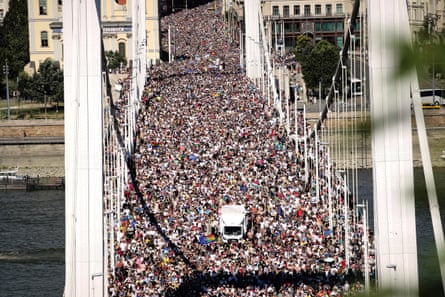
Tens of thousands of people have taken to the streets of Budapest in defiance of the Hungarian government’s ban on Pride, heeding a call by the city’s mayor to “come calmly and boldly to stand together for freedom, dignity and equal rights”.
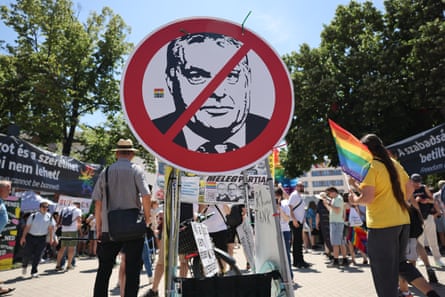
Jubilant crowds packed into the city’s streets on Saturday, waving Pride flags and signs that mocked the country’s prime minister, Viktor Orbán, as their peaceful procession inched forward at a snail’s pace.
Organisers estimated that a record number of people turned up, far outstripping the expected turnout of 35,000-40,000 people.
“We believe there are 180,000 to 200,000 people attending,” the president of Pride, Viktória Radványi told AFP. “It is hard to estimate because there have never been so many people at Budapest Pride.”
The mass demonstration against the government was a bittersweet marking of Budapest Pride’s 30th anniversary; while the turnout on Saturday was expected to reach record levels, it had come after the government had doubled down on its targeting of the country’s LGBTQ+ community.
Hungary Pride participants in the march cross the Elisabeth Bridge in Budapest, Hungary. Photograph: Rudolf Karancsi/AP
“We came because they tried to ban it,” said Timi, 49. The Hungarian national was marching with her daughter, Zsófi, 23, who had travelled from her home in Barcelona to join the rally.
After the ruling Fidesz party, led by the rightwing populist Orbán, fast-tracked a law that made it an offence to hold or attend events that involve the “depiction or promotion” of homosexuality to minors, many Hungarians vowed to show their disapproval by attending Pride for the first time.
Viki Márton was among those who had made good on the promise, turning up with her nine-year-old daughter.
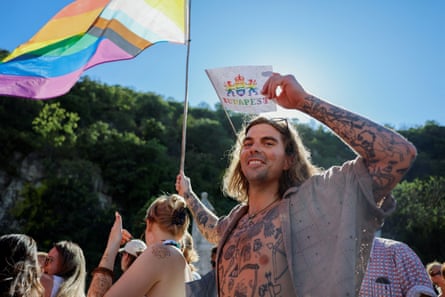
The pair had come equipped with hats, water spray, and a swimsuit, more worried about heat than rightwing protesters. “I want her to see the reality,” said Márton. “And I’m so excited to be here!”
Tens of thousands of Hungarians took to the streets on Saturday, despite Orbán’s warning on Friday that those who attend or organise the march will face ‘legal consequences’. Photograph: János Kummer/Getty Images
Earlier this month, police announced they would follow the government’s orders and ban the march. The progressive mayor of Budapest, Gergely Karácsony, was swift to respond, saying that the march would instead go ahead as a separate municipal event, with Karácsony describing it as a way to circumvent the need for official authorisation.
On Saturday, the mayor reiterated why the city had decided to host the event, hinting at how the march had become a symbol of discontent against a government that has long faced criticism for weakening democratic institutions and gradually undermining the rule of law.
“The government is always fighting against an enemy against which they have to protect Hungarian people,” said Karácsony.
“This time, it is sexual minorities that are the target … we believe there should be no first and second class citizens, so we decided to stand by this event.”
Akos Horvath, 18, who had travelled two hours from his city in southern Hungary to take part in the march, described it as an event of “symbolic importance”.
Speaking to news agency AFP, he added: “It’s not just about representing gay people, but about standing up for the rights of the Hungarian people.”
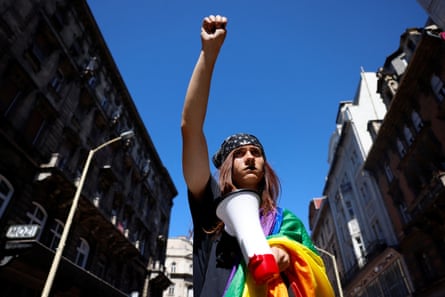
The sentiment was echoed by fellow marcher Eszter Rein-Bódi. “This is about much more, not just about homosexuality,” Rein-Bódi told Reuters “This is the last moment to stand up for our rights.”
‘This is about much more, not just about homosexuality,’ one participant told Reuters. Photograph: Lisa Leutner/Reuters
Tens of thousands of Hungarians, including senior citizens and parents with their children, plus politicians and campaigners from 30 countries, took to the streets on Saturday, despite Orbán’s warning on Friday that those who attend or organise the march will face “legal consequences”.
The Hungarian prime minister sought to minimise concerns over violence, however, saying that Hungary was a “civilised country” and police would not “break it up … It cannot reach the level of physical abuse”.
Still, in a video posted to social media this week, the country’s justice minister, Bence Tuzson, warned the Budapest mayor that organising a banned event or encouraging people to attend is punishable by up to a year in prison.
Speaking to reporters on Friday, the mayor brushed off the threat and downplayed concerns that police would later impose heavy fines on attende s. “Police have only one task tomorrow: to guarantee the safety and security of those gathered at the event,” said Karácsony.
The potential for violence had been amplified after three groups with ties to the extreme right said they were planning counter-marches. As the Pride march got under way, local news site Telex reported that the route of the march had to be changed after one of these groups blocked off a bridge.
Analysts had described the government’s bid to crackdown on Pride as part of a wider effort to curb democratic freedoms ahead of a hotly contested national election next year.
Orbán is facing an unprecedented challenge from a former member of the Fidesz party’s elite, Péter Magyar, leading Pride organisers to suggest they are being scapegoated as Orbán scrambles to shore up support among conservative voters.
Orbán’s government had also prompted concerns across Hungary and beyond after it said it would use facial recognition software to identify people attending any banned events, potentially fining them up to €500 (£425).
Ahead of the march, as campaigners scrambled for clarity on whether or how this technology would be used, AFP reported that newly installed cameras had appeared on the lamp-posts that dotted the planned route.
The threat had been enough to rattle some. Elton, 30, a Brazilian living in Hungary wore a hat and sunglasses as he took part on Saturday, explaining that he had been worried about jeopardising his job and immigration status, but that his Hungarian boyfriend had persuaded him to attend.
“This is my second time at Pride, but the first time I feel insecure about it,” he said.
Orbán’s government had also prompted concerns across Hungary and beyond after it said it would use facial recognition software to identify people attending any banned events. Photograph: Lisa Leutner/Reuters
Mici, a 21-year-old Budapest resident, said she had attended Pride marches in the past but this time had weighed whether to join in after she was spooked by reports of the facial recognition system.
“At first, I was scared to come out because of the news, but I feel safe with so many people.”
She hoped that the massive turnout for the march would be enough to push the Orbán government to change its stance.
“I think the crowd that has come from across Europe, the record numbers, will make Hungarian people see that this cause is well-supported.”
Jermaine Thomas, who says he was deported to Jamaica without a passport though he’s never been to the country (Provided by Jermaine Thomas)
Ten years ago, Jermaine Thomas was at the center of a case brought before the U.S. Supreme Court: Should a baby born to a U.S. citizen father deployed to a U.S. Army base in Germany have U.S. citizenship?
Last week, Thomas was escorted onto a plane with his wrists and ankles shackled, he says. He arrived in Jamaica, a country he’d never been to, a stateless man.
“I’m looking out the window on the plane,” Thomas told the Chronicle, “and I’m hoping the plane crashes and I die.”
Thomas has no citizenship, according to court documents. He is not a citizen of Germany (where he was born in 1986) or of the United States (where his father served in the military for nearly two decades) or of his father’s birth country of Jamaica (a place he’d never been).
Thomas doesn’t remember Germany. He says he thinks his first memory is in Washington state, but he moved around so much in his military family that it was hard to keep track.
He spent most of his life in Texas, much of it homeless and in and out of jail, he says. His parents divorced when he was too little to remember. His mother, a nurse, remarried to another man in the Army. They moved a lot, and as she and the stepfather had their own kids, Thomas says he struggled in the new family setup.
So at about about 11 years old, he went to stay with his biological father in Florida. By then, his dad was retired from an 18-year career in the U.S. military, he says. His dad died from kidney failure not long after, in 2010.
“If you’re in the U.S. Army, and the Army deploys you somewhere, and you’ve gotta have your child over there, and your child makes a mistake after you pass away, and you put your life on the line for this country, are you going to be okay with them just kicking your child out of the country?” Jermaine says, phoning the Chronicle from a hotel in Kingston, Jamaica. “It was just Memorial Day. Y’all are disrespecting his service and his legacy.”
From Killeen to Kingston
Thomas says it all began with an eviction in Killeen, Texas, which is about an hour north of Austin. Thomas didn’t know where he’d go next, so to get things out of the apartment quickly, he says he moved all of the stuff into the front yard.
While he was gathering things up in the yard, he was joined by his rottweiler, Miss Sassy Pants, whose leash he had tied to a pole.
Then Killeen police showed up. Thomas says they asked for his ID without telling him what he was in trouble for. He says he responded: I haven’t committed a crime and I don’t want to talk to you. They told him that they’d gotten a call about a dog being tied up. Next, they asked if he had the dog’s immunization records or chip number. He said they checked her chip and didn’t see Sassy’s name, so they told Thomas they’d be taking her to the pound.
The dog was loaded into a truck, and Thomas says at this point, he was arrested. Killeen police confirmed that he was arrested for suspected trespassing with no other charges. That’s a misdemeanor in Texas. He went to the Bell County Jail, where he says a court-appointed lawyer told him he could be sitting in a cell for eight months if he wanted to take the case to trial.
After about 30 days in jail, which resulted in losing his job as a janitor, Thomas says he signed paperwork to be released with conditions. But instead of being released, he was transferred to an Immigration and Customs Enforcement detention center in Waco. He was there only a few hours before being transferred again to an ICE detention camp in Conroe, Texas, just north of Houston.
He says he spent two and half months incarcerated in Conroe, and it seemed like no one knew the status of his case. According to Thomas, a deportation officer told him repeatedly that he had a very unique case, and that it was out of their hands in Texas, and now in the hands of “Washington, D.C.”
“You keep explaining to me that I’m being detained in suspended custody, in detention, but if I don’t have a release day and I don’t get to see a judge, that’s pretty much a life sentence,” Thomas says.
Feeling frustrated with his indefinite imprisonment, Thomas says he called the Department of Homeland Security and the Office of the Inspector General to file a report about what he thought was unlawful detention.
His case only got more confusing after that, he says. After a guard told him he would soon be released, Thomas was allowed a mesh bag to put his property in. He says all he had was some paperwork from his citizenship case and a phone. The phone didn’t have service – naturally, as he hadn’t been able to pay his phone bill since being incarcerated.
Officers brought Thomas to a room full of Spanish speakers. Thomas says he found one man who spoke “broken English” who said they were all being deported to Nicaragua. “So I get to banging on the door, and I’m like: Hey, why am I in here with them?”
Jermaine Thomas in Kingston (Provided by Jermaine Thomas)
Thomas says he decided then that if officers asked him to put his hands behind his back, he just wouldn’t. “I thought, I’m not gonna do it,” he says. “I’m gonna refuse to do it: Respectfully, I don’t mean to be a problem or anything like that, but you’re not gonna just kidnap me and traffic me across the lands and international lines and deport me like I’ve been seeing y’all do on the news.”
The Back of the Airbus
At least they sent him to Jamaica, says Thomas’ new friend and fellow deportee Tanya Campbell. It may be a country he’s never stepped foot in, and it may be he’s only there because of his “appearance,” as she puts it, but at least the language is English. Campbell, who actually grew up in Jamaica, was imprisoned for manslaughter more than a decade ago in New York. Upon her release from prison a few weeks ago, ICE picked her up. On May 29, she says she was one of roughly 100 people brought to a plane on a tarmac in Miami, bound for Kingston.
At the airport, as she exited a van and was being shackled, she noticed a man surrounded by between eight and 10 officers. That’s how she describes first seeing Jermaine. He was the last to board the plane, “And it was like a walk of shame,” she says. He was seated at the back with officers on either side. She assumed he was a fugitive.
Thomas says he sat in the 31st row. Landing was “bizarre, too real,” he says. “It was like a stampede. Everybody just got up and got off the plane.”
Thomas waited in the last row.He says an ICE officer got on the plane and said: “I don’t have records for more than half of these people. There’s something wrong.”
ICE and DHS did not respond to our questions.
Thomas says he doesn’t know what to do in Jamaica. He finds people difficult to understand, plus many speak Patois, and he doesn’t. He doesn’t know how to get a job. He doesn’t know if it’s the Jamaican or U.S. government paying for his hotel room, and for how long that will last. He’s not sure if it’s even legal for him to be there.
Editor’s Note Friday, June 6, 4:44pm: This story has been updated to correct the year of Thomas’ father’s death. The Chronicle regrets the error.
A Ukrainian lawmaker nominated Donald Trump for a Nobel Peace Prize, and has now withdrawn it, saying he had ‘lost any sort of faith and belief” in Trump and his ability to secure a ceasefire between Moscow and Kyiv. The mystery here is why ever had “faith” or “beliefe” in Donald Trump in the first place?
To believe in Donald Trump, you either have to be a cultist who does not live in reality, or have previously taken a tack hammer to the head.
The Ukrainian official, Oleksandr Merezhko, said Trump is “evading—he is dodging—the need to impose sanctions on Russia.” That’s because he’s Putin’s beyotch. Has Merezhko not been paying attention all these years?
Pakistan submitted a formal recommendation for Trump to receive the Nobel Peace Prize after saying his “decisive diplomatic intervention and pivotal leadership” stopped its recent military spat with India over Kashmir. Although India stated there was no need for external mediation on the Kashmir issue, playing down Trump’s role. Factor in that India’s leader is a Trump fan.
But now, just a day after recommending TACO for the Nobel Peace Prize, it’s condemning him for attacking Iran, saying the strikes “constituted a serious violation of international law” and the statute of the International Atomic Energy Agency. Pakistani Prime Minister Shehbaz Sharif, in a phone call Sunday with Iranian President Masoud Pezeshkian, expressed his concern that the bombings had targeted facilities that were under the safeguards of the IAEA.
Today, Georgia GOP Rep. Buddy Carter has formally nominated Trump for a Nobel Peace Prize, writing to the committee that it’s “in recognition of his extraordinary and historic role in brokering an end to the armed conflict between Israel and Iran.”
But, Buddy…you don’t negotiate peace by bombing somebody. Also, the peace deal isn’t working. Israel accused Iran of violating the deal, and Trump got upset, probably because further escalation would ruin his pretend chances of winning a Nobel Peace Prize. Also, you don’t win a Nobel Peace Prize by bombing a nation that’s never attacked you.
Trump said, “We basically — we have two countries that have been fighting so long and so hard that they don’t know what the fuck they’re doing.” Oh, and you do, TACO?
Buddy didn’t nominate Trump for the Nobel Peace Prize because he believes it would be deserved. Like Pakistan and the Ukrainian guy, Buddy is using the prize to kiss Trump’s ass. Pakistan and Ukraine both turned around and said Trump doesn’t deserve it, which they already knew. Maybe they should buy him planes. Buddy, I don’t know what you want from Trump, but can you buy him a plane?
Of course, Republicans are praising Trump for a peace deal with Israel and Iran, but why? There are no conditions or terms. Neither nation has given any concessions to the other. Has Iran agreed to abandon its nuclear program? No. Even if they did, why would it be more trustworthy than the deal Obama already made with Iran that Trump destroyed, which was working? Did Israel give Iran any concessions, like maybe abandoning its nuclear program that nobody wants to talk about?
Trump’s peace treaty is like the TEMU of peace treaties. It’s going to break just as soon as you start playing with it. (snip-MORE)
=============================
NATO Making Careful Preparations To Keep Baby Trump Entertained During Tomorrow’s Big Summit by Rebecca Schoenkopf
Wouldn’t want him to get bored or stomp out and demand to go home or anything! Read on Substack
This morning, Donald Trump was angry. One would imagine that after ending all wars forever with his flawless execution of the ceasefire between Israel and Iran, he just wanted to have a nice celebratory night, while SecDef Pete Hegseth drunked and belched around the White House residence in a sexy teddy singing “Nobel Peaaaaaaace Biiiiiiiiirthday, Missssteerrrrr [HIC!] Prezzzzdinint!”
Alas.
Instead it appears Israel and Iran stopped shooting long enough to let President Dumbass get on Truth Social and declare flawless victory, before they got right back to shooting at each other. It’s gotta be tough pretending to be the leader of the free world when none of the world, free or otherwise, has any respect for your leadership. (snip-MORE, and it is good!)
With Trump’s strikes on Iran and all the other shitstorms his administration has caused, the anniversary of American women losing their reproductive rights isn’t going to get a great deal of press. Here’s just one link to what abortion bans mean for women after the Supreme Court decision. There are plenty more.
============
Inside the queer pop-up parties you’ll never want to leave
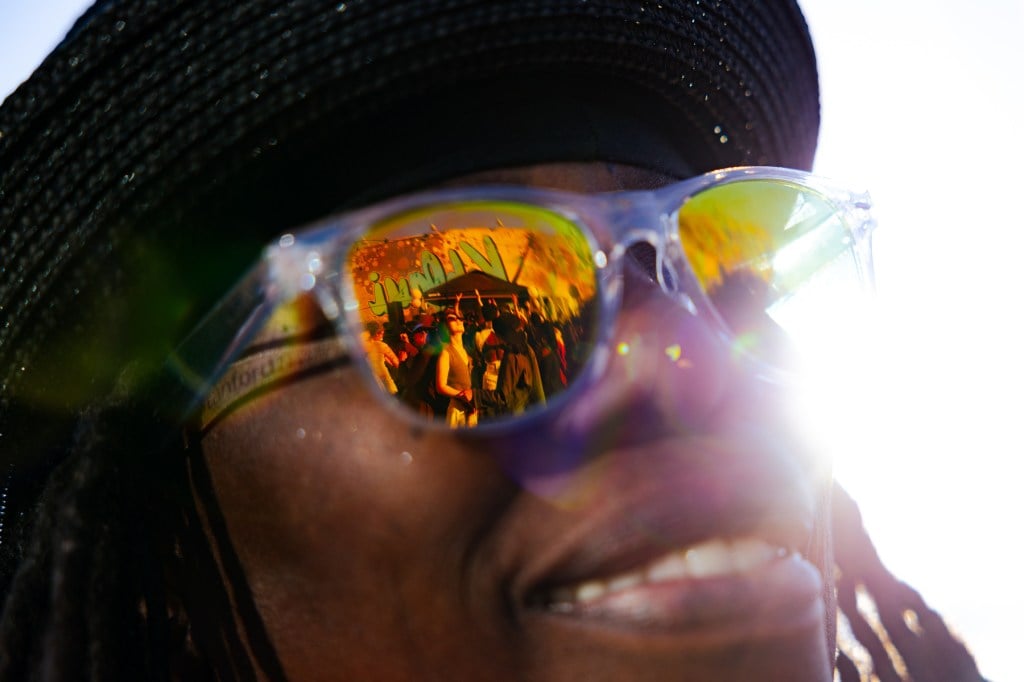
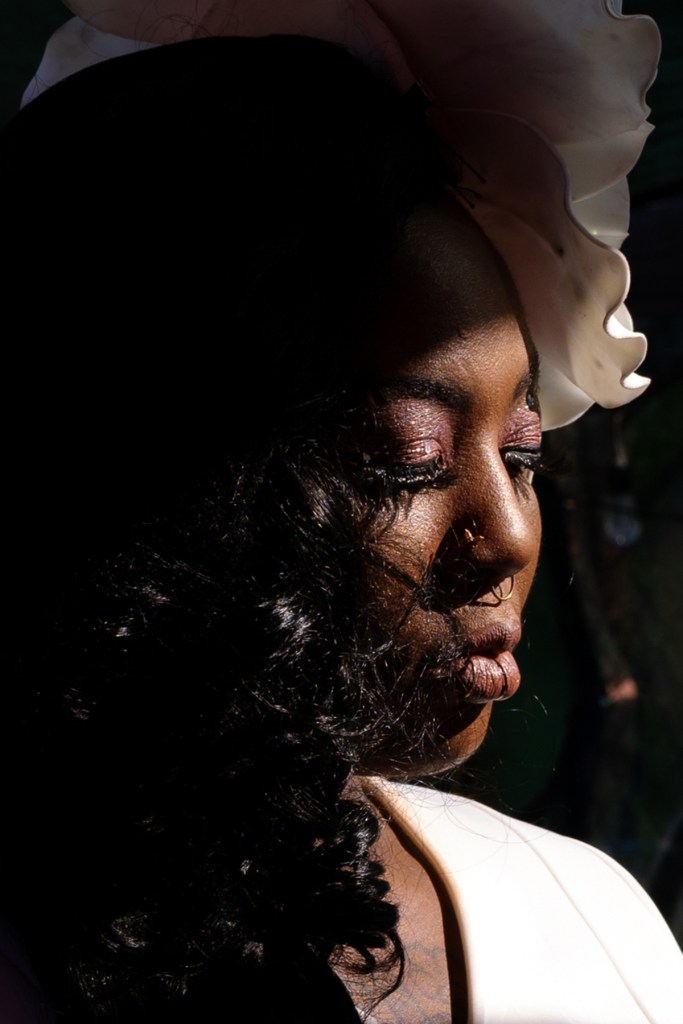
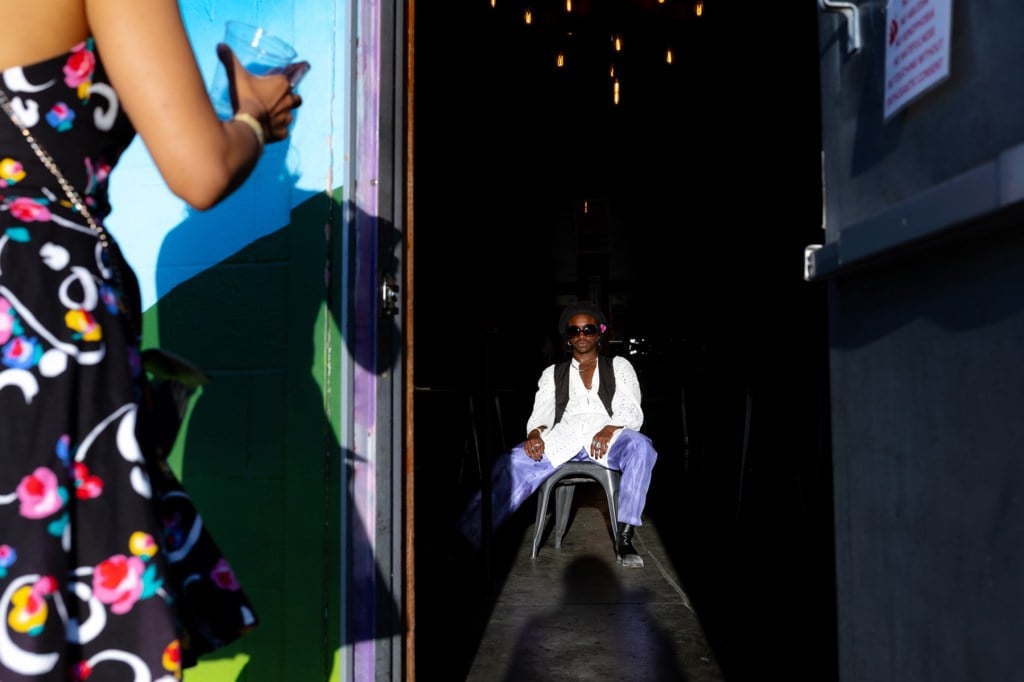
Glitter sparkles across people and surfaces, rainbow-colored acrylic nails snap in time to the Afrobeat, and boisterous cheers egg on the occasional dance floor death drop. These are moments that make up spaces created for and by queer and trans people of color (QTPOC). From Los Angeles to Philadelphia, New York City to Atlanta, queer community organizers, DJs, musicians and artists are producing monthly pop-up events that attendees and organizers say are reimagining queer liberation through collective joy.
Events range from underground warehouse raves like Hood Rave in Los Angeles to sunlit day parties and potlucks featuring patio yoga. Regardless of format, the trappings of queer life and culture are evident everywhere you look — necklaces made of popper bottles; chest harnesses as fashion; flags; fans; cheeky political statements across nails, hats and tees. The recognition of Black and Brown queer experiences is often apparent in event titles, like New York City’s notorious Papi Juice dance party and Los Angeles’ weekly Toxica event for sapphic Latine queers.
These parties also frequently double as advocacy work, where they highlight mutual aid campaigns, promote queer causes and spread political awareness. In recent years, DJ shouts of “Free Palestine” are frequently met with affirmative cheers from dance floors dotted with keffiyehs and watermelon imagery. QTPOC parties are also changing the tunes of gay nightlife from the pop/EDM/disco variety to a musical mix of hip-hop, trap, house, reggaeton, soca and Afrobeats.
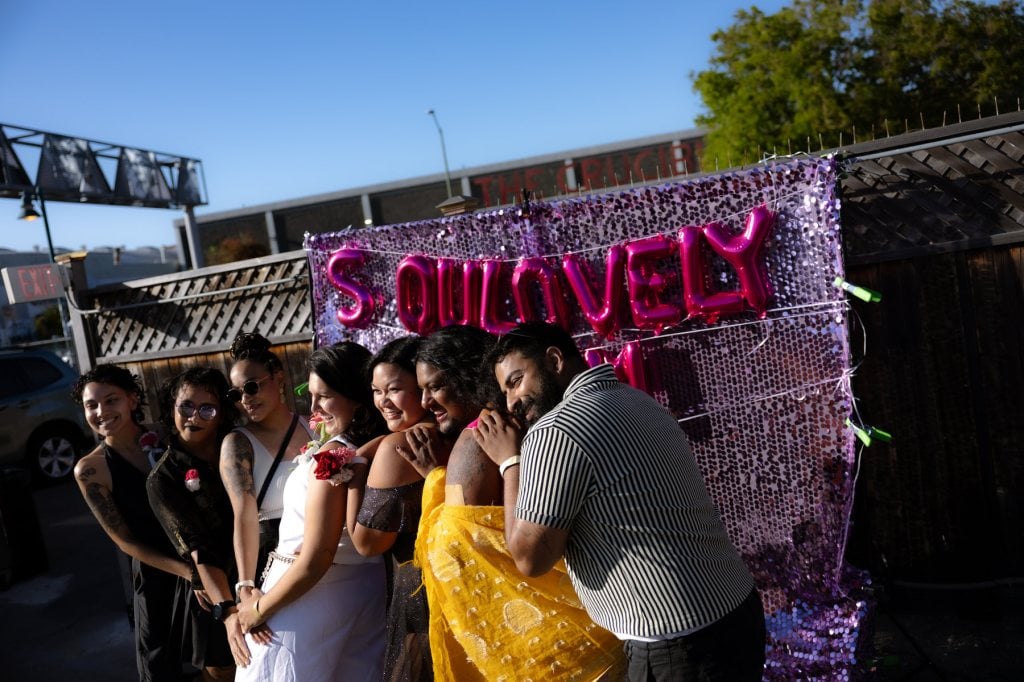
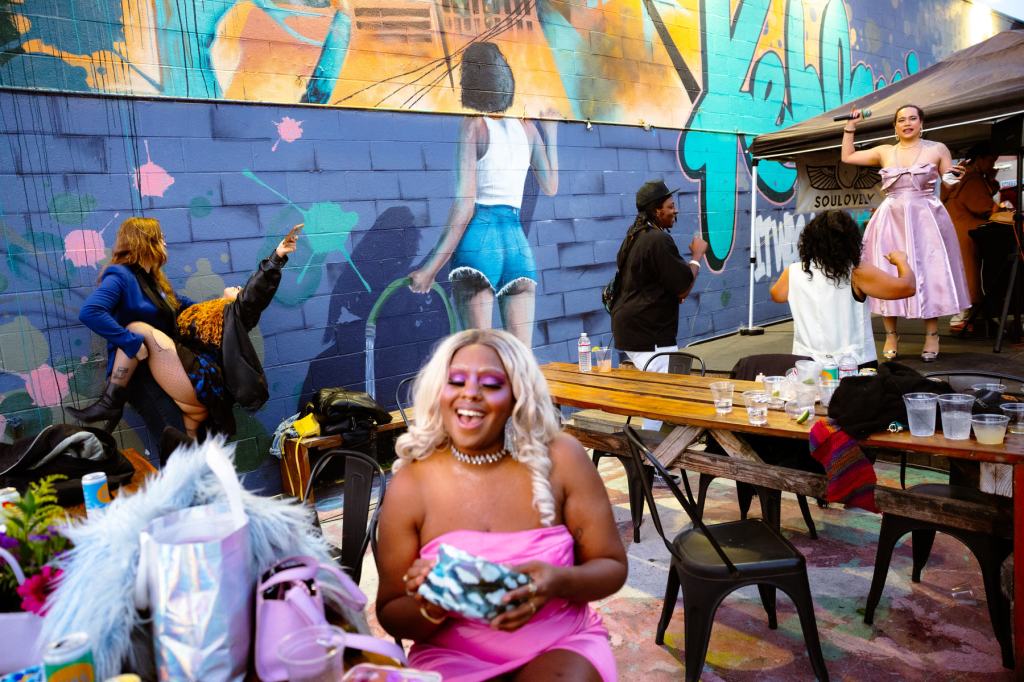
“Everybody is able to see themselves in the music and feel safe here,” said Terri Flamer, who attended the Soulovely prom in Oakland, California, in May. “That’s probably the best thing about it, is you’re safe to be yourself, you can party, you meet people that don’t look like you and it’s all love.”
Queer dance parties also enable the ecstatic experience of group dance, which can be understood as its own form of activism. Maya Bhardwaj, a scholar studying the global influx of such parties in the last decade, called them queer utopias that center: “healing, mental health, ancestral faith practices, queer Black and Brown music and dance traditions, and spaces for activists and cultural workers to gather beyond mainstream bars and nightlife.” Mission statements from QTPOC dance party organizations often invoke terms like “affirmation,” “celebration” and “sustaining.“
While queer nightlife as a space of resistance isn’t new — it has its roots in AIDS activism of the ’80s — the intersectional community building and intention brought to crafting these spaces makes the current slate of QTPOC parties feel fresh. Often exclusionary White male gay spaces are frequently the only options for LGTBQ+ nightlife, and the pop-up event has become a go-to to address a lack of gatherings that feel welcoming to QTPOC folks.
There’s this sense of pain shared among QTBIPOC […] and therefore the joy that is experienced at these parties feels more necessary, more dire and more of a relief.”Nicole Prucha
Pop-up spaces provide “a feeling of safety in being able to trust that the people who are there have experienced or understand what it is like to be othered, in a sense apart from our sexuality,” said performance studies scholar Nicole Prucha about her experience attending Los Angeles QTPOC parties. As a queer Arab person who has often struggled to find places where she feels truly seen, Prucha said parties like Casual, Hot Pot and its sister event HabibiPot fill a vital need for queer people of color: “A place of refuge and queer world-building” at a time when LGBTQ+ rights are under attack.
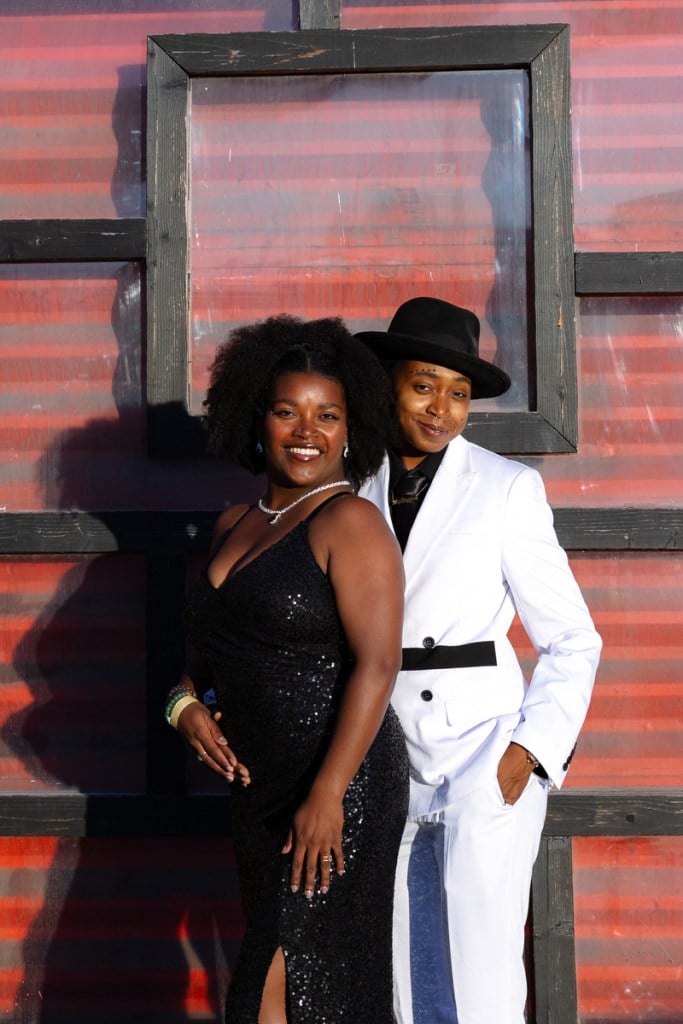
Terri Flamer attends Soulovely’s prom, held in the 14th season of Oakland’s QTPOC-centered monthly party. (Manuel Orbegozo for The 19th)
Event organizers are often working with limited resources amid challenging financial situations. Five queer BIPOC coordinators — Kike Ayorinde, Camryn Casey, Madi Dalton, dRi Guillén and Leslie Tellería — produce community-funded Lavender Evolutions (LE) events in D.C., and the ticket sales for each event contribute to the next event. In a collective statement, the organizers shared that they are largely unpaid but, “We do give core organizers small payments to cover things like gas, food during events, and the many hours of labor leading up to an event.” The LE organizers acknowledge that “money is a huge barrier and we could always use more of it, but for us, it’s more important that we have events that are financially accessible.”
They keep ticket prices below $25 to achieve that aim but struggle with the financial load of creating these pop-up spaces. The organizers say they are often unable to meet the market rates of DJs and other collaborators due to tight budgets, while logistical support frequently comes from community members willing to volunteer their time to assist with check-in and ticketing. Another challenge they face is making their work in building queer community attractive to funders. “Grant makers don’t always understand the scope of the work that we do and why it’s so important, especially in this moment,” organizers said.
Despite the challenges, organizers said the work is worthwhile. “We do experience burnout but we rely heavily on the collective,” the organizers said. “More than anything, we prioritize people. For our core organizers, it’s a delicate balance because our time and energy is limited. We’re all balancing our full-time jobs, life and Lavender, but the love of community keeps us going.”
They need us, we need them. It’s not always about the bottom dollar, sometimes it’s about building community and the dollars come after.Sgt. Die Wies
The 19th sent photographers to queer pop-up parties and events in Oakland, Washington, D.C., and Atlanta to show these spaces of radical queer joy in action and highlight the work that queer organizers are doing to build QTPOC community across the country.
OAKLAND
Soulovely has brought QTPOC-centered “cultural affairs” to the Bay Area for 14 years
Many attendees of Soulovely’s prom said it was a first for them, providing queer and trans people of color (QTPOC) an opportunity to attend a prom in a safe and community-based setting. (Manuel Orbegozo for The 19th)
Soulovely is a beloved and long-lasting pillar of queer life in the Bay Area. Since 2011, its monthly events have served as a safe haven for a predominantly BIPOC queer community to celebrate their identities and bodies through music and dance. “I actually just found out that a loved one passed. So coming here was kind of like in honor of them as well, because they love to dance, I love to dance, we met out dancing — it brings people together,” said Mello-Jahlil Travis, who attended Soulovely in May.
Burlesque producer and performer Sgt. Die Wies attended the Soulovely queer prom on May 11 and says she thinks the space provides an opportunity to be “solution-based versus just focusing on the negativity. “ (Manuel Orbegozo for The 19th)
Attendees and organizers both are often quick to point out these spaces are not about excluding White, straight or otherwise non-QTPOC people. Rather they are about radical inclusion and belonging. Sgt. Die Wies, a burlesque producer and performer who attended the Soulovely queer prom in May, said that the party is all ages with a variety of ethnicities coming out to be together:“It’s beautiful to see because there’s so much division in the world right now.”
Mello-Jahlil Travis (they/them) said the Soulovely Prom gave them an opportunity to have a different prom experience. “I’m stoked to be here amongst other beautiful queer people. It’s important to be able to see people who look like you be themselves and feel free. There’s not everywhere that I feel like I can have my nails painted and dress like this. It’s dope to be around people who can receive that.” (Manuel Orbegozo for The 19th)
While all are welcome, Jaycee Chang especially appreciates the way Soulovely centers queer and trans people of color. “It is both a space of joy and being a community but also, it’s a relatively politicized space where they’re very intentional about the artists that they bring in, the DJs, the themes,” Chang said.
And that can even extend to their families.
“One of the DJs who helped host HabibiPot [in Los Angeles], her mom was there to watch her first DJ set and she played Arab classics that my own mom had introduced me to,” Prucha said. “They’re both Palestinian, and her mom was there, standing on the tables with the rest of us, and she was crying because she was so happy that her daughter was there and had found community.”
Tiara Reed (left) met her now-fiancée Chenelle Reed (right) at a Soulovely event and said “it’s so significant to have spaces where unapologetic joy and levity and freedom are welcome and everyone can just bask in it.” (Manuel Orbegozo for The 19th)
These spaces also provide opportunities for LGBTQ+ people to meet each other beyond dating apps. A 2020 Pew Research Center study reported that lesbian, gay and bisexual people were both more likely to use online dating and more likely to experience harassment through dating apps than their straight counterparts.
Soulovely is always part of our story.”Chenelle Reed
Ahn Lee feels safe at Soulovely parties because harassment is far less likely. “I feel like no one’s gonna try to come at me in a way that doesn’t feel comfortable,” Lee said.
Since 2011, Soulovely events have provided a safe haven for the queer BIPOC community in the Bay Area. (Manuel Orbegozo for The 19th)
And for others, like Tiara Reed and Chenelle Reed, Soulovely has become a character in their love story. Reflecting on the experience of meeting her now-fiancée, Tiara, at Soulovely and their future together, Chenelle said, “It’s going to be absolutely beautiful, because we have places like this … where you can connect and learn that anything is possible, family in all the ways is possible.”
Jaycee Chang (they/them, right) with their partner Ahn Lee (she/they, left), has been coming to Soulovely for over a decade. Chang said: “Even when the world is chaotic and there’s a lot of harm happening, we can come together as a community and create spaces that feel like refuge, like safety.” (Manuel Orbegozo for The 19th)
ATLANTA
Southern Fried Queer Pride builds QTPOC community through education and embodied healing
Grassroots collective Southern Fried Queer Pride (SFQP) — now in its 11th year — focuses its events toward “artivism” with a stated mission to fight narratives that confine Southern LGTBQ+ people to “stigma, statistics and struggle” instead aiming to uplift an “honest narrative of resilience, rich history and vibrance.” SFQP offers year-round programming, typically providing between 40 to 60 events that feature community education — like the upcoming trans health care workshop — as well as gallery shows, marches and dance parties, such as its June trans cabaret and open mic.
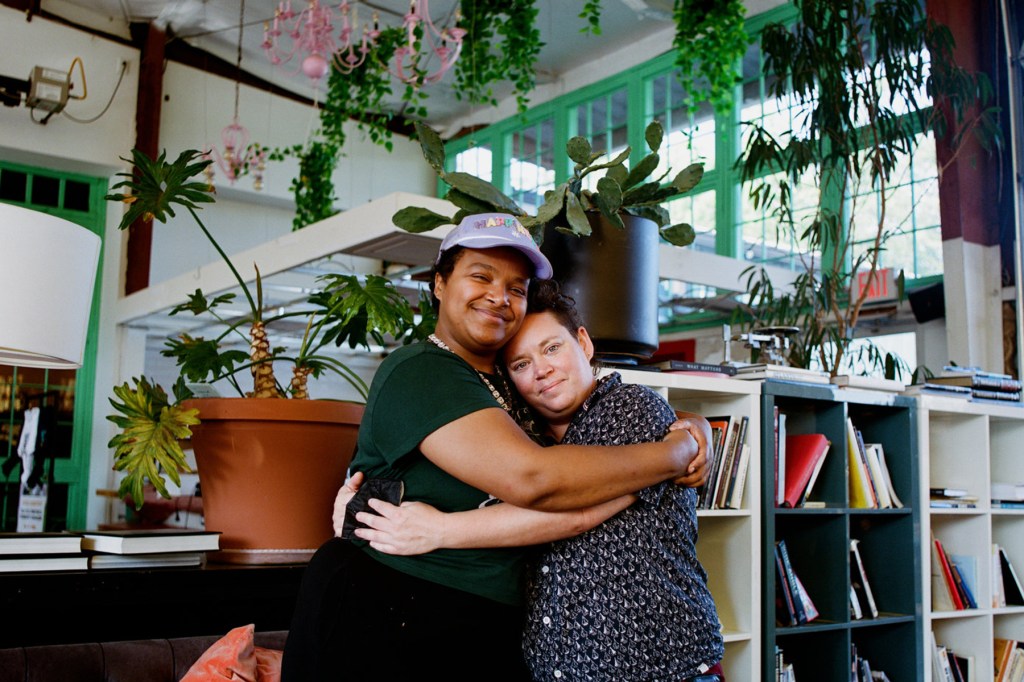
Maya Wiseman (left) and Magdalena (right) have both volunteered for SFQP for years and say organization offers a space of respite and community connection for them. (Piera Moore for The 19th)
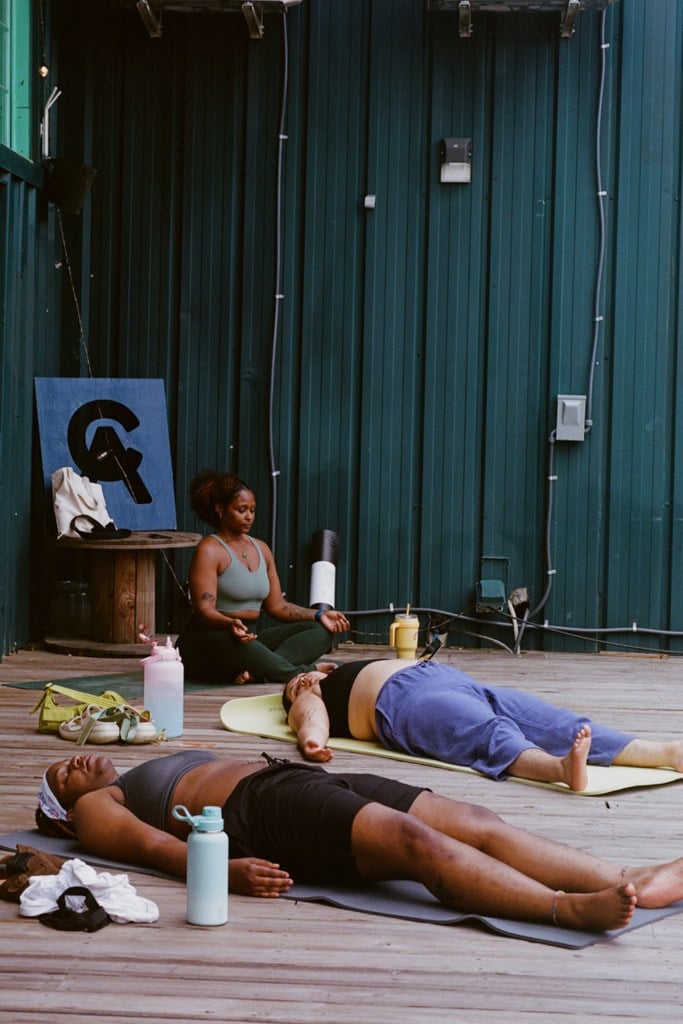
Community organizer Maya Wiseman said the May 18 SFQP Community Potluck was an alcohol-free and masks-required event to further expand on their inclusiveness, which has become a hallmark of SFQP events. “Queer folks have been marginalized throughout time, but often queer folks, whether they know it or not, naturally end up creating safe spaces for everyone,” said Wiseman, who has worked with SFQP as a community organizer for six years. “We try to create spaces that say ‘come as you are,’ because we’re not having this at a club. If you want to come here in pajamas, in a tank top and shorts, it’s fine with us.”
Southern Fried Queer Pride offered yoga at its May 18 community potluck in Atlanta. (Piera Moore for The 19th)
Atlanta’s queer community is very easy to navigate, and SFQP is a big reason why.”Magdalena
WASHINGTON, D.C.
Lavender Evolutions and Alphabet Soup make space for QTPOC joy at summer day parties
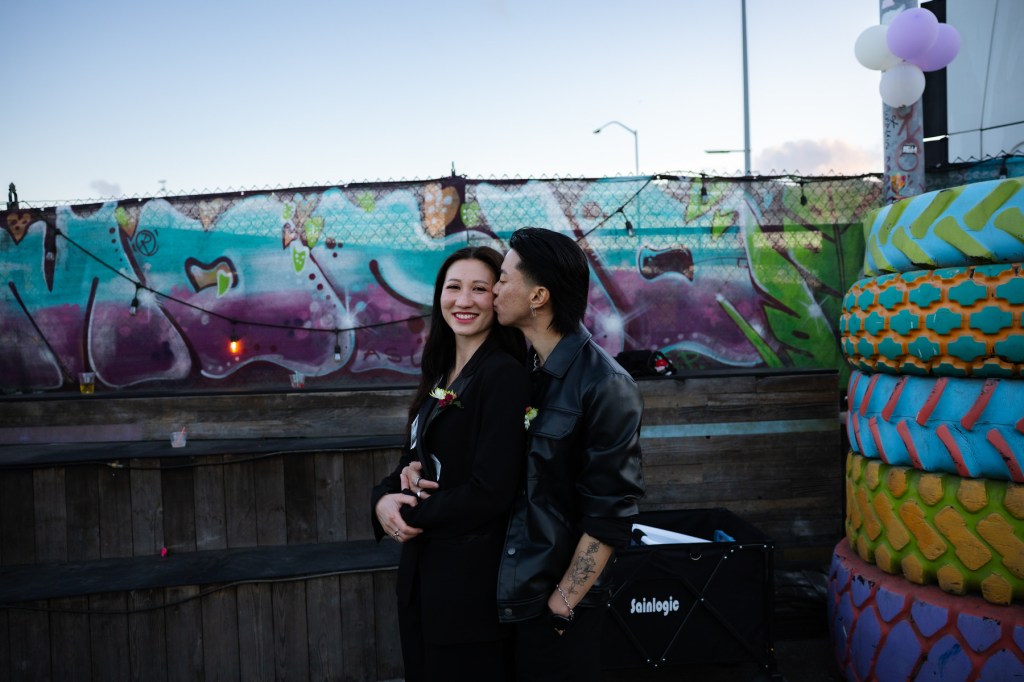
Alphabet Soup Events uses a tiered ticket pricing system that recognizes the systemic financial issues queer and trans people of color face to increase racial diversity across its attendees. (Mariah Miranda for The 19th)
While not explicitly centering QTPOC, Alphabet Soup events, like the recent Daisy Dykes pool party, are “sapphic-focused” and find other ways to make their events inclusive and accessible for queer people of color. Tickets are available at different price tiers, with some lower-cost tickets allotted for BIPOC attendees.
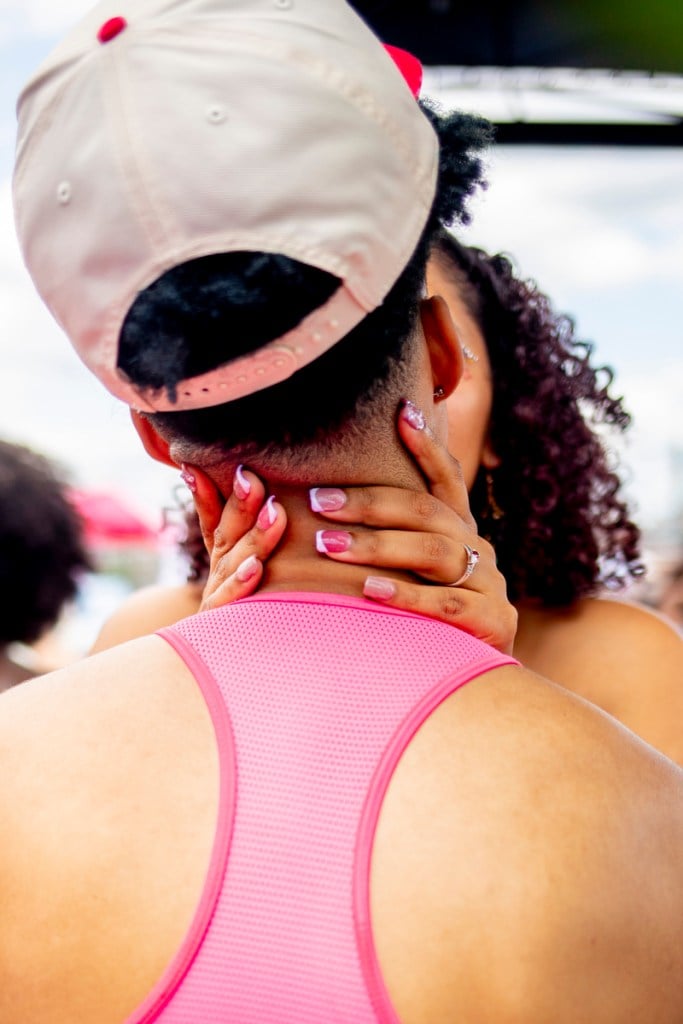
A couple dances together at a pool party by Alphabet Soup Events. (Mariah Miranda for The 19th)
Adu Ogbagiorgis has witnessed a big shift in the racial makeup of Alphabet Soup parties after the organizer started this pricing practice, which they see as a welcome recognition that “Black queers have a different experience than White queers.” For Ogbagiorgis, this approach to ticketing shows they want people of color to come to the events. “So it’s really awesome to see that a lot of more predominantly White spaces are making space for Black queers,” they said.
Mackenzie Bolden said they can be themselves at Alphabet Soup events. “I feel like I can just embrace my skin, embrace my personality, embrace my queerness, embrace everything that is me. And that’s something I treasure and will never take for granted because of how often I don’t feel that way.”
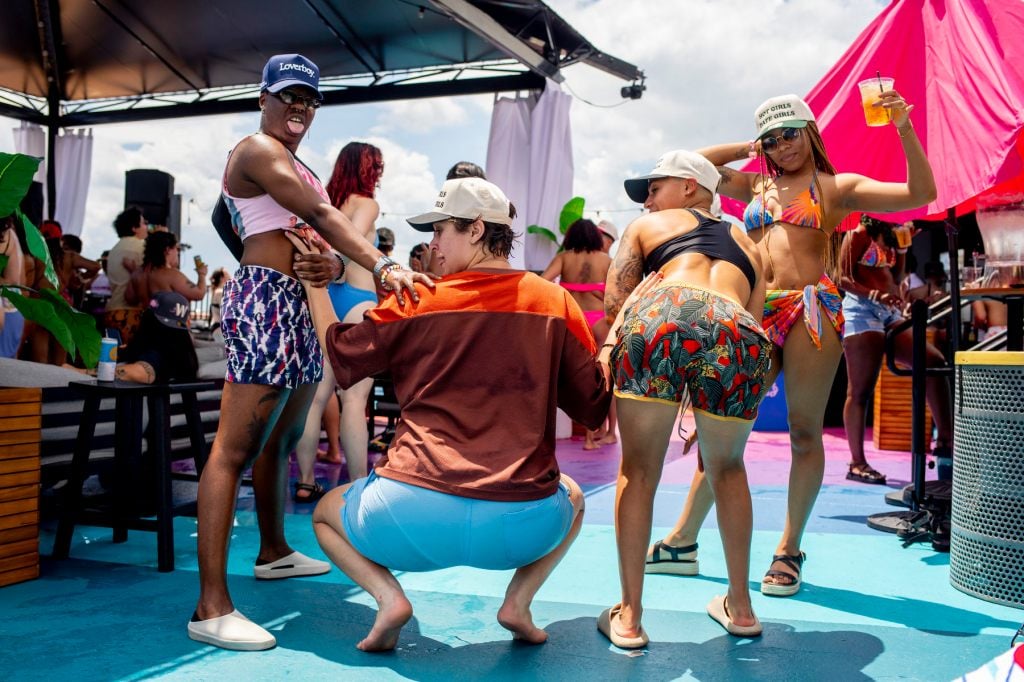
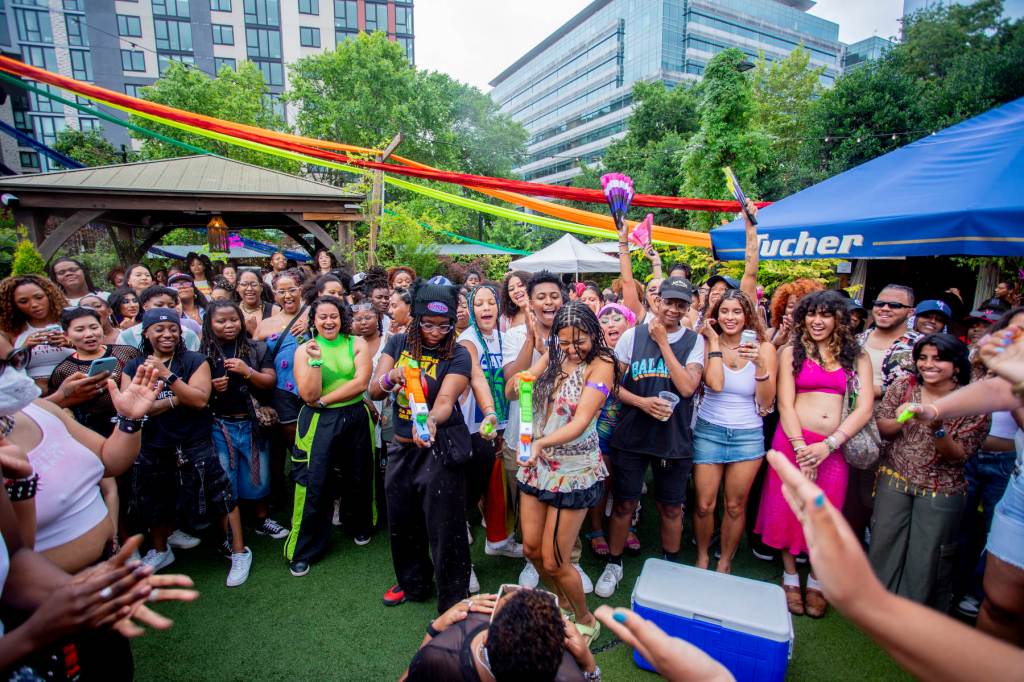
Lavender Evolution’s SWEAT party featured a wet t-shirt contest at on June 8 in D.C. (Mariah Miranda for The 19th)
Lavender Evolutions hosted a daytime beer garden pop-up called SWEAT on June 8 that featured a wet T-shirt contest, a water balloon toss and little cabanas filled with the sounds of multiple kikis.
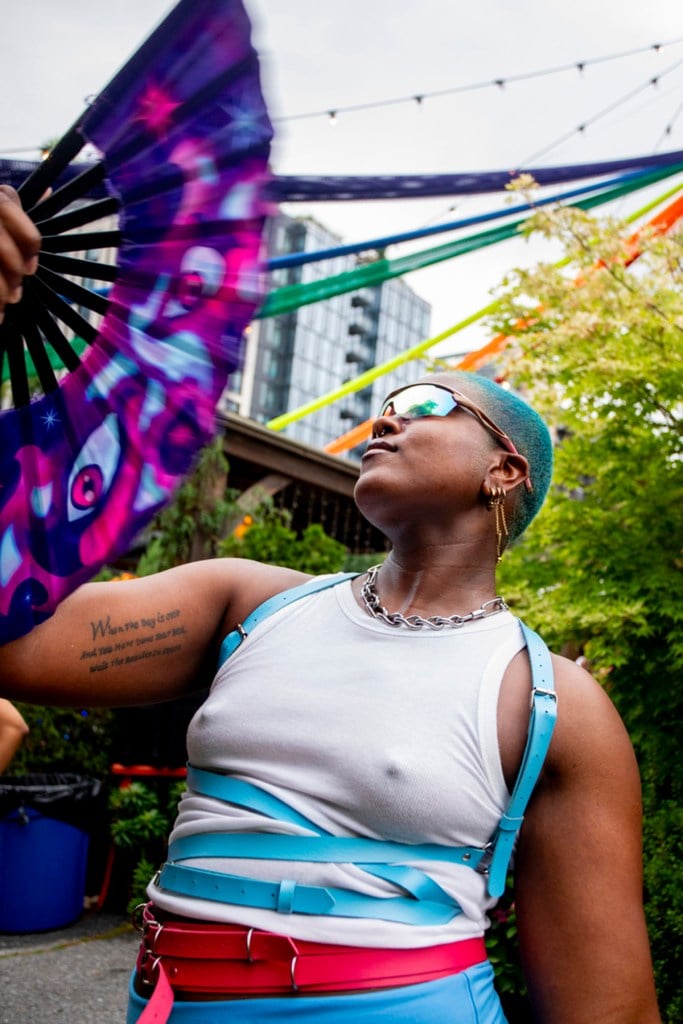
Ciara Bridges whips out their fan while attending Lavender Evolution’s SWEAT party in D.C. on June 8. (Mariah Miranda for The 19th)
Jojo Morinvil, who attended the SWEAT party, deeply values the way Lavender Evolutions has been intentional in their creation of space for queer BIPOC people to enjoy themselves. “They started out doing nature walks and book [clubs], then, as they grew, they really created safer spaces for folks to socialize, to get to know people and learn queer history, [along with] events where you can dance and party with your friends,” Morinvil said.
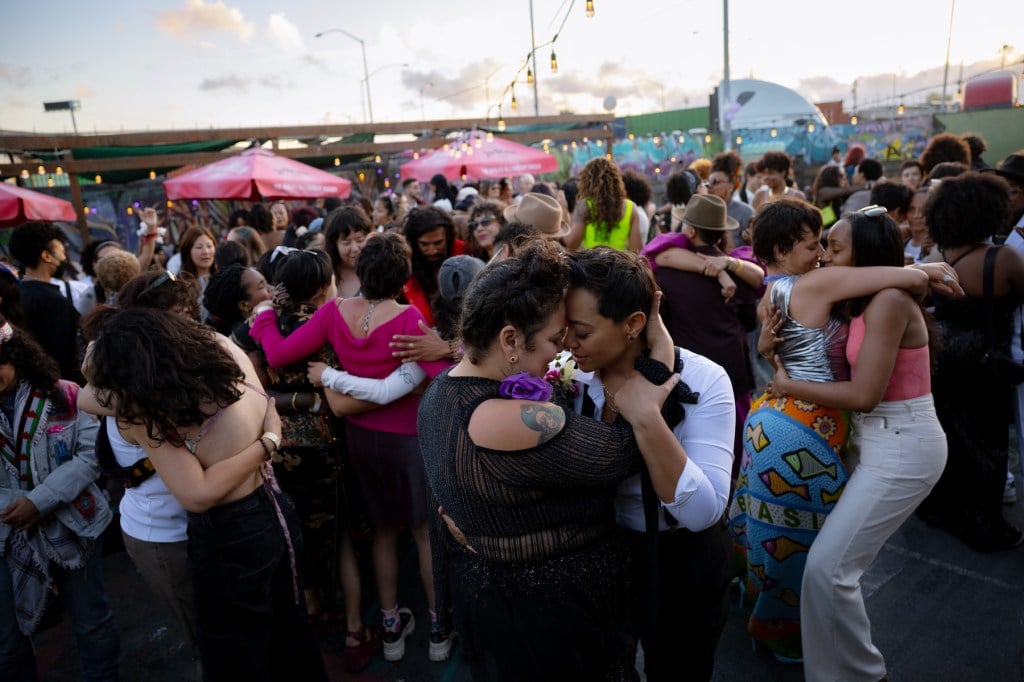
Couples and friends slow dance at Soulovely’s queer prom in Oakland on May 11. (Manuel Orbegozo for The 19th)
I truly believe that being whimsical will crush the patriarchy.”Sgt. Die Wies
Sgt. Die Wies points to the unabashed vibrance, love and joy experienced at parties like Soulovely as “things (that) are going to just crush the darkness. We’ve survived harder times than this. We’ve been bullied before. They ain’t got shit on us. There’s too many of us. There’s too much light and too much love and too much joy. We’ll be okay.”
Mariah Miranda, Piera Moore and Manuel Orbegozo contributed reporting.
June 25, 1948 The United States, Great Britain and France began the Berlin Airlift of food and supplies to the German city in defiance of the Soviet Union’s blockade of the roads. At the height of the Airlift, two groups of planes flew in four-hour blocks around the clock.While one group of aircraft was loaded and serviced, the other group was in the air. On the 264-mile route, 32 aircraft were in the air simultaneously. Supplies would be quickly unloaded and the aircraft would return for more food, fuel and other necessities for the 2.5 million West Berliners. It was the most ambitious aerial supply operation in history. The Soviet blockade was not lifted until the following May but the airlift continued for four months more. Berliners watch a plane involved in the Berlin Airlift bringing food and supplies About the Berlin Airlift
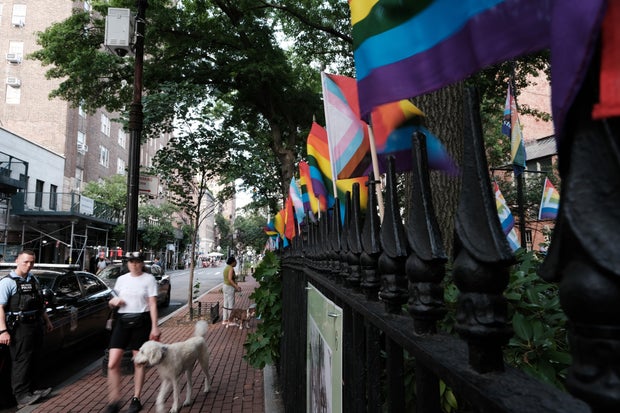
The transgender flags that usually adorn the Stonewall National Monument in New York City during Pride Month were missing this year, so some New Yorkers are taking matters into their own hands.
During June, Pride flags are placed around the park’s fence. They usually include a mixture of rainbow LGBTQ+ flags, transgender flags and progress flags, which have stripes to include communities of color.
Photographer and advocate Steven Love Menendez said he created and won federal approval for the installation nine years ago. Within a few years, the National Park Service was picking up the tab, buying and installing flags, including trans ones.
Pride flags fly in the wind at the Stonewall National Monument in Manhattan’s West Village on June 19, 2023 in New York City.Spencer Platt/Getty Images
This year, however, Menendez said the National Park Service told him to change the protocol.
“I was told … only the traditional rainbow flag would be displayed this year,” he said.
Now, no transgender or progress flags are among the 250 rainbow flags installed around the park.
“It’s a terrible action for them to take,” Menendez said.
“I used to be listed as an LGBTQ activist, and now it says ‘Steven Menendez, LGB activist,'” Menendez said. “They took out the Q and the T.”
“I’m not going to stand by and watch us be erased from our own history”
Many visiting the monument said they are opposed to the change.
“I think it’s absurd. I think it’s petty,” said Willa Kingsford, a tourist from Portland.
“It’s horrible. They’re changing all of our history,” Los Angeles resident Patty Carter said.
Jay Edinin, of Queens, brought his own transgender flag to the monument.
“I’m not going to stand by and watch us be erased from our own history, from our own communities, and from the visibility that we desperately need right now,” he said.
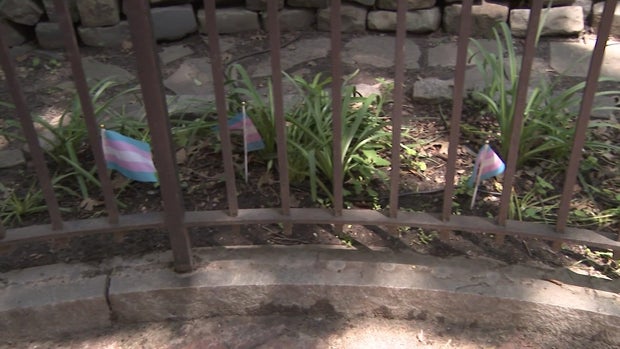
The transgender flags that usually adorn the Stonewall National Monument in New York City during Pride Month were missing this year, so some New Yorkers are taking matters into their own hands.CBS News New York
He is not the only one bringing unauthorized flags to the park. A number of trans flags were seen planted in the soil.
National Park Service workers at the park told CBS News New York they are not authorized to speak on this subject. CBS News New York reached out by phone and email to the National Park Service and has not yet heard back.
Dave Carlin has covered major national news stories and events in the past four decades including Superstorm Sandy and its tri-state impacts, Hurricane Hugo in South Carolina and Iniki on Kauai, Hawaii. He also covered the Space Shuttle Program, 1989 San Francisco Earthquake, numerous Southern California wildfires, the trial and execution of serial killer Ted Bundy in Florida, the 1994 police shooting death of Tyke the eacaped Cirus Elephant on the streets of Honolulu, 2009’s Miracle on the Hudson, the NYC Mayoral administrations of Bloomberg through Adams and more.
I admit this is long at 44 minutes. I found it worth the watch even though at times Gagnon tries to get technical and uses a circular argument in favor of his predetermined view of homosexuality and the LGBTQ+ spectrum. He is not using the bible to inform him as Reverend Trevors says but instead using it as a weapon for his dislike / hate for anything not superior male inferior female relationships. I find McClellan easy to follow and understand and I like that he leaves his feelings at the door when he tries to understand the texts of that time. He points how Gagnon is using his biases to inform his religion and not his religion forming his biases. The other interesting thing to me is that McClellan seems to have researched the times and cultures of the different passages to see the context they were written in, whereas Gagnon seems to simply impose his modern standards on the words. Hugs
Right now the tRump people are arguing in court that the right of judges to invoke country wide injunctions should be stopped. But they never held that view when republicans ran to this judge’s jurisdiction to stop and hinder every Biden executive order and law. Instead they crowed about it. However like the debt now that it is them in charge they don’t like what they used to stop Democratic Party initiatives. Hugs
Anti-LGBTQ+ Judge Matthew Kacsmaryk | YouTube screenshot
Anti-LGBTQ+ federal Judge Matthew Kacsmaryk ruled that Title VII of the 1964 Civil Rights Act doesn’t protect LGBTQ+ people from workplace discrimination — it only protects them from discriminatory termination. Kacsmaryk’s ruling contradicts the 2020 U.S. Supreme Court decision in Bostock v. Clayton County, a case that classified anti-LGBTQ+ workplace discrimination as a form of sex-based harassment prohibited by Title VII.
In the case, the state of Texas sued the federal Equal Employment Opportunity Commission (EEOC), claiming that the federal agency’s June 2021 guidance interpreting Title VII as prohibiting anti-LGBTQ+ workplace discrimination violated Texas’s “sovereign right” to establish governmental workplace policies dictating employee names, pronouns, dress codes, and facility usage as being based on a person’s sex assigned at birth (and not their gender identity).
The EEOC’s June 2021 guidance said that, to avoid illegally discriminating against LGBTQ+ people in the workplace, adherence to dress codes, use of personal pronouns, and access to gender-segregated facilities must be differentiated based on one’s gender identity and not their sex assigned at birth.
Texas said that the EEOC violated Texas’s free speech rights and Title VII’s sex-based protections by forcing the state’s Department of Agriculture (TDA) to base its workplace policies on gender identity instead of one’s sex assigned at birth. These particular TDA workplace policies were created by Sid Miller, a supporter of the current U.S. president who has said he’s “thrilled” by the ban on trans military members and has called trans identity a form of “leftist social experimentation.”
Texas sued the EEOC with the assistance of the Heritage Foundation, the right-wing think tank that constructed Project 2025, the very anti-LGBTQ+ blueprint for the current U.S. president’s second term in office.
Kacsmaryk agreed with the state of Texas, ruling that the TDA’s policies can legally ban transgender employees from using restrooms, pronouns, and dress codes that align with their gender identity. The TDA’s policies don’t constitute unequal treatment of trans employees, Kacsmaryk wrote, because they “equally” apply to everyone based on their sex assigned at birth, Truthout reported.
Kacsmaryk’s ruling altogether ignores trans identities in a manner consistent with the current president’s interpretation of federal anti-discrimination law. The president has signed executive orders directing all federal agencies, including the EEOC, to end all legal recognition of trans people’s gender identities and to, instead, only recognize a person’s “biological sex” as assigned at birth.
Kacsmaryk ordered the EEOC to remove all references to sexual orientation and gender identity as protected classes under Title VII from its June 2021 guidance.
In 2022, Kacsmaryk ruled against LGBTQ+ protections in Section 1557 of the Affordable Care Act – a law that bans healthcare discrimination on the basis of sex. The two doctors who sued in that case were represented by former Trump advisor Stephen Miller’s America First Legal Foundation, a far-right public interest group that opposes pro-LGBTQ+ civil rights.
Republicans and Christian groups often file their lawsuits in his district because of his tendency to rule in their favor.
Before his 2019 Senate confirmation hearing, Kacsmaryk removed his byline from an article condemning transgender health care in the Texas Review of Law and Politics, a far-right publication that he led as a law student at the University of Texas.
Hiding his contribution to the article likely prevented public scrutiny and questions about the article and his ties to The First Liberty Institute, a Christian conservative legal group that has represented clients who refused to serve LGBTQ+ people based on religious beliefs.
Subscribe to the LGBTQ Nation newsletter and be the first to know about the latest headlines shaping LGBTQ+ communities worldwide.
“In almost every single case, the reason was anti-trans discrimination in the form of pressure to ‘detransition’ from one’s family, friends, or community.”
Erin In The Morning is a reader-supported publication. To receive new posts and support my work, consider becoming a subscriber.
Upgrade to paid
A report on the largest survey ever of trans Americans’ health was released on Wednesday, June 11, and its findings reaffirmed what many academics, health care providers and trans people already know: gender-affirming care saves and improves lives, but transphobia often dissuades people from pursuing or continuing it when they need it most.
Over 84,000 trans, nonbinary and gender nonconforming people aged 18 and up responded to the 2022 U.S. Transgender Survey, spearheaded by Advocates for Trans Equality (A4TE). Of respondents who had transitioned, 9% had gone back to living as their sex assigned at birth at some point in their lives, at least for a short while—but in almost every single case, the reason was anti-trans discrimination from one’s family, friends, or community.
“Social and structural explanations dominated the reasons why respondents reported going back to living in their sex assigned at birth at some point,” the report found. “Only 4% of people who went back to living in their sex assigned at birth for a while cited that their reason was because they realized that gender transition was not for them. When considering all respondents who had transitioned, this number equates to only 0.36%.”
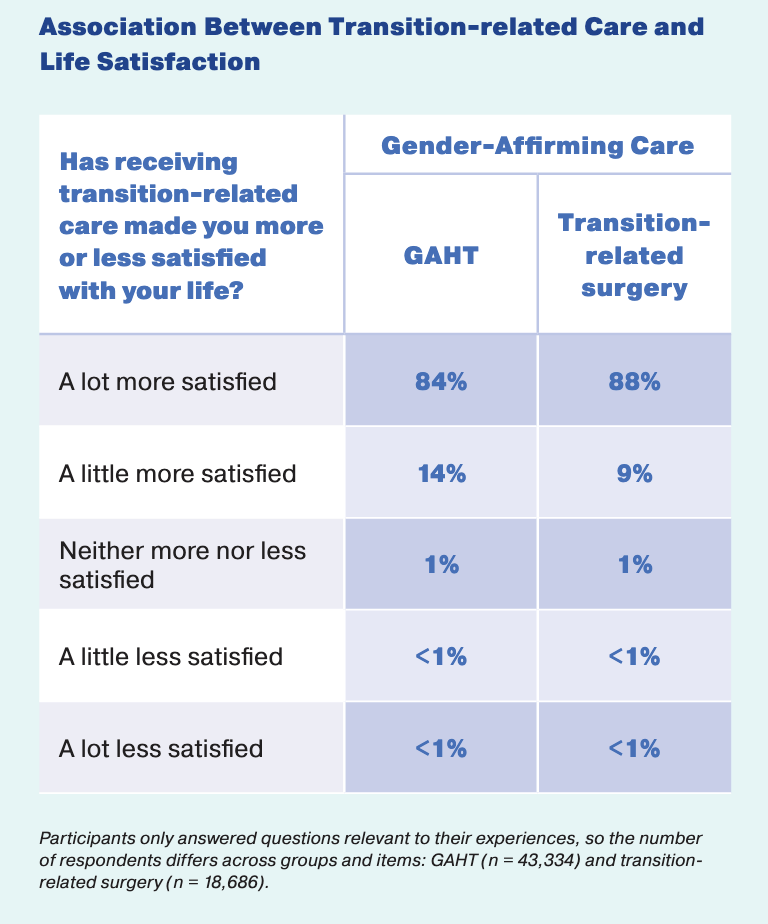
Meanwhile, respondents who received gender-affirming hormone therapy (GAHT) or gender-affirming surgery overwhelmingly reported feeling “more satisfied” with their lives—98% and 97% respectively.
Graphic courtesy of the 2022 U.S. Transgender Survey – Health and Wellbeing Report
This watershed report contradicts the popular narrative being circulated by mainstream media, far-right politicians and anti-trans groups that transgender people are “detransitioning” en masse due to life-shattering “transition regret.” In reality, it shows gender diverse people are living rich and vibrant lives—so long as they are provided the space, support and care they need from their health care providers and communities.
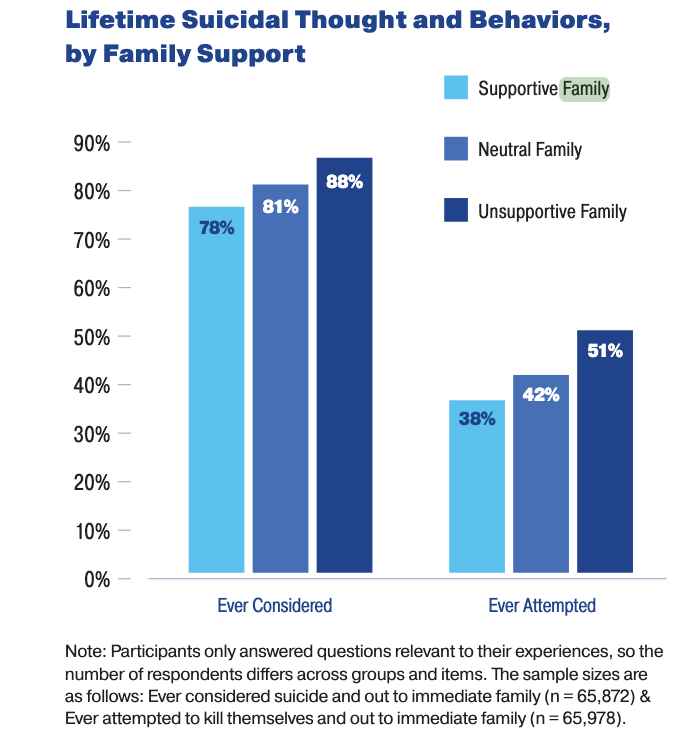
The survey found a trans person’s overall health and wellbeing also heavily depends upon rates of familial support, a factor that has a profound influence over a trans person’s lifetime experience of suicidality.
Graphic courtesy of the 2022 U.S. Transgender Survey – Health and Wellbeing Report
The survey has been released in increments as researchers at A4TE wade through the unprecedented amounts of data from trans people who lent their voice to the project. It is a much-needed, comprehensive overview on the challenges—and victories—seen in trans health care since the prior iteration of the study. The report is especially vital considering the Trump Administration moved to remove transgender people from the U.S. Census and other government websites, rendering trans communities potentially invisible, and robbing researchers of crucial data informing public policy decisions.
“Having real concrete and rigorous data about the realities of trans people’s day-to-day lives is also a vital part of dispelling all of those assumptions and stereotypes that plague the public discourse about our community,” said Olivia Hunt, A4TE’s Director of Federal Policy, during a press briefing this week.
The report also touched upon trans people’s access to health care, which increased between 2015 and 2022; the quality of care, as trust between doctors and trans patients has improved; disparities between trans people across racial groups, which showed trans people of color are generally more prone to experience discrimination compared to white trans people; and the mental health challenges facing the trans community, as 44% of respondents met the criteria for serious psychological distress, compared to less than 4% of the general U.S. population.
Many of these issues have likely been exacerbated since the data was collected. The lead-up to President Donald Trump’s return to the Oval Office incited a new wave of anti-trans animus, impeding access to care and stirring up transphobic vitriol and harassment.
“From 2015 to 2022, state-level policy environments became more protective in some ways for trans people; however, in 2022 alone, when the USTS was administered, 315 anti-LGBTQ bills were introduced across the country, many of which harm trans and nonbinary people’s access to healthcare, participation in sports, access to public facilities, or other facets of public life,” the report says.
“This political landscape has only worsened since the administration of the 2022 USTS, with the introduction of 571 anti-LGBTQ nationwide in 2023 and 489 in 2024,” it continues. “At the time of writing, data on trans and nonbinary people has been erased from federal health surveys. As funding for LGBTQ research is stripped away, the USTS has become an ever more critical resource on the lived experiences of trans and nonbinary people.”
Nonetheless, trans life and trans joy has persisted, as testimonies featured in the U.S. Trans Survey demonstrate.
“I have thrived in the past 12 months in transition, I have a genuine smile on my face most days & laugh with genuine joy,” wrote Charlotte, a trans woman, in her survey response. “I have grown into the woman I was meant to be.”
And as Roo, a nonbinary person, wrote: “Once I learned what it meant to be trans, I never looked back. I traded in my Regina George-esque life for a future with a balding head and a predisposition for a beer gut. I’ve never been more happy to be alive—every single day. ”
Erin In The Morning is a reader-supported publication. To receive new posts and support my work, consider becoming a subscriber.






 Anti-LGBTQ+ Judge Matthew Kacsmaryk | YouTube screenshot


 Scottie's Playtime