July 11, 1905 The Niagara Movement, precursor of the National Association for the Advancement of Colored People (NAACP), was formed in Buffalo, New York. Meeting at the home of Mary Burnett Talbert were W.E.B. DuBois, John Hope and 30 others who rejected the accommodationist approach of Booker T. Washington (“The wisest among my race understand that the agitation of questions of social equality is the extremest folly . . . .”) Founders of The Niagara Movement at Niagara Falls The Niagara Movement’s manifesto was, in the words of DuBois, “We want full manhood suffrage and we want it now . . . We are men! We want to be treated as men. And we shall win.“ The Niagara Movement and its founding principles
July 11, 1968 The American Indian Movement (AIM) was founded in Minneapolis, Minnesota, by George Mitchell, Dennis Banks, Clyde Bellecourt and 200 others. They gathered to organize in order to deal with widespread and persistent poverty among native Americans, and unjust treatment from all levels of government. American Indian Movement background
July 11, 1969 The federal appeals court in Boston reversed the convictions of Dr. Benjamin Spock and Michael Ferber who had been found guilty of conspiring to counsel evasion of the military draft in 1968. The judges considered their activities opposing the Vietnam War covered under the 1st Amendment right to free speech. Dr. Benjamin Spock and Dr. Martin Luther King Jr. Read “A Call to Resist Illegitimate Authority” co-authored by Dr. Spock (1967)
With little discussion, Pittsburgh City Council on Tuesday unanimously passed three bills intended to provide further safeguards to LGBTQ Pittsburghers.
Councilor Barb Warwick introduced the bills at the end of June to extend more protections to the local queer community.
Two of the bills were designed to de-emphasize enforcement of any future law restricting the LGBTQ community from participating in otherwise legal activities and create avenues for reporting medical discrimination.
The first bill prohibits the withholding or denial of “elective medical care which would normally be provided to a person, but for that person’s real or perceived gender identity or expression.”
For example, if a medical provider denied breast augmentation surgery to a trans patient on the basis of their gender identity, residents could report the provider to the city’s Commission on Human Relations.
The second bill aims to pre-emptively shield the LGBTQ community against being barred from society by future federal legislation by directing the city to de-prioritize enforcement of such a ban or restriction.
A third bill lessens the legal penalty for engaging in sex work from a misdemeanor to a summary offense. Warwick and other advocates say LGBTQ individuals have been disproportionately affected by such arrests. They say this measure will help the queer community and other vulnerable workers to not be targeted, and come forward to law enforcement if they need help without fear of persecution.
“Whether it’s proactively making sure that we are not criminalizing being trans, or making sure trans people have access to the health care that they need or not being discriminated against by our largest medical providers, and also making sure that folks who are doing survival sex work on the street are not being persecuted and thrown in jail, but they’re actually being cared for and getting the services that they need — these are all good things, right?” Warwick said.
“These are things that make Pittsburgh safer and really help protect our most vulnerable.”
Julia Maruca reports on Pittsburgh city government, programs and policy. She previously covered the Westmoreland County regions of Hempfield and Greensburg along with health care news for the Tribune-Review.
that according to my email from WordPress on 7/10/24, I was added as an author on Scottie’s Playtime. My mission, as I understood it, is to post some posts often to keep the blog lively while Scottie recuperated from a thing, to keep track of and acknowledge/reply to comments, to thank other bloggers who link to us, and to make sure that readers who feel marginalized know we see them and want to see them here at Playtime. Scottie has the blog mission statement linked up above. I hope I’ve been doing that, and I’m so complimented by Scottie’s continuing support of the stuff I do here. I always want to make sure everyone knows I’m an old woman ally who has plenty of free mom hugs, and I also make some excellent chocolate chip cookies that are not only excellent, but healthful, and I love to share. All are welcome here.
I am up for suggestions on material, too! I’ve been posting the Peace & Justice newsletters here for a year, so they will be becoming redundant. I’m wondering about culling a little something from each one, and maybe posting them weekly, though I’m not adverse to continuing as I am. The one thing about it, some of their links are no longer active, so I’m able to search for newer info and use those links, but otherwise, the newsletters are much the same each year. (I’ve been reading and sharing them since 2002. Not here since then, but other places.😄)
I’ve really been enjoying the Queer History Substacks! I like some lusty language with my facts. However, is there something I can do to make those easier on readers? Let me know!
So, again, I’m humbly pleased that Scottie lets me post here on his blog, and is so supportive of it. I hope to continue for at least the upcoming year, and am always up for suggestions. And comments. And chocolates.
In the late 20th century, a gay social club became a major political force in the California tech industry, eventually influencing corporate policies as well as state and federal laws across the country.
In the 1980s, at a time when the federal government turned its back on the LGBTQ community, gay men and lesbians found an unlikely partner in their fight for equality: corporations.
In the face of the AIDS crisis, hostility toward LGBTQ employees forced the community to “turn from the state to business for protection, according to Margot Canaday’s Queer Career: Sexuality and Work Modern America.” Corporate America did more than federal or state governments in this regard, outpacing both the labor movement and the non-profit sector.
And it started in Silicon Valley.
While Silicon Valley was dominated by the kind of straight white men mocked in the HBO series of the same name, it also wasn’t the establishment. In these early days, for example, women made up a larger proportion of those working in computer programming. Nonconformity was seen as valuable rather than problematic. In 1987, Lotus became the “first highly visible, for-profit company” to provide same sex couples with partner benefits, according to Canaday.
Today, Silicon Valley dominates the public narrative and the economy. Granted, in our current moment, it seems paradoxical that the same industry that gave us social media platforms that often perpetuate misogyny and homophobia also served as an important battleground for the assertion of employment rights for LGBTQ workers. Yet it did, and it happened internally through employee resource groups and externally through advocacy groups.
One of the most prominent of these external advocacy organizations was the High Tech Gays (HTG). Formed in the living rooms of Silicon Valley’s San Jose in 1983, it began largely as a social group for the region’s LGTBQ tech workforce, but over time it served as an incubator for other organizations dedicated to LGBTQ political rights, inspiring members to start their own employee resource groups at their places of employment and organizing against anti-gay state referendums.
The 1980s and Silicon Valley
While San Francisco, has long been identified with LGBTQ activism, suburban Silicon Valley proved more conservative. “Even though I was ‘out’ with friends and family who knew me…I found myself being very reserved in expressing affection, talking in any depth about gay culture with them,” says Bob Correa, a California native, San Jose resident (1971-1986), and an early HTG member. “Even in the early ’80s there was a lot of prejudice back then, a heck of lot more than today,” adds his husband and one of HTG’s founders, Denny Carroll, in their 2018 interview.
Denny Carroll and Bob Correa after donating the HTG collection to the San Jose State Martin Luther King Library (Photo courtesy of HTG, Martin Luther King, Jr. Library, San Jose State University)
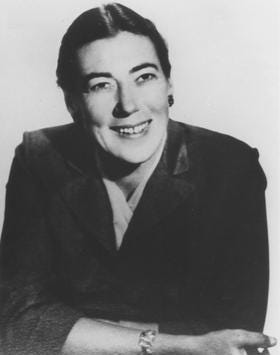
In 1956, when the entire psychiatric establishment was convinced that homosexuality was a form of mental illness requiring treatment, cure, or containment, one woman looked at the scientific evidence and said, “This is complete bullshit.” Evelyn Hooker didn’t just challenge conventional wisdom—she demolished it with the kind of methodological precision that left her opponents scrambling for excuses and the LGBTQIA+ community with something they’d never had before: scientific proof that there was absolutely nothing wrong with them.
But this wasn’t some abstract academic exercise conducted by a dispassionate researcher in an ivory tower. Hooker’s work was personal, political, and profoundly revolutionary in ways that extended far beyond the confines of psychological journals. She was a straight woman who risked her career to defend people she cared about, a scientist who refused to let prejudice masquerade as objective research, and a human being who understood that the difference between pathology and normalcy could literally be a matter of life and death for millions of people.
Her story is one of scientific courage in the face of institutional pressure, intellectual honesty in an era of willful ignorance, and the transformative power of rigorous methodology applied to questions that society would rather not examine too closely. It’s also the story of how one woman’s determination to follow the evidence wherever it led helped liberate an entire community from the tyranny of psychiatric pathologization, proving that sometimes the most radical act is simply insisting on the truth.
The Making of a Scientific Revolutionary (snip-MORE)
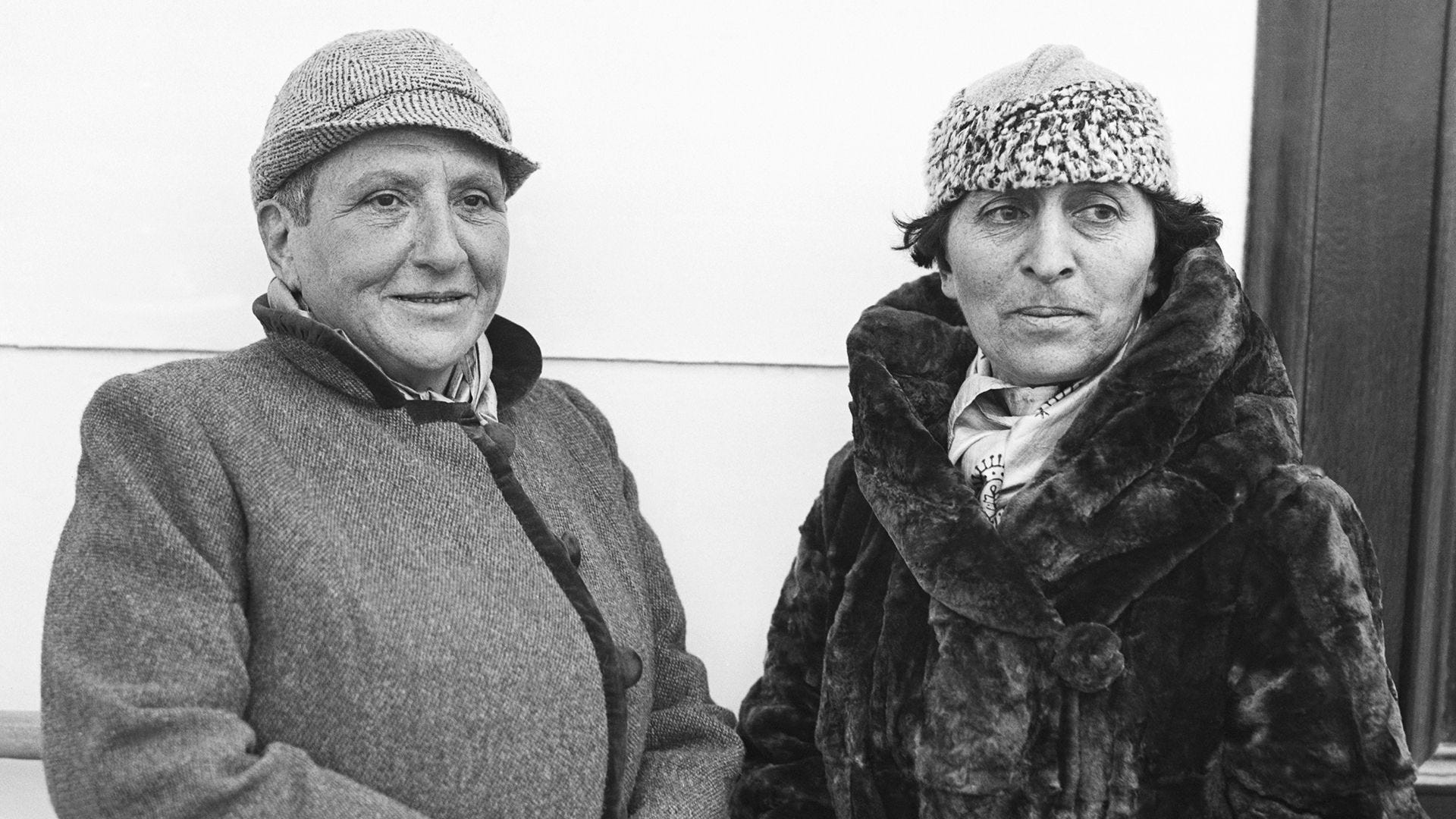
Queer History 573: Gertrude Stein and Alice Toklas by Wendy🏳️⚧️🏳️🌈🌈
The Badass Bitches Who Told Paris to Go Fuck Itself and Made Art History Anyway Read on Substack
Listen up, you beautiful fucking souls, because today we’re diving headfirst into the absolutely goddamn legendary love story that rewrote the rules of art, literature, and what it meant to be authentically, unapologetically queer in the early 20th century. We’re talking about Alice B. Toklas and Gertrude Stein – two women who said “fuck your heteronormative bullshit” and proceeded to create one of the most influential artistic partnerships in modern history.
These weren’t just two women living together because society expected spinsters to share expenses. Hell no. This was a love affair that burned so bright it illuminated the entire fucking modernist movement, and their relationship became the beating heart of Parisian avant-garde culture for nearly four decades.
The Fierce Fucking Beginning
Picture this shit: It’s 1907, and Alice Babette Toklas, a sharp-as-hell California Jewish woman with an eye for detail that could cut glass, walks into Gertrude Stein’s salon at 27 rue de Fleurus in Paris. The moment their eyes met, the world shifted on its goddamn axis. Alice later described hearing church bells ringing – not metaphorically, but literally – because apparently when your soulmate walks into the room, even the universe knows it’s time to celebrate.
Gertrude Stein wasn’t just any woman. This brilliant bitch had already established herself as a radical writer whose experimental prose was making traditional literature scholars shit their conservative pants. Born in 1874 in Pennsylvania to a German-Jewish immigrant family, Gertrude had studied psychology under William James at Harvard’s sister school, Radcliffe College. She understood the human mind in ways that would make Freud jealous as fuck.
Alice, born in 1877 in San Francisco, came from a middle-class Jewish family and had been living what society deemed an “appropriate” life for a single woman. But the moment she encountered Gertrude’s magnetic presence, all that conventional bullshit went straight out the window. Here was a woman who wrote things like “A rose is a rose is a rose” and made it sound like the most profound shit you’d ever heard.
In the sun-scorched landscape of Spanish politics, where machismo runs deeper than olive oil and Catholic conservatism clings like barnacles to a ship’s hull, Carla Antonelli emerged like a fucking phoenix from the ashes of Franco’s repressive regime. Born Carlos Álvarez-Malvar in 1959, she didn’t just transition from male to female—she transformed from a society that wanted her dead into a political force that would reshape Spain’s understanding of transgender existence. This wasn’t some gentle evolution; this was a goddamn revolution with lipstick and legislative power.
Carla Antonelli represents more than just political firsts and broken barriers. She embodies the visceral struggle of transgender people in post-Franco Spain, where the ghost of fascist oppression still haunted every street corner and the Catholic Church’s influence seeped into every crack of social life. Her journey from underground actress to regional parliamentarian reads like a masterclass in survival, authenticity, and the raw power of refusing to be erased.
Let’s be brutally fucking honest about what Carla faced: a Spain that had spent decades under a dictator who considered LGBTQIA+ people degenerates worthy of imprisonment or worse. Franco’s regime didn’t just criminalize homosexuality and gender nonconformity—it tried to erase these identities from existence entirely. When Franco finally had the decency to die in 1975, his ideological progeny didn’t magically disappear. They lurked in institutions, in families, in the collective psyche of a nation that was slowly, painfully learning to breathe freely again.
The Making of a Revolutionary in Franco’s Shadow (snip-MORE)
Queer History 892: Ben Barres – The Badass Brain Scientist Who Fucked Up Gender Bias Forever by Wendy🏳️⚧️🏳️🌈🌈
In the testosterone-soaked world of academic neuroscience, where brilliant minds wrapped in fragile egos compete to unlock the secrets of the human brain, Ben Barres stood as a goddamn force of nature who revolutionized not just our understanding of neural circuits but the entire fucking structure of scientific academia itself. Born Barbara in 1954, Ben didn’t just transition from female to male—he transformed from a marginalized outsider fighting for recognition to one of the most respected neuroscientists on the planet, all while wielding his unique perspective like a scalpel to dissect the sexist bullshit that infected his field.
Ben Barres wasn’t just another transgender scientist who happened to make discoveries. He was a revolutionary who used his lived experience of gender bias to expose the systemic discrimination that had been hiding in plain sight for decades. His story reads like a masterclass in how authenticity and scientific rigor can combine to create change that extends far beyond laboratory walls. When he died in 2017, he left behind not just groundbreaking research on glial cells and neural development, but a legacy of advocacy that continues to reshape how academia treats women, minorities, and anyone who doesn’t fit the traditional mold of what a scientist should look like.
This is the story of a brilliant mind who refused to be diminished by a world that couldn’t understand him, who channeled the fury of marginalization into scientific excellence and social change. Ben Barres proved that the best revenge against discrimination isn’t just success—it’s using that success to burn down the systems that tried to stop you in the first place.
The Early Years: A Brilliant Mind in the Wrong Package (snip-MORE)
I have long liked this young YouTuber. I started following him when he was more into debunking stuff while also producing atheist content. I felt he understood what a lot of people were going through in that he was trying hard to hide being an atheist from his parents and family which gave him an idea what many in the LGBTQ+ community were going through with their families. He himself noted that similarity. One of the things I like about him is his calm quiet fact filled delivery. If others have not noticed I don’t like aggressive angry yelling videos, they are too close to what I grew up with and suffered in my childhood. Drew is not a fervent anti-Christian like so many atheists are. Instead he simply is against the bad stuff some people do in the name of religion / Christianity. I like that. At the end of this video he again says if you are getting something good from your faith, don’t leave it, just change it to make it better. I agree. He explains how Christianity was abused by corporations and wealthy people to get people to do things against their own interest they otherwise wouldn’t do. In the name of god work more at a lower cost to make money for your employer type stuff. Hugs









 Scottie's Playtime