18-month-old Amalia, who, according to a lawsuit filed, suffered a life-threatening respiratory illness while in U.S. Immigration and Customs Enforcement (ICE) custody, reacts, in this handout picture obtained on February 7, 2026. Elora Mukherjee/Handout via REUTERS
] Kheilin Valero Marcano and Stiven Arrieta Prieto, parents of 18-month-old Amalia, who, according to a lawsuit filed, suffered a life-threatening respiratory illness while in U.S. Immigration and Customs Enforcement (ICE) custody, pose for a photo, in this handout picture obtained on February 7, 2026. Elora Mukherjee/Handout via REUTERS
Summary
Child had severe respiratory illness, lawsuit says
DHS says child received proper medical care and medications
Trump faces criticism for immigration detention practices
NEW YORK, Feb 7 (Reuters) – An 18-month-old girl detained for weeks by U.S. immigration authorities was returned to custody and denied medication after being hospitalized with a life-threatening respiratory illness, according to a lawsuit filed in Texas federal court.
The child, identified in the lawsuit as “Amalia,” was released by immigration authorities in President Donald Trump‘s administration after her parents sued on Friday. The parents, who also had been detained, were released as well. The suit had sought the release of all three of them.
In a statement provided on Monday following the publication of this story on Saturday, U.S. Department of Homeland Security spokeswoman Tricia McLaughlin said claims that Amalia did not receive proper medical treatment or medications were false.
The family was detained during a check-in with immigration authorities on December 11 and held at a facility in Dilley, Texas, according to the lawsuit. Amalia was hospitalized from January 18 to 28, and returned to the Dilley facility in the midst of a measles outbreak, the lawsuit said.
“Baby Amalia should never have been detained. She nearly died at Dilley,” said Elora Mukherjee, an attorney for the family.
Mukherjee said hundreds of children and families detained at Dilley lack sufficient drinking water, healthy food, educational opportunities or proper medical care, and should be released.
McLaughlin said in the statement on Monday that the child immediately received medical care after becoming ill, was admitted to a hospital for treatment and returned to the Dilley facility after being cleared for release by a pediatric doctor. Amalia was housed in the medical unit upon her return and received proper treatment and prescribed medicines, the statement said.
“It is a longstanding practice to provide comprehensive medical care from the moment an alien enters ICE custody. This includes medical, dental, and mental health intake screening within 12 hours of arriving at each detention facility, a full health assessment within 14 days of entering ICE custody or arrival at a facility, and access to medical appointments and 24-hour emergency care,” McLaughlin said.
Trump’s administration has been accused of heavy-handed and inhumane tactics as well as violating court orders while carrying out his mass deportation program.
A federal judge in Michigan criticized the administration in a January 31 ruling ordering the release of a five-year-old boy – seen in a viral photo wearing a blue bunny hat outside his house as federal agents stood nearby – who was detained by immigration agents in Minnesota. The administration is now seeking to deport the boy.
Amalia’s parents, originally from Venezuela, have lived in the United States since 2024 with their daughter, who is a Mexican citizen, according to the lawsuit. The lawsuit says all three intend to file asylum applications in the United States.
Amalia developed a fever on January 1 that reached as high as 104 degrees Fahrenheit (40 degrees Celsius), started vomiting frequently and struggled to breathe, according to the lawsuit.
She was taken to the hospital on January 18 with extremely low oxygen saturation levels and diagnosed with COVID-19, respiratory syncytial virus, viral bronchitis and pneumonia, according to the lawsuit. She was placed on supplemental oxygen.
Amalia was given a nebulizer and a respiratory medication upon her discharge from the hospital, but these were taken away by detention center staff upon her return, according to the lawsuit. The girl has lost 10% of her body weight and was given nutritional drinks to help her regain it, but these were also confiscated by authorities, according to the lawsuit.
Reporting by Jack Queen in New York; Editing by Sergio Non, Will Dunham and Daniel Wallis
Texas is at the forefront of pushing Christian nationalism along with all its prejudices. Misogyny, strict gender stereotypes, and enforced being straight. They require young people to marry in opposet gender marriages and produce as many children as possible. Why? It promotes their faith while filling church pews which funds more money for the church. Hugs
Suit against Debra Lynch is latest from Texas’s Republican attorney general amid ongoing attacks on abortion pills
Ken Paxton, Texas’s attorney general, outside the US supreme court in Washington DC on 1 November 2021. Photograph: Rod Lamkey/Newscom via Alamy
As part of its ongoing crusade against abortion pills, Texas sued a nurse practitioner on Tuesday, accusing her of shipping pills into Texas in defiance of the state’s abortion ban.
The nurse practitioner, Debra Lynch, operates a Delaware-based group called Her Safe Harbor, which mails abortion pills to women living in states with abortion bans. Now, Texas wants a court to block Lynch from “performing, inducing or attempting abortions” in Texas, on the grounds that Texas law only permits physicians to facilitate abortions in cases of medical emergencies.
Groups like Her Safe Harbor have proliferated in the four years since the US supreme court overturned Roe v Wade, as Delaware and a handful of other blue states have enacted so-called “shield laws”. These laws typically aim to protect abortion providers from out-of-state prosecutions, lending legal cover to providers who ship pills across state lines.
But such efforts have enraged anti-abortion advocates and sparked a legal war between states that protect abortion rights and states that ban the procedure. Texas has already sued a New York-based doctor, Margaret Carpenter, over allegations that she mailed abortion pills into the state, while Louisiana has indicted both Carpenter and a California-based doctor named Remy Coeytaux. Officials in New York and California, which also have shield laws on the books, have refused to cooperate with those efforts.
The safeguards offered by each state’s shield law vary. Eight states, including New York and California, clearly allow providers to use telemedicine to prescribe abortion pills to patients located in states where the procedure is banned. But legal experts have questioned whether Delaware’s shield law, which was first passed in 2022, always protects providers who offer telemedicine across state lines.
Delaware’s law was expanded in late 2025, in part to clarify that officials may not aid out-of-state investigations into abortion providers – a move that may offer Lynch additional protection. The Texas case may then depend on when, exactly, Lynch mailed abortion pills into the red state, according to Mary Ziegler, a professor at the University of California, Davis school of law, who studies the legal history of reproduction.
But, Ziegler added: “It doesn’t sound like they know when any of the abortions happened.”
The cases against Carpenter and Coeytaux largely rest on allegations of specific abortions. The Texas case against Lynch, however, focuses on media reports that feature Lynch saying she mails pills to Texans or advises Texans who want abortions.
After Ken Paxton, the Republican attorney general of Texas, sent a cease-and-desist letter to Her Safe Harbor and other abortion-providing groups in August, Lynch said she had no plans to stop mailing pills. In fact, in the hours after news of the letter broke, the group received more than 150 requests for pills from Texas, Lynch said at the time.
“None of our providers are primarily concerned with our own wellbeing or our own legal status,” Lynch previously told the Guardian. “All the horrors that women are facing because of these ridiculous bans and restrictions outweigh anything that could possibly happen to us as providers, in terms of a fine or a lawsuit or even jail time, if it were to come to that.”
Lynch did not immediately respond to a request for comment on Tuesday.
I have never understood the rights hate of LGBTQ+ people just for being different. I used to think it was they couldn’t understand it because they did feel that way. If they did not feel that way then it must be wrong or not exist. The very same things they say about trans people they said about gay people when I was a school kid. I remember that people were pushing to ban gay guys, and it was always gay guys just like it is always trans women, from teaching because they would molest the kids. Now it is we can’t let trans people use the bathroom that corresponds to their gender identity because of some fear they will molest the little girls. Always to protect the kids but if that was the goal then may I mention religious leaders? I think also the fear some religious right wingers have is that they find trans women attractive and that terrifies them. They want to force kids to go through the wrong puberty so it is harder for them to fit in with the stereotypes people have of what is masculine or feminine. For some they think they are doing the bidding of their deity but I don’t remember reading Jesus saying anything about trans people. But he did preach love and tolerance a lot. Maybe the pain and cruelty is the point after all. Hugs
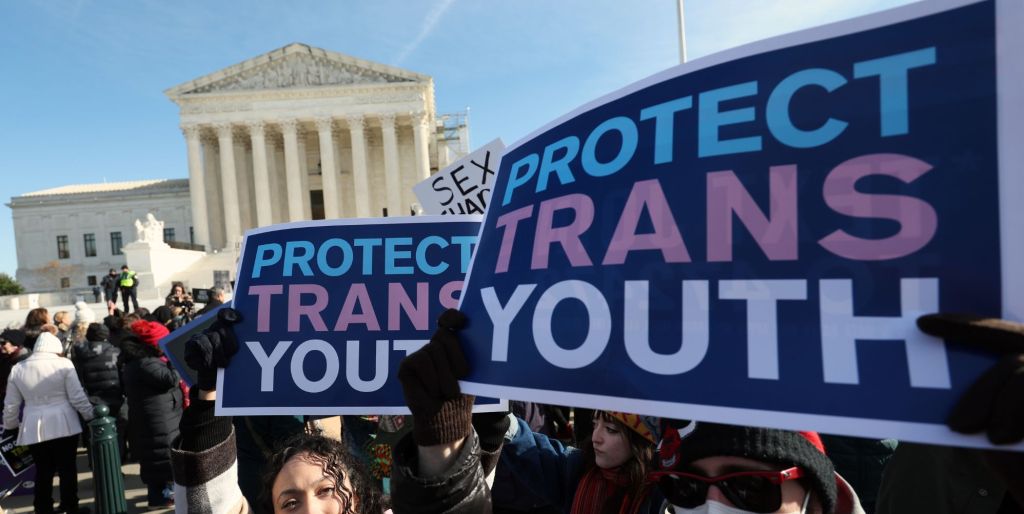
Trans youth almost always feel less suicidal while undergoing treatment. (Getty
Trans youth almost always feel less suicidal while undergoing treatment. (Getty)
Yet another study proving that trans youth almost always feel less suicidal on gender-affirming care has been thrown on the pile of evidence that puberty blockers are safe and effective.
Research set to be published in the Journal of Paediatric’s February volume has once again proved that trans adolescents show “meaningful reductions” in depression and anxiety after beginning clinically-endorsed hormone therapy.
Co-written by paediatricians in Nevada, Texas, and Missouri, the study examined the wellbeing of 432 patients before and after undergoing treatment.
The participants, aged 12 to 20, were surveyed on their mental health before and at least 364 days after beginning appropriate medical treatment such as puberty blockers and hormone replacement therapy (HRT).
Trans youth regularly come under attack by politicians. (Getty)
Using the Ask Suicide-Screening Questions (ASQ) toolkit – an internationally acknowledged assessment of suicidality in young people and adults – researchers found significant improvements in the mental health of patients across the board.
Suicidality among participants decreased significantly over time, according to the study’s results, with rates continuing to decrease as time went on.
The reductions, clinicians noted, were consistent regardless of gender identity, treatment duration, and, interestingly, the age at the start of therapy.
This not only once again proves that gender-affirming care is remarkably effective in improving the wellbeing of trans patients, but that its effectiveness in reducing suicidal tendencies does not diminish as patients get older.
Clinicians recommended following-up the study with a “larger sample and longer follow-up” to sufficiently prove the consistency of gender-affirming care’s mental health treatments.
Politicians continue to ban puberty blockers despite evidence
Numerous studies across the globe have proven that gender-affirming care is almost always a good thing for trans people, especially trans young people.
One study from October 2024 found that 97 per cent of trans under-18s were “highly satisfied” with the results of gender-affirming treatment, while another from March in the same year found that, out of 548 patients who accessed trans healthcare, just two regretted it.
Regret rates for gender-affirming treatment are very low according to a paper from May 2024, which found that patients are more likely to regret knee surgery, breast augmentation, and even having children than those starting gender-affirming care.
Despite the mountain of evidence proving that gender-affirming care can be, and almost always is, life-saving, anti-trans politicians and political pundits regularly claim trans young people shouldn’t be allowed to access clinically-approved medical treatment.
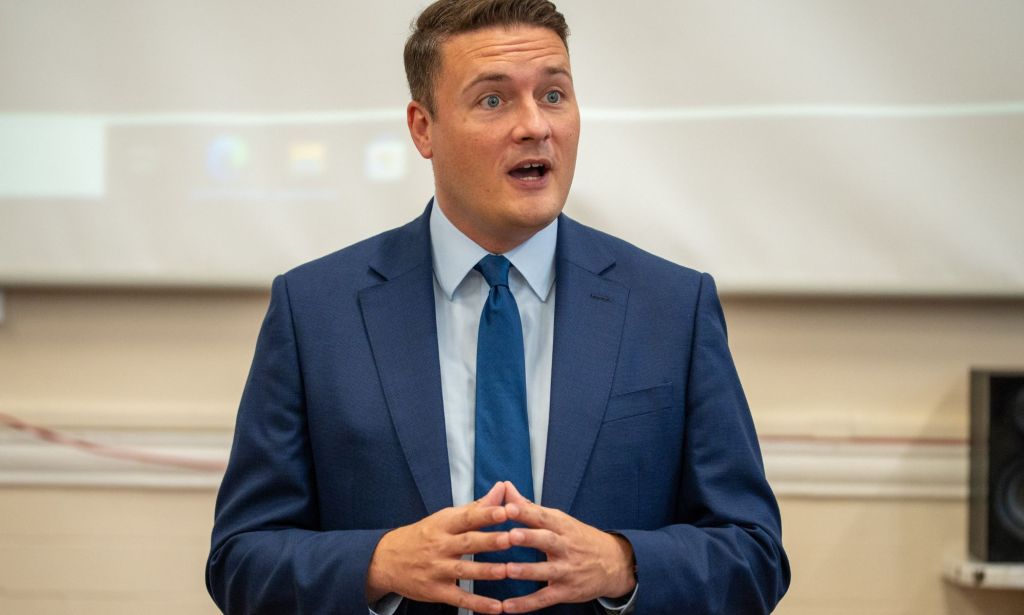
Wes Streeting has routinely come under fire for his policies on trans people. (Getty)
At least 27 states in the US ban gender-affirming care in some capacity, preventing over 40 per cent of America’s trans youth population from accessing care. Puberty blockers are also banned for trans youth in the UK, despite being freely available for cisgender youth.
The Trevor Project, an LGBTQ+ suicide prevention organisation, warned these bans have “detrimental impacts” on the mental health of trans young people, who are already disproportionately likely to feel suicidal.
Research conducted by Dr Natacha Kennedy in the University of London found that Wes Streeting’s ban on puberty blockers for trans young people is “significantly, extensively, and relentlessly harming trans children and young people”.
She spoke to the parents of trans young people who were once “happy, well-adjusted, and little different from most cis children”, but who have now resorted to self-harm because of an inability to access care.
Suicide is preventable. Readers who are affected by the issues raised in this story are encouraged to contact the Samaritans on 116 123 (www.samaritans.org), or Mind on 0300 123 3393 (www.mind.org.uk). Readers in the US are encouraged to contact the National Suicide Prevention Line on 1-800-273-8255.
For nearly two days I worried about Tupac, which I call Ron’s cat. I stayed up, I forced myself to do everything needed to make sure he was OK. I nearly fell out of bed twice because he was pushed so tight against me, and I was afraid if I pushed back he would be injured that I was right on the edge of the bed. I fed him in the bed, I let him pee and poop in the bed. I carried him around the house so he wouldn’t have to put his paw down on the floor. Yes, I was trying to be a good daddy. Meanwhile Ron was panicking and crying on the phone that we might have to put the boy down.
Here is my issue I want to share and ask all of the wonderful people who come here. It is not critical and if you don’t want to reply it is OK.
After all of this, All the lack of sleep, and all the effort, as I got home and started to relax, as I started watching other things on one monitor and as I started replying to comments on this monitor … memories started to invade.
I started struggling to deal with Tupac, the kitchen, even the blog. Memories after memories are flooding over me and through me. I was answering comments yet even as I write replies I have to delete some of what I wrote. What is wrong with me! I should be so happy as my husband’s cat is not got a broken leg and I only need to baby him to get him well.
Yet the places my mind is going into my past, my childhood is horrific and blocking everything I am trying to do. I once as a preteen swam out into the middle of a pond to save what would become my only praised love, the black lab and I did not know when I carried her cold shaking form back to the camper my adoptive parents had that I was signing the death warrant of our other dog. Also I had to bargain my damn body for the dog to live. I agreed and went into the camper to be raped repeatedly. Shit why does my mind go to these places they hurt so much?
Why. Suzy Sunshine asked me that question before admitting she had no way or conception how to help me. She tried to hide it but she was shocked and horrified by the few minor things I told her.
Sorry I got so damn distracted. The question is why now knowing Tupac is OK and everything will work out as I sat here at my computer starting to deal with everything … did my mind flood me with horrific memories of my past and of things I can not change? That is what I am struggling with. Please help if you have an idea?
See the rest I have been dealing with all my life. I watched librarians when I was 7 or 8 years old put the books I was reading behind their desk for me tomorrow while only touching me on my head as if they patted me on the back I cried out in pain. But my mind knew this. So why flood my memories with it when I realized Tupac was OK. Why is my mind sending me these memories?
Maybe you all have abilities I don’t. I am sorry if this post upset anyone. I am going back to replying to the wonderful comments. I just wanted everyone to understand what I am dealing with. Hugs
I am home and decompressing. I had a very bad night. But I guess I should start at the beginning.
Ron left the morning of Saturday the 17th for Texas because his sister fell and broke her wrist. This after her husband died and she needed Ron’s help to get her large home ready for sale. She had returned here with him and I was so grateful for her being here as she let me get back to what I love, blogging. But Ron being gone for three weeks was traumatic for Tupac who has seen the humans he loves go away never to come back so he clung to me the entire time Ron was gone. He had already been coming to me before Ron when he wanted something and at night he would sleep either on the pillow I put in the middle of the bed so he could lay on it and be made of by both of us or what he started to do while Ron was gone the first time he would lay between that middle pillow and my body.
So Ron left for Texas and I noticed that Tupac was staying much closer to me and to the house when outside. He also did not want to go out as much. Ron had noticed that there was a very large orange cat that was coming around to lay near the house and also a back long hair cat that was very vocal screaming at Tupac. While the orange cat was trying to find friendship the black long hair seemed to want to provoke a fight or at least scare Tupac. So I figured Tupac was staying close to home or inside since Ron left because of that. Also since Ron left Tupac who is a bit incontinent leaking a bit on the places he sleeps and stuff started urinating on the floor as he was walking or eating, or even just sitting somewhere. Now let’s get to the drama queen stuff and the big scare.
Yesterday the 20th Tupac stayed on the new daybed Diane gave us that was in the new living room all morning sleeping. I heard him thump onto the floor. I was in the kitchen getting ready to do dishes. As he walked into the room I noticed he was limping on his right front paw. But he seemed to be walking it out as he moved I just figured he slept too long on his right front shoulder. So I gave it no more thought. Then during the later part of the day he got up on my desk as he has gotten to love doing. It is one way I have bonded with all our cats, they love the warmth the monitors put off and enjoy rubbing on them and other things on the desk. I put a towel down and the cat sits next to the keyboard enjoying the pets and warmth along with companionship while I work. It took a while for Tupac to understand that joy but he took to it once he did.
So back to yesterday he was on the desk and I went to get a soda. I heard a thump / bang and came back to find Tupac on the floor with his right front paw held high. He was very upset and when I reached for him he hobbled away from me to the bedroom. Then he stopped and let me put him on the bed. He hobbled to my pillows and lay down. I reached out to him and he swatted my hand away with no claws. I started envisioning the worst.
Yes maybe he gets his drama queen honestly. I figured he either broke his leg or did damage to his shoulder like dislocating it. He pressed hard into my side pillow very upset. I let him be for a bit then went back to him. He then accepted my petting him. Still thinking he broke his leg / paw I brought him supper in bed. Then I went to bed with him. I did not try to push him over but tried hard to lay down on my side of the bed next to him. He loved it. He slept pushed hard against me as I laid on the edge of the bed worried to try to move him and hurt his broken leg / paw. He never got up once which was not normal, but he did change position pressing harder into me each time, each time I woke and couldn’t sleep because I worried he would try to jump down from the bed. I figure I got two and half broken hours of sleep.
This morning I again brought him breakfast in bed which he loved. I tried putting him on the floor but he wouldn’t walk or put the paw down and I got even more worried. I put him back up on the bed near the pillows and he settled back into them while I went and got my shower. After all I had to take him to the vet’s office as soon as they opened. After my shower I got two shirts out, one that he could claw if he needed as I put him in his carrier and one to wear out to the vet’s office.
When it came ten minutes from the time to leave, I went out, started the van let it warm up, and then moved it into position to be more able to move him into it. I then picked him up from the recliner I have put him in and he seemed fine with staying in. He did not really fight or struggle to stop going into the carrier. So I closed the door and went to change my shirt to the one I wanted to wear in the veterinarian’s office. Remember I was on an emergency walk in so the bill was $150 to walk into the door.
I have to admit the young woman behind the counter was very much sympathetic and on the ball. Seeing my cane she carried the pet carrier to a chair for me. She was very sympathetic. Then who I would in the hospital say was a medical assistance who came to get me and Tupac. Again seeing my cane she came and offered to carry Tupac into the room and set his carrier on the table. She took all the information. Again very caring person. I explained my fears and how Ron was in Texas. She was very understanding through it all. I thought of my time in the hospital and how many of the people there had far less empathy and concern for the feelings of the patients or their families.
The doctor came in and talked with me, heard my fears and concerns. They took Tupac and did X-Rays and other checks. After 30 minutes the doctor came back. She showed me the two X-Rays they were able to get before old man Tupac got too grumpy to let them do anymore. I guess veterinarians are used to that and let him calm down while the doctor came to talk to me.
The X-Rays showed that he had no breaks in his leg or wrist bones. They did show great swelling in his paw near the first two digits. The doctor suggested he got his claw caught and wrenched it while jumping down from the day bed. But she was not sure. I asked about his shoulder and she told me he was too grumpy then but if I wanted they could try again. I asked her to if she could as I needed reassurance he did not damage his shoulder. She told me she also was going to look closely at his claws on that paw to see if he ripped one.
Well letting the old grumpy moocher calm down worked. They got the X-ray, no damage to the shoulder. She was able to look closely at his paw and claws. And it explained what the issue was. He had what she felt was an infected first digit and slightly his thumb on that paw. That was why his paw was so swollen. She said it looked like a puncture such as a bite from another cat that did it. I asked if it could be a puncture from a plant or other thing and she said yes, but she felt it was another cat that did it.
So for an entire night of staying awake watching to make sure he did not jump down and hurt his broken leg / wrist / shoulder and feeding him in bed then carrying him to the recliner this morning and packing pillows around him while putting them on the floor in case he jumped down, to find out he had an infected swollen very painful paw. The doctor gave me three pain pills to give him one a day, and they gave him an antibiotic shot to help with the infection.
But who would have figured that two old gay guys, one who owned / ran a bar for gay people in the 1980s would have a furry drama queen child who milked a painful paw into getting supper and breakfast in bed and carried around like a little prince … Oh I give up. Hugs
Full disclosure I love watching Digby when she is on The Majority Report. That lady knows her stuff. I don’t know much about Tom Sullivan but if she is willing to put him on her site I will give him the benefit of the doubt. As for Randy Fine. He is a fanatic Christian nationalist who wants the US to be run by his church doctrines, who help write and push for the don’t say gay bill in Florida saying he couldn’t tolerate that when LGBTQ+ people came out to their peers they were accepted instead of being ostracized and beaten up. Yes he wants to return to the days of being different from the straight cis majority got you harassed, harmed, and injured. I guess that means if you are too afraid to come out and live as who you are it will make you a good straight cis person willing to submit to his god? He also is desperately stupid and is full die hard maga. He is another racist who thinks might makes right. Hugs
Where are the Epstein files? A social media poster on Monday noted, “So when an ICE officer tells you to get out of the car, you’re supposed to get out of the car, what are you supposed to do when a judge tells you to release the Epstein files?”
Thus in the field failure to comply with orders barked by kitted-out and under-trained DHS enforcers merits a bullet to the head. Yet failure of AG Pam Bondi’s DOJ to comply with the Epstein Files Transparency Act, passed overwhelmingly by Congress and signed by Dear Leader, seems not to merit not even a slap on the wrist. Immediately after the killing of Renee Good in Minneapolis, the right claimed her death was the consequences of her own choices.
Donald Trump’s “Great Again”: For my friends, a pardon; for my enemies, a bullet to the head. God bless America.
Here’s a choice a fine Republican from Florida’s 6th District made on Monday: H.R.7012 – To authorize the annexation and subsequent admission to statehood of Greenland, and for other purposes.
Is it a troll by a Trump brown-noser? The image suggests that that is likely. But these days, who can tell? Rep. Randy Fine has one cosponsor. Greenland has a tenth the population of Wyoming and no love for Donald Trump. Fine would likely oppose statehood for Puerto Rico or the District.
“By acquiring Greenland, we would prevent our adversaries from controlling the Arctic Region and secure our northern flank from Russia and China,” writes Fine.
Malcolm Nance, former naval intelligence officer, foreign policy analyst and pundit, itemized for Fine a few consequences of annexing Greenland. One assumes from the worst-case rant (and a few misspellings) that Nance is emptying both barrels at the former gaming executive. Nance’s response on X is over the top, but satisfying nonetheless:
CONSEQUENCES FOR DUMBASSES: You are an F’ing idiot. If we invade Greenland we go to war with 31 nations. NATO stays together but without us. Its HQ is in Brussels, not the Pentagon. Our global reach across the Atlantic will end with our closest refueling base in Israel or Egypt. 100,000 American soldiers will be forced to board civil airliners and sent home or be taken as POWs/Detainee sWITHOUT WEAPONS OR EQUIPMENT. Canada will close its airspace and sea space. US Ballistic Missile Defense at Pettufik and Fylingdales ENDS, which means we see nothing except what space sensors can see. US Intelligence is reduced to Fort Meade, Ft Gordon and Colorado Springs and Hawaii. CIA spies will be rolled up by their former friends in HOURS. NO ONE WILL SHARE ANYTHING WITH US. ALL GLOBAL SHIPPING WILL BE CLOSED TO US. Denmark operates the largest shipping company in the world. SIX OUT OF TEN global shipping companies are in Europe … Worlds Biggest container ships? DENMARK! Australia, NZ, Canada are Commonwealth so they will cut ties with us or be neutral too.
PS Denmark & locals tun all life support and generators at Pittufik and Canada resupplies it … all 150 US Spece force personnel would become POWs to guys on sleds. FYI They have troops there now and 35,000 Caribou hunting rifles.
FYI France and UK have nukes. Hundreds of them so you cannot intimidate them with that.
Oh and they collapse the US economy by sanctioning us and selling off 2.3 Trillion in US treasuries simultaneously. Also no Botox, Ozempic or insulin. Its made in Denmark.
Ya fucking dope.
That’s fair. Over the top, but fair. (I especially appreciate Nance’s observation about the potential loss of strategic refueling bases.)
Marcy Wheeler already pointed out that Trump admitted to the New York Times that his need to possess Greenland stems from a personal problem.
Elon Musk’s own AI already reported that not owning Greenland is no impediment to building new U.S. bases there or expanding existing ones. As for mining, several reports observe that if whatever useful minerals lie buried in Greenland, if they were “getable,” mines would already be in operation:
Researchers say it would be extremely difficult and expensive to extract Greenland’s minerals because many of the island’s mineral deposits are located in remote areas above the Arctic Circle, where there is a mile-thick polar ice sheet and darkness reigns much of the year.
Not only that, but Greenland, a self-ruling territory of Denmark, lacks the infrastructure and manpower required to make this mining dream a reality.
“The idea of turning Greenland into America’s rare-earth factory is science fiction. It’s just completely bonkers,” said Malte Humpert, founder and senior fellow at The Arctic Institute. “You might as well mine on the moon. In some respects, it’s worse than the moon.”
So is our sitting president. Pray for consequences for him.
I love Erin’s posts and reporting. The attack on trans rights and health was planned and coordinated by religious conservatives who felt they lost the culture war on gay acceptance and same sex marriage so they decided to jump quickly on the trans issue with lots of money. Their first attempt failed because they went after the idea of trans people itself. So then they changed to the old “protect the children” play book with the entire focus on protecting little cis girls but they never mention the trans boys that cis boys need to be protected from. See how patristical it is? It is all about males needing to protect the little womans. They don’t care about trans kids, they don’t care about female sports. It is about not letting trans kids transition with puberty blockers and the correct hormones as then the kids will grow up as they are fitting the societal view of what men and women look like. That scares the straight cis male religious guys because they are terrified they will be attracted to a trans woman. Imagine the horror if trans people moved freely in society not raising any question of their gender because they conformed to how society sees each gender. That sounds like a grand thing to me, but it terrifies these fanatical religious grifters that want to control how everyone lives to please their god. They make up untrue and scary what ifs, what if a man uses the letting trans people use the bathroom of their gender ID to go into a girls … notice they phrase it girls not womans because that make people more protective from the start, and they harm a little girl, your little girl? Well nothing stops a man from doing that now! Predators don’t need permission and won’t wait for it. And that has happened where a straight cis male dragged a little girl into the male bathroom and raped her while his friend watched. There was a famous court case on it. Look it up if you want. Want to know what has not happened, a trans woman going into the female’s bathroom and assaulting a female. Sorry. The right has tried hard to make one happen, but each claim of a trans person in a locker room or bathroom acting inappropriate has been debunked and disproven. This is all a made up scandal and crisis by people who can not accept the society progressing beyond the old traditional binary they grew up with and they think their holy books claim must be as their god insists on it. Weird how it is always how their god insists on what they already believe or promote. Handy that. So many people can not move past the idea that if it dangles you MUST be a boy regardless of how you feel and if it is an inny you must be a girl regardless of anything else idea. They can not seem to grasp personal feelings, needs, or medial science. Hugs
The bill would establish the Affirming Health Care Trust Fund, administered by the State Treasurer, to support clinics and providers outside the reach of federal funding threats.
Vermont Bill Would Create State Trust Fund For Private Trans Youth Care Clinics As Trump Threatens Hospital Funding
The bill would establish the Affirming Health Care Trust Fund, administered by the State Treasurer, to support clinics and providers outside the reach of federal funding threats.
Erin In The Morning is a reader-supported publication. To receive new posts and support my work, consider becoming a subscriber.
Across the United States, gender-affirming care has come under sustained attack in Republican-led states and from the Trump administration. For transgender youth, those attacks have been especially severe, with roughly half of U.S. states now banning such care outright. At the federal level, the administration has waged an intense pressure campaign against hospitals, threatening funding and prompting many systems to drop their care programs altogether. That campaign has now escalated further, with the federal government moving to threaten hospitals’ entire Medicaid and Medicare funding if they continue providing transgender youth care. In response, some states and cities are beginning to fight back by establishing their own funding mechanisms for trans healthcare. The latest example comes from Vermont, where lawmakers have introduced a bill to create a trust fund for gender-affirming care designed to be entirely insulated from federal funding threats.
H.576, introduced by Representatives Daisy Berbeco, Tiffany Bluemle, and Troy Headrick, would establish the Affirming Health Care Trust Fund. Administered by the State Treasurer, the fund would provide direct monetary support to healthcare providers and nonprofits offering gender-affirming care in Vermont. It would cover costs for patients who would otherwise go without treatment, fund the establishment of Vermont-based clinics, and pay for malpractice and liability insurance for clinicians who continue offering care. The bill is part of an increasing movement towards private clinics as a mechanism to survive federal threats.
The bill also includes provisions designed to protect patient information from both federal pressure and out-of-state threats, going further than the recent “refuge” or “shield” laws passed in several blue states to protect transgender youth care. It explicitly bars the board and other state actors from disclosing patient-identifiable data, the identities of providers, or the identities of award recipients to the federal government. This is a significant protection given the wave of abusive legislation and attempts to subpoena transgender healthcare records nationwide. While federal preemption may ultimately be litigated, these provisions give clinics a stronger legal footing to resist such demands—particularly as similar subpoenas have been repeatedly quashed in recent court cases.
The bill comes as families scramble to locate alternatives to hospital systems that are abandoning them. With more than 20 hospitals closing their doors to transgender youth care out of fear and preemptive compliance with the Trump administration, many families have been forced to seek alternatives. Just this week, major hospital systems across Colorado, for example, have stopped providing care. Groups like the Trans Youth Emergency Project say they have the capacity to refer displaced patients to private clinics, and in many places those clinics do exist and are absorbing demand. But as hospital-based programs continue to shut down and demand rises, those private providers will need sustained support—and more clinics will need to be created. Bills like this are a targeted way to do exactly that.
If this bill passes, Vermont would be the latest state to protect care in this way—but it would not be the only one. Massachusetts passed a similar measure last year, allocating $1 million toward transgender youth care clinics, though that funding has already come under criticism as insufficient to meet statewide need in the wake of major clinic closures. In New York City, newly elected mayor Zohran Mamdani has pledged $65 million for transgender healthcare. If that funding is realized, it would position New York City as a major hub for private clinics capable of absorbing demand created by hospital closures across the country. This strategy could prove to be a critical backstop for private providers that are already emerging—and that are likely to come under increasing strain in the years ahead.
The bill allows funding from state appropriations, private donations, grants, and—importantly—federal funds under a future administration that is protective of transgender healthcare. It would take effect immediately upon passage, with the board required to convene by August 1, 2026. There are still hurdles ahead: the bill must advance through committee, pass both chambers, and ultimately receive meaningful funding to function as intended. But its introduction alone signals something important. At a moment when hospitals are retreating and families are being forced into crisis planning, Vermont lawmakers are putting forward a concrete framework to protect access to care rather than surrender it. For Vermonters who want to see their state take a clear stand, residents can find and contact their legislators through the Vermont General Assembly website to make clear where they stand on protecting transgender healthcare.
Erin In The Morning is a reader-supported publication. To receive new posts and support my work, consider becoming a subscriber.
The sad fact is the actions of the military has dragged the US again into war crimes territory. It is Kegseth’s responsibility to guild and give direction to the military as its civilian leadership. He is the one that gave the illegal orders. Hugs
Community (This content is not subject to review by Daily Kos staff prior to publication.)
Friday, November 28, 2025 at 5:02:31p EST
Photo from Donald Trump via Truth Social
Shocking as this moment is, none of us should pretend we weren’t warned. When Donald Trump installed Pete Hegseth — a television provocateur whose public record is soaked in belligerence, booze, and culture-war performance — as America’s Defense Secretary, the world could see exactly where it was headed.
Still, nothing prepared us for today’s Washington Post’s revelation that Hegseth personally ordered U.S. forces to “kill everybody” on a small wooden boat off the coast of Trinidad on September 2.
You’d expect rogue militias or failed–state paramilitaries to speak that way. You don’t expect it from the man running the Pentagon.
What the Post reports is almost too grotesque to absorb.
After the first U.S. missile ripped the boat apart and set it burning, commanders watched on a live drone feed as two survivors clung desperately to the charred wreckage.
They were unarmed. They were wounded. They were no threat to anyone. They were simply alive; inconveniently alive for a man who had allegedly already given the order that there be no survivors.
And so, according to two officials with direct knowledge of the strike, the Special Operations commander overseeing the operation ordered a second missile. It hit the water and blew those two men apart.
History tells us to watch out for nations that lose their moral compass in real time.
It starts when the powerful stop seeing human beings as human. It accelerates when the government itself denies any obligation to justify its killings.
And when leaders begin lying to Congress and the public to cover what they’ve done, you’re no longer looking at isolated abuses. You’re staring straight into the machinery of authoritarianism.
Instead of telling Congress that the second strike was designed to finish off wounded survivors, Pentagon officials claimed it was to “remove a navigation hazard.”
That isn’t just spin: it’s an attempt to rewrite reality.
The Post quotes Todd Huntley, a former Special Operations military lawyer now at Georgetown Law, saying exactly what any first-year law student would immediately recognize: because the United States is not legally “at war” with drug traffickers, killing the people on that boat “amounts to murder.”
Even if a war did exist, Huntley notes, the order to kill wounded, unarmed survivors “would in essence be an order to show no quarter,” which is defined under the Geneva Conventions as a war crime.
This isn’t an obscure legal debate. This is basic civilization. Armed states do not execute helpless people in the water.
And yet this is now U.S. policy. The boat strike on September 2 was not a one–off. It was the beginning of a campaign.
The Post reports that since that first attack, Trump and Hegseth have ordered more than 20 similar missile strikes on small boats in the Caribbean and eastern Pacific, killing at least 80 people.
The administration insists the victims were members of the Venezuelan gang Tren de Aragua. But in classified briefings to Congress, Pentagon officials have not provided even one single verified name of a trafficker or gang leader they’ve killed. Lawmakers from both parties say they’ve been shown nothing beyond grainy videos of small boats being destroyed from the air.
If these men had truly been high–value cartel operatives, Trump would be parading names and photos across every rally stage in America. The silence tells its own story.
Experts warn that many of the dead may not have been traffickers at all. They may have been border–crossing migrants, subsistence fishermen, or small–scale smugglers whose crimes did not remotely justify summary execution.
International human rights groups are already calling these killings extrajudicial and illegal. Some foreign governments are asking whether the United States has effectively created a free-fire zone over parts of the Caribbean, and several have limited intelligence sharing with us for fear of being complicit in prosecutable war crimes and crimes against humanity.
This, too, has been part of the authoritarian playbook since ancient times.
Pick a foreign or criminal “other,” paint them as subhuman monsters, and then declare that the normal laws of war, morality, and basic decency no longer apply.
For years, right-wing media has been hyping Tren de Aragua as a kind of supercharged successor to MS-13, just as Trump once used MS-13 as a bludgeon to justify abuses at home.
The fact that the administration has produced no evidence for its claims isn’t a bug: it’s the point. When the government fabricates an omnipresent threat, it gives itself permission to kill whoever it wants.
This may also explain the ferocity with which Hegseth and Trump went after Democratic lawmakers last week when they reminded U.S. service members that they are duty-bound to disobey illegal orders.
Those officers weren’t being dramatic: they were issuing a warning grounded in fresh blood. And Hegseth’s and Trump’s panicked rage — calling for the death penalty for six members of Congress, including a decorated war hero and a CIA officer — now makes perfect sense: he knows perfectly well what he’s already ordered.
The strike on September 2 is not just a policy failure; it’s a moral collapse. If the Post’s reporting is accurate — and multiple congressional offices say it is consistent with what whistleblowers have told them — then the United States has engaged in the deliberate killing of wounded, unarmed men floating in the sea.
That is the kind of conduct that topples governments, triggers war-crimes investigations, and leaves scars on nations for generations.
Nobody elected Donald Trump or Pete Hegseth to serve as judge, jury, and executioner for impoverished people in wooden boats. Nobody gave them the authority to murder suspects without trial. And nobody gave them the right to lie to Congress about it.
Congress must not let this pass. These allegations demand immediate public hearings, subpoena power, and full investigative authority.
If Hegseth gave an order to “kill everybody,” he must be removed and prosecuted.
If U.S. commanders falsified reports to mislead Congress and the public, they must be held accountable.
And if Donald Trump approved or encouraged these actions, then impeachment and criminal referral are not optional: they’re required to defend the rule of law.
America doesn’t have many chances left to prove to the world, and to ourselves, that we still believe in the value of human life and the restraints of democratic power. This is one of them.

18-month-old Amalia, who, according to a lawsuit filed, suffered a life-threatening respiratory illness while in U.S. Immigration and Customs Enforcement (ICE) custody, reacts, in this handout picture obtained on February 7, 2026. Elora Mukherjee/Handout via REUTERS
] Kheilin Valero Marcano and Stiven Arrieta Prieto, parents of 18-month-old Amalia, who, according to a lawsuit filed, suffered a life-threatening respiratory illness while in U.S. Immigration and Customs Enforcement (ICE) custody, pose for a photo, in this handout picture obtained on February 7, 2026. Elora Mukherjee/Handout via REUTERS
Ken Paxton, Texas’s attorney general, outside the US supreme court in Washington DC on 1 November 2021. Photograph: Rod Lamkey/Newscom via Alamy
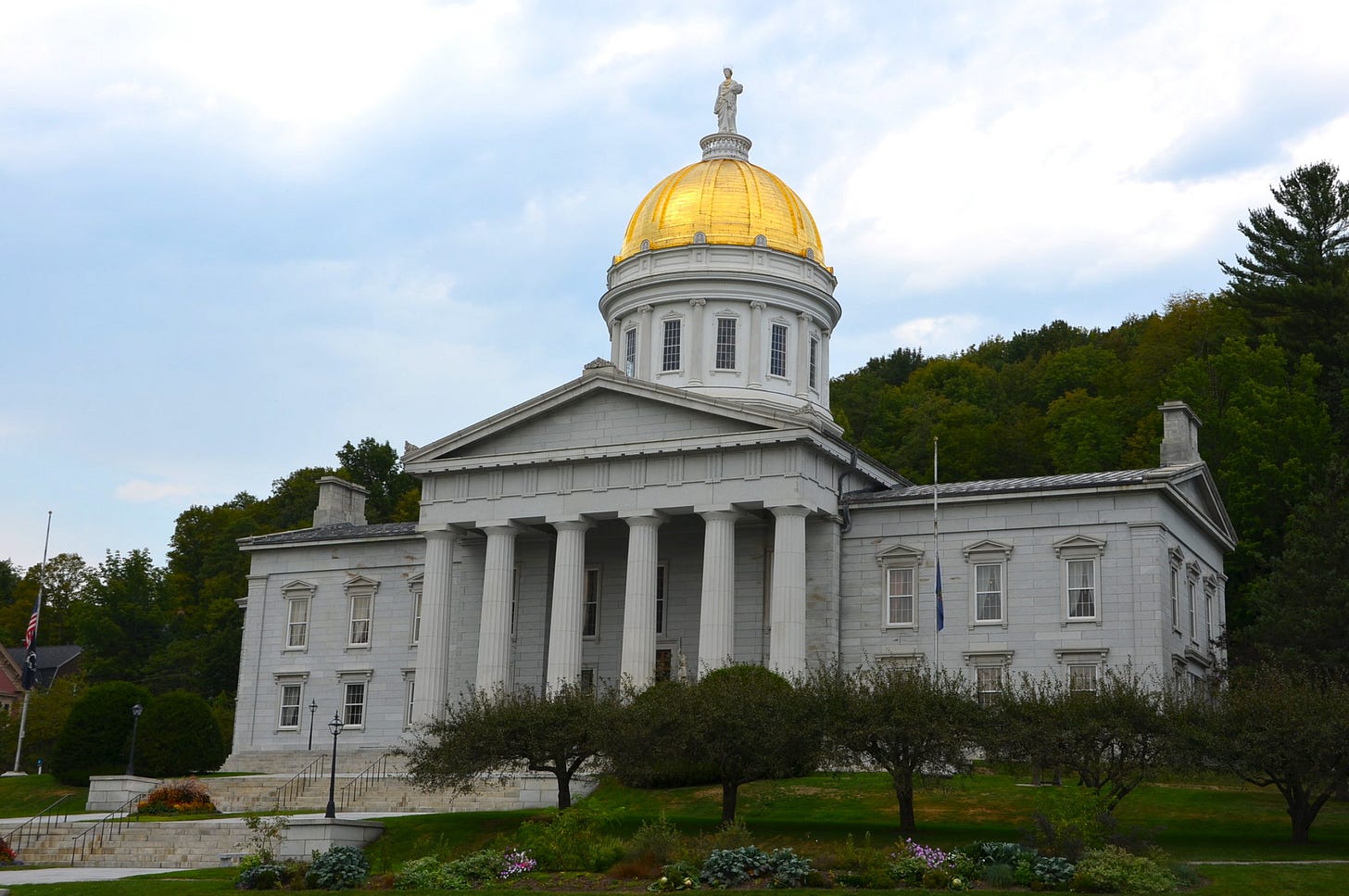
Photo from Donald Trump via Truth Social



 Scottie's Playtime