Brianna Keilar interviews Ohio Attorney General Dave Yost (Screen cap via CNN
Republican Ohio Attorney General Dave Yost grew testy on Monday when CNN host Brianna Keilar fact-checked him for promoting false claims about Haitian immigrants.
During an interview about bomb threats that have been leveled against schools in Springfield, Ohio in the wake of former President Donald Trump’s attacks on the community there, Keilar asked Yost about his own role in helping Trump advance false claims about immigrants kidnapping and eating residents’ pets.
Keilar pointed out that Springfield Mayor Rob Rue has said that local police have investigated and found no evidence to back up claims that Haitian immigrants in the city are eating either pets or local wildlife.
“Do you think the mayor is lying?” she asked him.
Yost dodged the question and said that most of his social media posts about Haitian immigrants in Springfield have been on the “real impacts” they’ve had rather than the fictional pet-eating impacts.
“My tweet was about the media’s disregard for citizen reports, citizen interaction with their government,” he said.
Keilar then pressed him for more information about these “citizen reports” and Yost said he was referring to “several videotaped comments that were made by citizens regarding a variety of things going on in Springfield.”
Yost added that these comments from citizens “are not enough to make a case” against Haitian immigrants, and he then pivoted to saying that too many children attending school in Springfield don’t speak English.
Keilar then asked Yost why he and other Republicans don’t simply talk about the strain on local resources that migrant communities are placing on public services instead of telling lurid and false tales about pet eating, especially “when you are supposed to be a very serious law enforcement individual.”
Yost took exception to this statement.
“Implying, of course, that you think I’m not [serious],” he replied indignantly.
Springfield, Ohio's city hall was evacuated this morning due to a bomb threat.
This comes two days after former President Donald Trump boosted the baseless rumor that Haitian immigrants there were “eating the pets of the people that live there.” pic.twitter.com/VnCwYE5Zpy
Springfield Police confirmed to me that "multiple facilities" including at least city hall and Fulton Elementary have been evacuated due to a bomb threat received around 8:20 this morning https://t.co/MyOVu2bgze
Wittenberg University is currently taking precautions following a possible threat to campus tomorrow, Sunday, Sept. 15, 2024. All events and activities tomorrow are canceled. See alert website at https://t.co/q8SBqL88p1 for more information, safety tips, and resources. pic.twitter.com/w7GcwjIlWC
Ohio Gov. Mike DeWine defends Haitian immigrants, telling @MarthaRaddatz that while there are “legitimate” problems at the border, “What’s going on in Springfield is just fundamentally different.”
A day after a Springfield school and other public buildings were evacuated and closed due to bomb threats, and the same day that two other Springfield elementary schools were evacuated and one middle school closed due to a new, separate bomb threat, Husted posted a photo of two geese on X Friday morning with the comment, “Most Americans agree that these migrants should be deported.”Husted’s spox has refused to comment. He first appeared here in 2012 when as Ohio secretary of state he eliminated extended hours for early voting.
NEW: Fraudulent petition signatures cited by the DeSantis administration to justify its probe of Amendment 4 had already been rejected by a local supervisor of elections.
They were never counted toward the total that got the initiative on the ballot. https://t.co/f0sXetVwUW
Ron DeSantis has mobilized the Florida state government to spend taxpayer resources on the political process. He's now waging a multi-front war against Amendment 4, which would restore abortion rights pic.twitter.com/QreyQAi7Kn
This kind of propaganda issued by the state, using taxpayer money and operating outside of the political process sets a dangerous precedent.https://t.co/dJbVj8A6kK
After sending police to knock on doors of voters who signed petitions to get the FL abortion rights amendment on the ballot, now Ron Desantis is using taxpayer funds to illegally have a state agency & website campaign against the amendment. Story.https://t.co/2ywnO6kALR
BREAKING: In a 2022 tirade against reproductive health care, Mark Robinson repeatedly waves his hand by his groin, says young women just need to “get this under control." #NCGovpic.twitter.com/QXuUtZuBAL
“When people ask me…What’s gonna happen if the Flip – Flopping, Laughing Hyena Wins?? I say…write down all the addresses of the people who had her signs in their yards! Sooo…when the Illegal human ‘Locust’ (which she supports!) Need places to live…We’ll already have the addresses of the their New families…who supported their arrival!” Zuchowski wrote.
Read the full article. Replies to his post are turned off. Zuchowski made news several years ago for a rant about the name change for the Cleveland Indians, which he claimed was “erasing our heritage.”
Ryan Routh voted for Trump in 16’, then supported Gabbard, and then moved on to Hailey. He’s no liberal. He’s a Republican who is disillusioned with Trump’s foreign policy and Putin-phelia. pic.twitter.com/PaEkWoPcqX
Suspect Ryan Wesley Routh is a Democrat. He was allegedly hiding in the bushes with an AK-47 with a scope, two backpacks, and a GoPro and was spotted by the Secret Service before he could take action on President Trump #shootingpic.twitter.com/3xkbB7EU19
Elon/X has allowed someone to create a fake account under the alleged shooter’s name (Ryan Wesley Routh), and it’s now being used to spread vile anti-Semitic content including quotes from a Hitler account that X is also allowing on the platform. pic.twitter.com/reqGUcmynS
“I’ve seen the guns myself and all, and, yeah, they had a lot of guns and stuff over there, and, yeah, a lot of people were afraid of him back in the day,” she said.
The State Attorney for Palm Beach County is an elected Democrat, so Desantis is doing what Desantis does.
Maybe Desantis should investigate himself for making it so easy to acquire and walk around with an assault rifle in FL even with an extensive criminal history. pic.twitter.com/DwAWAE928L
“These are people that want to destroy our country. It is called the enemy from within. They are the real threat. They do it with a combination of rhetoric and lawsuits they wrap me up in.
September 17, 1924 Mohandas Gandhi began a purifying 21-day fast for Hindu-Muslim tolerance and unity following communal riots in Kohat on India’s northwest border in what is now Pakistan. A Hindu, Gandhi spent his fast at the home of Mahomed Ali.
September 17, 1961 Bertrand Russell at anti nuclear weapons March, 1961 1,314 anti-nuclear protesters were arrested during a sit-down in London’s Trafalgar Square by 12,000 (authorities had denied a permit). Philosopher and peace activist Bertrand Russell, aged 89, and 32 others were already in jail, having been arrested the previous month during a demonstration on Hiroshima Day in Hyde Park. Russell’s Committee of 100 had organized the sit-down and other actions to resist nuclear weapons, challenging the authorities to ‘fill the jails’, with the intention of causing prison overload and large-scale disorder. On arrest members would go limp so as to create maximum disruption without conflict. History gallery: The Committee of 100
September 17, 1988 Haiti’s military government was overthrown by a group of non-commissioned officers who installed Lieutenant General Prosper Avril as the new head of state. The leaders of the coup were outraged by the attack the previous Sunday on St. Jean Bosco Church during which 13 parishioners were killed and nearly 80 injured. Fr. Jean-Bertrand Aristide, a persistent critic of the military regime, had been celebrating mass when the attack occurred. From the report of the Organization of American States’ Inter-American Commission on Human Rights, issued on September 7, 1988: “ The Commission has come to the conclusion that the current military government in Haiti has perpetuated itself in power as a result of violence instigated by elements of the Haitian Armed forces resulting in the massacre of Haitian voters on November 29, 1987, the manipulation of the elections held on January 17, 1988, and the ouster of President Leslie Manigat on June 20, 1988.”
The below is my response to a thread on the Male Survivor site where people were talking about intervening if they saw something suspicious but not outright abuse with a child. One guy commented that what if the adult later took it out on the child. Sorry but these are the memories and never seeming to stop thoughts I am dealing with right now. Hugs. Scottie
—————————————————————————————————————
Hi. That is what happened to me. I was driving my snowmobile to a basket making shop to cut up cardboard for the owner. It was a job a kid could do and earn a little money. The owner was friends with my parents. I hit ice, couldn’t completely stop in time, bumped the bumper of a large car. No damage to the car but the cowling / hood of the snowmobile was broken badly. That meant I had to call my AF (the male of the couple who adopted me, the woman is AM, their children are the hell spawn) who showed up at the place while I was inside cutting the cardboard in a separate area of the shop. He came in and started to beat me. My AF is a large man with huge arms and shoulders who was a barroom brawler when younger. The man who owned the shop was a former Marine and taller than the AF but maybe as strong. He heard my cries and AF swearing at me, rushed in to the area I was being beaten, grabbed the AF and pushed him to the wall away from me. It might have got worse but the other workers were now watching. I never saw what happened as very quickly someone grabbed me and took me to the other part of the shop and got me calmed down. I was so relieved. The owner came to tell me that the AF had left and they were going to fix my machine at the shop, so someone would drop me off at home. Then came the time I had to go home.
There was no one there to protect me. I walked through the door and closed it, and the fist smashed into my face throwing me back into the door. He picked me up and slammed me into the door, then turned around still holding me and threw me down on the floor. He was furious raging about me embarrassing him, and he would teach me not to go crying to others. Had I not learned it before never to tell, take like the … I was. The beating was bad with slaps, punches, and kicks, the sexual torture horrible starting with oral and going to hurt rape anal, and the humiliating thing he made me do after he finished in me was just more salt in my wounds. At least after he finished I knew it would be over, he had spent his rage but his anger would simmer until the next time. I was in bed in my little tiny room hardly big enough for a small bunk bed having been warned to keep my sniveling quiet so the AM wouldn’t be upset when she got home. I was told not to come out or let him see me again that day / night. I heard him yelling telling the AM that I was grounded and wouldn’t get supper for smashing the snowmobile and disobeying him. He told her only that he punished me. She never checked on me. The next day trying to move and get up was horrible. The AM seen me and told me to stay home from school. I was terrified because the AF would be home from work soon as he worked nights. As soon as she left I took a small pack with water / soda and stole snacks from the pantry and went into the woods to hide for the day. After the weekend I went back to school. Same story, I got hurt fighting with other kids, or fell off my bike going very fast, or one of the other ones I was practiced at telling such as fell down the stairs in a home that had no stairs. I was terrified to touch the snowmobile after that.
Unless you can get the child or abused person away from the abuser intervening might make it much worse for them when no one is there to stand up for them. Best wishes. Scottie
September 7, 1948 3,000 attended a rally to publicly launch the Peace Council in Melbourne, Australia.
September 7, 1957 Barbara Gittings leading a picket in the ’60s Barbara Gittings organized the first New York meeting held for the Daughters of Bilitis, a pioneer lesbian organization. The group was founded two years earlier in San Francisco. Barbara Gittings: Mother of the Gay Rights Movement (This link requires a sign-in on Medium, so I’m going to post it in another entry on its own.)
Cover from their magazine “The Ladder”, October,1968
September 7, 1990 Two British peace activists, Stephen Hancock and Mike Hutchinson known as the Upper Heyford Plowshares were sentenced to 15 months in prison for disabling an F-111 bomber in Oxford, England. A brief History of Direct Disarmament Actions
September 7, 1992 South African troops killed at least 24 people and injured 150 more at an African National Congress (ANC) rally on the border of Ciskei, in South Africa. 50,000 ANC supporters had turned out to demand Ciskei’s re-absorption into South Africa. Ciskei was one of ten black “homelands,” so designated to keep blacks from claiming citizenship in South Africa itself. They were a legal fiction, not recognized by any other country, that was part of the racially separatist apartheid regime. News at the time BBC
September 7, 1996 Two women were arrested for trespass at the Norfolk (Virginia) Naval Base after walking into the base with a banner reading, “Love Your Enemies.”
I forgot to shut off the A/C in the room. Let me know if it causes too much background noise. Also we had a thunderstorm during this recording, so you might hear some of it. Hugs. Scottie
My morning, my day trying to find sneakers, a few news articles such as Kennedy and chem trails, red states block methane regulations, Israeli settlers attack Palestinians and kill them, steal their homes / land, and think genocide is not a problem.
Happy Labor Day! Let’s Talk About Some Awesome Ladies Of The Labor Movement by Rebecca SchoenkopfRead on Substack
Because it was not actually just a bunch of flannel-wearing white dudes.
A version of this article was initially published on May 1, 2019. Happy Labor Day, we’re taking the day off!
When we talk about the history of feminism, we tend to think about the causes and struggles of middle class white women. When we talk about labor history, we tend to think about the causes and struggles of white working class men.
And that is some absolute bullshit.
Working class women, very often women of color and immigrant women, were, are and always have been the backbone of the labor movement. They were working and organizing well before Second Wave Feminism “made it possible” for women to enter the workforce. They’re the ones who first fought for equal pay, and they’re the ones who were doing the bulk of feminist work and activism during the years in between getting the right to vote and The Feminine Mystique. They are still fighting today.
So, since it’s Labor Day, let’s celebrate the hell out of them, starting with the woman who started it all.
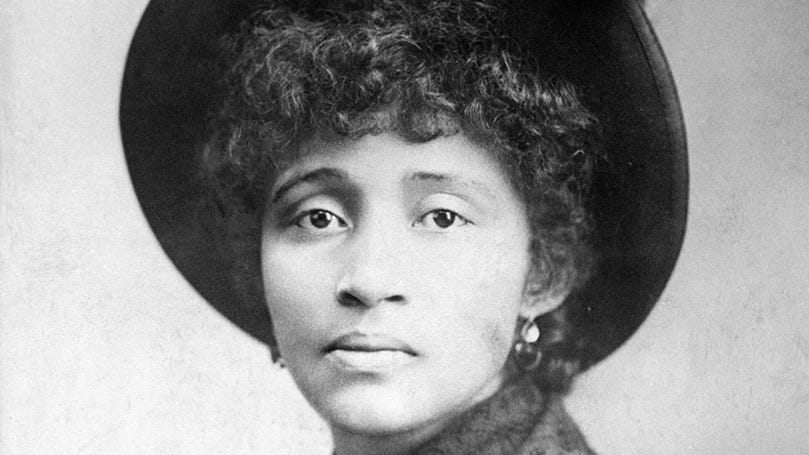
Lucy Parsons
‘Governments never lead; they follow progress. When the prison, stake or scaffold can no longer silence the voice of the protesting minority, progress moves on a step, but not until then.’
“More dangerous than a thousand rioters,” anarchist Lucy Eldine Gonzalez Parsons was a writer, orator, one of the founders of the Industrial Workers of the World, and tireless campaigner for the rights of people of color, all women, and all workers. Her husband, Albert Parsons, was one of the Haymarket martyrs.
We, the women of this country, have no ballot even if we wished to use it … but we have our labor. We are exploited more ruthlessly than men. Wherever wages are to be reduced, the capitalist class uses women to reduce them, and if there is anything that you men should do in the future, it is to organize the women.
Though Parsons and Emma Goldman were widely regarded as the most prominent female anarchists of the day, they very notably did not get along so well. Parsons believed that oppression based on gender and race was a function of capitalism and would be eliminated when capitalism was eliminated, whereas Goldman believed such oppression was inherent in all things. Parsons was all class struggle all the time, and felt that the “intellectual anarchists” like Goldman spent too much time bothering with appealing to the middle class.
One of her most important contributions to the labor movement was the concept of factory takeovers.
“My conception of the strike of the future is not to strike and go out and starve, but to strike and remain in, and take possession of the necessary property of production.”
Parsons is best known for being the woman who really started the celebration of May Day as a day for workers’ rights — leading a parade to commemorate the anniversary of the Haymarket Affair. Soon, nearly every other country in the world followed suit and proclaimed this day International Worker’s Day. Alas, here in America, we go with the less radical and more picnic-y Labor Day that we are celebrating today, because Grover Cleveland thought a federal holiday commemorating the Haymarket Affair would encourage people to become anarchists and socialists, and no thank you, he did not want that.
Anna LoPizzo
‘Hearts starve as well as bodies, give us bread but give us roses too’
Not much is known about Anna LoPizzo, other than that she was a 34-year-old mill worker who was murdered by police officer Oscar Benoit during the 1912 Lawrence Textile Strike — also known as the Bread and Roses Strike. Initially, police tried to charge two IWW organizers who were miles away for her murder, even though literally everyone there had seen Benoit shoot her.
The reason for the strike in the first place was that the textile mills of Lawrence, Massachusetts, cut worker pay after the state cut the number of hours women could legally work from 56 down to 54. The Industrial Workers of the World, led by Elizabeth Gurley Flynn (we’ll get to her in a minute), organized more than 20,000 workers of more than 40 different nationalities to demand they get their fair wages. One of the primary tactics used in the strike was sending the starving families of the mill workers on a tour to New York City so that people there could see for themselves what these low wages were doing to children. Between that and LoPizzo’s death, sympathy was on the side of the workers. Congressional hearings into the conditions of the mills were held, and the mills themselves ended up settling the strike by giving all workers across New England a 20 percent raise.
Lillian Wald
‘Human interest and passion for human progress break down barriers centuries old.’
Susan B. Anthony isn’t the only important feminist buried in the Mount Hope Cemetery in my hometown of Rochester, New York. There is another. Her name was Lillian Wald, and she was a total fucking bad ass. She wasn’t just a suffragist — she was also an early advocate for healthcare for all people regardless of economic class or citizenship, a founding member of the NAACP, lobbied against child labor, advocated for the rights of immigrants, helped to found the Women’s Trade Union League, and was an anti-war activist. Wald also founded the Henry Street Settlement House in New York City, which provides — to this day — social services, education, and health care to the impoverished. And she was active in the ACLU.
WHY THE HELL IS SHE NOT MORE FAMOUS? I am legitimately bothered by this and bring it up often.
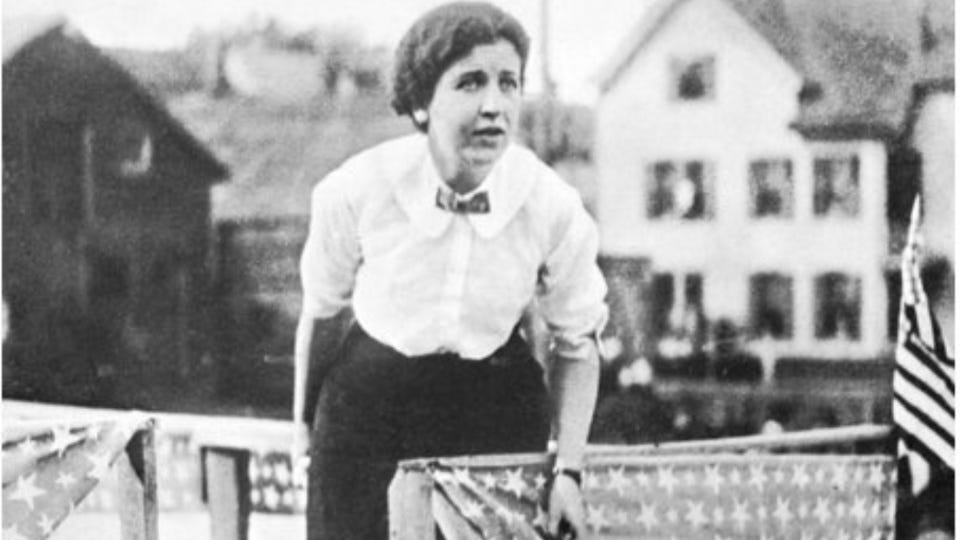
Elizabeth Gurley Flynn
‘The IWW has been accused of pushing women to the front. This is not true. Rather, the women have not been kept in back, and so they have naturally moved to the front.’
Hey! You know who was super freaking awesome? Elizabeth Gurley Flynn. As previously mentioned, she was an organizer with Industrial Workers of the World who helped organize the Lawrence Textile Strike. She also organized a hell of a lot of other strikes across the country, helped found the ACLU, and was known for the creative tactics she used to elicit sympathy and support for the American worker.
Hattie Canty
’Coming from Alabama, this seemed like the civil rights struggle … the labor movement and the civil rights movement, you cannot separate the two of them.’
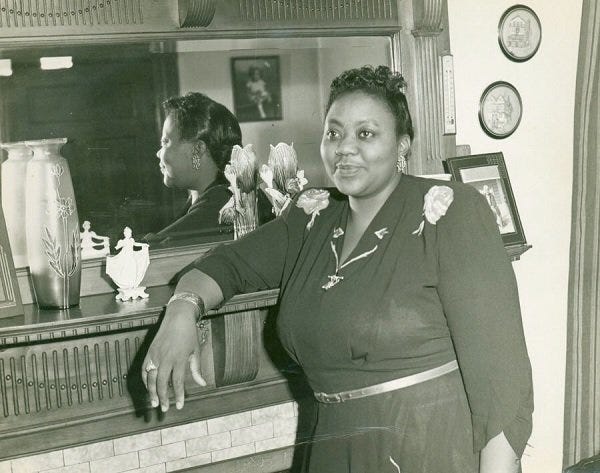
When Hattie Canty’s husband died in 1972, she found herself supporting eight children on her own. She found work as a maid at a Las Vegas hotel where she joined the Las Vegas Hotel and Culinary Workers Union Local 226. By 1990, she was president of that union, leading one of the longest strikes in American history — a six year strike of hospitality workers which, happily, ended in victory.
The Women of The Atlanta Washerwomen’s Strike
We mean business this week or no washing!
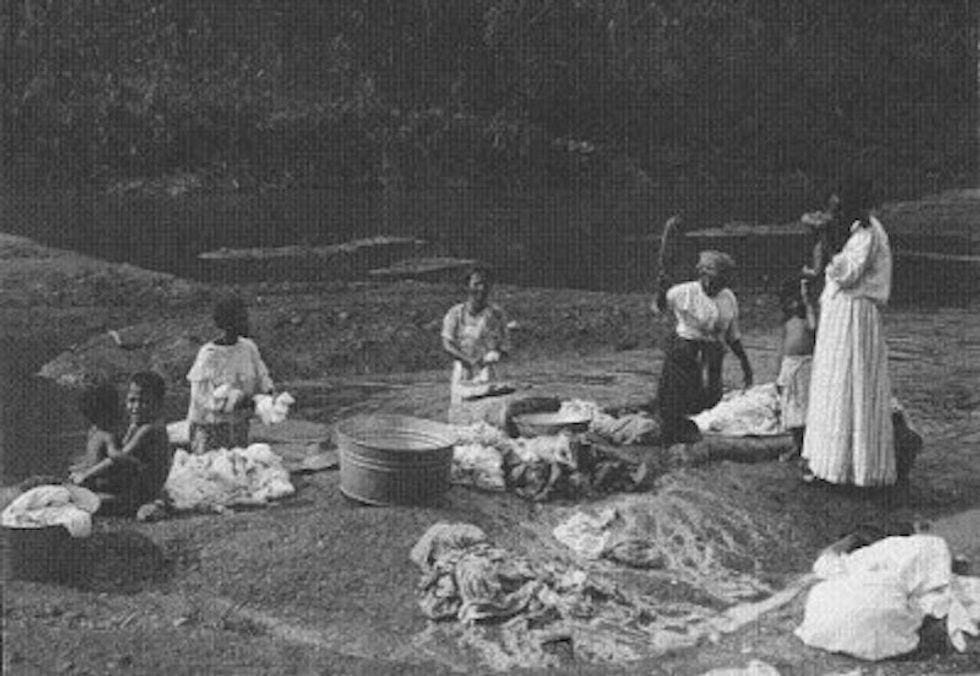
Back in the 1880s, only two decades after the Civil War ended, the most common occupation for Black women was as laundresses — this was largely because if poor white families were going to hire anyone to do chores for them at all, they were going to hire someone to do their laundry. These women were independent workers, often working from their own homes and making their own soap, and they only made about $4 a month. (Average non-Black-woman laborers earned about $35 a month in 1880.)
One day in 1881, about 20 of them got together and decided that $4 a month was some bullshit for all the work they were doing and decided to go on strike and demand wages of $1 for every 12 pounds of washing. Three weeks later, 3,000 other women joined them. Unsurprisingly, the city freaked out. They fined any participants $25 — which was a lot of money when you only made $4 a month — and they offered tax breaks to any corporation that would come down there to start a commercial steam cleaning business. Still, the women did not back down.
Eventually, people got really sick of doing their own laundry, and the city decided to back down on the fines, and accede to their demands for fear that the unrest would spread to other industries.
Dolores Huerta
‘Every minute a chance to change the world.’
Dolores Huerta, along with Cesar Chavez, helped to organize the National Farmworkers Association, which later became United Farm Workers. She wasn’t a farmworker herself — rather, she was an elementary school teacher who was tired of seeing the children she taught living in poverty because their parents were not making enough money as farmworkers.
I couldn’t tolerate seeing kids come to class hungry and needing shoes. I thought I could do more by organizing farm workers than by trying to teach their hungry children.
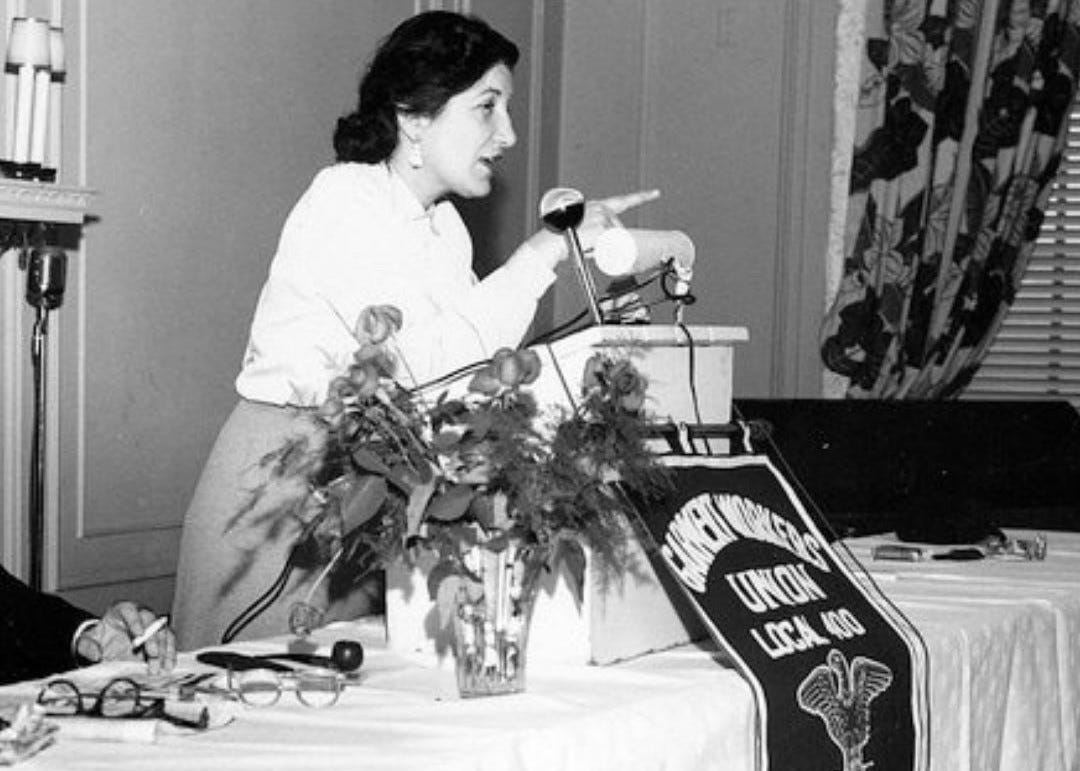
Together with Chavez, Huerta organized the successful Delano Grape Strike (or as your mom calls it, “that time we couldn’t eat grapes for five years” or as Rebecca’s mom calls it “serious people don’t care if a boycott ‘ends'”), which led to better wages and working conditions for farmworkers, and she has continued working as an activist and an organizer ever since.
Angela Bambace
‘We did it with fear.’
Though she’s not as well known as some of the other women on here, Angela Bambace, an organizer for the International Ladies Garment Worker’s Union who started unionizing her fellow shirtwaist factory workers at age 18, is a personal hero of mine, along with her sister Maria. Angela was known to punch strikebreakers in the nose, which was pretty freaking badass.
She also left her husband and a traditional marriage in which she was confined to “making tomato sauce and homemade gnocchi” — and lost her parental rights in doing so, because back then, women didn’t have any — to fight for workers’ rights on the front lines. She was the first woman woman elected Vice-President of the ILGWU, which previously only had male leadership, where she worked from 1936 until 1972.
May Chen
’The Chinatown community then had more and more small garment factories and the Chinese employers thought they could play on ethnic loyalties to get the workers to turn away from the union. They were very, very badly mistaken.’
May Chen, also of the International Ladies Garment Worker’s Union, led the New York Chinatown strike of 1982 — 20,000 workers strong and one of the largest strikes in American history. As a result of the strike, employers cut back on wage cuts, gave workers time off for holidays and hired bilingual interpreters in order to accommodate the needs of immigrant workers.
Lucy Randolph Mason
‘When I came South I had no idea of the frequency of attacks on people peacefully pursuing legitimate purposes, I am appalled at the disregard of the most common civil rights and the dangers of bodily harm to which organizers often are exposed”‘
Lucy Randolph Mason was an interesting one. She was a well-off Southern lady from Virginia, related to George Mason (author of the Virginia Declaration of Rights), Supreme Court Justice John Marshall, and, uh, Robert E. Lee. So, you know, you might have an idea in your head about what her deal might be. And you would be so wrong.
So, despite being from this very fancy family, Lucy goes and gets a job as a secretary for the YWCA at 20. In 1918, she gets into the whole suffragette thing. Women get the vote, but Lucy’s not done. She starts organizing for labor rights and integration and ending white supremacy in the South. She organizes interfaith, integrated unions in the South, which you can imagine was a pretty big deal at that time. She does it through the YWCA. She writes a pamphlet telling consumers to boycott companies that don’t treat their workers well. Eventually, she becomes the CIO’s ambassador to the South and spends the next 16 years of her life going to all these small towns where bad things would happen to anyone who tried to unionize, and explaining workers’ rights and why integration is good and racism is bad to pretty much anyone with any kind of power. Neat!
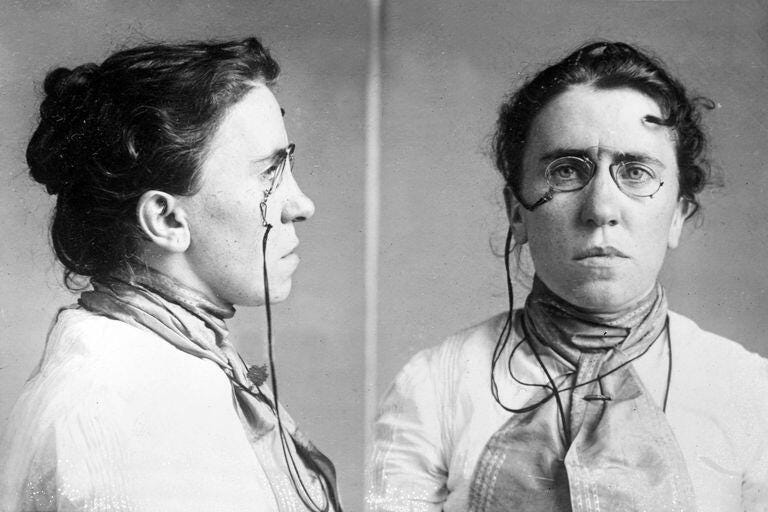
Emma Goldman
‘Ask for work, if they do not give you work, ask for bread, if they will not give you bread, steal bread.’
Though not a union organizer by trade, anarcha-feminist Emma Goldman’s advocacy for workers’ rights and human dignity and freedom empowered workers and organizers throughout the country, and motivated them to stand up for their own rights. She was considered the most dangerous woman in America for a reason.
She was a feminist, an anti-racist, an atheist, an advocate of free love, an opposer of the institution of marriage and — very unusually for the time (she pretty much started right after Haymarket, which was 1886, and continued until her death in 1940) — one of the first advocates of gay rights.
“It is a tragedy, I feel, that people of a different sexual type are caught in a world which shows so little understanding for homosexuals and is so crassly indifferent to the various gradations and variations of gender and their great significance in life.”
I could probably go on about Emma Goldman forever, but I have to get to other people and also this is not my sophomore year in college.
Rosina Tucker
‘I looked him right in the eye and banged on his desk and told him I was not employed by the Pullman company and that my husband had nothing to do with any activity I was engaged in … I said, ‘I want you to take care of this situation or I will be back.’ He must have been afraid … because a black woman didn’t speak to a white man in this manner. My husband was put back on his run.’
Rosina Tucker is best-known for helping to organize the first Black labor union, The Brotherhood of Sleeping Car Porters, started by A. Philip Randolph in 1925. A Brotherhood? But she was a woman, you say! Well, the Pullman porters wanted to organize, but they were afraid of losing their jobs — with good reason, because their bosses kept trying to fire them for trying to unionize. So Rosina and other wives of the porters got together and started the Ladies Auxiliary of the Brotherhood of Sleeping Car Porters in order to raise funds to start the union.
In 1963, along with A. Philip Randolph of the BSCP, she helped organize the March on Washington for Jobs and Freedom, and continued to be active in civil rights and labor rights until she passed away in 1987, at the age of 105.
The women on this list, along with the many others who also fought for labor rights in this country and others, didn’t only fight a fight for workers. They fought a feminist fight, they fought for civil rights, they fought for human rights — they understood the interconnectedness of it all, they understood that without economic justice there is no social justice and without social justice there is no economic justice. They understood the way that the labor movement could be used as a catalyst for making social change possible at a time when they didn’t have any political support or power — and that’s a thing we could all do well to remember ourselves.


 Bertrand Russell at anti nuclear weapons March, 1961
 Barbara Gittings leading a picket in the ’60s





 Scottie's Playtime