June 30, 2025 Evrim Yazgin, Cosmos science journalist
Helmeted Hornbill (Buckeroos vigil) male and female. Credit: Hello my names is james,I’m photographer / iStock / Getty Images Plus.
Researchers analysed different threat factors such as habitat loss and climate change to find that 500 bird species could go extinct in the next century. Unique species are most at risk.
The study, published in the Nature Ecology & Evolution, warns that the loss of unique birds could harm ecosystems around the world.
Vulnerable birds include the bare-necked umbrellabird found in the forests of Costa Rica and Panam, helmeted hornbill from Southeast Asia and yellow-bellied sunbird-asity endemic to Madagascar.
“We face a bird extinction crisis unprecedented in modern times. We need immediate action to reduce human threats across habitats and targeted rescue programmes for the most unique and endangered species,” says lead author Kerry Stewart from the University of Reading, UK.
The researchers studied the behavioural and morphological traits of about 10,000 bird species – representing nearly all known bird species – using data from the International Union for Conservation of Nature (IUCN) Red List.
Applying a statistical model, the researchers were able to show that large-bodied species were more at risk from hunting and climate change. Meanwhile, birds with broad wings suffer more from habitat loss.
“Stopping threats is not enough, as many as 250–350 species will require complementary conservation measures, such as breeding programmes and habitat restoration, if they are to survive the next century,” says senior author Dr Manuela Gonzalez-Suarez, also from the University of Reading. “Prioritising conservation programmes for just 100 of the most unusual threatened birds could save 68% of the variety in bird shapes and sizes. This approach could help to keep ecosystems healthy.”
“Many birds are already so threatened that reducing human impacts alone won’t save them,” adds Stewart. “These species need special recovery programmes, like breeding projects and habitat restoration, to survive.”
The authors say that “functionally unique” species – i.e. species that fill highly specialised ecological niches – are the most vulnerable. Likewise, the loss of such unique species could cause a cascading effect of harm for broader ecosystems.
“Effective targeted recovery programmes that explicitly consider species uniqueness hold great potential for conserving global functional diversity as a complementary strategy to threat abatement,” they write.
Losing a pet is a unique kind of heartbreak, one that can feel both profound and invisible. To help bring comfort, we spoke with Patricia Denys, MFA, a compassionate voice in the world of pet grief and healing.
Patricia is an artist, animal activist, creative director of Animal Culture magazine, educator, yogi, vegan, and an interfaith, interspecies animal chaplain ordained by the Compassion Consortium. She’s also a great friend of MUTTS.
In this conversation, Patricia shares her perspective as an animal chaplain on navigating loss, offering support, and finding gentle ways to honor the journey. Whether your pet recently crossed the Rainbow Bridge or you’re reflecting on a loss from long ago, we hope this conversation brings you some clarity, comfort, and connection.
Understanding the Role of an Animal Chaplain
Can you explain what an animal chaplain does?
An animal chaplain helps animals live their fullest lives and helps them transition when it is time. They offer help to animal parents, animal care workers, and animal people in general, navigate stress, grief, and compassion fatigue. Animal chaplains also encourage stronger human-animal (interspecies) bonds, individually and communally. Animal chaplains offer help with end-of-life care, decisions and rituals (interfaith), and bereavement support. An animal chaplain is also there for celebrations and victories for all animals and our planet!
How did you become an animal chaplain, and what drew you to this work?
Our magazine, Animal Culture, interviewed Reverend Sarah Bowen, co-founder of Compassion Consortium and Executive Director of their Animal Chaplaincy Training Program. The program is interfaith, interspiritual, and interspecies, which was important to me. Sarah was a wonderful interviewee, and I became quite interested in the program after connecting with her. It seemed intriguing and intelligent, and an organic next step on my path of a lifetime working with animals. It was quite a commitment of study and well worth it. My fellow students were amazing, compassionate people. It was a very positive experience.
What kinds of support do you offer to people who are grieving the loss of a pet?
The first thing is listening, while being a calming presence for different needs from different people. Using gentle questioning to see what arises for someone. Reminding people that laughter is good and healthy, and part of healing. And, working on realizing that one does not stop loving someone after the transition.
Hospice and Palliative Care for Companion Animals, edited by Amir Shanan, Jessica Pierce, and Tamara Shearer, is an excellent book. In one of the essays, the writer calls mourning, “…a transition from loving in presence to loving in absence.” We work on that as animal chaplains.
Why Saying ‘Goodbye’ to a Pet Is So Painful
Why do we often feel that losing a pet is just as painful — if not more so — than losing a human loved one?
Those of us who have experienced the pain of the loss of a companion animal, or any animal, know this pain all too well. Humans have intense bonds with an animal they love or one that is a part of their lives somehow. Animals’ lives are shorter than humans’. The shock of that short life being over can be very hard to process.
Companion animals also demonstrate stability and routine. A big void is created when these things come to an end. Animals are sentient. They are aware. We see that time and time again. We want to be with them and protect them; they are our family.
How can we respond to people who say, “It was just an animal” or who don’t understand pet grief?
It is very disappointing to hear, “It was just an animal,” from anyone, especially someone you respect or that is close to you. It is the last thing anyone wants to hear since it is so insensitive to one’s feelings and to the memory of the one who has passed. What someone grieving needs is validation that their feelings of loss for such a profound bond with an animal, are understandable and real. You may choose to say that or not.
What are some healthy ways to process and express grief after losing a pet?
Definitely seek support from friends, family, your veterinarian, and/or an animal chaplain. Animal grief is in our mainstream now. There is no shame in asking for help, ever. One needs to talk about the loss. It’s real.
Consider taking a workshop on animal loss or creating a shrine, memorial, art piece, or photo book. Volunteering is also a great, healthy way to heal.
Do you have any advice for someone who feels stuck in their grief or like they should have “moved on” by now?
“Moving on” is a very individual thing. There is no time limit on processing through one’s grief. Accepting the loss and adjusting one’s life accordingly takes time. You need to take your time. If you feel that you are experiencing symptoms of prolonged grief, a therapist can be of help.
Helpful Ways to Honor a Pet’s Memory
How can rituals or memorials help with healing? Do you have any suggestions for meaningful ways to honor a pet’s memory?
Oh, there are so many wonderful things you can do! Humans have always embraced rituals. It is a way to connect to something. A ritual may be something within your religious practices, your own spirituality that you find comforting, or the daily ritual of taking a walk with your dog. That is a ritual for both of you!
A memorial can be a powerful took for healing. It is a coping tool. It is a way to process. Creating an altar on a table for the one you have lost that includes photographs, something that was meaningful for that animal such as a toy, or adding flowers can be a positive expression of your feelings of loss. Re-wilding a small garden that encourages other animals to visit, or creating a small shrine you can carry with you are other ideas. Keeping a journal of your thoughts or sketches can also have a profound effect on healing. The simple act of writing to your loved one — what they meant to you, how much they are missed, what you enjoyed most about them, for example, is often a comfort.
As an artist and a teacher of art, I know creating art can be cathartic and healing, I conduct art workshops on loss and celebration of animals and the planet. They are for non-artists especially. It has been an incredible experience to see what people can create as a way to work out their feelings, and usually, how anxious they are to share with each other. It is a bonding experience about the power of love.
(snip-a bit MORE; click through on the title above)
Homeland Security Secretary Kristi Noem | Steven Spearie/The State Journal-Register / USA TODAY NETWORK
Rep. Robert Garcia (D-CA) confronted Homeland Security Secretary Kristi Noem about the administration sending a gay man to a prison camp in El Salvador and not even knowing if he’s still alive. Noem said that it wasn’t her problem.
Noem, who has bragged in the past about shooting her dog to death, appeared before the House Homeland Security Committee for a hearing yesterday, where Garcia asked her about Andry Hernandez Romero, a gay hair dresser from Venezuela who came to the U.S. legally to escape anti-LGBTQ+ violence and who was sent to the CECOT camp in El Salvador, which is known for torturing inmates, earlier this year.
The administration, which sent immigrants to the CECOT without letting courts determine if they were in the country illegally or if they had committed any crimes, has refused to try to bring anyone back from the camp.
“Would you commit to just letting his mother know – as a mother-to-mother – if Andry is alive?” Garcia asked Noem. “He was given an asylum appointment by the United States government. We gave him an appointment, we said, Andry, come to the border at this time and claim asylum, he was taken to a foreign prison in El Salvador.”
“His mother just wants to know if he’s alive. Can we check and do a wellness check on him?”
Noem said she doesn’t “know the specifics” of Hernandez Romero’s case but said that since he’s in El Salvador, Garcia should be asking El Salvador’s government about him.
“This isn’t under my jurisdiction,” Noem said.
Garcia reminded her that she said that the Salvadoran prison is a “tool in our toolkit” for fighting crime.
“You and the president have the ability to check that Andry is alive and not being harmed,” he said. “Would you commit into at least looking and asking El Salvador if he is alive?”
“This is a question that is best asked to the president and the government of El Salvador,” Noem responded drily.
Garcia to Noem: "Can you commit to just letting his mother know mother to mother if Andry is alive? He was given an asylum appointment by the United States government."(Noem wouldn't commit to it.)
Hernandez Romero is a Venezuelan immigrant who trekked to the U.S. and entered legally last year at San Diego. There, he asked for asylum, saying that he was being targeted in Venezuela for being gay and due to his political beliefs. He was held in a CoreCivic detention center, where he was screened by Charles Cross Jr.
“The government had found that his threats against him were credible and that he had a real probability of winning an asylum claim,” his lawyer, Lindsay Toczylowski, said.
In March, he, along with over 200 other immigrants, was taken in shackles to the CECOT camp in El Salvador. Even his lawyer said she didn’t know what happened to him until he was gone and missed a hearing in his immigration case.
In a video from the CECOT, Hernandez Romero could be heard saying, “I’m not a gang member. I’m gay. I’m a stylist,” as he was slapped and had his head shaved.
It was later revealed that the evidence Immigration and Customs Enforcement (ICE) had against Hernandez Romero was his tattoos, which came from a report from the contractor CoreCivic, specifically from former police officer Charles Cross Jr., who lost his job with the Milwaukee police after he drunkenly crashed into a house and allegedly committed fraud. His name was subsequently added to the Brady List, a list of police officers who are considered non-credible for providing legal testimony in Milwaukee County.
Cross claimed that Hernandez Romero had crown tattoos associated with a gang. The tattoos are labeled “Mom” and “Dad” and are common symbols associated with his hometown of Capacho, Venezuela. Capacho is known for its elaborate festival for Three Kings Day, and a childhood friend, Reina Cardenas, told NBC News that it was that festival that awakened Hernandez Romero’s desire to be an artist.
“Andry dedicated his life to arts and culture, and he worked hard to better his craft,” Cardenas said.
Subscribe to the LGBTQ Nation newsletter and be the first to know about the latest headlines shaping LGBTQ+ communities worldwide.
It happened just a few weeks ago: Jim Obergefell was moving things in his office when he came across the ashes of his late husband, John Arthur, now 12 years gone. Arthur had last wishes for his ashes. Obergefell had yet to fulfill them.
“And it struck me that, oh, I am actually now mentally, emotionally ready to take care of John’s ashes,” Obergefell told The 19th. “It was the first time that I had that feeling so clearly and so strongly.”
Obergefell, 58, is ready to move on. Not exactly from the love of his life or the history-making Supreme Court decision that came after Arthur died. But certainly from the insecurities straight America was grappling with a decade ago about same-sex unions.
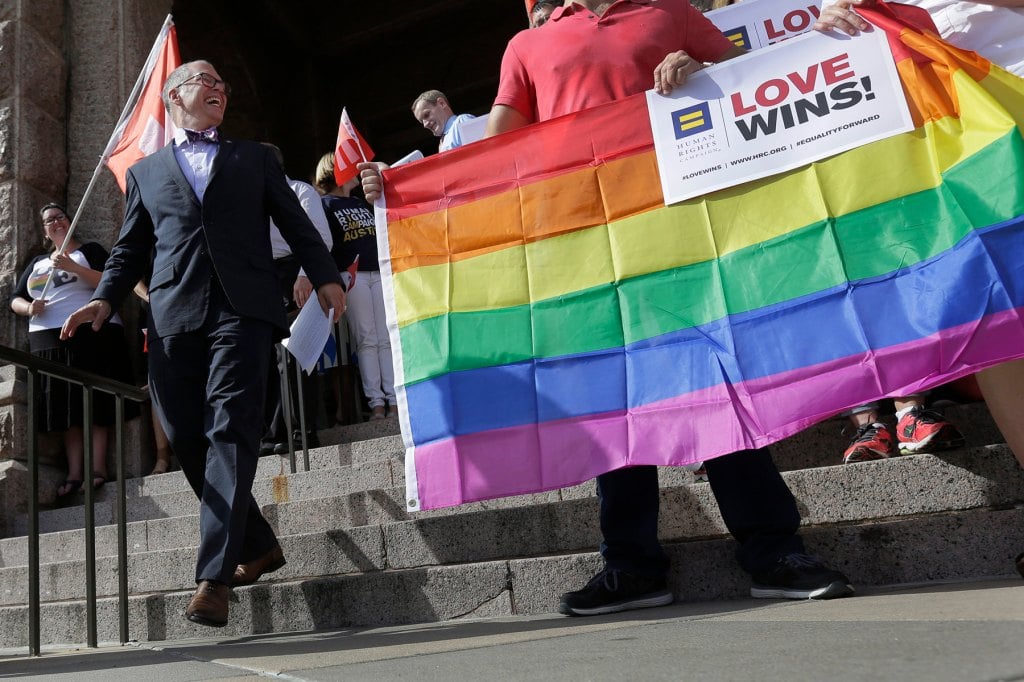
Obergefell is that Obergefell: the named plaintiff in the landmark lawsuit that extended marriage equality to every state in the nation in 2015. Ten years later, he celebrates that win and the many ways it rewrote his life. And in a time when LGBTQ+ rights are again under assault, he is looking to the future — of the queer rights movement and also his own.
A journey to the Supreme Court
Obergefell’s journey to the Supreme Court was hardly destined. It began 12 years ago, on June 26, 2013, when the Supreme Court struck down the Defense of Marriage Act, a federal law that prohibited the government from recognizing same-sex marriages.
Obergefell and Arthur had been together for 21 years at the time. The two had discussed getting married before. But they wanted it to be legal, and their home state of Ohio didn’t offer same-sex marriages.
Arthur was gravely ill with ALS, a progressive neurodegenerative disease, and he barely left his home hospice bed.
After the ruling, Obergefell leaned over to Arthur, hugged, then kissed him.
“Let’s get married,” he said.
Arthur agreed.
The logistics were not easy. Arthur was in no shape to travel, and the couple could not wed in Ohio. Obergefell researched and found that Maryland would let him get a marriage license even with only one of them present. But both would need to arrive in the state for the ceremony.
When friends and family learned about their predicament, they pooled together money to charter a medical jet for Arthur. The two flew to Baltimore. Over the course of 45 minutes, they exchanged vows on the tarmac before flying home.
“In the days that followed, we said the word ‘husband’ hundreds of times a day,” Obergefell said on the Decidedly Podcast in 2023.
But just five days later, their joy was muted when civil rights attorney Al Gerhardstein informed them that because of Ohio’s ban on same-sex marriage, Arthur would be listed as single in death.
Arthur and Obergefell were angry. The couple sued the state of Ohio in federal district court and won. Three months later, Arthur died.
The following year, Obergefell, still in mourning, lost on appeal. But he refused to believe he might lose altogether.
“I just kept going,” Obergefell said. “It was the right thing to do.”
On June 26, 2015, he won. For the country, the win was immensely practical. Many told Obergefell it gave them so much hope it saved their lives. For Obergefell, it meant a legacy for the man he loved.
“I made promises to John to love, honor and protect him, and I was going to keep doing that,” he said.
In the decade since Jim Obergefell won his Supreme Court case that made same-sex marriage federally legal, hundreds of thousands of same-sex couples have married in the U.S. (Eric Gay/AP Photo)
Changing history
It’s difficult to overstate the impact of Obergefell’s case on the nation or the world. Since the 2015 ruling, the Williams Institute at the UCLA School of Law estimates, 591,000 queer couples have wed, generating an estimated $5.9 billion in wedding spending for state and local economies.
It has also radically transformed Obergefell’s life. Introverted and unassuming, he has spent the last decade campaigning for LGBTQ+ rights. He helms Equality Vines, a wine company that donates its proceeds to advancing civil rights causes.
It’s a position that makes him deeply proud if not a little fatigued.
“I’m not tired of talking about it,” he said of the 10-year anniversary of the ruling. “I’m just physically tired from all of the interviews and the photographers and the speaking gigs and the events. Yes, I’m exhausted.”
For 12 years, Obergefell has kept Arthur alive through retelling their story countless times in courtrooms and for the media. That exercise, of telling and retelling, helped Obergefell process his profound loss.
But he has never recoupled. It wasn’t that Arthur didn’t want him to. In fact, Arthur told him regularly that he wanted him to find love again. He asked his friends and family to tell Obergefell that he wanted him to find love after he was gone.
“I know it was sincere, because he told me that he had other people tell me that,” Obergefell said.
It isn’t about the pressure he feels as the face of marriage equality, he said, though part of him wonders what it would be like to date after making history.
“I don’t know how to date,” he confessed. “I’m clueless when people flirt with me, and as much as I hate it, and I don’t go into any conversation or anything like this, but you know, there’s that part of me that sometimes wonders, you know, are they interested in me as a person, or are they interested in me as Jim Obergefell, named plaintiff?”
Obergefell’s name has become synonymous with marriage equality in the United States, an issue that has not always united the LGBTQ+ community. Some queer activists have argued that same-sex marriage was a misguided goal for the movement as queer youth continue to face high rates of homelessness and transgender people grapple with police violence and incarceration, among other issues.
More work to do
Obergefell, too, is worried that the needs of the community’s most vulnerable have gone unmet. He has watched horror-struck over the last five years as state legislatures have moved to restrict transgender rights.
“We need to fight for every marginalized community, because the queer community includes every marginalized community, and equality for one is pointless without equality for all,” he said. “I didn’t go to the Supreme Court just so White, cisgender, gay men like me could get married.”
Despite all of the setbacks in LGBTQ+ rights, and even threats to Obergefell’s game-changing victory, he is hopeful — and feels stronger than ever. People assume his case was difficult for him. It was, but the path was also obvious, to him and to Arthur. They loved each other.
“If we weren’t willing to fight for each other and for what was right, then what’s the point?”
I could have written large parts of this myself. It is scary to be in our position and at the mercy of those who have so much money they will never understand our needs or it seems even care. Most of congress are multimillionaires. They see their jobs not to look out for people like me, but to gain ever more wealth and power for themselves. Which leads to the billionaire bailout bill the republicans are pushing to pass right now. Hugs
The author asserts cuts to programs such as Social Security Disability Insurance will make it difficult for her to afford basic necessities The program provides month payments to people who have a disability that stops or limits their ability to work. (Dreamstime/TNS)
Being a care provider in a nursing home is backbreaking work. It includes heavy lifting and spending all day on your feet, helping patients eat, dress and use the bathroom while keeping track of dozens of patients who all have different needs, medicines and preferences. It’s never easy, but during my career I held myself to the standard of providing the care I would want someone to give to one of my family members.
I was a certified nursing assistant and medication aid in nursing homes before retiring due to health problems. I loved my job. It provided me with more than a paycheck; it gave my life meaning. It felt good to be someone people could depend on, especially in times of need. I loved being the first face my patients would see in the morning and the last at night. It was physically and emotionally draining at times, but always worth it. I’ve learned that anything in life worth having is a struggle to obtain. I miss working every day.
Now, my main source of income is Social Security Disability Insurance. Without it, I wouldn’t be able to cover my rent or help take care of my daughters, grandchildren or father. My monthly disability check, which I put toward rent, laundry, bills and other necessities, goes fast. The only way I am able to cover the rest of my expenses each month is through programs such as the Supplemental Nutrition Assistance Program and the Low Income Energy Assistance Program and Medicaid.
I’m prediabetic, so I have to be mindful about what I eat. SNAP is the only way I am able to afford healthy food. Lately, the price of everything in the grocery store has gone up. I shop carefully, but some weeks I have to forego buying meat to save money. My SNAP benefits have gone down significantly in recent months, which has already made it harder for me to afford the food I need. Across Pennsylvania, over 2 million people receive SNAP benefits. That’s thousands of families in our state, just like me, who depend on this program to put food in the mouths of their children.
I’ve received Medicaid on and off for over 20 years. It has helped me pay for important surgeries including a vision surgery, cystoscopy and a hysterectomy. Medicaid helps me cover copays and deductibles and access mental health services. Losing Medicaid would mean sacrificing health care and having to pay my medical costs out of my own pocket, which I cannot afford.
Every winter, LIHEAP benefits help me keep my home warm. It keeps my heating bill manageable so that I don’t have to use the stove to generate heat. Without LIHEAP, I would need to make tough decisions about which bills to pay, whether that’s rent, electricity or gas. It would be a situation of robbing Peter to pay Paul. My monthly budget is extremely fragile and the possibility of losing LIHEAP, which provides me about $200 each winter, is enough to put my whole financial situation at risk. When I hear that politicians in Washington want to make billions of dollars worth of cuts to SNAP, Medicaid, LIHEAP and other programs, it makes me incredibly anxious. Without these programs, I wouldn’t be able to stock my fridge, go to the doctor or heat my home.
I spent decades caring for patients in need and did it with pride. No one ever expects to be disabled and suddenly have to stop working. You never know what could happen and never think it could happen to you until it does. I didn’t think I would ever need back the tax dollars I put into the system. But God had a different plan for me. These programs are so important for me and millions of Americans.
But the programs are also part of what makes America a great and a caring nation. They ensure that any American — our neighbor, our family member, or a co-worker — who gets sick can live with dignity in the richest nation on earth. It seems like Republicans in Congress have no interest in supporting everyday people. They just want to make the rich richer.
By voting in favor of cuts to Medicaid and SNAP, my Congressional representative, Rep. Ryan Mackenzie, voted to turn his back on constituents like me. With these cuts, people will suffer and end up on the streets. People like me, who are already doing everything we can to make it work, will struggle even more.
I am calling on Sens. Fetterman and McCormick to chart a different path and put an end to these proposed cuts. Lives are on the line. It’s time for our leaders to show that they care and that they are willing to stand up against billionaires. On behalf of the millions of Pennsylvanians who rely on these SNAP, Medicaid and LIHEAP, I urge you to protect these programs and our ability to provide for our families.
This is a contributed opinion column. Pamela Berman is a Bethlehem resident and former certified nursing assistant. The views expressed in this piece are those of its individual author, and should not be interpreted as reflecting the views of this publication. Do you have a perspective to share? Learn more about how we handle guest opinion submissions at themorningcall.com/opinions.





 Homeland Security Secretary Kristi Noem | Steven Spearie/The State Journal-Register / USA TODAY NETWORK



 Scottie's Playtime