I didn’t get any posts set up last night for today. Ollie got a little overheated yesterday during our walk, and I wanted to watch over and care for him to make sure he’s all right. I just didn’t get to setting up posts. (I feel as if that will be a relief for eyes on the blog! But anyway.) He is fine; he’s not taking the fireworks real well, and for some reason doesn’t want his morning walk today, either, which is different, but I’m letting him lead on that. Fireworks don’t begin until 10AM here, so so far, so good on that. Anyway, that’s what’s up here. I hope all are managing to stay healthily cool enough, and taking good care to hydrate well, and screen the UV rays. And that the fireworks aren’t irritating! 🎆
I am so depressed over the drive of the Fundamentalist Christian rights success at trying to erase the LGBTQ+ people. Now they are trying to again return to the discredited idea that sexual ordination can be changed if you torture a kid badly enough. I read so many horror stories of kids as young as 13 and 14 having their genitals hooked up to electrical shock devices, being beaten, being sexual abused so that they would be turned off by same sex hook ups, being curatively raped for both lesbian and gay boys, and so many more. And it doesn’t work. People can be forced to control behavior and lie about their feelings. But sexual attraction can not be changed.
I keep saying the same question to those straight cis people who think orientation or gender is simply a choice rebellious teenagers make. Can you willingly change your attraction from straight to gay and live that life for a year having sex with your same gender? Can you do happily what same sex couples do to please each other sexually? Can you stop being the gender you were assigned at birth and change every aspect of your gendered life and live that way for a few years to show me it is a choice? They tell me that is stupid and why should they … they are the normal ones!
I feel sorry for the kids because of the stories of abuse I have read about at these conversion camps, at these “therapist offices”. The male survivor site has an entire forum dedicated to this subject. Why is it so important to these people to wipe us out socially / publically. Why can’t they let the kids be, why must they sexually force them to be mini me straight cis clones of the parents.
As I said I don’t understand and I do know it is not all Christians. But seriously we need progressive Christian churches to stand up to these groups. After 9/11 we kept hearing people demand Muslims in the US denounce publically the terrorist act of other Muslims. Recently a Muslim won the democratic nominee for NY City and democratic politicians were demanding he denounce every bad thing ever done by a Muslim. Why is that a one way street? Shouldn’t white people be required to denounce bad white people? Shouldn’t Christians be required to speak out against hateful Christians.
I am seeing a return to the 1970s Anita Bryant rhetoric and no one seems to see the connection. She used her faith to claim that no one wanted to see gay teachers in public schools indoctrinating and recruiting (sexualizing) kids. Well these are the same words used against the gay teachers and trans people today by the republicans and hate Christians. It was the anti-Christian oppression Samuel Alito wrote in his ruling that just having books with people happy to celebrate a same sex wedding was discrimination against Christians who did not want people to be happy at same sex weddings. Read his ruling it really says that kids being read a picture book of people being happy at a same sex wedding is oppression and discrimination against Christians.
I am tired. I am 62 years old. I fought this fight as a child, suffered from it, faced the discrimination, lost jobs, got assaulted at work and school, lost promotions, and had hate poured out on me at every turn for at least 25 years. Hell as I was being raped as a child I had anti-gay bigotry screamed at me. Think on that for a mindfuck. Those raping me screamed I deserved it as a 7 year old because I clearly was a faggot. I lost my right to keep going with my Army career due to a new unit commander who bragged about his deep Christian faith. He called me into his office, told me he knew I was out to my unit and even though I was respected, well liked, and had the skills to save the unit even on the day I was leaving, he was not going to tolerate an “evil deviant homosexual” to be in the army or his unit. I feel so sorry for the kids kicked out of their homes to have to sell their bodies on the street to strangers for food and lodging due to this hate. I am so tired as history is repeating and I need to find the strength to fight for the LGBTQ+ kids once again. I don’t think I can. Hugs
The therapy practice tries to influence gender or sexuality identity and has been denounced by experts for negative effects to patients’ mental or physical health.
From left to right: Family Foundation president Victoria Cobb, Founding Freedoms Law Center lawyer Josh Hetzler, and counselors/plaintiffs John and Janet Raymond celebrate a court ruling to overturn a ban on talk-based conversion therapy. (Photo by Charlotte Rene Woods/Virginia Mercury)
A Henrico County Circuit Court judge ordered that licensed counselors be allowed to engage underage clients in a controversial form of talk therapy about gender identity and sexual orientation that medical and mental health experts say can be harmful.
The case underpinning the new consent decree with the Virginia Department of Health Professions stemmed from a 2020 state law banning “any practice or treatment that seeks to change an individual’s sexual orientation or gender identity.” Last year, Front Royal-based counselors John and Janet Raymond challenged the ban.
“The Raymonds desired to engage in talk therapy with minors through voluntary conversations, prayer, and providing written materials such as Scripture, but Virginia’s law and regulations prohibited them from doing so,” read a Tuesday statement from the Founding Freedoms Law Center, the Family Foundation’s legal arm that represented the Raymonds in the case. The Center hailed the court’s ruling as a “landmark free speech victory.”
Conversion therapy entails attempts to change or influence a person’s sexual orientation or gender identity. The American Psychological Association has denounced conversion therapy, stating that it is not an accepted form of therapy based on medical or scientific evidence, as has the American Medical Association. The groups and advocates have also said conversion therapy is used as a tool to discriminate against LGBTQ+ people and lifestyles.
Conversion therapy treatments have garnered national controversy over the years and range from inducing nausea, providing electric shocks to having people snap an elastic band around their wrist when they become aroused by same-sex erotic images or thoughts.
The Raymonds told the court they previously practiced talk therapy for conversion therapy clients, as they do with their other clients. The ban meant they couldn’t have conversations to try to guide clients away from embracing their sexual or gender identities. The new consent decree means they can practice conversion therapy again.
Opponents of the practice have argued that conversion therapy can put LGBTQ+ people at higher risk ofmental health issues like depression, anxiety, post-traumatic stress disorder, substance abuse or suicide.
The Raymonds emphasized that the talk therapy they engage in with their clients is voluntary and stressed that nothing about their case should be construed as allowing any counselor to perform acts associated with conversion therapy, such as electro-shock therapy.
“With this court order, every counselor in Virginia will now be able to speak freely, truthfully and candidly with clients who are seeking to have those critical conversations about their identity and to hear faith-based insights from trusted professionals,” said Josh Hetzler, the couple’s legal counsel with the Founding Freedoms Law Center.
The Family Foundation is a Christian and conservative advocacy group and legal firm that opposes same-sex marriage, supports more parental input in public education, and supports increased restrictions on abortions. While the consent decree was ordered on June 4, Family Foundation and the plaintiffs announced it on July 1.
“We thank God that He gives us the freedom to speak, to believe, to seek His wisdom,” John Raymond said Tuesday in the Family Foundation’s office in Richmond — formerly a house that Confederate General Robert E. Lee rented following his surrender at Appomattox that ended the Civil War.
Raymond said he felt like Virginia’s 2020 law gave him no choice but to challenge it and called it a “hostile ideological invasion within our country.”
Likewise, Hetzler noted a “growing number of parents” seeking counseling services with a religious lens for their children “in an era when gender dysphoria has become a contagion among young people.”
Virginia lawmakers weigh in
Sen. Danica Roem, D-Prince William, noted on a press call Tuesday that there have been bipartisan efforts to support LGBTQ constituents in Virginia’s legislature in recent years. When the conversion therapy ban was clearing the House of Delegates five years ago, 11 Republicans joined their Democratic colleagues in voting for it. Seven Republican lawmakers — to include then-delegate and now Attorney General Jason Miyares — abstained from voting. Over in the Senate, a former GOP lawmaker joined Democrats in supporting that version as well.
While Miyares did not express support or dissent in 2020, his office has signed the consent decree effectively lifting the ban on conversion therapy.
As attorney general, Miyares has pressed for banning transgender youth from participating in sports teams of their identity as a suite of anti-LGBTQ+ bills have been introduced in the state during Republican Gov. Glenn Youngkin’s administration.
Localities have pushed back on former Gov. Ralph Northam’s order that transgender students be able to use the bathrooms of their identities. And an in-progress constitutional amendment to remove a defunct same-sex marriage ban from the state’s constitution has advanced with slim bipartisan support.
Advocates for that law say it’s important, as Supreme Court Justice Clarence Thomas has expressed interest in revisiting a decade-old ruling that protects gay marriage federally. He expressed the opinion after the court struck down federal abortion protections. Should marriage protections fall, Virginia is among states that would immediately ban the unions.
Roem reiterated the risks of conversion therapy, saying medical care for transgender people like hormone therapies or surgeries are constantly subject to medical review to assess quality of care, while talk-based conversion therapy isn’t.
Roem, the state’s first transgender senator, said she has been on the receiving end of efforts to dissuade her from her sexual identity but it never stopped her from embracing being transgender.
“I spent 13 years in Catholic school — I heard everything,” she said. “I am just as trans today at age 40 as I was when I got into Catholic school in 4th grade.”
Ultimately, what the conversion therapy ban came down to for Democrats, she and Senate Majority Leader Scott Surovell, D-Fairfax said, is public health. Given how various medical associations have denounced conversion therapy, they felt it had no place in state-licensed counselor’s services.
“I have no problem if somebody wants to go look at religious counseling from their priest or their minister, their rabbi, their imam — that’s perfectly fine,” Surovell said. “When somebody goes to get therapy from somebody licensed by the Commonwealth of Virginia, there’s a different set of rules applied. You can’t just say whatever you want because you have a license. That’s why we have professional standards, that’s why we have statutes.”
While several studies have shown negative mental and physical health impacts of conversion therapy on LGBTQ+ people, the Raymonds said a 2024 report in the United Kingdom called for more research on gender identity services for minors. However, the report’s author noted their belief that “no LGBTQ+ group should be subjected to conversion practice.”
With an appeal deadline having passed, lawmakers could further tweak their 2020 law when they convene next year.
Editor’s note: This article has been updated to reflect that the order was issued in June and announced in July. Sen. Surovell also said “imam” rather than “mom.”
In their celebratory video below, the group rants about LGBTQ “contagion among young people.”
Last year the Family Foundation joined a hate group coalition seeking to “save” the 2024 Republican Party platform from caving on LGBTQ issues.
In 2023, the Family Foundation successfully pressured Virginia lawmakers against repealing the state’s still-existing ban on same-sex marriage.
Also in 2023, a spokesman for the group claimed that they’d been refused service by a Virginia restaurant due to their anti-LGBTQ activism.
MONUMENTAL VICTORY
Founding Freedoms Law Center won a major, free speech victory for all Virginia counselors—securing their right to offer compassionate, common-sense talk therapy to minors who seek help with unwanted sexual feelings or identity confusion. pic.twitter.com/ahoJ5rY68J
— The Family Foundation of Virginia (@TFFVA) July 1, 2025
What would you call a society where it is both more expensive to be disabled and just live, and harder to earn that money to live when you live with a disability?I think we have to face some harsh realities.
June 30, 2025 Evrim Yazgin, Cosmos science journalist
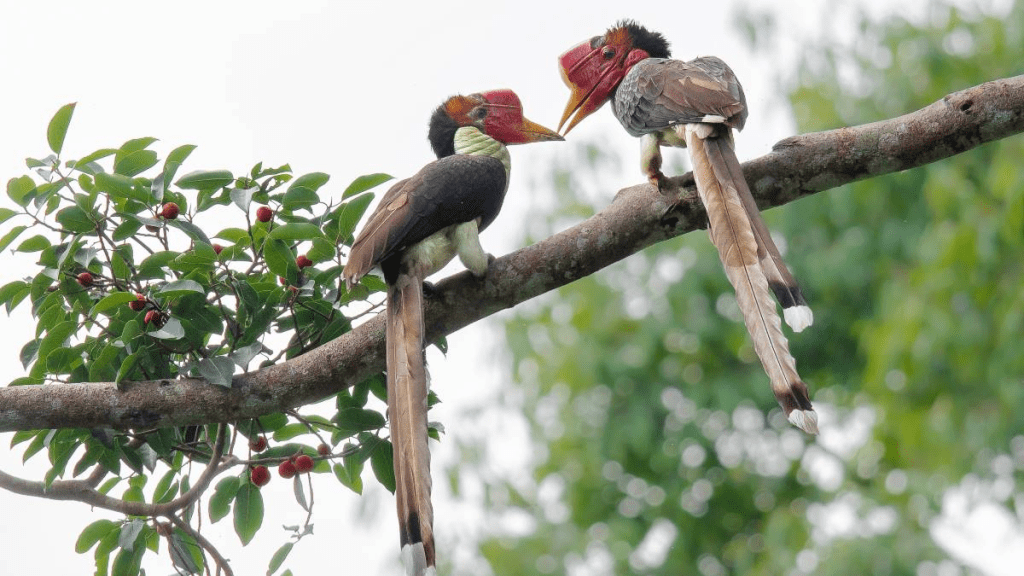
Helmeted Hornbill (Buckeroos vigil) male and female. Credit: Hello my names is james,I’m photographer / iStock / Getty Images Plus.
Researchers analysed different threat factors such as habitat loss and climate change to find that 500 bird species could go extinct in the next century. Unique species are most at risk.
The study, published in the Nature Ecology & Evolution, warns that the loss of unique birds could harm ecosystems around the world.
Vulnerable birds include the bare-necked umbrellabird found in the forests of Costa Rica and Panam, helmeted hornbill from Southeast Asia and yellow-bellied sunbird-asity endemic to Madagascar.
“We face a bird extinction crisis unprecedented in modern times. We need immediate action to reduce human threats across habitats and targeted rescue programmes for the most unique and endangered species,” says lead author Kerry Stewart from the University of Reading, UK.
The researchers studied the behavioural and morphological traits of about 10,000 bird species – representing nearly all known bird species – using data from the International Union for Conservation of Nature (IUCN) Red List.
Applying a statistical model, the researchers were able to show that large-bodied species were more at risk from hunting and climate change. Meanwhile, birds with broad wings suffer more from habitat loss.
“Stopping threats is not enough, as many as 250–350 species will require complementary conservation measures, such as breeding programmes and habitat restoration, if they are to survive the next century,” says senior author Dr Manuela Gonzalez-Suarez, also from the University of Reading. “Prioritising conservation programmes for just 100 of the most unusual threatened birds could save 68% of the variety in bird shapes and sizes. This approach could help to keep ecosystems healthy.”
“Many birds are already so threatened that reducing human impacts alone won’t save them,” adds Stewart. “These species need special recovery programmes, like breeding projects and habitat restoration, to survive.”
The authors say that “functionally unique” species – i.e. species that fill highly specialised ecological niches – are the most vulnerable. Likewise, the loss of such unique species could cause a cascading effect of harm for broader ecosystems.
“Effective targeted recovery programmes that explicitly consider species uniqueness hold great potential for conserving global functional diversity as a complementary strategy to threat abatement,” they write.
Losing a pet is a unique kind of heartbreak, one that can feel both profound and invisible. To help bring comfort, we spoke with Patricia Denys, MFA, a compassionate voice in the world of pet grief and healing.
Patricia is an artist, animal activist, creative director of Animal Culture magazine, educator, yogi, vegan, and an interfaith, interspecies animal chaplain ordained by the Compassion Consortium. She’s also a great friend of MUTTS.
In this conversation, Patricia shares her perspective as an animal chaplain on navigating loss, offering support, and finding gentle ways to honor the journey. Whether your pet recently crossed the Rainbow Bridge or you’re reflecting on a loss from long ago, we hope this conversation brings you some clarity, comfort, and connection.
Understanding the Role of an Animal Chaplain
Can you explain what an animal chaplain does?
An animal chaplain helps animals live their fullest lives and helps them transition when it is time. They offer help to animal parents, animal care workers, and animal people in general, navigate stress, grief, and compassion fatigue. Animal chaplains also encourage stronger human-animal (interspecies) bonds, individually and communally. Animal chaplains offer help with end-of-life care, decisions and rituals (interfaith), and bereavement support. An animal chaplain is also there for celebrations and victories for all animals and our planet!
How did you become an animal chaplain, and what drew you to this work?
Our magazine, Animal Culture, interviewed Reverend Sarah Bowen, co-founder of Compassion Consortium and Executive Director of their Animal Chaplaincy Training Program. The program is interfaith, interspiritual, and interspecies, which was important to me. Sarah was a wonderful interviewee, and I became quite interested in the program after connecting with her. It seemed intriguing and intelligent, and an organic next step on my path of a lifetime working with animals. It was quite a commitment of study and well worth it. My fellow students were amazing, compassionate people. It was a very positive experience.
What kinds of support do you offer to people who are grieving the loss of a pet?
The first thing is listening, while being a calming presence for different needs from different people. Using gentle questioning to see what arises for someone. Reminding people that laughter is good and healthy, and part of healing. And, working on realizing that one does not stop loving someone after the transition.
Hospice and Palliative Care for Companion Animals, edited by Amir Shanan, Jessica Pierce, and Tamara Shearer, is an excellent book. In one of the essays, the writer calls mourning, “…a transition from loving in presence to loving in absence.” We work on that as animal chaplains.
Why Saying ‘Goodbye’ to a Pet Is So Painful
Why do we often feel that losing a pet is just as painful — if not more so — than losing a human loved one?
Those of us who have experienced the pain of the loss of a companion animal, or any animal, know this pain all too well. Humans have intense bonds with an animal they love or one that is a part of their lives somehow. Animals’ lives are shorter than humans’. The shock of that short life being over can be very hard to process.
Companion animals also demonstrate stability and routine. A big void is created when these things come to an end. Animals are sentient. They are aware. We see that time and time again. We want to be with them and protect them; they are our family.
How can we respond to people who say, “It was just an animal” or who don’t understand pet grief?
It is very disappointing to hear, “It was just an animal,” from anyone, especially someone you respect or that is close to you. It is the last thing anyone wants to hear since it is so insensitive to one’s feelings and to the memory of the one who has passed. What someone grieving needs is validation that their feelings of loss for such a profound bond with an animal, are understandable and real. You may choose to say that or not.
What are some healthy ways to process and express grief after losing a pet?
Definitely seek support from friends, family, your veterinarian, and/or an animal chaplain. Animal grief is in our mainstream now. There is no shame in asking for help, ever. One needs to talk about the loss. It’s real.
Consider taking a workshop on animal loss or creating a shrine, memorial, art piece, or photo book. Volunteering is also a great, healthy way to heal.
Do you have any advice for someone who feels stuck in their grief or like they should have “moved on” by now?
“Moving on” is a very individual thing. There is no time limit on processing through one’s grief. Accepting the loss and adjusting one’s life accordingly takes time. You need to take your time. If you feel that you are experiencing symptoms of prolonged grief, a therapist can be of help.
Helpful Ways to Honor a Pet’s Memory
How can rituals or memorials help with healing? Do you have any suggestions for meaningful ways to honor a pet’s memory?
Oh, there are so many wonderful things you can do! Humans have always embraced rituals. It is a way to connect to something. A ritual may be something within your religious practices, your own spirituality that you find comforting, or the daily ritual of taking a walk with your dog. That is a ritual for both of you!
A memorial can be a powerful took for healing. It is a coping tool. It is a way to process. Creating an altar on a table for the one you have lost that includes photographs, something that was meaningful for that animal such as a toy, or adding flowers can be a positive expression of your feelings of loss. Re-wilding a small garden that encourages other animals to visit, or creating a small shrine you can carry with you are other ideas. Keeping a journal of your thoughts or sketches can also have a profound effect on healing. The simple act of writing to your loved one — what they meant to you, how much they are missed, what you enjoyed most about them, for example, is often a comfort.
As an artist and a teacher of art, I know creating art can be cathartic and healing, I conduct art workshops on loss and celebration of animals and the planet. They are for non-artists especially. It has been an incredible experience to see what people can create as a way to work out their feelings, and usually, how anxious they are to share with each other. It is a bonding experience about the power of love.
(snip-a bit MORE; click through on the title above)
Homeland Security Secretary Kristi Noem | Steven Spearie/The State Journal-Register / USA TODAY NETWORK
Rep. Robert Garcia (D-CA) confronted Homeland Security Secretary Kristi Noem about the administration sending a gay man to a prison camp in El Salvador and not even knowing if he’s still alive. Noem said that it wasn’t her problem.
Noem, who has bragged in the past about shooting her dog to death, appeared before the House Homeland Security Committee for a hearing yesterday, where Garcia asked her about Andry Hernandez Romero, a gay hair dresser from Venezuela who came to the U.S. legally to escape anti-LGBTQ+ violence and who was sent to the CECOT camp in El Salvador, which is known for torturing inmates, earlier this year.
The administration, which sent immigrants to the CECOT without letting courts determine if they were in the country illegally or if they had committed any crimes, has refused to try to bring anyone back from the camp.
“Would you commit to just letting his mother know – as a mother-to-mother – if Andry is alive?” Garcia asked Noem. “He was given an asylum appointment by the United States government. We gave him an appointment, we said, Andry, come to the border at this time and claim asylum, he was taken to a foreign prison in El Salvador.”
“His mother just wants to know if he’s alive. Can we check and do a wellness check on him?”
Noem said she doesn’t “know the specifics” of Hernandez Romero’s case but said that since he’s in El Salvador, Garcia should be asking El Salvador’s government about him.
“This isn’t under my jurisdiction,” Noem said.
Garcia reminded her that she said that the Salvadoran prison is a “tool in our toolkit” for fighting crime.
“You and the president have the ability to check that Andry is alive and not being harmed,” he said. “Would you commit into at least looking and asking El Salvador if he is alive?”
“This is a question that is best asked to the president and the government of El Salvador,” Noem responded drily.
Garcia to Noem: "Can you commit to just letting his mother know mother to mother if Andry is alive? He was given an asylum appointment by the United States government."(Noem wouldn't commit to it.)
Hernandez Romero is a Venezuelan immigrant who trekked to the U.S. and entered legally last year at San Diego. There, he asked for asylum, saying that he was being targeted in Venezuela for being gay and due to his political beliefs. He was held in a CoreCivic detention center, where he was screened by Charles Cross Jr.
“The government had found that his threats against him were credible and that he had a real probability of winning an asylum claim,” his lawyer, Lindsay Toczylowski, said.
In March, he, along with over 200 other immigrants, was taken in shackles to the CECOT camp in El Salvador. Even his lawyer said she didn’t know what happened to him until he was gone and missed a hearing in his immigration case.
In a video from the CECOT, Hernandez Romero could be heard saying, “I’m not a gang member. I’m gay. I’m a stylist,” as he was slapped and had his head shaved.
It was later revealed that the evidence Immigration and Customs Enforcement (ICE) had against Hernandez Romero was his tattoos, which came from a report from the contractor CoreCivic, specifically from former police officer Charles Cross Jr., who lost his job with the Milwaukee police after he drunkenly crashed into a house and allegedly committed fraud. His name was subsequently added to the Brady List, a list of police officers who are considered non-credible for providing legal testimony in Milwaukee County.
Cross claimed that Hernandez Romero had crown tattoos associated with a gang. The tattoos are labeled “Mom” and “Dad” and are common symbols associated with his hometown of Capacho, Venezuela. Capacho is known for its elaborate festival for Three Kings Day, and a childhood friend, Reina Cardenas, told NBC News that it was that festival that awakened Hernandez Romero’s desire to be an artist.
“Andry dedicated his life to arts and culture, and he worked hard to better his craft,” Cardenas said.
Subscribe to the LGBTQ Nation newsletter and be the first to know about the latest headlines shaping LGBTQ+ communities worldwide.



 Alex Bollinger (He/Him)May 15, 2025, 9:14 am EDT
Homeland Security Secretary Kristi Noem | Steven Spearie/The State Journal-Register / USA TODAY NETWORK


 Scottie's Playtime